Bass fishing size limits by lake
It can be incredibly frustrating to hit the water, reel in a beautiful bass, and then stand there scratching your head, wondering if it's a keeper or if it needs to go back. Georgia is an amazing state for bass fishing, but the rules aren't always uniform from one lake to the next. This comprehensive guide will clear up the confusion surrounding bass fishing size limits across Georgia's diverse lakes and help you fish confidently.
Understanding Georgia's Statewide Largemouth Bass Regulations
Before we dive into the nitty-gritty of individual lake rules, it’s essential to grasp the baseline. Georgia has a general set of regulations that apply to most waters unless specifically stated otherwise. This is your starting point, your default setting for bass fishing in the Peach State.
The General Rule for Most Waters
For the vast majority of lakes, ponds, and rivers across Georgia, the standard rule for largemouth bass is straightforward: a minimum length of 12 inches and a daily creel limit of 10 fish. This means any largemouth bass you catch that measures less than 12 inches from the tip of its nose to the tip of its tail (with the mouth closed and tail squeezed) must be immediately released back into the water. And, no matter how good the fishing is, you can't keep more than 10 bass in a single day. This statewide regulation is in place to ensure a healthy and sustainable bass population for everyone. It helps protect juvenile fish, giving them a chance to grow and contribute to future generations of angling enjoyment. For a deeper dive into these broad rules, check out our guide on Statewide Largemouth Bass Size Limits in Georgia and Georgia Largemouth Bass Daily Creel Limit.
Why Lake-Specific Rules Exist
Now, this is where things can start to get a little tricky, and it's perfectly normal to feel a bit confused. If the statewide rule exists, why do some lakes have different regulations? The simple answer is that every lake is a unique ecosystem with its own set of challenges and opportunities. The Georgia Department of Natural Resources (DNR) doesn't just pull these numbers out of thin air. They employ fishery biologists who study specific lake populations, monitor growth rates, assess fishing pressure, and evaluate the overall health of the bass fishery.
For instance, a lake with high fishing pressure might need a higher minimum length limit to protect larger, spawning fish. Or, a lake with an abundance of smaller, stunted bass might benefit from a slot limit to encourage anglers to harvest smaller fish, thereby reducing competition for food and allowing the remaining bass to grow larger. These tailored regulations are all about optimizing the fishing experience and ensuring the long-term sustainability of the resource in that particular body of water. They are designed to address the specific biological and angling conditions of each reservoir, often leading to better quality fishing in the long run.
Navigating Bass Size Limits on Georgia's Premier Lakes
Many of Georgia’s most popular and productive fishing lakes have their own specific bass size limits, which often differ from the statewide 12-inch minimum. It’s crucial to know these distinctions before you drop a line, especially if you plan on keeping any fish. Misunderstanding these rules can lead to citations, which nobody wants after a great day on the water.
Lakes with a 14-Inch Minimum Length Limit
This particular regulation is probably the most common deviation from the statewide 12-inch rule and affects several of Georgia’s iconic reservoirs. Imagine you're out on the water, having a fantastic day, and you pull in a chunky 13-inch largemouth. If you’re on a lake with the 14-inch minimum, that fish, no matter how perfect it looks, needs to go back. It's a hard pill to swallow sometimes, but it’s vital for the health of these fisheries.
Here are some of the most notable Georgia lakes where this 14-inch minimum length limit applies to largemouth bass (and often spotted bass as well):
- Lake Lanier: Without a doubt one of Georgia's most famous lakes, Lake Lanier is known for both largemouth and spotted bass. On Lanier, both species have a 14-inch minimum length limit. This rule helps protect the excellent genetics and growth potential of the bass in this popular lake. Many anglers wonder, Is the bass limit different at Lake Lanier than elsewhere in Georgia?, and the answer is a resounding yes!
- Lake Oconee: A prime destination for bass and hybrid striped bass, Lake Oconee also enforces a 14-inch minimum for its largemouth and spotted bass populations. This helps maintain a robust fishery amidst considerable fishing pressure. For more details on this specific lake, see Lake Oconee bass size limit.
- West Point Lake: Straddling the Georgia-Alabama border, West Point Lake is another major reservoir with a 14-inch minimum length limit for largemouth and spotted bass. Cooperation with Alabama's regulations often influences these shared border waters. Our article on West Point Reservoir bass minimum length has more insights.
- Lake Walter F. George (Lake Eufaula): Similarly, this large reservoir on the Chattahoochee River, also shared with Alabama, has a 14-inch minimum length limit for largemouth and spotted bass. This rule helps manage the trophy potential of this historically rich bass fishery. Read up on Walter F. George Reservoir bass size rules for specific details.
- Lake Blackshear: Located in Southwest Georgia, Lake Blackshear is a popular spot, and its largemouth bass are also subject to the 14-inch minimum. This is critical for sustaining its quality bass population. Find out more at Lake Blackshear largemouth bass minimum length.
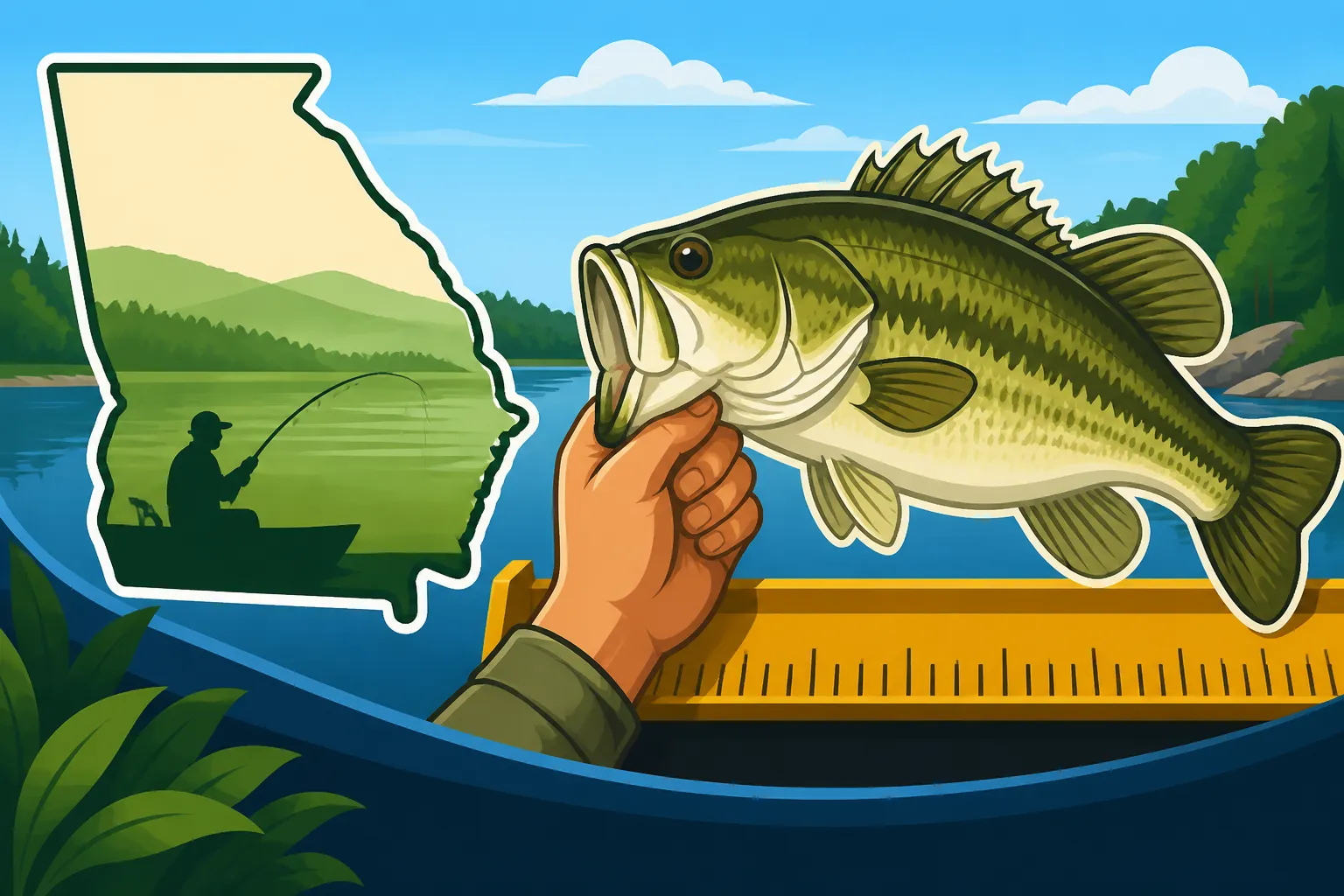
Understanding these specific rules is paramount. Having a reliable measuring device on your boat or in your tackle box is not just a good idea, it's essential for legal compliance. Many anglers rely on durable fish measuring boards, which you can easily find on Amazon. You'll want one that's clearly marked and easy to use for quick measurements and releases. For a comprehensive overview of reservoirs with these specific rules, check out Reservoirs with a 14-Inch Bass Minimum in Georgia.
Public Fishing Areas (PFAs) and Their Unique Rules
Georgia's Public Fishing Areas (PFAs) are a fantastic resource for anglers, offering accessible, well-managed fishing opportunities. Because these areas are specifically designed and intensively managed to provide high-quality fishing, they often come with their own set of highly specific regulations, which can include unique bass size and creel limits.
PFAs are sometimes stocked, and management strategies might involve different minimum lengths, slot limits, or even reduced creel limits to ensure the best possible experience for visitors. For example, some PFAs might have a higher minimum size limit, perhaps 15 or 16 inches, to protect larger bass and promote a trophy fishery. Others might have a lower daily limit than the statewide 10-fish rule.
The key takeaway here is to never assume the statewide rules apply when you visit a PFA. Always check the signage at the PFA entrance or boat ramp, or consult the Georgia DNR fishing regulations guide (which you can often find a copy of at local tackle shops or even purchase on platforms like Amazon for quick reference). These areas are designed for your benefit, but respecting their specific rules is part of making them successful. Our article on Public fishing area bass size limit in Georgia offers more general insights into these special regulations.
Special Bass Slot Limits and Shoal Bass Exceptions
Just when you think you’ve got a handle on things, Georgia throws in a few more curveballs to keep you on your toes. These aren't common statewide, but they apply to specific, unique fisheries that require special management. Knowing these exceptions is key to staying compliant and understanding the conservation efforts behind them.
Lake Lindsay Grace's Catch-and-Release Slot Limit
Lake Lindsay Grace, a gem of a Public Fishing Area (PFA) in South Georgia, has a truly distinctive regulation that sets it apart from almost every other body of water in the state. This lake operates under a protected slot limit for largemouth bass: all bass measuring between 15 and 22 inches must be immediately released.
This means you can keep largemouth bass that are under 15 inches and you can keep largemouth bass that are over 22 inches. However, any fish you catch that falls within that 15 to 22-inch range must be returned to the water unharmed. The daily creel limit of 10 fish still applies, but only to those bass outside the protected slot.
This specific slot limit is a powerful management tool designed to enhance the quality of the fishery. By protecting the medium-sized bass, the DNR aims to increase the number of larger, trophy-sized fish in the lake. Anglers are encouraged to harvest the smaller fish (under 15 inches) to reduce competition and allow the remaining bass to grow bigger.
Imagine catching a beautiful 17-inch bass on Lake Lindsay Grace – it's a fantastic fight, but after a quick measurement with your trusted ruler (perhaps one you picked up from Amazon), you know it’s time for it to swim free to grow even larger. On the flip side, if you hook into a monster 23-inch bass, that one is a legal keeper! This unique approach makes Lake Lindsay Grace a fascinating and challenging place to fish. For comprehensive details on this one-of-a-kind regulation, explore Lake Lindsay Grace Bass Slot Limit and Releasing 15 to 22 Inch Bass at Lake Lindsay Grace. You might also be interested in Can you keep a bass over 22 inches at Lake Lindsay Grace? for more clarification. It truly is Georgia's only bass slot limit lake.
Shoal Bass Regulations, Especially on the Flint River
Shoal bass are a distinct species of black bass, native to several river systems in Georgia, most notably the Flint River. While they share characteristics with largemouth and spotted bass, their unique habitat (fast-flowing riverine environments) and slower growth rates often necessitate different management strategies.
Generally, the statewide minimum length limit of 12 inches and a 10-fish daily creel limit applies to shoal bass as well. However, there's a significant exception that anglers targeting shoal bass, particularly on the famous Flint River, need to be aware of:
- Flint River Below Warwick Dam: In this specific stretch of the Flint River, the minimum length limit for shoal bass increases to 15 inches. This stricter regulation is in place to protect the larger, spawning shoal bass in this critical habitat, ensuring the long-term health of one of Georgia's most prized native game fish populations.
This distinction highlights the importance of not only knowing your location but also being able to correctly identify the species of bass you've caught. Shoal bass have a distinct appearance, often appearing more streamlined with smaller scales and a series of dark blotches along their sides, different from the distinct lateral line of a largemouth. If you're specifically targeting shoal bass, particularly on the Flint, always double-check the regulations for that exact stretch of water. Knowing the difference between a largemouth and a shoal bass is crucial here. Delve deeper into these specific regulations by reading Shoal bass minimum length in Georgia and Flint River shoal bass size limit exception. You can also find specifics on Shoal bass rules below Warwick Dam.
Here’s a handy table summarizing the bass size limits for key lakes and water bodies in Georgia:
| Lake/Water Body | Largemouth Bass Minimum Length | Largemouth Bass Daily Creel Limit | Special Rules/Notes |
|---|---|---|---|
| Most Georgia Waters | 12 inches | 10 | General statewide regulation |
| Lake Lanier | 14 inches | 10 | Applies to Spotted Bass too |
| Lake Oconee | 14 inches | 10 | Applies to Spotted Bass too |
| West Point Lake | 14 inches | 10 | Applies to Spotted Bass too (shared with Alabama) |
| Lake Walter F. George | 14 inches | 10 | Applies to Spotted Bass too (shared with Alabama) |
| Lake Blackshear | 14 inches | 10 | Applies to Spotted Bass too |
| Lake Lindsay Grace (PFA) | Under 15" OR Over 22" | 10 | Protected slot limit: 15-22 inches must be released |
| Flint River (General) | 12 inches | 10 | Shoal Bass |
| Flint River (Below Warwick Dam) | 15 inches | 10 | Shoal Bass only |
| Other Public Fishing Areas | Varies (check specific PFA) | Varies (check specific PFA) | May include unique slot limits or reduced creel limits |
Practical Tips for Anglers
Staying informed and prepared is your best defense against inadvertently breaking regulations and ensures a more enjoyable and responsible fishing experience. Nobody wants a day on the water ruined by a misunderstanding of the rules, which could lead to fines or worse.
Always Check Current Regulations
Regulations, while generally stable, are not set in stone forever. The Georgia Department of Natural Resources (DNR) regularly reviews and updates fishing rules based on new biological data, changes in fish populations, and evolving management goals. What was true last year might have a slight tweak this year, or a brand new rule might be implemented for a particular body of water.
It's truly your responsibility as an angler to be aware of the most current regulations for the specific water body you plan to fish. Before every fishing trip, especially if you're exploring a new lake or haven't fished a particular spot in a while, take a few minutes to:
- Consult the Georgia DNR Fishing Regulations Guide: This is published annually and is the definitive source. You can usually find it online on the DNR website, or pick up a physical copy at most fishing license agents, bait shops, or even certain sporting goods stores.
- Check the Go Outdoors GA App: The Georgia DNR offers a convenient mobile app that often includes up-to-date regulations, license purchasing options, and other helpful tools.
- Look for Signage: At boat ramps and public access points, you'll often find signs detailing the specific regulations for that lake or river.
Even if you’ve been fishing a certain lake for decades, it’s a good habit to quickly verify the rules. It only takes a moment and can save you a lot of grief. To get a broader understanding of all rules, check out our Georgia Fishing Regulations Explained guide.
Essential Gear for Compliance
Knowing the rules is one thing; being equipped to follow them is another. To ensure you're always compliant with length limits, having the right gear on hand is non-negotiable.
- Reliable Measuring Device: This is perhaps the most critical piece of equipment. A simple tape measure might work, but a dedicated fish measuring board or a sturdy, marked ruler is far more practical and accurate on a wiggling fish. Many popular, durable options are available on Amazon, from brands like Hawg Trough or YakGear, that are designed for quick, accurate measurements. Ensure it's long enough to measure your target species comfortably.
- How to Measure Correctly: Remember the official way to measure a fish: place it on its side, mouth closed against a solid surface, and pinch the tail fin lobes together to get the maximum length. Do this quickly and carefully to minimize stress on the fish, especially if it's a catch-and-release.
- Quick Release Tools: For those fish that fall within a protected slot or are undersized, a good pair of needle-nose pliers or a de-hooking tool can make releasing the fish much easier and safer for both the fish and the angler. This minimizes handling time and increases the fish's chances of survival.
- Digital Scale: While not directly for size limits, if you're interested in weight for a trophy catch (which often happens with bigger bass that are legal keepers), a good digital scale can be invaluable. Many anglers purchase compact, waterproof digital scales on Amazon for this purpose.
Consequences of Non-Compliance
It's easy to think, "What's the big deal if I keep one undersized bass?" But adhering to fishing regulations isn't just about avoiding a ticket; it's about being a responsible steward of our natural resources. The rules are in place to ensure that Georgia's fantastic fishing opportunities remain viable for years to come.
However, there are indeed legal consequences for failing to abide by size and creel limits. If a Georgia DNR law enforcement officer finds you in possession of undersized fish or more fish than the daily limit allows, you could face:
- Fines: These can range from moderate to substantial, depending on the severity of the violation and whether it's a repeat offense.
- Confiscation of Gear: In some cases, your fishing gear, boat, or even your catch could be confiscated.
- Loss of Fishing Privileges: Serious or repeated violations can lead to the suspension or revocation of your Georgia fishing license.
These penalties are designed to deter illegal activity and underscore the importance of conservation. It’s far better to err on the side of caution, measure twice, and release any questionable fish than to risk a citation. Understanding How many bass can you keep per day in Georgia isn't just good knowledge; it's a legal requirement.
Disclaimer
Please remember that fishing regulations can change. While this guide provides comprehensive and accurate information based on current Georgia DNR regulations, it is your responsibility to always check the most up-to-date official Georgia fishing regulations guide before heading out on the water.