Releasing 15 to 22 Inch Bass at Lake Lindsay Grace
Navigating the unique fishing regulations across Georgia’s diverse waters can sometimes feel like trying to solve a puzzle, especially when you encounter specialized rules for specific lakes. One such regulation that often catches anglers by surprise is the distinctive bass slot limit at Lake Lindsay Grace. If you've ever found yourself wondering whether that beautiful 18-inch largemouth bass you just landed should go in the livewell or back into the water, this guide is dedicated to clarifying the exact protocol for releasing 15 to 22 inch bass at Lake Lindsay Grace, ensuring you're fishing responsibly and effectively.
Unraveling the 15 to 22-Inch Bass Slot Limit at Lake Lindsay Grace
The bass fishing at Lake Lindsay Grace, part of the Public Fishing Area (PFA) network, comes with a very specific set of rules designed to cultivate a high-quality fishery. These rules are a departure from the more general Georgia Fish Size and Creel Limits you might encounter elsewhere in the state, and understanding them is crucial for a successful and legal outing. It's not just about what you can keep, but precisely what you must release.
Defining the Protected Slot Size
Let's get straight to the heart of it: at Lake Lindsay Grace, any largemouth bass you catch that measures between 15 and 22 inches in total length must be immediately released. There’s no wiggle room here, no exceptions for a cooler full of other fish, and no "just one more." This isn't a suggestion; it's a mandatory release zone for fish within this particular size bracket. For many anglers used to more straightforward length minimums, this "slot limit" can feel a bit counter-intuitive at first. You might be accustomed to rules like the 12-inch vs 14-inch bass minimum in Georgia explained in other waters, where anything under a certain length goes back. Here, it's about protecting a specific growth stage.
Imagine you've cast your favorite topwater lure near a submerged log, and a feisty 17-inch bass absolutely crushes it. Your immediate thought, if you’re new to Lake Lindsay Grace, might be to admire its girth and consider it a keeper. However, a quick check of your measuring board confirms it falls squarely within that 15 to 22-inch range. That fish, as tempting as it might be, needs to go right back into the water unharmed.
Keeping Bass Outside the Slot
So, if you can’t keep bass within the 15 to 22-inch range, what can you take home? The regulations at Lake Lindsay Grace allow anglers to keep a daily limit of five largemouth bass. The critical caveat is that within this five-fish limit, only one of those bass can be 22 inches or longer. This means your five-fish creel can consist of any combination of bass that are less than 15 inches, plus one individual bass that is 22 inches or longer.
Let's walk through a few hypothetical scenarios to make this crystal clear:
- Scenario 1: You catch four bass that are 12, 13, 14, and 14.5 inches. All of these are legal to keep. You still have one more fish available for your daily limit. If your next catch is a 16-inch bass, it goes back. If it’s a 13-inch bass, you can keep it. If it’s a 23-inch bass, you can keep that one, fulfilling your one-fish-over-22-inches allowance and your five-fish limit.
- Scenario 2: You land a magnificent 24-inch lunker right off the bat. You decide to keep it. That’s your one fish over 22 inches for the day. Now, you can still catch and keep four more bass, but all of those must be under 15 inches. Any bass between 15 and 22 inches still needs to be released.
This particular regulation means you truly have to pay attention to every fish you boat. It’s a very different approach from simply knowing how many bass can you keep per day in Georgia on other, less regulated, bodies of water. The nuances here are significant and are designed with specific ecological goals in mind.
The Biological Rationale Behind Lake Lindsay Grace's Unique Regulation
It’s easy to get frustrated by specific regulations that seem to add complexity to your fishing trip, but there’s always a sound biological reason behind them. Lake Lindsay Grace’s 15 to 22-inch protected slot limit isn't arbitrary; it’s a carefully crafted fisheries management tool implemented by the Georgia Department of Natural Resources (GDNR) to achieve very specific goals for the bass population. This system is a prime example of Georgia Fishing Regulations Explained in a practical, localized context.
Targeting Trophy Potential and Quality Angling
The primary reason for a protected slot limit like this is to grow bigger fish and create a truly exceptional angling experience. By mandating the release of bass in the 15 to 22-inch range, the GDNR is essentially giving these fish a "pass" to continue growing. These are typically the sexually mature, healthy bass that are prime for reproducing and have the genetic potential to become true giants.
Think about it: many anglers, if given the choice, would keep a beautiful 18-inch bass. It’s a good-sized fish, often delicious, and a rewarding catch. However, if too many of these mid-sized fish are harvested, the pool of fish that can grow into those 5, 6, 7-pound lunkers rapidly shrinks. By protecting them, these fish get more time to feed, mature, and reach those coveted trophy sizes that make lakes like Lindsay Grace famous. This management strategy aims to ensure that when you visit, you have a legitimate chance at catching a truly memorable, large bass, not just an abundance of smaller ones. It’s about creating a "quality fishery" rather than just a "numbers fishery."
Balancing Population Dynamics for Ecosystem Health
Beyond just growing trophy fish, protected slot limits also play a crucial role in maintaining a balanced and healthy fish population. A common issue in some lakes is a phenomenon called "stunting," where a high density of smaller fish competes fiercely for limited food resources, preventing them from growing to a desirable size. Conversely, if too many larger, predatory bass are removed, smaller fish populations can explode, exacerbating the stunting problem.
The Lake Lindsay Grace slot limit helps to achieve equilibrium:
- Removes smaller fish: Allowing the harvest of bass under 15 inches helps to thin out the population of smaller, faster-growing fish. This reduces competition for food among the remaining small fish and, crucially, provides more food resources for the protected, mid-sized bass to feast on and grow.
- Protects breeders and growers: The 15 to 22-inch protected slot ensures that a robust class of healthy, reproductive bass remains in the lake. These fish are vital for ensuring future generations and continuing the cycle of growth.
- Allows for trophy harvest: Permitting the harvest of one bass over 22 inches means anglers can still take home a true lunker, adding to the allure of the fishery, but this limited harvest prevents over-exploitation of these magnificent, mature fish.
This intricate dance of allowing some harvest while strictly protecting others is a sophisticated way of managing the fish community, promoting both diversity and density, and ultimately leading to a more resilient and rewarding fishery. It's a localized application that goes beyond the Statewide Largemouth Bass Size Limits in Georgia to tailor specifically to this unique PFA.
| Bass Size (Total Length) | Regulation at Lake Lindsay Grace | Rationale |
|---|---|---|
| Less than 15 inches | KEEP (Up to daily creel limit) | Reduces competition among smaller fish, provides food for larger bass, and offers harvest opportunities. |
| 15 to 22 inches | RELEASE IMMEDIATELY | Protects prime reproductive and growth-potential fish, allowing them to become trophy size. |
| 22 inches or greater | KEEP (Only one per daily limit) | Allows harvest of true trophy-sized fish while limiting overall impact on the largest bass. |
Practical Tips for Measuring, Handling, and Releasing Bass
Adhering to the Lake Lindsay Grace slot limit isn't just about knowing the rules; it's about executing them flawlessly to ensure the fish you release survive and thrive. Improper handling can negate the conservation efforts of the slot limit, so mastering catch-and-release techniques is just as important as knowing when to keep or release. This isn't just good practice for bass; these techniques are broadly similar to how to Catch and Release Trout Properly in mountain streams, emphasizing the universal importance of fish welfare.
Accurate Measurement is Your First Priority
When you boat a bass at Lake Lindsay Grace, your first priority is a quick and accurate measurement. There's no room for guessing games, especially when a few fractions of an inch can determine if a fish is a keeper or a mandatory release.
- Invest in a Quality Measuring Board: A reliable bump board is non-negotiable. Look for one that's sturdy, clearly marked, and easy to use. Many excellent options are available on Amazon, ranging from foldable models that fit in a tackle bag to more robust, fixed boards for boat use. Make sure it's long enough for larger bass, ideally up to 30 inches.
- How to Measure: Gently lay the fish on its side on the measuring board. Close its mouth and press it firmly against the "bump" at the zero end of the board. Smooth out the tail to get its full length, and read the measurement at the longest point of the tail. Always be precise. If a fish looks like it's right on the edge of 14.5 inches or 15.5 inches, measure twice, and if in doubt, err on the side of caution (i.e., release if it seems to be in the slot).
- Practice Makes Perfect: If you're new to using a bump board, practice at home with a ruler or even a toy fish. The goal is to make the process as quick and stress-free for the live fish as possible.
Gentle Handling for Maximum Survival
The fish you release, especially those 15 to 22-inch protected bass, are the future of Lake Lindsay Grace's trophy fishery. Their survival depends heavily on how gently and efficiently you handle them.
- Minimize Air Exposure: This is perhaps the most critical rule. Fish can't breathe air. Keep the bass in the water as much as possible, especially during unhooking and measurement. If you must lift it for a quick photo, do so rapidly and get it back in the water within seconds.
- Support the Entire Body: When holding a bass, never suspend it vertically by just the jaw, especially larger fish. This puts immense strain on their jaws, spine, and internal organs, potentially causing irreversible damage. Instead, cradle the fish horizontally, supporting its belly and tail with your other hand. This distributes its weight evenly and prevents injury.
- Wet Hands, Always: Before you even touch the fish, wet your hands thoroughly. Fish have a protective slime coat that acts as a barrier against bacteria and parasites. Dry hands can rub off this coating, leaving the fish vulnerable to infections after release.
- Efficient Unhooking:
- Use the Right Tools: Carry a good pair of needle-nose pliers or a dedicated dehooking tool. These make removing hooks much easier and quicker.
- Single Hooks Preferred: If you're primarily catch-and-release fishing, consider using lures with single, barbless hooks, or replacing treble hooks with single hooks. This dramatically reduces damage and makes unhooking faster. Many Best Lures for Georgia Largemouth Bass can be modified with single hooks for easier release.
- Deep Hooks: If a fish is deeply hooked in the gills or gut, attempting to violently remove the hook can cause more harm than good. In such cases, it’s often best to simply cut the line as close to the hook as possible. The hook will often rust out or be encapsulated by the fish's tissue, giving it a better chance of survival than a traumatic removal.
Quick and Effective Release Techniques
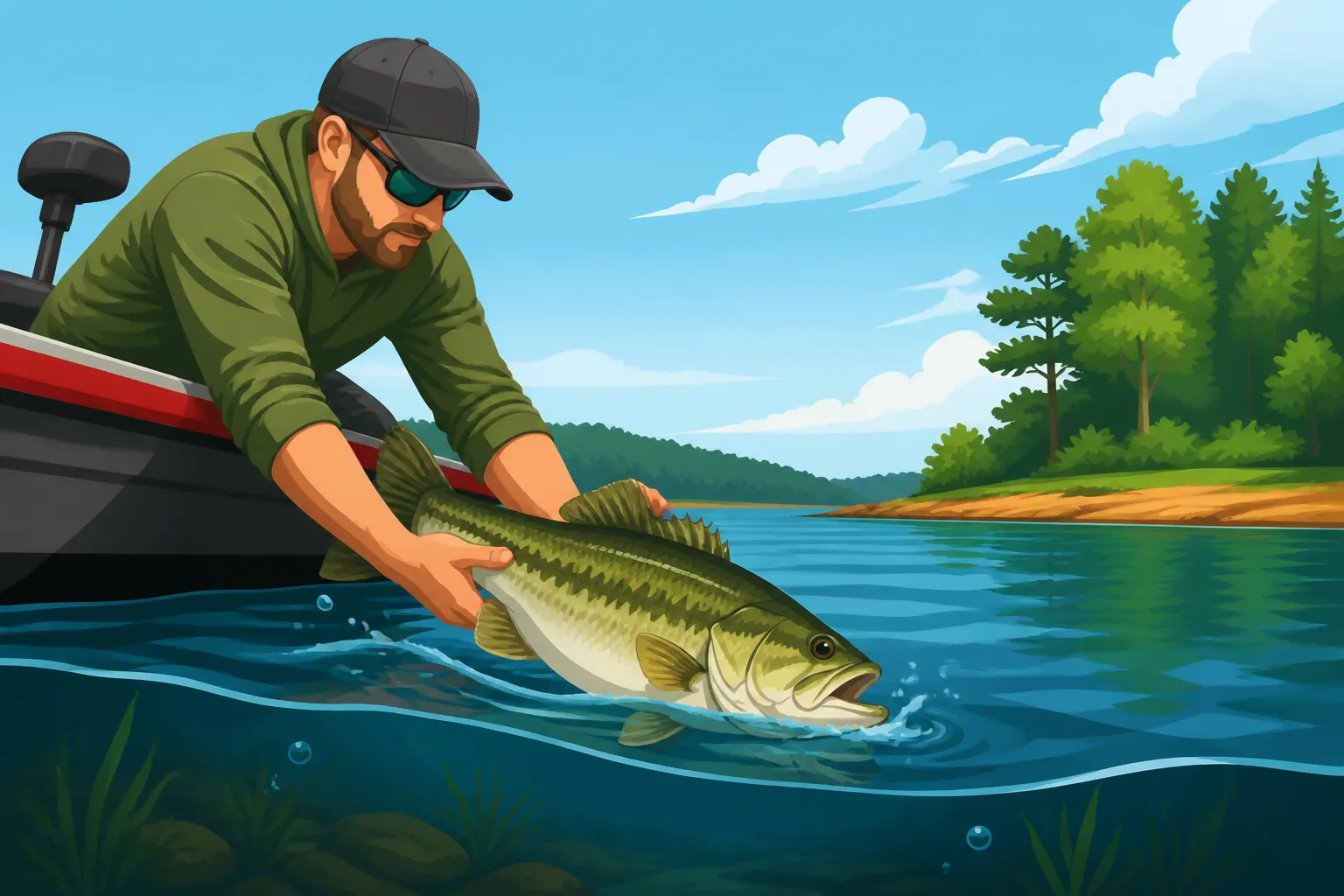
Once measured and unhooked, the final step is a successful release. Don't just toss the fish back; give it the best possible chance to recover.
- Gentle Re-entry: Place the fish back into the water headfirst, gently. Don't drop it from a height.
- Revitalization (If Needed): If the bass appears sluggish or disoriented, hold it upright in the water, supporting its belly and jaw. Gently move it back and forth to force water over its gills. This helps to re-oxygenate its blood. Continue this until you feel the fish regain strength and it tries to swim away under its own power. Once it does, release it. Watch it swim away to ensure it's healthy.
- Avoid Strong Currents: Release the fish in calm water if possible, away from strong currents that might sweep it away before it fully recovers.
By following these handling and release techniques, you’re not just obeying the rules; you’re actively contributing to the health and vitality of the Lake Lindsay Grace fishery, ensuring those protected slot fish grow into the trophy bass we all hope to catch.
Maximizing Your Catch-and-Release Success at Lake Lindsay Grace
Fishing at Lake Lindsay Grace with its specific slot limit encourages a mindful approach to angling. It's not just about what you catch, but how you approach the act of fishing itself, knowing that many of your catches will be returned to the water to grow larger. This mindset can actually make your fishing trips even more rewarding, turning every release into an investment in the future of the fishery.
Choosing the Right Tackle for the Job
Your gear choice can significantly impact both your success in landing fish and your ability to safely release them. Given the possibility of catching anything from smaller keepers to substantial trophy bass, versatility and reliability are key.
- Rods and Reels: A medium-heavy to heavy action baitcasting rod, around 7 to 7.5 feet in length, paired with a reliable baitcasting reel, is a fantastic all-around choice. This setup provides the power needed to quickly bring in larger bass, minimizing fight time and reducing stress on the fish. You’ll want a reel with a smooth drag system, which is crucial for fighting big fish without snapping your line or tearing hooks out of their mouths. For specific recommendations, exploring the Best Rod and Reel Combo for Largemouth Bass in Georgia can offer tailored insights.
- Line Choice: Spool your reel with 15-20 lb fluorocarbon or braided line. Fluorocarbon offers excellent sensitivity and abrasion resistance, making it great for fishing around cover. Braided line, with its superior strength and no-stretch properties, is ideal for punching through thick vegetation or setting hooks on long casts. If using braid, consider a fluorocarbon leader for stealth.
- Hooks: As mentioned before, if your primary intent is catch-and-release, consider switching out treble hooks on your hard baits for single, in-line hooks. Barbless hooks are even better for quick, clean releases, though they require more diligence during the fight to prevent the fish from throwing the hook. Always have pliers or a dehooker readily accessible.
Lure and Bait Selection for Targeted Bass Behavior
While bass in Lake Lindsay Grace will hit a wide variety of lures, choosing certain types can aid in the catch-and-release process and even help you target different size classes.
- Soft Plastics: Texas-rigged worms, Senkos, creature baits, and jigs are excellent choices. They typically use a single hook, which is easier to remove cleanly. They are also highly effective for targeting bass holding in cover or along structure. These are fundamental items when considering the Best Lures for Georgia Largemouth Bass.
- Spinnerbaits and Chatterbaits: These lures also feature single hooks (or often one main hook with a smaller trailer hook), making them good options for minimizing deep hooking. They are fantastic for covering water and eliciting aggressive strikes from active fish.
- Crankbaits and Topwater: These often come with multiple treble hooks. While incredibly effective, be prepared with your pliers to carefully remove all hooks, minimizing damage to the fish. A quick unhooking process is vital.
- Live Bait: If you're using live bait like shiners or worms, fish them on circle hooks. Circle hooks are designed to hook fish in the corner of the mouth, dramatically reducing gut-hooking incidences and increasing the chances of a successful release.
Embrace the Conservation Ethos
Fishing Lake Lindsay Grace is more than just a day on the water; it's an active participation in a unique conservation program. Every 15 to 22-inch bass you carefully measure, handle, and release contributes directly to the health and future of this fishery. It's a chance to refine your skills, not just in catching, but in responsible angling.
This commitment to careful release means that you’re not just following the rules of the lake; you're actively helping to grow those giants that make for truly legendary fishing tales. So, embrace the challenge, enjoy the process, and take pride in knowing you’re doing your part for Georgia’s incredible bass fishing. And remember, when you're out on the water for a long day of fishing and upholding these regulations, having a good Best Cooler for a Fishing Boat is essential for keeping your drinks cold and any legal keepers fresh!
Disclaimer
The information provided in this guide is for general informational purposes only and is subject to change. While we strive to offer the most accurate and up-to-date details, fishing regulations can be complex and are regularly updated by the Georgia Department of Natural Resources (GDNR). It is always the angler's responsibility to consult the most current official Georgia Sport Fishing Regulations before fishing any public waters. Failure to comply with regulations can result in penalties.