Lake Lindsay Grace Bass Slot Limit
Stepping onto the shores of a new lake, or even a familiar one, only to be hit with a slew of confusing fishing regulations can really take the wind out of your sails. It’s a common frustration, especially when you’re just trying to enjoy a relaxing day on the water. But don’t you worry, because if you’ve been scratching your head over the specific bass slot limit at Lake Lindsay Grace, you’ve come to the right place. This guide is all about demystifying that particular regulation so you can fish with confidence and stay on the right side of the law.
Understanding Slot Limits in Georgia
Before we dive headfirst into the specifics of Lake Lindsay Grace, it's crucial to understand what a slot limit actually is and how it fits into the broader picture of fisheries management here in Georgia. Many anglers are familiar with simple length limits – either a minimum size, meaning the fish has to be at least X inches long to keep, or a maximum size, meaning it can't be over Y inches. But slot limits? They're a different beast entirely, and understanding them is key to successful and compliant fishing, especially in specially managed waters.
What is a Slot Limit?
Imagine a "slot" or a specific size range, say, between 15 and 22 inches. A slot limit dictates that any fish whose length falls within that predetermined slot must be immediately released back into the water. This means you cannot keep fish that are, for instance, 15, 18, or 21 inches long. However, you can keep fish that are smaller than the lower end of the slot, and often, you can also keep fish that are larger than the upper end of the slot, up to a certain daily creel limit. It's a nuanced approach, and it’s specifically designed to achieve particular goals for a fishery, which often vary from lake to lake. These regulations are detailed in the annual Georgia Fishing Regulations Explained, so it's always a good idea to consult the most current guide.
For example, if a lake has a 15- to 22-inch slot limit, you might be allowed to keep bass under 15 inches and bass over 22 inches, but nothing in between. This contrasts sharply with a simple 12-inch minimum length limit, where any bass 12 inches or longer could theoretically be kept. The slot limit effectively creates a protected size class of fish, allowing them to grow larger and contribute to the population's health. It's a thoughtful management strategy, but it definitely requires anglers to pay close attention to their catches.
How Slot Limits Differ from Minimum or Maximum Sizes
The difference between a slot limit and a standard minimum or maximum size limit isn't just academic; it profoundly impacts how you fish and what you keep. A minimum size limit, like the common 12-inch rule for many Georgia lakes, simply means any fish shorter than 12 inches must go back. Anything 12 inches or longer is fair game (up to your daily creel limit). On the flip side, a maximum size limit, though less common for bass, would mean you can keep fish under a certain length but not over it.
A slot limit, as we discussed, is like a "no-keep zone" for a specific size range. This approach is usually implemented when fisheries managers want to protect a certain cohort of fish – often the prime spawners or the fast-growing juveniles – to help them reach larger sizes or to improve the genetic diversity and overall health of the population. It ensures that those middle-sized fish, which are often the most reproductively active and robust growers, are given the chance to live longer, spawn more, and contribute to future generations. This is a targeted effort to improve the quality of fishing for everyone in the long run, even if it means a little more thought at the boat ramp or on the bank when deciding what to put in the livewell.
Benefits of Slot Limits for Fish Populations
So, why would the Georgia Department of Natural Resources (DNR) go through the trouble of implementing such a specific and sometimes confusing regulation? The benefits for the fish population, and ultimately for the anglers, are substantial. First and foremost, slot limits can lead to an increase in the number of trophy-sized fish. By protecting those fish in the middle size range, they get to grow bigger and older, eventually reaching sizes that make for truly memorable catches. This is a huge draw for anglers who dream of catching a wall-hanger largemouth.
Secondly, protecting these mid-sized fish often means protecting the most prolific spawners. These are the bass that are mature, healthy, and contribute significantly to the next generation of fish. Allowing them to reproduce unimpeded can lead to stronger year classes, ensuring a healthy and self-sustaining fishery. Lastly, slot limits can help balance the fish population. In some lakes, there might be an overabundance of smaller, stunted fish. By allowing anglers to keep some of these smaller fish (below the slot), it can reduce competition for food and resources, enabling the remaining fish to grow faster and healthier. Conversely, if a lake has too few larger fish, protecting the middle class helps ensure more fish reach that desirable big-fish status. It’s all about creating a robust, balanced ecosystem.
Why Lake Lindsay Grace Has a Special Bass Slot Limit
Lake Lindsay Grace isn’t just any lake; it's a Public Fishing Area (PFA) managed by the Georgia DNR, meaning it receives focused attention to optimize fishing opportunities. PFAs are often laboratories for advanced fisheries management techniques, and the special bass slot limit at Lake Lindsay Grace is a prime example of this commitment to creating outstanding fishing experiences. It's not a regulation thrown out haphazardly but a carefully considered strategy for this specific body of water.
The Unique Purpose Behind This Specific Regulation
The primary purpose of the 15- to 22-inch slot limit at Lake Lindsay Grace is to cultivate a truly exceptional largemouth bass fishery, particularly focusing on the production of trophy-sized bass. Many lakes in Georgia might have abundant bass, but not all of them consistently produce those truly massive fish that anglers dream about. This slot limit is a deliberate attempt to change that dynamic at Lake Lindsay Grace. By prohibiting the harvest of bass within this specific size range, the DNR ensures that the lake's prime breeding stock and the fish with the highest growth potential are allowed to mature, grow larger, and reproduce multiple times.
It’s a long-term investment in the lake's ecological health and fishing quality. The idea is that these protected fish will not only continue to grow past the 22-inch mark, creating more opportunities for anglers to catch giants, but they will also contribute a stronger genetic pool to the next generations of bass in the lake. This kind of intensive management is what sets PFAs like Lake Lindsay Grace apart and makes them such valuable resources for Georgia anglers.
How It Aims to Improve Bass Quality and Size
The direct aim of this slot limit is a noticeable improvement in both the quality and average size of the largemouth bass population. When you protect fish between 15 and 22 inches, you're essentially putting a "hold" on the healthiest, most vigorous growing bass in the lake. These are the fish that have survived past their vulnerable juvenile stage and are now entering their prime growth period. Allowing them to stay in the water does several things:
- Increases Individual Size: Simple biology dictates that if fish aren't harvested, they continue to grow. The protected slot allows these bass to pack on more pounds and inches, pushing them into the trophy class.
- Improves Spawning Success: Larger, older bass are often more effective spawners. They produce more eggs, their fry tend to be hardier, and they have more experience navigating the spawning process. This leads to more successful reproduction and stronger year classes of bass.
- Reduces Competition for Smaller Fish: While it might seem counterintuitive, sometimes keeping smaller fish (below the slot) can actually benefit the overall population. If there's an overabundance of smaller bass, they compete intensely for food. Allowing some harvest of these smaller fish can reduce competition, letting the remaining juvenile bass grow faster and potentially reach the protected slot more quickly.
The end game is a lake where anglers have a higher probability of encountering bigger, healthier bass, making the fishing experience significantly more rewarding.
Historical Context and Management Goals
Lake Lindsay Grace is part of Georgia's Public Fishing Area program, which began back in the 1970s. These areas are specifically developed and managed by the Georgia Department of Natural Resources (DNR) to provide high-quality, accessible fishing opportunities across the state. They're often designed to showcase best practices in fisheries management. The decision to implement a slot limit at Lake Lindsay Grace, like many other special regulations at PFAs, comes from years of biological study and monitoring of the lake's fish populations.
The management goals for Lake Lindsay Grace have consistently revolved around creating a premier bass fishery. Over time, fisheries biologists observed the dynamics of the bass population – growth rates, reproduction, and angler harvest patterns. When it became clear that a standard minimum length limit wasn't achieving the desired outcome of producing a strong population of large bass, the slot limit was introduced. This adaptive management approach allows the DNR to fine-tune regulations to the specific needs of each body of water. The ultimate goal is not just to maintain a fishable population, but to elevate Lake Lindsay Grace into a destination for anglers seeking a chance at a truly exceptional largemouth bass, contributing to the broader objective of providing diverse and high-quality fishing experiences across Georgia.
Navigating the Lake Lindsay Grace Bass Slot Limit
Fishing Lake Lindsay Grace means you need to be extra vigilant about the size of the bass you're catching. It's not enough to just know the slot limit exists; you need to know exactly how to apply it when you've got a feisty largemouth in your hands. Misinterpreting the rules can lead to fines and penalties, so let's break down the practical application.
Defining the "Protected Slot"
At Lake Lindsay Grace, the "protected slot" for largemouth bass is clearly defined as 15 to 22 inches. This means any largemouth bass that measures 15 inches or longer, but shorter than 22 inches, MUST BE IMMEDIATELY RELEASED. There are no exceptions to this rule within the daily creel limit for fish within this slot.
Think of it like a strict no-parking zone for bass within this specific size window. If your fish measures anywhere from 15 inches up to, but not including, 22 inches, it doesn't belong in your livewell or cooler. This precise measurement is critical, so having a reliable measuring board or tape measure is absolutely essential. Many anglers find durable, waterproof measuring boards on Amazon that clearly mark the inches, making on-the-water decisions quick and accurate. This prevents any ambiguity when you're trying to figure out if your catch fits the bill or needs to swim another day.
What You Can and Cannot Keep
Understanding what to keep and what to release is the most crucial part of fishing under a slot limit. Here's the breakdown for Lake Lindsay Grace:
- You CAN keep:
- Largemouth bass that are shorter than 15 inches. These smaller bass are typically abundant, and their removal can actually help reduce competition, allowing the remaining fish to grow faster.
- Largemouth bass that are 22 inches or longer. These are the trophy-sized fish that the slot limit is designed to help produce. Catching one of these beauties is the ultimate reward for responsible fishing under these regulations.
- You CANNOT keep:
- Largemouth bass that are 15 inches or longer, but shorter than 22 inches. These fish are the protected breeding stock and future trophy fish. They must be handled with care and released immediately.
It’s a bit like a game of "Goldilocks" for bass – not too small (unless you want to keep them), not too big (unless they're really big), but just right (meaning in the middle) and therefore untouchable. Always measure your fish carefully and respect the slot. Remember that even if a fish barely makes it into the slot, it must be released. It's better to err on the side of caution.
Counting Your Daily Creel Limit
While the slot limit dictates which fish you can keep, the daily creel limit dictates how many legal fish you can keep. For largemouth bass at Lake Lindsay Grace, the daily creel limit is 5 fish per angler. This limit applies to the combination of bass you keep from below the 15-inch mark and above the 22-inch mark.
Let’s walk through some hypothetical scenarios:
- Scenario 1: You catch three bass under 15 inches, one 18-inch bass, and one 23-inch bass. You must release the 18-inch bass. You can keep the three under 15 inches and the 23-inch bass. That makes a total of 4 kept fish, still within your 5-fish limit.
- Scenario 2: You catch five bass, all under 15 inches. You can keep all five, reaching your creel limit.
- Scenario 3: You catch two bass under 15 inches and two bass over 22 inches. You have kept 4 fish, and you can still keep one more legal bass (either under 15 inches or over 22 inches).
- Scenario 4: You catch five bass between 15 and 22 inches. You must release all five. You have not kept any legal fish, and you can continue fishing for legal-sized bass up to the creel limit.
It's essential to understand that releasing a fish from the slot does not count against your creel limit for fish that can be legally kept. Your creel limit only applies to the fish you actually harvest and retain. Be mindful of these numbers and the sizes to ensure you're compliant. Checking the most current regulations, particularly the Georgia Fishing Regulations Explained, is always a smart move before heading out.
Here’s a quick summary table for Lake Lindsay Grace bass regulations:
| Category | Regulation |
|---|---|
| Species | Largemouth Bass |
| Daily Creel Limit | 5 fish |
| Protected Slot | 15 inches to 22 inches (inclusive of 15", exclusive of 22") |
| Legal to Keep | Bass shorter than 15 inches |
| Bass 22 inches or longer | |
| Must Release | Bass that are 15 inches or longer, but shorter than 22 inches (e.g., a 15-inch, 18-inch, or 21-inch bass) |
Practical Tips for Fishing Lake Lindsay Grace
Fishing under a slot limit introduces a few extra considerations, but with the right approach, it can be incredibly rewarding. You're fishing in waters specifically managed for quality, so tailoring your techniques and being prepared for meticulous measurement will pay off.
Gear and Techniques for Slot Limit Waters
When you're targeting bass in a slot-limit lake like Lake Lindsay Grace, your gear choices can really make a difference. The goal isn't just to catch fish, but to catch them efficiently and minimize stress on the ones you have to release. Consider using baits and lures that tend to attract larger bass, like bigger crankbaits, jigs, or soft plastic swimbaits. While you might still catch smaller fish, focusing on presentations that appeal to a larger mouth can increase your chances of hitting those "over slot" fish. Many anglers find great success with quality Best Lures for Georgia Largemouth Bass, often available through retailers like Amazon, to tempt those bigger bites.
Rod and reel selection also plays a role. A medium-heavy to heavy action rod with a strong backbone is ideal for quickly bringing in larger fish, reducing fight time and thus stress. Paired with a reel spooled with sturdy line, you'll have the power needed to manage bigger bass effectively. Keep your hooks sharp to ensure quick, clean hooksets, which often lead to easier hook removal. And remember, since you'll be releasing many fish, single, barbless hooks (or crimping down barbs) can significantly reduce damage and handling time, increasing the fish's survival rate.
Measuring and Handling Bass Properly
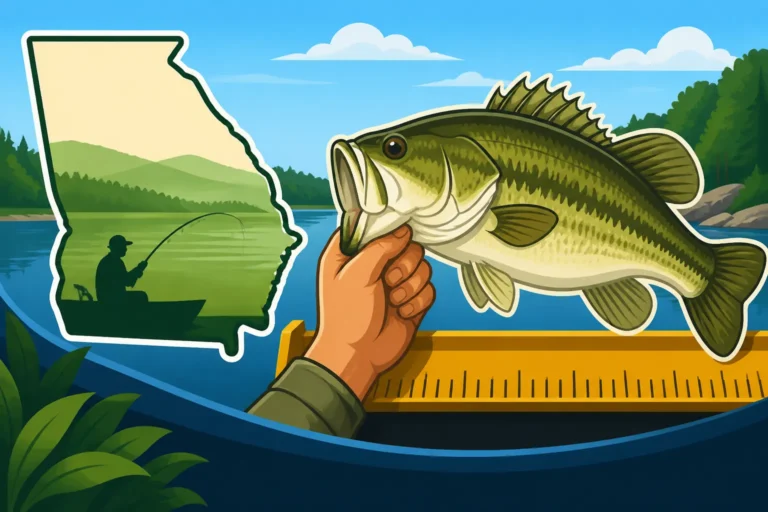
This is where rubber meets the road. Accurate measurement is non-negotiable. Always have a reliable, easily readable measuring board or bump board on your boat or by your side if you're bank fishing. Lay the fish flat on its side, with its mouth closed and touching the nose-piece or end of the board. Gently pinch the tail to get the maximum length. No guessing games here! Even a quarter-inch can make the difference between a legal fish and one that must be released.
Proper handling is just as critical, especially for those fish you're sending back. Minimize air exposure. The longer a fish is out of water, the more stressed it becomes, which can significantly reduce its chances of survival. Wet your hands before handling fish to protect their slime coat, which is their primary defense against disease. Use a fish gripper or a rubber-coated net to safely secure the fish while you measure and unhook it. If you're using a lip gripper, always support the fish's body, especially larger ones, to avoid damaging its jaw. For more on this, you might find tips on How to Catch and Release Trout Properly useful, as many principles apply to bass as well. The goal is to get that fish back into the water quickly and gently, ready to fight another day.
Responsible Catch and Release Practices
Because a significant portion of your catches at Lake Lindsay Grace will likely fall within the protected slot, mastering catch and release is paramount. Beyond just wet hands and minimal air exposure, consider these practices:
- Quick Unhooking: Have your pliers or dehooking tools easily accessible. If a fish is deeply hooked, especially in the gills, it's often best to cut the line as close to the hook as possible rather than trying to remove it. The hook will usually rust out over time, and this causes less trauma than prolonged struggle.
- Revival Time: Don't just toss a fish back into the water if it seems sluggish. Hold it gently in the water, facing into the current (if any), and move it back and forth slightly to help water flow over its gills. When it starts kicking and tries to swim away on its own, then you know it's ready.
- Environmental Awareness: Be mindful of water temperature. In extremely warm summer months, the stress of being caught and released can be much higher, even with proper handling. Consider targeting bass during cooler parts of the day or in deeper, cooler water. Understanding How Water Temperature Affects Fish Behavior can inform your fishing decisions and improve release survival.
Practicing these responsible techniques not only ensures the survival of the fish you release but also contributes directly to the long-term health and quality of the fishery at Lake Lindsay Grace, fulfilling the very purpose of the slot limit.
Consequences of Violating Bass Slot Limits
Ignoring fishing regulations, especially specific ones like the slot limit at Lake Lindsay Grace, isn't just bad etiquette; it can lead to serious legal and financial repercussions. Georgia's Department of Natural Resources takes these rules seriously because they are vital to managing and protecting the state's natural resources.
Fines and Penalties
If you're caught violating the bass slot limit at Lake Lindsay Grace, you're not just getting a stern lecture. You're looking at potential fines, and in some cases, even more severe penalties. The exact cost can vary depending on the severity of the violation, the number of illegal fish, and whether it's a repeat offense. Typically, fishing without the proper license or violating creel and size limits can result in fines ranging from a couple of hundred dollars to several thousand, plus court costs. You could also face the forfeiture of your fishing gear, including rods, reels, and even your boat, depending on the circumstances.
In addition to monetary penalties, violating fishing regulations can lead to the suspension or revocation of your fishing license. This means you could be legally barred from fishing in Georgia for a significant period. Imagine being an avid angler and suddenly losing your privilege to fish for months or even years – it's a tough pill to swallow. To avoid these headaches, always ensure you have a valid Georgia Fishing License Guide and are familiar with all current regulations for your target waters. It's truly not worth the risk for a few extra fish.
Impact on Georgia's Fisheries Management
Beyond the personal consequences, violating slot limits has a detrimental impact on the very fisheries management goals they are designed to achieve. Remember, the 15- to 22-inch slot limit at Lake Lindsay Grace is there to protect prime breeding stock and allow fish to grow into trophies. When anglers illegally harvest fish from this protected slot, they directly undermine these efforts. Each fish removed from the slot is a potential trophy that won't grow, and a prime breeder that won't contribute to future generations.
This kind of unregulated harvest can lead to a decline in the average size and overall health of the bass population. If enough anglers disregard the rules, the lake's ability to produce large, healthy bass can be severely compromised, potentially leading to a less desirable fishery for everyone. It can also force fisheries managers to consider even stricter regulations in the future, impacting all law-abiding anglers. Respecting these rules is a collective responsibility; it's about preserving the quality of fishing for both current and future generations of anglers in Georgia.
Beyond Lake Lindsay Grace: Other Georgia Bass Regulations
While Lake Lindsay Grace has its unique slot limit, it's important to remember that Georgia is a vast state with diverse fisheries. Bass regulations can vary significantly from one water body to another, and understanding these differences is crucial for any angler who travels across the state.
Statewide Largemouth Bass Limits
For most general-purpose waters across Georgia, the Statewide Largemouth Bass Size Limits in Georgia typically stipulate a daily creel limit of 10 largemouth bass, with a minimum size limit of 12 inches. This means any largemouth bass you catch that is shorter than 12 inches must be immediately released. Anything 12 inches or longer can be kept, up to your 10-fish daily limit. This is the baseline regulation that most anglers are familiar with, and it applies to countless lakes, rivers, and ponds unless otherwise specified.
However, as we've seen with Lake Lindsay Grace, these statewide rules are often superseded by special regulations in specific lakes, rivers, or Public Fishing Areas (PFAs). These special rules are always implemented with the unique characteristics and management goals of that particular water body in mind. Always check the specific regulations for the body of water you intend to fish, as assuming statewide rules apply everywhere can lead to unintentional violations. The DNR's annual fishing guide is your best friend here, providing detailed information on all special regulations.
Other Lakes with Special Bass Regulations
Lake Lindsay Grace is not alone in having specialized bass regulations. Many of Georgia's prominent reservoirs and fishing areas feature unique rules designed to enhance their specific fisheries. For instance, you might find lakes with different minimum size limits, slot limits that differ from Lake Lindsay Grace's, or even completely different daily creel limits.
Some well-known lakes like Lake Lanier or Lake Oconee might have slightly different bass minimums or creel limits, usually documented in their Lake Oconee bass size limit specific guides. For example, some reservoirs might have a 14-inch minimum for largemouth bass. Other smaller community lakes or PFAs might have "no-kill" regulations for certain species or even more restrictive slot limits than Lake Lindsay Grace, sometimes only allowing harvest of fish outside a very broad slot, or even pure catch-and-release rules. The key takeaway is to never assume. Before you launch your boat or cast your line into any unfamiliar water, take a few minutes to confirm the current local regulations. This due diligence ensures you're fishing legally and contributing to the conservation efforts of that specific fishery.
Shoal Bass Specific Rules
Beyond largemouth bass, Georgia is also home to other fascinating bass species, including the unique shoal bass, particularly prevalent in certain rivers. Shoal bass, an often overlooked but feisty native black bass, have their own specific regulations that differ from those for largemouth. For example, the Shoal Bass Size Limit Rules, Georgia, especially on rivers like the Flint River, are distinct. These regulations are designed to protect this unique riverine species and ensure its continued health and abundance.
Shoal bass regulations might include different minimum size limits, reduced creel limits, or even special protective zones within certain river stretches. These rules reflect the specific biology and habitat requirements of shoal bass, which are often found in flowing water with rocky shoals and swift currents, a very different environment from the still waters of a reservoir. Always consult the Georgia DNR fishing guide for the specific river or stream you plan to fish if you're targeting shoal bass, as their regulations are a separate chapter in the rich tapestry of Georgia fishing rules.
Disclaimer
Please be aware that fishing regulations, including creel limits, size restrictions, and license requirements, are subject to change. While this guide aims to provide accurate and up-to-date information regarding the Lake Lindsay Grace bass slot limit, it is always your responsibility as an angler to consult the latest official Georgia Department of Natural Resources (DNR) fishing regulations before heading out on the water. This guide is for informational purposes only and should not be considered a substitute for the official regulatory documents.