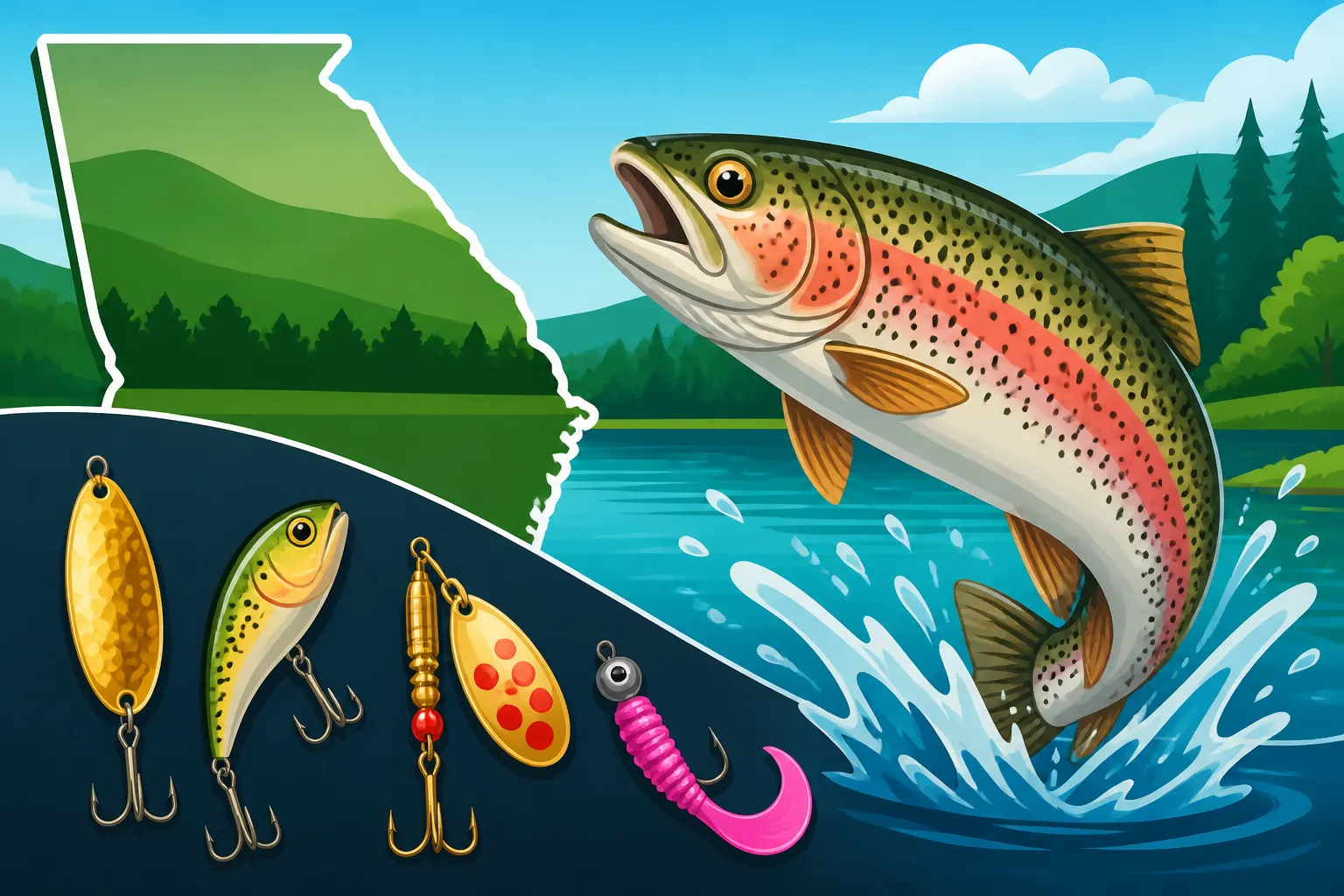
Best Lures for Stocked Trout
It's incredibly frustrating when you're out on a beautiful Georgia stream, armed with what you think are the right lures, only to watch other anglers reel in stocked trout while your line stays slack. You picked a spot after checking the Georgia Trout Stocking Schedule Explained, you've got your waders on, and yet, nothing. The truth is, stocked trout, especially when they're first introduced, behave differently than their wild counterparts, and figuring out what they'll hit can feel like a secret handshake. This comprehensive guide will unravel the mystery of the best lures for stocked trout, helping you understand their unique behaviors and what presentations will consistently entice a bite.
Understanding Stocked Trout Behavior
When you're fishing for stocked trout in Georgia, it's crucial to remember that these fish have had a very different upbringing than wild trout. They often come from hatcheries, where they're accustomed to being fed pelleted food and seeing very little in the way of natural predators or varied forage. This background profoundly influences their initial behavior when they hit a new stream or pond, and understanding it is your first step to success.
The "Freshly Stocked" Mentality
Picture this: thousands of trout are suddenly dumped into a new environment. For the first few days, they're often disoriented and, frankly, a bit dumbfounded. They might be aggressive, hitting almost anything that moves or smells vaguely like food, simply because that's what they've been conditioned to do. They don't yet associate lures with danger, nor do they have a strong instinct for hunting natural prey. This is often when you hear about anglers having "epic" days, catching fish after fish on seemingly simple offerings.
During this initial phase, flashy, noisy, or scented lures tend to perform exceptionally well. Think about something that stands out in the water and grabs their attention. They're not looking for subtlety; they're looking for an easy meal, much like the pellets they've always known. This is a prime time to experiment with brighter colors and more aggressive retrieves, capitalizing on their lack of wariness. However, this window of opportunity doesn't last forever, and conditions can change rapidly depending on fishing pressure and environmental factors.
Acclimatization and Wariness
As time passes, usually within a few days to a week after stocking, these trout begin to acclimate to their new surroundings. They start to spread out, find cover, and might even begin to key in on natural food sources available in the stream. Crucially, they also become more wary. If they've been caught and released a few times, or have seen a lot of anglers throwing the same lures, they'll become much pickier. What worked on Tuesday might get you nothing but stares on Saturday.
This is when you need to switch gears and become more nuanced in your approach. The frantic feeding frenzy gives way to a more natural foraging pattern, and their survival instincts kick in. You might need to scale down your lures, use more natural colors, or adjust your presentation to be more subtle and lifelike. The fish are still there, and they're still hungry, but they've learned a thing or two. Being able to adapt to this shift in behavior is what separates consistently successful trout anglers from those who only catch fish on stocking day. Keep an eye on the Georgia Trout Stocking Schedule Explained to help predict this transition.
Top Lures for Stocked Trout – The Tried and True
When it comes to tempting freshly stocked trout, certain lures consistently stand out. These aren't necessarily fancy or complicated, but they tap into the trout's instinctual drive for an easy meal, especially during those initial days after they've been introduced to a new waterway. Having a selection of these in your tackle box is a surefire way to increase your chances of success, whether you're fishing a well-known North Georgia stream or a smaller, lesser-known pond.
Spinners and Spoons
There's a reason why classic spinners and spoons have been trout fishing staples for generations: they work. The flash and vibration they create in the water are incredibly attractive to naive stocked trout. Imagine a small, injured baitfish or an insect frantically trying to escape – that's the illusion these lures create, and trout can't resist a perceived easy target.
Spinners like the Rooster Tail or Mepps Aglia are fantastic. Their rotating blade sends out strong vibrations and reflects light, mimicking frantic prey. For stocked trout, bright colors such as chartreuse, orange, or even classic silver and gold often produce the best results, especially when the water has a bit of stain or on overcast days. A good starting size is typically a 1/16 oz to 1/8 oz, cast slightly upstream and retrieved just fast enough to get the blade spinning. You can find a wide variety of these on platforms like Amazon, making it easy to build a diverse collection.
Spoons, such as the Little Cleo or Kastmaster, offer a different kind of flash and wobble. Their irregular, fluttering descent often triggers a strike on the fall, making them excellent choices for deeper pools or when you want to cover more water quickly. Again, silver, gold, and vibrant patterns are often effective. The key with both spinners and spoons is to experiment with your retrieve speed and depth until you find what the fish are responding to on that particular day. Don't be afraid to try a stop-and-go retrieve, letting the lure flutter before resuming your pull.
Small Crankbaits
While often associated with bass, small crankbaits can be incredibly effective for stocked trout, especially those that have been in the water for a little while and are starting to key in on natural forage. These lures are designed to imitate small minnows or other baitfish, diving to various depths and exhibiting an erratic swimming action. Their realistic profiles and vibrant colors can be just the ticket when trout are being a bit more selective.
Look for shallow-diving or suspending crankbaits in sizes ranging from 1 to 2 inches. Colors that mimic natural forage, like browns, greens, or silver, can be very productive. However, don't shy away from brighter "attractor" colors, especially on recently stocked fish. Crankbaits allow you to cover different depths and retrieve speeds, which can be critical when you're trying to locate active fish. A steady retrieve with an occasional twitch or pause can often induce a strike. Some anglers swear by specific micro-crankbait brands, often found through dedicated fishing supply retailers or on Amazon.
Soft Baits and PowerBait
Ah, the scent factor! If you're looking for consistent bites, especially from freshly stocked trout, soft baits, and particularly PowerBait, are almost mandatory. These aren't necessarily "lures" in the traditional sense of mimicking prey movement, but their scent, texture, and often buoyant properties make them irresistible to hatchery-raised trout. After all, they grew up on pellets, and PowerBait often smells like, well, processed fish food.
PowerBait comes in various forms: dough, nuggets, and even small worms. The buoyant dough and nuggets are designed to float off the bottom, presenting a tempting morsel right at the fish's eye level when rigged with a small hook and a split shot. Bright colors like chartreuse, orange, and rainbow are perennial favorites. The key here is the strong scent and the soft, palatable texture that encourages trout to hold on longer, giving you more time to set the hook. This is often an excellent choice for anglers fishing from the bank, patiently waiting for a bite.
Small soft plastic worms or grubs, especially those infused with scent, can also be highly effective. These can be rigged on tiny jig heads and slowly retrieved, bounced along the bottom, or even suspended under a bobber. The subtle action combined with the scent can fool even slightly warier trout. When fishing with soft baits, a light touch and paying close attention to your line for the slightest tap are essential. For a different approach to bait, you might also want to check out our guide on the Best Bait for Stocked Trout, as both lures and baits have their place.
Advanced Lure Tactics and Considerations
Once you've got your arsenal of go-to lures, it's time to refine your approach. Stocked trout fishing isn't just about throwing something shiny in the water; it's about thoughtful presentation and understanding how environmental factors influence fish behavior. This is where you can really elevate your game and consistently outperform other anglers.
Matching the Hatch (Even for Stocked Trout)
While stocked trout aren't necessarily "bug experts" from day one, paying attention to what natural food sources are present can give you an edge, especially as they acclimate. If you see small minnows darting around, consider throwing a crankbait or a small, slender spoon. If there are a lot of aquatic insects hatching, even though they won't typically take a fly like a wild trout, a small spinner with a drabber, more natural color might fool them.
"Matching the hatch" in the context of stocked trout means observing the general size and color of any available prey and trying to imitate it. It also means observing other successful anglers. What colors are they using? What size lures are getting bites? Don't be afraid to subtly watch and learn. The beauty of these trout is their adaptability, and sometimes, a lure that looks like a local food source can be the secret weapon. For more general information on the species, you can check out Georgia Trout Fishing: Rainbow, Brown, and Brook Trout Explained.
Color and Size Selection
This is a critical, yet often overlooked, aspect of lure fishing for stocked trout. The right color and size can make all the difference on a given day.
- Color: Bright, fluorescent colors (chartreuse, orange, hot pink) are often best for freshly stocked, aggressive trout, or in stained/murky water, because they offer high visibility. However, as trout become warier, or in clear water conditions, more natural colors (silver, gold, black, olive, brown) that mimic natural forage can be more effective. Sunlight conditions also play a role; bright sunny days might call for more muted tones or natural finishes, while overcast days can benefit from brighter, more reflective lures.
- Size: Generally, smaller lures are better for trout. Start with 1/16 oz to 1/8 oz for spinners and spoons, and small crankbaits around 1-2 inches. If the fish are very aggressive, you might go slightly larger, but rarely beyond 1/4 oz for general trout fishing. If they're being finicky, downsizing even further can often trigger a bite. Sometimes a tiny jig or a micro-spoon can outperform everything else when the bite is tough. Always be prepared to go smaller if the fish aren't responding. Many anglers keep a selection of these essential sizes and colors in a small tackle box or a compact lure wallet, readily available for quick changes. You can stock up on a variety of colors and sizes conveniently on Amazon.
Presentation is Key
You can have the perfect lure, but if your presentation is off, you might as well be throwing a rock. How you retrieve your lure, and how it behaves in the water, is paramount.
- Retrieve Speed: For spinners, a steady, slow retrieve that just gets the blade spinning is often ideal. For spoons, a jigging motion or a stop-and-go retrieve can create an enticing flutter. Crankbaits often do well with a consistent retrieve, but don't hesitate to add twitches or pauses. Experiment! Sometimes a very fast retrieve triggers a reaction strike, while other times a painstakingly slow one is required.
- Depth Control: Stocked trout can be found throughout the water column, but often they congregate in deeper pools or around structure. Adjust your retrieve to get your lure into the strike zone. If you're fishing a spinner, let it sink for a few seconds before starting your retrieve. For soft baits with split shot, let them hit the bottom and slowly reel in, bouncing them along. Understanding How to Spin Fish for Trout effectively will greatly improve your depth control and overall success.
- Casting Accuracy: Being able to cast accurately to cover, like submerged logs, undercut banks, or large rocks, is a game-changer. These are prime hiding spots for trout. Avoid splashing your lure down too loudly, especially in clear, shallow water. A gentle, accurate cast is often rewarded. When fishing in Georgia's mountain streams, understanding How to Fish for Trout in a Mountain Stream becomes even more critical for precise lure placement.
Essential Gear and How to Maximize Your Lure Success
Having the right lures is only half the battle; the other half is having the right gear to present them effectively and making smart choices on the water. Lightweight gear and a willingness to adapt are crucial for consistent success with stocked trout.
Rod, Reel, and Line Setup
Light tackle is not just a preference; it's practically a requirement for stocked trout fishing. These fish often have a soft mouth, and heavy gear can easily tear the hook out.
- Rod: A lightweight spinning rod, typically 5 to 6.5 feet long with an "ultra-light" or "light" action, is perfect. This flexibility allows for delicate presentations, accurate casting of small lures, and provides enough give to absorb head shakes without pulling the hook.
- Reel: Pair your rod with a small spinning reel (size 1000 to 2000 series) that balances well with the rod. A smooth drag system is essential, as even a modest-sized trout can put up a surprising fight, especially in swift currents.
- Line: This is perhaps the most critical component. Opt for 2 to 4 lb test monofilament or fluorocarbon line. Fluorocarbon is less visible underwater and has less stretch, offering better sensitivity, but monofilament is more forgiving. The thinner line diameter allows for longer casts with small lures and is less visible to wary trout. Many anglers also use a braided mainline with a 2-4 lb fluorocarbon leader for the best of both worlds – sensitivity and invisibility.
Carrying a Variety
Never go to the stream with just one type of lure or one color. Trout can be incredibly finicky, and what worked yesterday might not work today. Carry a diverse selection of spinners, spoons, small crankbaits, and scented soft baits in a range of colors and sizes.
Think of it like having a diverse toolkit. If the water is murky after a rain, you might need a bright, high-vibration spinner. If it's crystal clear and sunny, a small, natural-colored spoon or a subtle soft plastic might be the only thing they'll touch. Don't be afraid to switch lures frequently, especially if you're not getting bites. Sometimes a subtle change in color or profile is all it takes to trigger a strike. Keep an eye on local conditions; if you're fishing in Rainbow Trout Fishing in North Georgia Streams, the water clarity and current will dictate your choices.
The Importance of Observation
Fishing isn't just about casting; it's about observing. Pay attention to everything around you:
- Water Conditions: Is the water clear or murky? Fast or slow? What's the temperature like? These factors directly influence where trout hold and what lures they'll prefer.
- Insect Activity: Are there any insects hatching or flying around? While hatchery trout aren't always insect-focused, a flurry of activity might suggest a preference for something resembling local fare.
- Other Anglers: What are other successful anglers using? While you don't want to copy them exactly, it can give you clues about what's working on that particular day.
- Fish Behavior: Are you seeing any rises (fish eating off the surface)? Are they darting around or staying deep? This will inform your choice of retrieve and depth.
By being a keen observer, you can quickly adjust your tactics and increase your chances of success. Also, remember to be aware of the rules; check the Daily Creel Limits for Trout in Georgia and consider practices like How to Catch and Release Trout Properly to ensure healthy fish populations for everyone. You'll also need to make sure you have the proper Mountain Trout License Add-On in Georgia before you head out.
Here's a quick comparison of some popular lure types:
| Lure Type | Best for Condition | Key Characteristic | Retrieval Style | Scent Required? |
|---|---|---|---|---|
| Spinners | Freshly stocked, slightly stained water, overcast | Flash, vibration, rotation | Steady, slow retrieve | Optional |
| Spoons | Deeper pools, targeting active fish | Flash, flutter on fall | Jigging, stop-and-go | Optional |
| Small Crankbaits | Acclimated fish, mimicking baitfish, varying depths | Erratic swimming action | Steady, twitch and pause | Optional |
| PowerBait (Dough/Nuggets) | Freshly stocked, bottom fishing, patient anglers | Scent, buoyancy, soft texture | Still, float off bottom | Yes |
| Small Soft Plastics | Wary fish, subtle presentation, clear water | Subtle action, scent | Slow retrieve, bounce | Recommended |
Remember, the world of trout fishing is vast and full of learning opportunities. Even experienced anglers are always trying new things. While specific brand recommendations can vary based on personal preference, you'll find a wide selection of these effective lures on Amazon and at local tackle shops across Georgia. Don't forget to check When Trout Stocking Starts in Georgia Each Year to plan your trips effectively!
Disclaimer
This article is for general informational purposes only and does not constitute professional advice. Laws, prices and regulations vary by location and change over time. Consult a qualified professional for guidance on your specific situation.