Summer Fishing Patterns on Georgia’s Big Lakes
Oh, summer on Georgia's big lakes! It sounds idyllic, doesn't it? Warm sunshine, sparkling water, a gentle breeze… but if you're an angler, you know that the season's beauty often comes with a whole host of fishing challenges. The scorching heat and shifting fish patterns can turn a hopeful day on the water into a frustrating blank. This guide is here to walk you through exactly what's happening beneath the surface during these hot months and equip you with the knowledge and strategies to keep those fish biting, even when the mercury soars.
Understanding Georgia's Summer Heat and Its Impact on Fish
When those Georgia temperatures really climb, usually from June through August, our big lakes like Lanier, Oconee, Sinclair, and Clarks Hill undergo some pretty dramatic changes. These changes profoundly affect where fish live, what they eat, and how active they are. Ignoring these shifts is a surefire way to come home empty-handed.
Water Temperature Stratification and the Thermocline
As the sun bakes down day after day, the surface water of our deep lakes gets incredibly warm. This warm, lighter water sits on top of the cooler, denser water below, creating distinct layers. We call this phenomenon "stratification." The most important layer for anglers is the "thermocline." This is a relatively narrow band where the water temperature drops rapidly with increasing depth. Think of it as a natural ceiling and floor for many fish species. Above the thermocline, the water is warm and often has less oxygen because the warmer water can't hold as much dissolved oxygen. Below it, the water is colder, but often also has less oxygen, especially in deeper, stagnant areas, because decaying organic matter consumes it.
Fish, especially your prized game fish, need a comfortable temperature and adequate oxygen to thrive. This often means they'll be concentrated right at or just above the thermocline, where they can find that sweet spot of cooler water and enough oxygen. Understanding this thermal stratification is absolutely critical for finding fish in the summer. You might even find yourself looking for a new fish finder on platforms like Amazon to help you pinpoint that thermocline more effectively.
Oxygen Depletion in Deeper Waters
It's not just about temperature; oxygen is a huge factor. As the summer progresses, and especially after long stretches of hot weather with little wind, the oxygen levels in the deepest parts of our lakes can become very low, or even non-existent. This process, known as anoxia, is caused by the decomposition of organic material (leaves, algae, dead plants) on the lake bottom. The bacteria doing this decomposition consume oxygen. Since the lake is stratified and there's no mixing between the warm surface and cold bottom, that consumed oxygen isn't replenished.
This means that while the deepest waters might be the coolest, they can also be devoid of life-sustaining oxygen. So, fish are squeezed into that relatively narrow band of water around the thermocline where both temperature and oxygen levels are suitable. If your fish finder shows fish way down deep but they aren't biting, they might be in an area with insufficient oxygen. It’s an invisible barrier that can dictate where fish can and cannot survive, let alone feed.
General Summer Fishing Strategies for Big Lakes
Since the fish are being squeezed into specific thermal and oxygen comfort zones, our strategies need to adapt dramatically from spring or fall. It's less about covering vast areas and more about precision.
Finding Cooler Water and Adapting to the Thermocline
Your primary goal in summer fishing is to find that optimal zone—the thermocline. This means focusing your efforts where cooler, oxygenated water is available. On big reservoirs like Lake Lanier or Lake Oconee, this usually means targeting deeper areas, often 20 to 40 feet, but the exact depth can vary from lake to lake and even day to day. Topographic maps and your boat's electronics, especially a good fish finder, become your best friends. Look for ledges, humps, creek channels, and submerged timber at these specific depths.
Once you identify the thermocline, usually visible as a distinct layer on your sonar, you want to fish in it or just above it. Many anglers try to present their baits just above the main concentration of baitfish they see on their sonar, as predatory fish will often sit below the bait, looking up for an easy meal. This isn't about guesswork; it's about interpreting the data your electronics provide and adjusting your presentation accordingly.
Focus on Structure and Cover
Even in summer, fish relate to structure and cover. It provides ambush points, shade, and safety. The key difference now is that these structures need to extend into or be located within that prime thermocline depth range. Think about what's available in deeper water:
- Ledges and Drop-offs: These are highways for fish moving between different depths. A sharp drop-off can be a consistent producer as fish relate to the edge.
- Submerged Timber and Brush Piles: These are classic fish magnets. Crappie, bass, and even catfish will congregate in submerged trees, especially if they are sitting at the right depth with good oxygen. Many anglers even sink their own brush piles to create these habitats.
- Deep Humps and Roadbeds: Underwater islands or old roadbeds can hold massive schools of baitfish, which in turn attract predatory species.
- Bridge Pilings: The shade and current breaks created by bridge pilings can hold fish, especially early and late in the day. Plus, the pilings often extend deep enough to reach cooler water.
You'll also find that many fish will suspend over deeper open water, especially striped bass and hybrid striped bass, tracking schools of baitfish like shad. This is why having good electronics to mark bait and predatory fish is indispensable. To learn more about specific spots, check out our guide on Georgia's Best Lakes for Fishing.
Targeting Specific Species in Summer
Summer fishing isn't one-size-fits-all. Different species react to the heat and stratification in their own ways, demanding tailored approaches.
Largemouth Bass Strategies
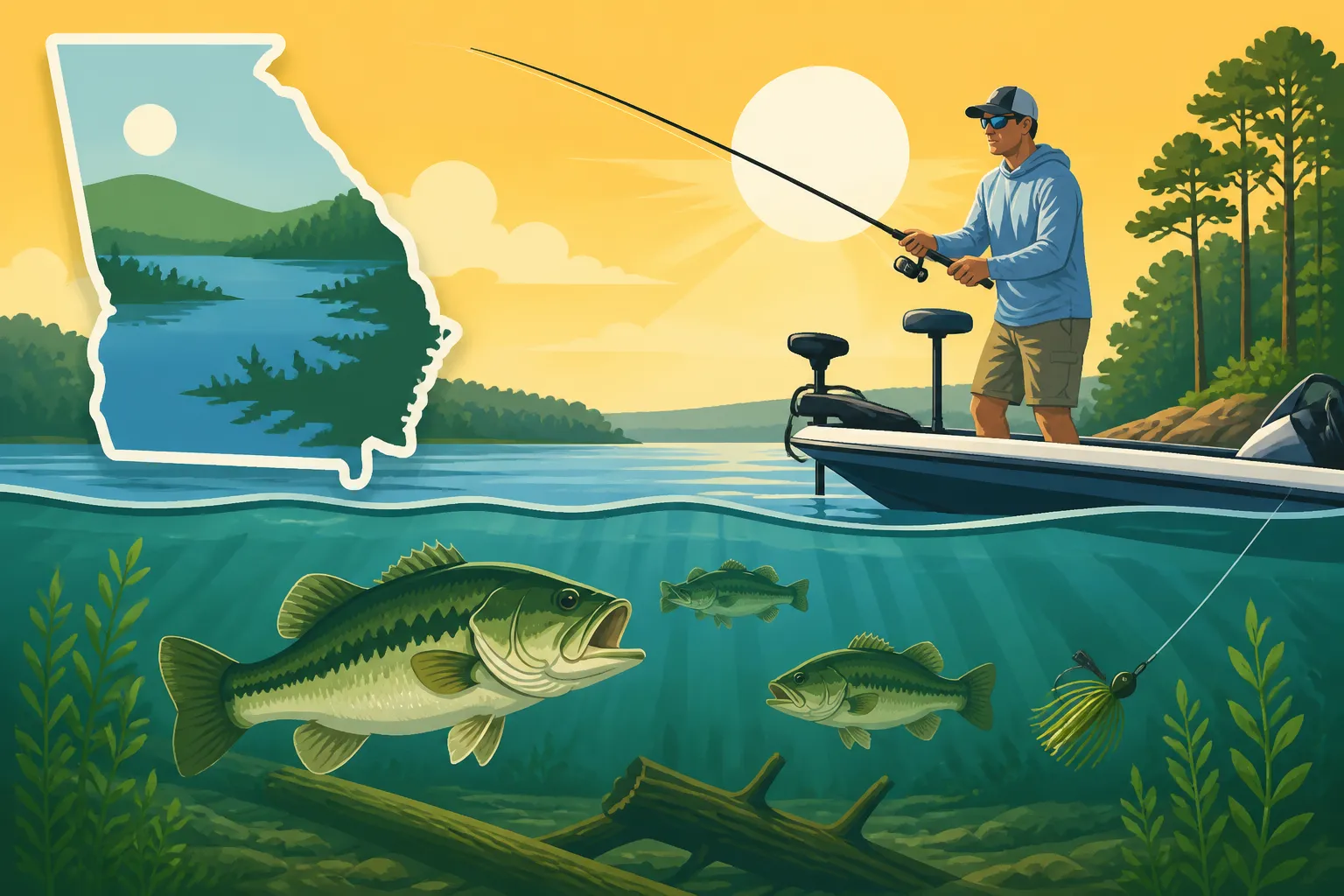
Our beloved largemouth bass can be a real challenge in the summer heat. While some will move deep, relating to ledges and brush piles around the thermocline, others will stay shallow but become extremely nocturnal or relate to dense, heavy cover that provides deep shade and slightly cooler water.
- Deep Water Bass: For these fish, look for them schooled up on offshore humps, deep points, and submerged timber at depths of 15-30 feet, depending on the lake. Jigging spoons, deep-diving crankbaits (think something like a Strike King 6XD or a Rapala DT Series), football jigs, and shaky head worms are excellent choices. Present these baits right on the bottom or slowly retrieve them through the suspended schools.
- Shallow Water Bass (Early/Late/Night): These fish become much more active during low light conditions. At dawn and dusk, topwater lures like frogs, poppers, and walking baits can be incredibly effective around docks, lily pads, and shoreline cover. During the day, they'll bury themselves in the densest shade possible—under thick mats of grass, beneath overhanging trees, or deep under boat docks. Flipping and pitching jigs or heavy Texas-rigged worms into this cover is your best bet. Remember, patience is key here, as bites can be subtle. If you’re fishing Lake Lanier, you might find specific tips in our Lake Lanier Fishing Guide, Georgia.
Striped Bass and Hybrid Striped Bass Tactics
Stripers and hybrids are built for open water and will often suspend in huge schools over deep main lake channels, chasing baitfish. Summer is prime time for deep-water striper action.
- Live Bait is King: Downlining live bait, especially blueback herring or shad, is arguably the most effective method for summer stripers. Use your fish finder to locate schools of bait and the stripers feeding below them. Then, drop your live bait right into the strike zone. Freelines are also effective when stripers are busting bait on the surface early in the morning.
- Trolling: For covering water and finding active fish, trolling with umbrella rigs, lead core line, or planer boards with deep-diving crankbaits or bucktail jigs can be incredibly productive. Vary your depths until you find where the fish are holding. Many anglers rely on specific brands of trolling motors and fish finders, which can be found readily on Amazon, to execute these techniques. For more specialized techniques, look into Deep Water Techniques for Striped Bass.
- Topwater Action (Early Morning): Just like largemouth, stripers and hybrids will often push bait to the surface at dawn and sometimes dusk. Have a big topwater plug or a fluke ready to cast into these frenzies. The action can be explosive! Our guide on Lake Oconee's Hybrid Striped Bass Fishery offers excellent specific advice for this species.
Crappie and Catfish
These species also adapt to the summer heat, offering different opportunities.
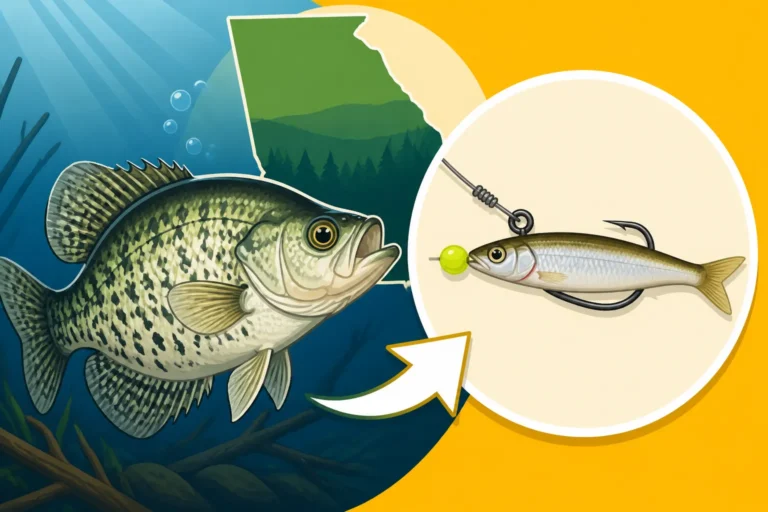
- Crappie: Black and white crappie will usually move to deeper, cooler water in summer, often congregating around brush piles, submerged timber, or bridge pilings that extend into the thermocline. Spider rigging with multiple rods, presenting live minnows or small jigs (1/16 to 1/8 oz) at various depths, is a common and effective technique. Look for them around 15-25 feet, but adjust based on your electronics. Vertical jigging or tightlining directly over brush piles you've marked can also be very productive. Check out our Best Crappie Lakes in Georgia for specific lake recommendations.
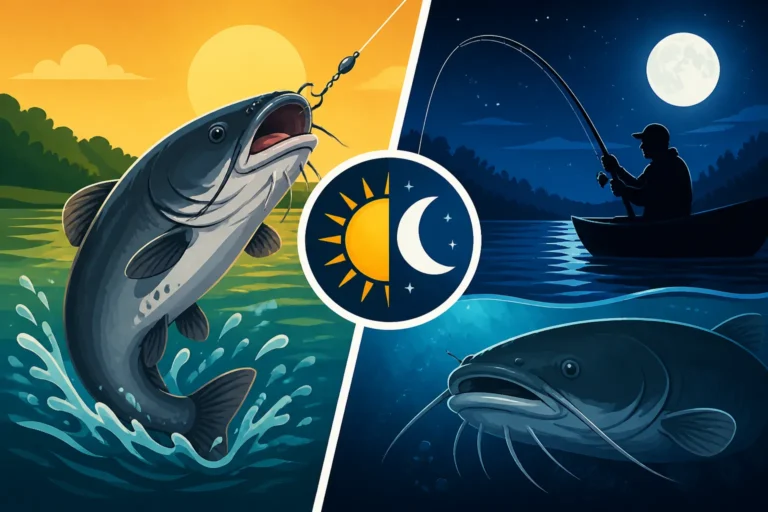
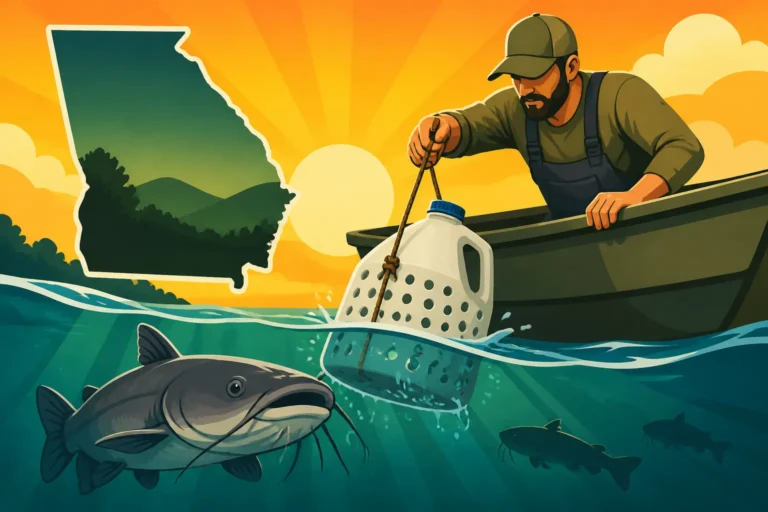
- Catfish: Channel, blue, and flathead catfish are much more tolerant of warmer water and lower oxygen than other species, but even they will seek comfort. During the day, they often move to deeper holes, creek channels, or hang out in dense cover like log jams. At night, they become much more active and will often move shallower to feed. Bottom fishing with a variety of baits—cut bait, chicken livers, stink baits, or even hot dogs—is standard. Look for them in areas with current, like river channels entering a lake, or around deeper structures. Night fishing for catfish can be phenomenal; you'll want to read up on Night Fishing Techniques for Catfish to really dial it in.
| Species | Preferred Summer Depth (Avg.) | Key Structure/Cover | Best Summer Baits/Lures | Prime Time |
|---|---|---|---|---|
| Largemouth Bass | 15-30 ft (Deep) / 5-15 ft (Shallow Cover) | Ledges, Humps, Submerged Timber, Docks | Deep-diving Crankbaits, Jigs, Shaky Heads, Topwater (low light) | Early/Late, Night (Shallow); Midday (Deep) |
| Striped/Hybrid Bass | 20-60 ft (Suspended) | Main Lake Channels, Humps | Live Herring/Shad, Umbrella Rigs, Large Topwater (low light) | Early/Late, Night |
| Crappie | 15-25 ft | Brush Piles, Submerged Timber, Bridge Pilings | Live Minnows, Small Jigs (1/16-1/8 oz) | Early/Late, Night |
| Catfish | Deep Holes, River Channels, Log Jams (Day); Shallower Flats (Night) | Deep Structure, Current Breaks | Cut Bait, Chicken Livers, Stink Baits, Live Bream | Night (most active), All Day (deep) |
Best Times to Fish During Summer
Forget sleeping in if you want to catch fish in summer! The sun is your enemy, and the best fishing windows are often short and sweet.
Early Mornings and Late Evenings
These are your absolute prime times. As the sun rises or sets, the light levels are lower, and air and water temperatures are at their coolest. This provides a brief window when fish, especially bass and stripers, will move shallower to feed more aggressively. Topwater action can be incredible during these periods. A buzzbait or a walk-the-dog style topwater lure can draw explosive strikes from fish that are otherwise lethargic.
The cooler temperatures also make it more comfortable for you, the angler! It's worth getting on the water well before sunrise or staying out until after sunset to maximize these windows. During the middle of the day, fish generally retreat to deeper, cooler water or hide in the densest shade, becoming much less active and harder to tempt.
Night Fishing Opportunities
Don't put your rods away after sunset! Night fishing on Georgia's big lakes can be incredibly productive for several species, especially bass, crappie, and catfish. The water cools down, boat traffic dies off, and many fish species feel much more comfortable moving into shallower areas to hunt.
- Bass: Look for bass around lighted docks, bridge pilings, or shallow points adjacent to deep water. Black or dark-colored spinnerbaits, worms, jigs, and even topwater lures can be effective. The key is to fish slowly and deliberately.
- Crappie: Many anglers use submersible green lights to attract baitfish, which in turn attract crappie. Dropping small jigs or minnows under these lights can lead to fantastic catches.
- Catfish: As mentioned earlier, catfish become very active at night. Focus on deep channels transitioning to shallower flats or around areas with current. Use strong tackle, because you never know what kind of monster might bite!
Remember to bring appropriate lighting for navigation and tying knots, and always let someone know your float plan when fishing after dark. Safety is paramount, and you might consider a good headlamp from Amazon to keep your hands free.
Gear and Techniques for Summer Success
To beat the heat and outsmart summer fish, you'll need to adjust your tackle box and techniques. It's not just about what you throw, but how you present it.
Deep-Diving Lures and Heavy Baits
When fish are deep, your lures need to get down to them. This means reaching for crankbaits with long bills designed to dive 20 feet or more, heavy jigs, and weighty soft plastics. Consider the size of your line as well; heavier fluorocarbon or braided line can help cut through the water and get your bait down faster.
- Crankbaits: Experiment with different diving depths and colors. Natural baitfish patterns (shad, bluegill) are often a good starting point. Vary your retrieve speed; sometimes a slow, steady retrieve is best, other times a stop-and-go can trigger a strike.
- Jigging Spoons: These metal lures are fantastic for vertical presentations to suspended schools of fish. Drop them down to the desired depth and twitch them, letting them flutter back down. They imitate dying baitfish perfectly.
- Carolina Rigs: This is a classic deep-water bass rig. A heavy sinker, a swivel, a leader, and then your soft plastic bait (worm, lizard, creature bait). The weight keeps the rig on the bottom, but your bait can float tantalizingly above the structure.
Having a good selection of these deep-water offerings on hand, perhaps stocked from your favorite online retailer like Amazon, will put you in a much better position to succeed.
Live Bait Rigs and Techniques
Sometimes, nothing beats live bait, especially for finicky summer fish. Whether you're targeting striped bass with herring or crappie with minnows, presenting live bait effectively is a game-changer.
- Downlining: For stripers and hybrids, this is essential. Use a heavy weight (1-3 oz) to quickly get your live bait (herring, shad) down to the desired depth, often right in the middle of a suspended school. Keep your line tight enough to feel the bait's struggles but loose enough not to impede its movement.
- Freelines: When fish are breaking the surface or in very shallow water early in the morning, a simple free-lined live bait with just a hook (and maybe a tiny split shot if you need a little casting weight) can be deadly.
- Slip Bobbers: For crappie over brush piles, a slip bobber rig allows you to easily adjust your depth and present a live minnow or jig precisely where the fish are holding. The bobber suspends the bait at a fixed depth above the cover, preventing snags.
Always make sure your live bait is fresh and lively. A good aerated bait tank is a worthwhile investment for summer fishing trips.
Electronics for Locating Fish and Structure
In summer, your electronics aren't just helpful; they're practically mandatory. Modern fish finders, particularly those with side imaging and down imaging, can drastically improve your success rate.
- Sonar (2D/Down Imaging/Side Imaging): Use 2D sonar to identify the thermocline and mark fish arches. Down imaging gives you a photographic view directly beneath your boat, showing brush piles, submerged timber, and fish clearly. Side imaging allows you to scan wide swaths of water to either side of your boat, revealing offshore humps, ledges, and schools of fish and bait that you might otherwise miss.
- GPS and Mapping: Mark productive spots (waypoints) on your GPS. This allows you to return to those exact deep brush piles or humps that held fish on previous trips. High-definition mapping chips can show detailed contour lines, helping you identify subtle changes in depth that hold fish. Learning How Water Temperature Affects Fish Behavior will make interpreting your electronics even more effective.
- Water Temperature Gauges: Many fish finders include this, but a separate, accurate water temperature gauge can help you confirm the thermocline depth and identify areas with slightly cooler surface temperatures, which can be critical. You can also monitor the Georgia's Trout Stocking Schedule Explained to see how water temps affect those programs.
Mastering your electronics takes practice, but the payoff in summer fishing is immense. It's the difference between blindly casting and precisely targeting fish. If you're looking to upgrade, our guide on the Best Fish Finders for Georgia Reservoir Fishing can help.
Safety Considerations for Summer Angling
Summer fishing is exhilarating, but the heat and sun can be dangerous if you're not prepared. Prioritizing safety is just as important as your fishing techniques.
Hydration and Sun Protection
Dehydration and sunburn are serious risks during long summer days on the water.
- Hydration: Bring plenty of water, and drink it consistently, even if you don't feel thirsty. Sports drinks with electrolytes can also be beneficial. Avoid excessive alcohol, which contributes to dehydration. Consider a good quality cooler, easily found on Amazon, to keep your drinks icy cold.
- Sun Protection: Wear a wide-brimmed hat, sunglasses that block UV rays, and long-sleeved, lightweight sun-protective clothing. Apply broad-spectrum sunscreen with at least SPF 30 frequently, especially on exposed skin. Don't forget your lips and ears! Even on cloudy days, UV rays can penetrate and cause damage.
- Take Breaks: Seek shade periodically, whether it's under a boat canopy, a bridge, or a shady cove. Give your body a chance to cool down. Early morning and late evening fishing also reduces your exposure to the harshest midday sun. For a comprehensive list, check out our Safety Gear Checklist for a Day on Lake Lanier.
Storm Awareness and Preparation
Summer in Georgia is synonymous with pop-up thunderstorms. These can develop quickly and bring dangerous lightning, heavy rain, and strong winds.
- Monitor Weather Forecasts: Before you head out, check the local weather forecast. While perfect sunny skies might be predicted, be aware of the chance of afternoon storms.
- Keep an Eye on the Sky: Even with a forecast, the best warning is often the sky itself. Watch for darkening clouds, sudden drops in temperature, or changes in wind direction. A marine weather app on your phone can provide real-time radar.
- Know Your Escape Routes: If a storm approaches, know where the nearest safe harbor or boat ramp is. Get off the water immediately. Lightning is a serious threat on open water. If you can't get to shore, get low in the boat and avoid contact with metal surfaces.
- Secure Loose Items: Before the weather turns, make sure all your gear, tackle boxes, and coolers are secured. High winds can easily blow items overboard.
Being prepared for weather changes ensures that your summer fishing adventure remains fun and safe for everyone on board.
Disclaimer
Please note that fishing regulations, conditions, and fish behavior can change. Always consult the latest Georgia Department of Natural Resources (DNR) guidelines for current fishing licenses, creel limits, and specific lake regulations before heading out. This guide provides general information and best practices.