How to Fish for Trout in a Mountain Stream
There's nothing quite like the crisp air, the sound of rushing water, and the thrilling prospect of a Georgia mountain trout pulling on your line. Yet, for many anglers, the idea of fishing these beautiful, often secluded, streams can feel a bit daunting. The water moves fast, the fish are notoriously wary, and it's certainly not like fishing a wide-open lake. If you've ever felt overwhelmed wondering how to approach these pristine waters, this guide is here to help you unlock the secrets to successfully fishing for trout in Georgia's stunning mountain streams.
Understanding Georgia's Mountain Trout and Their Habitat
Before you even think about casting a line, it's incredibly helpful to understand the trout themselves and the unique environments they call home in Georgia's mountains. These fish are masters of their domain, and knowing their habits and preferences will dramatically increase your chances of success.
The Trout Species You'll Encounter
In Georgia's cold, clear mountain streams, you'll primarily be targeting three species of trout: Rainbow, Brown, and our cherished native Brook Trout. Each has its own personality, and recognizing them can add to the joy of your catch. Rainbow trout are often the most commonly stocked and are known for their vibrant pink stripe and willingness to strike a variety of baits and lures. Brown trout, identifiable by their dark spots often haloed with lighter rings, are typically more elusive and can grow quite large, offering a formidable fight. Then there's the beautiful Brook Trout, Georgia's only native trout species, distinguished by its worm-like markings (vermiculations) on its back and colorful spots, including red ones often ringed with blue. These smaller, feisty fish prefer the coldest, highest elevation streams. Learning about these incredible fish in more detail can be a real game-changer for your strategy, so you might find our guide on Georgia Trout Fishing: Rainbow, Brown, and Brook Trout Explained especially useful.
These fish thrive in specific conditions. They need cold, oxygen-rich water, which is why they flock to the fast-moving, shaded mountain streams. They're also acutely sensitive to light and vibrations, making stealth an absolute must. Unlike bass that might cruise open waters, trout are structure-oriented, constantly seeking cover and ambush points. They spend their lives looking for food that drifts by, or seeking shelter from predators, both airborne and aquatic.
Reading the Water: Where Trout Hide
The biggest secret to finding trout in a mountain stream isn't about having the fanciest gear; it's about learning to "read the water." This means understanding where trout are most likely to hold, feed, and feel safe. Trout don't expend energy fighting strong currents if they don't have to; they prefer to sit in calmer water, waiting for food to drift past, darting out into the current when an opportunity arises.
Look for areas where the current slows down, such as behind large rocks, fallen logs, or in the deeper sections of pools. Undercut banks, where the stream has carved out a small cave under the shore, are classic trout hideouts. The convergence of currents, known as current seams, creates a natural food conveyor belt and is a prime feeding lane. Riffles – those shallow, rocky, fast-moving sections – are also important as they oxygenate the water and dislodge insects, providing a buffet for hungry trout. Even seemingly small pockets of calmer water adjacent to a fast run can hold a surprisingly large fish. Pay attention to these subtle changes; they are the trout's grocery stores and safe havens.
Gearing Up for Success in Georgia's Trout Streams
Stepping into a mountain stream requires a bit of specific gear to maximize your comfort, safety, and, most importantly, your success. You don't need to break the bank, but having the right tools for the job makes a huge difference.
Rods, Reels, and Line: Precision is Key
For mountain stream trout, finesse is almost always the name of the game. If you're a spin fisherman, an ultralight or light action spinning rod, typically between 5 to 6.5 feet in length, is ideal. This shorter length makes casting in tight, overgrown stream environments much easier, and the lighter action allows you to feel even the most subtle bites from these finicky fish. Pair it with a small spinning reel (a 500 or 1000 size is perfect) spooled with 2 to 4-pound test monofilament or fluorocarbon line. The lighter line is less visible to the trout and allows for more natural presentations. Many anglers find the sensitivity of fluorocarbon advantageous in these clear waters.
For fly anglers, a 3 to 5-weight fly rod, generally 7 to 8.5 feet long, is a versatile choice for most Georgia mountain streams. A shorter rod again helps with casting in tight quarters. Your fly reel should be appropriately matched to the rod weight, mainly serving to hold your line. A weight-forward floating fly line is a good starting point for presenting most dry flies and nymphs. A tapered leader and tippet, matched to the size of your flies and the clarity of the water, completes the setup. If you're looking to delve deeper into the specifics, check out our guide on Best Fly Rod for North Georgia Trout Streams.
Waders, Vests, and Essentials: Comfort and Convenience
Wading is often essential for accessing prime fishing spots and getting the best casting angles in mountain streams, so a good pair of waders and wading boots is a must. Breathable waders are great for warmer months, while neoprene might be preferred in colder conditions. Your wading boots should have excellent grip, as stream beds can be slick with algae-covered rocks. Felt soles offer superior traction on wet rocks, though rubber soles with studs are also popular.
Beyond waders, a fishing vest or a small chest pack or backpack is invaluable. These allow you to carry all your essentials – extra line, leaders, tippet, split shot, indicators, nippers, hemostats, and of course, your lures or flies – all within easy reach. Many anglers also appreciate a good pair of polarized sunglasses to cut the glare off the water, helping you spot fish and submerged structure. Don't forget bug spray, sunscreen, a hat for sun protection, and a small first-aid kit for those inevitable slips or scrapes. A small net with a rubberized mesh is also recommended for safely landing and releasing fish. You can find a huge variety of reliable gear, from waders to tackle, on platforms like Amazon, making it convenient to stock up before your next adventure.
Lures, Baits, and Flies: Matching the Hatch (or the Stock)
The choice of what to tie on your line can feel overwhelming, but keeping it simple often works best, especially when you're just starting out. For spin fishing, small inline spinners like Rooster Tails or Mepps Aglias are incredibly effective for both stocked and wild trout. Small spoons and even tiny soft plastics rigged on jig heads can also entice strikes. When using natural bait, red wigglers (worms), corn kernels, or PowerBait in various colors are perennial favorites, particularly for recently stocked trout. You can learn more about which options might work best in our guide to Best Bait for Stocked Trout.
Fly anglers have a vast array of choices, but focusing on a few key patterns for different situations will serve you well. For dry fly fishing, patterns like an Adams, Elk Hair Caddis, or Parachute Adams imitate common insects on the surface. For subsurface fishing, which is often more productive, a variety of nymphs like a Pheasant Tail, Hare's Ear, or Prince Nymph are excellent. Streamers like Woolly Buggers can imitate baitfish and attract larger, more aggressive trout. The key is often matching the size and general color profile of the natural food sources available in the stream. Remember, presentation often trumps pattern when it comes to fly fishing for trout. For a deeper dive, check out Best Lures for Stocked Trout.
Mastering Techniques for Mountain Stream Trout Fishing
Mountain stream trout fishing is less about brute force and more about finesse, stealth, and understanding how fish react to their environment. Developing a few key techniques will give you a significant advantage.
Casting and Presentation: Stealth and Accuracy
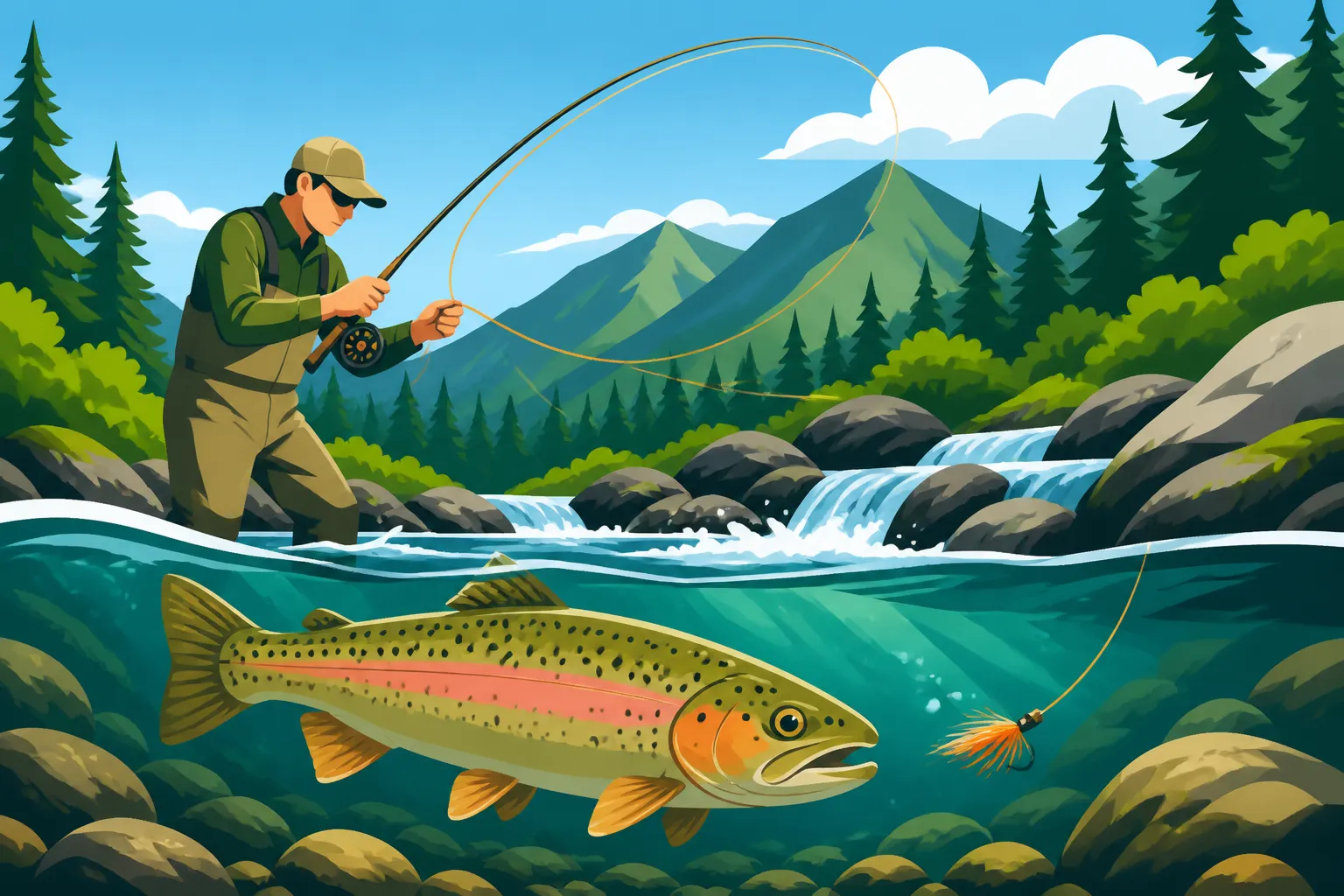
Trout in clear mountain streams are incredibly wary. They have excellent eyesight and are easily spooked by sudden movements, shadows, or clumsy casting. The most critical aspect of your presentation is stealth. Approach the stream quietly, keeping a low profile, and avoid casting your shadow over the water you intend to fish. Short, accurate casts are far more effective than long, wild ones. You're often fishing small pockets and runs, so precision is key to placing your lure or fly exactly where a trout might be holding.
When casting, aim to land your lure or fly gently, upstream of your target area, allowing it to drift naturally into the zone where you expect a fish to be. Think about how a natural insect or small baitfish would enter the water – softly, without a splash. A hard splash can send fish darting for cover. For spin fishermen, learning to "roll cast" or make short, underhand flips can be invaluable in tight quarters where overhead casting isn't feasible. Fly anglers will find mastering basic roll casts and accurate short-range presentations to be essential in the often-overgrown canopy of mountain streams.
Drifting and Dead-Drifting: Natural Presentations
The concept of a "dead drift" is paramount, especially for nymph and dry fly fishing, but it also applies to spin fishing with baits or small lures. It means allowing your bait or lure to drift completely free of any drag or unnatural movement, mimicking a natural food item floating downstream. Any unnatural drag, where your line pulls the lure or fly against the current, will immediately put off a wary trout.
For bait and lures, this often means casting slightly upstream and mending your line (making small adjustments to keep slack out without moving the lure) as it drifts, ensuring it moves at the same speed as the current. For fly fishermen, mastering the art of the dead drift with nymphs under an indicator, or allowing a dry fly to float unhindered, is a lifelong pursuit. It involves line management, mending, and often a lot of practice. The goal is always to present your offering as naturally as possible, letting the current do the work, making it irresistible to a trout waiting in ambush. Learning How to Spin Fish for Trout can really help you refine these techniques.
Approaching the Stream and Working Upstream
The single most effective strategy for fishing mountain streams is to work your way upstream. This offers several key advantages. First, trout naturally face upstream, waiting for food to drift down to them. By approaching from downstream, you're less likely to be seen by the fish you're targeting. Second, any sediment or debris you kick up while wading will drift downstream behind you, not into the water you're about to fish.
Move slowly and deliberately. Observe the water ahead of you, identifying potential holding spots before you cast. Walk around deeper pools or slow sections if possible, rather than wading through them, to avoid spooking fish. When you do wade, shuffle your feet and keep your movements minimal. Cast into likely spots, starting with the closest water and working your way further out. Always present your lure or fly upstream of the suspected fish, allowing for a natural drift into their strike zone. Repeat casts to the same spot, but change your angle or presentation slightly if you don't get a strike.
Seasonal Considerations and Conservation
Fishing for trout in Georgia's mountain streams is a year-round activity, but understanding seasonal nuances and embracing responsible angling practices are crucial for both your enjoyment and the health of these delicate ecosystems.
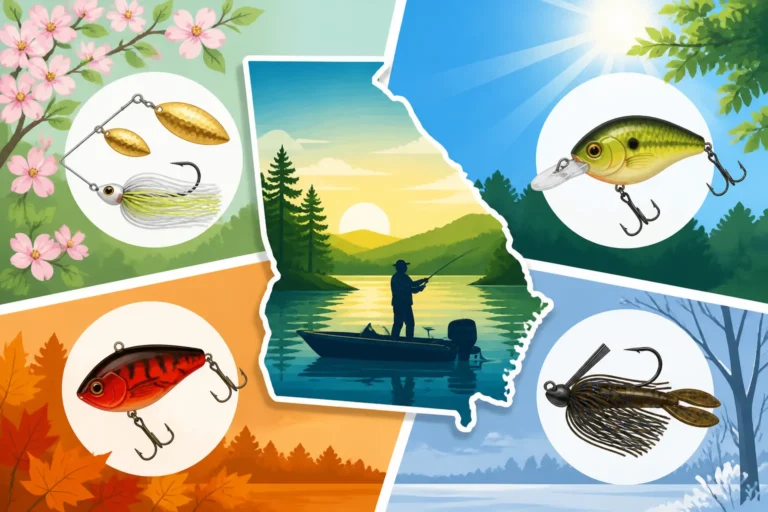
Best Times to Fish: Spring, Summer, Fall
Each season offers a unique experience for mountain trout fishing in Georgia.
- Spring: This is often considered prime time. As temperatures rise, insects become more active, triggering feeding frenzies. Streams are typically well-stocked, and trout are eager to bite. The water levels can be higher and colder due to snowmelt and spring rains, making good wading gear essential. It's a fantastic time to target hungry fish that are recovering from winter.
- Summer: Summer fishing requires a bit more strategy. As water temperatures increase, trout become less active during the heat of the day. Your best bet is to fish early in the morning or late in the evening when the water is cooler and the fish are more comfortable feeding. Seek out shaded stretches of stream and areas with higher elevation where water remains colder. Targeting these periods will often lead to more success.
- Fall: Autumn offers arguably the most beautiful backdrop for trout fishing, with vibrant foliage coloring the mountainsides. Water temperatures begin to cool, and trout become more active. This is an excellent time to target larger brown trout, which become more aggressive as they prepare for spawning. Late fall can see good nymph and streamer fishing as fish feed heavily.
- Winter: While less popular due to colder temperatures, winter can offer surprisingly good fishing, especially on milder days. Fewer anglers mean less pressure on the fish. Trout are often found in deeper, slower pools, conserving energy. A slower, deeper presentation with nymphs or bait can be very effective.
For dedicated trout anglers, exploring some of the Best Trout Streams in Georgia during different seasons will reveal their unique characteristics and fishing opportunities.
Practicing Catch and Release in Delicate Ecosystems
The allure of mountain stream trout fishing often goes hand-in-hand with a deep appreciation for nature. To preserve these fragile environments and ensure healthy fish populations for the future, practicing responsible catch and release is paramount. This is especially true for our native Brook Trout and larger, wild brown trout.
When you land a fish, handle it as little as possible. Keep the fish in the water while you remove the hook if you can. If you must lift it, use wet hands to avoid removing the fish's protective slime layer. Avoid squeezing the fish, particularly around its gills or belly. Use barbless hooks, or pinch down the barbs on your hooks, as this makes removal much easier and less damaging. Minimize the time the fish is out of the water; just enough for a quick photo, if desired. Before releasing, hold the fish gently facing into the current until it regains its strength and swims away on its own. Your careful actions ensure these beautiful creatures can continue to thrive. For a complete guide on how to do this correctly, refer to How to Catch and Release Trout Properly.
Respecting Regulations and Fellow Anglers
Georgia has specific regulations designed to manage its trout fisheries, and these can vary significantly from one stream to another. It is your responsibility to know and follow these rules. This includes understanding Georgia Trout Stream Size Limits by Creek, daily creel limits (how many fish you can keep), and whether a specific stream is designated as "catch-and-release only" or "delayed harvest." For many trout streams, you'll also need a basic Georgia fishing license, and often a separate Mountain Trout License Add-On in Georgia. Always double-check the current regulations before you head out; ignorance is not an excuse for violations.
Beyond regulations, extend courtesy to other anglers you encounter on the stream. Mountain streams can be intimate environments, and it's considerate to give others ample space. Don't crowd another angler's spot or wade directly upstream of them, potentially disturbing the water they are fishing. A simple nod or "hello" goes a long way. By respecting the rules and each other, we can all ensure that Georgia's mountain trout streams remain a cherished resource for generations of anglers to come.
Disclaimer
This article is for general informational purposes only and does not constitute professional advice. Laws, prices and regulations vary by location and change over time. Consult a qualified professional for guidance on your specific situation.