Kayak Fishing Gear Checklist for Georgia Anglers
There’s nothing quite like the feeling of paddling silently across a glassy Georgia lake at dawn, or navigating a winding river, knowing you’re reaching fishing spots most traditional boats can’t even dream of touching. But for many anglers, the idea of getting into kayak fishing can feel overwhelming. What gear do you really need? What’s essential, and what’s just a nice-to-have? This guide is going to walk you through a comprehensive checklist of kayak fishing gear for Georgia anglers, breaking down everything from your vessel to your tackle, ensuring you hit the water safely and effectively without feeling like you’re trying to pack your entire house into a tiny boat.
Why Kayak Fishing in Georgia is a Game-Changer
Kayak fishing has exploded in popularity in recent years, and for good reason, especially here in Georgia. Our state offers such a diverse range of waterways, from the vast expanses of our major reservoirs like Lanier and Oconee to the intimate, winding creeks of North Georgia and the sprawling coastal marshes. A kayak opens up possibilities that simply aren't available to anglers confined to bigger, louder boats, or even those stuck on the bank. It's a different kind of experience, one that many find incredibly rewarding.
The Allure of Quiet Waters and Hidden Coves
One of the biggest draws to kayak fishing is the stealth factor. Imagine drifting into a secluded cove, the only sound being the gentle dip of your paddle or the quiet whir of your pedal drive. This quiet approach allows you to get much closer to fish without spooking them, often leading to more bites and a more natural interaction with the environment. You can slip into shallow backwaters, tight channels, and dense cover that larger boats can’t access, giving you a competitive edge and opening up pristine, untouched fishing grounds.
Beyond the fishing itself, there’s a profound sense of peace and connection with nature that comes with kayak fishing. You’re low to the water, experiencing the landscape firsthand, feeling the subtle currents, and noticing the wildlife around you. It’s an immersive experience that many find incredibly therapeutic, a true escape from the hustle and bustle of everyday life. Plus, it's often a fantastic way to find quiet fishing spots away from the crowds, even on popular lakes.
Cost-Effectiveness and Accessibility Compared to Traditional Boats
Let's be real: traditional powerboats are a significant investment. Not just the initial purchase, but also the ongoing costs of fuel, maintenance, storage, and insurance. For many anglers, these expenses put boat ownership out of reach. Kayaks, on the other hand, offer a much more affordable entry point into on-the-water fishing. While high-end fishing kayaks can certainly be an investment, there are plenty of excellent, budget-friendly options that will get you out on the water effectively.
The accessibility factor is huge too. You don't need a massive truck or a specialized trailer for many kayaks. Smaller kayaks can be car-topped, and even larger ones can often be transported on a basic utility trailer or with a dedicated kayak trailer. This means less hassle getting to and from the water, often allowing you to launch from primitive access points that don't have boat ramps. For those who want to get on the water without breaking the bank or dealing with the complexities of larger vessels, kayak fishing is an undeniable winner.
A Unique Perspective on Georgia's Diverse Fisheries
From the mountain trout streams of North Georgia to the bass-filled reservoirs in the Piedmont and the redfish flats on the coast, Georgia’s fisheries are incredibly diverse. A kayak allows you to tailor your approach to each unique environment. You can effortlessly navigate the tight bends of a trout stream, covering water quietly and precisely. On a large lake, a pedal-drive kayak can help you cover significant distances and maintain position against wind and current while you focus on casting for Largemouth Bass Fishing in Georgia: The Complete Species Guide or Striped Bass and Hybrid Striped Bass in Georgia Waters.
Along the coast, kayaks are phenomenal for poling through shallow marsh grass to target tailing redfish, or slipping into oyster creeks for speckled sea trout. This versatility is what makes kayak fishing so appealing in a state like Georgia. It's not just a niche activity; it's a legitimate, highly effective way to pursue nearly every fish species our waters have to offer. You get an intimate understanding of the water you're fishing, seeing the structure and cover from a unique, low-to-the-water vantage point.
Essential Kayak and Propulsion Choices
The kayak itself is, naturally, the first piece of the puzzle. It's your vessel, your floating fishing platform, and choosing the right one can make all the difference in your comfort, stability, and fishing success. There's a wide world of kayaks out there, each designed with different purposes in mind, so let's narrow it down for fishing in Georgia.
Choosing the Right Kayak Type for Georgia Waters
When it comes to fishing kayaks, you're generally looking at sit-on-top (SOT) models. These are incredibly popular for fishing because they offer excellent stability, are easy to get in and out of, and drain water easily through scupper holes. They also provide ample deck space for gear, which is crucial for anglers. Beyond SOTs, there are a few sub-categories to consider:
- Recreational Fishing Kayaks: These are often shorter (10-12 feet), lighter, and more budget-friendly. They're great for smaller lakes, ponds, and calm rivers where you don't need to cover vast distances. They're also easier to transport and store. If you're just starting out or primarily fish smaller bodies of water, this might be a great fit.
- Performance Fishing Kayaks: These are typically longer (12-14+ feet), wider, and often rigged with more features like built-in rod holders, tackle storage, and transducer mounts for fish finders. They offer better tracking, speed, and stability for standing to cast, making them ideal for larger lakes and rivers where you might encounter chop or need to cover more ground. These are the workhorses for serious kayak anglers.
- Specialty Kayaks: This category includes models designed for specific purposes, like river kayaks with enhanced maneuverability, or ultra-stable models built for standing and sight fishing. For Best Kayak for Fishing Georgia's Trout Streams, you might even consider a more nimble, traditional sit-in touring kayak for easier paddling in currents, though they offer less storage and stability for landing bigger fish.
Consider the types of water you'll mostly be fishing. Are you primarily on quiet ponds for Bream and Sunfish Guide for Georgia Anglers? Or are you planning to tackle the wide-open waters of Lake Lanier for Best Spots for Bass Fishing on Lake Lanier? Your primary target environment will heavily influence your kayak choice. You can find a vast selection of these at outdoor retailers like Bass Pro Shops or online platforms such as Amazon, giving you plenty of options to compare features and prices.
Paddle Power vs. Pedal Drives: What's Best for You?
This is one of the biggest decisions you'll make when selecting a fishing kayak. Both paddle and pedal drive systems have their distinct advantages:
- Paddle Kayaks: The traditional method, paddle kayaks are generally lighter, more affordable, and require no complex mechanical maintenance. They're excellent for navigating shallow waters, tight spaces, and areas with dense vegetation. For pure simplicity and a full upper-body workout, paddling is the way to go. However, keeping a paddle in your hands means you often have to stop fishing to reposition, which can be a minor frustration when trying to stay on a hot bite.
- Pedal Drive Kayaks: These systems, like those offered by Hobie or Old Town, use your legs to power a propeller or fin system, leaving your hands free for casting, reeling, and managing your tackle. This "hands-free" fishing is a game-changer for many, allowing for constant trolling, precise boat control in wind or current, and quick adjustments without putting your rod down. They are typically heavier, more expensive, and require more maintenance, but the efficiency and freedom they offer are unparalleled for many anglers, especially on larger bodies of water where covering distance is important.
Think about your budget, physical capabilities, and fishing style. If you love the idea of continuous casting and trolling, a pedal drive is probably worth the investment. If you prefer simplicity, a lower price point, and don't mind putting the paddle down occasionally, a traditional paddle kayak will serve you well. Many anglers also appreciate the exercise that comes with paddling, too!
Safety Considerations and Essential Accessories
No matter which kayak you choose, safety should always be your top priority. Accidents can happen quickly on the water, and being prepared is key.
- Personal Flotation Device (PFD): This is non-negotiable. Always wear a Coast Guard-approved life jacket when you're on the water in your kayak. Modern fishing PFDs are designed for comfort, with plenty of pockets and attachment points for gear, so there's no excuse not to wear one. The best life jacket is the one you actually wear. For more specific information, check out Best Life Jacket for Kayak Fishing and Georgia Life Jacket Laws for Boaters and Kids.
- Paddle Leash: Even if you have a pedal drive, always carry a paddle as a backup. A paddle leash keeps your paddle attached to your kayak, preventing it from floating away if you drop it or capsize.
- Whistle or Air Horn: Required safety equipment, a loud signaling device is crucial for alerting other boaters or rescuers in an emergency. You can find small, inexpensive whistles that clip right onto your PFD. Remember, Do You Need a Whistle on a Kayak in Georgia? – yes, you absolutely do!
- Dry Bag: Protect your electronics, wallet, keys, and other valuables from water. A good dry bag is essential for any kayak trip, big or small. Best Dry Bag for Kayak Fishing Trips can provide more detail on choosing one.
- First-Aid Kit: A small, waterproof first-aid kit is always a good idea, for everything from hook punctures to minor scrapes.
- Headlamp or Navigation Lights: If you're on the water before sunrise or after sunset, navigation lights are legally required and crucial for visibility. A headlamp is also invaluable for rigging up in the dark or making minor repairs.
- Anchor System: Especially important on windy days or in current, an anchor system helps you stay put on a fishing spot. We'll dive into this more later, but it's a key safety and fishing aid.
Must-Have Fishing Tackle for Your Kayak
Now that we’ve got your ride sorted and safety covered, let's talk about the fun stuff: the fishing gear itself! Kayak fishing requires a slightly different approach to tackle than bank fishing or powerboat fishing, mainly because space is at a premium. Organization and efficiency are key.
Rods, Reels, and Lines for Kayak Anglers
When you're crammed into a kayak, every inch counts. This often means opting for shorter rods that are easier to handle and maneuver without constantly hitting your paddle, your other gear, or the water.
- Rod Length and Action: For most freshwater applications in Georgia, rods in the 6'6" to 7' range are ideal. Shorter rods (around 6'0") are great for close-quarters casting in tight brush, while longer rods (up to 7'6") might be preferred for open-water applications like casting long distances or trolling. Medium to medium-heavy action rods will cover most of your bass, crappie, and even smaller striped bass needs. For trout fishing in streams, a lighter action rod around 5'6" to 6'6" is perfect.
- Reel Size: Spinning reels in the 2000-3000 size range are versatile and handle most freshwater species. For baitcasting, a low-profile reel is generally preferred for its comfort and ease of use. Ensure your reels are well-maintained, as they will inevitably get splashed more often in a kayak.
- Line Choices: A good braided line (10-30 lb test) with a fluorocarbon leader (8-20 lb test) is a fantastic all-around setup for Georgia. Braid offers sensitivity and strength, while fluoro leaders provide invisibility and abrasion resistance. Keep a spool of extra line on hand for re-spooling as needed. For more guidance, check out Best Rods and Reels for Georgia Fishing.
It’s always a good idea to bring at least two rod and reel setups: one primary and one backup or one rigged for a different technique or bait. This saves you from re-tying constantly and provides a fallback if a rod gets damaged.
Tackle Storage and Organization in a Small Space
This is where kayak fishing really demands some strategic thinking. You can't just toss a huge tackle box in the boat and hope for the best. Everything needs to be compact, accessible, and secure.
- Tackle Management Systems: Look for waterproof tackle boxes or bags specifically designed for kayak fishing. Brands often sell soft-sided bags with multiple utility boxes inside that fit perfectly into kayak hatches or behind the seat. Plano and other tackle companies make excellent systems that are durable and easy to organize. The key is to only bring what you think you'll use on that particular trip, rather than your entire collection.
- Soft-Sided vs. Hard Boxes: Soft-sided tackle bags are generally more forgiving in tight spaces and lighter. Hard boxes offer more protection, especially if they’re truly waterproof. A combination often works best: a small waterproof hard box for essential terminal tackle, and a soft-sided bag for larger lures and baits.
- Deck Storage: Many kayaks feature bungees and storage areas on the deck. Use these for items you need quick access to, but make sure everything is secured. A small, waterproof box for your phone, keys, and wallet can be bungee-corded to the deck within reach. When it comes to finding these efficient storage solutions, online retailers like Amazon offer a massive selection, as do dedicated outdoor stores like Bass Pro Shops.
Selecting Baits and Lures for Georgia's Targets
What you pack in your tackle box depends entirely on what you're targeting. However, for general Georgia fishing from a kayak, here are some versatile options:
- Bass: Soft plastics (worms, creature baits, flukes) rigged Texas-style are incredibly versatile for getting into cover without snagging. Small crankbaits, spinnerbaits, and ChatterBaits are also excellent for covering water. Topwater lures can be explosive during low light conditions.
- Crappie: Small jigs (1/16 to 1/8 oz) with curly tail grubs or hair jigs are deadly. Live minnows are also highly effective, so a small minnow bucket or livewell might be a consideration.
- Trout: Inline spinners (Mepps, Panther Martin), small spoons, and tiny soft plastic grubs are great for spin fishing. For fly fishing, a selection of nymphs, dry flies, and streamers will cover most situations.
- Catfish: A simple bottom rig with a weight and hook, baited with cut bait, chicken livers, or worms, is usually all you need.
Remember, less is often more when kayak fishing. Try to streamline your bait selection to proven producers for the species and conditions you expect to encounter.
Personal Gear and Safety First
Beyond the kayak and fishing tackle, there’s a whole host of personal gear that will make your trip more comfortable, enjoyable, and most importantly, safe. Don’t skimp on these items; they can truly make or break your day on the water.
Life Jackets: Your Non-Negotiable Safety Item
Let's reiterate: wearing a PFD (Personal Flotation Device) is absolutely paramount when kayak fishing. It's not just a recommendation; in many situations, it's the law, especially for certain age groups or in certain types of boats. For example, Life Jacket Requirements for Kids Under 13 in Georgia are very specific.
- Comfort and Fit: Modern fishing PFDs are a far cry from the bulky, uncomfortable vests of yesteryear. Look for ones with mesh backs to stay cool, multiple pockets for small tackle or tools, and adjustable straps for a snug, non-restrictive fit. Some even have hydration sleeves. The key is to find one that you forget you’re wearing, so you'll actually keep it on all day.
- Inflatable PFDs: For adults, inflatable PFDs offer maximum freedom of movement. They are compact and only inflate when activated (either manually or automatically upon immersion). However, they require regular inspection and maintenance, and some regulations might have specific requirements for their use. Always choose a Coast Guard-approved model.
- Visibility: Opt for bright colors like orange, yellow, or lime green for increased visibility to other boaters, especially on larger, busy lakes.
Never think of your PFD as something you might need; think of it as an integral part of your fishing attire. If you go overboard, or if conditions quickly change, you'll be thankful you have it on.
Apparel for Comfort and Protection on the Water
Being exposed to the elements all day in a kayak means you need to dress smartly. Sun, wind, and sudden rain showers are common in Georgia.
- Sun Protection: This is huge. Long-sleeved, lightweight, quick-drying shirts with UPF (Ultraviolet Protection Factor) ratings are essential. A wide-brimmed hat, sunglasses (polarized are a must for spotting fish and seeing submerged structure), and plenty of sunscreen will protect your skin from Georgia’s intense sun. Don't forget lip balm with SPF.
- Layers: Even on warm days, mornings can be cool, and afternoons can bring pop-up thunderstorms. Dressing in layers allows you to adapt to changing conditions. A waterproof and windproof jacket is a smart addition, even in summer.
- Footwear: Water shoes, sandals with good grip, or quick-drying athletic shoes are generally preferred over heavy boots. Your feet will get wet, so choose something that drains well and protects you from hooks, sharp rocks, or oyster shells if you're fishing saltwater.
- Rain Gear: A lightweight, packable rain jacket and pants can save your day if an unexpected shower rolls in. Being wet and cold in a kayak is a miserable experience.
Essential Safety, Navigation, and Communication Tools
Beyond your PFD, a few other items are critical for your safety and peace of mind on the water.
- Knife or Line Cutters: Essential for cutting fishing line, freeing snags, or even in an emergency, cutting yourself free from entangled lines or ropes. Keep it easily accessible, ideally on your PFD.
- Pliers/Forceps: For hook removal, crimping split shot, or adjusting lures. Again, keep these handy.
- GPS/Fish Finder: While not strictly safety equipment, a reliable GPS can be a lifesaver if you get lost or disoriented, especially on large lakes or in foggy conditions. Many modern fish finders include GPS charting capabilities. Best Fish Finders for Georgia Reservoir Fishing is a good resource here.
- Cell Phone: Stored in a waterproof case or dry bag, your cell phone is your primary communication device. Ensure it's fully charged. Consider a portable power bank for longer trips.
- VHF Radio (Coastal/Large Lakes): For saltwater or very large freshwater lakes, a waterproof handheld VHF radio provides a more reliable line of communication than a cell phone, especially for reaching the Coast Guard or other boaters in an emergency.
- Signaling Mirror/Flares: For more remote trips or coastal adventures, a signaling mirror can catch the attention of aircraft or distant boats. Emergency flares are another option.
- Anchor: As mentioned before, an anchor helps you maintain position. For safety, it keeps you from drifting into dangerous areas or losing a key fishing spot. We'll detail this more below.
A good "go bag" with these essentials, always packed and ready, can simplify your preparation and ensure you never forget something critical.
Rigging Your Kayak for Optimal Performance
Once you have your kayak and essential gear, the next step is to rig it up for maximum fishing efficiency. This is where you customize your vessel to become a true fishing machine, making sure everything you need is within easy reach and securely stowed.
Mounts and Electronics: Fish Finders and GPS
Having a good fish finder and GPS unit on your kayak can be a total game-changer, especially on Georgia's larger lakes and reservoirs. It transforms your guessing game into a strategic hunt.
- Choosing a Unit: Look for compact, kayak-friendly fish finders. Many units offer a combination of traditional sonar, DownImaging, and SideImaging, which can show you structure and fish directly beneath and to the sides of your kayak. GPS mapping capabilities are incredibly useful for navigating, marking waypoints (like brush piles or submerged humps), and finding your way back to the launch. Brands like Humminbird and Garmin offer excellent models tailored for kayak use.
- Mounting Solutions: You'll need a stable mounting system. Railblaza and Scotty are popular brands that offer versatile track-mount or permanent-mount options for transducers, display units, and even rod holders. These allow you to easily attach and detach your electronics. For the transducer, consider an in-hull mount (shooting through the kayak hull) for protection, or an external mount that deploys into the water.
- Power Source: Small 12V sealed lead-acid (SLA) or lithium batteries are typically used to power kayak electronics. Ensure your battery is properly protected in a waterproof box and secured within your kayak. Always carry a fully charged battery and consider a spare for longer trips.
Having a clear picture of what's beneath the surface can save you countless hours of blind casting, allowing you to focus on productive areas where fish are likely holding.
Rod Holders and Storage Solutions
Having your rods secure and accessible is crucial. You don't want them sliding around or, worse, going overboard.
- Flush Mount vs. Adjustable Rod Holders: Most fishing kayaks come with at least one or two flush-mount rod holders behind the seat. These are great for safely transporting rods or for trolling. For active fishing, an adjustable rod holder mounted to a track system or a permanent base near the cockpit is invaluable. These allow you to orient your rod exactly where you need it for casting or holding it while you paddle or re-tie. Scotty and Ram Mounts are excellent choices for adjustable rod holders.
- Horizontal Rod Storage: Some kayaks have internal rod tubes or bungees on the deck to store rods horizontally, keeping them out of the way, especially when paddling through tight cover or when launching/landing.
- Milk Crates/Storage Bins: A simple milk crate or a purpose-built kayak fishing crate (often available at Bass Pro Shops) placed in the stern well is a fantastic way to organize tackle boxes, a cooler, and extra gear. You can customize these with PVC pipes for additional rod holders, pliers holders, and other accessories. They keep things contained and easily accessible.
- Anchor Trolley System: While not strictly rod storage, an anchor trolley allows you to deploy and retrieve your anchor from either the bow or the stern, without having to reach outside your kayak. This is a must-have for controlling your drift or holding position in current or wind.
Anchoring Systems for Kayak Anglers
An effective anchor system is critical for kayak fishing, allowing you to precisely position yourself on a spot, whether it's over a brush pile, a submerged rock pile, or a productive drop-off.
- Anchor Types:
- Grapple Anchor: A small, folding grapple anchor (1.5-3 lbs) is highly versatile for most bottom types in Georgia. Its tines can dig into mud, sand, or grab onto rocks.
- Drag Chain/Drift Anchor: For slowing your drift in windy conditions or current, a drag chain or a drift anchor (also known as a drift sock or sea anchor) is very effective. It creates drag in the water, allowing you to present baits more naturally over a longer stretch.
- Stake Out Pole: For very shallow water (especially in coastal marshes or calm ponds), a stake-out pole can simply be pushed into the bottom to hold your position quietly.
- Anchor Line: Use strong, durable anchor line, preferably floating rope, at least three times the maximum depth you expect to fish. Mark your line with depth markers if you want to be precise.
- Anchor Trolley: As mentioned above, an anchor trolley is an absolute must-have for safety and convenience. It's a simple rope system that runs along the side of your kayak, allowing you to move your anchor attachment point from bow to stern. This lets you orient your kayak to the wind or current, keeping you in the optimal casting position without having to manually move the anchor or your kayak. This makes handling your Best Kayak Anchor for Georgia Rivers much easier and safer.
Maintenance and Transport for Your Kayak Setup
Investing in good kayak fishing gear means you'll want to take care of it so it lasts for years of adventures on Georgia's waters. Proper maintenance and safe, easy transport are the final pieces of the puzzle.
Keeping Your Kayak and Gear in Top Shape
A little bit of care goes a long way in extending the life of your kayak and all your expensive electronics and tackle.
- Rinse After Every Trip: This is especially critical if you've been in saltwater, but even freshwater contains sediment and algae that can build up. A quick rinse with fresh water, especially on your kayak, paddle, and PFD, will prevent corrosion and keep things clean. Pay attention to pedal drive units, rinsing them thoroughly to remove grit.
- Dry Completely: Before storing, ensure everything is thoroughly dry to prevent mildew, mold, and corrosion. Open all compartments on your kayak and let it air out. Hang your PFD in a well-ventilated area.
- Lubricate Moving Parts: For pedal drives, rudder systems, and reels, regular lubrication according to the manufacturer's instructions is crucial. Saltwater requires even more frequent attention.
- Store Properly: Store your kayak out of direct sunlight to prevent UV damage, which can degrade plastic over time. Store it on its side, upside down, or on a dedicated kayak rack to prevent hull deformation. Store electronics in a dry, temperature-controlled environment.
- Inspect Regularly: Before and after each trip, take a few minutes to inspect your kayak for cracks, loose screws, or worn lines. Check your PFD for any damage to straps or buckles. Addressing small issues quickly can prevent them from becoming major problems later.
Transporting Your Kayak: Racks, Carts, and Trailers
Getting your kayak to and from the water should be as painless as possible. There are several options, depending on your kayak's size and your vehicle.
- Car Toppers/Roof Racks: For lighter, smaller kayaks, simple foam blocks or dedicated roof rack systems (J-cradles, stackers, or saddles) can secure your kayak to your vehicle's roof. Always use good quality straps and bow/stern tie-downs for safe transport, especially on Georgia's highways.
- Truck Bed Extenders: If you have a pickup truck, a bed extender can support the stern of a longer kayak while the bow rests in the bed. This is a convenient option for many.
- Kayak Carts/Dollies: These are invaluable for getting your kayak from your vehicle to the water, especially at launch points without direct vehicle access. They take the heavy lifting out of the equation. Best Kayak Cart for Boat Ramp Launches could be a helpful read.
- Dedicated Kayak Trailers: For larger, heavier fishing kayaks, or if you transport multiple kayaks, a small utility trailer or a dedicated kayak trailer is often the easiest solution. These are typically low-profile and easy to load. Remember to check Georgia Boat Registration Requirements Explained for any trailers you might use.
Always ensure your kayak is securely fastened and won't shift during transit. A loose kayak on the highway is a serious hazard.
Pre-Trip Checks and Post-Trip Cleanup
Developing a routine for your kayak fishing trips will save you headaches and ensure you're always ready to hit the water.
-
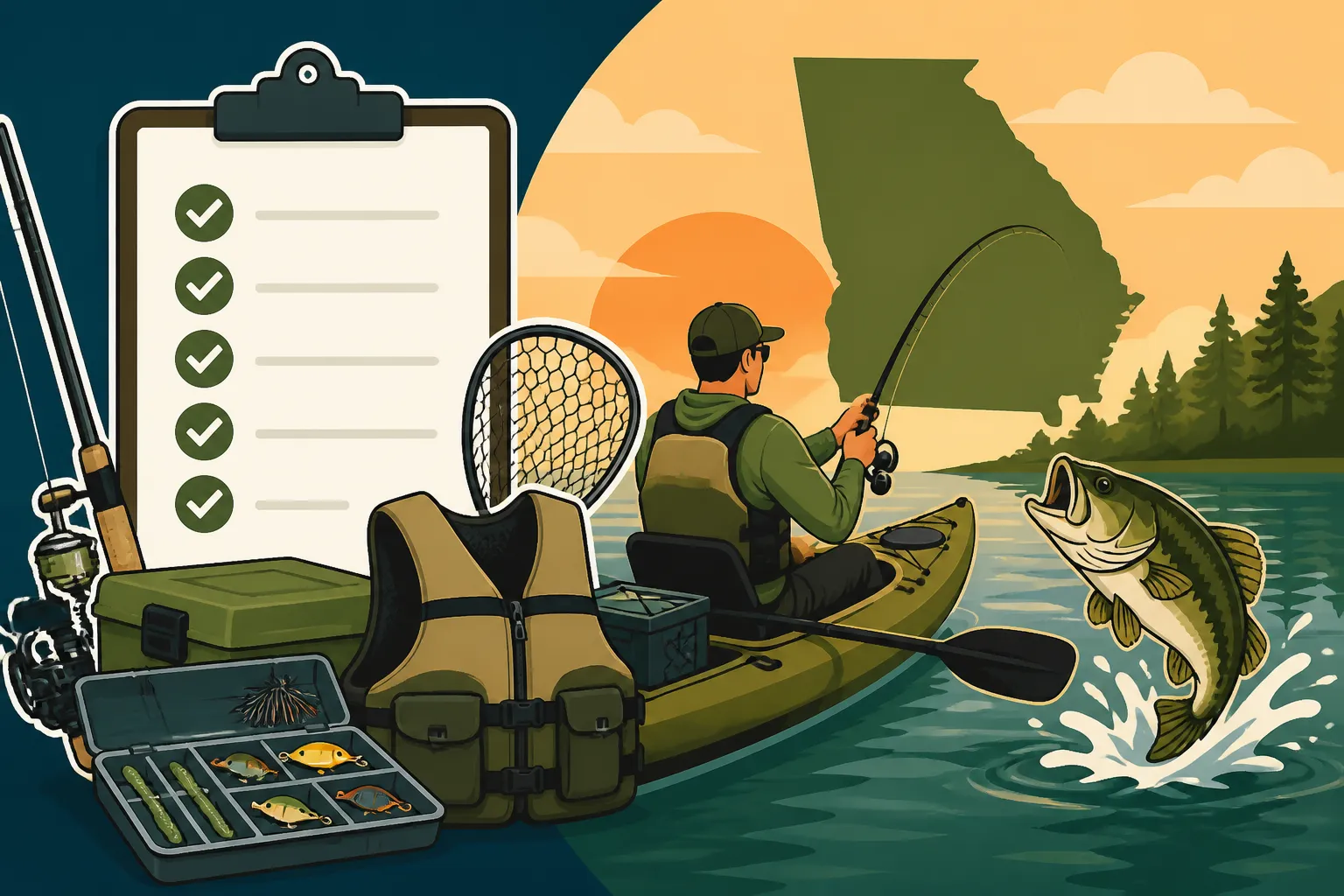
Pre-Trip Checklist: Before heading out, quickly run through a mental or physical checklist:
- Is your PFD in the kayak?
- Do you have your paddle and leash?
- Are all rods rigged and secure?
- Tackle box stocked with the right lures/baits?
- Electronics charged and mounted?
- Water, snacks, sunscreen?
- Phone in a dry bag?
- Fishing license (check out How to Get a Fishing License in Georgia)?
- First-aid kit?
- Anchor system ready?
-
Post-Trip Cleanup: As detailed above, a quick rinse, dry, and proper storage of your kayak and all gear will ensure everything is in prime condition for your next adventure. Taking care of your equipment means it will take care of you on the water.
Kayak fishing in Georgia is an incredibly rewarding experience, offering unparalleled access to pristine waters and thrilling fishing opportunities. With the right gear and a focus on safety, you'll be well-equipped to explore everything our beautiful state has to offer, one silent paddle stroke at a time.
Disclaimer
This article is for general informational purposes only and does not constitute professional advice. Laws, prices and regulations vary by location and change over time. Consult a qualified professional for guidance on your specific situation.