Best Trolling Motor for Georgia Bass Boats
As a passionate bass angler here in Georgia, I've heard my fair share of frustrations about trying to hold your boat in just the right spot, or quietly sneaking up on a promising cove when the wind and current just won't cooperate. It's a real buzzkill when you spook a school of bass because your main engine is too loud or you can't keep your boat pointed where you need it. That's why having the best trolling motor for your Georgia bass boat isn't just a luxury; it's an absolute game-changer, and this guide will help you understand what makes a good one and how to pick the right motor for your adventures on our incredible waterways.
Why a Trolling Motor is Non-Negotiable for Georgia Bass Anglers
Let's be honest, fishing without a trolling motor on a bass boat in Georgia is like trying to drive a nail with a sponge – you can do it, but it's going to be inefficient, frustrating, and probably won't give you the results you want. Our lakes and rivers are diverse, from the vast open waters of Lake Lanier with its deep channels and wind-swept points, to the winding, current-laden stretches of the Flint River. Each presents unique challenges that a good trolling motor helps you conquer.
Silent Approach and Stealth Fishing
One of the biggest advantages of a trolling motor is its whisper-quiet operation. Unlike your roaring outboard, a trolling motor allows you to glide silently into shallow coves, along submerged timber, or near brush piles where bass love to hide. This stealth is absolutely crucial, especially in clear water lakes like Hartwell or on calm mornings when fish are easily spooked. You can approach a prime fishing spot without sending vibrations and noise through the water that warn the fish of your presence. Imagine slowly working a topwater lure along a lily pad line at dawn; the last thing you want is a loud engine disturbing the peace and sending those bass scattering. The ability to move quietly also allows you to make repeated passes over a productive area without alerting the fish. You can work every angle of a promising structure, ensuring you've covered it thoroughly before moving on.
Precise Boat Control and Positioning
Georgia's fishing often demands pinpoint accuracy. Whether you're trying to hold your position over a deep brush pile, navigate tight turns in a creek channel, or stay perfectly aligned with a current seam, a trolling motor gives you that essential control. Trying to do this with your main outboard is nearly impossible; it's just too powerful and clunky for fine adjustments. With a quality trolling motor, you can effortlessly adjust your boat's heading, move sideways, or hold steady against the wind and waves. This precision is especially vital when you're fishing vertical structures, flipping docks, or trying to hit a small target like a submerged stump. It allows you to stay focused on your casts and retrieves, rather than constantly fighting to keep your boat in the right spot. For those competing in tournaments, this level of control can mean the difference between landing a keeper and going home empty-handed. Many serious anglers consider their trolling motor to be as important as their Best Bass Boat for Georgia Tournaments.
Key Features to Look for in a Georgia Bass Boat Trolling Motor
When you're outfitting your bass boat for Georgia's waters, there are a few non-negotiable features you'll want in your trolling motor. Thinking through these aspects will ensure you get a unit that not only performs but stands up to the rigors of our diverse fishing environments. You're making an investment, so you want it to be the right one.
Thrust and Shaft Length: Power and Reach
Choosing the right amount of thrust is critical. Too little, and you'll be fighting the wind and current all day, especially on larger lakes like Lanier or the vast expanses of Clarks Hill. A good rule of thumb is to have at least two pounds of thrust for every 100 pounds of your boat's fully loaded weight (boat, gear, fuel, passengers). However, I always recommend going a bit higher than the minimum. You never want to be underpowered when a strong wind kicks up or you're trying to move quickly between spots. For most 18-21 foot bass boats, you're typically looking at 80 to 112 pounds of thrust, often requiring a 24V or 36V system.
| Boat Length (Feet) | Recommended Thrust (Lbs) | Voltage System (Typical) |
|---|---|---|
| Up to 17 | 55 – 70 | 12V |
| 17 – 19 | 70 – 80 | 24V |
| 19 – 21 | 80 – 100 | 24V or 36V |
| 21+ | 100 – 112+ | 36V |
Shaft length is just as important. You want the propeller to stay submerged even in choppy water. If your prop comes out of the water, it cavitates, losing thrust and making a racket. Measure the distance from the bow where the motor will be mounted to the waterline, then add about 20 inches to that measurement to account for waves and boat movement. A common mistake I see is anglers getting a shaft that's too short, leading to endless frustration. For most bass boats in Georgia, you'll likely need a 45-inch to 60-inch shaft, depending on your boat's freeboard. Longer shafts are always better if you fish big water or frequently encounter rough conditions.
GPS Integration and Spot-Lock Technology
This is where modern trolling motors truly shine and become an invaluable tool for Georgia anglers. GPS-enabled trolling motors, often featuring "Spot-Lock" or similar anchor-mode technology, are revolutionary. Imagine fishing a brush pile, and instead of constantly correcting your boat's position with your foot pedal, you press a button, and the motor automatically holds you right there, even against wind and current. This frees you up to focus 100% on fishing, making precise casts and working your Best Rod and Reel Combo for Largemouth Bass in Georgia without distraction.
Many high-end motors, like those from Minn Kota (with their i-Pilot and Spot-Lock) or Lowrance (with their Ghost and Anchor Mode), integrate seamlessly with your Best Fish Finder for Lake Lanier and chartplotters. This allows for advanced features like following a contour line, re-running a saved track, or navigating to waypoints with incredible accuracy. For bass anglers exploring deep structure or fishing specific points, this technology saves immense amounts of time and makes you a far more efficient angler. It's a game-changer for working those deep river ledges on the Chattahoochee or holding steady on a windy point on Lake Oconee.
Durability and Quiet Operation
Georgia's waters can be tough on gear, from the occasional stump strike to the constant exposure to sun and humidity. You need a trolling motor built to last. Look for robust construction, corrosion-resistant components, and a strong composite shaft that can flex without breaking. Brands like Minn Kota and Motorguide are known for their rugged reliability, and while they might be a larger initial investment, they often pay for themselves in longevity and consistent performance. When browsing options at a Bass Pro Shops, always feel the quality of the materials.
And we already touched on quiet operation, but it bears repeating. While most electric trolling motors are quieter than an outboard, some are specifically engineered for near-silent performance. Brushless motors, in particular, offer a quieter, more efficient, and longer-lasting option. The less noise you make, the more fish you're likely to entice, especially when fishing for skittish largemouth in shallow clear water. A quiet motor is crucial for stalking fish in calm conditions or making those critical approaches to docks and laydowns.
Choosing the Right Trolling Motor for Your Georgia Bass Fishing Style
Not all bass fishing is the same, and neither are all trolling motors. Your personal fishing style, the type of boat you run, and the specific waters you frequent in Georgia should all play a role in your decision. Let's break down some of the choices you'll face.
Bow-Mount vs. Transom-Mount
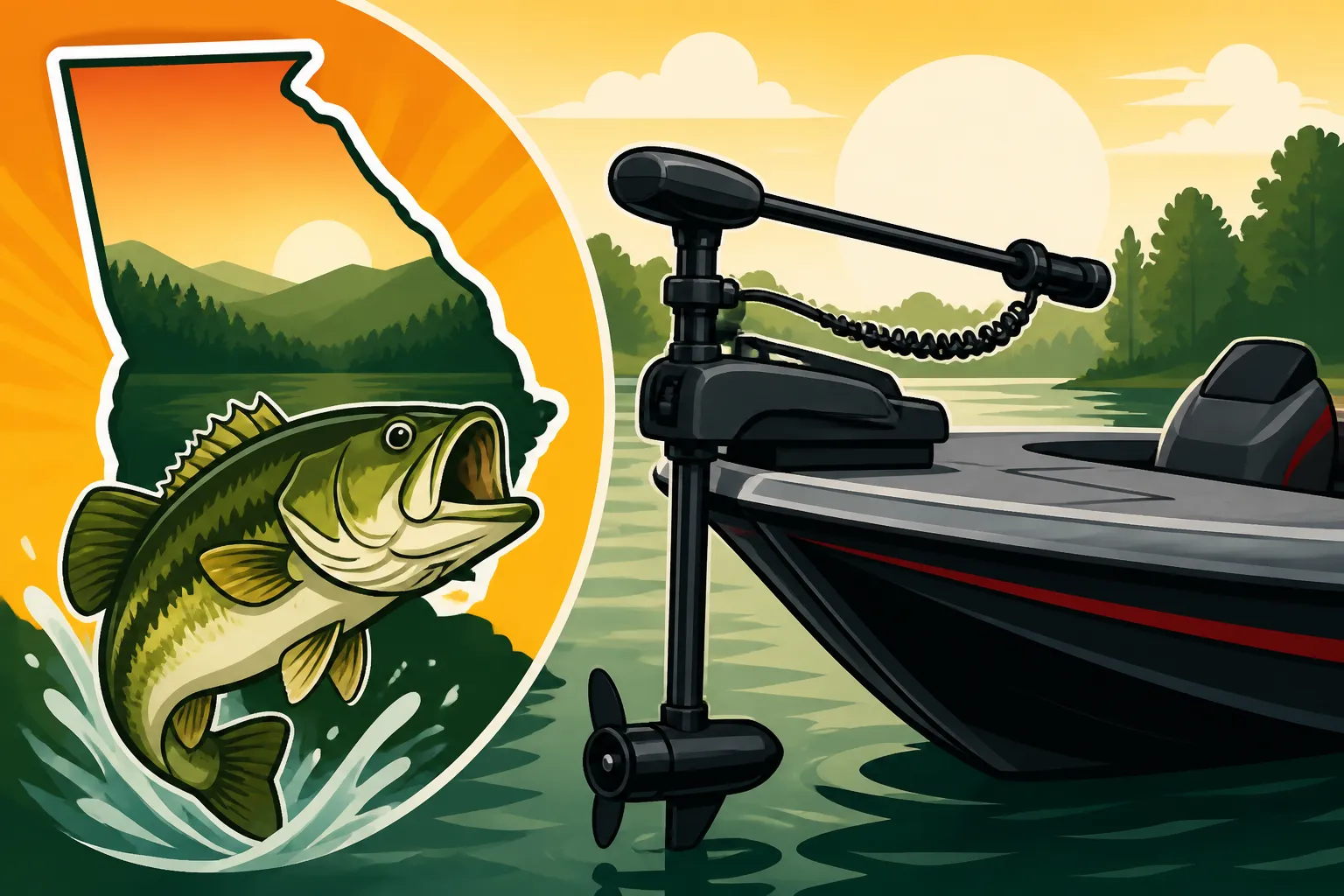
The vast majority of serious bass anglers opt for a bow-mount trolling motor, and for good reason. They pull your boat through the water, offering superior control and maneuverability, especially when you're navigating tight spots or battling wind and current. A bow-mount allows you to keep the bow pointed where you want to go, making casting and boat positioning much more intuitive. It also keeps the prop away from your main engine, reducing tangles if you're deploying multiple lines or fishing heavy cover. For a dedicated bass boat, a bow-mount is almost always the answer.
Transom-mount motors are typically smaller, less powerful, and designed for smaller boats like canoes, kayaks, or jon boats. While they can be an option for very small bass boats or as a backup, they push the boat from the stern, which makes steering less responsive and more challenging to maintain a precise heading. If your primary goal is serious bass fishing on larger Georgia lakes and rivers, invest in a quality bow-mount.
Cable Steer vs. Electric Steer
This is a fundamental choice that impacts your fishing experience directly.
-
Cable Steer: These motors, often seen on classic bass boats, use a physical cable connection between the foot pedal and the motor's lower unit. They offer immediate, direct response and a very "connected" feel to the motor. Many seasoned tournament anglers prefer cable steer for its instant feedback and precise control in heavy cover situations where split-second adjustments are critical. Think of punching mats or flipping docks – that instant control can be invaluable. However, they require a bit more physical effort to operate over a long day, and they don't typically offer the advanced GPS features of electric steer models. They are generally less expensive and have fewer electronic components, which some anglers appreciate for simplicity and reliability.
-
Electric Steer: These modern motors use an electric signal from the foot pedal (or a handheld remote) to control the motor. They are incredibly smooth, responsive, and often come packed with advanced features like Spot-Lock, integrated GPS, and even wireless remotes. Brands like Minn Kota's Ultrex or Humminbird's MEGA Live are popular examples, often found in conjunction with sophisticated Best Electronics for Bass Boats. The electric steer foot pedals are often lighter to operate, reducing fatigue over a long day. The trade-off is often a higher price point and a slightly less "instant" feel than cable steer, though modern electric steer motors have significantly closed this gap. For anglers who value technology, comfort, and the ability to hold a precise position with minimal effort, electric steer is the way to go. Consider what truly matters most to your fishing style: raw, direct control or advanced, hands-free features.
Installation, Power, and Maintenance Tips for Your Georgia Trolling Motor
Getting your trolling motor set up correctly and keeping it running smoothly is just as important as choosing the right one. A poorly installed or neglected motor can lead to endless headaches on the water.
Battery Considerations and Wiring
A powerful trolling motor demands a robust power source. You'll need deep-cycle marine batteries, specifically designed to discharge slowly over a long period. The voltage of your trolling motor (12V, 24V, or 36V) dictates how many batteries you'll need. A 24V system requires two 12V batteries wired in series, and a 36V system requires three. Always use high-quality battery cables of the appropriate gauge to minimize voltage drop and ensure efficient power delivery. Poor wiring can lead to reduced performance and premature battery failure.
Many anglers find that dedicating a specific set of batteries just for the trolling motor, separate from their main cranking battery, is the best approach. This ensures you always have enough power for both systems. When you're out exploring the Best Fishing Spots in Georgia, the last thing you want is a dead trolling motor battery stranding you far from the ramp. For more in-depth information, you might want to read up on Best Marine Battery for a Bass Boat and Best Trolling Motor Battery Setup. Always ensure your batteries are securely strapped down in your boat's battery compartment to prevent shifting and potential damage, especially when running through choppy water.
Charging and Maintenance
Regular charging is paramount for the longevity of your deep-cycle batteries. Invest in a good quality multi-bank marine charger that matches the voltage system of your trolling motor. This allows you to charge all your batteries simultaneously and optimally, preventing overcharging or undercharging which can damage them. Charge your batteries after every outing, even if you only used your trolling motor for a short time. This helps prevent sulfation and extends battery life.
Maintenance for the trolling motor itself is relatively simple but important. After each trip, especially if fishing in brackish or salty water (though less common for bass boats in Georgia, some rivers can have tidal influences), rinse the lower unit and propeller with fresh water. Regularly check the propeller for fishing line or debris wrapped around the shaft, as this can damage seals and lead to water intrusion. Keep all electrical connections clean and free of corrosion using dielectric grease. Periodically check mounting bolts for tightness. Inspect the shaft for any signs of damage or bending. Simple preventative care will keep your trolling motor humming along for years, ensuring you're always ready to tackle those Seasonal Bass Fishing Patterns in Georgia.
Disclaimer
This article is for general informational purposes only and does not constitute professional advice. Laws, prices and regulations vary by location and change over time. Consult a qualified professional for guidance on your specific situation.