Life Jacket Requirements for Kids Under 13 in Georgia
There's nothing quite like the joy of sharing your passion for fishing with the younger generation, but navigating the rules around boating safety, especially for kids, can sometimes feel like trying to untangle a particularly stubborn fishing line. It's easy to get confused about when exactly your little ones need to be wearing a life jacket and when they just need one readily available on the boat. This guide is here to clear up all that uncertainty, specifically focusing on Georgia's life jacket requirements for children under 13, so you can spend less time worrying and more time making memories on the water.
Understanding Georgia's Boating Safety Laws for Kids
When you head out onto Georgia's beautiful lakes and rivers, whether it's Lake Lanier for some bass fishing or a quiet stretch of the Altamaha, safety is always the top priority. And when kids are involved, those safety measures become even more crucial. It’s not just about avoiding a ticket; it’s about protecting the most precious cargo on your boat.
Why These Laws Exist: Protecting Our Youngest Anglers
Georgia's life jacket laws for children aren't arbitrary rules meant to make your life harder. They are born out of a deep understanding of water safety and the unfortunate realities of boating accidents. Young children, especially those under 13, often lack the swimming skills, strength, and quick decision-making abilities that adults possess. A sudden lurch of the boat, an unexpected wave, or a playful tumble can quickly turn dangerous if a child isn't wearing proper flotation. These laws act as a vital safeguard, providing immediate buoyancy and visibility in an emergency. Think of it as putting on a seatbelt in a car – it's a non-negotiable step to ensure their well-being, even if the ride seems calm. The goal is to prevent tragic outcomes and ensure that every family outing on the water is a safe and happy one.
Who the "Under 13" Rule Applies To
The specific rule we're diving into today focuses squarely on children under the age of 13. This age cutoff isn't random; it's generally recognized as the point where a child's physical development and cognitive awareness might allow for more independence in certain water situations. However, until they reach that milestone, they fall under stricter requirements. This means if you have a child who just celebrated their twelfth birthday, they're still included. If your neighbor's ten-year-old is joining you for a day of fishing, these rules apply to them too. It applies to any child under 13 on board your vessel, regardless of whether they are your own, a relative's, or a friend's. It's a simple, clear line in the sand to help keep all young passengers safe.
Overview of General Boating Safety in Georgia
While our focus today is on kids' life jackets, it’s important to remember that this specific rule fits into a larger framework of Georgia's comprehensive boating safety regulations. These laws cover everything from boat registration and operating requirements to rules about navigation lights and required safety equipment. For instance, did you know that everyone on board a personal watercraft (like a jet ski) needs to wear a life jacket, regardless of age? Or that certain boat operators need to have a Georgia Boater Education Card Requirements? These broader regulations are all designed to create a safer environment for everyone enjoying Georgia's waterways. It's always a good idea to familiarize yourself with the full scope of these rules before hitting the water, ensuring you're compliant and prepared for any situation.
Specific Life Jacket Requirements for Children Under 13
This is where the rubber meets the road, or perhaps more accurately, where the boat meets the water! Understanding the precise scenarios when a child under 13 must wear a life jacket is absolutely critical for every boater in Georgia. It’s not just about having one on board; it’s about having it on them at the right time.
When a Life Jacket Must Be Worn
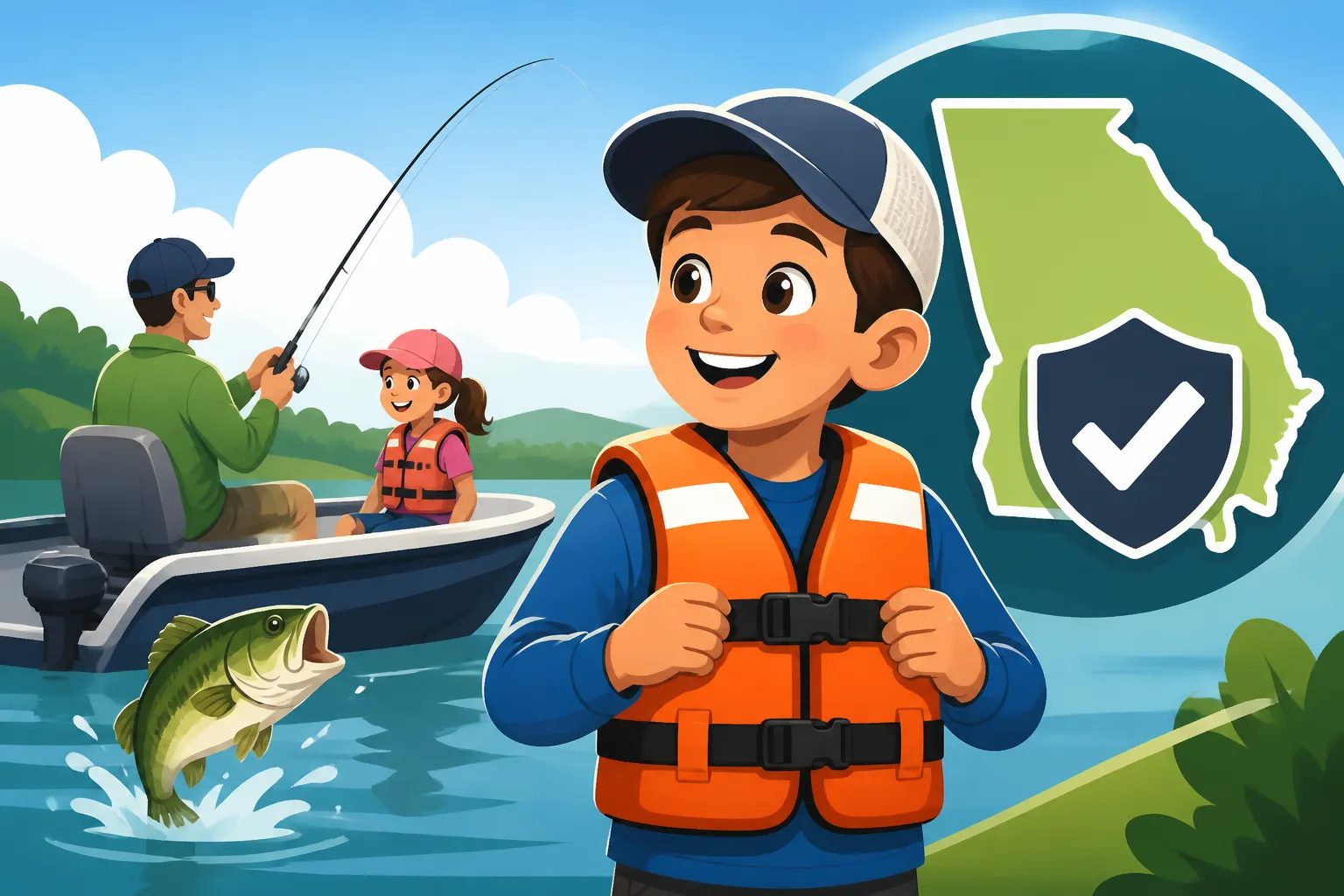
Here's the core of the rule: In Georgia, any child under the age of 13 must wear a U.S. Coast Guard-approved life jacket at all times while on board any moving vessel. This isn't just a suggestion; it's the law. "Moving vessel" is the key phrase here. If your boat is underway, whether you're cruising across Lake Oconee, trolling for bass on Lake Sinclair, or just motoring a short distance to a new fishing spot on the Flint River, that child needs to be securely buckled into their life jacket.
Imagine you're taking your kids out for a fun afternoon of fishing. The sun is shining, the water is calm, and everyone is excited. You pull away from the dock, and your seven-year-old is excitedly pointing at a duck. In that moment, if they aren't wearing their life jacket, you're not only breaking the law but also putting them at immediate risk. Even a slow idle out of a no-wake zone counts as a moving vessel. It doesn't matter if they're sitting in the cabin, on the deck, or in the bow – if the boat is moving, the jacket needs to be on. This also applies to kayaks, canoes, and stand-up paddleboards, even if they're not motorized. For more on what constitutes an approved jacket, check out Coast Guard-Approved Life Jackets for Georgia Boaters.
Exceptions to the Rule: When They Don't Have to Wear It
Now, there are a couple of specific exceptions where a child under 13 is not required to be wearing their life jacket, though it must still be readily accessible on the vessel.
First, if the child is inside a fully enclosed cabin on a vessel, they are exempt from the mandatory wear rule. A fully enclosed cabin means it has a roof and solid sides that would provide protection and prevent them from easily falling overboard. Think of a larger cruiser or a houseboat with a defined interior living space. A mere bimini top or a small cuddy cabin with an open entrance generally wouldn't qualify. The spirit of this exception is that they are considered to be in a protected space, similar to being in a building.
Second, if the vessel is not underway, meaning it is anchored, moored, or aground, the child is not required to wear the life jacket. So, once you drop anchor for a long fishing session, or tie up to a dock for lunch, your child can take off their life jacket if they wish. However, the life jacket must remain on board and easily accessible for them. If you lift anchor and start moving again, even just to reposition a few yards away, the jacket needs to go back on immediately. It's a fine line, but one that Georgia's Department of Natural Resources (DNR) officers enforce carefully. Remember, even during these exceptions, it's often a good idea for younger children to keep their life jackets on, especially if they're active around the boat or near the water's edge.
Proper Fit and Approval: More Than Just Having One Onboard
Having a life jacket isn't enough; it needs to be the right life jacket, and it needs to fit properly. All life jackets, also known as Personal Flotation Devices (PFDs), must be U.S. Coast Guard (USCG) approved. This approval means they meet strict safety and performance standards. You'll find a label inside the jacket confirming its USCG approval, along with its type and weight range. Always double-check this label before purchasing or using a life jacket. You can often find a great selection of USCG-approved options at retailers like Bass Pro Shops or online at Amazon, where you can read reviews specific to fit and durability.
Beyond approval, fit is paramount. A life jacket that's too big can ride up around a child's ears, offering no real flotation, and one that's too small will be uncomfortably tight or won't buckle correctly. When trying on a life jacket for a child, ensure it fits snugly but comfortably. Fasten all zippers, buckles, and straps. Then, lift the child by the shoulders of the life jacket. If it slides up past their chin or ears, it's too big and won't keep their head safely above water. A proper fit will keep their mouth and nose clear of the water, which is the whole point! Don't forget to check the specific weight range on the label; this is critical for effective flotation. For more specific recommendations, our guide on Best Life Jackets for Kids Boating in Georgia delves deeper into choosing the perfect fit.
Choosing the Right Life Jacket: Types and Features
With so many options out there, selecting the right life jacket for your child can feel overwhelming. It's not just about color or cartoon characters; it's about understanding the different types and features that will offer the best safety and comfort for your young angler.
Understanding US Coast Guard Approval and Types
The U.S. Coast Guard categorizes life jackets into different types (I, II, III, IV, V) based on their design, intended use, and level of flotation. For children, you'll primarily be looking at Type II and Type III PFDs.
- Type I (Off-Shore PFDs): These are designed for rough, open water where rescue may be delayed. They offer the most buoyancy and are designed to turn an unconscious person face-up in the water. While highly effective, they can be bulky and are often not practical for active kids fishing.
- Type II (Near-Shore Buoyant Vests): These are common for general recreational boating. They offer good buoyancy and some turning ability to get an unconscious person face-up, though not as reliably as Type I. They are less bulky than Type I and more comfortable for extended wear. Many children's life jackets fall into this category.
- Type III (Flotation Aids): These are designed for continuous wear and offer the most comfort and freedom of movement. They are suitable for most recreational activities. They generally do not turn an unconscious person face-up, so they are best for situations where rescue is likely to be swift, or for conscious wearers.
- Type IV (Throwable Devices): These are things like life rings or buoyant cushions. They are not designed to be worn and are never acceptable as the required life jacket for a child.
- Type V (Special Use Devices): These are specific-use PFDs like those integrated into fishing vests or work suits. They must be worn to be considered a Type V.
For children under 13, a USCG-approved Type II or Type III PFD is typically what you'll be looking for. Always check the label to ensure it matches the child's weight and activity. Our guide on Coast Guard-Approved Life Jackets for Georgia Boaters offers a detailed look at all types.
Here’s a quick overview of common USCG PFD types:
| PFD Type | Description | Best Use Case | Turning Ability (Unconscious) | Buoyancy Level |
|---|---|---|---|---|
| Type I | Off-Shore PFD, bulky | Rough, remote waters where rescue may be delayed | Excellent (most reliable) | Highest |
| Type II | Near-Shore Buoyant Vest, less bulky | General recreational boating, calm waters | Good (some turning ability) | Good |
| Type III | Flotation Aid, most comfortable | Recreational activities, conscious wearers | Minimal (user must assist) | Good |
| Type IV | Throwable Device (cushions, rings) | Emergency throwing aid, not for wearing | None | Varies |
| Type V | Special Use Device (fishing vests, deck suits) | Specific activities, must be worn for approval | Varies by design | Varies |
Key Features to Look for in Kids' Life Jackets
When you're out shopping for a life jacket, whether at a local Bass Pro Shops or browsing online on Amazon, several features can make a big difference in comfort, safety, and practicality for kids.
- Head Support (Pillow): Many infant and toddler life jackets come with a large collar or "pillow" behind the head. This is crucial for keeping their head supported and face out of the water, especially for very young children who may not be able to do so themselves.
- Grab Handle: A sturdy grab handle on the collar or back can be invaluable for quickly pulling a child out of the water if they go overboard. It provides a secure point of retrieval, making a rescue quicker and safer.
- Crotch Strap (between the legs): This is arguably one of the most important features for a child's life jacket. Without it, the jacket can ride up around their ears when they are in the water, negating its effectiveness and potentially hindering their breathing. A crotch strap keeps the jacket securely in place.
- Bright Colors and Reflective Strips: High visibility is key for water safety. Bright colors like neon yellow, orange, or green make it much easier to spot a child in the water, especially in choppy conditions or low light. Reflective strips add an extra layer of visibility, particularly useful during dusk or dawn fishing excursions.
- Durable Materials: Kids are tough on gear. Look for jackets made from durable, quick-drying materials that can withstand sun, salt (if you're near the coast), and general wear and tear.
Sizing and Fit: A Crucial Step for Safety
We touched on this earlier, but it truly bears repeating because it's that important. A life jacket that doesn't fit correctly is almost as bad as no life jacket at all. Life jackets are sized by weight range, not by age. So, forget the idea of buying a "size 5T" life jacket; instead, look for the weight range prominently displayed on the label.
When you're fitting a jacket, remember these steps:
- Check the Weight Range: Ensure the child's current weight falls within the jacket's specified range. Don't "buy for them to grow into" when it comes to life jackets.
- Fasten All Straps and Zippers: Make sure every buckle, zipper, and strap is securely fastened. Loose straps can allow the jacket to shift or ride up.
- Perform the "Lift Test": With the jacket fully fastened, lift the child by the shoulders of the life jacket. If the jacket rides up and covers their chin or mouth, it's too big. You want it to stay snugly in place, not slide up their torso.
- Allow for Movement: While snug, the jacket shouldn't restrict their breathing or movement to the point of discomfort. They should be able to move their arms and play without feeling overly constrained, otherwise, they'll fight against wearing it.
Remember that children grow quickly, so you'll need to re-check the fit periodically, especially at the start of each boating season.
Enforcement and Penalties: What Happens if You Don't Comply
Nobody wants to have their fun day on the water interrupted by a run-in with law enforcement, but Georgia's Department of Natural Resources (DNR) officers are out there specifically to ensure everyone's safety. Understanding the consequences of non-compliance isn't just about avoiding a fine; it's about appreciating the seriousness of the law.
The Role of Law Enforcement on Georgia's Waters
DNR game wardens and other law enforcement agencies patrol Georgia's lakes, rivers, and coastal waters to ensure everyone is following boating safety regulations. They are there to educate boaters, assist in emergencies, and, when necessary, enforce the law. When they pull alongside your boat for a safety check, they're not just looking for fishing licenses – though you'll definitely want to make sure your Georgia Fishing License Guide is up to date – they're checking for things like proper registration, required safety equipment, and, crucially, that children are wearing their life jackets when required.
These officers are highly trained in water safety and are experts at identifying potential hazards. They understand the importance of these rules and the real-world dangers that can arise from neglecting them. So, when an officer signals for you to slow down for a check, remember they're doing their job to keep everyone on the water safe. Their presence is a reminder that these aren't just suggestions; they are enforceable laws with serious implications.
Consequences of Non-Compliance: Fines and Safety Risks
Ignoring the life jacket requirements for children under 13 in Georgia can lead to a few unpleasant outcomes. The most immediate one is a citation and a fine. While the exact amount can vary, it's certainly more than the cost of a good quality life jacket. Think about it: a few hundred dollars out of your pocket for a preventable oversight that could have also jeopardized a child's life. It's a lose-lose situation.
Beyond the financial penalty, there's the much graver risk to the child's safety. In an accident, even a minor one, a child without a life jacket is at a significantly higher risk of drowning. Imagine a sudden turn, a collision with debris, or another boat creating a large wake that causes your child to fall overboard. If they're not wearing a life jacket, precious seconds are lost trying to locate them, get a jacket to them, or pull them from the water. Even strong swimmers can be disoriented, injured, or overcome by cold water shock. The law is designed to eliminate these life-threatening delays. You can learn more about general penalties for boating infractions in our Penalties for Fishing Without a License in Georgia article, which, while focused on fishing, highlights the state's seriousness about compliance.
Why Compliance Isn't Just About Avoiding a Ticket
Ultimately, complying with Georgia's life jacket laws for kids isn't just about sidestepping a fine or avoiding a stern lecture from a DNR officer. It's about a fundamental commitment to safety and responsibility. As the operator of a vessel, you are responsible for the safety of everyone on board, especially children. It's about providing peace of mind, knowing that if the unexpected happens, your child has the best possible chance of staying safe.
When you ensure your child is properly wearing their USCG-approved life jacket, you're not just following a rule; you're actively participating in preventative safety. You're setting a positive example for your children and other boaters, demonstrating that safety comes first. This ethos contributes to a safer boating community for everyone enjoying Georgia's beautiful waterways, from the mountain trout streams to the coastal fishing spots. It’s about being a conscientious boater, a responsible parent, and a protector of precious young lives.
Beyond the Basics: Additional Safety Tips for Young Anglers
Getting those life jackets on the kids is a fantastic start, but water safety, especially when you have young anglers on board, goes much deeper. It's about cultivating a culture of safety, being prepared, and teaching responsible habits that will serve them well for a lifetime of enjoying the water.
Leading by Example: Adults and Life Jackets
One of the most powerful tools you have as a parent or guardian is setting a good example. If you expect your child under 13 to wear a life jacket, consider wearing one yourself, especially in situations that might be riskier, like rough water, early morning, or late evening fishing, or when operating a small craft like a kayak or canoe. Children are observant, and they learn by watching you. If they see you, the responsible adult, taking water safety seriously and routinely donning your PFD, they're much more likely to accept it as a normal and necessary part of the boating experience.
This isn't just about modeling behavior; it's also about your own safety. Accidents can happen to anyone, and if you, as the primary caregiver, go overboard, having your own life jacket on ensures you can assist your child and that rescue efforts can focus on both of you. Many adults find that modern life jackets, especially some of the comfortable inflatable options you might find at Bass Pro Shops or on Amazon, are much less restrictive than older models. While there aren't specific Life Jacket Requirements for Kids Under 13 in Georgia for adults, it's always a smart move to wear one.
Educating Kids About Water Safety
Beyond simply enforcing the "wear your life jacket" rule, take the time to explain why it's important to your children in an age-appropriate way. Instead of just saying "because I said so," talk about how the life jacket helps them float, keeps them warm, and makes them easier to see if they ever fall in the water.
You can turn it into a game or a fun learning experience. Teach them about the different parts of their life jacket and how to buckle it themselves. Practice how to float on their back while wearing it in a safe, shallow area if they're comfortable. Discuss basic water safety rules, such as staying seated while the boat is moving, not leaning over the edge, and what to do if they see someone fall into the water. Empowering them with knowledge not only makes them safer but also helps them feel more confident and connected to the boating experience. These conversations contribute to a holistic understanding of water safety that extends beyond just wearing a vest.
Emergency Preparedness and What to Do
Even with all the precautions in place, emergencies can still happen. Being prepared can make all the difference. Beyond the life jackets, ensure you have a complete Safety Gear Checklist for a Day on Lake Lanier or any other body of water you're visiting. This includes things like throwable flotation devices, a first-aid kit, a whistle or horn, and a fully charged cell phone in a waterproof bag.
Teach your children what to do if they fall into the water – to stay calm, try to float on their back (the life jacket will help!), and wait for help. Show them where the throwable device is and how to use it. If they are old enough, teach them how to call for help on a VHF radio (if your boat has one) or a cell phone. The more informed and prepared everyone on board is, the better your chances of handling an unexpected situation calmly and effectively. Knowing what to do in a crisis can reduce panic and increase the likelihood of a positive outcome for everyone involved.
Disclaimer
This article is for general informational purposes only and does not constitute professional advice. Laws, prices and regulations vary by location and change over time. Consult a qualified professional for guidance on your specific situation.