Best Kayaks for Fishing Georgia Lakes
There's nothing quite like the freedom of gliding across a glassy Georgia lake at dawn, a cup of coffee steaming beside you, with only the sound of your paddle breaking the silence. Many anglers dream of this serene experience, but the thought of choosing the right fishing kayak can feel overwhelming with all the options out there. This guide is here to cut through the confusion and help you pinpoint the best kayaks tailored for navigating and fishing Georgia's diverse waterways, ensuring your next outing is less about worry and more about reeling in the big one.
Why Kayak Fishing in Georgia Lakes is So Popular
Kayak fishing has exploded in popularity across Georgia, and for good reason. Our state boasts an incredible variety of freshwater lakes, from the vast expanses of Lake Lanier and Lake Oconee to countless smaller, more intimate reservoirs and public fishing areas. What kayaks offer that larger boats often can't is a unique blend of accessibility, stealth, and a truly immersive fishing experience that connects you more deeply with nature. It’s not just a trend; it's a practical and enjoyable way to fish.
Unmatched Accessibility and Versatility
One of the biggest draws of kayak fishing is the sheer accessibility it provides. You don't need a massive boat ramp to launch a kayak. Often, a small patch of shoreline or a quiet riverbank is all you need to get your vessel into the water. This means you can access those hidden coves, shallow flats, and tight creek mouths that are simply out of reach for traditional bass boats or pontoons. Imagine being able to paddle into a lily pad field where bass are bedding, or slipping silently up a narrow channel to find crappie hiding in submerged timber.
Furthermore, kayaks are incredibly versatile. Many of Georgia's larger lakes have extensive coves and arms that are perfect for kayak exploration. You can fish open water for striped bass in the morning, then transition to flipping jigs for largemouth in a weed-choked bay in the afternoon, all from the same craft. For anglers looking to explore beyond the heavily trafficked areas, a kayak is often the key to unlocking new, productive fishing grounds without the expense and maintenance of a larger powerboat.
Stealth and a Deeper Connection to Nature
There’s an undeniable advantage to the quiet nature of a kayak. Unlike a roaring outboard motor, a paddle or pedal drive allows you to approach fishing spots with minimal disturbance. Fish are incredibly sensitive to vibrations and noise, and a stealthy approach can make all the difference, especially when targeting wary species like largemouth bass in clear water. You can quietly drift into position, make your first cast, and present your lure without spooking your quarry.
Beyond the fishing advantage, kayak fishing offers a more intimate connection with Georgia's stunning natural environment. Without the constant hum of an engine, you’re more attuned to the sounds of nature – the splash of a jumping fish, the call of a bird, or the rustle of leaves along the shoreline. It's a peaceful, meditative experience that many anglers find just as rewarding as catching fish. You become part of the environment, not just an observer, leading to a much richer and more fulfilling day on the water.
Key Features to Look For in a Georgia Fishing Kayak
Choosing the right fishing kayak for Georgia's lakes isn't a one-size-fits-all decision. The perfect kayak for you will depend on your fishing style, the types of water you plan to tackle, and your personal priorities. When you're browsing options, whether online on Amazon or in person at a Bass Pro Shops, there are several key features you’ll want to consider to ensure you pick a kayak that truly enhances your fishing adventures.
Stability for Confident Angling
Stability is often the number one concern for new kayak anglers, especially those who dream of standing up to cast. Fishing requires movement – casting, reeling, setting the hook, and even landing a fish – and you want a kayak that feels secure beneath you. There's a trade-off: highly stable kayaks tend to be wider and a bit slower, while narrower kayaks are faster but less stable.
For Georgia lake fishing, especially if you plan to target bass or simply prefer the ability to stand occasionally, look for kayaks designed with a wide beam (width) and a flat hull. Some models even feature pontoon-style hulls or outriggers (though these are often add-ons) that provide exceptional secondary stability, meaning they resist tipping once they've leaned. If you foresee yourself primarily sitting while fishing, a slightly less stable but more efficient hull might be acceptable. Always prioritize safety and comfort; a stable platform means less worry about an unexpected swim and more focus on fishing.
Propulsion Methods: Paddle, Pedal, and Motor
How you move your kayak across the water is a critical decision that impacts your fishing experience, especially on Georgia's larger lakes where covering distance is often necessary.
- Paddling kayaks are the traditional choice. They're generally lighter, simpler, and more affordable. Paddling is excellent for quiet approaches and navigating shallow, technical water. However, it ties up your hands, making it challenging to fish and move simultaneously. For a good paddling experience, investing in a quality, lightweight paddle is a must. You can find excellent advice in our guide, Best Kayak Paddle for Bass Fishing.
- Pedal-drive kayaks have revolutionized kayak fishing. Systems like fin drives or prop drives allow you to propel the kayak using your legs, leaving your hands free for casting, holding a rod, or even eating a sandwich. This hands-free operation is a huge advantage for trolling, maintaining position in wind or current, and fighting fish. While pedal kayaks are typically heavier and more expensive, many anglers find the convenience and efficiency well worth the investment, especially on big reservoirs like Lake Lanier or Clarks Hill Lake.
- Motorized kayaks (or kayaks with motor mounts) take propulsion a step further. Small electric trolling motors can be added to many fishing kayaks, offering effortless cruising and precise boat positioning with the push of a button. This is fantastic for covering long distances, battling strong winds, or fishing large open expanses. Keep in mind that adding a motor often means dealing with a battery, extra weight, and potentially Georgia boat registration requirements depending on the motor size.
Consider how much water you typically cover and if hands-free operation is important to your fishing style. Each method has its pros and cons, but pedal and motor options offer significant advantages for serious lake anglers.
Thoughtful Storage and Rigging Options
A fishing kayak isn't just a boat; it's a mobile fishing platform. Ample and intelligent storage, along with versatile rigging options, can make or break your day on the water.
Look for kayaks with dedicated rod holders – flush-mounted ones for storage and adjustable ones for trolling or setting a secondary rod. Gear tracks (often called "accessory tracks") are incredibly valuable, allowing you to easily mount and adjust fish finders, GPS units, camera mounts, and additional rod holders without drilling into your hull. These systems are widely available at outdoor retailers and on Amazon. Dry storage hatches are essential for keeping valuables like phones, wallets, and extra clothing safe and dry. Many fishing kayaks also feature a large tankwell area in the stern, perfect for securing a cooler, tackle crate, or a Best Dry Bag for Kayak Fishing Trips. Think about how much gear you typically bring and choose a kayak that can accommodate it all in an organized and accessible manner.
Comfort for Long Days on the Water
Even the best fishing spot can become unbearable if you're uncomfortable. You'll likely spend hours sitting in your kayak, so a comfortable seat is paramount. Many modern fishing kayaks feature elevated, framed seats that resemble small lawn chairs, offering excellent back support and allowing for better circulation than traditional molded-in seats. These seats often have adjustable positions to fine-tune your comfort.
Beyond the seat, adjustable foot braces are important for proper paddling posture and comfort, allowing you to brace yourself effectively. Some kayaks also include padding on the standing platform, which can be a small but appreciated detail if you plan to stand frequently. Don't underestimate the importance of comfort; a miserable day on the water means you'll be less likely to return. When considering how to get comfortable, check out our general guide on Kayak Fishing Gear Checklist for Beginners for more tips.
Types of Fishing Kayaks Best Suited for Georgia Waters
Georgia's lakes are diverse, ranging from deep, clear mountain reservoirs to shallower, tannin-stained impoundments in the piedmont and coastal plain. Thankfully, kayak manufacturers have developed various designs, each with its strengths, to match different fishing styles and water conditions. Understanding these types will help you narrow down your options for the Best Fishing Kayak for Georgia Lakes.
Sit-on-Top (SOT) Kayaks: The Angler's Favorite
Sit-on-top (SOT) kayaks are by far the most popular choice for fishing, especially in the warmer waters of Georgia. Their open deck design means you sit on the kayak rather than in it, making them incredibly easy to get in and out of – a huge plus if you need to quickly re-enter after an accidental capsize or just want to take a quick dip. The scupper holes in the hull allow water to drain out, so you're not sitting in a puddle after a wave or rain shower.
SOT fishing kayaks are often designed with width and stability in mind, providing a solid platform for casting and even standing. They typically come with generous storage areas, especially in the stern tankwell, and often include built-in rod holders or mounting points for accessories. For the average Georgia lake angler who values ease of use, stability, and plenty of space for gear, a sit-on-top kayak is an excellent starting point. They're also generally very durable and easy to maintain.
Sit-in Kayaks: Protection and Efficiency
While less common for dedicated fishing than SOTs, sit-in kayaks still have their place, particularly for those who prioritize efficiency or fish in cooler weather. In a sit-in kayak, you sit inside the cockpit, with your legs and lower body protected by the kayak's deck. This offers better insulation from cold water and wind, which can be a comfort advantage during Georgia's cooler fishing seasons, especially on early spring trout streams or late fall bass trips.
Sit-in kayaks are often narrower and have a sleeker hull design, making them faster and more efficient to paddle over long distances. However, they are typically less stable than SOTs and re-entry after a capsize can be more challenging. While some sit-in models are designed specifically for fishing with rod holders and accessory mounts, they usually offer less open deck space for gear organization compared to a sit-on-top. If your primary goal is speed, paddling efficiency, or protection from the elements, and you're comfortable with slightly less stability, a sit-in kayak might be a viable option.
Pedal-Drive Kayaks: Hands-Free Revolution
As mentioned earlier, pedal-drive kayaks have truly transformed kayak fishing. These innovative boats allow anglers to propel themselves using a foot-powered system, freeing up their hands for constant fishing action. This is a game-changer for many reasons on Georgia's larger lakes. Imagine effortlessly trolling a crankbait along a submerged hump on Lake Oconee or Lake Sinclair, constantly adjusting your speed and direction with your feet, all while holding your rod and feeling for bites.
Pedal kayaks come in various designs, from propellor-driven systems to fin-driven models that mimic a penguin's flippers. They typically offer excellent stability and are often packed with fishing-specific features like extensive gear tracks, large open cockpits, and comfortable elevated seating. The downsides are generally higher cost, increased weight (making them harder to transport for some), and more complex maintenance for the pedal drive system. However, for serious anglers who spend long hours on the water and desire maximum fishing efficiency, a pedal-drive kayak is often considered the ultimate choice.
Tandem Kayaks: Fishing with a Buddy
Sometimes, fishing is best enjoyed with company, and that's where tandem kayaks come in. Designed to comfortably seat two anglers, these kayaks are longer and wider than single-person models to accommodate the extra weight and provide adequate stability. They can be a fantastic option for introducing a child to fishing, spending quality time with a spouse or friend, or even bringing along extra gear for a longer excursion.
While they offer the advantage of shared experience and often more carrying capacity, tandem kayaks can be more challenging to paddle solo and require coordinated effort when two people are on board. Their size can also make them slightly more cumbersome to transport and store. However, for families or fishing partners looking to share the kayak fishing experience on Georgia's numerous lakes, a well-chosen tandem can lead to unforgettable memories. Just remember to pack enough tackle for two, and maybe a separate cooler for drinks!
Here's a quick comparison of common kayak types for fishing:
| Kayak Type | Pros | Cons | Best for |
|---|---|---|---|
| Sit-on-Top | Excellent stability, easy re-entry, self-bailing, open deck for gear | Can be slower than sit-ins, exposed to elements | General lake fishing, bass, crappie, warmer weather, beginners |
| Sit-in | Faster/more efficient, protected from elements, lighter | Less stable, harder re-entry, less open deck space | Cooler weather, smaller rivers, longer paddles, efficiency |
| Pedal-Drive | Hands-free fishing, easy to cover distance, great for trolling | More expensive, heavier, more complex maintenance | Serious anglers, large lakes, covering significant water, trolling |
| Tandem | Two anglers, shared experience, more carrying capacity | Requires coordination, heavier, more cumbersome to transport | Family fishing, sharing the experience, beginners with a guide |
Outfitting Your Kayak for Georgia Lake Fishing
Once you've chosen your dream fishing kayak, the next step is to outfit it properly for the types of fishing you'll be doing on Georgia's lakes. A well-rigged kayak isn't just about convenience; it's about maximizing your efficiency, comfort, and safety on the water. Think of your kayak as a blank canvas, ready to be customized to your exact needs. This is where you can truly make your vessel your own.
Essential Rod Holders and Mounting Systems
You can never have too many rod holders on a fishing kayak. Most dedicated fishing kayaks will come with at least one or two flush-mount holders behind the seat, which are great for safely storing rods while paddling or when not in use. However, for active fishing, especially if you plan on trolling or running multiple lines, you'll want adjustable, track-mounted rod holders.
Brands like Scotty, RAM Mounts, and YakAttack offer robust, easily adjustable rod holders that can be clamped or bolted onto integrated gear tracks found on many modern fishing kayaks. These allow you to position your rods exactly where you need them for trolling, bait fishing, or simply keeping them ready for action. Having multiple rod holders means you can easily switch between different rod setups for various lures or techniques without creating a tangled mess in your lap. You can find a vast selection of these accessories at outdoor stores like Bass Pro Shops or through online retailers like Amazon, ensuring you have the right setup for every fishing scenario.
Electronics: Fish Finders and GPS
In today's world, fishing electronics aren't just for big boats anymore. A compact fish finder can be a game-changer for kayak anglers on Georgia lakes, helping you locate structure, identify baitfish, and mark productive fishing spots. Modern fish finders are incredibly powerful, even in their smaller, kayak-friendly versions. You can see bottom contours, ledges, brush piles, and even individual fish arches.
When choosing a fish finder for your kayak, consider screen size, transducer mounting options (through-hull, scupper-mount, or portable), and battery life. Many models come with GPS capabilities, which are invaluable for marking waypoints, navigating back to productive spots, and ensuring you don't get lost on unfamiliar waters. Remember that you'll need a small, sealed battery to power your unit, and proper wiring is crucial to prevent water damage. Our guide on Best Fish Finders for Georgia Reservoir Fishing can offer more detailed advice on selecting the right electronics for your needs.
Storage Solutions: Crates, Coolers, and Tackle Management
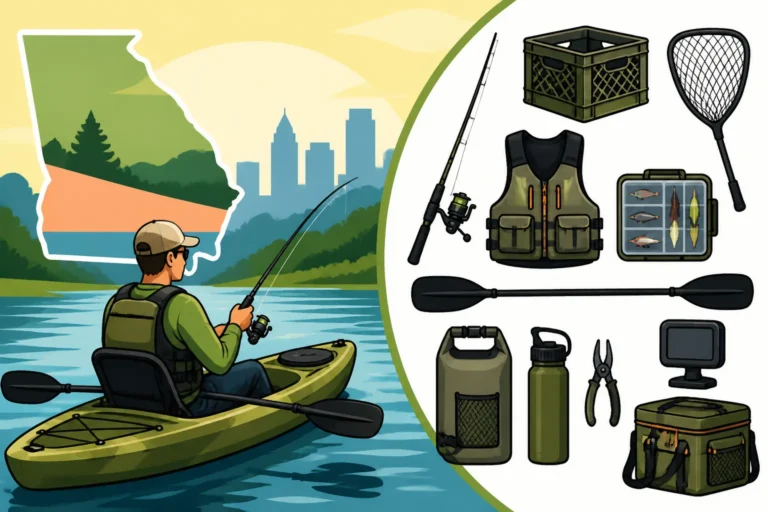
Efficient tackle management is key to a successful day of kayak fishing. Space is at a premium, so every item needs a designated home. A standard milk crate, often customized with PVC rod holders and bungee cords, remains a popular and inexpensive storage solution for the stern tankwell. It can hold tackle boxes, a small soft-sided cooler, and other essentials.
Beyond the crate, consider dedicated tackle storage systems that fit neatly into your kayak's hatches or are easily accessible on deck. Waterproof dry bags are indispensable for keeping electronics, extra clothing, and your lunch safe and dry. For drinks and snacks, a small, soft-sided cooler that fits comfortably in the tankwell or strapped to the deck is ideal. Ensure all your gear is securely tied down or bungeed in place. The last thing you want is a tackle box floating away after an unexpected wake or tip. For more general advice on what to pack, consult our Kayak Fishing Gear Checklist for Beginners.
Staying Safe and Legal on Georgia Lakes
Safety should always be your top priority when kayak fishing. While kayaks are generally very safe vessels, understanding Georgia's boating laws and taking appropriate precautions can prevent accidents and ensure an enjoyable day on the water. Ignoring safety not only puts you at risk but can also lead to legal penalties.
Georgia Life Jacket Laws and Wearing It
It’s easy to think a life jacket is only for emergencies, but it's a critical piece of safety gear that should be worn at all times while on a fishing kayak. Georgia law states that all vessels must have a U.S. Coast Guard-approved wearable personal flotation device (PFD) for each person on board. For children under 13, wearing a PFD is mandatory while underway on any vessel, including kayaks. Our guide Georgia Life Jacket Laws for Boaters and Kids provides comprehensive details.
Even for adults, wearing your life jacket rather than just having it stowed is a non-negotiable safety measure. In the event of an unexpected capsize, especially in cold water or if you hit your head, having your PFD on can be the difference between a minor inconvenience and a life-threatening situation. Modern fishing PFDs are designed for comfort, with plenty of pockets for gear, and won't hinder your casting motion. Choose a Type III PFD for general recreational use, as they are designed for comfort and mobility.
Essential Safety Gear Beyond the PFD
While a life jacket is primary, several other items should always be part of your kayak fishing safety kit:
- Whistle or Air Horn: Required by law on all vessels to signal distress or attract attention. You can find inexpensive options that clip right onto your PFD. In fact, you may be wondering Do You Need a Whistle on a Kayak in Georgia?, and the answer is generally yes!
- Paddle Leash: Even if you have a pedal drive, a paddle is your backup propulsion. A leash prevents it from floating away if you drop it.
- Lights (for low light/night fishing): If you plan to be on the water from dusk till dawn, a 360-degree white light is legally required and crucial for visibility to other boaters.
- First-Aid Kit: A small, waterproof kit for minor cuts, scrapes, or hook punctures is always a good idea.
- Communication Device: A fully charged cell phone in a waterproof case, or a marine VHF radio, can be vital for emergencies.
- Anchor: A small anchor can help you maintain position in wind or current, but also be mindful of proper anchoring techniques to avoid capsizing. Our guide, Best Kayak Anchor for Georgia Rivers, has more information.
- Sun Protection: Georgia sun can be intense. Wide-brimmed hats, polarized sunglasses, and sunscreen are essential to prevent sunburn and heatstroke.
By consistently carrying and using these safety items, you significantly reduce the risks associated with kayak fishing and ensure you're prepared for unexpected situations.
Maintenance and Care for Your Fishing Kayak
A fishing kayak is an investment, and like any valuable piece of gear, it will last longer and perform better with proper care and maintenance. Georgia's climate, with its intense sun and occasional humidity, requires specific attention to keep your kayak in top shape. A little effort after each trip can prevent major problems down the line.
Post-Trip Cleaning and Inspection
After a fulfilling day on a Georgia lake, the last thing you want to do is clean up, but it's crucial. Freshwater lakes can still leave behind grime, algae, and mud. Take a few minutes to rinse your kayak thoroughly with fresh water, especially if you've been in murky or silty areas. Pay attention to the hull, deck, and any crevices where debris might accumulate. This prevents buildup, keeps your kayak looking good, and helps avoid transporting invasive species between waterways.
While cleaning, take the opportunity to inspect your kayak for any signs of wear or damage. Look for scrapes, dings, or cracks in the hull, especially if you've bumped into rocks or stumps. Check your rudder or skeg (if you have one) for any damage. For pedal-drive kayaks, inspect the drive unit for tangled fishing line, debris, or any signs of unusual wear. Addressing small issues proactively can prevent them from becoming larger, more expensive repairs later on.
Proper Storage for Longevity
Where and how you store your kayak makes a huge difference in its lifespan. Prolonged exposure to direct sunlight and extreme temperatures can degrade the plastic (polyethylene) that most kayaks are made from, leading to fading, brittleness, and even warping.
- Out of Direct Sunlight: Always try to store your kayak in a shaded area, a garage, or under a tarp or dedicated kayak cover. UV rays are the enemy of kayak plastic.
- Off the Ground: Storing your kayak directly on a hard surface for extended periods can cause flat spots or deformities in the hull. Use kayak cradles, sawhorses, or a wall-mounted storage system that supports the hull evenly.
- Upside Down or On Its Side: If storing outdoors, it's often best to store the kayak upside down or on its side to prevent water from pooling inside the cockpit or tankwell, which can lead to mildew or mosquito breeding.
- Security: If stored outside, consider securing your kayak with a lock and chain to deter theft, especially if it's visible or easily accessible.
Following these storage tips will ensure your kayak maintains its structural integrity and aesthetic appeal for many years of Georgia fishing adventures.
Addressing Minor Repairs and Wear
Even with the best care, kayaks can take a beating. Minor repairs are often inevitable and can be easily handled at home. Small scrapes and gouges in the hull are typically cosmetic and don't affect performance or integrity. Deeper gashes, however, might warrant attention.
For polyethylene kayaks, specialized plastic welding kits are available, which involve melting new plastic into the damaged area. For small cracks, marine-grade sealants can sometimes offer a temporary fix. Always consult the kayak manufacturer's recommendations for repair procedures. Beyond the hull, common wear items include bungee cords, scupper plugs, and seat straps. These are usually inexpensive and easy to replace, and you can often find replacements at Bass Pro Shops or online retailers. Regularly checking and replacing these worn components will keep your kayak fully functional and comfortable, ready for every cast on Lake Lanier or any other fantastic Georgia fishing spot.
Disclaimer
This article is for general informational purposes only and does not constitute professional advice. Laws, prices and regulations vary by location and change over time. Consult a qualified professional for guidance on your specific situation.