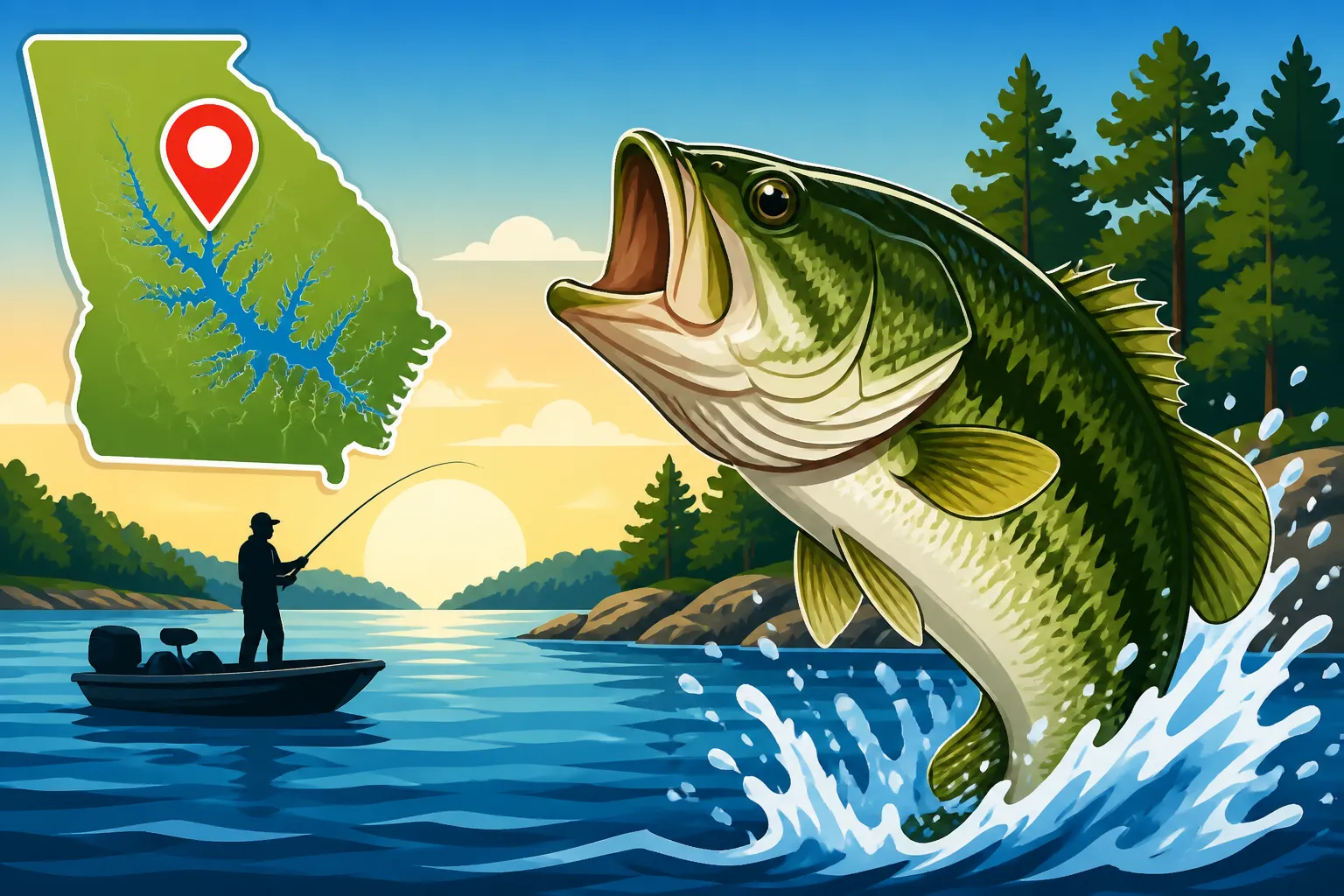
Best Spots for Bass Fishing on Lake Lanier
Trying to find the best bass fishing spots on Lake Lanier can feel like searching for a needle in a haystack. This massive reservoir, with its incredible depth and countless coves, can be intimidating, leaving many anglers frustrated and wondering where to even begin. But don't you worry, because this comprehensive guide is here to break down the mystery, pinpointing those coveted bass hotspots and giving you the strategies to confidently reel in those elusive Lanier largemouth and spotted bass.
Understanding Lake Lanier's Unique Bass Fishery
Lake Lanier isn't your average puddle; it's a sprawling, deep, and clear-water reservoir that demands a specific approach from bass anglers. Its unique characteristics are precisely what makes it such a phenomenal, albeit challenging, fishery. You can't just throw a worm anywhere and expect success; you need to understand the lake's personality.
The Layout of the Lake and Its Impact on Bass
One of the first things you'll notice about Lake Lanier, especially if you're coming from other Georgia lakes like Sinclair or Oconee, is its sheer size and depth. Carved out of the foothills of the Blue Ridge Mountains, Lanier is known for its clear, cold water and a landscape dominated by standing timber, steep bluff walls, and deep creek channels. This isn't a shallow, grassy lake; instead, bass here relate heavily to hard structure: humps, points, rock piles, and especially those thousands of docks.
The clarity of the water means bass can be more skittish and often hold deeper, especially during bright conditions. They'll use the abundant standing timber and brush piles as ambush points and cover, making your electronics absolutely crucial for finding these submerged treasures. Understanding the creek arms, how they funnel into the main lake, and the subtle contours of the bottom is like reading a secret map for bass. It's a puzzle, but once you start putting the pieces together, the rewards are immense.
Primary Bass Species and Their Preferred Habitats
Lake Lanier is primarily known for two black bass species: the largemouth bass and the spotted bass. Knowing the difference, and more importantly, knowing their preferred haunts, will drastically improve your success. If you're wondering how to tell them apart, check out our guide on Largemouth Bass vs Spotted Bass: How to Tell Them Apart in Georgia.
- Largemouth Bass: These are the classic bucketmouths we all love. On Lanier, largemouth tend to stick to shallower, more cover-oriented areas. Think submerged brush, fallen trees, shallow docks, and the back of coves. They prefer a bit more stained water if they can find it, or at least ample shade. You'll often find them lurking near laydowns on secondary points or tucked way back in a creek arm, especially during the warmer months and spawn.
- Spotted Bass: Oh, the spotted bass of Lanier are a different beast entirely! These fish thrive in the deep, clear water and are notorious for schooling up in open water, often suspending over deep humps, points, and creek channels. They are aggressive, fight hard, and frequently feed on baitfish like blueback herring. While you'll find them shallower during certain times of the year, their bread and butter spots are offshore structures where they can chase bait. They are often the more prevalent catch on Lanier due to the lake's characteristics favoring them.
Understanding these habitat preferences is key. If you're targeting largemouth, you'll be focusing on different structures and depths than if you're after spots. Often, anglers will inadvertently catch both, but having a clear target in mind will help you choose your locations and techniques more effectively.
Top Bass Fishing Hotspots and How to Approach Them
Now, let's get down to brass tacks. Lake Lanier is enormous, but certain areas consistently produce bass, year after year. These aren't just random spots; they're chosen because they offer the type of structure, cover, and forage that bass, particularly largemouth and spotted bass, absolutely love.
Major Creek Arms and Their Productive Coves
The major creek arms are the lifeblood of Lake Lanier's bass fishery. They act as highways for bass moving in and out of spawning grounds, and they concentrate baitfish, making them prime feeding areas.
- Six Mile Creek: This is a perennial favorite for a reason. Six Mile is known for its deep water access, numerous docks, and fantastic humps and points that extend into the main channel. It's a great place to target both largemouth and spotted bass. For largemouth, focus on the docks and blowdowns in the pockets, especially those with deeper water nearby. Spotted bass will often school up on the main lake points and humps within the creek. During the colder months, the deeper sections can hold massive schools of spots.
- Big Creek: Another consistent performer, Big Creek is very similar in character to Six Mile. It features plenty of deep-water access, a mix of residential docks, and prominent points. You'll often find large schools of spotted bass here, particularly on the main lake points and bends in the creek channel where current might concentrate bait. Don't overlook the shallower pockets for largemouth, especially if there's timber or rock.
- Gainesville Creek / Flat Creek: Located on the northern end of the lake, these creeks can sometimes offer slightly more stained water, which can be a boon for largemouth anglers. Look for largemouth tucked away in shallower pockets, around fallen trees, and brush piles. Spotted bass will still be present on the deeper points and humps, but the stained water can make the largemouth more active in shallower cover.
- Balus Creek: A consistent producer on the southern end, Balus Creek offers a good mix of cover and structure. Similar to the others, target the docks and submerged brush for largemouth and the deeper points and humps for schooling spotted bass. The mouths of these creeks where they meet the main lake are also excellent transition areas for bass. Many of these creek arms also feature Family-Friendly Fishing Coves on Lake Lanier which are perfect for a relaxing day.
Productive Main Lake Points and Humps
Main lake points and humps are absolute bass magnets, especially for spotted bass, but largemouth will use them too. Why? Because they offer bass a fantastic ambush position. From these elevated structures, fish have easy access to deep water for safety and can quickly move up to feed on passing baitfish.
Identifying key humps with submerged brush or rock piles is where your electronics truly shine. Look for irregularities on the bottom – sudden depth changes, rock formations, or even the tell-tale sign of a brush pile. Bass will often position themselves on the sides or tops of these structures, waiting for an easy meal.
Near the dam and other main lake areas, you might also find concentrations of striped bass. While this guide is focused on black bass, it's worth noting that if you're catching stripers, you're likely in an area with good baitfish, which often attracts spotted bass too. If you're interested in chasing those powerful freshwater stripers, our guide on Where to Catch Striped Bass on Lake Lanier, Georgia offers some great insights. The key is to pay attention to your sonar for bait balls and fish arches suspended off the bottom.
Docks, Riprap, and Marinas
These man-made structures are often overlooked but can be incredibly productive, providing constant cover and food sources for bass.
- Docks: Lake Lanier is dotted with thousands of private docks, and they are prime real estate for bass. Docks provide shade from the sun, overhead cover from predators, and often have brush piles or natural structure around them. Largemouth love to hide in the darkest corners, under pontoon boats, or near the pilings. Skipping jigs, shaky heads, or weightless worms far under these docks can be deadly.
- Riprap and Bridges: Riprap banks, found around causeways and bridges, are fantastic feeding grounds. These rocky banks attract crawfish and baitfish, making them an easy buffet for bass. Crankbaits, spinnerbaits, and shaky heads worked along riprap can be incredibly effective, especially during cooler water periods. Bridges also offer deep water access, shade, and current breaks that bass will exploit.
- Marinas: Marinas are essentially giant complexes of docks, often with deeper water access and abundant forage. They can be particularly good in winter, offering slightly warmer water, and in summer, providing deep shade. However, fishing in marinas requires careful navigation and respect for private property. Remember, you can often fish around the edges or near the mouths of these structures. If you're looking for accessible spots without a boat, many marinas and parks offer Lake Lanier Shore Fishing Access Points that can be quite productive too.
Seasonal Strategies for Locating Bass on Lake Lanier
Bass behavior on Lake Lanier changes dramatically with the seasons, driven by water temperature and their biological urge to spawn and feed. Adapting your approach to the time of year is non-negotiable for consistent success.
Springtime Patterns: Spawn and Pre-Spawn
Spring is a time of transition and excitement on Lanier. As water temperatures begin to rise, typically from February through April, bass start to move shallow, staging for the spawn.
- Pre-Spawn (February-March): Bass will congregate on secondary points and creek channel bends leading into spawning coves. They're feeding heavily to build energy for the spawn. This is a great time for crankbaits, jerkbaits, and jigs worked along these transition areas. Focus on the northern end of the lake and protected coves, as these areas often warm up first. Our guide on Spring Bass Fishing Patterns on Georgia's Reservoirs has more detail on this crucial period.
- Spawn (April-May): Once water temperatures hit the mid-60s, bass move onto beds in shallower, protected pockets and coves. Look for flat, sandy, or rocky bottoms in about 2-5 feet of water. Sight fishing with soft plastics or jigs can be very effective if you can spot the bass on their beds. Remember to practice ethical catch and release during this sensitive time.
- Post-Spawn (Late May-Early June): After the spawn, bass are often lethargic and dispersed. Some will guard fry, while others will move to deeper cover to recover. This can be a challenging period, but focus on docks, brush piles, and points near spawning areas. Topwater lures can be effective as bass start feeding aggressively again.
Summer Tactics: Deep Water and Night Fishing
Summer on Lake Lanier (June-August) means heat, and bass, especially spotted bass, will retreat to deeper, cooler water. This is when your electronics become your best friend.
- Deep Water Dominance: Focus your efforts on offshore humps, deep brush piles, and main lake points in 20-40+ feet of water. Dropshots, shaky heads, jigging spoons, and deep-diving crankbaits are go-to baits. Look for schools of baitfish, often blueback herring, and the bass won't be far behind. Finding and staying on these deep schools is paramount.
- Night Fishing: When the sun goes down, the lake comes alive. Night Fishing Spots on Lake Lanier, Georgia can be incredibly productive during the summer. Bass, both largemouth and spotted, move shallower under the cover of darkness to feed. Spinnerbaits, worms, and jigs worked around docks and main lake points can yield some of the biggest fish of the year. This is also a fantastic time for topwater action.
Fall and Winter: Transition and Deep-Water Holds
Fall and winter bring their own unique opportunities and challenges for bass anglers on Lanier.
- Fall Turnover and Migration (September-November): As water temperatures drop, baitfish move into the backs of creeks, and bass follow. This is often heralded as the "fall turnover" when the lake's water columns mix. Look for bass feeding aggressively on shad and herring. Topwater lures, crankbaits, and spinnerbaits can be incredibly effective as bass chase bait. The creek mouths and main channel swing points become key areas.
- Winter (December-January): Bass on Lanier go deep in winter, often holding on channel edges, deep humps, and brush piles in 30-60 feet of water. Vertical presentations like jigging spoons, dropshots, and finesse jigs are highly effective. Look for areas with slightly warmer water, like near the Georgia Power plant on the south end, which can be a real hotspot. Despite the cold, these can be some of the most consistent times to catch big spotted bass. For a full breakdown of the yearly patterns, our guide on the Best Time of Year to Catch Bass at Lake Lanier, Georgia is a must-read.
Gear and Techniques for Lanier's Bass
Having the right gear and knowing how to use it effectively makes all the difference on a challenging lake like Lanier. It's not just about having a rod and reel; it's about having the right rod and reel for the job, and the tools to find the fish.
Essential Lures and Baits
Given the distinct habits of largemouth and spotted bass on Lanier, you'll want a versatile tackle box.
- For Spotted Bass:
- Dropshots: This finesse rig is deadly for suspended spots. Use small worms, minnow imitations, or small creature baits.
- Shaky Heads: Another finesse staple, excellent for fishing deep brush and rock piles.
- Small Swimbaits: Especially those mimicking blueback herring, fished on a lead head.
- Jerkbaits: Effective in cooler water, particularly around points and humps.
- Jigging Spoons: For vertically jigging over deep schools of fish.
- Finesse Jigs: Small jigs worked slowly along the bottom.
- For Largemouth Bass:
- Jigs (Football and Flipping): For working docks, brush piles, and laydowns.
- Texas Rigs/Carolina Rigs: With creature baits or worms for slower, more methodical fishing in cover.
- Crankbaits (Deep and Shallow): Deep divers for main lake points, shallow runners for creek channels and pockets.
- Spinnerbaits: Great for covering water and working along riprap or stained water.
- Topwater Lures (Poppers, Walking Baits): Especially effective during low light conditions in spring, summer, and fall around docks and shallow cover.
Don't forget the importance of line choice – fluorocarbon for finesse techniques due to its low visibility and sensitivity, and braided line for heavier cover or topwater. If you're looking to upgrade your setup, check out our recommendations for the Best Rod and Reel Combo for Largemouth Bass in Georgia. For local advice on what's biting and what baits to use, a visit to a local tackle shop like Hammonds Fishing Center is always a good idea. They'll know the current patterns better than anyone!
Crucial Equipment Beyond Rods and Reels
While rods and reels are obvious, some less obvious pieces of gear are absolutely critical for success on Lake Lanier.
- Electronics (Sonar and GPS): This cannot be overstated. A good fish finder with side imaging, down imaging, and traditional 2D sonar is essential for locating offshore humps, brush piles, creek channels, and suspended baitfish and bass. Garmin, Humminbird, and Lowrance all offer excellent units. You'll want detailed mapping chips like Navionics or Humminbird LakeMaster to navigate the lake's contours. Our guide on the Best Fish Finder for Lake Lanier goes into much more detail on choosing the right unit.
- Trolling Motor with Spot-Lock: A quality trolling motor, especially one with GPS anchoring capabilities (like a Minn Kota Ultrex or Garmin Force), is a game-changer. It allows you to hold your boat precisely over a productive spot, even in wind or current, freeing you up to focus on fishing.
- Quality Boat or Guide: While you can certainly find bass from shore, having a boat opens up countless more opportunities on Lanier. If you're new to the lake or want to fast-track your learning, consider hiring a local guide. Services like FishingBooker can connect you with experienced Lake Lanier bass guides who know the seasonal patterns and secret spots inside and out. They can teach you techniques that would take years to master on your own. Booking a trip through FishingBooker can be an excellent investment to learn the nuances of this challenging fishery.
| Hotspot Type | Primary Species | Best Seasons | Recommended Lures | Key Considerations |
|---|---|---|---|---|
| Major Creek Arms | Spotted, Largemouth | All Year (Seasonal Shifts) | Crankbaits, Jigs, Jerkbaits, Dropshots | Look for baitfish, follow creek channels, docks, brush piles. |
| Main Lake Points | Spotted | Spring, Summer, Fall, Winter | Dropshots, Spoons, Jerkbaits, Swimbaits | Use electronics to find humps & structure; watch for bait balls. |
| Docks & Marinas | Largemouth, Spotted | All Year (Esp. Summer/Winter) | Jigs, Worms, Shaky Heads, Spinnerbaits | Skip baits under docks, fish deep water access. |
| Riprap (Bridges) | Largemouth, Spotted | Spring, Fall, Winter | Crankbaits, Spinnerbaits, Shaky Heads | Fish parallel to rocks, target current breaks. |
Don't forget to always keep an eye on the current Georgia fishing regulations. Things like daily creel limits and minimum sizes are important. For example, knowing How Many Bass Can You Keep Per Day in Georgia can prevent legal headaches. Lake Lanier is a fantastic fishery, and while it demands respect and knowledge, it's incredibly rewarding. If you're unsure about getting started on your own boat, considering a guided trip through FishingBooker is a fantastic way to experience the lake's potential and gain invaluable insights from a seasoned pro. They can often recommend the Best Boat Ramps on Lake Lanier for your trip too! And trust me, once you experience Lanier, you'll agree that Is Lake Lanier Good for Bass Fishing? is an understatement!
Disclaimer
Please remember that fishing regulations, including license requirements, size limits, and creel limits, can change. Always consult the latest Georgia Department of Natural Resources (DNR) guidelines before heading out on the water. This guide is for informational purposes only and should not be considered a substitute for official regulations. Be safe, respect the environment, and happy fishing!