Best Fish Finders for Georgia Reservoir Fishing
One of the biggest frustrations for any angler hitting Georgia's vast and beautiful reservoirs is staring out at a seemingly endless expanse of water, wondering where on earth the fish might be hiding. It's like trying to find a needle in a haystack, only the haystack is miles wide and hundreds of feet deep. This guide is all about cutting through that uncertainty, showing you how fish finders can transform your reservoir fishing experience from a guessing game into a targeted, efficient pursuit, revealing the underwater world beneath your boat.
Understanding the Basics of Fish Finders for Reservoir Fishing
Let's face it, the days of relying solely on guesswork and old wives' tales about where the fish are biting are largely behind us, especially on Georgia's larger reservoirs like Lanier, Oconee, or Clarks Hill. A fish finder isn't just a fancy gadget; it's an essential tool that acts as your underwater eyes, mapping out structure, depth, and, yes, even the fish themselves. But before you dive into the sea of options, it's helpful to understand the core technology at play.
How Sonar Technology Works
At its heart, a fish finder uses sonar technology – which stands for SOund NAvigation and Ranging. Think of it like this: your fish finder sends out sound waves from a transducer, which is usually mounted on the transom, trolling motor, or inside the hull of your boat. These sound waves travel through the water until they hit an object – whether it's the lake bottom, a submerged tree, a school of baitfish, or a lunker bass. When they hit something, they bounce back to the transducer, which then converts these echoes into electrical signals.
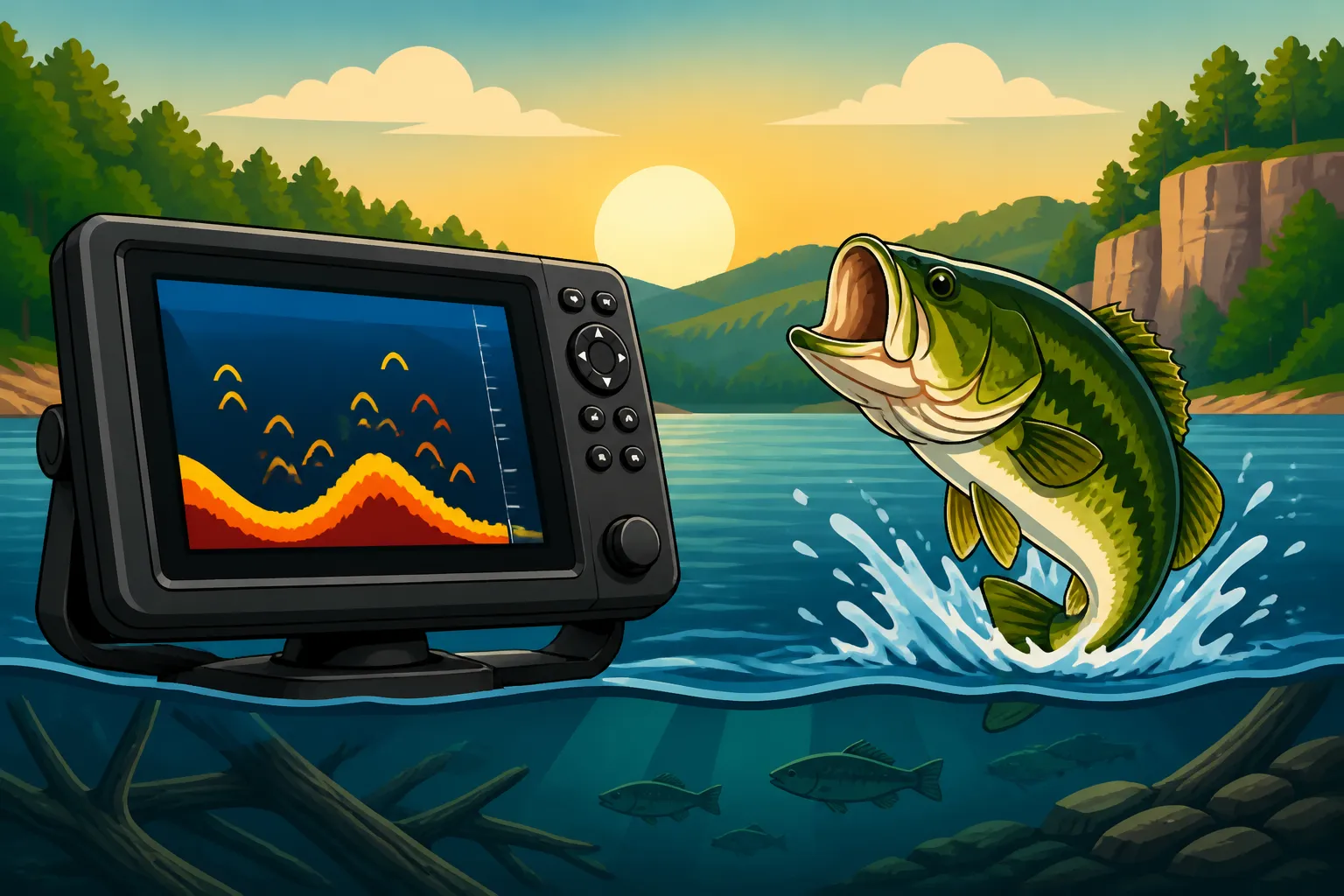
The unit then takes these signals and translates them into a visual representation on its screen. What you see is a detailed picture of the underwater world: the depth, the contours of the bottom, thermoclines, and those tell-tale arches or dots that indicate fish. The speed at which the sound waves return helps the unit determine the distance to the object, giving you precise depth readings. It's a marvel of modern technology that allows us to peek into the mysterious world below the surface, giving us an incredible advantage in our pursuit of Georgia's prized catches.
Key Features to Look For
When you start looking at fish finders, the sheer number of features can feel overwhelming. It's easy to get lost in the jargon, but some core features are truly game-changers for reservoir fishing. First, consider the display. A larger, higher-resolution screen is invaluable because it allows you to see more detail and distinguish between different types of targets. A small, pixelated screen might show you something is there, but a clear, vibrant display can help you identify if it's a brush pile, a rock formation, or a school of baitfish with predators lurking nearby.
Next, transducer capabilities are paramount. This is the part that sends and receives the sonar waves. Different transducers offer various frequencies and beam angles, which directly impact what you can see and how clearly. We'll dive deeper into these specifics shortly, but generally, having a transducer that can handle both high and low frequencies, and offers both wide and narrow beams, will give you the most versatile view of Georgia's diverse reservoir topography. Lastly, don't overlook user-friendliness; a powerful unit is only useful if you can easily navigate its menus and interpret its readings on the water.
Types of Fish Finders Best Suited for Georgia Reservoirs
Georgia's reservoirs, with their deep channels, submerged timber, vast open waters, and intricate shorelines, demand different capabilities from a fish finder compared to, say, a shallow pond or a fast-moving river. Understanding the various types available will help you narrow down the best choice for your specific fishing adventures on these expansive bodies of water.
Standalone Units and Combo Units
When you start shopping, you'll quickly encounter standalone fish finders and combo units. A standalone fish finder, as the name suggests, focuses purely on sonar capabilities. It excels at showing you what's beneath and around your boat, often with excellent detail and processing power dedicated solely to that task. These are great for anglers who already have a separate GPS unit or prefer to use their phone for navigation.
However, for most reservoir anglers, a combo unit is often the preferred choice. These units integrate a fish finder with GPS and mapping capabilities into one convenient device. This means you can see fish and structure while simultaneously navigating, marking waypoints, and reviewing detailed lake maps. On a large body of water like Lake Lanier or Lake Oconee, being able to pinpoint exact locations of successful catches, navigate back to a particular humidor, or follow contour lines with precision is incredibly valuable. Brands like Humminbird and Garmin offer a wide range of these integrated systems, making it easier to manage your electronics from a single display. You can often find a great selection of these combo units at a store like Bass Pro Shops or by browsing online retailers. Best Electronics for Bass Boats will delve into this topic more.
Dedicated Side Imaging and Down Imaging Systems
This is where fish finder technology really starts to shine for reservoir fishing. Traditional 2D sonar gives you a picture directly beneath your boat, which is good, but it has limitations. Dedicated Down Imaging (also known by brand-specific names like DownScan or ClearVü) takes that vertical view and renders it with photographic-like clarity, making it much easier to distinguish submerged trees, rock piles, and even individual fish from their shadows. This is incredibly useful for dissecting deep structure in Georgia's old riverbeds.
Side Imaging (or SideScan/SideVü) is the real game-changer for covering vast reservoir areas. Instead of just looking down, this technology sends out sonar beams horizontally, covering a wide area—hundreds of feet to either side of your boat. This means you can literally scan large flats, channel edges, or submerged timber for fish without driving directly over them. Imagine cruising along a contour on Lake Sinclair and seeing a school of crappie holding tight to a brush pile 50 feet to your left. This capability drastically reduces search time and increases your efficiency, making it an indispensable tool for finding those hidden hotspots in Georgia's Best Lakes for Fishing.
Portable and Castable Options for Bank or Kayak Anglers
Not everyone fishes from a fully rigged bass boat, and that's perfectly fine! Georgia offers incredible bank fishing and kayak fishing opportunities, and technology hasn't left these anglers behind. Portable fish finders are typically smaller, battery-powered units that can be mounted temporarily on a kayak, canoe, or even used from the bank. They often come with clamp-on transducers or suction cup mounts, making them easy to deploy and pack up. While they might not have the massive screens or multi-frequency capabilities of high-end boat units, they provide crucial depth and structure information that's far better than fishing blind.
Even more compact are castable fish finders, which are small, spherical devices that you literally cast out with your rod and reel. These connect wirelessly to your smartphone or tablet, displaying sonar readings right on your device screen. They're fantastic for bank anglers exploring new spots or for kayak anglers who want minimal clutter. While their range and depth capabilities might be limited compared to larger units, they offer an incredible amount of information for a relatively low entry cost. Many popular models can be found on Amazon, making them accessible to almost any angler looking to gain an edge from shore or a small craft. Best Kayaks for Fishing Georgia Lakes can be outfitted with these units quite easily.
Essential Features for Deep Georgia Reservoirs
Georgia's reservoirs aren't just big; they're often deep, complex environments with varying water clarities, thermoclines, and structures that can be challenging to decipher. To truly unlock their secrets, you need a fish finder equipped with features designed to handle these specific conditions. It's not just about seeing something; it's about seeing it clearly and accurately.
Transducer Frequencies and Beam Angles
The transducer is the unsung hero of your fish finder, and its capabilities are directly tied to the frequencies and beam angles it employs. Frequencies refer to the pitch of the sound waves emitted. Lower frequencies (like 50 kHz or 83 kHz) penetrate deeper into the water, which is crucial for exploring the depths of Georgia's larger reservoirs, but they offer less detail. Higher frequencies (like 200 kHz or 455/800 kHz) don't penetrate as deep but provide much finer detail, allowing you to distinguish individual fish or the precise texture of the bottom. For truly versatile reservoir fishing, a transducer that can utilize multiple frequencies (often called dual-beam or CHIRP sonar) is ideal, allowing you to get both depth penetration and crisp detail.
Beam angles refer to how wide the cone of sonar is. A narrow beam (around 20 degrees) is excellent for precise target separation and identifying specific structures directly beneath your boat in deep water. A wide beam (45 to 60 degrees or more) covers a larger area, helping you find fish faster, especially when searching for schools of baitfish or scattered fish on flats. Advanced transducers for side and down imaging use even narrower, fan-shaped beams to create those photo-like images. Having a transducer that offers a combination of these frequencies and angles will give you the most comprehensive view of the diverse underwater landscapes in Georgia's impoundments.
Screen Size and Resolution
While it might seem like a luxury, screen size and resolution are paramount on a fish finder, especially when you're trying to interpret complex sonar images on a bright, sunny day on the lake. A larger screen (think 7 inches or more) provides more real estate to display multiple views simultaneously – for example, 2D sonar, side imaging, and a GPS map all at once. This multi-pane view is invaluable for quickly cross-referencing information and getting a complete picture of your surroundings without constantly toggling between screens.
Resolution, measured in pixels, dictates the clarity and sharpness of the image. A higher resolution means more pixels, leading to a much more detailed and lifelike representation of what's below. You'll be able to differentiate individual tree limbs in a submerged brush pile, clearly see baitfish schools, and identify those distinct fish arches rather than just模糊的blips. Investing in a unit with a good screen, perhaps an IPS display for wider viewing angles, will drastically improve your ability to read the water and make better decisions, whether you're chasing Best Bass Fishing Coves on Lake Oconee or Best Crappie Fishing Spots on Lake Blackshear, Georgia.
GPS and Mapping Capabilities
For serious reservoir anglers, a fish finder without robust GPS and mapping capabilities is like having a car without a steering wheel. These features are non-negotiable for navigating vast waters and consistently finding your way back to productive spots. Integrated GPS allows you to pinpoint your exact location, track your movement, and most importantly, mark waypoints. Imagine finding a killer brush pile with your side imaging – with GPS, you can drop a waypoint directly on it and return to it precisely, even weeks later.
Detailed mapping, often pre-loaded or available via purchasable cards, provides contour lines, navigation aids, and even depth highlight features for most major Georgia reservoirs. These maps transform your screen into a topographical chart of the underwater world, allowing you to identify humps, ledges, creek channels, and submerged roadbeds before you even send out a sonar wave. Some advanced units even allow for "contour mapping" or "Genesis Live" type features, where you can create your own custom, highly detailed depth maps of areas you fish, constantly improving your understanding of a particular lake's nuances. This is invaluable for tracking down fish in areas like Best Spots to Catch Spotted Bass on Lake Lanier.
Choosing the Right Fish Finder for Your Fishing Style and Budget
Selecting the perfect fish finder isn't just about picking the most expensive one with all the bells and whistles. It's about finding the right balance between powerful features, your specific fishing habits, and, let's be honest, your budget. Every angler has different needs, and what works for a tournament pro might be overkill for a weekend warrior.
Considering Your Boat Size and Power Needs
Your boat itself plays a significant role in determining the right fish finder. If you're running a smaller jon boat or even an inflatable, a massive 12-inch screen with a complex network of transducers might be impractical to mount and power. In such cases, a more compact combo unit, perhaps a 5 or 7-inch display, offering 2D sonar, down imaging, and basic GPS, would be a more sensible and manageable choice. These smaller units are often easier to install and draw less power, which is important if you're relying on a single battery for your trolling motor and electronics.
For larger bass boats or deep-V walleye boats that frequent vast reservoirs, you have more flexibility. These boats can handle larger screens, multiple units (perhaps a dedicated side imaging unit at the console and a separate 2D/GPS unit at the bow for the trolling motor), and more powerful transducers. They also typically have more robust electrical systems to support these power-hungry devices. Thinking about where you'll mount the unit, how much dashboard space you have, and your battery capacity will guide your decision significantly. Remember to consider your Georgia Boat Registration Requirements Explained when outfitting your vessel.
Balancing Features with Affordability
This is often the trickiest part. Everyone wants the best technology, but budgets are real. The good news is that fish finder technology has advanced to the point where even mid-range units offer incredible capabilities that were once reserved for high-end models. Decide which features are absolute must-haves for your fishing style. Do you really need live sonar that shows fish moving in real-time, or would excellent side imaging be sufficient for finding structure and fish? For many reservoir anglers, a unit with strong 2D, down imaging, side imaging, and integrated GPS with mapping is the sweet spot for functionality and cost-effectiveness.
You'll find various brands offering competitive options across different price points. Companies like Lowrance, Humminbird, Garmin, and Raymarine all have excellent products. It’s worth checking out retailers like Bass Pro Shops, which often have display models you can interact with, or reading detailed reviews on sites like Amazon to see how different units perform in real-world scenarios. Don't be afraid to start with a slightly less feature-rich unit and upgrade later if your fishing needs evolve; a good foundation will always serve you well. For a deeper dive into overall gear, check out Best Rods and Reels for Georgia Fishing.
Installation Considerations and DIY vs. Professional
Once you've picked your fish finder, the next step is getting it on your boat. Installation can range from relatively simple to quite complex, depending on the unit's features and your comfort level with tools and boat wiring. Basic 2D sonar units often come with a transom-mount transducer that's fairly straightforward to install, requiring drilling a few holes for the transducer and running a power cable to your battery.
More advanced units, especially those with side imaging or multiple transducers (e.g., one on the transom and one on the trolling motor), can be more involved. They might require running longer cables, integrating with a trolling motor that has a built-in transducer, or even networking multiple units together. If you're not comfortable with drilling into your boat, wiring electronics, or interpreting complex diagrams, it's often worth considering professional installation. While there's an added cost, a correctly installed system will perform optimally and save you headaches down the road. For kayak anglers, installation is generally much simpler, often involving temporary mounts, though How to Rig a Kayak for Fishing offers some great tips.
Maximizing Your Fish Finder's Potential on Georgia Waters
Having a top-of-the-line fish finder is one thing, but knowing how to use it effectively is another. It's like owning a high-performance sports car – it won't win races by itself. Understanding how to interpret the data, utilize its mapping features, and apply that information to specific fishing scenarios on Georgia's reservoirs will make all the difference in your success.
Interpreting Sonar Readings
This is where the rubber meets the road. Your fish finder's screen displays a lot of information, and learning to interpret it quickly and accurately is a skill that develops with practice. On 2D sonar, fish often appear as arches. A strong, well-defined arch usually indicates a larger fish or one passing directly through the sonar cone. Smaller arches or dots might be smaller fish or a fish on the edge of the cone. Schools of baitfish will often show up as large, dense clouds. The depth of these arches tells you exactly where in the water column the fish are holding, which is critical for presenting your bait at the right level.
With Down Imaging, the picture becomes even clearer, often showing fish as distinct shapes near structure, making it easier to identify if they are holding tightly to a brush pile or suspended over a deep creek channel. Side Imaging takes time to master, but once you do, you'll be amazed at how clearly you can see submerged timber, rock piles, ledges, and fish scattered across the bottom or suspended off to the sides of your boat. Learning to differentiate between cover, structure, and actual fish marks is key. Remember, practice makes perfect – the more time you spend watching your screen and correlating it with your catches, the better you'll become.
Using Waypoints and Custom Maps
The GPS functionality of your fish finder is a powerful tool for consistency and efficiency. Every time you find a productive spot—whether it's a brush pile, a rock outcrop, a submerged roadbed, or a school of actively feeding fish—mark it as a waypoint. These digital breadcrumbs allow you to return to that exact spot again and again, even if conditions change or you're fishing a vast expanse of water like Clarks Hill Lake. Over time, you'll build a personal library of hotspots that are proven to hold fish.
Many modern fish finders also allow for custom mapping. Features like Humminbird's AutoChart Live or Garmin's Quickdraw Contours let you create your own detailed contour maps in real-time as you drive your boat. This is incredibly useful for areas that might not be well-mapped, or for identifying subtle depth changes that regular maps miss. You can even highlight specific depth ranges that you know are productive for certain species, like the 10-20 foot range for bass during certain times of the year, or deeper for Winter Fishing at Lake Sinclair While Other Georgia Lakes Slow Down. This level of customization truly personalizes your fishing experience and gives you a significant edge.
Tips for Fishing Specific Reservoir Structures
Once your fish finder reveals the underwater world, it's up to you to leverage that information to catch fish. Georgia's reservoirs are full of diverse structures, and a fish finder helps you target them effectively. For example, if your sonar shows fish suspended over a deep creek channel, you'll know to use baits that can reach those depths quickly, like a jigging spoon or a deep-diving crankbait. If you see bass holding tight to submerged timber on Side Imaging, you'll want to pitch a Texas-rigged worm or a jig right into that cover, rather than blindly casting to open water.
Understanding How Water Temperature Affects Fish Behavior and how fish relate to structure seasonally is also crucial. In spring, you might use your fish finder to locate shallow spawning beds or pre-spawn staging areas near points and humps. In summer, you'll be looking for thermoclines and fish holding in deeper, cooler water around offshore structure like brush piles and ledges. Come fall, fish might be chasing bait in creek arms, which your Side Imaging will easily reveal. Using your fish finder to identify these patterns and then adapting your Summer Fishing Patterns on Georgia's Big Lakes to present baits effectively will exponentially increase your success rate.
| Fish Finder Feature | Benefit for Georgia Reservoirs | Ideal for Which Scenarios |
|---|---|---|
| High-Resolution Screen | Clearer images, easier to differentiate fish from structure | Identifying individual fish near submerged brush piles |
| Dual/CHIRP Sonar | Combines deep penetration with sharp detail | Exploring deep channels while identifying baitfish schools |
| Down Imaging | Photo-like views directly beneath the boat | Pinpointing fish holding tight to rock piles or stumps |
| Side Imaging | Scans wide areas to either side of the boat, reducing search time | Locating hidden brush piles or ledges on expansive flats |
| Integrated GPS & Maps | Navigation, waypoint marking, detailed contour lines | Returning to exact hotspots, navigating vast lakes like Lanier |
| Custom Mapping (e.g., Quickdraw) | Create your own highly detailed depth maps of unfished areas | Mapping new areas or refining existing maps for precision |
| Portable/Castable | Accessible sonar for bank or kayak anglers | Scouting new shore fishing spots or quiet kayak adventures |
Disclaimer
This article is for general informational purposes only and does not constitute professional advice. Laws, prices and regulations vary by location and change over time. Consult a qualified professional for guidance on your specific situation.