Best Small Boats for Georgia’s Trout Streams
The dream of chasing Georgia trout often involves visions of pristine mountain streams, cold, clear water, and a peaceful day with a fly rod. But the reality can hit pretty quickly: many of those idyllic spots are just plain tough to access. You might find yourself trying to navigate thick brush, slippery rocks, or just stretches of water that are too deep to wade but too shallow for a big boat. This guide is all about helping you unlock those harder-to-reach trout havens by exploring the best small boats perfectly suited for Georgia’s diverse trout streams.
Why Small Boats Are Essential for Georgia Trout Streams
Let's face it, Georgia's trout streams aren't like the wide, slow-moving rivers you might find out West. Up in the North Georgia mountains, we're talking about often narrow, winding waterways, sometimes choked with fallen trees, rocky shoals, and stretches of very shallow water. Trying to get a traditional bass boat or even a medium-sized jon boat into these areas is not only impractical but often impossible. That's where small boats truly shine, offering an unparalleled advantage for serious trout anglers.
Navigating Shallow and Tight Waters
The number one reason small boats are a game-changer for trout fishing in Georgia is their ability to navigate incredibly shallow water. Many of our best trout streams have long sections that are only a few inches deep, interspersed with deeper pools. A larger boat would simply get stuck, leaving vast stretches of prime fishing territory inaccessible. With a lightweight kayak, canoe, or even a specialized small jon boat, you can often glide over those skinny water sections, or with a bit of effort, portage around unnavigable obstacles. This opens up entirely new areas where the trout see far less pressure, making your chances of a successful outing much higher.
Think about the Toccoa River or the upper Chattahoochee; while there are deeper sections, many tributaries and even parts of the main stem are very shallow. A small boat allows you to float through these areas, reaching pools and riffles that are too far for comfortable wading and too tricky for anything bigger. It’s about covering more water efficiently and getting to those tucked-away spots where the wild brown and rainbow trout might be holding.
Stealth and Minimizing Disturbance
Trout, especially larger, wild trout, are incredibly wary creatures. They are highly sensitive to vibrations, shadows, and sudden movements. A big, noisy boat with a gas motor is a sure way to spook every fish in a half-mile radius. Small boats, particularly kayaks and canoes, offer a level of stealth that is unmatched. You can quietly paddle or even slowly drift downstream, presenting your fly or lure with minimal disruption to the water or the fish below. This quiet approach is absolutely critical in clear, shallow trout streams where fish can see and hear everything.
Imagine slowly paddling up to a promising bend, the only sound being the gentle dip of your paddle. You're able to position yourself perfectly for a cast, remaining unseen and unheard by the trout holding in the current seam. This kind of nuanced approach is impossible with larger, louder vessels. Even a small electric trolling motor on a jon boat is significantly quieter than a gas outboard, allowing for a more subtle presentation, which can make all the difference on a tough trout day.
Portability and Ease of Access
Getting your boat to the water is often half the battle, especially when you're aiming for more remote trout streams in North Georgia. Larger boats require boat ramps, often paved and maintained, which aren't always available on smaller rivers or sections of larger ones. Small boats, however, offer incredible portability. Many kayaks and canoes can be car-topped, meaning they can be strapped directly onto the roof rack of your vehicle. This allows you to access remote put-in spots that are little more than a dirt pull-off by the side of the road.
Even smaller jon boats can often be launched from unimproved banks or hand-launched in areas where a full-sized trailer wouldn't even dream of going. This ease of access dramatically expands your options for where to fish, letting you escape the crowds that tend to gather at more conventional boat ramps. For those truly adventurous anglers, ultralight packrafts can even be backpacked into wilderness areas, opening up fishing opportunities in places most people only dream about. The ability to launch from almost anywhere means more time fishing and less time worrying about logistics.
Types of Small Boats Best Suited for Trout Streams
When you're thinking about a small boat for trout streams, you're looking at a specific set of characteristics: maneuverability, shallow draft, and quiet operation. Thankfully, there are several excellent options, each with its own set of advantages depending on the specific type of Georgia trout stream you plan to tackle.
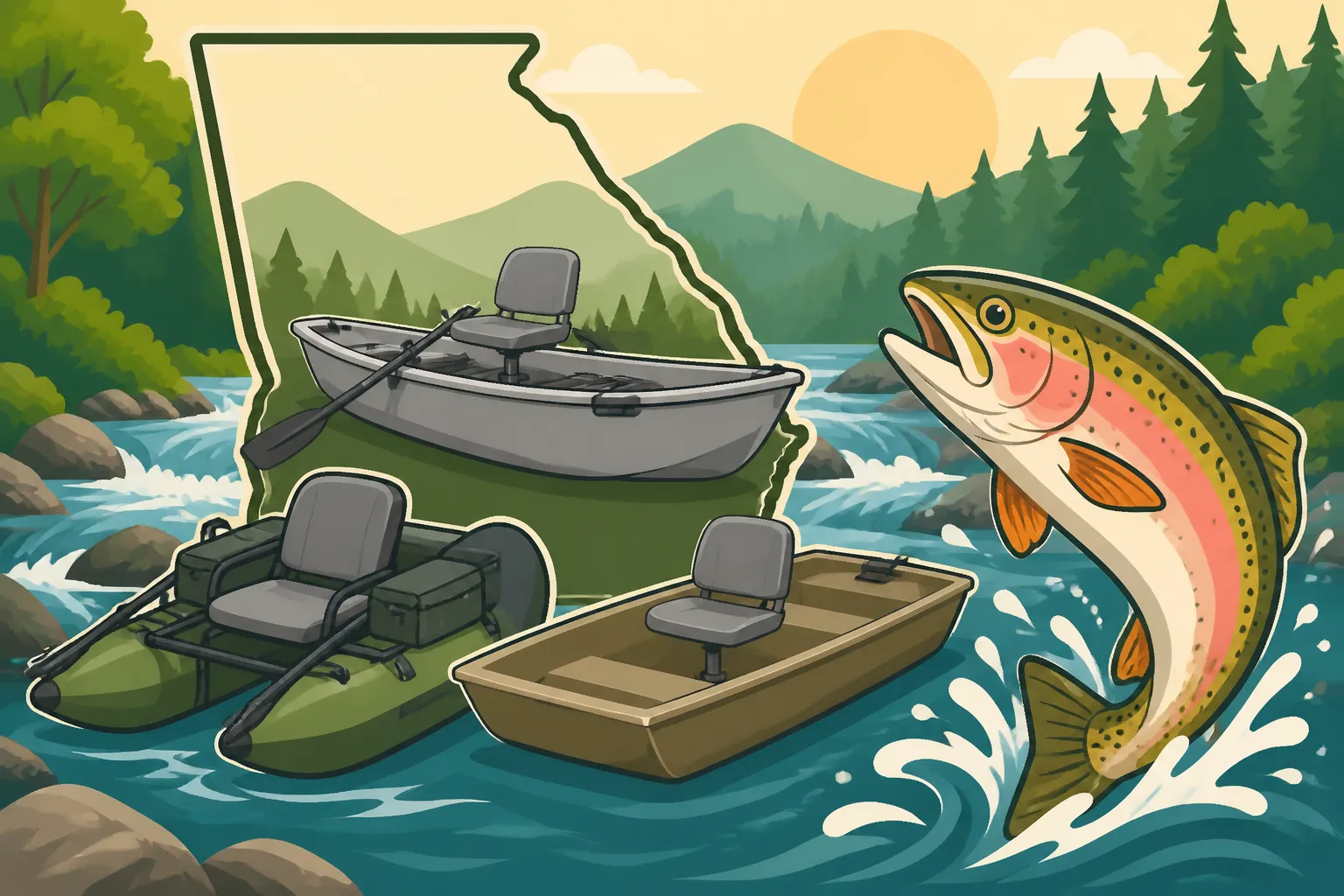
Kayaks: The Agile Angler's Choice
Kayaks have exploded in popularity among anglers, and for good reason. They are arguably the most versatile small boat for trout streams, especially in Georgia's often tight and winding waterways. Their long, narrow profile allows them to glide through shallow water with minimal effort and navigate sharp turns with ease.
Sit-On-Top vs. Sit-In Kayaks: For fishing, most anglers prefer sit-on-top (SOT) kayaks. They offer more open deck space for gear, are easier to get in and out of, and are self-bailing, meaning water drains right out. Sit-in kayaks offer more protection from the elements but can be harder to fish from and self-rescue if you capsize. Many SOT fishing kayaks now feature raised seating, which provides a much better vantage point for spotting fish and casting, making them a fantastic choice for sight-fishing in clear water.
Paddle vs. Pedal Drive Kayaks: Traditional paddle kayaks are lightweight and excellent for shallow water where you might need to quickly lift your paddle. Pedal drive kayaks, on the other hand, use foot pedals to turn a propeller or flippers, leaving your hands free for casting and fighting fish. This hands-free operation is a huge advantage, especially when trying to maintain position in a current while actively fishing. However, pedal drives often protrude below the hull, which can be a disadvantage in extremely shallow or rocky areas where they might strike obstacles. For the smaller, shallower Georgia trout streams, a traditional paddle kayak might be the more practical choice, allowing you to quickly navigate around submerged rocks and logs. You can find a wide range of fishing kayaks, from basic models to highly outfitted ones, at retailers like Bass Pro Shops or online at Amazon.
Canoes: Traditional Versatility
Canoes represent a more traditional approach to river travel and fishing, and they still hold a strong place in the small boat category for trout streams. They offer a unique blend of capacity, stability, and versatility that can be very appealing, especially if you often fish with a partner or carry a lot of gear.
Capacity and Open Design: One of the biggest advantages of a canoe is its open design and generous carrying capacity. You can easily fit multiple anglers, a cooler, tackle boxes, and camping gear for an overnight trip. This makes them excellent for leisurely floats down larger, but still intimate, rivers. The open space also makes it easier to access gear and move around a bit more than in a kayak.
Stability and Maneuverability: While generally not as stable as a purpose-built fishing kayak for standing, many wider canoes offer decent stability. Learning to paddle a canoe effectively for fishing in current takes practice, but once mastered, they can be surprisingly nimble. Tandem canoes allow one person to paddle while the other fishes, or you can paddle solo from the middle seat. They also excel at downstream travel, where you can drift with the current and make precise casts. However, turning a canoe in tight spots can be more challenging than a kayak, and they are more susceptible to wind because of their higher profile.
Jon Boats: Stable and Customizable Platforms
For anglers who prefer a bit more stability, space, and the option for motorized propulsion, a small jon boat can be an excellent choice for Georgia's larger trout rivers or tailwaters. These flat-bottomed boats are known for their rugged durability and open layout.
Stability and Customization: Jon boats are inherently stable due to their flat bottom design, making them ideal for standing and casting. This stability is a huge advantage for fly fishermen who need to make long, accurate casts. Their open interior is also a blank canvas for customization. You can add swivel seats, rod holders, casting platforms, and even small electric motors. A small, lightweight jon boat with a shallow-draft hull and an electric trolling motor can be a fantastic setup for covering miles of river quietly.
Weight and Draft Considerations: While smaller jon boats are designed for shallow water, they generally have a slightly deeper draft than kayaks or canoes, especially with an angler and gear on board. This means they might struggle in the absolute shallowest sections where a kayak would glide effortlessly. However, for waters like the Chattahoochee River below Buford Dam or wider sections of the Toccoa, where you might encounter deeper runs and longer stretches of water, a small jon boat offers a comfortable and efficient fishing platform. You'll also need a trailer for most jon boats, even small ones, so access points with suitable ramps become more critical. For specific boat ramp information, check out Top Boat Ramp Access Points in Georgia.
Inflatables and Packrafts: Ultra-Portable Options
For the adventurous angler looking to access truly remote, difficult-to-reach trout streams, inflatable boats and packrafts offer the ultimate in portability. These are not your typical lake inflatables; these are rugged, purpose-built vessels designed for navigating rivers.
Ultimate Portability: The primary advantage of inflatables and packrafts is their ability to be deflated, rolled up, and easily transported. Many packrafts can fit into a backpack, allowing you to hike into remote sections of streams or areas only accessible by foot. This opens up entirely new frontiers for trout fishing where traditional boats simply cannot go. They are incredibly lightweight, making portaging around rapids or waterfalls much more manageable.
Durability and Stability: Modern inflatables are made from incredibly durable materials like PVC or Hypalon, designed to withstand bumps and scrapes against rocks. While they might feel less stable than a hard-sided boat initially, their wide, flexible pontoons offer excellent secondary stability, making them surprisingly forgiving in choppy water. However, their light weight means they can be more susceptible to wind, and they typically offer less internal storage space compared to a canoe or even some fishing kayaks. For a comprehensive list of what to bring on such an adventure, a Kayak Fishing Gear Checklist for Georgia Anglers can be a great starting point, even if you're in a packraft.
Key Features to Look For in a Trout Stream Boat
Choosing the right small boat for Georgia's trout streams isn't just about picking a type; it's about evaluating specific features that will enhance your experience and ensure safety and effectiveness on the water. Given the varied conditions of our streams, from gentle flows to swift currents and rocky bottoms, certain characteristics become paramount.
Durability and Material Considerations
Trout streams, especially those in the North Georgia mountains, can be unforgiving. Rocks, submerged logs, and shallow gravel bars are common obstacles. Your boat needs to be able to handle a fair amount of abuse without compromising its integrity.
Rotomolded Plastic for Kayaks: Most fishing kayaks are made from rotomolded polyethylene plastic. This material is incredibly durable, resistant to abrasions, and can withstand impacts with rocks and other submerged objects. It's also relatively inexpensive to manufacture, which keeps the cost of many kayaks accessible. While it can scratch, deep gouges are rare, and minor scrapes are usually just cosmetic. This makes rotomolded kayaks an excellent choice for bumping down rocky streams.
Aluminum for Jon Boats: Small jon boats are typically constructed from aluminum. Aluminum is lightweight, strong, and highly resistant to corrosion, making it perfect for both freshwater and saltwater environments (though we're focused on trout here!). Its rigidity means it can handle impacts, and if a dent does occur, it's often repairable. Riveted or welded construction varies, with welded hulls generally offering greater strength and fewer potential leak points over time.
PVC and Hypalon for Inflatables: High-quality inflatable boats and packrafts use heavy-duty PVC or Hypalon fabric. Hypalon is generally considered superior for its UV resistance and longevity but is more expensive. PVC is also very durable, especially when reinforced, and is common in many modern inflatables. Look for multiple air chambers for added safety and repair kits that come standard, just in case you encounter a sharp object.
Weight and Portability
The ability to easily transport and launch your boat is critical for accessing remote trout fishing spots. This often means prioritizing lighter options.
Car-Topping and Manual Launching: If you plan to fish smaller streams without formal boat ramps, the weight of your boat is paramount. Many solo fishing kayaks weigh between 50-80 pounds, making them manageable for one person to load onto a car roof rack. Tandem canoes can be heavier but are usually handled by two people. The lighter your boat, the easier it is to carry it over short distances (known as portaging) around logjams or shallow rapids that are impassable by floating. This freedom to put in almost anywhere dramatically expands your fishing opportunities.
Trailer vs. Cart: While a small jon boat might require a trailer, consider how small and light that trailer can be. Some anglers opt for custom-built or small utility trailers that are easy to maneuver. For kayaks and canoes, a wheeled kayak cart (often available at stores like Bass Pro Shops or online at Amazon) is an absolute lifesaver for rolling your boat from your vehicle to the water's edge, saving your back for casting.
Stability and Maneuverability
When you're fishing a flowing river, stability and maneuverability are key. You need a boat that feels secure, allows you to cast effectively, and can navigate currents and obstacles.
Primary vs. Secondary Stability: Kayaks and canoes have two types of stability. Primary stability is how stable the boat feels when you first get in, while it's flat on the water. Secondary stability is how stable it feels when tilted on its edge. For casting, especially fly casting where you might be twisting and turning, good primary stability is important. For navigating currents or leaning into a turn, good secondary stability prevents capsizing. Wider, flatter bottom boats (like jon boats or wider fishing kayaks) generally have better primary stability.
Tracking and Turning: In a river, you'll constantly be navigating. Good maneuverability means the boat turns easily in tight spots, allowing you to avoid rocks or position yourself for a perfect drift. However, too much maneuverability can lead to "spinning" in the current. A balance is often ideal, allowing the boat to track reasonably straight but respond quickly to paddle or pedal input. Shorter boats generally turn more easily, while longer boats track straighter.
Storage and Rigging Options
While trout fishing might seem minimalist, you still need a place for your gear, and having it organized and accessible can make a big difference in a productive day.
Rod Holders: Integrated or aftermarket rod holders are essential for securing your rods while paddling, moving between spots, or fighting a fish. Vertical rod holders keep them out of the way, while horizontal holders can be good for quick access.
Dry Storage and Hatches: Many fishing kayaks and even some canoes come with watertight hatches or dry bags. These are critical for keeping your phone, keys, wallet, and extra layers dry, especially if you happen to get splashed or capsize.
Gear Tracks and Mounting Systems: Modern fishing kayaks often feature "gear tracks" or universal mounting systems. These allow you to easily attach accessories like fish finders, camera mounts, extra rod holders, or tackle organizers without drilling into your boat. This versatility means you can customize your setup for different fishing scenarios. Consider an anchor system too, especially for holding position in slower currents or pools; a simple drag chain or small folding anchor can work wonders.
Essential Gear and Accessories for Small Boat Trout Fishing
Having the right small boat is a fantastic start, but it's only part of the equation for a successful and safe trout fishing adventure in Georgia. Equipping your vessel with essential gear and accessories can dramatically enhance your experience, making it more comfortable, efficient, and above all, safer.
Safety First: Life Jackets and Whistles
No matter how calm the water seems, safety should always be your top priority. Accidents can happen quickly, especially on rivers with currents, submerged obstacles, and changing water levels.
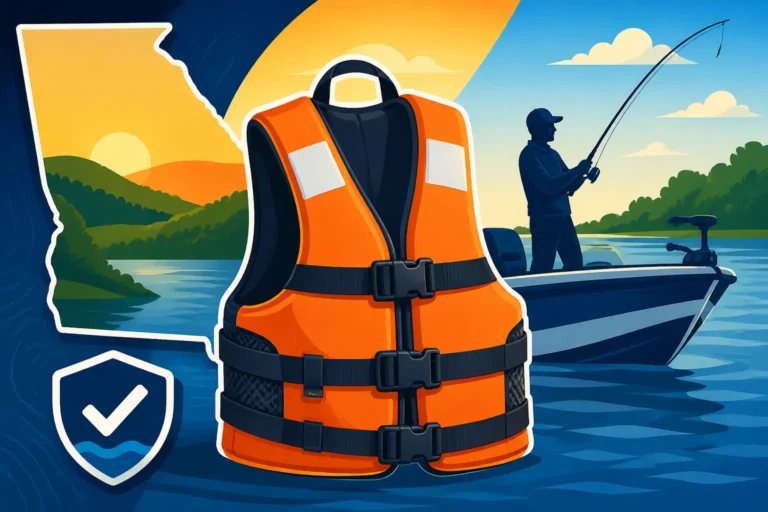
Always Wear a Life Jacket: This isn't just a recommendation; it's often a legal requirement and always smart practice. A properly fitted, U.S. Coast Guard-approved life jacket (Personal Flotation Device or PFD) can save your life. Choose a fishing-specific PFD with pockets and attachment points for small tools, as these are designed for comfort during long days on the water. Even strong swimmers can be knocked unconscious or injured, making a PFD vital. Remember that Life Jacket Requirements for Kids Under 13 in Georgia are particularly stringent, ensuring our youngest anglers are protected. To learn more about types, refer to Coast Guard-Approved Life Jacket Types for Georgia Boaters.
Whistle or Other Sound-Producing Device: A whistle is a simple, inexpensive, and vital piece of safety equipment. It allows you to signal for help in an emergency, alert other boaters to your presence, or communicate with a fishing partner, especially if you get separated or around a bend. Always keep it easily accessible, perhaps attached to your PFD.
Paddles, Anchors, and Propulsion
How you move your boat and how you stay put are crucial considerations for river fishing.
Choosing the Right Paddle: For kayaks, a lightweight, durable paddle is key. The length will depend on your height and the width of your kayak. A good rule of thumb is that when standing the paddle vertically, your chin should be roughly at the throat of the blade. Look for paddles with asymmetrical blades that are slightly feathered (offset) to reduce wind resistance. For canoes, traditional single-bladed paddles are used, with lengths depending on the paddler's height and seating position.
Anchoring in Current: While you might not use a heavy anchor, a small, collapsible anchor or a drag chain is incredibly useful for slowing your drift or holding position in a promising pool. A simple grappling anchor with a bit of chain and rope can be surprisingly effective. Anchor trolleys on kayaks allow you to deploy the anchor from the bow or stern, adjusting your boat's position without moving the anchor itself, which is a fantastic feature for fishing in current.
Electric Trolling Motors: For jon boats, and increasingly for larger fishing kayaks, a small electric trolling motor can revolutionize your ability to cover water and hold position. These are quiet, efficient, and allow for hands-free propulsion, letting you focus on fishing. Make sure to consider battery life and thrust appropriate for the size of your boat and the currents you'll encounter.
Rod Holders, Storage, and Organization
Keeping your fishing gear secure, organized, and readily accessible is paramount on a small boat where space is at a premium.
Built-In vs. Aftermarket Rod Holders: Many fishing kayaks and jon boats come with flush-mount or adjustable rod holders. If not, aftermarket options abound. Having at least two or three rod holders allows you to carry multiple setups (e.g., a fly rod and a spinning rod) and to secure your rod while paddling or netting a fish.
Dry Bags and Tackle Management: Invest in quality dry bags for anything that absolutely cannot get wet, like electronics, a first-aid kit, or extra clothes. For tackle, compact tackle boxes or soft-sided tackle bags are ideal. Keep frequently used lures, tools, and leader material in an easily reachable spot. Many kayaks have bungee cords on the deck for securing items or dedicated storage wells.
Safety Kit: Beyond your PFD, a small safety kit should include items like a small first-aid kit, a headlamp (even for daytime trips, just in case), a knife, and a small length of rope.
Electronics and Navigation (if applicable)
While not strictly necessary for every trout stream outing, certain electronics can enhance your experience, especially on larger rivers or if you're exploring new areas.
Fish Finders: For deeper sections of rivers or for larger tailwater systems, a compact fish finder can help you identify depth changes, submerged structure, and even fish. Many models are available that are designed specifically for kayak or small boat use, with portable transducers and battery packs. If you are venturing out on bigger bodies of water, even within a river system, a good fish finder is a must, you can look for options in Best Fish Finders for Georgia Reservoir Fishing.
GPS/Navigation Apps: While many trout streams are relatively straightforward, having a way to navigate can be reassuring, especially in unfamiliar territory. A dedicated handheld GPS unit or a reliable GPS app on your smartphone (with waterproof protection) can help you track your progress, mark productive spots, and ensure you know where you are in relation to launch and take-out points.
Navigating Georgia's Diverse Trout Waters with a Small Boat
Georgia's trout waters are incredibly varied, ranging from tiny headwater streams to significant rivers. Each type of water presents unique challenges and opportunities for the small boat angler. Understanding these differences will help you choose the right vessel and approach for your specific adventure.
North Georgia Mountain Streams: The Fly-Fishing Paradise
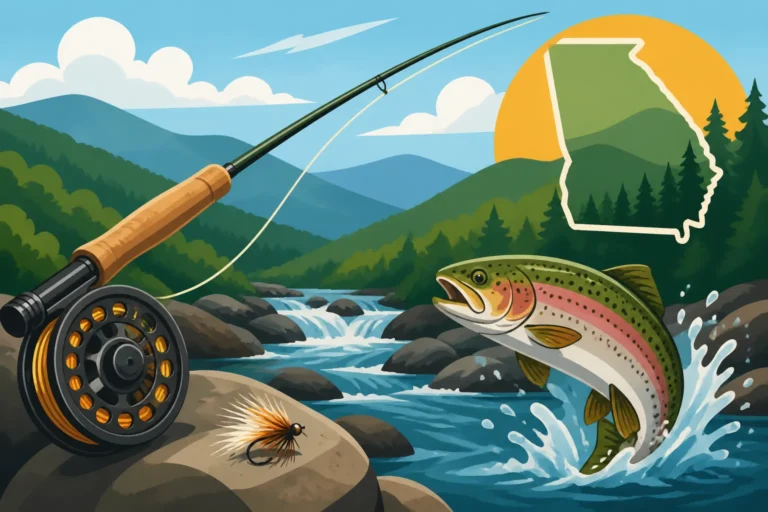
When most people think of trout fishing in Georgia, their minds immediately go to the pristine, cold-water streams nestled in the Appalachian foothills of North Georgia. These are often the true "fly-fishing paradise," home to wild brook, brown, and rainbow trout.
Ideal Small Boats: For these smaller, typically shallower, and often obstacle-laden streams, the absolute best options are lightweight, highly maneuverable kayaks (especially paddle kayaks), canoes, or ultralight packrafts. The emphasis here is on minimal draft and the ability to portage. Rivers like the upper Toccoa River or sections of the Chattahoochee River headwaters are perfect candidates for this type of boating. You'll want a boat that can be easily controlled in current and is tough enough to scrape over rocks. Think nimble and quiet. Many anglers use these small vessels to access areas that are simply too far to wade comfortably, allowing them to fish untouched stretches of water with precision. If you’re looking for more info on specific locations, Toccoa River Trout Fishing in Georgia and Chattahoochee River Headwaters Trout Fishing are great resources.
Techniques: On these waters, stealth is paramount. Fly fishing is particularly effective from a small boat, allowing for delicate presentations. If spin fishing, light tackle and small, subtle lures are key. Often, it's about drifting quietly downstream, spotting fish, and making quick, accurate casts.
Larger Rivers and Tailwaters: Accessing Deeper Runs
While the small mountain streams get a lot of attention, Georgia also boasts larger rivers and tailwater fisheries that offer excellent trout fishing. These waters tend to be deeper, wider, and have more consistent flows, often regulated by dams.
Ideal Small Boats: For these waters, you have a bit more flexibility. Wider, more stable fishing kayaks (including pedal drive models), canoes, and small jon boats equipped with electric trolling motors really shine here. These boats allow you to cover more water efficiently, hold position in stronger currents, and access deeper channels or larger eddies that might be out of reach from the bank. The Chattahoochee River below Buford Dam is a prime example of a tailwater where a small boat is almost essential for effective trout fishing. Here, you'll encounter sections that are too deep to wade, but too narrow or complex for a large powerboat. Check out Best Fishing Spots on the Chattahoochee River Below Buford Dam for more insights on this specific area.
Techniques: Trolling with small flies or lures can be effective in deeper sections, as can drifting with indicators and nymphs. Spin fishing with small crankbaits or jigs also works well. The ability to anchor briefly or hold position with a trolling motor allows you to thoroughly work promising runs or pools, especially when targeting larger holdover trout.
Public Access and Launching Challenges
Finding legal and practical access points can sometimes be the trickiest part of small boat trout fishing in Georgia. Many prime trout waters flow through private land or designated wilderness areas with limited infrastructure.
Designated Boat Ramps vs. Informal Access: While larger rivers might have formal boat ramps, many smaller trout streams do not. This means you might be looking for unofficial pull-offs, public easements, or even carrying your boat from a roadside parking spot. Always be mindful of private property rights and only access water where it's legal and safe to do so. State parks and Wildlife Management Areas (WMAs) often provide better access points, sometimes with primitive launches suitable for small boats.
The Role of Portaging: For truly wild and remote streams, be prepared for portaging – physically carrying your boat and gear around obstacles like waterfalls, major logjams, or unrunnable rapids. This is where the extreme light weight of a packraft or a very small kayak becomes a huge advantage. Understanding where the formal access points are is crucial, but also be aware of where you can informally get a small boat in. For general information on where to launch, explore resources like Top Boat Ramp Access Points in Georgia and Shore Fishing Access Points in Georgia. A little pre-trip scouting on maps can save a lot of frustration on the water.
Maintenance and Care for Your Trout Stream Vessel
You've invested time and perhaps a bit of money into finding the perfect small boat for your Georgia trout adventures. Now, let's talk about how to keep it in top shape so it can serve you faithfully for many seasons to come. Proper maintenance isn't just about aesthetics; it's about prolonging the life of your boat, ensuring its safety, and protecting our precious waterways.
Post-Trip Cleaning and Inspection
After a day on the river, it's tempting to just toss your boat back on the trailer or roof rack and head home. However, taking a few extra minutes for cleaning and inspection can make a world of difference.
Rinse Off Dirt and Debris: Georgia's streams can carry a lot of silt, mud, and organic debris. A thorough rinse with fresh water, ideally a hose, will remove this grime. Pay special attention to crevices, scupper holes, and any rigging. If you've been in a particularly mucky spot, a soft brush and mild soap can help. This not only keeps your boat looking good but also prevents the buildup of abrasive materials that can slowly wear down surfaces.
Preventing Invasive Species: This is perhaps the most critical reason for cleaning your boat. Invasive aquatic species, like certain plants or microscopic organisms, can hitchhike on your boat, paddle, and gear from one waterbody to another, potentially devastating local ecosystems. Always follow the "Clean, Drain, Dry" principle.
- Clean: Remove all visible mud, plants, fish, or animals from your boat and gear.
- Drain: Pull your drain plug and drain all water from the hull, bilge, livewells, and bait buckets.
- Dry: Allow your boat and gear to thoroughly dry before using it in another waterbody. This might mean allowing it to sit in the sun for several days.
Inspect for Damage: While rinsing, take the opportunity to give your boat a quick once-over. Check for new scratches, gouges, or cracks, especially on the hull. For inflatables, check for any new abrasions or slow leaks. Catching small issues early can prevent them from becoming major problems down the line.
Storage and Longevity Tips
How you store your small boat during downtime significantly impacts its lifespan. Protecting it from the elements is key.
UV Protection: Sunlight, specifically UV rays, is a major enemy of most boat materials, especially plastic kayaks and inflatable fabrics. Over time, UV exposure can degrade plastics, making them brittle and faded, and can weaken the fabric on inflatables.
- Hard-Sided Boats: Store kayaks, canoes, and jon boats indoors if possible, or under a tarp or boat cover if stored outside. Elevating them off the ground can also prevent moisture buildup and potential pest issues.
- Inflatables: Always store inflatables deflated, clean, and dry in a cool, dark place. Keeping them inflated and exposed to sun and temperature fluctuations will drastically shorten their life.
Proper Support: When storing hard-sided boats, ensure they are supported properly to prevent warping. Kayaks should be stored on their side or suspended by straps, not resting on their hull for extended periods. Jon boats should be on their trailer or a flat, even surface.
Security: Don't forget to secure your boat, especially if stored outdoors. Thieves love an easy target. A simple cable lock can deter opportunists.
Basic Repairs and Field Fixes
Even with the best care, minor accidents happen. Knowing how to perform basic repairs can save a fishing trip or a costly professional repair.
Patch Kits for Inflatables: If you have an inflatable, always carry a small patch kit. Minor punctures or abrasions can often be quickly repaired on the spot with a good marine-grade adhesive and patch material. Make sure you know how to use it before you're on the water.
Hull Repair for Hard-Sided Boats: Small scratches or shallow gouges on rotomolded kayaks are usually just cosmetic and don't require repair. Deeper gouges that compromise the hull might need a plastic welding kit or a visit to a specialty shop. For aluminum jon boats, small punctures can sometimes be sealed with marine-grade epoxy or sealant, though larger damage might require professional welding. Always have some marine-grade sealant or duct tape (yes, duct tape!) on hand for emergency field fixes that might get you back to the launch.
Taking these steps ensures your small boat remains a reliable companion for countless trout fishing adventures on Georgia's beautiful waters.
Disclaimer
This article is for general informational purposes only and does not constitute professional advice. Laws, prices and regulations vary by location and change over time. Consult a qualified professional for guidance on your specific situation.