Hybrid Striped Bass Fishing at Lake Oconee
Trying to consistently land those powerful hybrid striped bass on Lake Oconee can feel like chasing a ghost, especially with the lake's expansive waters and these fish's often nomadic habits. Many anglers spend hours searching, only to come up short, feeling frustrated by their inability to pinpoint where these elusive fighters are holding or what they're biting. This comprehensive guide is here to cut through that frustration, offering proven strategies and insights into successfully targeting hybrid stripers on Lake Oconee, equipping you with the knowledge to make your next trip a triumph.
Understanding Hybrid Striped Bass on Lake Oconee
Before you can truly master hybrid striper fishing on Lake Oconee, you need to understand the fish itself – what it is, why it thrives here, and how it behaves. These aren't just any fish; they're a unique blend of power and instinct, perfectly suited for a lake like Oconee.
What Makes a Hybrid Striper So Unique?
Hybrid striped bass, often affectionately called "wipers" by anglers, are a fascinating creation. They are a crossbreed, typically the result of breeding a female striped bass with a male white bass. This genetic mix gives them the best characteristics of both parents: the aggressive fighting spirit and impressive size potential of a pure striper, combined with the hardiness and schooling tendencies of a white bass. Unlike their purebred striped bass cousins, hybrids are sterile, meaning they don't reproduce naturally, and their populations in lakes like Oconee are maintained through regular stocking by wildlife agencies.
What truly sets them apart, from an angler's perspective, is their sheer power. When you hook into a hybrid striper, be prepared for a fight! They make blistering runs, pull hard, and can test your gear to its limits. They also grow relatively quickly and can reach substantial sizes, making them a highly sought-after sportfish. Their fast growth rate and strong fight make them an excellent target for sport fishing programs.
Why Lake Oconee is a Premier Hybrid Striper Destination
Lake Oconee isn't just a good place for hybrid striped bass; it's one of Georgia's premier destinations for them. Several key factors contribute to this. Firstly, the lake's direct connection to Plant Branch, a power generation facility, plays a crucial role. The warm water discharge from this plant creates an artificial current and warmer thermal refuge areas, especially during cooler months. This attracts vast schools of baitfish, which in turn draws in the hungry hybrid stripers. It's a natural buffet that keeps them active and feeding year-round.
Beyond the power plant, Lake Oconee boasts an abundance of forage, primarily threadfin and gizzard shad. These baitfish are the cornerstone of the hybrid striper's diet, and Oconee has a healthy, thriving population. The lake also features extensive open water, numerous main lake points, submerged humps, and deep creek and river channels, all of which provide excellent habitat for both the hybrids and their prey. This combination of warm water, abundant food, and diverse structure makes Lake Oconee a true hotspot for these hard-fighting fish. You can learn more about the specifics of this environment in our guide Lake Oconee's Hybrid Striped Bass Fishery.
Identifying Hybrid Stripers: Know Your Catch
When you reel in a striper-like fish on Lake Oconee, it's important to know if you've caught a hybrid, a pure striped bass, or even a large white bass. While they share similarities, there are subtle differences that can help you distinguish them, which is crucial for adhering to any specific regulations for each species.
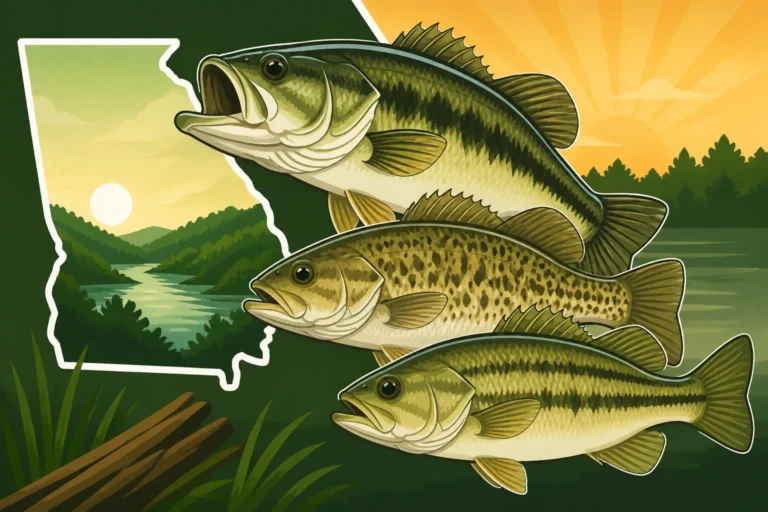
The most common distinguishing feature for hybrid striped bass is their lateral lines. Unlike the pure striped bass, which typically has distinct, unbroken horizontal lines running down its sides, a hybrid's lines are often broken or interrupted, particularly towards the tail section. These broken lines can be a bit squiggly or fragmented, making them look less uniform than a true striper. Their body shape also tends to be deeper and more stout than a pure striper, which often appears more elongated. White bass, on the other hand, are much smaller, generally topping out at a few pounds, and have only one lateral line that is usually unbroken. If you're ever in doubt, count the unbroken lateral lines, look at the body shape, and note the overall size. Knowing the differences is key, as size and creel limits can vary by species. For a deeper dive into identification, check out Striped Bass vs Hybrid Striped Bass: Georgia Angler's Guide.
Decoding Seasonal and Daily Patterns for Lake Oconee Hybrids
Hybrid striped bass are constantly on the move, their behavior dictated largely by water temperature, forage availability, and current. Understanding these seasonal and daily patterns is paramount to consistently putting fish in the boat on Lake Oconee.
The Spring and Fall Run: Peak Action
Spring and fall are, without a doubt, the prime times to target hybrid striped bass on Lake Oconee. As water temperatures begin to moderate in spring (usually from March through May), hybrids become incredibly active. They'll often move into shallower areas, especially around main lake points and creek mouths, chasing baitfish that are also moving up. This is a fantastic time for both casting artificial lures and drifting live bait. Look for surface activity, like baitfish flickering or hybrids busting the surface, especially during low-light conditions.
In the fall (September through November), a similar "run" occurs, often even more pronounced. As the lake's water cools, baitfish will school up tightly in major creek channels and on main lake humps, and the hybrids will follow them with gusto. This is when you're most likely to witness those incredible "topwater boils," where schools of hybrids herd shad to the surface and violently feed. It's an exhilarating experience and often the most productive time for casting topwater lures or suspending swimbaits into the frenzy. For more insights on seasonal bass fishing, which often overlaps with hybrid patterns, you can read Best Time of Year to Catch Bass at Lake Oconee, Georgia.
Summer and Winter Strategies for Lake Oconee
While spring and fall offer explosive action, don't write off summer and winter for hybrid stripers on Lake Oconee. You just need to adjust your strategy. In the heat of summer, hybrids retreat to deeper, cooler water, often suspending over ledges, humps, or in the main river channel. They'll follow the thermocline – the layer of water where temperature changes rapidly – seeking comfort and oxygen. This is when deep-water techniques like down-lining live bait directly over marked schools on your fish finder become incredibly effective. Early morning and late evening bites are usually the most consistent during these warmer months.
Winter fishing on Lake Oconee, however, offers a unique advantage: the warm water discharge from Plant Branch. While other areas of the lake might be frigid, the discharge area remains significantly warmer, creating a thermal refuge for baitfish and, consequently, for hungry hybrids. Anglers often congregate near these areas, drifting live bait or casting deep-diving crankbaits and jigs. This warm water also ensures that hybrids remain relatively active throughout the colder months, making winter a surprisingly productive time if you know where to look. Understanding How Water Temperature Affects Fish Behavior is key to cracking the code in these extreme seasons.
The Daily Grind: Timing Your Trip for Success
Beyond the seasons, the time of day and even the power generation schedule on Lake Oconee can dramatically influence hybrid striper activity. Generally, hybrids are most active during low-light periods: dawn and dusk. This is when they are more confident to move into shallower water to feed, and baitfish are often more vulnerable. Overcast or cloudy days can extend these productive periods, as the reduced sunlight makes the fish less wary throughout the day.
However, on Lake Oconee, the power generation schedule is arguably the most critical factor. When the generators at Wallace Dam (which impounds Lake Oconee) are running, they create current. This current is a game-changer. It positions baitfish in predictable ways, often concentrating them along channel edges or points, and it triggers hybrids into feeding frenzies. Pay close attention to the generation schedule if you're planning a trip. Fishing during periods of strong generation can turn a slow day into an epic one. Conversely, when the water is stagnant, fish may be more scattered and less aggressive, requiring a more patient approach.
Essential Techniques and Gearing Up for Hybrid Stripers
Successfully landing Lake Oconee's hybrid stripers requires the right techniques and appropriate gear. These fish are powerful, and if your setup isn't up to the task, you'll quickly find yourself with a broken line and a story about "the one that got away."
Live Bait is King: Shad, Herring, and More
For many seasoned hybrid striper anglers on Lake Oconee, live bait is the undisputed king. The most effective baits are those that mimic the hybrids' natural forage, primarily threadfin and gizzard shad, but also herring and large shiners. Catching and keeping live bait can be an art form in itself. You'll need a good quality cast net to gather shad from creek mouths or main lake points where they school up. A spacious, aerated bait tank is absolutely essential to keep your bait lively throughout the day. Without vibrant, frisky bait, your chances of success will plummet. You can find durable, efficient bait tanks and cast nets at many sporting goods stores, or often at competitive prices on platforms like Amazon.
Once you have your bait, several techniques can be employed:
- Downlining: This involves dropping live bait straight down to fish marked on your depth finder. It's especially effective in deeper water during summer and winter. Use a three-way swivel, attaching your main line, a leader to your hook, and a short leader to a weight.
- Freelinning: If hybrids are schooling near the surface or along a shallow break, simply hook a lively shad and let it swim naturally with no weight. This technique shines during active feeding periods in spring and fall.
- Planer Boards: For covering large areas of open water, especially when fish are scattered, planer boards allow you to spread out multiple bait lines away from the boat, mimicking a school of baitfish.
For more detailed rigging advice, check out How to Fish Live Bait for Striped Bass and Best Bait for Hybrid Striped Bass.
Artificial Lures: When to Throw What
While live bait is often preferred, artificial lures can be incredibly productive, especially when hybrids are actively chasing bait on the surface or when you need to cover water quickly. Having a selection of lures tailored to different situations is smart.
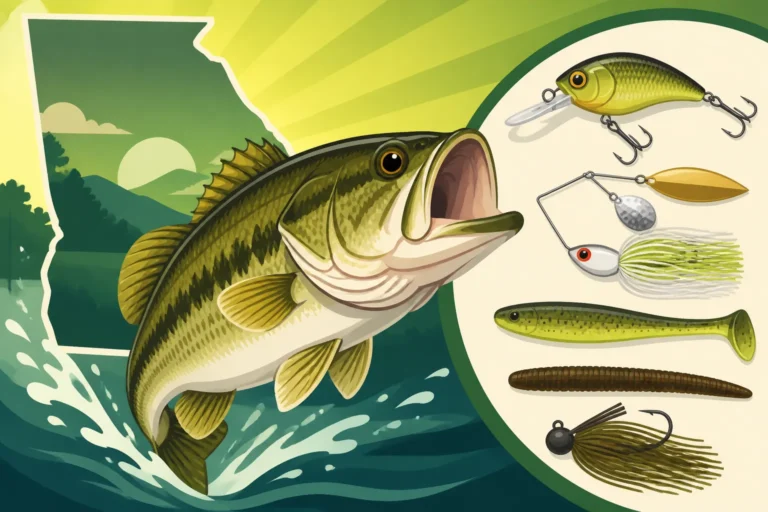
- Topwater Lures: When hybrids are busting the surface in those thrilling "boils" (often in spring and fall), nothing beats a walk-the-dog style topwater lure or a popper. Cast into the melee, and hang on!
- Swimbaits: Soft plastic swimbaits, either weighted or rigged on a jig head, are excellent for mimicking shad. They can be cast and retrieved or trolled slowly near schools of baitfish.
- Spoons: Heavy metal spoons (jigging spoons) are fantastic for vertical jigging over deep, suspended schools of hybrids. Drop them down, rip them up, and let them flutter back down—that erratic action often triggers a strike.
- Bucktail Jigs: These versatile jigs can be cast, retrieved, or trolled. They are particularly effective when tipped with a piece of cut bait or a soft plastic trailer to add scent and bulk.
Matching the hatch—using lures that resemble the size and color of the baitfish currently in the lake—is always a good strategy. You can easily find a vast array of these lures by browsing online retailers like Amazon, ensuring you have the right tools for any situation.
Rods, Reels, and Line: The Right Tools for the Fight
Given the powerful fight of hybrid stripers, your gear needs to be robust. Skimping here will only lead to disappointment.
- Rods: Opt for medium-heavy to heavy action spinning or baitcasting rods, typically 7 to 8 feet in length. A fast tip will give you the sensitivity to detect subtle bites, while a strong backbone is crucial for setting the hook and muscling in big fish.
- Reels: For spinning setups, choose reels in the 4000 to 5000 size range with a smooth drag system. For baitcasting, a robust reel with a good line capacity and a strong gear ratio is ideal. Ensure your reel can handle the stress of multiple hard fights.
- Line: Most anglers prefer braided main line, ranging from 20 to 50 lb test, due to its incredible strength and sensitivity. The lack of stretch in braid helps you feel even the lightest bite and provides powerful hooksets. Always tie a fluorocarbon leader (15 to 30 lb test) to your braided main line using an FG knot or similar strong knot. Fluorocarbon is nearly invisible underwater, providing the stealth needed for wary hybrids, and its abrasion resistance protects your line from sharp rocks and fish mouths.
Having the right combination of rod, reel, and line ensures that you can effectively present your bait or lure and have the power to control and land these formidable fish. For a comprehensive look at tackle, check out Best Tackle for Georgia Striped Bass Fishing.
| Gear Type | Recommendation | Key Features |
|---|---|---|
| Rods | Medium-Heavy to Heavy, 7-8 feet, fast action | Strong backbone, sensitive tip for bite detection |
| Spinning Reels | 4000-5000 size | Smooth, reliable drag; good line capacity |
| Baitcasting Reels | Robust build, high gear ratio, good line capacity | Strong drag for fighting power, durable construction |
| Main Line | 20-50 lb Braided Line | Zero stretch for sensitivity, high strength, small diameter |
| Leader Line | 15-30 lb Fluorocarbon | Low visibility, abrasion resistant, good knot strength |
| Baits/Lures | Live Shad, Herring, Shiners; Topwater, Swimbaits, Spoons, Bucktail Jigs | Mimic forage, aggressive action, suited for current conditions |
| Bait Storage | Aerated Livewell/Bait Tank | Maintains bait freshness and liveliness |
| Bait Capture | High-Quality Cast Net | Durable construction, appropriate mesh size for local baitfish |
Pinpointing Hybrid Striped Bass Hotspots on Lake Oconee
Finding the fish is often the biggest challenge in hybrid striper fishing. Lake Oconee is a large body of water, and these fish can be anywhere. However, by understanding their preferred habitats and leveraging technology, you can significantly narrow your search.
Navigating Key Structures and Forage Magnets
Hybrid stripers are predators, and like all predators, they'll be where their food is. On Lake Oconee, this means focusing on areas that concentrate baitfish. Key structures to target include:
- Main Lake Points: These are often ambush points where hybrids wait for baitfish to swim by.
- Submerged Humps and Islands: Baitfish will school up around these offshore structures, and hybrids will be close behind.
- Creek Channels and River Bends: The natural contours of the old river and creek channels provide highways for fish movement and often hold deeper water where hybrids can stage.
- Bridge Pilings: Bridges crossing the lake create current breaks and attract baitfish, making them prime hybrid locations.
Specifically, the areas around the confluence of the Apalachee River and Richland Creek arms, as well as the main lake body towards the dam, are perennial producers. Always be on the lookout for visual signs of baitfish, such as ripples, flickers, or even diving birds, as these are strong indicators that hybrids are likely nearby. A thorough understanding of Lake Oconee Fishing Guide, Georgia will offer even more localized insights.
The Power of Electronics: Your Underwater Eyes
In modern hybrid striper fishing on Lake Oconee, quality electronics are not just an advantage; they are almost a necessity. A good fish finder with down imaging and side imaging capabilities will transform your fishing.
- Identifying Bait Balls: Your primary goal with electronics is to locate schools of baitfish. They will appear as dense clouds or clusters on your screen. Where there's bait, there are usually hybrids.
- Distinguishing Hybrids: While it takes practice, you can often distinguish large fish arches (hybrids) suspended just below or within a bait ball. Look for thicker, more defined arches that indicate bigger fish.
- Understanding Depth and Thermocline: Especially in summer, your fish finder can help you locate the thermocline, which is where hybrids will often suspend. This allows you to present your bait or lure at the optimal depth.
- Side Imaging: This technology allows you to scan wide areas to either side of your boat, helping you quickly locate submerged structures, channel edges, and bait schools without driving directly over them, minimizing disturbance.
Investing in a reliable fish finder and learning to interpret its readings will drastically improve your success rate. You can compare various models and features, often finding excellent deals on these advanced devices on online marketplaces like Amazon, enabling you to equip your boat with the latest technology. For more detailed information, check out Best Fish Finders for Georgia Reservoir Fishing.
Leveraging Current and Dam Discharges
As mentioned earlier, the power generation schedule at Wallace Dam has a profound impact on hybrid striped bass behavior on Lake Oconee. When the dam is generating power, it creates current, and hybrids are masters at using this current to their advantage.
- Current Positions Fish: Current pushes baitfish, often concentrating them along channel edges, points, or against structures like bridge pilings. Hybrids will position themselves strategically, often on the "down-current" side of a point or hump, waiting to ambush bait.
- Aggressive Feeding: The presence of current often triggers an aggressive feeding response in hybrids. They expend less energy feeding when the current brings food to them.
- Dam Discharge Areas: The immediate vicinity of the power plant's warm water discharge is a magnet for hybrids, especially in colder weather. The current and warmer water create a consistent feeding ground.
Always check the generation schedule before you head out. Fishing during periods of generation can make all the difference. When the water is moving, focus your efforts on current seams, eddies, and points where the current creates a natural funnel for bait. Understanding Deep Water Techniques for Striped Bass can further enhance your approach in these dynamic conditions. By paying attention to current, you're tapping into a fundamental aspect of hybrid striper behavior on Lake Oconee.
Disclaimer
This article is for general informational purposes only and does not constitute professional advice. Laws, prices and regulations vary by location and change over time. Consult a qualified professional for guidance on your specific situation.