How to Identify a Hybrid Striped Bass
There's nothing quite as frustrating as reeling in a powerful fish, only to stare at it and wonder, "Is this a striper? A white bass? Or one of those hard-fighting hybrids?" Many Georgia anglers, myself included, have stood on the bank or in a boat, scratching our heads over this exact dilemma. This guide is here to clear up that confusion, offering a definitive breakdown of how to accurately identify a hybrid striped bass, ensuring you know exactly what you've caught and, crucially, if it meets local regulations.
What Exactly is a Hybrid Striped Bass?
Before we dive into the nitty-gritty of identification, it helps to understand what a hybrid striped bass actually is. It's not just another naturally occurring species you'd find swimming around; it's a meticulously engineered fish designed to bring a fantastic fishing experience to our waters. Think of it as a super-athlete, bred for strength and growth.
The Genetic Mix-Up: Striper Meets White Bass
The hybrid striped bass, often affectionately called a "wiper" (white bass + striper) or "sunshine bass" (depending on which parent was the female), is a crossbreed between a female white bass and a male striped bass. This isn't something that typically happens naturally in the wild, though it can occur in rare circumstances where the two species spawn in close proximity. Instead, most of the hybrids you'll encounter in Georgia waters are produced in hatcheries.
The goal of this crossbreeding is to create a fish that combines the best characteristics of both parents. From the striped bass, hybrids inherit impressive growth rates and an aggressive fighting spirit. From the white bass, they get a hardiness and adaptability that allows them to thrive in reservoir environments where pure stripers might struggle to reproduce or sustain populations without constant stocking. It’s a brilliant solution to offer robust fisheries in lakes that might not be ideal for self-sustaining populations of their purebred cousins.
Why Hybrids are Popular in Georgia
Georgia's lakes and reservoirs are prime territory for hybrid striped bass, and they're incredibly popular with anglers for several compelling reasons. First and foremost, they grow fast and get big, offering a substantial challenge on the end of your line. While they might not reach the sheer size of the largest pure striped bass, a 10-pound hybrid is a truly impressive catch, and they're known for their relentless, drag-peeling runs.
Beyond their fighting prowess, hybrids are also quite adaptable. They can tolerate a wider range of water temperatures and oxygen levels than pure striped bass, making them excellent candidates for stocking in many of Georgia's large impoundments. This adaptability means they provide a consistent and exciting fishery, often alongside populations of largemouth bass, crappie, and catfish. The Georgia Department of Natural Resources often stocks these fish, creating fantastic opportunities in lakes like Lake Oconee. If you're looking to learn more about where these powerful fish are released, check out Where Georgia Stocks Hybrid Striped Bass.
Key Physical Characteristics to Look For
When you pull a fish out of the water and suspect it might be a hybrid striped bass, you'll want to quickly check a few key physical traits. These aren't just subtle differences; some are quite distinct once you know what to look for. Having a good fish identification guide, perhaps one you can find on Amazon, can be incredibly helpful for quick comparisons right on the boat.
Body Shape and Proportions
One of the first things you'll notice about a hybrid striped bass is its body shape. It's typically more robust and deeper-bodied than a white bass, but often not quite as elongated and streamlined as a pure striped bass of similar weight. Think of it as hitting the gym more than a white bass, but not quite having the sleek, torpedo-like build of its bigger striper parent. They often have a somewhat "humped" back just behind the head, giving them a powerful, compact appearance.
When you hold one, you'll feel the solid muscle. They're built for power and short, explosive bursts of speed, which is why they fight so hard. This makes them a joy to catch, but also means they can be tricky to hold if you're not used to their strength!
The Distinctive Stripe Pattern
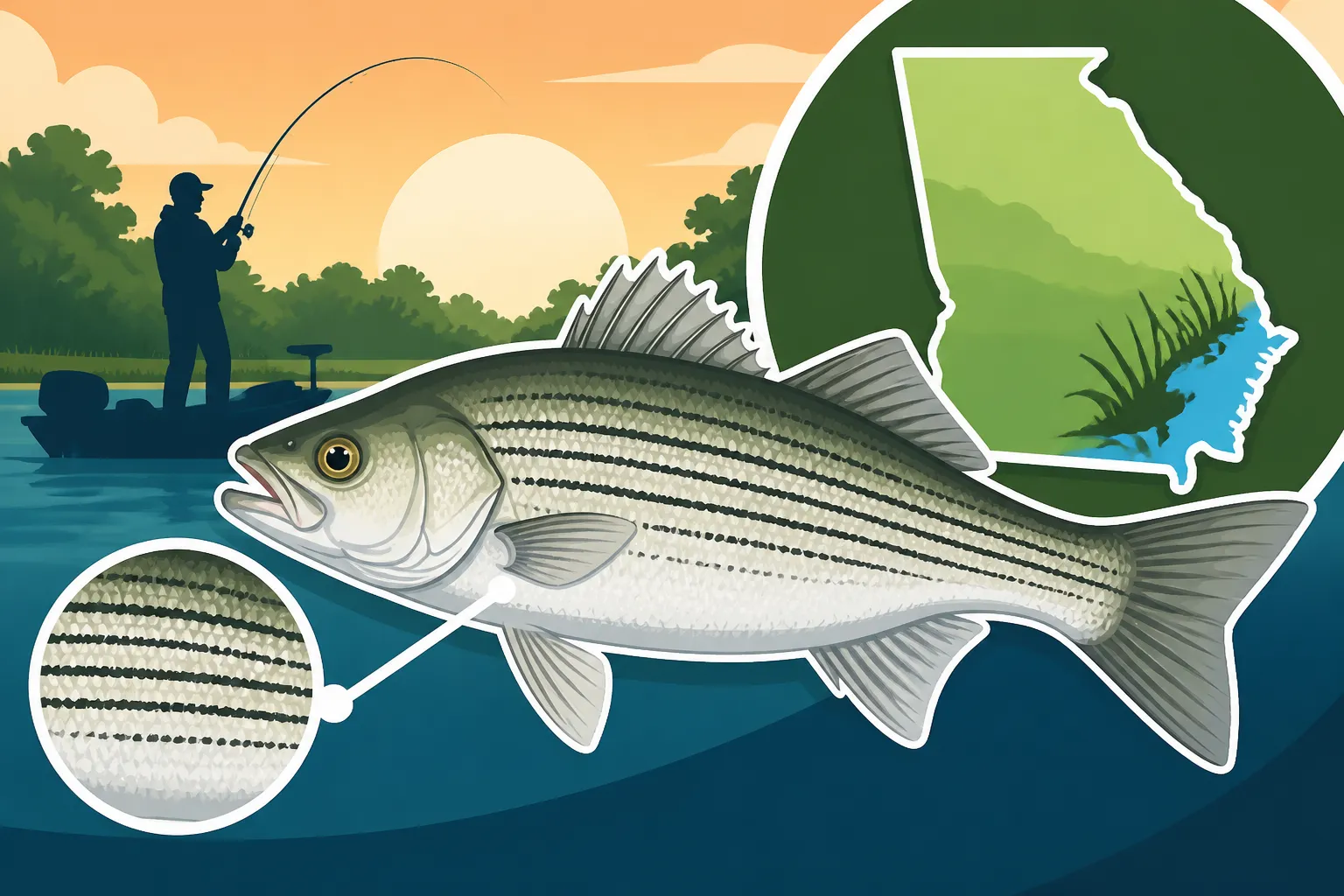
This is arguably the most crucial identification marker. Hybrid striped bass have stripes running horizontally along their bodies, much like pure stripers and white bass. However, the key difference lies in the nature of these stripes. On a hybrid, the stripes are often broken, interrupted, or even irregular, sometimes appearing as a series of dashes rather than continuous lines.
Imagine drawing several lines across a fish's body, but then going back and erasing parts of them or making some lines zig-zag. That's what you're looking for. While some pure striped bass can have slightly broken lines, it's far more pronounced and common in hybrids. White bass, on the other hand, usually have only one or two clear, continuous lines, with the others often being very faint or absent. Pay close attention to the stripes below the lateral line – if many of them are broken or patchy, you're likely holding a hybrid.
Head and Mouth Features
While perhaps less obvious than the stripes, the head and mouth can offer additional clues. The hybrid striped bass typically has a head size proportionate to its more robust body. Its mouth, like its parents, is usually terminal (meaning it opens at the very front of the snout), and its lower jaw will slightly protrude beyond the upper jaw. This is characteristic of predatory fish that feed on baitfish.
What you might notice, compared to a white bass, is a slightly larger, more aggressive-looking mouth, capable of engulfing bigger prey. Compared to a massive pure striper, it might look a bit smaller overall, but still powerful. These subtle differences become clearer once you've handled a few of each species.
Dorsal Fins: The Tell-Tale Separation
This is often considered the most reliable characteristic for distinguishing hybrids from white bass, and sometimes even from smaller striped bass. Look at the two dorsal (back) fins.
- Hybrid Striped Bass: The first, spiny dorsal fin and the second, soft-rayed dorsal fin are distinctly separate. You should be able to lay a finger flat between them without touching either fin.
- White Bass: The two dorsal fins are typically connected at their base by a membrane, or they are very, very close together, making it difficult to put anything between them.
- Pure Striped Bass: Like the hybrid, the two dorsal fins are usually separate, though sometimes very closely spaced on smaller individuals. This is why looking at the stripes is so important when differentiating between a pure striper and a hybrid.
This dorsal fin separation is a fantastic, quick check, especially when you're in a hurry to get a measurement and release the fish. It's a key detail to remember.
Comparing Hybrids to Their Cousins: Striped Bass and White Bass
The real challenge in identifying a hybrid striped bass comes when you're trying to tell it apart from its parents or other similar species. Georgia waters are home to both striped bass and white bass, and they often inhabit the same areas, creating potential for confusion. Knowing the subtle (and sometimes not-so-subtle) differences is vital, not just for bragging rights, but for adherence to Georgia Fish Size and Creel Limits, which can vary by species.
Hybrid vs. Pure Striped Bass
This is where many anglers stumble, especially with smaller striped bass. Both species are powerful fighters, have similar overall coloration, and often inhabit the same waters like Lake Lanier or Clarks Hill. However, there are consistent differences:
- Stripes: As mentioned, the stripes on a pure striped bass are generally unbroken and continuous. They run clearly from head to tail. While some individual stripers might have a slightly fractured line or two, it's not the predominant pattern like it is on a hybrid. On a hybrid, multiple stripes will be distinctly broken or irregular.
- Body Shape: Pure striped bass tend to be more elongated and streamlined, built for long-distance cruising and sustained speed. Hybrids are often deeper-bodied and more compact for their length, giving them a bulkier, more powerful appearance.
- Size Potential: While hybrids can grow large, pure striped bass have the potential to grow significantly larger, with trophy fish often exceeding 30-40 pounds in Georgia's larger reservoirs. Hybrids typically top out around 15-20 pounds, though bigger ones are caught.
- Dorsal Fins: Both typically have separate dorsal fins, so this isn't a distinguishing factor between these two.
If you're still unsure, especially with a fish that has some broken lines, consider the overall build and the majority of the stripe pattern. For more detailed information, you can always consult a guide like How to Identify a Striped Bass.
Hybrid vs. White Bass
Distinguishing a hybrid from a white bass is generally easier due to more pronounced differences in size and stripe patterns. White bass are much smaller and are often mistaken for juvenile hybrids.
- Size: This is the most immediate difference. White bass rarely exceed 2-3 pounds, and a truly large one might hit 4-5 pounds. Hybrids, even juveniles, grow much faster and larger, quickly surpassing the average size of a white bass. If you've caught a 5-pound fish with striper-like qualities, it's almost certainly a hybrid.
- Stripes: White bass usually have faint, continuous stripes, often only one or two prominent ones below the lateral line, with others barely visible. Hybrids have darker, more numerous, and distinctly broken/irregular stripes.
- Body Shape: White bass are thinner and less robust than hybrids. They have a more slender, almost silvery appearance. Hybrids are noticeably deeper-bodied and more muscular.
- Dorsal Fins: This is a crucial distinction. As noted, white bass typically have their two dorsal fins connected at the base or extremely close together. Hybrid striped bass have clearly separate dorsal fins, with a noticeable gap between them.
This combination of size, stripe pattern, and dorsal fin separation makes distinguishing between a hybrid and a white bass quite straightforward once you've seen a few of each.
A Quick Reference Table for Identification
To make things even clearer, here's a handy table summarizing the key identification markers:
| Feature | Hybrid Striped Bass | Pure Striped Bass | White Bass |
|---|---|---|---|
| Stripes | Mostly broken, interrupted, or irregular | Mostly continuous and unbroken | Faint, continuous, usually only 1-2 prominent |
| Body Shape | Deep-bodied, robust, powerful, somewhat compact | Elongated, streamlined, torpedo-like | Slender, shallower-bodied, more silvery |
| Dorsal Fins | Clearly separate, noticeable gap between them | Clearly separate (sometimes very close on small fish) | Connected at base, or very close with no gap |
| Size Potential | Up to 15-20 lbs (rarely larger) | Can exceed 40+ lbs | Rarely exceeds 5 lbs |
| Jaw | Lower jaw protrudes slightly | Lower jaw protrudes slightly | Lower jaw protrudes slightly |
| Habitat | Stocked in many Georgia reservoirs | Large reservoirs, rivers, coastal estuaries | Reservoirs, larger rivers, often shallower water |
Keeping this table in mind or even printing a copy from a reputable source (you can find many good fishing guides on Amazon) can be a real game-changer when you're on the water.
Where You'll Find Hybrid Stripers in Georgia
Knowing where these powerful fish typically swim in Georgia can also help with identification, as it sets your expectations. You're not likely to encounter a hybrid striped bass in a tiny farm pond, for instance. They prefer larger bodies of water where they can chase schooling baitfish.
Popular Georgia Lakes and Reservoirs for Hybrids
Hybrid striped bass thrive in Georgia's expansive reservoirs, especially those with good populations of shad and other baitfish. These impoundments provide the open water they need to roam and feed. Some of the top spots in Georgia where you're very likely to encounter hybrid striped bass include:
- Lake Oconee: This lake is renowned for its excellent hybrid striped bass fishery. The warm waters discharged from the nearby power plant in cooler months can concentrate baitfish and hybrids, making for exciting action. If you're heading here, be sure to check out Hybrid Striped Bass at Lake Oconee.
- Lake Sinclair: Similar to Oconee, Lake Sinclair also boasts a strong hybrid population, often benefiting from the same thermal influences and abundant baitfish.
- Clarks Hill Lake (Lake Strom Thurmond): A massive reservoir on the Georgia-South Carolina border, Clarks Hill offers vast expanses for hybrids to grow and thrive.
- Lake Lanier: While often celebrated for its spotted and striped bass, Lanier also supports a healthy population of hybrid striped bass, particularly in the lower lake areas. A comprehensive Lake Lanier Fishing Guide, Georgia would certainly cover these fantastic fish.
- West Point Lake: Another popular spot on the western side of the state, West Point provides excellent hybrid fishing, particularly around creek channels and submerged structures.
These lakes are regularly stocked by the Georgia Department of Natural Resources, ensuring a robust and exciting fishery for anglers targeting these hard-fighting fish.
How Habitat Relates to Identification
Understanding the typical habitat of a hybrid striped bass helps because it contextualizes your catch. If you're fishing a large, open-water reservoir known for its striper and hybrid populations, you'll be more attuned to identifying these specific characteristics. Conversely, if you're in a smaller river or a pond, you might primarily be looking for different species.
Hybrids are often found schooling in open water, chasing shad. They'll frequent creek channels, humps, points, and deep water near dams, especially during the warmer months. In winter, they might move shallower or seek out warmer water discharges. Knowing their preferred haunts means that if you hook into a powerful schooling fish in one of these areas, your "hybrid radar" should be on high alert.
Why Accurate Identification Matters
Beyond the simple satisfaction of knowing what you've caught, accurate identification of a hybrid striped bass is actually quite important for several practical and ethical reasons. It's not just about being a knowledgeable angler; it's about being a responsible one.
Regulation Differences for Different Species
This is perhaps the most critical reason for correct identification. In Georgia, different fish species often have different regulations regarding size limits (minimum or maximum length) and creel limits (the number of fish you can keep per day).
For example, the size and creel limits for pure striped bass might be different from those for hybrid striped bass, and certainly different from white bass. Unintentionally keeping an undersized pure striper, or exceeding the creel limit for hybrids, could lead to a citation from a game warden. These regulations are in place to ensure sustainable fish populations, and as anglers, it's our responsibility to understand and follow them. Always double-check the latest Georgia Fishing Regulations Explained before heading out.
Conservation and Management
Beyond individual regulations, accurate identification by anglers contributes to the overall conservation and management efforts of Georgia's fisheries. When biologists conduct surveys and stock fish, they rely on data to understand how different species are faring. If anglers consistently misidentify fish, it can skew the data and make it harder for wildlife agencies to make informed decisions about stocking programs, habitat protection, and regulation adjustments.
For instance, if a specific lake's hybrid striped bass population is declining, but anglers are mistakenly reporting them as pure striped bass, the problem might go unnoticed for longer. By correctly identifying your catch, you're essentially providing better "citizen science" data, helping to ensure that future generations of anglers will also have the opportunity to enjoy the incredible fishing Georgia has to offer. It's all part of being a good steward of our natural resources.
Disclaimer
This article is for general informational purposes only and does not constitute professional advice. Laws, prices and regulations vary by location and change over time. Consult a qualified professional for guidance on your specific situation.