Georgia’s Native Bass Species: Largemouth, Spotted, and Shoal Bass
Ever wondered what kind of bass you just reeled in, or why your buddy keeps talking about "shoal bass" when you're only familiar with largemouth? It's a common dilemma for anglers across Georgia! Our state is a true haven for bass fishing, but navigating the nuances between our native species can sometimes feel like trying to untangle a backlash on a baitcaster. This comprehensive guide is here to demystifying the unique characteristics, preferred habitats, and best fishing strategies for Georgia's three primary native black bass species: the iconic Largemouth Bass, the often-mistaken Spotted Bass, and the river-dwelling Shoal Bass.
Understanding Georgia's Diverse Bass Fishery
Georgia's waterways, from its vast reservoirs to its winding rivers, are teeming with a variety of fish species, and among the most celebrated are our black bass. These aren't just any fish; they're an integral part of our state's angling heritage and ecosystems. But for many, a "bass" is just a bass. However, understanding the distinctions between the species isn't just about showing off your fish identification skills; it's about becoming a more effective and responsible angler. Each species has its own quirks, its preferred diner menu, and its specific hangouts. Ignoring these differences means you might be missing out on incredible fishing opportunities, or worse, misidentifying a protected species.
Think about it: you wouldn't use the same tactics for catching a feisty rainbow trout in a clear mountain stream as you would for a lazy catfish in a muddy river, right? The same principle applies to bass. Our state boasts three prominent native black bass species, each thriving in slightly different niches. These aren't just minor variations; they're distinct species with evolutionary traits that allow them to coexist, often in the same general areas, but rarely in exactly the same way. Getting to know each one means deepening your connection to Georgia's incredible natural resources and enhancing your success on the water. It’s a journey from simply catching fish to truly understanding the magnificent creatures that call our waters home.
The Importance of Species Identification
Accurate identification isn't just for bragging rights or scientific study; it has real-world implications for anglers. First and foremost, fishing regulations, including size and creel limits, often differ by species and even by specific body of water. Mistaking a largemouth for a spotted bass, or vice versa, could inadvertently lead to a violation if you're not paying attention to the specific rules for that species in that particular lake or river. The Georgia Department of Natural Resources (DNR) works tirelessly to manage these populations sustainably, and those regulations are designed to protect each species.
Beyond legal compliance, proper identification helps you refine your fishing techniques. If you're consistently catching one type of bass in a certain area, understanding its preferred habits and diet can help you choose the right baits, lures, and presentations to maximize your catch rate. For example, if you realize you're in an area dominated by spotted bass, you might switch to smaller, more agile lures than you would for a trophy largemouth. This knowledge allows you to read the water more effectively, understand the subtleties of the ecosystem you're fishing, and ultimately become a more skilled angler. It's about moving beyond guesswork and approaching your fishing trips with informed strategy.
Native Bass in Georgia: A Quick Overview
Georgia is fortunate to be home to a vibrant array of black bass, each contributing to the rich tapestry of our freshwater fisheries. When we talk about "native" bass, we're focusing on those species that naturally evolved and established populations in our state's waters long before human intervention began moving fish around. While other bass species might be present through stocking or accidental introduction, these three are the backbone of our natural bass heritage.
The Largemouth Bass, Micropterus salmoides, is undoubtedly the most famous, holding the title of Georgia's official state fish. It's the fish of choice for many anglers, known for its aggressive strikes and impressive size. Then we have the Spotted Bass, Micropterus punctulatus, a species often confused with the largemouth but possessing distinct features and habits that make it a formidable opponent on its own. Finally, there's the Shoal Bass, Micropterus cataractae, a true river specialist, built for life in flowing water, and a prized catch for those seeking a unique challenge in Georgia's rocky river systems. Understanding these three means understanding a huge part of what makes fishing in Georgia so special.
The Mighty Largemouth Bass: Georgia's State Fish
Ah, the largemouth bass! For many, this fish is bass fishing. Its image is emblazoned on countless fishing gear items, and its pursuit drives a multi-million-dollar industry. In Georgia, the largemouth bass holds a special place, not just as a popular game fish, but as our official state fish. Its widespread presence across our reservoirs, ponds, and slower-moving rivers makes it accessible to anglers of all skill levels, from the casual bank fisherman to the seasoned tournament pro. There's nothing quite like the explosive strike of a big largemouth, especially when it erupts on a topwater lure at dawn. It's a fish that inspires passion and dedication, and for good reason—they fight hard and are incredibly rewarding to catch.
The pursuit of largemouth bass is deeply ingrained in the culture of Georgia fishing. Generations have grown up casting for them in farm ponds and major impoundments alike. It’s a species that can test your patience, challenge your skill, and ultimately provide memories that last a lifetime. Whether you're targeting a new personal best or simply enjoying a relaxing day on the water, the largemouth bass offers an unparalleled angling experience. You can find a huge variety of specialized lures and rods for largemouth on Amazon, perfect for honing your technique.
Identification Markers for Largemouth Bass
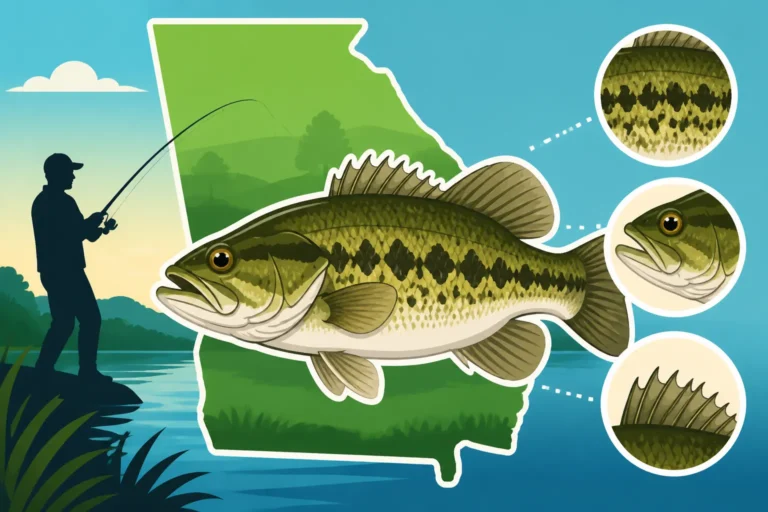
Identifying a largemouth bass usually isn't too tricky once you know what to look for. The most defining feature, and the one that gives it its name, is its mouth. If you hold the fish horizontally, the corner of its mouth will extend past the rear edge of its eye. This is a crucial distinction, especially when comparing it to a spotted bass. Its body is generally dark green on the back, fading to lighter green or yellowish sides, and a white belly. Most largemouth will have a prominent, irregular dark lateral line running horizontally along its sides. This line might be solid, or it could appear as a series of blotches, but it's almost always there.
Another key characteristic is the absence of any visible scales on the soft-rayed part of its dorsal fin. Run your finger over it gently; it should feel smooth without any rough patches from scales. The largemouth also tends to have a deeper, more robust body compared to its slender cousins, allowing it to ambush prey with powerful bursts of speed. Its overall appearance just screams "top predator" in the freshwater environment.
Preferred Habitat of Largemouth Bass
Largemouth bass are habitat generalists, meaning they can thrive in a wide range of environments, but they definitely have their favorites. They prefer warm, somewhat turbid (cloudy) waters with abundant aquatic vegetation, submerged timber, and other forms of cover. Think lily pads, hydrilla beds, fallen trees, docks, and brush piles – these are all prime largemouth real estate. They use this cover for ambushing prey, for shade from the sun, and for protection from predators themselves. This preference for structure is why you'll often find anglers spending hours dissecting a single brush pile or a weed line.
In Georgia, this translates to huge populations in our major reservoirs like Lake Lanier, Lake Oconee, and Clarks Hill Lake, as well as countless smaller ponds and slow-moving rivers. Best Bass Fishing Lakes in Georgia provides a great overview of these prime locations. They are less common in fast-flowing, clear mountain streams where trout or shoal bass would dominate, but will happily inhabit the slower pools and backwaters of larger river systems. Basically, if it's warm, has some cover, and offers plenty of food, a largemouth will likely call it home.
Effective Fishing Strategies for Largemouth Bass
When it comes to catching largemouth, the possibilities are almost endless, which is part of their appeal. They're aggressive eaters and will strike at a vast array of lures and baits. For beginners, a simple Texas-rigged plastic worm or a spinnerbait can be incredibly effective when cast near cover. Live bait, such as shiners or worms, also works wonders. For the more experienced angler, techniques like flipping and pitching jigs into heavy cover, cranking deep-diving crankbaits along ledges, or walking a topwater bait across open water at dawn are all highly productive.
The key to consistent largemouth success often lies in understanding seasonal patterns. During the spring spawn, they move shallow, making them vulnerable to soft plastics and jigs near beds. In summer, they might retreat to deeper, cooler water or become active around dawn and dusk on topwater. Seasonal Bass Fishing Patterns in Georgia dives deeper into these critical movements. Experimentation is crucial; if one lure isn't working, don't be afraid to change colors, sizes, or even entire lure types. Having a well-stocked tackle box, perhaps with a good selection of Best Lures for Georgia Largemouth Bass, purchased from retailers like Amazon, will give you plenty of options.
The Elusive Spotted Bass: A Challenging Catch
The spotted bass, often simply called "spots" by anglers, is a fascinating species that sometimes lives in the shadow of its larger cousin, the largemouth. This isn't because it's less exciting; quite the opposite! Spotted bass are known for their feisty nature, fighting well above their weight class, and their tendency to inhabit different areas than largemouth, offering a unique challenge. Many anglers mistake them for small largemouth, but once you learn their distinct characteristics, you'll appreciate them as a separate and equally rewarding catch. They tend to be strong, dogged fighters, sometimes even more so than a largemouth of similar size, which makes every catch an exhilarating experience.
Don't let their average smaller size fool you; a spotted bass on the end of your line is a thrilling fight. They're often found in clear, deeper waters, making them a target for anglers who prefer finesse techniques or electronic fish finders. They might not reach the trophy sizes of largemouth, but what they lack in sheer mass, they make up for in tenacity and numbers.
Identification Markers for Spotted Bass
Distinguishing a spotted bass from a largemouth requires a keen eye for a few specific details. While they share a similar overall body shape, the spotted bass generally has a more streamlined, torpedo-like body, and rarely grows to the same maximum size as a largemouth. The first, and most important, identifier is its mouth: the corner of a spotted bass's mouth will typically not extend past the rear edge of its eye when held horizontally. This is the inverse of the largemouth.
Look closely at the underside of its jaw, too. Spotted bass typically have a patch of small, rough scales on the tongue, which you can feel if you run your finger over it. This is a definitive marker often absent in largemouth. Their lateral line is usually more pronounced and often appears as a series of distinct dark spots, sometimes even forming rows below the lateral line, giving them their "spotted" name. Another key difference lies in the connection of their dorsal fins: the spiny and soft-rayed dorsal fins are clearly connected, unlike the largemouth which often has a deeper notch or near-separation. Spotted Bass Identification: What Makes It Different can provide even more detailed visual comparisons.
Preferred Habitat of Spotted Bass
Spotted bass tend to favor different environments than largemouth, often preferring clearer, deeper water with less dense cover. You'll find them in rocky areas, around points, humps, and submerged timber in reservoirs, and in moderate to fast-flowing sections of rivers. They are often more comfortable in open water or around sparse cover than in the thick vegetation that largemouth love. Their preference for current and rocky bottom makes them a common sight in Georgia's larger river systems and the lower, deeper sections of major lakes.
In Georgia, spotted bass are abundant in impoundments like Lake Lanier, Lake Hartwell, and Lake Allatoona, often coexisting with largemouth but typically occupying different niches. While you might find largemouth hiding in the shallow, weedy coves, spotted bass will be suspended over deeper structure or hugging rocky bluffs. Their adaptability allows them to thrive in these varied conditions, often making them the dominant bass species in certain sections of our larger reservoirs where clean, deep water is prevalent.
Effective Fishing Strategies for Spotted Bass
Fishing for spotted bass often involves different tactics than those used for largemouth. Because they frequently suspend in open water or relate to deeper, rockier structures, finesse techniques often shine. Drop-shot rigs, shaky heads, and small jigs are incredibly effective. Look for them with your fish finder over deep humps, along bluff walls, or schooling up in open water chasing baitfish. They are known for their aggressive strikes, even on smaller lures, and will readily hit crankbaits, jerkbaits, and swimbaits that imitate baitfish.
Unlike largemouth, spotted bass are often more active year-round in deeper water. During the colder months, they can still be found deep, whereas largemouth might become more sluggish. Vertical jigging or slow-rolling a swimbait can be deadly when they're congregated on offshore structure. Even topwater can work in the right conditions, particularly when they are actively busting bait on the surface. Don't be afraid to downsize your lures and lighten your line when targeting these feisty fighters. A medium-light spinning rod with fluorocarbon line is often a perfect setup.
The Unique Shoal Bass: River Dwellers
Now, let's talk about a truly special bass species unique to certain river systems in Georgia and a few neighboring states: the shoal bass. This is not a bass you'll typically find in your average lake or farm pond. The shoal bass is a true connoisseur of current, preferring the rocky, fast-flowing waters of specific rivers. They are streamlined and powerful, built for navigating strong currents and ambushing prey in the eddies and pockets behind river obstructions. Catching a shoal bass is often a badge of honor among Georgia anglers, representing a commitment to river fishing and an appreciation for a truly unique native species. Shoal Bass: Georgia's River-Specialist Black Bass is a great resource if you want to learn more about this incredible fish.
The pursuit of shoal bass is less about quantity and more about quality and the experience of fishing in stunning, often remote, riverine environments. These fish embody the wild spirit of Georgia's free-flowing waters, and hooking into one on a light tackle is an unforgettable battle against both the fish and the river's relentless current. It's an adventure, not just a fishing trip.
Identification Markers for Shoal Bass
The shoal bass can be somewhat difficult to distinguish from a largemouth or spotted bass, especially for the untrained eye, as they often share similar color patterns. However, there are some definitive traits to look for. Shoal bass have a more elongated, slender body compared to the bulkier largemouth, a design perfectly suited for life in moving water. Their coloration tends to be darker, often with prominent vertical bars or tiger stripes along their sides, which can be quite striking. They usually have a dark blotch on their tail fin.
Like the spotted bass, the corner of a shoal bass's mouth typically does not extend past the rear edge of its eye. However, unlike the spotted bass, the shoal bass usually lacks the distinct patch of scales on its tongue. This is a key differentiator. They also have relatively small eyes for their head size. The spiny and soft-rayed dorsal fins are clearly connected, much like the spotted bass. But perhaps the most telling sign is often where you catch them – if it's in a fast-flowing, rocky river, there's a good chance you've found a shoal bass.
Preferred Habitat of Shoal Bass
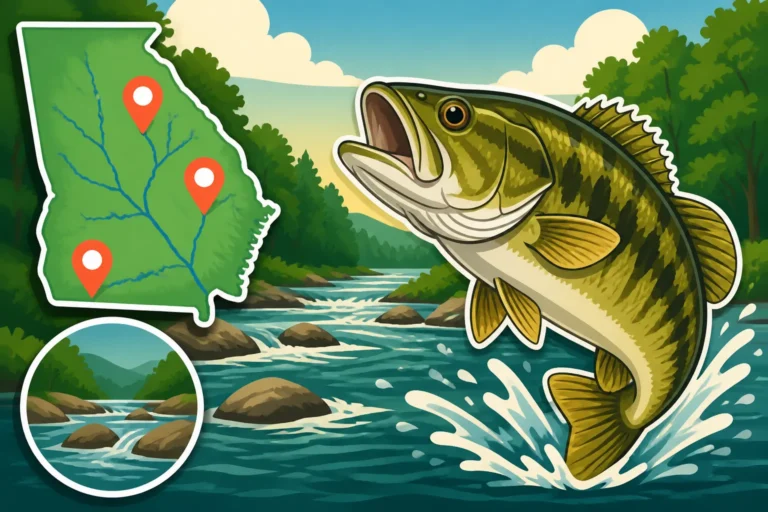
As their name suggests, shoal bass are intimately tied to shoals – rocky, shallow areas with strong current in rivers. They absolutely thrive in moving water, seeking out rapids, riffles, and rocky runs. You won't find them in stagnant ponds or large, open lake impoundments. Their habitat is characterized by exposed bedrock, large boulders, and gravel bottoms, with deep pockets and eddies providing ambush points and resting areas out of the main current.
In Georgia, the Flint River is perhaps the most famous stronghold for shoal bass, particularly in its upper and middle sections. Flint River Shoal Bass Fishing Guide can point you to some prime locations. Other rivers in the Apalachicola-Chattahoochee-Flint (ACF) river basin, and occasionally in other specific river systems, may also hold populations. These unique environments are not only crucial for the shoal bass but also provide a stunning backdrop for fishing, often requiring wading or kayaking to access the best spots. Their existence is a testament to the biological richness of our undammed river systems.
Effective Fishing Strategies for Shoal Bass
Fishing for shoal bass is an entirely different game than lake fishing for largemouth or spotted bass. It's often more physically demanding, requiring you to navigate currents, wade over slippery rocks, or paddle a kayak through rapids. Lures that mimic baitfish or crayfish, their primary food sources, are highly effective. Spinnerbaits, small crankbaits, jigs, and soft plastic creature baits, often in natural colors, are go-to options. Focus your casts into eddies, current breaks behind rocks, and seam lines where fast water meets slower water.
The presentation needs to account for the current. Often, allowing your lure to drift naturally with the current, or working it subtly against the flow, can trigger strikes. Fly fishing is also incredibly popular for shoal bass, using streamers and poppers. Light to medium-light spinning or baitcasting gear is ideal, allowing for accurate casts and managing the powerful runs these fish make in strong currents. Patience and persistence are key, as is a willingness to explore new stretches of river. For a deeper dive, consider a good pair of waders and check out specialized river fishing gear available on Amazon.
Key Differences and Identification Tips
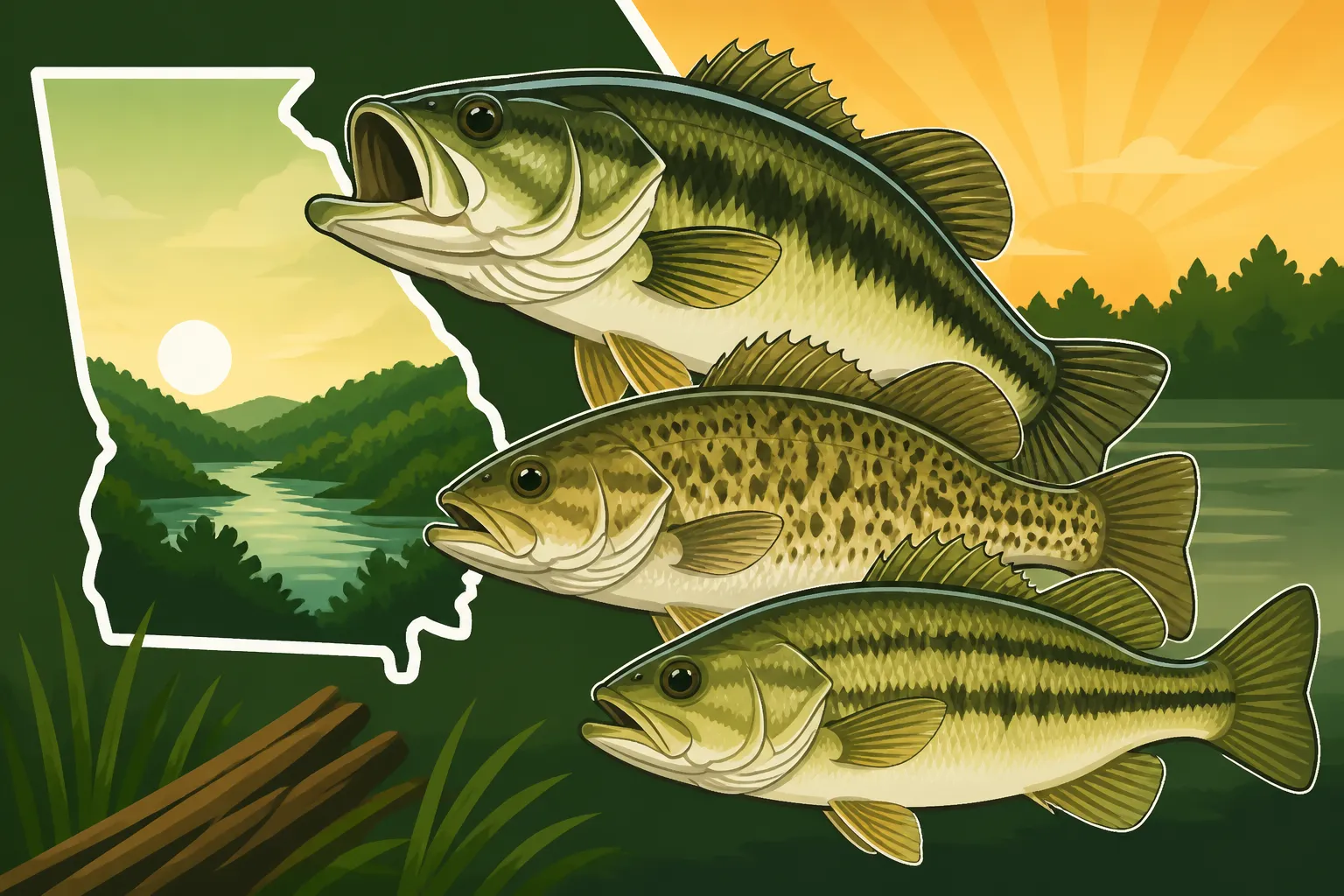
With three native black bass species calling Georgia home, it's easy to get them mixed up, especially if you're new to fishing or just casually observing your catch. However, knowing the distinct features of each species is incredibly beneficial for a variety of reasons, from adhering to local regulations to improving your fishing success. Let's break down the primary visual distinctions in a clear, comparative way.
It's not just about the mouth, though that's a big one! Look at the whole picture: body shape, coloration, patterns, and even subtle details like the tongue or fin connections. Over time, with practice and careful observation, these differences will become second nature, allowing you to quickly and confidently identify your catch.
Largemouth vs. Spotted Bass: The Common Confusion
The largemouth and spotted bass are the two species most frequently confused, especially by anglers in Georgia's large reservoirs where both are abundant. The mouth is your best friend here. Remember, a largemouth's mouth extends past its eye, while a spotted bass's mouth generally does not. Imagine trying to fit a golf ball in its mouth – the largemouth can usually swallow a larger one.
Beyond the mouth, feel the tongue. If it's rough with a small patch of scales, it's almost certainly a spotted bass. Largemouth tongues are typically smooth. Body shape is also a clue: largemouth tend to be chunkier and deeper-bodied, whereas spotted bass are often more slender and streamlined. Finally, look at the lateral line and belly. Spotted bass often have distinct rows of spots or small blotches below the lateral line, especially on their lower sides and belly, which are usually absent or less defined on a largemouth. Largemouth Bass vs Spotted Bass: How to Tell Them Apart in Georgia offers a detailed side-by-side comparison.
Spotted Bass vs. Shoal Bass: River vs. Reservoir Adaptations
Distinguishing between spotted and shoal bass can be trickier, as they share some characteristics like a mouth that doesn't extend past the eye and a more streamlined body than a largemouth. The most definitive difference lies in the scales on the tongue: spotted bass have them, while shoal bass generally do not.
Also, consider their preferred habitat. If you're fishing a clear, rocky river with strong current, especially in the Flint River system, and you catch a bass that isn't clearly a largemouth, chances are it's a shoal bass. If you're in a large, deep reservoir, it's more likely to be a spotted bass. Shoal bass also tend to have more prominent vertical barring or "tiger stripes" along their sides and a more pronounced dark spot at the base of their tail fin, adaptations that help them camouflage in rocky river environments.
Visual Comparison Table
To make identification a little easier on the water, here's a quick comparison of the three native bass species you're likely to encounter in Georgia. Keep this handy, and with a little practice, you'll be identifying them like a pro in no time!
| Feature | Largemouth Bass | Spotted Bass | Shoal Bass |
|---|---|---|---|
| Mouth Position | Extends beyond the eye | Does not extend beyond the eye | Does not extend beyond the eye |
| Tongue Scales | Smooth, no scales | Has a distinct patch of scales | Smooth, generally no scales |
| Dorsal Fin | Deep notch, almost separated | Clearly connected | Clearly connected |
| Lateral Line | Dark, often broken or blotchy | Distinct rows of spots below lateral line | Dark, often with vertical bars/tiger stripes |
| Body Shape | Deep, robust, "stocky" | Streamlined, "torpedo-like" | Elongated, very streamlined, powerful |
| Preferred Habitat | Warm, vegetated lakes, ponds, slow rivers | Clear, rocky reservoirs, moderate rivers | Fast-flowing, rocky rivers (shoals, rapids) |
| Average Size | Largest of the three (often >15 inches) | Medium (typically 10-15 inches) | Smaller than largemouth (typically 10-18 inches) |
Habitat and Behavior: Where to Find Each Species
Understanding the distinct habitats and behavioral patterns of Georgia's native bass species is perhaps the most critical piece of the puzzle for successful angling. It's not enough to just know what they look like; you need to know where they live, what they eat, and how they behave throughout the year. Each species has evolved to fill a specific niche in Georgia's diverse aquatic environments, and by learning these preferences, you can dramatically improve your chances of finding and catching them.
Think of it like being a detective: you're looking for clues in the environment. Is the water clear or murky? Is there current, or is it still? What kind of cover is present? These environmental cues will tell you which bass species is most likely to be present and how they might be positioned. Knowing this will help you choose your fishing location, the right baits, and the most effective presentation.
Largemouth Bass: Masters of Cover
Largemouth bass are true masters of camouflage and ambush, intimately tied to cover. Their preferred environment is typically characterized by warmer, often nutrient-rich waters with an abundance of aquatic vegetation, submerged timber, laydowns, docks, and brush piles. These structures provide them with everything they need: concealment from prey, shade from the sun, and protection from larger predators. You'll rarely find a largemouth cruising aimlessly in open water; they're almost always relating to some form of structure or cover. This makes Lake Lanier Fishing Guide, Georgia a perfect example, as it's known for its abundant cover and thriving largemouth populations.
Their behavior is largely dictated by water temperature and the availability of cover. During the spring, they move into shallow spawning flats and coves. In summer, they might move to deeper cover during the heat of the day, emerging to feed in shallower water during low light. In the fall, they'll chase baitfish in preparation for winter. The key takeaway for largemouth is cover, cover, cover. If you can find good cover in appropriate depths for the season, you're likely to find largemouth.
Spotted Bass: Deep Structure Specialists
Spotted bass, in contrast to largemouth, are more at home in clearer, deeper waters and are often associated with rocky structures rather than dense vegetation. While they will utilize some cover, they are typically found around offshore humps, points, ledges, bluff walls, and submerged timber in deeper zones. They are also highly adept at feeding on baitfish in open water and will often suspend over deep water, especially in large reservoirs like Lake Allatoona or Lake Hartwell.
Their behavior often involves schooling, particularly when feeding on baitfish. You might find large schools of spotted bass congregated around a deep structure, chasing shad or other forage. They are less sensitive to light than largemouth and will often feed actively throughout the day, even in bright sunshine, as long as they are in their preferred deeper, cooler water. This makes them a more consistent target for anglers fishing with electronics or using vertical jigging techniques. Their willingness to chase and their aggressive nature make them a challenging but rewarding catch for anglers exploring the deep.
Shoal Bass: Current Dwellers and River Athletes
Shoal bass are the true athletes of Georgia's bass species, specifically adapted for life in moving water. Their streamlined bodies and powerful tails allow them to navigate strong currents with ease. You will almost exclusively find them in rivers characterized by rocky shoals, rapids, and fast-flowing runs. They use the river's current to their advantage, positioning themselves in eddies and slack water pockets behind boulders or ledges, waiting to ambush prey as it drifts by. Best Rivers for Fishing in Georgia is a must-read for any angler looking to target these unique fish.
Their behavior is highly tied to the river's flow. During periods of high water, they might retreat to calmer, deeper pools. In lower water conditions, they become more accessible in the shoals. They are opportunistic feeders, preying on crayfish, small baitfish, and insects that are swept downstream. Targeting shoal bass often involves a combination of wading, precise casting, and understanding how current affects lure presentation. It's a truly immersive fishing experience that connects you directly to the wild heart of Georgia's rivers.
Best Techniques and Lures for Georgia's Bass Species
Now that we've covered how to identify each bass species and where they like to hang out, let's talk about the fun part: how to catch them! While there's always overlap in what lures bass will strike, specific techniques and lure choices often shine for one species over another. Adapting your approach to the bass you're targeting or the environment you're fishing in will dramatically increase your success. It's about being strategic and having the right tools for the job.
Having a diverse tackle box is key, and you can often find a fantastic selection of all the lures mentioned below on Amazon, making it easy to prepare for any bass fishing scenario. Remember, fishing is an art as much as a science; experimentation and confidence in your presentation are just as important as the lure itself.
Lure Selection for Largemouth Bass
Largemouth bass are famously aggressive and will strike at a wide variety of lures, especially those that mimic their natural prey or invade their personal space. When targeting largemouth, think about covering water and enticing a reaction strike from fish hiding in cover.
- Soft Plastics: Texas-rigged worms, creature baits, and senkos are absolutely deadly. They're versatile, weedless, and can be fished slowly in heavy cover where largemouth often lurk. Colors like green pumpkin, junebug, and black/blue are perennial favorites.
- Jigs: Flipping and pitching jigs into thick cover, under docks, or into brush piles is a prime largemouth technique. Pair them with a crawfish-imitating trailer for maximum effectiveness.
- Crankbaits: Squarebill crankbaits for shallow cover, and deep-diving crankbaits for offshore ledges and humps, are excellent for covering water and triggering strikes. Match the size and color to the prevalent baitfish.
- Spinnerbaits & Chatterbaits: These are fantastic for fishing through sparse cover or over submerged grass beds. The flash and vibration can draw fish out from hiding.
- Topwater Lures: Poppers, walk-the-dog baits, and frogs are incredibly exciting during low-light conditions or when fishing over matted vegetation. The explosive strikes are unforgettable.
For detailed strategies on these, check out Best Lures for Georgia Largemouth Bass.
Lure Selection for Spotted Bass
Spotted bass often prefer smaller, more subtle presentations, particularly when schooling or suspended in deeper water. Finesse is often the name of the game, though they can be aggressive given the right conditions.
- Finesse Worms/Jigs: Drop-shot worms, shaky head jigs, and small football jigs with finesse trailers are incredibly effective for spotted bass holding on deep structure. Their smaller profile mimics smaller baitfish and crawfish.
- Small Swimbaits: Small paddle-tail swimbaits rigged on jig heads are fantastic for imitating schooling baitfish, especially when spotted bass are actively chasing.
- Jerkbaits & Small Crankbaits: These can be very productive for suspended fish or when spots are feeding on open-water baitfish. A stop-and-go retrieve with a jerkbait can be irresistible.
- Spoons: Vertical jigging spoons are a classic technique for targeting schooling spotted bass found on your fish finder in deep water.
- Topwater Lures: While less common than for largemouth, small poppers or walking baits can be effective early mornings or late evenings when spotted bass push bait to the surface, particularly in clearer waters.
Focus on lighter lines, smaller hooks, and a more natural presentation to fool these often pressured fish.
Lure Selection for Shoal Bass
Shoal bass demand lures that can handle current and accurately mimic the prey found in river environments, primarily crayfish and baitfish. Durable baits that can withstand bumping off rocks are a plus.
- Spinnerbaits: Compact spinnerbaits with willow or Colorado blades are excellent for covering water in current, providing flash and vibration that shoal bass can't resist.
- Jigs & Creature Baits: Jigs with crawfish-imitating trailers, or soft plastic creature baits, are perfect for bouncing along the rocky bottom in eddies and current breaks. Darker, natural colors like brown, green pumpkin, and black are often best.
- Small Crankbaits: Shallow-diving crankbaits that deflect off rocks can trigger aggressive strikes. Look for models with strong bills built for durability.
- Topwater Lures: Poppers and prop baits can be incredibly exciting in rocky shoals during summer mornings and evenings, drawing explosive strikes from these powerful fish.
- Flies: For fly anglers, streamers that imitate baitfish or crayfish, and large poppers, are highly effective. The challenge and reward of fly fishing for shoal bass in these unique river settings is truly special.
Remember to consider the current; you'll often need to cast upstream and allow your lure to drift naturally into strike zones or work it with the current while maintaining tension. This species thrives in current, and your presentation should reflect that.
Conservation and Responsible Angling
As anglers, we have a profound responsibility to protect and preserve the incredible fishing resources that Georgia offers. Our native bass species are a vital part of our state's aquatic ecosystems, and ensuring their health and abundance for future generations is paramount. Conservation isn't just about following rules; it's about adopting an ethos of respect for the environment and its inhabitants. Every decision we make on the water, from how we handle a fish to how we dispose of our trash, has an impact.
By understanding the species we target, adhering to regulations, and practicing ethical angling, we can all contribute to a thriving fishery. The joy of catching a bass is only amplified by knowing that we're doing our part to sustain these populations. It's a legacy we build with every cast and every carefully released fish.
Adhering to Size and Creel Limits
Perhaps the most direct way anglers contribute to conservation is by understanding and strictly adhering to all size and creel limits. These regulations are not arbitrary; they are carefully developed by the Georgia Department of Natural Resources (DNR) based on scientific data, aimed at ensuring sustainable fish populations. For instance, some lakes might have a 14-inch minimum for largemouth bass to protect juvenile fish, while others might have slot limits designed to encourage the release of medium-sized fish and allow larger ones to grow.
It's crucial to check the specific regulations for the body of water you're fishing before you even make your first cast. Ignorance of the law is never an excuse, and penalties for violations can be significant. Always carry a measuring device, and know how to accurately measure your fish. If you're unsure about a fish's species or size, the safest bet is always to release it gently. This diligence ensures that enough fish survive to reproduce, maintaining healthy populations for years to come. Georgia Fish Size and Creel Limits is a critical read before any fishing trip.
Catch and Release Practices
While keeping some fish for the dinner table is certainly a part of fishing, practicing responsible catch and release, especially for larger fish or when limits are met, is a cornerstone of modern conservation. A well-executed catch and release dramatically increases the chances of a fish's survival. This is particularly important for trophy-sized fish, as they are the prime spawners and contribute most significantly to the genetic health of the population.
Here are some key tips for effective catch and release:
- Minimize handling: Try to keep the fish in the water as much as possible.
- Wet hands: Always wet your hands before touching a fish to protect its protective slime coat.
- Support the fish: Support the fish horizontally, especially larger ones, to avoid damaging its internal organs or jaw.
- Quick removal: Use pliers or forceps to quickly remove the hook. If the fish is deeply hooked, consider cutting the line as close to the hook as possible; hooks often rust out or dislodge naturally.
- Revive the fish: If the fish seems stressed, hold it gently in the water, facing into a mild current, until it can swim away under its own power. Don't just toss it back.
By taking these steps, you're not just letting a fish go; you're actively investing in the future of the fishery.
Protecting Aquatic Habitats
The health of our bass populations is directly tied to the health of their aquatic habitats. As anglers, we can play a significant role in protecting these vital environments. This means being mindful of where we step, not disturbing sensitive spawning areas, and certainly never leaving trash or discarded fishing line behind. Monofilament fishing line, in particular, can be a deadly hazard for wildlife.
Beyond personal actions, consider supporting conservation organizations that work to protect and restore Georgia's waterways. Participate in local clean-up efforts, or report pollution and habitat destruction to the authorities. Advocacy for clean water and healthy ecosystems directly benefits our fish and, by extension, our fishing opportunities. A clean, healthy environment means more robust fish populations and a more enjoyable experience for everyone on the water. It’s a collective effort, and every angler has a part to play.
Disclaimer
This article is for general informational purposes only and does not constitute professional advice. Laws, prices and regulations vary by location and change over time. Consult a qualified professional for guidance on your specific situation.