White Crappie Size Compared to Black Crappie
It's a common dilemma for Georgia anglers: you've landed a beautiful slab crappie, but then you start wondering if it's a white crappie or a black crappie, and more importantly, how their sizes really stack up against each other. It’s not just curiosity; knowing the typical size differences can actually help you target bigger fish and understand the health of the crappie populations in your favorite lake or river. This guide will dive deep into the fascinating world of crappie sizes, breaking down what you can expect from both white and black crappie across Georgia’s diverse waters.
Understanding the Crappie Cousins: White vs. Black
Before we can truly talk about size differences, it’s absolutely essential to be able to tell these two distinct species apart. They often share the same waters, and sometimes even the same brush pile, leading to a lot of confusion. While both are fantastic sportfish and incredible table fare, they have subtle but important characteristics that set them apart, and these characteristics often play a role in their growth potential.
Imagine you're out on Lake Sinclair, and you've just pulled in a couple of nice crappie. You hold them up, side by side, and they look pretty similar at first glance. However, a closer inspection will reveal the tell-tale signs. White crappie generally have more of a "taller" body profile, almost disc-shaped, while black crappie tend to be a bit more rounded. But the real clincher is usually the dorsal fin.
Key Identification Features for White Crappie
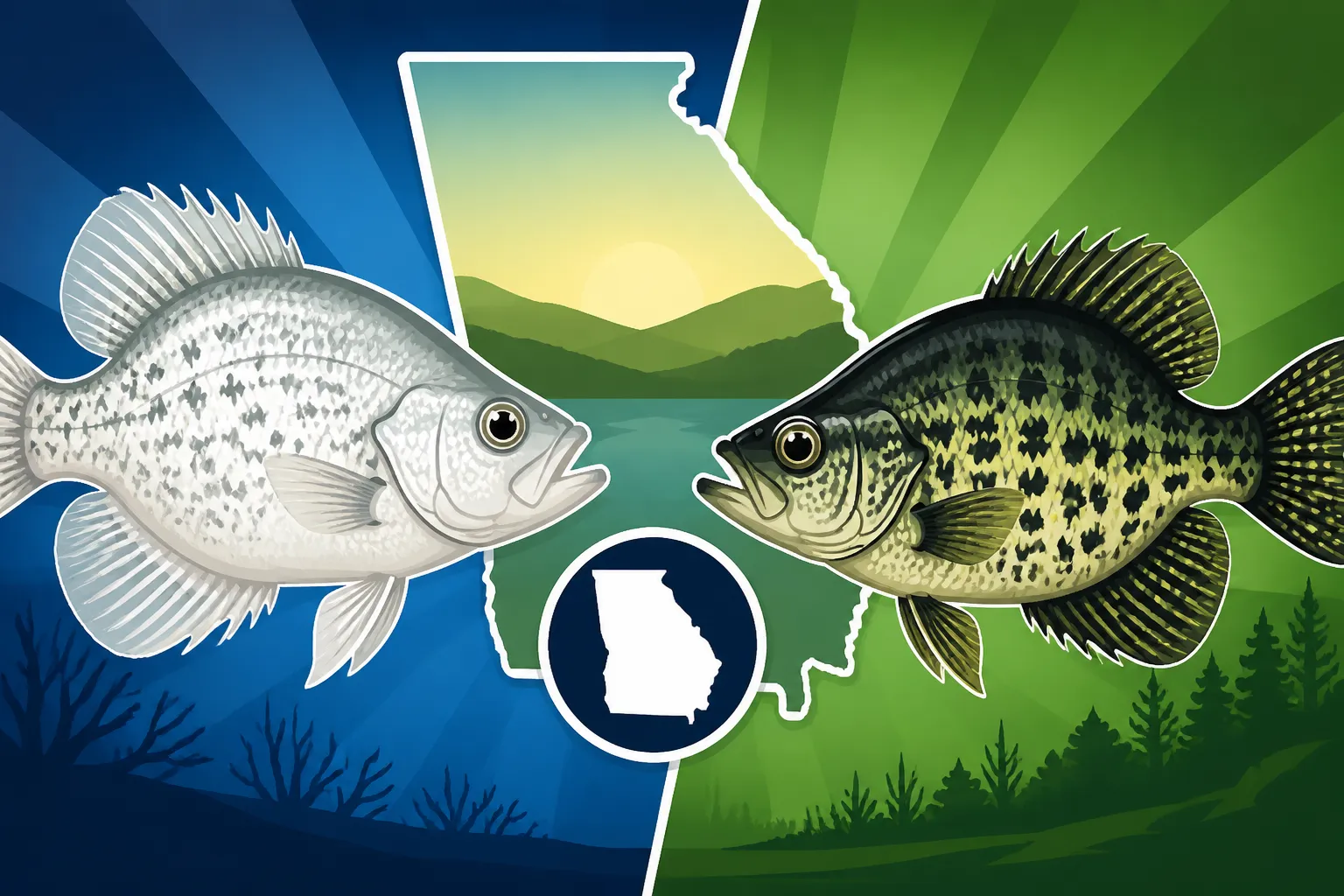
When you're trying to identify a white crappie, pay close attention to its body shape and markings. White crappie tend to have a more elongated, somewhat slimmer body compared to their black crappie cousins. Their coloration is usually paler, often a silvery-white, with distinct dark vertical bars running down their sides. These bars can sometimes be quite prominent, almost like stripes.
One of the most reliable identification points for the white crappie is the number of spines in its dorsal fin. Count them carefully; a white crappie will almost always have six dorsal spines. This is a crucial detail that anglers often use to distinguish it from the black crappie. Their mouth also tends to be a bit larger, extending past the middle of the eye. This combination of shape, vertical bars, and dorsal fin count makes them fairly easy to identify once you know what to look for. Understanding these features is key to knowing what you’ve caught, which then leads to a better understanding of their potential size. For a more detailed look at their physical traits, check out White Crappie Fin and Spine Count vs Black Crappie.
Key Identification Features for Black Crappie
Black crappie, on the other hand, typically have a deeper, more robust, and rounder body shape. Their coloring can vary quite a bit depending on their habitat and diet, but they usually appear darker, with an olive-green or brownish hue, covered in an irregular pattern of dark spots and speckles. Unlike the white crappie's distinct vertical bars, the black crappie's spots are scattered seemingly at random.
The most definitive way to identify a black crappie is by counting the spines in its dorsal fin. You'll find that black crappie consistently have seven or eight dorsal spines, a clear difference from the white crappie's six. Their mouth is also typically smaller, not extending past the middle of the eye. These characteristics combine to give the black crappie a unique appearance, and recognizing them is the first step in appreciating their size potential. If you're looking for more general information on both species, Crappie Fishing in Georgia: Black and White Crappie Guide is a great resource.
Typical Size Ranges for White Crappie in Georgia
Now let's get down to the nitty-gritty: how big do white crappie actually get here in Georgia? While individual fish can always surprise you, white crappie in Georgia generally exhibit a certain growth pattern influenced by their environment and food availability. You'll find them thriving in larger, often murkier, and more open waters compared to black crappie.
Average Length and Weight of White Crappie
In most Georgia lakes and rivers, a "keeper" white crappie is typically in the 8 to 10-inch range. These are the fish you'll consistently encounter and happily bring home for a delicious fish fry. In terms of weight, a crappie of this size will usually be anywhere from half a pound to a pound. Catching several of these in a day makes for a really rewarding outing.
However, white crappie definitely have the potential to grow larger, especially in prime habitats with abundant forage and less fishing pressure. Many anglers regularly pull in white crappie in the 12 to 14-inch range, which are considered excellent catches and will typically weigh between 1.5 to 2 pounds. These are the "slabs" that crappie anglers dream about! While larger fish can certainly be found, a white crappie pushing 15 inches or more is a truly exceptional specimen in Georgia, often tipping the scales at over 2 pounds.
Factors Affecting White Crappie Growth
Several environmental factors heavily influence how large white crappie can grow in a particular body of water. Primarily, it comes down to food availability. White crappie are voracious predators, and their growth is directly tied to the abundance of small baitfish, like shad and minnows, as well as insects and crustaceans. Lakes with healthy shad populations, for instance, often produce larger crappie.
Water quality and temperature also play significant roles. White crappie tend to prefer slightly more turbid (cloudy) waters, and while they can tolerate a wide range of conditions, consistently good water quality with stable temperatures helps them thrive and grow. Overcrowding can lead to stunted growth, as too many fish compete for limited resources. On the flip side, a body of water with a balanced ecosystem and good management practices can lead to truly impressive white crappie sizes. Places like Lake Sinclair, for example, are known for their strong crappie fisheries. If you're wondering when the best time to target these fish might be, check out Best Month to Catch Crappie in Georgia.
Typical Size Ranges for Black Crappie in Georgia
Black crappie, while often living alongside white crappie, tend to favor slightly different habitats, and this can influence their overall size potential. They're typically found in clearer, cooler waters with more vegetation or structure, like submerged timber and brush piles. This preference can sometimes lead to different growth rates and average sizes compared to their white crappie cousins.
Average Length and Weight of Black Crappie
For black crappie in Georgia, a commonly caught fish will also be in the 8 to 10-inch range, weighing from half a pound to a pound. Just like white crappie, these are the bread-and-butter fish that make for a fun day on the water. They are robust, good fighters, and delicious.
However, many seasoned anglers will tell you that the black crappie, pound for pound, often feels a bit "meatier" or heavier for its length compared to a white crappie. While their overall maximum length might not always exceed that of white crappie, they frequently have a deeper body, giving them a more substantial weight at similar lengths. Catching black crappie in the 11 to 13-inch range is fairly common in productive waters, with these fish often weighing between 1 to 1.75 pounds. Anything over 14 inches for a black crappie in Georgia is considered a trophy, often breaking the 2-pound mark. You can read more about what to expect in Black Crappie Size in Georgia Ponds and Reservoirs.
Factors Affecting Black Crappie Growth
Black crappie also rely heavily on food sources, primarily small minnows, insects, and larval fish. Their preference for clearer water with more cover means that lakes and ponds with healthy aquatic vegetation or extensive woody debris provide excellent habitat for both the crappie and their forage. These structural elements also offer protection from predators and ambush points for hunting.
Water clarity plays a bigger role for black crappie; they generally prefer clearer conditions where they can more easily spot their prey. Stable water temperatures and a lack of pollution are also critical for robust growth. Just like white crappie, overcrowding can lead to smaller fish, as the competition for food intensifies. Anglers looking to maximize their chances of catching larger black crappie should focus on waters known for good clarity and abundant structure. If you’re preparing for a crappie trip, consider looking up some Best Bait for White Crappie in Georgia options, which often work for black crappie too.
The Great Crappie Size Debate: Who Gets Bigger?
This is the question that fuels countless conversations among crappie anglers: which species gets bigger? The answer isn't always cut and dry, as both species have the potential to grow to impressive sizes under the right conditions. However, there are some general tendencies and prevailing wisdom that can guide our understanding.
Comparing Maximum Potential Sizes
Historically, the white crappie has often been cited as having a slightly larger maximum growth potential in terms of overall length. There's anecdotal evidence and some record books that suggest the very largest crappie, those pushing past the 3-pound mark, are more frequently white crappie. This might be due to their slightly more elongated body shape allowing for greater length development. Think of it like comparing a lean sprinter to a powerful bodybuilder – both strong, but built differently.
However, the black crappie often gives the impression of being a "chunkier" or "fatter" fish at a comparable length. Because of their deeper, more rounded body, a 12-inch black crappie might actually weigh more than a 12-inch white crappie from the same body of water, even if the white crappie has the potential to reach a longer overall measurement. So, while white crappie might win the length contest at the extreme end, black crappie often hold their own, or even surpass, in the weight-for-length category within the typical keeper sizes.
Environmental Influence on Size Potential
It's crucial to remember that these "maximum potentials" are heavily influenced by local conditions. A black crappie in a pristine, forage-rich, well-managed pond might easily outgrow a white crappie in an overcrowded, nutrient-poor public reservoir. Factors like water temperature, nutrient load, pH, and the presence of ideal forage (small baitfish like threadfin shad or gizzard shad) are far more impactful than the species itself in determining the average size you'll encounter on any given day.
For instance, a warm, fertile reservoir like Lake Oconee or Lake Sinclair, with its abundance of baitfish, can produce impressive crappie of both species. Whereas a small, isolated pond might only produce stunted crappie due to overpopulation and limited food. The takeaway here is that while genetic potential exists, the environment is the ultimate arbiter of a crappie's size. Knowing which species tends to thrive in certain water conditions can give you a clue about where to find bigger fish. For broader insights into crappie, consider reading Crappie Compared: Black vs White in Georgia Waters.
Table: Crappie Species Comparison
To help clarify the differences and general size expectations, here’s a quick comparison table summarizing key features of white and black crappie in Georgia. This isn't just about identification; it also gives you hints about their preferred habitats which, in turn, influence their growth.
| Feature | White Crappie | Black Crappie |
|---|---|---|
| Body Shape | More elongated, somewhat slimmer, disc-shaped | Deeper, rounder, more robust body |
| Color/Markings | Paler, silvery-white, distinct dark vertical bars | Darker, olive-green/brownish, irregular dark spots/speckles |
| Dorsal Fin Spines | 6 dorsal spines | 7-8 dorsal spines |
| Mouth Size | Larger, extends past middle of eye | Smaller, does not extend past middle of eye |
| Preferred Habitat | Larger, often murkier, open waters | Clearer, cooler waters with more vegetation/structure |
| Typical Length | 8-14 inches (occasionally larger) | 8-13 inches (occasionally larger) |
| Typical Weight | 0.5 – 2 pounds (up to 3+ lbs exceptionally) | 0.5 – 1.75 pounds (up to 2.5+ lbs exceptionally) |
| Growth Potential (General) | Slightly greater maximum length potential | Often heavier for its length, 'chunkier' build |
Practical Implications for Anglers
Understanding the size differences and growth patterns of white and black crappie isn't just academic; it has real, practical implications for how you approach your fishing trips in Georgia. Knowing what to expect and what influences their size can help you become a more successful and knowledgeable angler.
Targeting Larger Crappie Based on Species Preference
If you're specifically hoping to catch a truly "long" crappie, perhaps a genuine foot-and-a-half fish, you might slightly lean towards targeting white crappie in larger, fertile reservoirs known for abundant baitfish. These fish tend to chase open water bait schools, so adjusting your tactics to cover larger areas with trolling or drift fishing might pay off. Using electronics to find schools of bait and the crappie feeding on them is crucial.
On the other hand, if your goal is a "heavy" crappie, a thick-bodied fish that really pulls on the line, focusing on black crappie in clearer, structured waters might be your best bet. These fish love hiding in brush piles, submerged timber, or around docks. Vertical jigging or pitching small jigs and minnows directly into cover are often very effective methods. Consider investing in a good crappie jig assortment, which you can easily find on Amazon, to cover various situations.
Gear and Tackle Considerations
Regardless of which crappie species you're targeting, using appropriate light tackle is key. Crappie have delicate mouths, and too heavy a hand can tear the hook out. Ultralight spinning rods with sensitive tips, spooled with light line (4-6 lb test monofilament or fluorocarbon), are perfect. Small jigs (1/32 to 1/16 ounce are common), tiny crankbaits, or live minnows under a bobber are proven crappie getters.
For those truly targeting trophy-sized crappie, a high-quality fish scale and a measuring board are essential tools, not just for bragging rights but also for accurate catch-and-release data if you're practicing conservation. You can find durable, waterproof scales and measuring devices on Amazon that will withstand the elements of a fishing trip. Having a good understanding of How to Jig for Crappie or How to Tightline for Crappie will also significantly improve your chances of success, especially when pinpointing those bigger fish.
Conservation and Management
Finally, understanding crappie sizes also ties into conservation. Crappie populations can be sensitive to overfishing, especially in smaller bodies of water. Knowing the typical size range for a healthy population in your specific fishing spot can help you make informed decisions about what to keep and what to release. Adhering to local size and creel limits is vital for ensuring that both white and black crappie continue to thrive in Georgia for generations of anglers to come. Always check the current Georgia Fish Size and Creel Limits before heading out.
When you're out on the water, the thrill of reeling in a crappie is always there, whether it's a white or a black, a modest panfish or a true slab. But by understanding their subtle differences and the factors that influence their growth, you gain a deeper appreciation for these fantastic fish and become a more effective angler in the process.
Disclaimer
This article is for general informational purposes only and does not constitute professional advice. Laws, prices and regulations vary by location and change over time. Consult a qualified professional for guidance on your specific situation.