Deep Water Techniques for Striped Bass
When striped bass decide to dive deep, often seeking cooler, more oxygenated waters during the scorching Georgia summer or staging in predictable patterns during winter, it can be incredibly frustrating for anglers. You might spend hours casting into shallower waters only to come up empty, knowing those powerful fish are lurking just out of reach. This guide is all about equipping you with the knowledge and tactics to consistently find and catch striped bass, no matter how far down they decide to hold.
Understanding Deep Water Striped Bass Behavior
Before you can catch these powerful fish, you've got to think like them. Striped bass aren't just going deep for fun; there's always a reason, and usually, it boils down to comfort and food availability.
Why They Seek Depth
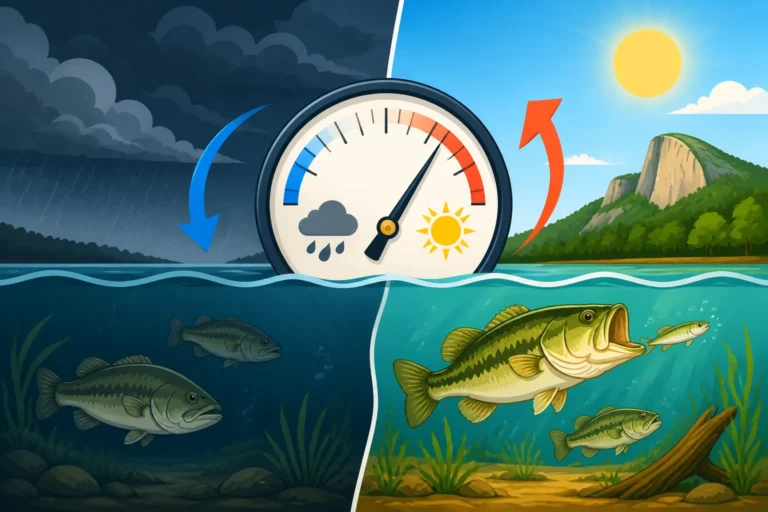
Striped bass, being cold-water fish by nature, are highly sensitive to water temperature and oxygen levels. As surface waters heat up during the summer months in Georgia's expansive reservoirs like Lake Lanier or Lake Oconee, the stripers are forced to descend into the thermocline. The thermocline is that magical layer where cooler, oxygen-rich water meets warmer, depleted water. It's often where baitfish, like threadfin and gizzard shad, also congregate, making it a perfect buffet line for stripers. Think of it as their air-conditioned pantry.
Beyond temperature and oxygen, baitfish concentration is a huge draw. If the shad are holding in a creek channel 40 feet down, you can bet the stripers won't be far behind. They're opportunistic predators, and they'll follow their food source wherever it goes. This often means suspending over deep points, humps, or even submerged timber where bait schools are present. Understanding this direct correlation between bait, temperature, and depth is the first step to successful deep-water striper fishing. You need to be where the food is, and where the fish are comfortable eating it.
Seasonal Movements and Depths
The depths at which striped bass hold can change dramatically with the seasons. In spring, as waters warm, stripers will often be found shallower, chasing baitfish in coves and on main lake points as they prepare for and complete their spawn. However, once summer truly hits, usually from late May through September, the deep-water game begins in earnest. This is when you'll find them actively schooling in depths ranging from 30 to 70 feet, often hugging the thermocline or the very bottom of deeper structures during the brightest parts of the day.
As autumn arrives and water temperatures begin to cool, the thermocline breaks up, and stripers might scatter a bit more, moving into a wider range of depths. They'll often be found chasing bait closer to the surface in the mornings and evenings, but still dropping back to 20-40 feet during midday. Winter sees them congregating in massive schools over deep creek channels, river bends, and around major lake structures. Here, they might be found anywhere from 50 to 100 feet deep, or even deeper, especially in reservoirs like Lake Hartwell where vertical jigging becomes a prime tactic for those cold-water giants. Knowing these general patterns helps you narrow down your search area significantly.
Essential Gear for Deep Water Success
You wouldn't try to dig a trench with a garden trowel, and you shouldn't try to catch deep-water stripers with ultralight gear. This type of fishing demands robust equipment that can handle the weight, the fight, and the depths.
Rods, Reels, and Line for Heavy Duty
For deep water striped bass, you're going to need a sturdy setup. Think medium-heavy to heavy action rods, typically in the 7 to 8-foot range. Longer rods give you better leverage for fighting big fish and more casting distance if you're throwing larger plugs. A sensitive tip is still important to detect subtle bites, but the backbone must be substantial enough to manage heavy weights and muscle powerful fish from considerable depths. A popular choice for many Georgia anglers are graphite composite rods, offering both sensitivity and strength.
Matching your rod with a high-capacity baitcasting or spinning reel is crucial. Baitcasting reels, often preferred for their cranking power and control when dropping heavy weights, should have a smooth drag system that can withstand long, powerful runs. For lines, a strong braided line in the 30-50 pound test range is ideal. Braid has minimal stretch, which means better bite detection and more direct hooksets from deep water. Many anglers will then add a 10-20 foot fluorocarbon leader (20-30 pound test) to the braid. This leader provides stealth and abrasion resistance, especially when fishing around submerged timber or rocky bottom. You can find excellent options for both reels and lines on Amazon, ensuring you have reliable gear for those tough fights. For more on specific setups, check out our guide on the Best Gear for Striped Bass Fishing.
Key Electronics: Fish Finders and Mapping
Trying to find deep-water stripers without a quality fish finder is like trying to find a needle in a haystack in the dark. It's simply not practical. A good fish finder with high-resolution sonar is your best friend. Look for units that offer traditional 2D sonar, side imaging, and down imaging. 2D sonar will show you bait balls and fish arches directly beneath your boat, while down imaging provides a more photographic view of what's directly below. Side imaging is a game-changer for scanning wide areas quickly, revealing schools of bait and stripers off to the sides of your boat.
Coupled with your sonar, a reliable GPS mapping system is indispensable. Modern units integrate GPS with detailed lake maps, showing contour lines, creek channels, humps, and points. This allows you to mark waypoints where you find fish or bait, navigate precisely, and return to productive spots time and again. Brands like Humminbird and Garmin offer excellent units that combine all these features. Learning to interpret what your fish finder is telling you – distinguishing bait from fish, identifying thermoclines, and marking key structures – is an art form that will drastically improve your success. We have a detailed resource on Best Fish Finders for Georgia Reservoir Fishing if you're looking to upgrade.
Terminal Tackle: Weights, Hooks, and Swivels
When fishing deep, your terminal tackle selection becomes critical. To get your bait or lure down to those significant depths, you'll need heavy sinkers. "Cannonball" or "egg" sinkers ranging from 1 to 4 ounces are common, sometimes even heavier depending on current, depth, and line diameter. The goal is to get your bait down quickly and keep it in the strike zone. You'll often use a three-way swivel rig or a Carolina rig setup to present your bait effectively without twisting your line.
Hooks need to be stout enough to handle the immense power of a fighting striper. Circle hooks, particularly in sizes 4/0 to 7/0, are highly recommended when using live bait. They are designed to hook fish in the corner of the mouth, reducing gut hooking and making release easier if you're not keeping your catch. For artificials, ensure all treble hooks are sharp and strong; consider upgrading stock hooks on some lures for better performance and durability. High-quality barrel or ball bearing swivels (size 2-4) are also essential to prevent line twist, especially when trolling or using spinning baits. Always carry an assortment of these items, as deep-water snags are inevitable.
Effective Deep Water Fishing Techniques
Once you're geared up, it's time to put those tools to work. There are several proven techniques for targeting striped bass holding in deeper waters, each with its own nuances and ideal conditions.
Downlining Live Bait: The Classic Method
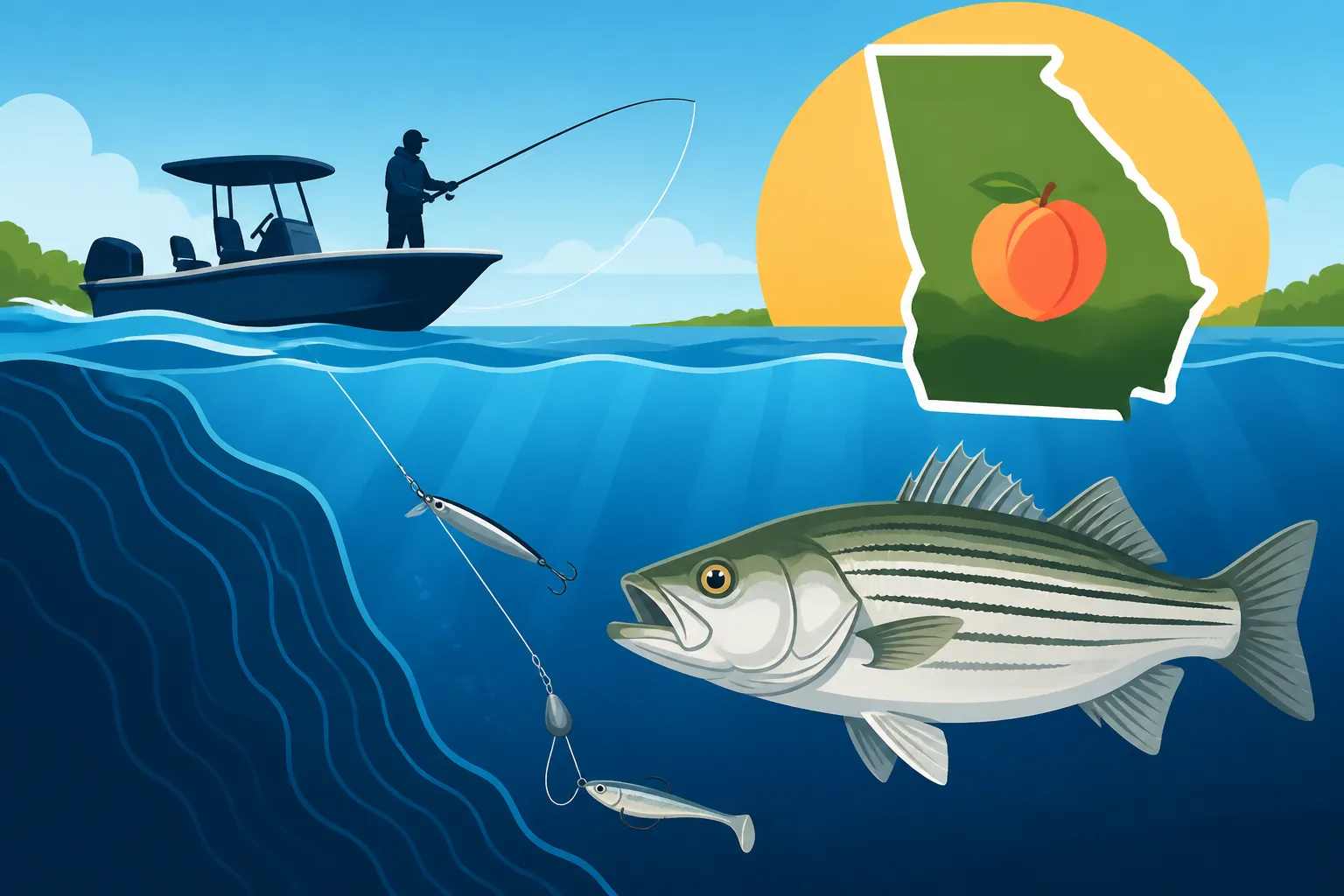
Downlining is arguably the most effective and popular method for catching deep-water striped bass, especially when they are schooled up tight. This technique involves suspending a live baitfish, typically a large threadfin shad, gizzard shad, or blueback herring, directly beneath your boat at the same depth as the stripers you've located on your fish finder. You'll typically use a three-way swivel rig or a simple slip-sinker rig. For the three-way, tie your main line to one eye, a 1-4 oz cannonball sinker to a short leader (6-12 inches) off the second eye, and a longer leader (3-6 feet) with your hook and live bait to the third eye. This setup allows your bait to swim freely while the weight keeps it at the desired depth.
Presentation is key. Carefully drop your rig down, watching your line counter or using markers on your line to ensure you hit the exact depth where you're seeing fish or bait on your sonar. Once you reach the depth, engage your reel and place the rod in a sturdy rod holder. It's often a waiting game, but when a striper hits, it's usually unmistakable – a violent pull that nearly rips the rod out of the holder. Always keep your bait fresh and lively; a struggling bait is more enticing. Many anglers will keep a large bait tank with aerators to ensure their herring or shad stay active. Mastering this technique is fundamental to successful summer and winter striper fishing. More detailed insights on How to Downline for Striped Bass can be found in our comprehensive guide.
Trolling Deep Diving Lures and Planer Boards
Trolling is an excellent method for covering large expanses of water and locating scattered schools of stripers that might not be tightly grouped. When targeting deep-water fish, you'll primarily use deep-diving crankbaits, spoons, or even umbrella rigs. These lures are designed to get down to significant depths on their own or with the aid of additional weights like lead core line or downriggers. Deep-diving crankbaits from brands like Rapala or Bomber can reach 20-30 feet on their own, while downriggers can precisely place any lure or bait at depths of 50 feet or more.
Speed and lure selection are crucial for effective trolling. Generally, speeds between 2-4 mph work best, but you'll want to experiment to find what the fish prefer on a given day. Watch your fish finder constantly; when you see bait or fish, adjust your lures to run at that depth. Planer boards, while often associated with surface trolling, can also be used to spread your deep-diving lures wider, allowing you to cover an even broader path. This is especially useful for avoiding spooking fish directly under the boat. Trolling can be very productive on large open water sections of reservoirs where stripers are actively chasing bait pods. Our guide on How to Troll for Striped Bass provides further advanced tactics.
Vertical Jigging and Spooning
When stripers are tightly schooled over specific structures like humps, ledges, or deep timber, vertical jigging and spooning can be incredibly effective. This technique involves dropping a heavy metal spoon or a large bucktail jig directly down to the depth of the fish and then imparting a sharp, upward jerk followed by a controlled freefall. The idea is to mimic a dying baitfish, triggering a reaction strike. The "flutter" on the fall is often when the strike occurs, so pay close attention to your line on the drop.
Spoons like the Hopkins Shorty, Kastmaster, or Gibbs Minnow are popular choices, ranging from 1 to 4 ounces. Bucktail jigs, especially those with added soft plastics or live bait strips, can also be deadly. When jigging, watch your fish finder constantly. Drop your lure just above the fish you see, and work it through the school. Sometimes a fast, aggressive retrieve is best, other times a slow, rhythmic lift-and-drop. Experiment with cadence and speed until you find what triggers a bite. This method is particularly effective in winter when stripers are less active and more reluctant to chase fast-moving baits horizontally.
Choosing the Right Bait and Lures
Success in deep water is heavily reliant on presenting the right meal to those hungry stripers. Whether it's live bait or artificials, the choice often depends on the season, the fish's mood, and the depth they're holding.
Live Bait Secrets for Stripers
Hands down, live bait is often the king for deep-water striped bass, especially when the fish are finicky or lethargic. Blueback herring, threadfin shad, and gizzard shad are the primary forage for stripers in many Georgia lakes and are therefore the most effective live baits. The key to success with live bait is keeping it healthy and lively. This means having a large, well-aerated bait tank with a good water filtration system. Water temperature in the tank should be kept as close as possible to the lake water temperature to minimize shock. You can find excellent bait tank aerators and additives on Amazon to help keep your bait frisky.
When downlining, present your live bait on a strong circle hook, nose-hooked or through the back just ahead of the dorsal fin, allowing it to swim naturally. For smaller baits like threadfin shad, a 4/0 hook might suffice, while larger gizzard shad or herring might require a 6/0 or 7/0. The livelier the bait, the more scent and vibration it puts out, which is irresistible to stripers. Always have plenty of bait, as stripers can be ravenous, and you might go through a dozen or more baits in a productive session. Understanding How to Rig Herring for Striped Bass properly can make a huge difference in your hookup ratio.
Artificial Lures That Reach the Depths
While live bait is dominant, there are many artificial lures that excel in deep water, especially when stripers are actively chasing bait or when you're covering water.
- Deep-Diving Crankbaits: These lures feature large lips that allow them to plunge to significant depths (20-30 feet or more) on a long cast and retrieve or when trolled. Look for models from brands like Strike King, Norman, or Rapala that are known for their deep-diving capabilities. Colors that mimic shad or herring are usually best – chrome, white, or blues.
- Spoons: Metal spoons are incredibly versatile for deep-water jigging. Their fluttering action on the fall is highly attractive. Hopkins Shorty, Kastmaster, and Crippled Herring spoons are classics. They come in various weights and finishes, with chrome, gold, and white being popular.
- Bucktail Jigs: Heavy bucktail jigs, often tipped with a piece of soft plastic or a strip of cut bait, are fantastic for vertical jigging. The pulsating hair provides a lifelike action, and the weight gets them down fast. Sizes from 1/2 oz to 3 oz are common.
- Umbrella Rigs: These are more advanced trolling rigs that mimic a school of baitfish. They consist of a main wire frame with multiple arms, each armed with a swimbait or teaser, and a larger "chaser" lure in the center. While they can be cumbersome, they are incredibly effective at drawing strikes from large schools of stripers.
- Soft Plastics on Jig Heads: Heavy jig heads (1/2 oz to 2 oz) paired with large paddle tail swimbaits (4-6 inches) or fluke-style baits can be cast and retrieved, or vertically jigged, effectively imitating a wounded baitfish.
The key to artificials is often matching the hatch – using lures that resemble the size and color of the local baitfish. Experimentation with different retrieve speeds, jigging cadences, and lure types will tell you what the stripers are looking for on any given day.
Locating Deep Water Striped Bass
Even with the best gear and techniques, you won't catch fish if you can't find them. Locating deep-water striped bass is primarily a game of understanding structure, bait presence, and interpreting your electronics.
Reading Your Electronics
Your fish finder is the single most important tool for locating deep-water stripers. Start by looking for bait schools. Baitfish often show up as dense clouds or clumps on your 2D sonar. Stripers will typically appear as large, distinct arches or marks, often positioned just below, within, or around these bait schools. Don't just look directly under your boat; use side imaging to scan wide swaths of water. If you see a good school of fish off to the side, adjust your boat's position to move over them.
Pay close attention to the thermocline, which will often appear as a distinct horizontal line on your sonar, typically between 20-50 feet deep in summer. This is often where both bait and stripers will suspend. Mark any significant fish or bait concentrations as waypoints on your GPS. Also, look for underwater features like humps, points, ledges, creek channels, and submerged timber. Stripers will often relate to these structures, especially if baitfish are present nearby. Regularly checking the What Depth Striped Bass Hold At guide can help you anticipate where to look based on conditions.
Targeting Key Deep Structures
Striped bass, even in deep water, are still structure-oriented. They use submerged features for ambush points, current breaks, and as navigation highways.
- Main Lake Points and Humps: These are classic striper hangouts. Look for steep drops where points extend far into the lake or where humps rise dramatically from the bottom. Stripers will often school on the deep sides of these structures, especially on the wind-blown side where bait might be concentrated.
- Creek and River Channels: In reservoirs, the old creek and river channels offer deeper pathways. Stripers will often travel along these channels and school up in bends or where smaller feeder creeks intersect the main channel. Using your mapping system to identify these old submerged waterways is crucial.
- Submerged Timber and Brush Piles: While risky for tackle, deep timber provides excellent cover and ambush points for stripers and attracts baitfish. If you can locate deep brush piles or standing timber, often found in old creek beds before impoundment, you've found a potential hotspot. Approach these areas carefully with your electronics to avoid snags, and consider using weedless rigs if you plan to fish directly in the cover.
- Dam Walls and Rock Piles: The face of a dam or large rock formations can create current breaks and deep ledges that attract stripers. These areas are often productive, especially if current is present from generation.
Combining your understanding of these structures with careful observation of your electronics will significantly increase your chances of intercepting those elusive deep-water striped bass. Remember to respect specific local regulations that might apply to certain structures or areas, like those outlined in the Georgia Fishing Regulations Explained.
Safety and Preparation for Deep Water Angling
Fishing deep water, especially on large reservoirs, comes with its own set of safety considerations. Preparation is key to a successful and safe outing.
Boating Safety Essentials
When you're out on big water chasing deep-dwelling stripers, boating safety should always be your top priority. Make sure your boat is in excellent working order, particularly your engine, battery, and navigation lights. Always carry enough Coast Guard-approved life jackets for everyone on board – in Georgia, children under 13 are required to wear one while the boat is underway. This is a non-negotiable safety rule. You can find robust and comfortable life jackets for all ages on Amazon.
Beyond life jackets, your boat should be equipped with essential safety gear including a fire extinguisher, throwable flotation device, horn or whistle, navigation lights, and a first-aid kit. A reliable VHF radio or fully charged cell phone is crucial for communication in case of an emergency, though cell service can be spotty on some parts of larger lakes. Always check the weather forecast before heading out, as conditions on large reservoirs can change rapidly, with storms appearing seemingly out of nowhere. Strong winds can quickly make deep-water fishing dangerous. Our Safety Gear Checklist for Georgia Boaters provides a comprehensive overview.
Pre-Trip Planning and Understanding Regulations
Successful deep-water fishing starts long before you launch your boat. Thorough pre-trip planning can save you time and frustration on the water. Research the specific lake you plan to fish: look at maps to identify key deep structures, study historical fishing reports, and check current water conditions (temperature, generation schedules, clarity). Having a clear game plan before you leave the dock will help you maximize your time on the water.
Finally, always make sure you are in compliance with all Georgia fishing regulations. This includes having a valid Georgia Fishing License Guide, understanding specific Georgia Fish Size and Creel Limits for striped bass, and knowing any special regulations that might apply to the body of water you're fishing. For instance, some lakes might have specific rules for certain species or areas. Ignorance of the law is not an excuse, and game wardens do patrol Georgia's waters. A quick check with the Georgia Department of Natural Resources (DNR) website before your trip can ensure you're fishing legally and responsibly.
Disclaimer
Please note that fishing conditions, regulations, and fish behavior can change. Always consult the latest Georgia Department of Natural Resources (DNR) fishing regulations before your trip. The information provided in this guide is for general informational purposes only and should not be considered a substitute for official regulations or professional advice.