Lake Oconee’s Hybrid Striped Bass Fishery
If you've ever spent countless hours on Lake Oconee, watching the sunrise paint the sky, only to come back to the dock without that adrenaline-pumping fight you craved, you're not alone. It can be frustrating trying to pinpoint exactly where and when certain species are active, especially when you're after a powerful fish like the hybrid striped bass. This guide is dedicated to unraveling the mysteries of Lake Oconee's incredible hybrid striper fishery, giving you the insights and strategies to make your next trip a resounding success.
Understanding Hybrid Striped Bass in Lake Oconee
Hybrid striped bass are a fantastic sport fish, offering an exhilarating fight that makes every catch memorable. On Lake Oconee, these powerful fish are a true angling gem, drawing in folks from all over who crave that hard-pulling action. But what exactly makes them tick in this particular reservoir?
What Makes Them Unique
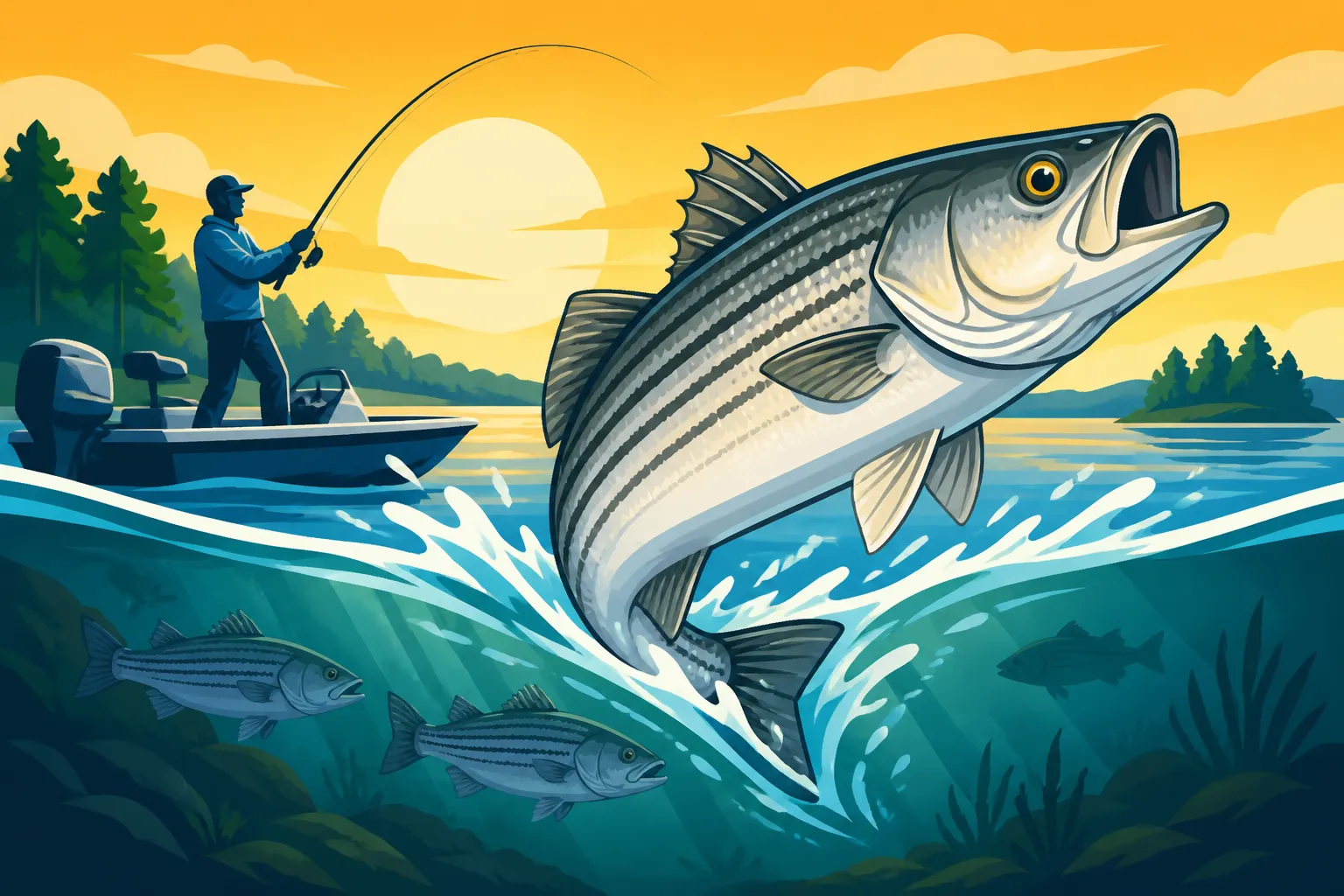
Hybrid striped bass, often affectionately called "wipers" by anglers, are a cross between a striped bass and a white bass. This genetic mix gives them the best of both worlds: the robust size and fighting power of a true striper, combined with the schooling tendencies and aggressive feeding habits of a white bass. They grow fast, hit hard, and are generally found in large schools, making them a blast to chase once you locate them. Unlike their purebred striped bass cousins, hybrids are infertile, meaning they can't reproduce. This makes a managed stocking program essential for maintaining a healthy population in Lake Oconee, ensuring there are always plenty of feisty fish to target. You'll often find them cruising open water, herding baitfish like threadfin and gizzard shad into tight balls, making for some explosive topwater action when they decide to feed on the surface.
Identifying them can sometimes be tricky if you're not used to it, as they share characteristics with both parent species. Look for broken or discontinuous stripes along their sides, especially below the lateral line. Pure stripers tend to have solid, unbroken lines, while white bass are smaller with fewer, often fainter lines. The hybrid's body is typically deeper and more compressed than a pure striper, but bulkier than a white bass. They are truly built for speed and power, which you'll quickly realize once one is on the end of your line!
Habitat Preferences in Lake Oconee
Lake Oconee's sprawling waters offer a diverse range of habitats that appeal to hybrid striped bass throughout the year. These fish are constantly on the move, chasing baitfish, and their preferences shift with the seasons and water conditions. Generally, hybrids prefer open water areas, often congregating around main lake points, humps, and submerged islands where they can ambush schools of shad. They're also drawn to deeper channels and creek mouths, especially where current is present or where baitfish are funneling through.
One significant factor on Lake Oconee is the influence of Georgia Power's operations, particularly the Wallace Dam between Lake Oconee and Lake Sinclair. The generation schedule creates current, which can be a magnet for baitfish and, consequently, hybrid stripers. These fish often position themselves in current breaks or along the edges of the channel, waiting for an easy meal to be swept their way. When the turbines are running, these areas become prime real estate. You'll also find them relating to offshore structures like brush piles and timber lines, particularly during periods when they're not actively busting the surface. It's a constant game of hide-and-seek, but knowing their general tendencies will put you miles ahead of the game.
Prime Fishing Seasons and Times
Timing is everything when it comes to consistently catching hybrid striped bass on Lake Oconee. These fish are highly influenced by water temperature and the availability of their primary food source, which means certain times of the year and even certain parts of the day will be far more productive than others.
Spring and Fall Feeding Frenzies
If you're looking for consistent action and some of the most exciting fishing Lake Oconee has to offer, mark your calendar for spring and fall. These are truly the peak seasons for hybrid striped bass.
In spring, as the water temperatures begin to rise from the chilly winter lows, hybrid stripers become incredibly active. They're recovering from the colder months and aggressively feeding to build up their energy reserves. You'll find them moving into shallower areas, especially around major creek arms and main lake points, where baitfish are also migrating. This is when topwater action can explode, particularly during early morning and late evening hours. As the sun gets higher, they'll often drop down to deeper humps and ledges nearby. The Spring Bass Fishing Patterns on Georgia's Reservoirs article offers some similar insights into how fish react to warming waters. Don't be surprised to see massive schools of hybrids herding shad right up against the surface, creating what looks like a boiling cauldron of water. This is the time to throw fast-moving baits and be ready for a fight!
Fall is arguably the best time of year for hybrid striped bass on Lake Oconee. As temperatures cool, the baitfish start to school up tightly in preparation for winter, and the hybrids go on an absolute rampage. They know winter is coming, and they're trying to pack on as much weight as possible. This is when you'll see some of the most spectacular surface feeding activity, often referred to as "fishing the boils." The fish will chase bait all over the lake, from creek mouths to the main lake basin, making it possible to spot them from a distance. Again, early mornings and late afternoons are prime times, but often the bite can last throughout the day if conditions are right, especially on cloudy days.
Summer and Winter Strategies
While spring and fall are prime, you can absolutely catch hybrid stripers on Lake Oconee year-round; it just requires a different approach.
During the summer months, when Georgia's heat is at its peak and surface water temperatures soar, hybrid stripers tend to move deeper to find cooler, more oxygenated water. This doesn't mean they're not feeding, they're just harder to reach. You'll typically find them in the main lake basin, especially near the dam, in deep channels, or suspending over offshore humps. This is when vertical jigging with spoons or live bait, like shad or shiners, becomes incredibly effective. Deep Water Techniques for Striped Bass are definitely worth exploring for this time of year. Early mornings, just before sunrise, can still offer some topwater action before the sun drives them deep, but for consistent catches, you'll need to focus on your electronics to locate those deep schools. Night fishing can also be surprisingly productive in the summer, as fish come shallower under the cover of darkness. The article Summer Fishing Patterns on Georgia's Big Lakes provides more context for this season.
Winter presents its own unique challenges and opportunities. The fish generally slow down their metabolism in colder water, but they still need to eat. They'll often school up in massive aggregations in deep pockets, bends in the old river channel, or near the dam. While they might not be as aggressive as in the fall, they can still be caught. Again, electronics are key to finding these deep schools. Live bait, fished slowly on a downline or free-lined near the schools, is often the most productive method. Trolling deep-diving crankbaits or bucktail jigs can also coax a strike. Look for areas where the water might be slightly warmer, such as around the power plant discharge if Lake Oconee's operations influence local temperatures. This is a time for patience and precision, but the rewards can be significant with some truly large hybrids.
Essential Gear and Techniques
Success with Lake Oconee's hybrid striped bass depends heavily on having the right equipment and knowing how to use it. These are powerful fish, and flimsy gear won't cut it. You need tackle that can handle strong runs and sudden surges.
Rods, Reels, and Line
When gearing up for hybrid stripers on Lake Oconee, think sturdy but sensitive. You'll want a medium-heavy to heavy action spinning or baitcasting rod, typically in the 7 to 7.5-foot range. This length provides good casting distance for reaching boils and enough leverage to fight a hard-charging fish. A quality graphite blank will give you the sensitivity to detect subtle bites while still having the backbone to muscle in a 10-pound hybrid. Many anglers find excellent options for these types of rods on Amazon.
Pair your rod with a reliable spinning reel in a 3000 to 4000 series size, or a baitcasting reel with a good drag system and line capacity. A smooth, powerful drag is absolutely critical, as these fish will make strong, sustained runs. Don't skimp here; a cheap reel will fail you when you hook into a monster.
For line, a 15 to 20-pound test monofilament or fluorocarbon main line is a good starting point, especially if you're fishing live bait or topwater. However, many experienced anglers prefer braided line for its incredible strength, sensitivity, and zero stretch. If you go with braid, a 20 to 30-pound test is ideal, and you'll want to tie on a fluorocarbon leader of 15 to 25-pound test, about 3-5 feet long. The leader provides invisibility in clear water and some abrasion resistance, which is important around submerged structures. Again, Amazon has a wide selection of high-quality braided and fluorocarbon lines.
Baits, Lures, and Rigs
The hybrid striped bass on Lake Oconee are opportunistic feeders, so having a versatile tackle box is key.
Live Bait: There's no denying that live bait is often the most effective method, especially when hybrids are holding deep or are less active. Gizzard shad and threadfin shad are the gold standard, often caught fresh with a cast net. If live shad aren't available, large shiners or herring can also be incredibly effective. For presentation, a simple downline rig is popular: a large, strong hook (like a 3/0 to 5/0 circle hook) tied directly to your leader, with a swivel and an appropriate sized sinker (1/2 to 2 ounces, depending on depth and current) a foot or two above the hook. Live Bait Rigs for Striped Bass offers more details on these setups. This allows your bait to be presented naturally at the depth where the fish are holding. Another common rig is the free-line rig, where a live baitfish is allowed to swim freely behind the boat with little to no weight, especially useful when fish are feeding near the surface or suspending.
Artificial Lures: When the hybrids are active, especially during those spring and fall feeding frenzies, artificial lures can be incredibly exciting.
- Topwater Plugs: Poppers, walk-the-dog style baits, and prop baits are lethal when fish are busting the surface. Their aggressive splashes and movements mimic distressed baitfish perfectly. Colors like chrome, white, or shad patterns are excellent.
- Jigs: Bucktail jigs (1/2 to 1.5 ounces) with a white or chartreuse trailer, or soft plastic swimbaits on jig heads, are highly effective for schooling fish, whether they're on top or holding a bit deeper. Best Lures for Striped Bass in Georgia has more details on effective presentations.
- Spoons: Heavy metal spoons (1 to 2 ounces) are fantastic for vertical jigging on deep schools, particularly in summer and winter. Flutter spoons can also be deadly when fish are slightly suspended.
- Crankbaits: Deep-diving crankbaits in shad patterns can be effective when trolling or casting to fish holding on ledges or humps.
- Flukes/Soft Jerkbaits: Rigged weightless or with a small belly weight, these can be worked erratically through schooling fish for explosive strikes.
Always carry a variety of options, as what works one day might not the next.
Trolling and Live Bait Tactics
Two of the most popular and productive methods for targeting hybrid striped bass on Lake Oconee are trolling and live bait fishing. Both require patience and a good understanding of fish behavior.
Trolling: This technique allows you to cover a lot of water and present your lure at a consistent depth, making it excellent for searching for active schools or when fish are scattered. You can troll deep-diving crankbaits, bucktail jigs, or even swimbaits. Using planer boards or downriggers can help you spread out your presentation and reach specific depths. The key is to match your trolling speed to the lure's action and the fish's activity level. Slower speeds often work better in colder water, while faster speeds can entice strikes from aggressive fish. Pay close attention to your fish finder; when you mark a school, slow down, turn, or even circle back through the area.
Live Bait Tactics: Beyond the basic downline and free-line rigs, there are a few nuanced live bait strategies.
- Balloon Fishing: When hybrids are busting on the surface but just out of casting range, you can use a small balloon to carry your free-lined live bait into the feeding frenzy.
- Carolina Rig: For fishing close to the bottom around structure, a Carolina rig with a walking sinker and a short leader can be effective for presenting a live shad.
- Suspended Schools: If your fish finder shows schools suspended at a certain depth, deploy your live baits to that exact depth. You might need to use a controlled sinker system or downriggers to keep your bait in the strike zone.
- Kite Fishing: While less common, kite fishing can present live baits far away from the boat, mimicking a natural, unmolested shad. This can be especially effective on calm days when fish are spooky.
Regardless of your chosen technique, remember that the constant presence of current from the dam can impact how fish position themselves and how your bait behaves. Adjust your weights and presentation accordingly. Good quality terminal tackle, from swivels to hooks (you can find a robust selection on Amazon), is paramount to ensure you don't lose a trophy fish.
Top Fishing Spots on Lake Oconee
Lake Oconee is a fantastic reservoir, but like any large body of water, knowing where the fish are likely to be is half the battle. Hybrid striped bass are roamers, but they tend to frequent certain areas due to depth, structure, and baitfish presence. Fishing Lake Oconee, Georgia covers a broad range of fishing insights for the lake.
Deep Water Haunts
Hybrid striped bass are often found in deeper water, especially during the warmer months or when they're not actively chasing bait on the surface. These are the areas where you'll want to pay close attention to your electronics.
The main lake basin is a prime deep-water haunt, particularly the area closer to the Wallace Dam. Here, the lake is at its deepest, and the current from the dam operations can concentrate baitfish, attracting large schools of hybrids. Look for sharp drops, channel bends, and deep humps that rise out of the main channel. Your fish finder will be your best friend here, helping you locate schools that might be suspended anywhere from 15 to 40 feet deep. Mark these schools on your GPS and work them thoroughly with vertical jigs or downlined live bait. Remember that the Best Fish Finders for Georgia Reservoir Fishing article can help you choose the right electronics for these deep-water hunts.
Another key area is the mouths of major creeks, particularly where the creek channel meets the main lake channel. These intersections often create subtle current breaks and congregation points for baitfish, which hybrids readily exploit. Creek channels themselves, especially those with deeper sections and submerged timber, can hold schools of fish. Focus on the ledges and drops along these channels. During the colder months, these deeper channels can become critical holding areas for large schools of fish trying to conserve energy.
Structures and Cover
While hybrids are known for open water schooling, they often relate to specific structures and cover, especially when not in a full-blown feeding frenzy.
Main lake points and humps are classic hybrid striper magnets. Points that extend out into the main lake, particularly those with a gradual slope on one side and a sharp drop-off on the other, provide excellent ambush points. Hybrids will stage on the deeper side and move up to attack baitfish that cross the point. Submerged humps, especially those with some rock or brush on top, act as underwater islands that attract both bait and predators. These are fantastic spots to troll around, cast to, or deploy live bait.
Bridge pilings and causeways also offer consistent opportunities. The concrete structures create current breaks and attract baitfish, making them natural congregating spots for hybrids. Fishing around the pilings, especially on the upstream side where the current is broken, can be very productive. The causeways that cross parts of the lake create choke points where fish and bait are funneled, making them high-percentage areas. Be mindful of boat traffic, especially on busy weekends.
Finally, while Lake Oconee is known for its open water, don't overlook areas with submerged timber or brush piles, especially in the deeper parts of creek arms. While largemouth bass are usually associated with cover, hybrids will also use it, particularly larger, lone wolf individuals or smaller schools seeking refuge or ambushing less mobile bait. A good fish finder can help you distinguish these piles and identify if fish are holding nearby.
Regulations and Conservation
As passionate anglers, it's not just about catching fish; it's about preserving the incredible resource we have in Lake Oconee. Understanding and adhering to the fishing regulations for hybrid striped bass is crucial for ensuring healthy populations for future generations. Georgia Fishing Regulations Explained is a comprehensive resource to consult for all state rules.
Size and Creel Limits
Georgia's fishing regulations, including those for hybrid striped bass, are in place to manage fish populations sustainably. For Lake Oconee, like most other public waters in Georgia, there are specific size and creel (daily catch) limits that you absolutely must abide by. These limits can change, so always check the most current Georgia Department of Natural Resources (DNR) guidelines before you head out. Typically, you'll find a daily creel limit on hybrid striped bass, meaning you can only keep a certain number of fish per day. There might also be a minimum size limit, requiring you to release any fish shorter than a specified length. The goal of these regulations is to allow fish to reach maturity and spawn (though hybrids are sterile, these rules protect the overall striper fishery) and to prevent overfishing.
It's not just about knowing the rules; it's about understanding why they exist. Every time you throw back a short fish, you're contributing to a healthier fishery. And when you decide to keep fish for the dinner table, ensure they meet the minimum size requirements and that you don't exceed your daily bag limit. This commitment to responsible angling ensures that the thrill of catching these magnificent hybrids remains available for everyone who loves to fish Lake Oconee. If you're ever in doubt, it's best to err on the side of caution and release the fish. Georgia Fish Size and Creel Limits offers detailed state-wide information.
Responsible Angling Practices
Beyond just following the size and creel limits, there are several best practices that every angler should adopt when targeting hybrid striped bass, particularly when practicing catch-and-release. These practices minimize stress and injury to the fish, significantly increasing their chances of survival.
First and foremost, use appropriate tackle. As discussed, these fish are powerful. Using gear that is too light can prolong the fight, exhausting the fish to the point where it may not recover after release. A quick, decisive fight is always better for the fish. Secondly, handle fish gently. If you plan to release a fish, try to keep it in the water as much as possible. If you must bring it aboard for a quick photo, wet your hands thoroughly before touching the fish to protect its protective slime coat. Avoid holding fish by their gills or horizontally by their jaw if they are heavy; instead, support their body weight horizontally with one hand under the belly and the other gripping the lower jaw. A good pair of fish grippers can also help manage feisty fish without direct hand contact.
When unhooking, use needle-nose pliers or a de-hooking tool to remove hooks quickly and efficiently. If a fish is deeply hooked, it's often better to cut the line as close to the hook as possible rather than trying to rip it out, which can cause internal damage. Finally, ensure proper release. When letting a fish go, gently place it back in the water and hold it upright until it swims away under its own power. Sometimes a gentle forward and backward motion can help push water through its gills, aiding in recovery. By embracing these responsible angling practices, we ensure that Lake Oconee's hybrid striped bass fishery continues to thrive, providing exciting fishing opportunities for years to come.
Here's a quick overview of seasonal strategies for hybrid striped bass on Lake Oconee:
| Season | Hybrid Behavior | Best Locations | Recommended Techniques | Key Baits/Lures |
|---|---|---|---|---|
| Spring | Aggressively feeding, moving shallower | Creek arms, main lake points | Topwater, casting jigs, live bait | Poppers, swimbaits, shad, shiners |
| Summer | Move deeper for cooler water, often suspended | Main lake basin, deep channels | Vertical jigging, downlining live bait | Metal spoons, shad, shiners |
| Fall | Intense feeding frenzies, chasing baitfish | Main lake, creek mouths, humps | Topwater, casting jigs, trolling | Poppers, bucktails, crankbaits, shad |
| Winter | Schooling deep, slower metabolism | Deep channels, dam area | Slow live bait, deep trolling | Shad, shiners, deep-diving crankbaits |
Lake Oconee is a truly special place to target hybrid striped bass, offering a diverse range of fishing experiences throughout the year. Whether you're a seasoned angler chasing boils in the fall or a patient live-baiter plumbing the depths in summer, these fish provide an unforgettable fight. Remember to always respect the resource, follow regulations, and practice responsible angling. Now go get 'em!
Disclaimer
This article is for general informational purposes only and does not constitute professional advice. Laws, prices and regulations vary by location and change over time. Consult a qualified professional for guidance on your specific situation.