Best Sunglasses for Sight Fishing on the Water
There's nothing quite as frustrating as being out on a beautiful Georgia lake or stream, knowing the fish are there, but being utterly blinded by the sun's glare dancing off the water's surface. You squint, you shade your eyes, but that elusive shadow beneath the surface remains just that – a shadow. This guide is all about cutting through that visual noise, helping you understand the magic behind proper fishing sunglasses, and how to pick the perfect pair to give you that crucial edge in sight fishing across our diverse Georgia waters.
Why Your Everyday Sunglasses Just Won't Cut It for Fishing
We've all been there, grabbing a cheap pair of shades on the way out the door, thinking "they'll do." But when it comes to serious fishing, especially when you're trying to spot fish, structure, or even changes in the bottom contour, those everyday sunglasses often fall woefully short. It's not just about dimming the sun; it's about seeing through the water, which is a whole different ballgame.
The Frustration of Surface Glare
Imagine this scenario: You're poling quietly along a shallow flat on the Georgia coast, trying to spot redfish tailing in the spartina grass, or perhaps you're cruising a coves edge on Lake Lanier, looking for subtle signs of bass on beds. The sun is high, or maybe just at that tricky angle, and suddenly, the entire surface of the water becomes a shimmering, blinding mirror. It's a wall of light, effectively hiding everything beneath. You know the fish are there, you can feel them, but you simply cannot see them. This isn't just annoying; it's a huge disadvantage, costing you potential bites and even making navigation harder as you try to avoid submerged stumps or rocks. Your regular sunglasses might reduce the brightness, but they do little to nothing to cut through that horizontal glare that obscures your underwater vision. This specific type of glare is the arch-nemesis of any sight angler.
The Importance of Polarization
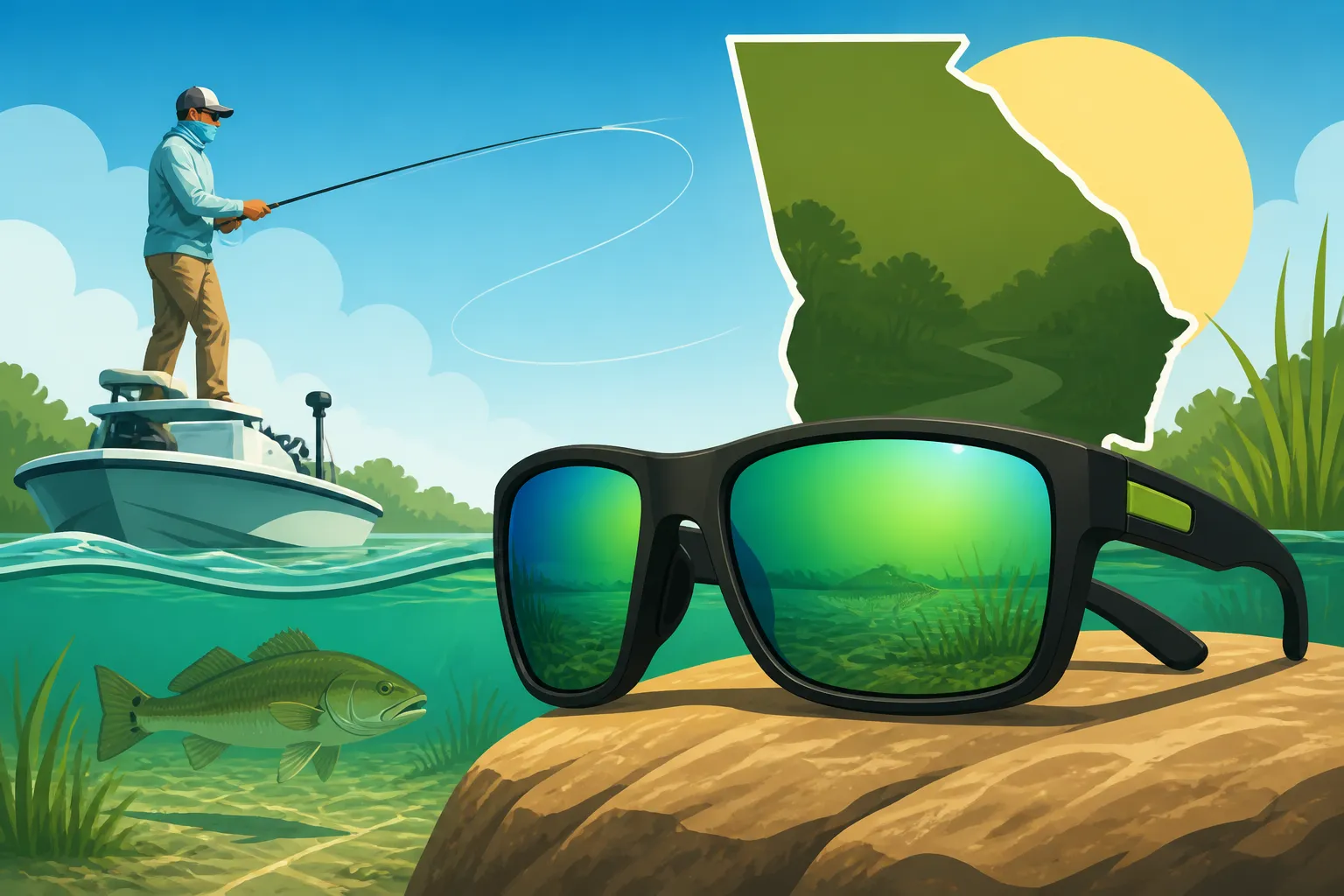
Here's where the real game-changer comes in: polarization. This isn't just a fancy buzzword; it's the single most critical feature in any pair of fishing sunglasses. Sunlight travels in waves, and when it hits a flat surface like water, a significant portion of those waves reflect horizontally, creating that blinding glare we just talked about. Polarized lenses have a special filter that's designed to block these horizontal light waves while allowing vertical light waves to pass through.
What does this mean for you? It means that instead of seeing the sun's reflection on the water's surface, you can literally see into the water. That shimmering mirror effect disappears, revealing what lies beneath. You'll start spotting a dark shape that's actually a Largemouth Bass Fishing in Georgia: The Complete Species Guide holding tight to a submerged log, or the subtle twitch of a crappie's fin near a brush pile. You might even see the subtle movements of baitfish, which is a huge clue to where the predators are lurking. This ability to penetrate the water's surface is what separates true fishing sunglasses from standard shades and is absolutely essential for sight fishing, especially in clear waters like many of Georgia's lakes and trout streams. It provides an immediate, undeniable advantage, transforming a frustrating guessing game into a focused hunt.
Key Features to Look For in Quality Fishing Sunglasses
Once you understand why you need specialized fishing sunglasses, the next step is knowing what to look for. It's not just about polarization; many other features contribute to comfort, clarity, and durability, ensuring your investment pays off on the water.
Lens Color Matters More Than You Think
Choosing the right lens color is like picking the right lure; it makes a huge difference depending on the conditions. Different tints are designed to perform optimally in various light levels and environments, enhancing your ability to see specific details.
- Grey/Smoke Lenses: Think of grey as your all-around, "bluebird sky" option. These lenses reduce overall brightness significantly without distorting natural colors. They're fantastic for bright, sunny days out on wide-open water, like the expansive surfaces of Lake Lanier or Lake Hartwell, where intense sunlight is bouncing everywhere. If you're fishing offshore in the ocean or chasing stripers in the middle of a clear, sunny day, grey lenses will provide excellent glare reduction and true color perception. They're a solid choice if you can only have one pair and fish primarily in bright conditions.
- Brown/Amber/Copper Lenses: These are often considered the workhorses for many freshwater anglers, especially in Georgia's diverse waterways. Brown, amber, and copper tints excel in variable light conditions – think partly cloudy days, early mornings, late evenings, or when fishing in areas with mixed sun and shade, like under tree canopies on a river bank. They increase contrast and enhance depth perception, which is incredibly useful for discerning submerged structure, distinguishing fish from shadows, and spotting variations in bottom composition in murkier or tannin-stained waters. If you're fishing the Flint River for shoal bass or exploring the creeks on Lake Oconee, these warm tints will often give you a clearer view.
- Yellow/Rose Lenses: When the light gets really low, or if you're dealing with persistently overcast skies, dense fog, or fishing at dawn or dusk, yellow or rose-tinted lenses can be your best friend. They actually enhance brightness and contrast, making it easier to see in dim conditions where other lens colors might make things too dark. While they might distort natural colors slightly, the trade-off for improved visibility in challenging light is often worth it. These are less common for bright sight fishing but can be invaluable for spotting subtle movements in very low light.
- Green Mirror Lenses: Often found on a brown or amber base lens, a green mirror coating is designed to further reduce glare and enhance contrast. This combination is particularly effective in a variety of bright to medium light conditions, especially when you need to distinguish subtle colors and textures, such as spotting bass in sparse grass beds or differentiating a fish from the surrounding cover. Many anglers swear by green mirror lenses for inshore saltwater fishing or when targeting bass in vegetated areas of large reservoirs.
- Blue Mirror Lenses: Typically applied over a grey base lens, blue mirror coatings are engineered for extremely bright, open water conditions, often favored by offshore anglers. They provide maximum glare reduction and are excellent for those blindingly bright days on the ocean or vast, exposed lakes where the sun reflects intensely off the water. They offer superb protection from intense sunlight and a crisp, cool view.
Frame Style and Fit for Comfort and Coverage
Lens quality is paramount, but a poor-fitting frame can ruin the experience. For long days on the water, comfort and coverage are non-negotiable.
- Comfort and Security: You need a pair that stays put without pinching or slipping, even when you're leaning over the boat, casting aggressively, or battling a big fish. Look for lightweight materials like nylon or TR90, which are flexible and durable. Some frames feature rubberized nose pads and temple tips for a more secure grip, especially when wet. Remember, you'll be wearing these for hours, so try them on and make sure they feel good.
- Wrap-Around Style: This is crucial for fishing. A frame that wraps around your face helps block light from entering from the sides, top, and bottom. Side glare can be just as detrimental as direct glare, washing out your vision. Full-coverage, wrap-around designs ensure maximum peripheral vision is protected and prevent stray light from sneaking in. This is especially important for Georgia Saltwater Fishing Permit Guide or when fishing on open expanses like Lake Lanier.
- Vented Frames: In Georgia's humid climate, lens fogging can be a real issue. Some high-quality frames feature small vents or channels designed to promote airflow, reducing the likelihood of your lenses fogging up when you're working hard or transitioning between cool and warm air.
- Retainers: While not part of the frame itself, having a compatible sunglass retainer (the strap that goes around your neck) is highly recommended. Many quality fishing sunglasses come with integrated retainer holes or boast styles that work well with aftermarket options. Losing an expensive pair of sunglasses overboard is a common, and easily avoidable, tragedy.
Lens Material and Durability
The material of your lenses affects clarity, weight, and impact resistance. Your choice often involves a trade-off.
- Polycarbonate Lenses: These are the most common choice for sport and fishing sunglasses. They are incredibly lightweight and highly impact-resistant, making them a safe choice if you're prone to dropping your glasses or if you might take a stray lure to the face. While optically very good, they can be slightly less clear than glass at their highest grades. They're also more prone to scratching if not properly cared for, so look for models with good scratch-resistant coatings.
- Glass Lenses: For the absolute best optical clarity and scratch resistance, glass lenses are king. They offer distortion-free vision that can be a game-changer for discerning subtle details on or beneath the water. However, they are significantly heavier than polycarbonate and much more fragile – a drop onto a hard surface can easily shatter them. If you prioritize pristine vision and are careful with your gear, glass can be an excellent, albeit more delicate, option.
- Trivex/NXT Lenses: These materials represent a fantastic middle ground. Trivex (and similar materials like NXT) offers optical clarity that rivals glass, but with the lightweight and superior impact resistance of polycarbonate. They are often found in higher-end fishing sunglasses and provide an excellent balance of performance and durability.
- Coatings: Beyond the base material, several coatings enhance lens performance and longevity:
- Anti-reflective (AR) coatings: Applied to the back of the lens, these eliminate distracting reflections off the inside surface of your sunglasses, reducing eye strain.
- Hydrophobic coatings: These repel water, causing droplets to bead up and roll off, which is incredibly useful when you're dealing with spray, rain, or sweat.
- Oleophobic coatings: These repel oils, making it easier to clean off smudges from fingerprints, sunscreen, or fish slime.
- Scratch-resistant coatings: Essential for any lens material to prolong its life. Even glass can scratch, so this is a key feature.
Making the Right Choice for Your Georgia Fishing Adventures
With so many options, how do you narrow it down to the "best" pair for your fishing needs? It really comes down to understanding where and how you typically fish, and then aligning that with lens characteristics and your budget.
Matching Sunglasses to Your Fishing Environment
Georgia offers an incredible variety of fishing environments, from clear mountain streams to vast, open reservoirs and coastal estuaries. The best sunglasses for one type of fishing might not be ideal for another.
- North Georgia Trout Streams: If you're planning a trip to a pristine trout stream like the Toccoa River or one of the many creeks in the Blue Ridge Mountains, you'll often be dealing with dappled light filtering through tree canopies, shaded pools, and clear, moving water. For these conditions, amber, brown, or even rose-tinted lenses are often preferred. They excel at enhancing contrast, helping you spot the subtle movements of Rainbow Trout Fishing in North Georgia Streams or native brook trout against a rocky bottom, especially in lower light conditions. You might also want a good wrap-around fit to block any glare sneaking in from the sides through the trees. Consider checking out brands known for their clarity in variable light when preparing for Trout license requirements for north Georgia mountain streams.
- Large Reservoirs (e.g., Lake Lanier, Lake Oconee, Clarks Hill): These expansive lakes often present very bright, open-water conditions, especially on sunny days. Here, grey, smoke, or blue mirror lenses (often built on a grey base) will be your best bet. They provide maximum glare reduction and minimize eye fatigue under intense sun, allowing you to scan vast areas for schooling fish, submerged humps, or subtle depth changes. If you're spending all day targeting bass or stripers on Best Fishing Spots on Lake Lanier or Lake Oconee's Hybrid Striped Bass Fishery, you'll appreciate the full protection and true color perception these lenses offer. Green mirror lenses, typically with an amber base, also perform exceptionally well on these large lakes, providing excellent contrast while cutting glare.
- Coastal Fishing (e.g., Golden Isles, Brunswick): For inshore fishing along Georgia's coast, like targeting redfish and sea trout in the marshes of St. Simons Island or Brunswick, amber, brown, or green mirror lenses are fantastic. They help penetrate the often tea-stained or murky inshore waters, allowing you to spot fish moving through grass beds or cruising shallow flats. If you venture further offshore into the open Atlantic, then grey or blue mirror lenses will provide the necessary protection from extreme glare reflecting off the vast ocean surface. A good pair of polarized sunglasses is practically mandatory when navigating and fishing Georgia's beautiful Best Inshore Fishing Spots in the Golden Isles, Georgia.
Here's a quick reference table to help guide your choice:
| Lens Color | Best Conditions | Best for Spotting | Notes |
|---|---|---|---|
| Grey / Smoke | Bright, sunny days | General, offshore, deep water | Reduces overall light, natural color perception. |
| Brown / Amber | Variable, partly cloudy | Shallow water, structure, fish in shadows, muddy water | Enhances contrast and depth perception. |
| Yellow / Rose | Low light, overcast, dawn/dusk | Movement in dim conditions, murky water | Brightens view, extreme contrast boost. |
| Green Mirror | Bright to medium light | Structure, fish in grass/weeds, inshore | Often on amber base, excellent glare reduction, color enhancement. |
| Blue Mirror | Extremely bright, offshore | Pelagic species, open water | Often on grey base, maximum glare reduction for intense sun. |
Budgeting for Quality and Where to Look
Let's be real: quality fishing sunglasses are an investment. You'll see a huge range in prices, and while it's tempting to grab the cheapest option, doing so will almost certainly lead to disappointment. Cheaper "polarized" sunglasses often have inconsistent polarization, distort vision, or lack durable coatings, leading to quick scratches and a short lifespan. This is one piece of Best Rods and Reels for Georgia Fishing gear where saving a few bucks will hurt your fishing experience.
That said, you don't necessarily need the absolute most expensive pair on the market. Many mid-range options offer excellent performance and durability. When you're ready to invest, here’s some practical advice:
- Try Before You Buy (If Possible): This is ideal for sunglasses. The fit of the frame is incredibly personal, and what feels good on one person might pinch another. Visiting an outdoor retailer like Bass Pro Shops allows you to try on various styles and lens colors, and even step outside to see how they perform in natural light. Many stores have a small polarized test card that demonstrates the glare-cutting ability. This hands-on experience is invaluable.
- Read Reviews: If you're buying online, perhaps from a retailer like Amazon, scour reviews from other anglers. Look for comments on optical clarity, durability, and how well they perform in different lighting conditions.
- Consider Your Usage: If you're an occasional angler who only fishes a few times a year, you might not need the top-tier, most rugged option. However, if you're out on the water every weekend, or plan on engaging in demanding activities like Kayak Fishing Gear Guide for Beginners, investing in a more durable pair with robust coatings will pay off in the long run.
- Look for Warranties: Many reputable sunglass brands offer warranties on their products, which can give you peace of mind regarding defects in materials or workmanship.
Ultimately, choosing the best sunglasses for sight fishing is about equipping yourself to see more, catch more, and enjoy your time on the water without straining your eyes. It’s a vital piece of your Safety Gear Checklist for a Day on Lake Lanier that often gets overlooked. With the right pair, you'll be amazed at what you've been missing just below the surface.
Disclaimer
This article is for general informational purposes only and does not constitute professional advice. Laws, prices and regulations vary by location and change over time. Consult a qualified professional for guidance on your specific situation.