Who Needs a Boater Education Card in Georgia
Navigating the rules and regulations for boating in Georgia can feel like trying to untangle a fishing line after a particularly enthusiastic cast – confusing, a little frustrating, and if you don't get it right, it can quickly lead to trouble. One common source of confusion for many anglers and recreational boaters revolves around the Georgia Boater Education Card. This guide aims to clear up all the mystery, explaining exactly who needs this card, why it's important, and how you can easily get yours so you can enjoy Georgia's beautiful waterways with peace of mind.
Understanding Georgia's Boater Education Card
When you first hear about a "boater education card," you might think it's just another bureaucratic hurdle. But in reality, it's designed to make our shared waters safer and more enjoyable for everyone. It’s not just about ticking a box; it’s about ensuring that everyone operating a vessel has a foundational understanding of safe practices and the rules of the aquatic road.
What Exactly is a Boater Education Card?
Think of the Georgia Boater Education Card much like a driver's license for the water. It's an official document that proves you've successfully completed an approved boating safety course and passed an exam demonstrating your knowledge of boating laws, safety procedures, and responsible operation. It’s not a license in the traditional sense that you have to renew annually, but rather a one-time achievement that verifies your educational accomplishment. This card is issued by the Georgia Department of Natural Resources (DNR) through its Law Enforcement Division, and it's recognized across the state. While it's commonly referred to as a "card," the official documentation you receive serves the same purpose. The goal isn't to restrict your access to the water, but to enhance your confidence and competence when you're out there.
The Purpose Behind the Requirement
The primary purpose of requiring a boater education card is, quite simply, safety. Boating, much like driving, comes with inherent risks if operators aren't properly informed or don't follow established guidelines. Accidents can happen, and they can be severe. By requiring operators to complete a safety course, the state aims to reduce boating incidents, injuries, and fatalities. These courses cover everything from navigation rules, emergency procedures, environmental responsibilities, and the proper use of safety equipment like Life Jacket Requirements for Kids Under 13 in Georgia. It also helps instill a sense of responsibility in boaters, promoting a culture of awareness and caution that benefits not just themselves and their passengers, but also other boaters, swimmers, and wildlife. It’s about creating a more harmonious and secure environment for all who share Georgia's lakes and rivers.
Who Absolutely Needs the Card: The Georgia Law
This is where the rubber meets the road, or perhaps, the hull meets the water! Georgia has specific regulations outlining who is legally required to possess a boater education card. Ignoring these rules can lead to citations and fines, which nobody wants when they're trying to have a relaxing day on the lake.
The "Born On or After January 1, 1998" Rule
Georgia's primary requirement for the boater education card hinges on your birthdate. If you were born on or after January 1, 1998, and you plan to operate any vessel that is mechanically propelled (this includes jet skis, motorboats, and even kayaks or canoes with trolling motors), you are legally required to have passed a boating safety course and carry proof of that completion, typically in the form of your boater education card. This rule was put in place to ensure that younger generations of boaters start off with a solid foundation of safety knowledge. So, if you're a younger angler eager to take the helm, make sure this card is on your checklist right after your Georgia Fishing License Guide. It's a key part of responsible boating for those in this age bracket.
Operating a Personal Watercraft (PWC)
The rules are a little different and often stricter when it comes to Personal Watercraft (PWCs), like jet skis. Regardless of your birthdate, if you are 12 years of age or older and intend to operate a PWC on Georgia waters, you are also required to complete a boating safety course and carry your boater education card. This is due to the unique operational characteristics and speed of PWCs, which can contribute to a higher risk of accidents if not handled by knowledgeable operators. Even if you're an experienced boater who was born before 1998 and therefore don't need the card for a regular motorboat, you will need it for a PWC. This specific requirement highlights the state's concern for safety in this popular, high-energy segment of recreational boating.
Exemptions and When You Might Not Need One
Now, before you panic and think everyone needs to rush out and get a card, there are some important exemptions to consider. These exceptions are designed to avoid unnecessary burdens while still prioritizing safety where it matters most.
Here's a breakdown of situations where the card might not be required:
- Born Before January 1, 1998: As mentioned, if your birthdate falls before this cutoff, you are generally exempt from the mandatory boater education card requirement for operating a motorboat. This doesn't mean you shouldn't consider taking a course for your own safety and knowledge, but it's not legally mandated for you to operate a regular boat.
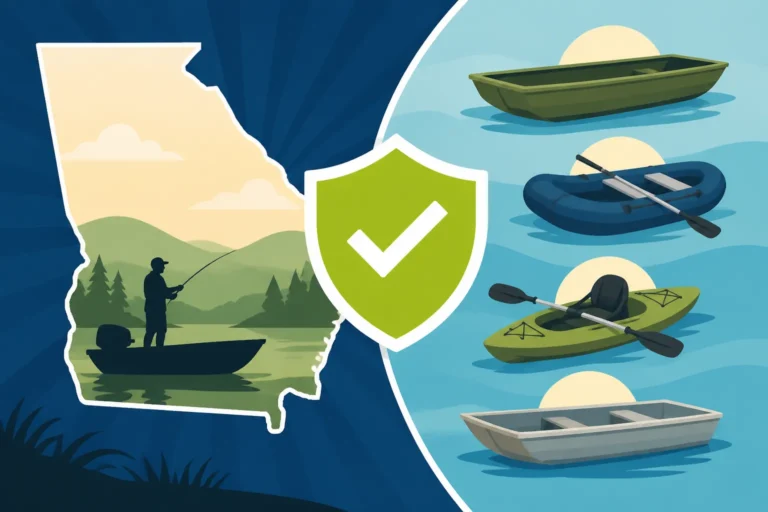
- Operating a sailboat or a non-motorized vessel: If your vessel relies solely on wind power (sailboat) or human power (paddleboard, rowboat, un-motorized kayak or canoe), you typically do not need a boater education card, regardless of your age. The exception here, of course, is if you add a motor to your kayak or canoe, even a small electric trolling motor – then the birthdate rule or PWC rule would apply. For clarification on non-motorized vessel rules, check out Do Kayaks Need to Be Registered in Georgia?.
- Operating under supervision: While rare for adults, minors who are not yet old enough to legally operate certain vessels on their own might be exempt if they are under direct, on-board supervision of a person who is at least 18 years old and legally allowed to operate the vessel. However, this is usually a temporary learning scenario and not a long-term solution.
- Private waters: Rules generally apply to public waters. If you are operating a boat exclusively on private ponds or lakes that are not accessible to the public, state boating education requirements may not apply. Always double-check local ordinances, though, as some counties might have their own stipulations.
- Visiting from another state: Georgia recognizes boater education cards or equivalency from other states if they meet the National Association of State Boating Law Administrators (NASBLA) standards. This means if you've already completed a NASBLA-approved course in your home state, you're usually good to go in Georgia. This is a common form of Fishing License Reciprocity for Georgia Anglers for boating education.
It’s crucial to understand these exemptions thoroughly. When in doubt, it’s always better to err on the side of caution and get the card. It’s an investment in your safety and enjoyment on the water.
Here’s a quick table to summarize the core requirements:
| Scenario | Birthdate On or After Jan 1, 1998 | Birthdate Before Jan 1, 1998 | Notes |
|---|---|---|---|
| Operating a Motorboat (not PWC) | Required | Not Required | Includes vessels with any mechanical propulsion. |
| Operating a Personal Watercraft (PWC) | Required | Required | PWC operators must be at least 12 years old. |
| Operating a Sailboat | Not Required | Not Required | Unless it has an auxiliary motor, then motorboat rules apply. |
| Operating a Non-Motorized Vessel | Not Required | Not Required | Kayaks, canoes, paddleboards without motors. If a motor is added, it becomes a "motorboat." |
| Operating under direct supervision | Varies | Varies | Typically for minors learning. The supervisor must meet requirements. |
| Visiting from another NASBLA-approved state | Reciprocal | Reciprocal | You must have proof of completion from your home state. |
How to Obtain Your Georgia Boater Education Card
Getting your boater education card doesn't have to be a headache. The state has made several convenient options available to ensure that everyone who needs to comply can do so without too much hassle. Whether you prefer learning at your own pace online or in a classroom setting, there's a path for you.
Online Course Options
For many people, taking an online boating safety course is the most convenient route. You can complete the lessons from the comfort of your home, at your own pace, fitting it into your schedule. Several reputable online providers offer NASBLA-approved courses that meet Georgia's requirements. These courses are typically interactive, with quizzes and modules covering all the essential material, from navigation rules to emergency preparedness. Once you complete the course material, you'll take a final exam. Upon passing, you'll receive a certificate of completion, which you then use to apply for your official boater education card from the Georgia DNR. Websites like Boat-Ed.com and BoaterExam.com are popular choices, and you can often find resources or recommendations through boating communities or even places like Bass Pro Shops, which often promote safety education. Be sure the course you choose is approved for Georgia and meets NASBLA standards to ensure your certification is recognized. The beauty of the online option is the flexibility it offers – you can pause and resume as needed, truly absorbing the information. For specific guidance on costs, you can look up Georgia Boater Education Card Cost and How to Get One.
In-Person Class Opportunities
If you prefer a more traditional learning environment or have questions you'd like to ask an instructor directly, in-person classes are also available. These courses are often offered by organizations like the U.S. Coast Guard Auxiliary, the U.S. Power Squadrons, or even local community centers and marinas. The classroom setting allows for direct interaction with experienced instructors, hands-on demonstrations, and the opportunity to network with other boaters. These classes typically run over a few days or weeks, culminating in a proctored exam. While they require a commitment to a set schedule, many people find the structured learning and direct instruction highly beneficial. Attending an in-person class can also sometimes offer deeper dives into local nuances of Georgia's waterways, which can be invaluable. You can usually find listings for these courses on the Georgia DNR's website or by contacting local boating clubs.
What to Expect During the Exam
Regardless of whether you choose an online or in-person course, a final exam is a crucial step in obtaining your boater education card. The exam is designed to test your comprehension of the material covered in the course. It will typically consist of multiple-choice questions covering a wide range of topics, including:
- Navigation Rules: "Rules of the Road" like right-of-way, meeting head-on, overtaking, and crossing situations.
- Boating Safety Equipment: Requirements for life jackets, fire extinguishers, sound-producing devices, visual distress signals, and other Safety Gear Checklist for Georgia Boaters.
- Environmental Responsibility: Preventing pollution, safe fueling practices, and respecting wildlife.
- Emergency Procedures: What to do in case of capsizing, fire, man overboard, or severe weather.
- Boating Under the Influence (BUI) Laws: Understanding the dangers and legal consequences, which are just as serious on the water as on the road. For more on this, see Georgia BUI Laws and Blood Alcohol Limits.
- Aids to Navigation: Interpreting buoys, markers, and other navigational signs.
- General Boating Knowledge: Anchoring, docking, trailering, and basic vessel maintenance.
Passing the exam demonstrates that you have a fundamental understanding of safe boating practices. Don't worry, the courses are designed to prepare you thoroughly. Most exams require a passing score of around 70-80%, and many online courses allow you to retake the exam if you don't pass on your first attempt. Once you successfully pass, you’ll receive your proof of completion, which is your ticket to getting that official card.
Benefits Beyond Compliance: Why It Matters
While avoiding fines and staying legal are certainly strong motivators, the Georgia Boater Education Card offers far more than just compliance. It's an investment in your skills, your safety, and your overall enjoyment of the water. Thinking about it this way shifts it from a chore to a valuable asset for any responsible boater.
Enhanced Safety on the Water
This is perhaps the most significant benefit. Completing a boater education course equips you with critical knowledge that directly translates to safer boating. You'll learn how to properly respond to emergencies, understand potential hazards, and prevent accidents before they happen. Imagine you're out on Lake Lanier, enjoying a beautiful day of Best Spots for Bass Fishing on Lake Lanier, and suddenly the weather turns. Knowing how to read approaching storms, secure your boat, and seek safe harbor can literally be a lifesaver. You’ll understand the importance of checking your What Safety Equipment Is Required on a Georgia Boat before every outing and how to use it effectively. This enhanced knowledge reduces the risk of collisions, groundings, and other common boating incidents, protecting not only yourself and your passengers but also everyone else sharing the waterway. It fosters a proactive approach to safety rather than a reactive one, making every trip a little less stressful and a lot more secure.
Understanding Boating Etiquette and Rules of the Road
Just like driving on a highway, there are unwritten (and some very much written) rules of etiquette and right-of-way on the water. A boater education course teaches you these crucial "rules of the road" for boating. You'll learn about navigation lights, sound signals, proper passing procedures, and how to safely navigate around other vessels, whether it's a fishing boat, a sailboat, or a kayaker. Understanding things like how to yield to larger vessels or the importance of maintaining a safe distance from swimmers and divers makes for a much more harmonious experience for everyone. It also covers common courtesy, such as reducing your wake near docks or anchored boats, or not cutting in front of someone who's actively fishing. This knowledge prevents frustrating encounters, minimizes conflicts, and ensures that everyone can enjoy their time on the water without unnecessary tension. It helps you become a more considerate and respectful member of the boating community, something every responsible boater strives for.
Potential Insurance Advantages
Here’s a practical benefit that many boaters often overlook: your boater education card might save you money on boat insurance. Many insurance providers recognize the value of formal boating safety education and offer discounts to policyholders who have completed an approved course. Why? Because educated boaters are generally safer boaters, which translates to a lower risk of claims for the insurance company. This discount can sometimes be significant enough to offset the cost of the course itself over time, making it a smart financial decision in addition to a safety one. When you're shopping for boat insurance or reviewing your current policy, be sure to ask your agent about any available discounts for certified boater education. It's a tangible reward for taking the initiative to become a more informed and safer operator. Think of it as another way your responsible choices pay off, similar to how defensive driving courses can reduce car insurance premiums.
Common Questions and Misconceptions
Despite the clear guidelines, there are always questions that pop up, and some common misconceptions tend to circulate among boaters. Let’s tackle some of these head-on to ensure you have all the facts.
Does It Apply to All Boats?
This is a frequent point of confusion. The quick answer is: no, not all boats. The Georgia Boater Education Card requirement primarily applies to mechanically propelled vessels and Personal Watercraft (PWCs).
- Motorboats: If your boat has an engine – whether it’s a massive offshore fishing rig, a small Jon boat with an outboard, or even a canoe or kayak with an electric trolling motor – and you fall into the "born on or after January 1, 1998" category, you likely need the card. The size of the motor or the boat itself often doesn't matter as much as the presence of mechanical propulsion.
- Personal Watercraft (PWCs): As discussed, if you're 12 or older and operating a PWC (like a Jet Ski, WaveRunner, or Sea-Doo), you need the card regardless of your birth year. This is a very specific and strict requirement due to the nature of PWCs.
- Non-motorized vessels: Generally, if your vessel relies solely on human power (paddles, oars) or wind power (sails), the boater education card is not required. This includes standard kayaks, canoes, paddleboards, and sailboats without an auxiliary engine. However, do remember that if you add a motor, even a small one, to a kayak, it now falls under the motorized vessel rules. For information on specific types of watercraft, you might refer to Is the Georgia Boater Education Card Required for Kayaks?.
It's easy to get caught up in the details, but focusing on "mechanical propulsion" and "PWCs" for the age groups is the key to understanding who needs it.
Reciprocity with Other States
Many anglers enjoy fishing in different states, or perhaps they took a boating safety course in another state before moving to Georgia. The good news is that Georgia generally recognizes boater education certifications from other states, provided they meet the standards set by the National Association of State Boating Law Administrators (NASBLA). This is a nationwide standard that most state-approved courses adhere to. So, if you completed a NASBLA-approved course in Florida, Alabama, or any other state, your certification should be valid in Georgia. You don't usually need to take a separate Georgia-specific course. Always make sure to carry proof of your certification with you when boating, just as you would carry your Georgia Fishing License Guide or other important documents. This reciprocity is designed to make it easier for boaters to enjoy waters across different state lines without having to jump through redundant hoops.
What About Visitors to Georgia?
For visitors to Georgia, the rules for the boater education card are generally the same as for residents, with the added benefit of reciprocity. If you are a visitor and your home state requires a boater education card to operate a motorized vessel, and you have that card, it will be recognized in Georgia. If your home state doesn't require a card, but you fall into Georgia's "born on or after January 1, 1998" category, or you plan to operate a PWC (regardless of birthdate), then you would need to comply with Georgia's requirements. This means either having a recognized card from your home state or completing a NASBLA-approved course before operating in Georgia.
It's always a good idea for out-of-state visitors to review Georgia's specific boating laws before hitting the water, as some regulations might differ from their home state. For instance, while your boater education card might be reciprocal, specific rules about Georgia Fish Size and Creel Limits or Georgia Fishing Regulations Explained might be unique to Georgia. The idea is to ensure that everyone on Georgia's waters, resident or visitor, possesses a baseline understanding of safe and responsible boating. If you're planning a trip, a quick online search for "Georgia boating laws for visitors" is always a smart move.
Maintaining Your Boater Education
Once you've earned your boater education card, you might wonder if that's the end of it, or if there's more you need to do. It’s a valid question, as many licenses and permits require ongoing attention.
Is There an Expiration Date?
This is a common point of confusion, and the answer is generally reassuring: no, your Georgia Boater Education Card does not expire. Once you successfully complete an approved boating safety course and receive your official card from the Georgia DNR, it's typically valid for life. This is a significant difference from many other licenses, like a driver's license or an annual fishing license, which require regular renewal. The card serves as proof that you have achieved a certain level of knowledge and skill, and that achievement doesn't have a shelf life.
However, while the card itself doesn't expire, your knowledge and awareness can fade over time, and regulations can change. It's always a good idea to refresh your memory occasionally. Consider reviewing a boating safety handbook every few years or taking an advanced course if you want to expand your skills. You might even find updated safety gear or new techniques at places like Amazon or Bass Pro Shops that warrant a quick refresher on best practices. The card is permanent, but your commitment to safety should be ongoing.
Staying Informed on Rule Changes
Even though your boater education card doesn't expire, boating laws and regulations can, and sometimes do, change. The Georgia Department of Natural Resources (DNR) periodically updates its rules regarding vessel operation, safety equipment, environmental protection, and other aspects of boating. For instance, new technologies might lead to new rules for certain types of vessels, or changes in environmental concerns might lead to updated fishing regulations or speed limits in certain areas.
It's your responsibility as a boater to stay informed about these changes. How can you do this?
- Georgia DNR Website: The official Georgia DNR website is the best source for current boating laws and regulations. They typically publish updates and offer downloadable boating handbooks.
- Boating Magazines and Forums: Many regional boating publications and online forums dedicated to Georgia fishing and boating will discuss upcoming or recent rule changes.
- Boating Safety Organizations: Organizations like the U.S. Coast Guard Auxiliary and U.S. Power Squadrons often hold seminars or send out newsletters detailing regulatory changes.
- Local Marinas and Bait Shops: These are often great informal hubs for information on local rules or recent statewide changes. The folks working at your local bait shop or marina often hear about new rules directly from other boaters or through official channels.
By staying proactive and keeping an eye on official announcements, you can ensure you’re always in compliance, even if the specific rules around you evolve. Your boater education card might be a one-time achievement, but being a truly responsible boater means a lifelong commitment to learning and adapting.
Disclaimer
This article is for general informational purposes only and does not constitute professional advice. Laws, prices and regulations vary by location and change over time. Consult a qualified professional for guidance on your specific situation.