Bluegill Fishing: A Great First Fish for Georgia Kids
Trying to introduce your kids to the magic of fishing can sometimes feel a bit like trying to herd a school of minnows – exciting, but potentially chaotic if you don't pick the right first species. We all want to share our passion for the outdoors with our little ones, but getting them hooked on fishing means finding a fish that's eager to bite and forgiving for beginners. That's where bluegill come in. This guide is all about why bluegill are Georgia's ultimate starter fish for kids and how you can make their first fishing experiences unforgettable.
Why Bluegill Are Perfect for Young Anglers in Georgia
Let's face it, kids have short attention spans. If they aren't catching anything, their interest wanes faster than a mayfly hatch. That's why bluegill are truly a godsend for introducing children to the sport. They offer almost everything you could ask for in a first-time fishing target: they're everywhere, they're not picky, and they put up just enough fight to be exciting without being overwhelming.
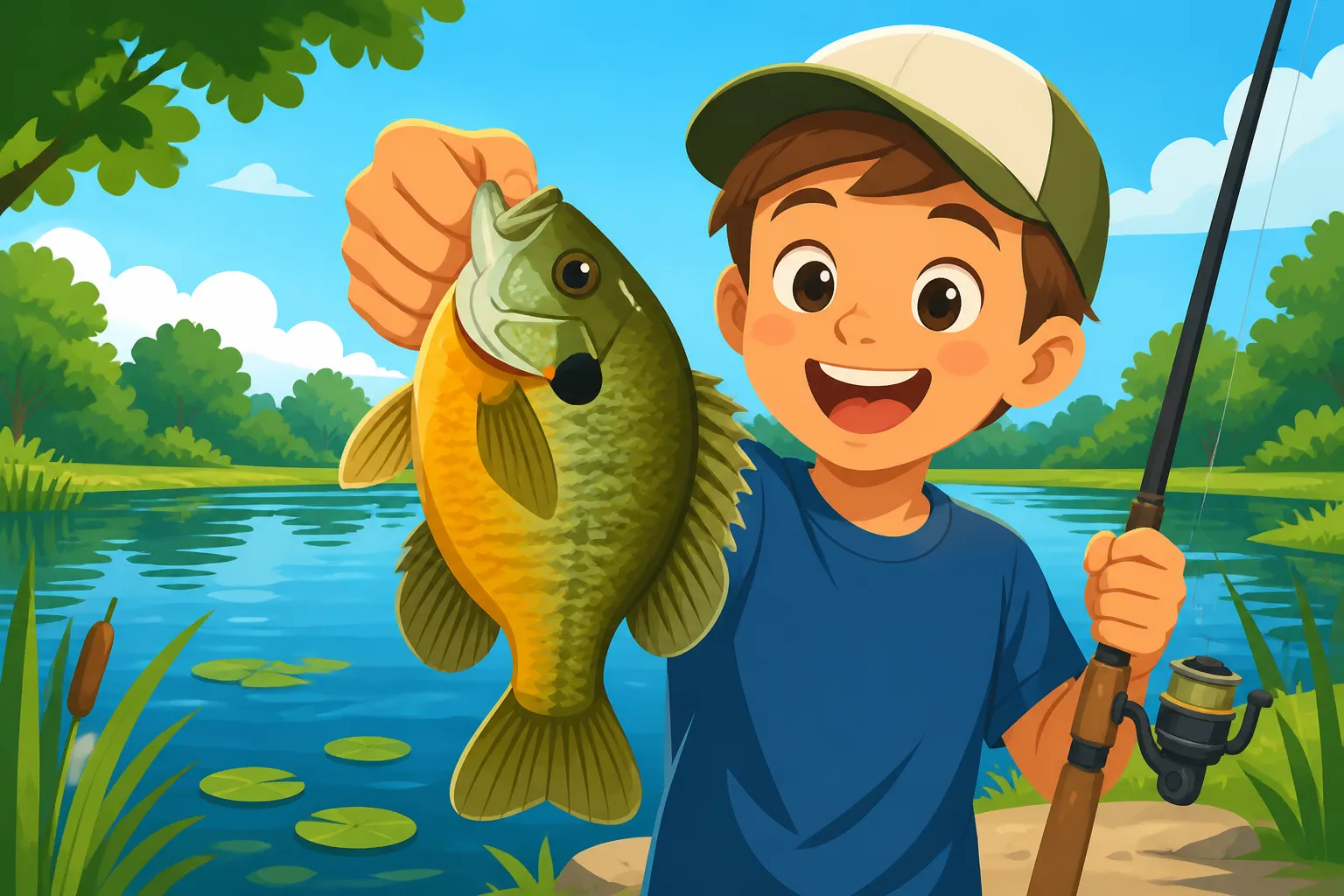
Think about it from a child's perspective. The thrill of seeing a bobber dip, feeling that first tug on the line, and reeling in a vibrant, sun-dappled fish is an incredible sensation. Bluegill deliver these moments reliably, fostering a love for fishing that can last a lifetime. It’s not just about catching fish; it’s about building confidence and creating cherished memories outdoors.
Abundance and Accessibility
One of the biggest hurdles for any new angler, especially kids, is simply finding fish. You don't want to drive for hours only to come up empty-handed. Luckily, bluegill are practically ubiquitous across Georgia. You'll find them thriving in nearly every pond, lake, and slow-moving river or creek in the state, from small neighborhood retention ponds to large reservoirs. This widespread presence means less travel time and more fishing time, which is a huge win when you have impatient little ones in tow.
Many Georgia State Parks and Public Fishing Areas (PFAs) are specifically managed with family fishing in mind, often featuring well-stocked ponds and easy bank access that are teeming with bluegill. These spots are fantastic because they're designed to maximize your chances of success, often with amenities like restrooms and picnic areas to make a full day of it. You don't need a fancy boat; a simple stroll to a dock or a quiet bank can yield plenty of action. For ideas on where to go, check out resources like Best Kid-Friendly Fishing Ponds in Georgia or Georgia State Park Fishing Spots.
Imagine setting up your folding chairs by a calm pond, the kids excitedly dangling their lines into the water. Within minutes, a bobber might start dancing, and then disappear! That instant gratification is priceless for keeping their spirits high. This accessibility also teaches kids that fishing isn't an exclusive activity but one that can be enjoyed close to home, fostering a deeper connection to their local environment.
Eager Biters and Consistent Action
If you've ever watched a group of kids fish, you know the most important thing is a bite! Bluegill are notorious for being aggressive and enthusiastic eaters, which is fantastic news for keeping young anglers engaged. They're not particularly shy or finicky, and when they're in a feeding mood, they'll readily strike at a variety of baits. This means less waiting and more reeling, which is precisely what you need to hold a child's attention.
The visual thrill of a bobber disappearing under the water is pure magic for a child. It's an immediate signal that something exciting is happening, transforming a peaceful wait into an exhilarating moment of action. The consistent tugs and modest fight of a bluegill on a light line are also perfect for teaching kids how to feel a bite, set the hook, and reel in their catch without it being too strenuous or difficult. It’s a great way to build muscle memory and confidence.
This consistent action helps combat boredom and frustration, which can quickly derail a fishing trip with kids. Instead of long stretches of inactivity, they'll likely experience a steady stream of bites, keeping their enthusiasm levels high. Each successful catch, no matter how small, reinforces the positive experience and makes them eager for the next one. It's these frequent successes that build a lifelong love for the sport. For more on what makes bluegill such a great entry point, read Easiest Fish for Kids to Catch.
Simple Gear and Techniques
One of the best parts about bluegill fishing with kids is that it doesn't require a huge investment in expensive, complicated gear. You can get started with very basic, affordable equipment that's simple for small hands to operate. This low barrier to entry means parents don't have to break the bank to see if their child enjoys fishing, and it makes the learning curve much gentler.
A simple spin-casting rod and reel combo, often called a "push-button" reel, is ideal. These are incredibly easy for kids to learn to cast and retrieve, minimizing tangles and maximizing their independent participation. Pair that with some small hooks, a few split-shot weights, and a bright bobber, and you're pretty much ready to go. You can often find great deals on these beginner combos on Amazon, making it easy to grab everything you need in one go.
The techniques for catching bluegill are equally straightforward. There's no need for fancy presentations, intricate knots, or complex lure retrieval patterns. A simple rig with a hook, a bit of bait, and a bobber floated near some cover is usually all it takes. This simplicity allows kids to focus on the basics of casting, watching their line, and the joy of the catch, rather than getting bogged down in advanced methods. You can find more beginner-friendly advice in How to Catch Bluegill as a Beginner.
Essential Gear for a Successful Bluegill Trip with Kids
While bluegill fishing is beginner-friendly, having the right basic gear can make all the difference between a fun outing and a frustrating tangle-fest. The goal is to equip your young angler with tools that are easy to use, durable, and effective, ensuring they have the best chance for success and enjoyment. Don't worry, you won't need anything too high-tech or expensive.
When shopping for kid's fishing gear, think about comfort, safety, and ease of use. Bright colors and cartoon characters on tackle can add to the fun and make the gear feel more like a toy, further enticing your child to participate. A successful trip often starts long before you even leave the house, with thoughtful preparation of your equipment.
Rods, Reels, and Line
For kids, a spin-casting combo is truly king. These reels are designed with a push-button mechanism that simplifies casting, making it much easier for beginners to learn than traditional spinning or baitcasting reels. Look for shorter rods, around 4 to 5 feet, which are lighter and easier for children to handle and cast without fatigue. Many reputable brands offer excellent kid-specific combos. A simple spincasting reel, like those readily available on Amazon, is usually the easiest for little hands to manage.
When it comes to fishing line, a light monofilament line in the 4 to 6-pound test range is perfect for bluegill. It's thin enough to be subtle for these small fish, but strong enough to handle any bluegill they might hook, and even an occasional larger panfish. This line is also forgiving if it gets snagged on a twig or a lily pad, as it has a bit of stretch to prevent instant breaks. Teaching kids about line management – keeping it out of the water when not fishing, reeling in slack – is a great early lesson.
A good example would be a 4-foot fiberglass rod with a simple Zebco push-button reel spooled with 6-pound test line. This setup is lightweight, virtually indestructible, and incredibly easy to use. The excitement of operating their own rod and reel is a big part of the fun, and these combos allow them to do just that with minimal parental intervention after a quick lesson.
Hooks, Sinkers, and Bobbers
These small but mighty components are crucial for bluegill success. For hooks, opt for small sizes, typically a size 8 or 10. These are small enough to fit in a bluegill's mouth but large enough to hold a piece of worm or other bait. Aberdeen hooks are a good choice because they have a longer shank, making it easier for adult hands to remove them from a fish. If you're planning on mostly catch-and-release, consider barbless hooks or gently crimping down the barb on a regular hook with pliers; this makes removal much quicker and less stressful for the fish.
A few small split-shot sinkers will help get your bait down to where the bluegill are feeding. These are tiny lead or steel weights that you pinch onto your line a few inches above the hook. You don't need much weight for bluegill; just enough to counteract the buoyancy of your bobber and bait. Start with one or two small split-shots and adjust as needed to get your bait slowly sinking.
And finally, the bobber! This is arguably the most exciting piece of gear for a kid. A simple red-and-white clip-on bobber is perfect. It's easy to attach and highly visible, providing that dramatic visual cue when a fish bites. Set your bobber so your bait is suspended anywhere from 1 to 3 feet deep, adjusting based on the water depth and where you see fish activity. For a detailed guide on setting up your bobber, check out How to Rig a Bobber for Bream.
Here's a quick checklist for your bluegill gear:
| Item | Description | Why It's Good for Kids |
|---|---|---|
| Spin-casting Combo | Shorter rod (4-5 ft), push-button reel, pre-spooled | Easy to cast, less tangles, lightweight |
| Monofilament Line | 4-6 lb test | Strong enough for bluegill, good stretch, less visible |
| Small Hooks | Size 8 or 10, Aberdeen-style, barbless (optional) | Fits bluegill mouths, easier removal, safer |
| Split-shot Sinkers | Small, non-toxic | Gets bait to fish, easily adjustable |
| Clip-on Bobbers | Bright, visible (e.g., red and white) | Exciting visual bite indicator, easy to attach |
| Needle-nose Pliers | Small, for hook removal | Essential for safe hook removal |
| Small Cooler | For drinks, snacks, and keeping bait fresh (if needed) | Keeps everyone happy, maintains bait quality |
| Sunscreen & Hat | High SPF, wide-brimmed hat | Protects delicate skin from Georgia sun |
| Small Tackle Box | Basic plastic box with compartments | Organizes hooks, sinkers, bobbers, fosters responsibility |
The Best Baits for Hungry Bluegill
Bluegill are famously unfussy eaters, which is another reason they're such a great target for kids. You don't need exotic, expensive lures or secret formulas. The best baits are often the simplest and most natural, making them easy to acquire and rig. This simplicity allows kids to participate in baiting their own hooks (with supervision, of course!), adding to their sense of accomplishment.
Hands down, the champion bluegill bait for kids is the humble worm. Red wigglers, commonly found at bait shops or even in your garden, are absolutely irresistible to bluegill. They're small, squiggly, and release a scent that drives bluegill wild. Nightcrawlers, cut into smaller pieces, also work wonderfully. Kids love handling worms, and the ease of simply threading a piece onto a small hook makes baiting a breeze.
Beyond worms, don't underestimate other natural options. Crickets, often sold at bait shops, are another bluegill favorite, especially in the warmer months. Even household items like small pieces of corn, bread, or hot dogs can be surprisingly effective in a pinch. The key is to use a small enough piece that a bluegill can easily take it into its mouth. While artificial lures like tiny jigs or micro-spinners can work, stick to natural bait for true beginners; it’s more forgiving and usually yields more consistent bites. For more ideas on what tempts these panfish, check out Best Bait for Bluegill Fishing.
Where to Find and How to Catch Bluegill in Georgia
Now that you've got your gear ready, the next step is finding the right spot and teaching your little angler the ropes. Georgia is blessed with an abundance of fantastic bluegill habitats, and the techniques for catching them are straightforward enough for even the youngest enthusiast. Remember, the goal isn't just to catch a fish, but to enjoy the whole experience.
Part of the adventure is exploring new places, and Georgia offers a wealth of opportunities. From the Appalachian foothills to the coastal plain, there's likely a productive bluegill spot closer than you think. Making the choice of location a family decision can also add to the excitement and build anticipation for the trip.
Top Spots for Bluegill in Georgia
As we mentioned, bluegill are everywhere! For a truly kid-friendly experience, focus on locations that offer easy bank access, plenty of shade, and minimal hazards. Community ponds, often found in local parks or managed by homeowner associations, are fantastic because they're typically well-maintained, easily accessible, and frequently stocked. Many of these ponds are specifically designed for family recreation, offering a safe and convenient environment.
Georgia's State Parks are another goldmine for bluegill fishing. Parks like Panola Mountain State Park near Atlanta, High Falls State Park south of Griffin, or Fort Yargo State Park in Winder often feature lakes or ponds with dedicated fishing piers or gentle banks perfect for young anglers. These locations often have amenities like restrooms, playgrounds, and picnic tables, allowing you to turn a fishing trip into a full-day family adventure. For specific recommendations, look into resources like Best Fishing Spots for Kids and Families in Georgia and Best Beginner Fishing Spots for Bluegill in Georgia.
Additionally, the slow-moving backwaters and coves of larger reservoirs or rivers can hold plenty of bluegill. Look for areas with aquatic vegetation, fallen trees, or docks, as these provide cover for bluegill to hide and forage. Avoid areas with strong currents or deep, steep drop-offs when fishing with children. The shallower, calmer waters are not only safer but often where bluegill congregate, making them easier to target.
Basic Techniques for Little Anglers
Teaching a child to fish is all about breaking down the process into simple, manageable steps. Start with baiting the hook – you might do this for them initially, but encourage them to watch and eventually try it themselves. Show them how to gently thread a small piece of worm onto the hook, ensuring the point is exposed. Then, demonstrate how to open the bail or push the button on the spin-casting reel.
Next comes the cast. For young children, you might start with a simple "dangle cast" where they just drop the bait a few feet from the bank. As they get more comfortable, teach them an overhead cast with minimal force. Emphasize that precision isn't important at first; just getting the bait in the water is a win! Once the bobber is floating, teach them to watch it intently. Patience is a virtue in fishing, but for kids, it helps if they know what they're waiting for.
When the bobber dips or darts away, that's the moment of truth! Teach them a gentle upward "hook set" with the rod to secure the fish, then to slowly and steadily reel in their catch. Celebrate every bite, every nibble, even if they don't land the fish. The thrill of the chase is often as exciting as the catch itself. Remember to praise their efforts and make it a positive, encouraging experience, regardless of the outcome.
Handling and Releasing Your Catch
Once your child has successfully reeled in a bluegill, the next important lesson is how to handle the fish. Bluegill, while small, do have some sharp spines on their dorsal fin and gill covers. Teach your child to hold the fish gently but firmly by placing their thumb over the pectoral fin (the one just behind the gill plate) and wrapping their fingers around the belly, avoiding the spiny dorsal fin. This provides a secure grip that protects both the child and the fish.
Talk to them about the fish's beautiful colors and patterns. You might even use a guide like How to Identify Bluegill and Other Sunfish to point out distinguishing features. Decide beforehand whether you'll be practicing catch-and-release or keeping some for a meal. If releasing, show them how to gently remove the hook with needle-nose pliers, being careful not to squeeze the fish too tightly. Always try to wet your hands before touching the fish to protect its protective slime coat.
If you're keeping fish, explain why and how we respect the catch. This is a great opportunity to teach about responsible harvesting and the food chain. No matter the choice, gently lower the fish back into the water, or place it quickly into a cooler with ice. This moment, whether release or keeping, is crucial for fostering respect for nature and the creatures we share our environment with.
Making the Most of Your Family Fishing Adventure
Fishing with kids isn't just about the fish; it's about the entire experience. It's a chance to unplug, connect with nature, and create lasting family memories. A successful outing involves more than just a full stringer; it's about the laughter, the learning, and the shared joy of being outdoors together.
Think of each trip as an opportunity to teach, to bond, and to instil a love for the natural world. These experiences often shape a child's appreciation for conservation and the simple pleasures of life.
Beyond the Fish: Life Lessons and Fun
While catching fish is certainly the main event for kids, bluegill fishing offers so much more. It’s an incredible classroom for teaching patience, a skill that's valuable in all aspects of life. It’s also an opportunity to connect with nature on a deeper level. Encourage your children to observe their surroundings: the ducks swimming by, the dragonflies buzzing over the water, the sounds of birds in the trees.
These trips are perfect for sparking curiosity. Why do the fish bite now and not later? What do they eat? What other animals live in the pond? These questions lead to great conversations and learning moments. Pack a small magnifying glass or a nature identification book to enhance their exploration. Don't forget snacks and drinks – a well-fed child is a happy angler! A small cooler, maybe one found on Amazon, can keep drinks cold and snacks fresh.
Ultimately, it’s about the quality time spent together. Put away your phones, engage with your kids, and enjoy the peace and quiet (or excited squeals!) of the moment. These shared experiences forge strong bonds and create stories that you’ll recount for years to come. Fishing becomes a vehicle for teaching values, respect for the environment, and the simple joy of companionship.
Safety First on the Water
Even on a calm pond, safety should always be your top priority, especially with young children. Before you head out, make sure everyone understands basic water safety rules. If you're near deep water or on a boat, wearing a Coast Guard-approved life jacket is not just a good idea, it's often legally required for children under a certain age in Georgia. You can learn more about specific requirements in Georgia Life Jacket Laws for Boaters and Kids.
Protecting against the elements is also crucial. Georgia sun can be intense, so liberally apply sunscreen, wear wide-brimmed hats, and consider long-sleeved, lightweight shirts to prevent sunburn. Bring plenty of water to stay hydrated. Teach kids how to handle hooks carefully, always looking before they cast and never swinging a baited hook. A small first-aid kit with bandages and antiseptic wipes is always a smart addition to your fishing bag.
Finally, ensure that any adults fishing alongside the children have the necessary Georgia Fishing License Guide. While children under a certain age may not need a license, the accompanying adults almost certainly will. Be sure to check the current regulations before you go. Having all your licenses in order and being prepared for any situation means you can focus entirely on enjoying the day with your family.
Keeping the Enthusiasm Alive
The first bluegill trip might be a smash hit, but how do you keep that fishing spark ignited? Variety is the spice of life, and fishing is no exception. Try visiting different ponds or sections of a river to give them new scenery and new challenges. Sometimes just a change of location can make a familiar activity feel fresh and exciting.
You could also introduce them to catching other panfish, like redear sunfish or shellcrackers, which often inhabit the same waters as bluegill. This expands their fishing repertoire and helps them learn about different species. For more on the variety of panfish available, check out Bream and Sunfish Guide for Georgia Anglers. Let them help pick out new baits or even a new bobber on Amazon before the next trip.
Most importantly, keep it fun and pressure-free. Not every trip will result in a cooler full of fish, and that's okay. Focus on the adventure, the laughs, and the simple pleasure of being together in nature. Celebrate the small victories, like a perfect cast or correctly baiting a hook, and cherish these moments. A positive experience will build anticipation for the next outing and help foster a lifelong love for Georgia fishing.
Disclaimer
This article is for general informational purposes only and does not constitute professional advice. Laws, prices and regulations vary by location and change over time. Consult a qualified professional for guidance on your specific situation.