How to Identify a Shoal Bass
It can be incredibly frustrating to reel in a beautiful bass from a swift Georgia river, only to stare at it, wondering, "Is this a largemouth? A spotted bass? Or something rarer?" Knowing the subtle differences between Georgia's various bass species, especially the elusive shoal bass, isn't just about bragging rights; it's crucial for adhering to specific regulations and contributing to conservation efforts. This guide will help you confidently identify a shoal bass, highlighting its unique characteristics and the waters where it thrives.
Why Identifying Shoal Bass Matters for Georgia Anglers
Picture this: you're casting on the Flint River, and you hook into a feisty bass that fights harder than any largemouth you've ever caught. Is it just an unusually aggressive spotted bass, or have you landed a true shoal bass? Identifying your catch correctly is more than an academic exercise; it has real implications for both your fishing experience and the health of Georgia's waterways.
Shoal Bass vs. Largemouth and Spotted Bass: The Crucial Distinctions
Many anglers, especially those new to river fishing, might initially confuse a shoal bass with a spotted bass or even a largemouth bass. They all share that general "bass" look, but the devil is in the details – and those details can make a world of difference. For instance, largemouth bass tend to prefer slower, warmer, more vegetated waters, while shoal bass are built for the swift currents and rocky bottoms of specific rivers. Spotted bass often occupy a middle ground, but their physical features still distinguish them from shoal bass upon closer inspection. Understanding these nuances helps you not only identify the fish in your hand but also informs where and how you might target them, leading to a more successful and responsible fishing trip. We'll dive into the precise physical cues shortly, but always keep in mind their preferred habitat as a major clue. For a deeper dive into the specific species and where they thrive, check out Shoal Bass: Georgia's Flint River Specialist.
Conservation and Management Importance: Protecting a Unique Species
Beyond simply knowing what you caught, accurate identification plays a vital role in conservation. Shoal bass have specific Shoal bass minimum length in Georgia and Shoal bass size limit rules, Georgia in certain river stretches, particularly on the Flint River. Misidentifying a shoal bass as a largemouth, which often has different size and creel limits, could inadvertently lead to overharvesting or violating regulations. This unique black bass species is truly a gem of Georgia's rivers, and proper identification helps ensure that anglers respect these guidelines, preserving healthy populations for future generations. Conservation efforts often rely on data collected from anglers, and knowing what you're catching helps agencies manage these fisheries more effectively. Understanding Is the shoal bass limit different on the Flint River? is a prime example of why precise identification is so important on specific waterways.
Key Physical Characteristics of a Shoal Bass
So, you've got a bass in hand, and you suspect it might be a shoal bass. Let's break down the exact features you should be looking for. Think of it like a checklist to confidently identify this river-dwelling beauty.
Head and Mouth Features: The Devil is in the Jawline
One of the most telling features of a shoal bass is its mouth. Unlike the largemouth bass, whose jaw extends past the back of its eye when closed, the jaw of a shoal bass typically does not extend past the back of its eye. It's often more in line with the middle or front of the eye. This is a subtle but critical distinction. Their head often appears slightly more streamlined, adapted for cutting through currents. Look closely at the jaw and the placement of the eye relative to it. The snout can also appear a bit more pointed than that of a largemouth. Sometimes, observing the head shape from above can reveal a slightly narrower profile, another adaptation to swift water. These small details are often the first giveaways.
Body Shape and Fin Appearance: Streamlined for the Current
The overall body shape of a shoal bass is another major clue. They are built for power and speed in moving water. Compared to a largemouth bass, a shoal bass will typically be more slender and torpedo-shaped, not as deep-bodied. Imagine a fish designed to navigate strong currents, and you've got the picture. Their fins also tend to be robust and well-developed, helping them hold position and maneuver in flowing water. The coloration of the fins can also offer hints, often being darker or more subtly patterned than those of other bass species. While fin coloration isn't always definitive, combined with body shape, it builds a stronger case. Think about how a fish's form reflects its function – the shoal bass's body is a testament to its riverine existence.
Coloration and Markings: From Blotches to Stripes
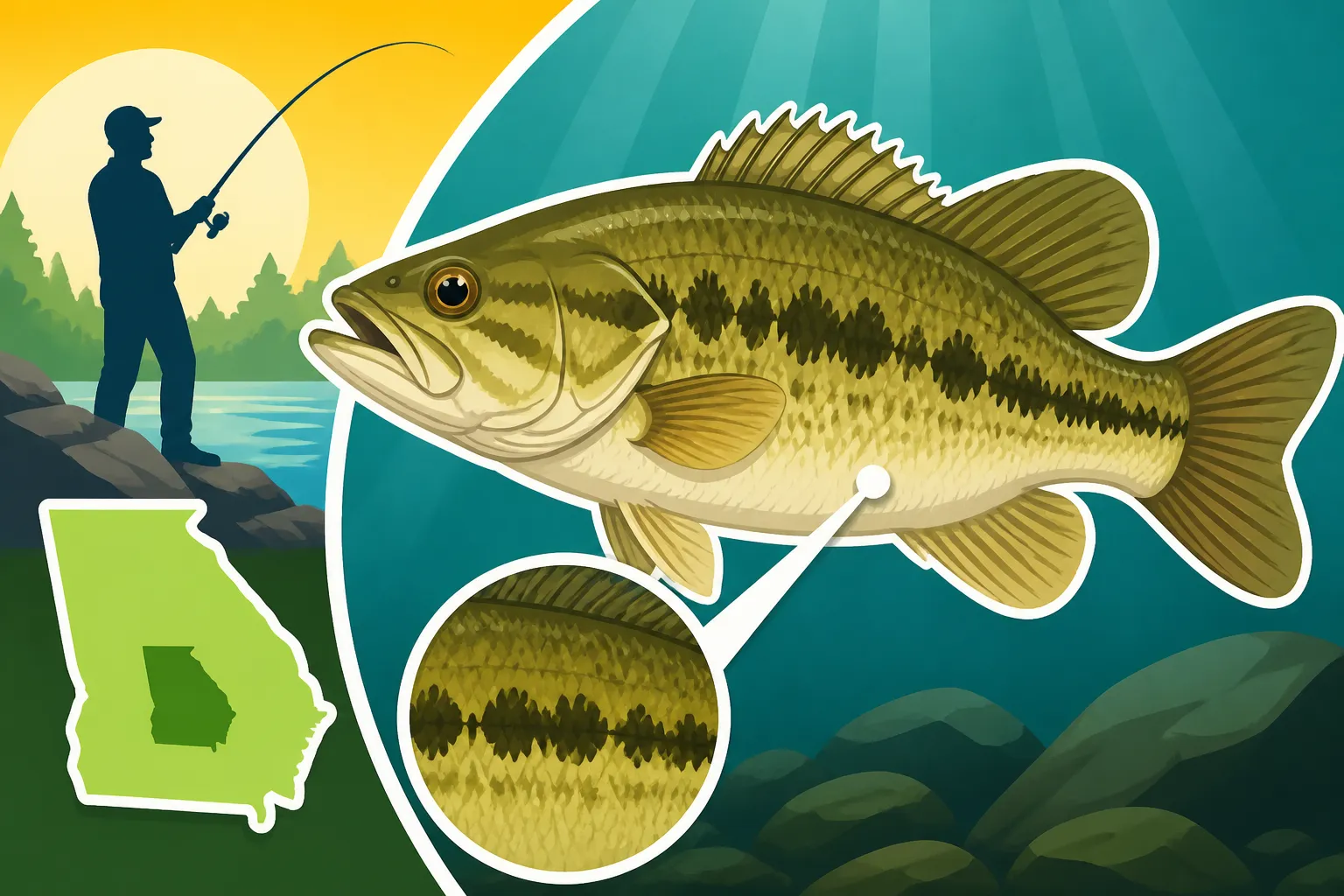
Shoal bass typically display a beautiful and varied coloration, usually appearing bronze, olive green, or golden-brown on their backs, fading to a lighter, creamy belly. What truly sets them apart are their distinctive markings. They usually have 10-12 vertical, dark blotches or bars along their sides, which are often somewhat irregular and can sometimes resemble faint stripes. Unlike the solid horizontal stripe often seen on a largemouth, or the distinct rows of spots on a spotted bass, the markings on a shoal bass are usually more blotchy and irregular. You might also notice a series of small, dark spots along the lower sides, below the lateral line, but these are generally less pronounced than on a spotted bass.
Here's a quick comparison table for visual identification:
| Feature | Shoal Bass | Largemouth Bass | Spotted Bass |
|---|---|---|---|
| Jawline | Does not extend past the back of the eye | Extends past the back of the eye | Does not extend past the back of the eye |
| Body Shape | Slender, streamlined, torpedo-shaped | Deeper body, often more stout | More streamlined than largemouth, less than shoal |
| Lateral Markings | 10-12 irregular vertical blotches/bars | Prominent dark horizontal stripe | Rows of distinct spots below lateral line |
| Tooth Patch on Tongue | Absent | Absent | Present |
| Fins | Robust, often darker | Typically lighter, sometimes mottled | Often spotted, particularly tail fin |
| Preferred Habitat | Swift, clear rivers, rocky shoals | Still, vegetated lakes, ponds, slow rivers | Rivers, impoundments, often deeper water |
Habitat and Behavior Clues: Where to Find These River Fighters
Beyond their looks, where and how a fish acts can be a huge indicator of its species. Shoal bass are not just unique in appearance; they are unique in their lifestyle too, preferring very specific environments.
Preferred River Environments: Built for the Flow
Shoal bass are true river specialists. You won't find them lurking in the still, murky backwaters of a pond or a slow-moving lake. Instead, they thrive in the highly oxygenated, clear, and swift-flowing sections of rivers. Look for them around rocky shoals, rapids, and areas with significant current. They use the rocks and ledges as ambush points, darting out to snatch prey that the current delivers. These areas are often difficult to navigate by boat, making them prime targets for wading anglers or those with specialized shallow-draft boats. If you're on a big, open reservoir with lots of standing timber, chances are you're not in prime shoal bass territory. For the best chance to find these fish, you need to seek out the rivers with strong currents and rocky structure. Best Shoal Bass Spots on the Flint River would be a great read if you're looking for specific locations.
Dietary Habits and Aggression: What Makes Them Strike
Given their swift-water habitat, shoal bass are opportunistic and aggressive predators. They feed primarily on crayfish, minnows, and small baitfish that live in or get swept through the currents. Their streamlined bodies and powerful tails allow them to hold position in strong flows and then burst out to ambush prey. This aggressive nature translates to an exciting fight on the end of your line. They're known for hard strikes and strong runs, often diving into the current or around structure, making them a favorite among river anglers. This also means certain lures and baits, like crankbaits, jigs, and soft plastics that mimic their natural prey, are particularly effective. You can find more specific advice in Best Bait and Lures for Shoal Bass Fishing. Many anglers find great success ordering specialized jigs and crankbaits from sites like Amazon that might not be available in local tackle shops.
Geographic Distribution in Georgia: Knowing the Hot Spots
In Georgia, the Flint River is hands-down the most famous and productive river for shoal bass. It's often called the "home of the shoal bass" for a good reason! You can also find them in some other river systems, but the Flint is where they truly shine. Understanding their limited geographic range is a crucial piece of the identification puzzle. If you're fishing a small pond in South Georgia, you're almost certainly not catching a shoal bass. However, if you're on the Flint River, especially in the rocky sections, your chances dramatically increase. Knowing this Geographic Distribution in Georgia helps you narrow down possibilities before you even cast a line. Specific regulations apply to these unique fisheries, so it's always wise to check current rules for areas like the Flint River, especially below Warwick Dam where Shoal bass rules below Warwick Dam are in effect.
Common Mistakes and How to Avoid Them
Even experienced anglers can sometimes get mixed up, especially when a fish is fresh out of the water and thrashing around! Let's clear up the most common confusions.
Confusing Shoal Bass with Spotted Bass: Spotting the Difference
This is probably the most common mix-up. Both shoal bass and spotted bass have somewhat similar body shapes compared to largemouths, and both can inhabit river systems. However, there are key differences. The most reliable differentiator is the tooth patch on the tongue: spotted bass always have a distinct patch of teeth on their tongue, which a shoal bass does not. Simply run your finger over the fish's tongue (carefully!) to feel for this rough patch. Additionally, spotted bass tend to have more defined rows of spots below their lateral line, whereas shoal bass have those more irregular vertical blotches. While they share some habitat preferences, particularly in impoundments, if you're in a swift, rocky river, and your catch lacks a tongue patch, it's a strong indicator of a shoal bass. For a full comparison, delve into Bass Species Compared: Largemouth vs Spotted vs Shoal in Georgia.
Confusing Shoal Bass with Largemouth Bass: The Jaw is Key
This mistake is easier to avoid once you know what to look for, but beginners often make it. The primary difference, as mentioned earlier, is the jawline. Remember, a largemouth bass's jaw extends past the back of its eye when its mouth is closed, while a shoal bass's jaw does not. Largemouths also typically have a more prominent horizontal dark stripe down their side, rather than the vertical blotches of a shoal bass. Their body shape is generally deeper and less streamlined, built for bursting from cover in stiller water. If you're consistently catching bass in slower, weedier sections of a river or a calm lake, you're likely catching largemouths. But in those swift, rocky areas, pay close attention to the jaw and markings. You can find more identification tips for largemouths in How to Identify a Largemouth Bass.
Using a Quick Reference Guide: Your On-the-Water Companion
To avoid these common identification errors, it's a fantastic idea to keep a small, waterproof field guide or a laminated card with key identification features with you while fishing. Many state wildlife agencies provide excellent resources online that you can print out. Or you might find a comprehensive guide on Amazon specifically for Georgia fish species. Having visual aids and a quick checklist can be invaluable when you're on the water, excited about your catch, and trying to make a quick, accurate identification before release. These tools help reinforce the visual cues we've discussed and ensure you're always making the correct call, especially when special regulations for species like the shoal bass are in play. It's a small investment that pays off big in responsible angling and successful fishing.
Disclaimer
This article is for general informational purposes only and does not constitute professional advice. Laws, prices and regulations vary by location and change over time. Consult a qualified professional for guidance on your specific situation.