Best Small Streams for Brook Trout in North Georgia
For many anglers in Georgia, the dream isn't always about landing a massive bass or a hefty striped bass. Sometimes, it's about the quiet pursuit of something far more elusive and precious: the native brook trout. Finding those pristine, secluded small streams where these beautiful fish not only survive but thrive can feel like a genuine treasure hunt, often requiring a bit of grit, some careful planning, and a deep appreciation for wild places. This comprehensive guide will help you understand what makes these hidden North Georgia gems so special, where to focus your search, and how to approach these delicate fisheries with the respect and skill they demand.
The Unique Appeal of North Georgia's Native Brook Trout
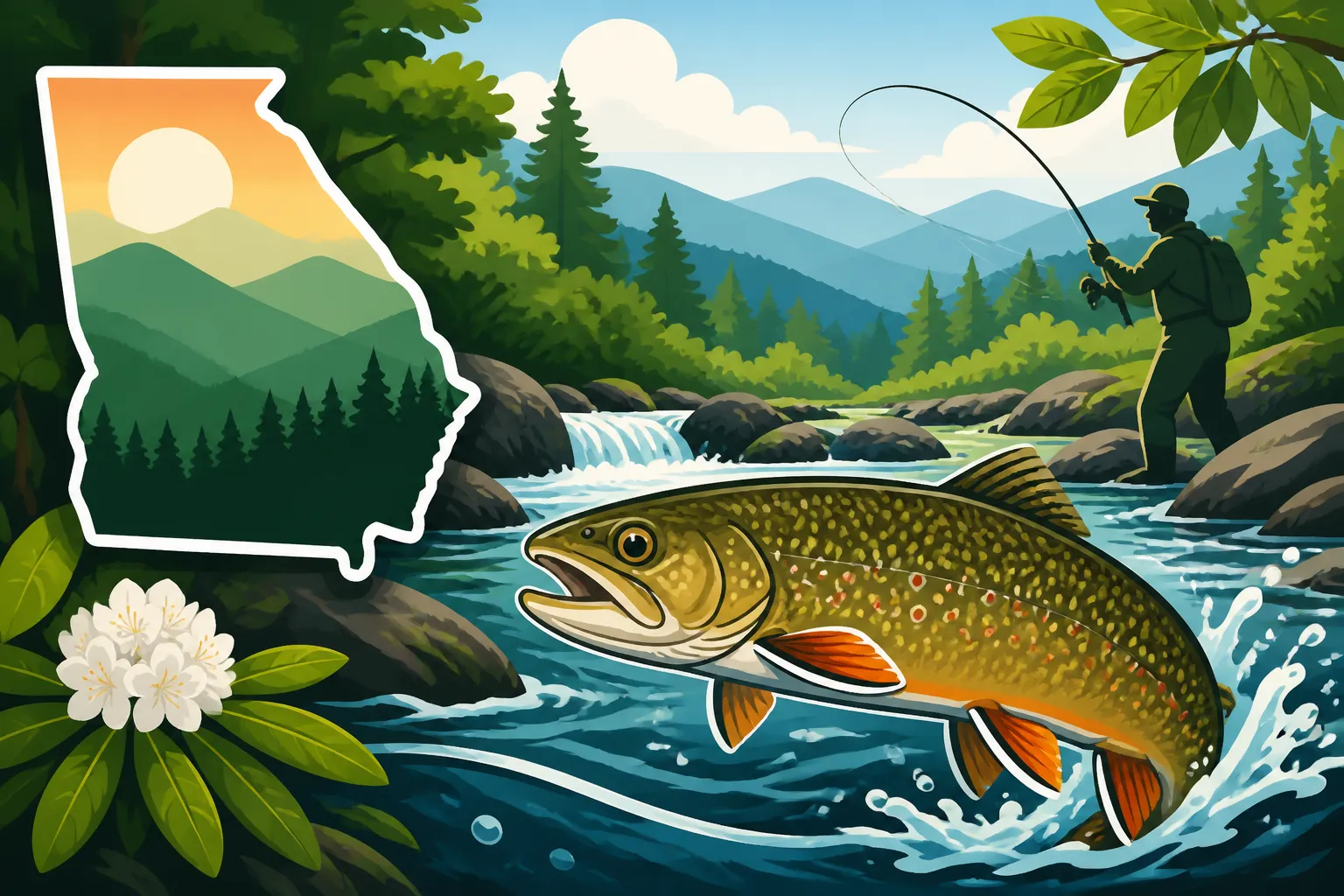
There's something truly magical about catching a native brook trout in its natural habitat. These aren't your typical stocked fish; they're descendants of ancient populations, perfectly adapted to the rugged, cold waters of the Appalachian Mountains. Their vibrant colors – the deep olive back, the crimson spots haloed in blue, the creamy belly, and the iconic white leading edges on their fins – make them arguably the most beautiful freshwater fish in Georgia.
Georgia's Indigenous Trout and Their Habitat Needs
The brook trout, Salvelinus fontinalis, holds a special place in Georgia's angling history as our state's only native trout species. Unlike their rainbow and brown trout cousins, which were introduced from other regions, brook trout have called these mountains home for millennia. They are a testament to the pristine conditions that once dominated North Georgia's waterways. To truly understand why they’re found in such specific places, you need to appreciate their stringent habitat requirements.
These magnificent fish demand exceptionally cold, clean, and highly oxygenated water. They are incredibly sensitive to changes in water temperature, pollution, and siltation. Historically, extensive logging practices and subsequent erosion significantly impacted brook trout populations, pushing them further and further upstream into the most remote, highest-elevation headwater tributaries. These are often the same streams that would have melted out after the last ice age, leaving small, isolated populations clinging to existence. This isn't just about fishing; it's about connecting with a living piece of Georgia's wild heritage. For a deeper dive into their story, check out Brook Trout: Georgia's Native Trout Species.
Why Small Streams Are the Key to Finding Them
When we talk about brook trout in Georgia, we're almost always talking about small streams. You won't find significant populations in larger rivers or reservoirs here. Why? Because these smaller, often nameless, tributary streams offer the precise conditions brook trout need to survive and reproduce.
These are typically narrow channels, sometimes no wider than a car, where the dense forest canopy creates constant shade, keeping water temperatures consistently low, even during the scorching Georgia summers. The water flows swiftly over a bottom composition of gravel, cobble, and bedrock, naturally filtering out silt and providing crucial spawning grounds. Abundant instream cover, such as fallen trees, submerged logs, undercut banks, and large boulders, offers critical refuge from predators and strong currents. These micro-habitats, hidden away in the folds of the mountains, protect them from larger, more aggressive trout species (like browns and rainbows) that dominate bigger waters, as well as from other predators. If you're wondering how to distinguish them from other trout you might encounter, our guide on How to Identify a Brook Trout has excellent tips.
Uncovering North Georgia's Prime Brook Trout Waters
The quest for native brook trout isn't just about casting a line; it's about exploration and a willingness to venture beyond the usual fishing spots. These fish live in places that don't always show up on common fishing maps, demanding a bit of detective work and legwork from the angler.
Focusing on Higher Elevations and Wilderness Areas
Your best bet for finding native brook trout in North Georgia lies within our vast federal and state lands, particularly the Chattahoochee National Forest and its designated wilderness areas like the Cohutta Wilderness. These areas offer the high elevations, dense forest cover, and protected water quality that brook trout require. Wildlife Management Areas (WMAs) in the northernmost counties, often managed by the Georgia Department of Natural Resources, can also hold pockets of native populations.
The trick is to look up. Focus on the headwaters – the highest reaches of river systems where countless tiny creeks trickle down mountain slopes, eventually feeding into larger rivers. These aren't always easy to get to. You might find yourself driving forest service roads, then parking and embarking on a hike. Topographic maps, whether paper or digital, are your absolute best friend here. Look for those faint blue lines that crisscross the steep contours of the mountains. These lines often represent the very small, high-gradient streams that hold brook trout. Some of the most productive streams are those that start high on a ridge, flow down into a valley, and then disappear underground or dry up during drought, essentially creating isolated, self-sustaining pockets. This kind of scouting is essential for discovering Where to Catch Native Brook Trout in Georgia.
Identifying Unpressured Tributaries and Feeder Creeks
The true secret to consistent brook trout fishing in Georgia is finding waters that see minimal human impact. This usually means streams that are not easily accessible by vehicle and require a hike, sometimes even a bit of bushwhacking. These unpressured tributaries are where the fish are less wary and more likely to exhibit natural behaviors.
Don't expect paved parking lots or well-trodden trails leading right to the water's edge. Often, these "streams" are barely more than trickles in places, requiring you to follow game trails or forge your own path through rhododendron thickets and mountain laurel. The reward for this effort is solitude and the chance to cast over fish that might not have seen a human in weeks, if ever.
It's important to differentiate these wild brook trout waters from the more heavily stocked streams where rainbow and brown trout are common. While those offer fantastic fishing too, the experience is distinctly different. Our guide comparing Georgia Trout Fishing: Rainbow, Brown, and Brook Trout Explained can help you understand the ecological differences and where you're most likely to find each species. When seeking the most secluded spots, think about exploring some of the Most Remote Fishing Spots in the North Georgia Mountains.
Mastering the Art of Small Stream Brook Trout Fishing
Once you've located a promising stream, the next challenge is to adapt your fishing techniques and gear to the unique demands of these intimate, often overgrown, environments. Successful brook trout fishing in North Georgia is less about power and distance, and more about finesse, stealth, and precision.
Recommended Gear for Tight Spaces
Forget your heavy bass rods or your long, fast-action fly rods. For these small, brush-choked streams, a minimalist approach to tackle is paramount.
For spin fishing, an ultralight rod between 4 to 5.5 feet in length is ideal. Pair this with a small spinning reel spooled with 2 to 4-pound test monofilament or fluorocarbon line. The shorter rod allows for easier maneuvering through tight vegetation and more accurate short-distance casting. Small spinners, like 1/32 oz to 1/8 oz Panther Martins, Mepps, or Rooster Tails, are incredibly effective. Tiny spoons or micro-jigs (e.g., 1/80 oz to 1/64 oz) with small grub bodies also work wonders. You can find a fantastic selection of these ultralight rods, reels, and tiny lures on Amazon, perfect for building your specialized brook trout kit. For more on spin fishing fundamentals, check out our Spin Fishing Techniques for Trout guide.
For fly fishing, a short, lightweight fly rod (typically 6.5 to 7.5 feet, 2 to 4-weight) is the tool of choice. A weight-forward floating line will help with presenting small flies in tight quarters. Leaders should be tapered down to 5x or 6x tippet for delicate presentations. As for flies, small dry flies (#16-20) imitating local naturals like Elk Hair Caddis, Adams, or Parachute Adams are excellent, especially during hatches. Don't overlook small nymphs (#16-20) such as Pheasant Tail Nymphs, Hare's Ear Nymphs, or even tiny stimulators fished dead-drift. Remember, presentation is key. If you're looking to upgrade your fly gear, our article on the Best Fly Rod for North Georgia Trout Streams might offer some good recommendations.
Beyond rod and reel, durable wading boots with good ankle support are essential for navigating slippery rocks and uneven terrain. Sometimes, just old hiking boots are sufficient if you're willing to get your feet wet. A small backpack (many great options are available on Amazon) to carry water, snacks, a small first-aid kit, and your tackle is also a must.
Stealth, Presentation, and Reading the Water
These brook trout are wild, and they are incredibly wary. Your approach and presentation will often dictate your success far more than your lure choice.
Stealth: This is the golden rule. Approach the stream cautiously, staying low and out of sight as much as possible. Avoid casting a shadow over the water. Move slowly and deliberately. Brook trout spook easily, and once they've darted for cover, they'll be reluctant to bite for a while. Think like a predator stalking its prey.
Presentation: Short, accurate casts are paramount. You'll often be casting into pockets no bigger than a bathtub, surrounded by rhododendrons or overhanging branches. Learn to use roll casts, bow-and-arrow casts, or even just flicking a lure or fly with a minimal backcast. The goal is to present your offering softly and naturally, letting it drift or wobble into the fish's strike zone with minimal disturbance. Unlike fishing for stocked trout, where a basic cast often suffices, these fish demand flawless execution. For general tips on decoding trout habitats, our guide on How to Read Water for Trout Fishing can be very helpful.
Reading the Water: In these small streams, brook trout will hold in specific spots that offer cover, a break from the current, and easy access to food. Look for:
- Plunge Pools: The deeper water at the base of small waterfalls or rapids.
- Undercut Banks: Where the current has eroded the bank, creating a hiding spot under the overhang.
- Fallen Logs & Boulders: Any structure that breaks the current and provides ambush points.
- Seams: The transition zones between fast and slow water, where food drifts by but the fish expend less energy.
Brook trout are opportunistic feeders, but they won't chase a poorly presented bait. Focus your efforts on these prime holding lies, making repeated, accurate casts until you elicit a strike. And remember, the fishing license requirements for these remote waters are the same as any other trout stream; make sure you're properly licensed, including any necessary trout add-ons, as outlined in our Trout license requirements for north Georgia mountain streams article.
Ethical Angling and Conservation of Brook Trout Streams
The privilege of fishing for native brook trout in their unspoiled habitat comes with a profound responsibility: to protect these fragile ecosystems and ensure these populations endure for future generations.
Practicing Responsible Catch and Release
For native brook trout, 100% catch and release is not just encouraged, it's often essential for the long-term health of the population. These fish grow slowly, reproduce in smaller numbers than stocked trout, and their populations are easily depleted. Even a few fish kept can have a significant impact.
Here's how to practice responsible catch and release:
- Use Barbless Hooks: Crimp down the barbs on all your lures and flies. This makes hook removal quick and easy, minimizing damage to the fish's mouth.
- Minimize Handling: Try to keep the fish in the water as much as possible. If you must handle it, wet your hands thoroughly first to protect its delicate slime coat, which is vital for disease resistance.
- Quick Release: Don't play the fish to exhaustion. Bring it in quickly, unhook it, and allow it to swim away on its own. If it seems sluggish, hold it gently facing upstream in the current until it regains its strength.
- Avoid Nets: Unless absolutely necessary, try to avoid using a net. If you do use one, make sure it's a soft, knotless rubber or silicone mesh net to prevent scale and fin damage.
For a thorough guide on how to properly release fish, refer to How to Catch and Release Trout Properly.
Protecting These Pristine Ecosystems
The small streams that hold native brook trout are incredibly sensitive to environmental disturbance. They are often the purest water sources in their regions, and their health reflects the health of the surrounding forest. As anglers, we have a duty to be stewards of these places.
- Leave No Trace: This is paramount. Pack out everything you pack in, including fishing line scraps, snack wrappers, and anything else. Don't leave any trash behind.
- Stay on Trails (Where They Exist): If there are designated trails, use them. If not, tread lightly. Avoid trampling streamside vegetation, which helps stabilize the banks and provide shade.
- Respect Private Property: Be aware of land ownership. While many brook trout streams are on public land, some may border or cross private property. Always seek permission if unsure.
- Prevent Invasive Species: Clean your boots, waders, and gear between fishing different waterways to avoid transferring invasive species, pathogens, or even microscopic algae that can harm these delicate ecosystems.
- Observe and Appreciate: Take time to appreciate the pristine beauty of these places. It's not just about the fish; it's about the entire natural setting.
These streams are truly special, offering a glimpse into what North Georgia's wilderness once was. By being respectful, knowledgeable, and responsible anglers, we can help ensure that the elusive native brook trout continues to thrive in its hidden mountain sanctuaries. While many lures are advertised for Best Lures for Stocked Trout, the key for native brookies is often smaller, more subtle presentations.
| Feature | Native Brook Trout Stream | General Trout Stream (e.g., larger stocked stream) |
|---|---|---|
| Stream Size | Very small, narrow, headwaters; often only a few feet wide | Small to medium-sized rivers or creeks, typically wider and more open |
| Water Temp | Exceptionally cold and stable year-round, spring-fed | Cold, but more susceptible to seasonal fluctuations; can warm in summer |
| Habitat | Dense canopy cover, abundant fallen trees, undercut banks, rocky pockets | More varied, can include open stretches, less consistent canopy, wider pools |
| Access | Remote, often requires significant hike-in or bushwhack; limited official access points | Often easily accessible by road, designated parking, and established trails |
| Fish Size | Typically smaller, 6-10 inches, rarely over a foot | Varies greatly; stocked fish can be larger, wild fish vary by species and age |
| Fishing Pressure | Generally low due to difficult access | Moderate to high, especially on easily accessible stocked waters |
| Fishing Style | Stealthy approach, accurate short casts, minimalist tackle, focus on pockets | Varied techniques, longer casts, wider range of tackle, more open water |
| Conservation | Strict catch & release highly recommended for species preservation | Catch & release often encouraged, but harvest is typically allowed for stocked fish |
Disclaimer
This article is for general informational purposes only and does not constitute professional advice. Laws, prices and regulations vary by location and change over time. Consult a qualified professional for guidance on your specific situation.