How to Read Water for Trout Fishing
Have you ever stood by a beautiful trout stream in Georgia, casting your line with hope, only to come up empty-handed while another angler downstream seems to be pulling fish out one after another? It's frustrating, isn't it? It feels like they have some secret knowledge, a sixth sense for where the trout are hiding. Well, that "secret" is often just a skill called "reading the water," and this guide is here to help you unlock it, transforming your approach to trout fishing in our stunning North Georgia mountain streams.
Why Reading Water Matters for Trout Fishing
Imagine a trout stream not just as a moving body of water, but as a complex ecosystem with its own hidden highways, restaurants, and safe houses. Trout, like any wild creature, are constantly looking for three things: food, cover, and comfortable water conditions. The angler who can "read" the water understands these needs and knows where to present their fly or lure for the best chance of success. Without this skill, you're essentially blind casting into vast stretches of water where fish are unlikely to be, wasting precious time and energy.
The Hidden Language of a Trout Stream
Every riffle, eddy, rock, and log in a trout stream is telling a story. It's whispering where the current is slowing down enough for a trout to rest without expending too much energy, or where food is being funneled directly into their waiting mouths. Learning to decipher this language isn't just about catching more fish; it's about gaining a deeper appreciation for the river itself. You start to see the flow, not as chaotic, but as purposeful, carving out perfect little havens for brook, brown, and rainbow trout.
Think of it this way: if you're looking for a good restaurant, you don't just walk into any building. You look for signs, for activity, for the smell of good food. Similarly, a trout is looking for the "signs" of a good feeding lane or a safe place to hide. Understanding these natural patterns allows you to fish smarter, not just harder.
How Not Reading Water Can Ruin Your Day
We've all been there. You arrive at a gorgeous stream, full of anticipation, and just start casting wherever the water looks "fishy." You might get lucky occasionally, but more often than not, you're just flailing. This isn't just inefficient; it can be demoralizing. You're casting over barren stretches, spooking the few fish that might be there, and spending more time untangling snags than actually fishing. It leads to frustration, doubt, and eventually, maybe even giving up on a perfectly good day.
Not knowing how to read water can also lead to misinterpreting conditions. You might assume a stream is "fished out" when, in reality, you're simply not presenting your offering where the fish are holding. This is particularly true when fishing for wild trout in remote areas or even when chasing stocked trout, as these fish quickly learn to seek out natural holding spots.
Decoding the Prime Trout Lies
Trout aren't randomly distributed in a stream; they seek out specific "lies" – places where they can expend minimal energy while getting maximum benefit. These lies can be categorized into feeding lies, where they actively seek food, and resting lies, where they conserve energy or hide from predators. Often, a good spot serves both purposes.
Riffles, Runs, and Pools: The Big Three
Understanding these fundamental stream structures is your first step to becoming a water-reading pro.
-
Riffles: These are the shallow, fast-moving sections of the stream where the water tumbles over rocks, creating oxygen-rich, broken water. Riffles are conveyor belts for food, dislodging insects and washing them downstream. Trout will often position themselves at the tail end of a riffle, where the current begins to slow, to pick off these drifting morsels. They'll also hold in the deeper pockets within a riffle, using the broken surface to hide. Don't be fooled by the shallow appearance; there are often deeper seams and rocks providing cover and feeding lanes.
-
Runs: Longer, smoother, and deeper stretches of moving water that connect riffles and pools. Runs often have a consistent current and are prime areas for trout to cruise and feed, especially in the middle depths. Look for subtle depressions, submerged rocks, or changes in bottom composition that might offer a trout a slight advantage against the current. These areas are excellent for presenting nymphs or wet flies that drift naturally with the flow. Many of Georgia's larger trout streams, especially those below dams, feature long, productive runs.
-
Pools: These are the deeper, slower-moving sections of the stream. While they might seem less active, pools are crucial. They provide deep-water sanctuary, especially during hot weather or when water levels are low. Trout in pools tend to be less active feeders but will rise for insects on the surface or take bait presented near cover. The head of a pool, where the faster water enters, can be a great feeding lie as food funnels in. The tail of a pool, where the water shallows out before forming the next riffle, is also a classic spot for trout waiting for food to wash into the faster water.
Understanding Current Seams and Eddies
Once you've grasped riffles, runs, and pools, it's time to refine your vision and focus on the subtle hydraulics of the stream.
-
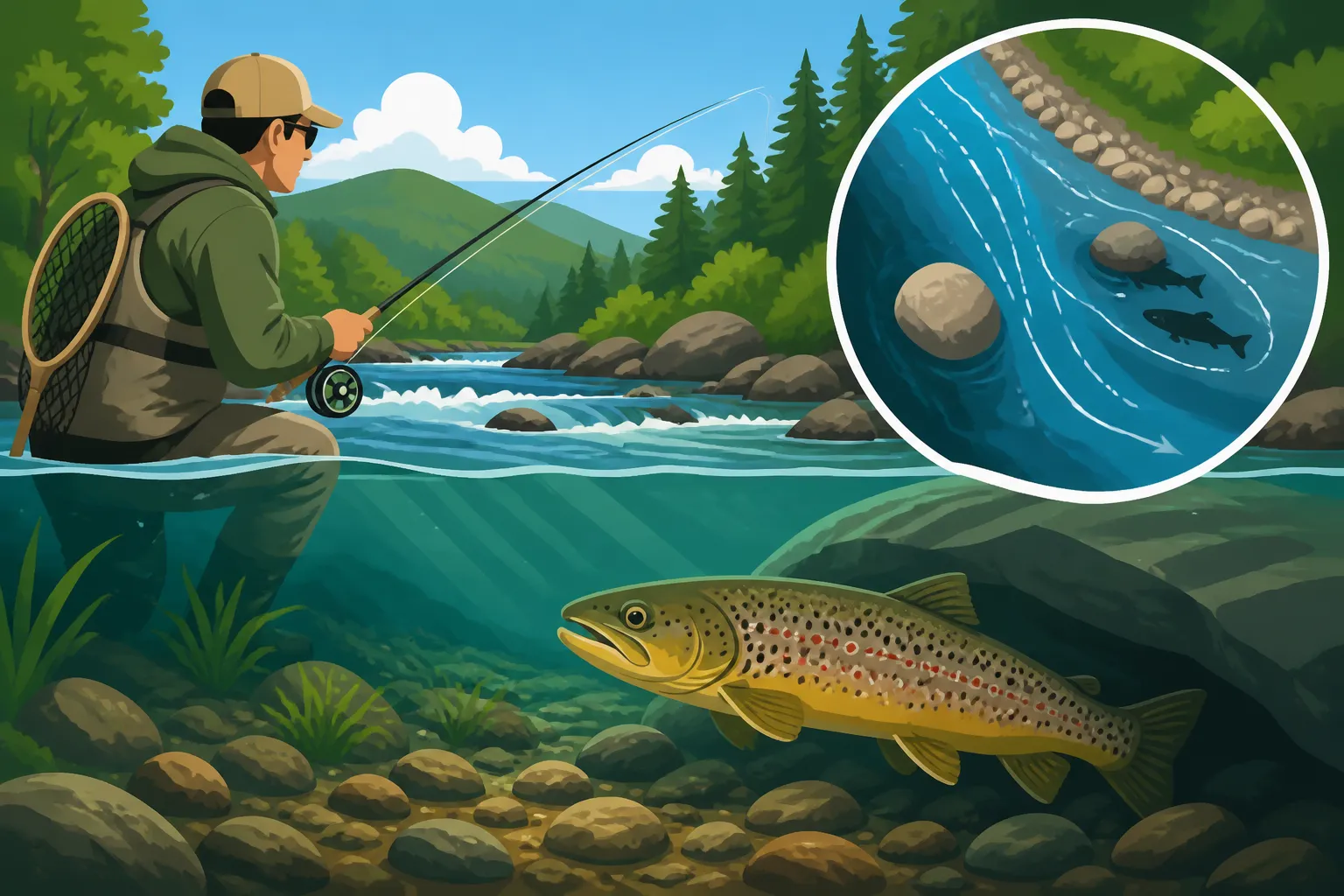
Current Seams: These are the boundary lines where fast water meets slow water. Imagine a visible line on the water's surface, often marked by foam or debris. Trout absolutely love these seams because they offer the best of both worlds: a steady stream of food drifting down the fast current, and a slower current zone right next to it where they can hold with minimal effort. They simply nose into the faster water to snatch a meal and then drift back into the slower water to rest. Learning to cast and drift your offering precisely along these seams is a game-changer for any angler, whether you're fly fishing or spin fishing for trout.
-
Eddies: These are pockets of slower, often swirling water found behind obstacles like large rocks, logs, or points of land. The current in an eddy actually moves upstream or in a circular pattern, creating a natural collection point for food. Trout frequently hold in eddies because they offer excellent protection from the main current and a buffet of trapped insects. Don't overlook the "soft" water on the downstream side of a large rock; this is a classic eddy where a smart trout will be waiting. Pay close attention to the size and depth of the eddy, as bigger, deeper ones can hold larger fish.
Looking for Structure: Rocks, Logs, and Undercuts
Trout are ambush predators and require protection. Structure provides this in spades, offering cover from overhead predators, shelter from strong currents, and hiding spots from which to dart out and grab food.
-
Rocks and Boulders: Any significant rock in the stream bed creates a change in current, forming eddies and current seams. Fish will hold directly behind, in front of, or to the side of these rocks. The larger the rock, the more significant the current break, and potentially, the larger the fish it can hold. Pay attention to groups of rocks that form natural ambush points.
-
Logs and Fallen Trees (Logjams): These are fantastic trout magnets. Submerged logs provide overhead cover and break the current, creating ideal resting and feeding lies. Logjams, while sometimes challenging to fish around, can be goldmines. Trout will tuck themselves into the nooks and crannies of the timber, emerging to feed on whatever washes into their sanctuary. Always approach logjams cautiously and quietly, as these are often prime spots for larger, warier fish.
-
Undercut Banks: These are pockets of water carved out beneath the stream bank by the current, creating natural caves for trout. They offer incredible protection from predators (like you!) and harsh sunlight, as well as providing a cool, dark refuge. Trout will often hug these undercuts, especially during bright, sunny days or when water levels are low. Presenting a nymph or weighted bait to drift into an undercut bank can be incredibly effective, but it requires precision and a good understanding of current. Many of Georgia's mountain trout streams have excellent undercut banks.
Beyond the Obvious: Subtle Clues and Environmental Factors
While understanding the physical structure of the stream is paramount, the best anglers also pay attention to the less obvious cues, the environmental factors that influence trout behavior and, therefore, their location.
Water Clarity, Temperature, and Oxygen Levels
These factors profoundly impact a trout's comfort and activity levels.
-
Water Clarity: Trout are sight feeders. In clear water, they can see your offerings (and your presence) from a distance. This means you need to be stealthier, use lighter lines, and present more natural-looking baits or flies. In murky or stained water (after a rain, for example), trout's vision is reduced, making them less wary but also harder to find. They might hug the banks more closely or move into shallower, more oxygenated areas. In such conditions, heavier, more vibrant lures or scented baits can be more effective.
-
Water Temperature: This is perhaps the most critical factor for trout. Their preferred temperature range is generally between 45-65°F (7-18°C). Outside this range, they become stressed and less active. In colder water (winter), trout are lethargic and often hold in deeper, slower pools where temperatures are more stable. In warmer water (summer), they seek out cooler, oxygen-rich areas like the head of pools, faster riffles, or springs entering the stream. Knowing How Water Temperature Affects Fish Behavior can dictate whether you target deep pools or active runs.
-
Oxygen Levels: Fast-moving, turbulent water (like riffles) is highly oxygenated, which is why trout are often found there, especially in warmer conditions. Stagnant, warm water has lower oxygen, which is why trout avoid it. Understanding where the water is being aerated can help you pinpoint active feeding lies. This is particularly relevant when you're checking the Georgia's Trout Stocking Schedule From March to October, as newly stocked fish will quickly seek out these comfortable zones.
The Influence of Time of Day and Weather
Just like us, trout are influenced by the time of day and prevailing weather conditions.
-
Time of Day: Early morning and late evening (dawn and dusk) are generally prime feeding times. The light is low, making trout feel safer, and insect activity is often at its peak. During the brightest parts of the day, especially in summer, trout will seek deeper, shadier, or more structured cover. On overcast days, they might be more active throughout the day, as the diffused light reduces their vulnerability. For tips on fishing at these times, consider exploring Dawn Fishing Techniques or Dusk Fishing Techniques.
-
Weather: A steady, light rain can actually be excellent for trout fishing, as it washes insects into the stream and breaks up the surface tension, making trout less wary. Heavy rains, however, can blow out a stream, making it too high and muddy to fish effectively. Cold fronts can shut trout down, sending them deep into cover, while a warming trend can activate them. Always check the forecast and observe the conditions before and during your trip.
Reading the Banks and Overhanging Cover
Don't just look at the water; look around it too. The stream banks and surrounding vegetation play a huge role in trout habitat.
-
Overhanging Vegetation: Trees, bushes, and grasses that overhang the water provide shade, keeping the water cooler. They also drop terrestrial insects (grasshoppers, ants, beetles) into the water, creating an easy meal. Trout will hold directly under these overhangs, waiting for a tasty morsel to fall. Casting a fly or lure right up against the bank under this cover can be incredibly productive, but it often requires a delicate touch to avoid snagging.
-
Fallen Trees and Debris: Beyond what's in the water, fallen trees that create shadows or deep pockets along the bank are also fantastic hiding spots. Pay attention to how the current interacts with these bank features, as they often create mini-eddies or current breaks that attract trout.
Putting It All Together: Developing Your "Trout Eye"
Reading water isn't a skill you learn overnight from a book; it's developed through observation, practice, and a keen sense of curiosity on the water. It's about combining all these elements into an instinctive understanding.
Practice Makes Perfect: Start Small, Observe More
The best way to develop your "trout eye" is to simply spend more time on the water, even when you're not actively fishing. Choose a small stretch of stream and just watch. Observe how the current moves, where foam lines gather, where insects are active, and where the water deepens or shallows. Look for subtle movements that might indicate a fish.
Start by focusing on one element at a time. First, identify all the riffles, runs, and pools. Then, look for current seams within those areas. Next, try to spot structure like submerged rocks or logs. The more you consciously identify these features, the more automatic it will become. Don't be afraid to walk stretches of stream with polarized sunglasses on, looking for where you think a trout might be, and then checking if your hypothesis was correct. This methodical approach will greatly improve your ability to know How to Fish for Trout in a Mountain Stream.
Gear That Helps You Read the Water Better
While pure observation is key, some gear can definitely give you an edge.
- Polarized Sunglasses: These are absolutely indispensable for reading water. They cut glare, allowing you to see into the water, spot submerged structure, and even sometimes see fish holding in their lies. This isn't a luxury; it's a necessity. You can find a wide range of options on platforms like Amazon, from budget-friendly pairs to high-end brands, but the important thing is that they are polarized.
- Waders and Wading Boots: Being able to safely and comfortably move around in the stream allows you to approach different angles and get closer to prime spots. Best Waders for Fishing Rivers From Shore can make a huge difference in your ability to explore and position yourself.
- Appropriate Rod and Reel: Having a versatile setup, whether it's a Best Fly Rod for North Georgia Trout Streams or a lightweight spinning combo, allows you to present your offering accurately to the lies you've identified.
- Local Stream Maps/Apps: While not "on-water" gear, these can help you identify bends, deep pockets, or access points that might hold prime water-reading opportunities before you even get there.
When to Move On: Knowing When a Spot Is Barren
A critical part of reading water isn't just knowing where the fish should be, but also knowing when they aren't there. If you've thoroughly fished a prime-looking lie with different presentations and haven't had any strikes, it's time to move on. Don't waste hours flogging dead water.
Factors that might make a seemingly good spot barren:
- Recent Pressure: Other anglers might have already caught or spooked the fish.
- Environmental Changes: A sudden drop in temperature, a rise in turbidity, or a lack of insect activity can make trout inactive, even in a good lie.
- Lack of Actual Fish: Sometimes, despite ideal conditions, fish just aren't present in that particular spot for various reasons (e.g., they've moved upstream or downstream due to spawning or changing food sources).
Trust your observations. If the water looks great but produces nothing, keep walking and keep reading. The next bend, the next riffle, or the next deep pool might hold the fish you're looking for. Knowing when to quit a spot is as important as knowing where to start.
Reading water for trout fishing is an ongoing learning process, a continuous dialogue with the river. It's about paying attention to the details, understanding the trout's needs, and connecting with the natural world. The more you practice, the more intuitive it becomes, and the more rewarding your days on Georgia's beautiful trout streams will be.
Disclaimer
This article is for general informational purposes only and does not constitute professional advice. Laws, prices and regulations vary by location and change over time. Consult a qualified professional for guidance on your specific situation.