Channel Catfish Guide for Georgia Anglers
For many Georgia anglers, there’s nothing quite like the tug of a channel catfish on the line. These whiskered bottom-dwellers offer a fantastic fight and make for delicious table fare, but sometimes they can feel elusive or tricky to consistently catch. If you’ve ever wondered where they hide, what they love to eat, or the best way to reel them in, you've come to the right place. This guide is all about helping you understand and successfully target channel catfish across our beautiful state.
Understanding Channel Catfish in Georgia
Channel catfish, often affectionately called "channels" or "fork-tails" by anglers, are one of Georgia's most popular freshwater game fish. They're incredibly resilient and adaptable, thriving in a wide range of aquatic environments from large reservoirs to slow-moving rivers and even smaller farm ponds. Their popularity stems from their willingness to bite, their fighting spirit, and their excellent taste. Getting to know their basic biology and habits is the first step to becoming a more successful catfish angler.
Identifying a Channel Catfish
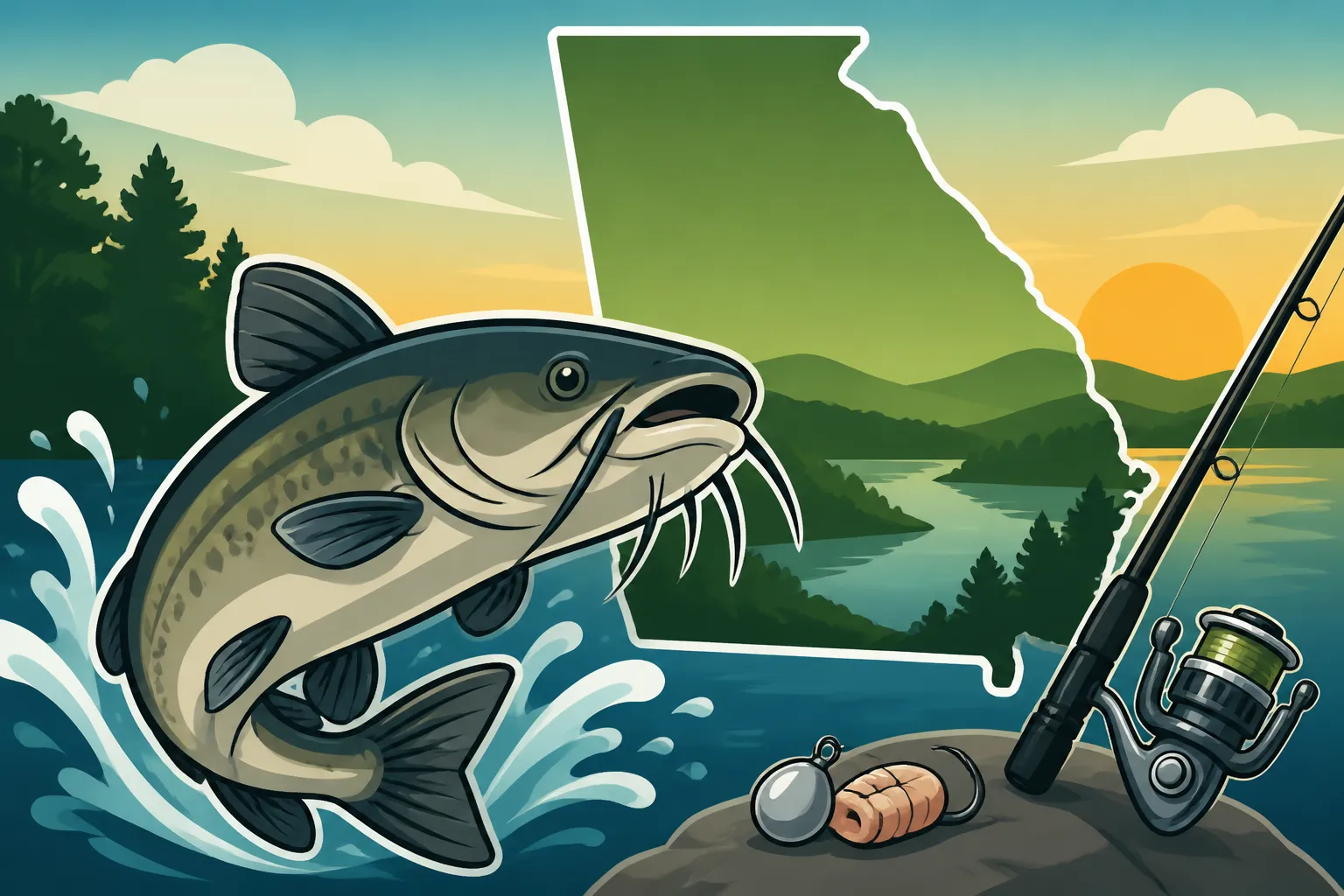
One of the most common questions I get is, "How do I know if I've caught a channel catfish and not something else?" It's a fair question, especially since Georgia waters are also home to blue catfish and flathead catfish. The easiest way to tell a channel cat apart is by its distinct features. They typically have a deeply forked tail, which is how they get their "fork-tail" nickname. Their body color can vary quite a bit depending on the water they live in – from olive-green to gray-blue on their backs, fading to silvery-white on their bellies. Younger channel catfish often have small, dark spots on their sides, which tend to fade as they get older. They also have eight barbels (whiskers) around their mouth, two on the nose and six on the chin, which they use to find food.
Contrast this with a blue catfish, which usually has a straight-edged or slightly forked tail, a humped back, and a generally uniform slate-blue color without spots. Flatheads, on the other hand, have a broad, flattened head, a somewhat mottled yellow-brown appearance, and a rounded, unforked tail. Learning these subtle differences will quickly help you identify your catch and ensure you're adhering to any specific regulations for each species. You can dive deeper into their unique characteristics in our Channel Catfish Identification and Habits guide.
Habitat and Behavior
Channel catfish are true opportunists when it comes to finding a home. They prefer waters with a slower current, or those with plenty of structure where they can hide and ambush prey. Think about areas with submerged logs, rock piles, drop-offs, undercut banks, and even brush piles. In rivers, they'll often be found in deeper holes or eddies where the current isn't as strong. In lakes and reservoirs, they congregate around channels, humps, and points, especially those with access to deeper water nearby.
Their behavior changes with water temperature and time of day. They are largely nocturnal, meaning they are most active at night, using their keen sense of smell and barbels to forage for food in low light. However, they can absolutely be caught during the day, especially if the water is murky or during cooler periods like early morning or late evening. They're also quite social, often schooling together, so if you catch one, there's a good chance there are more nearby! Understanding these preferences is key to knowing Where to Catch Channel Catfish in Georgia.
Size and Growth in Georgia Waters
Channel catfish in Georgia can grow to impressive sizes, though their average size varies by body of water. In many ponds and smaller lakes, you'll commonly catch fish in the 1-5 pound range. In larger reservoirs and rivers like the Flint River or Altamaha, it's not uncommon to land channels weighing 10-20 pounds, and occasionally even larger. These larger fish are typically older and have had more time to grow, taking advantage of abundant food sources.
Their growth rate is influenced by factors such as water temperature, food availability, and population density. A healthy fishery with plenty of food and not too much competition will produce larger fish. While hitting a trophy-class channel cat is always exciting, even the smaller ones put up a respectable fight and are perfect for a fish fry. For more details on what to expect, check out our Channel Catfish Size in Southern Reservoirs article.
Where to Find Channel Catfish in Georgia
Georgia is blessed with an abundance of excellent fishing spots, and many of them hold thriving populations of channel catfish. Whether you prefer the vastness of a major reservoir, the meandering flow of a river, or the quiet solitude of a local pond, there's a place for you to target these fantastic fish.
Top Lakes and Reservoirs
When it comes to big water, Georgia's reservoirs are phenomenal for channel catfish. Lakes Lanier, Oconee, Sinclair, and Clarks Hill (officially Lake Strom Thurmond) are perennial favorites. These lakes offer vast expanses of water with countless nooks, crannies, and deep channels where catfish love to hang out. On Lake Lanier, for example, look for them around the mouths of major creeks, especially after a good rain washes nutrients into the main lake. On Lake Oconee and Sinclair, the warmer waters from the power plant discharges can attract catfish during cooler months, providing excellent fishing opportunities.
Reservoirs often have deeper areas, especially around the old river channels, which become prime catfish territory. Targeting humps, ledges, and drop-offs that transition into these deep channels can be very productive. Areas with submerged timber or rock piles also act as magnets for channel cats, offering both cover and feeding opportunities.
Productive Rivers and Tributaries
Don't underestimate Georgia's rivers for fantastic channel catfish action. The Ocmulgee, Altamaha, Flint, and Savannah Rivers are all renowned for their catfish populations. Rivers offer a different kind of challenge and reward. In river systems, current breaks are your best friend. Look for eddies behind submerged logs, fallen trees along the banks, or deep holes where the current slows down. Tributary mouths, where smaller creeks flow into larger rivers, can also be hotspots, especially after rain when baitfish are washed into the main river system.
The Flint River, particularly in its middle and lower stretches, is fantastic. The Altamaha River system, one of Georgia's largest, is a catfish mecca, providing ample structure and food for channels to thrive. When fishing rivers, pay attention to bends and curves; the outside bends often have deeper water and current-scoured holes where catfish will stage.
Public Fishing Areas and Ponds
For a more relaxed experience or for anglers without a boat, Georgia's Public Fishing Areas (PFAs) and countless smaller ponds are excellent choices. These managed waters are often stocked and provide easy bank access, making them perfect for family outings or a quick fishing trip. PFAs like Marben Farms PFA near Mansfield, Paradise PFA near Tifton, and Social Circle PFA are great examples where you can find healthy channel catfish populations. Many of these areas have fishing piers or designated bank fishing spots, and are often managed to ensure good fishing opportunities.
Even small, private ponds can hold surprisingly large channel catfish. If you have access to a farm pond or a friend's private lake, chances are there are some hungry channel cats waiting. In these smaller waters, they often relate to any available structure, whether it's lily pads, docks, or fallen branches. These spots are excellent for beginners, offering a good chance to hone your skills before tackling bigger waters. Remember to always check local regulations, even in private waters, and ensure you have your Georgia Fishing License Guide in order.
Best Baits and Rigs for Channel Catfish
Channel catfish are famously unfussy eaters, which is great news for anglers! They're scavengers and opportunistic predators, meaning they'll readily bite a wide variety of offerings. However, some baits are definitely more effective than others, and presenting them correctly with the right rig can significantly increase your success.
Top Baits That Attract Channel Cats
When it comes to channel catfish, smell is everything. They have an incredible sense of smell, and baits that give off a strong odor are often the most effective. Here's a rundown of some of the best baits:
- Cut Bait: This is a classic for a reason. Chunks of oily fish like shad, herring, or even smaller sunfish (where legal) are irresistible. The scent trail they leave in the water is a powerful attractant.
- Chicken Livers: Another all-time favorite. They're messy to work with but incredibly effective due to their strong scent and soft texture. Many anglers swear by them.
- Stink Baits/Prepared Baits: There's a whole world of commercially prepared catfish baits, often in paste or dip form, designed to appeal to a channel cat's nose. Brands like Berkley PowerBait or Catfish Charlie offer various formulations that can be used with a sponge or tube jig. You can find a huge selection of these on Amazon.
- Worms: Good old nightcrawlers or red wigglers are always a solid choice, especially for smaller channels or when fishing in areas where a variety of species might be present.
- Shrimp: Fresh or frozen, raw shrimp can be very effective, particularly in brackish water or areas where shrimp are a natural food source.
- Hot Dogs/Cheese: Believe it or not, these household items can be fantastic catfish baits, especially when soaked in garlic or other strong scents. They're cheap, readily available, and surprisingly effective.
Experimentation is key! What works one day or in one body of water might not work as well in another. Always bring a variety of options. Our Best Bait for Channel Catfish in Georgia guide offers even more insight into specific bait choices.
Essential Rigs for Catfish Angling
The goal of any catfish rig is to present your bait effectively on or near the bottom, where channel cats primarily feed. Here are a couple of go-to rigs that will serve you well:
-
Carolina Rig (Santee Cooper Rig): This is arguably the most popular and versatile rig for channel catfish. It consists of a sliding sinker (egg sinker or no-roll sinker) on your main line, followed by a swivel, and then a leader (12-24 inches) with your hook. The sliding sinker allows the fish to pick up the bait and run without feeling the weight, which is crucial for finicky eaters. The Santee Cooper variant adds a float between the swivel and the hook, which lifts your bait slightly off the bottom, keeping it visible and away from snags, particularly useful in silty or weedy areas.
- Setup: Main line -> Sliding Sinker -> Bead (optional, to protect knot) -> Swivel -> Leader (fluorocarbon or monofilament, lighter than main line) -> Hook. For Santee Cooper, add a small cigar float on the leader above the hook.
-
Three-Way Swivel Rig: This rig is excellent for fishing in current, like in rivers. You tie your main line to one eye of a three-way swivel, a short leader (6-12 inches) with a pyramid or bell sinker to another eye, and a longer leader (18-36 inches) with your hook to the third eye. This keeps your bait stationary in the current while allowing the fish to take the bait without immediately feeling the sinker.
- Setup: Main line -> Three-Way Swivel. From one eye: Sink Sinker. From another eye: Leader -> Hook.
Choosing the Right Gear (Rods, Reels, Line)
You don't need highly specialized gear to catch channel catfish, but having the right setup can make a big difference in both your success and enjoyment.
- Rods: A medium to medium-heavy action rod, typically 6.5 to 8 feet long, is ideal. This gives you enough backbone to fight larger fish and cast heavier baits and sinkers, while still having enough sensitivity to feel those subtle bites. Ugly Stik rods are popular among catfish anglers for their durability.
- Reels: A baitcasting reel is preferred for heavier setups and offers more power for fighting big fish, but a sturdy spinning reel in the 3000-5000 size range works perfectly for most channel cat situations. Ensure it has a smooth drag system!
- Line: Monofilament line in the 12-25 pound test range is a good all-around choice, offering good abrasion resistance and knot strength. Some anglers prefer braided line for its sensitivity and incredible strength-to-diameter ratio, especially when fishing in heavy cover. If using braid, a fluorocarbon leader is often added for invisibility and abrasion resistance.
Remember, the goal is balance. Your rod, reel, and line should work together to allow you to cast your chosen rig effectively and handle the size of fish you expect to catch. Finding a good, reliable fishing combo on Amazon can make getting started a breeze.
Effective Techniques for Catching Channel Catfish
Beyond knowing what to use and where to go, understanding how to fish for channel catfish is crucial. These techniques are tried and true, adapted for various situations you might encounter in Georgia's diverse waterways.
Bottom Fishing Strategies
The most common and often most effective method for channel catfish is bottom fishing. Since they spend most of their time foraging along the lakebed or river bottom, placing your bait directly in their strike zone makes perfect sense.
When bottom fishing, it's all about finding those subtle features. Look for transitions: where a shallow flat drops into a deeper channel, the edges of submerged weed lines, or areas with scattered rock and timber. Cast your rig out, let your sinker settle to the bottom, and then reel in any slack line until your rod tip has a slight bend. It's important not to pull the sinker from its resting spot. Then, simply wait.
Patience is a virtue in catfish angling. Bites can range from a subtle tap-tap to a full-on rod-bending smash. Resist the urge to set the hook on every little nibble; often, a channel cat will mouth the bait before committing. Let them pull the rod tip down firmly, or even start taking line, before setting the hook with a strong, sweeping motion. This technique is extensively covered in our How to Bottom Fish for Catfish guide.
Drifting and Still Fishing
While bottom fishing often implies casting to a specific spot and waiting, drifting or still fishing from a boat offers more mobility and can help you cover more water, especially in larger lakes and rivers.
-
Still Fishing (Anchored): This is ideal when you've located a promising area, like a deep hole, a brush pile, or a channel bend. Anchor your boat securely upcurrent or upwind of the target area, then cast your baits out. The current or wind will carry your scent trail downstream or downwind, attracting fish to your anchored position. This method allows you to precisely target known catfish hangouts.
-
Drifting: If you're on a large lake or river and the fish are scattered, drifting can be incredibly effective. Instead of anchoring, you allow the wind or current to slowly move your boat, dragging your baited rigs along the bottom. This covers a wide area and helps you locate active fish. You might use multiple rod holders, fanning your lines out behind or to the sides of the boat. Using a sea anchor (drift sock) can help slow your drift and keep your boat oriented correctly, especially on windy days. Adjust the size of your sinkers to ensure your bait stays in contact with the bottom without snagging too frequently.
Night Fishing for Channel Cats
Channel catfish are primarily nocturnal feeders, meaning they become more active as the sun goes down. This makes night fishing one of the most productive times to target them. The cooler temperatures and reduced boat traffic can also make for a more pleasant and peaceful fishing experience.
When fishing at night, safety is paramount. Always bring headlamps, lanterns, and ensure your boat has all required navigation lights. Use glow-in-the-dark baits or glow sticks attached to your line or rod tip to help detect bites. Catfish often move into shallower areas at night to feed, so don't be afraid to target slightly shallower flats or shorelines that they might not visit during the day.
The techniques remain largely the same as daytime bottom fishing, but the bites can be even more aggressive. Listen for your rod tip rattling or the distinct sound of line peeling off your reel. Night Fishing Techniques for Catfish can open up a whole new world of angling opportunities for you in Georgia.
Seasonal Considerations for Channel Catfish
Just like any other fish species, channel catfish behavior and feeding patterns change throughout the year in response to water temperature, spawning cycles, and food availability. Understanding these seasonal shifts can greatly improve your chances of success.
Spring Spawning and Feeding Frenzy
Spring is a fantastic time for channel catfish. As water temperatures begin to rise, typically into the 60s Fahrenheit, catfish become very active. They're recovering from the lean winter months and are actively feeding to bulk up for the upcoming spawn. This pre-spawn period is characterized by aggressive feeding, and they can be found in a variety of depths, often moving towards shallower flats and creek channels as they search for food.
The actual spawning period usually occurs when water temperatures reach the mid-70s. During the spawn, males become highly territorial and guard their nests, which are often found in secluded, dark places like hollow logs, undercut banks, or rock crevices. While they might still bite if a bait gets too close to their nest, the fishing can slow down. However, the post-spawn period sees them resume heavy feeding as they recover, often remaining in or near these same shallow areas before dispersing.
Summer Deep Water Tactics
Summer in Georgia means hot weather and often, hot water. While channels can still be caught shallow during low-light hours (early morning, late evening, or night), during the heat of the day, they will often retreat to deeper, cooler water. Look for them in the main lake channels, deep holes in rivers, or around thermoclines in stratified lakes.
This is when electronic fish finders can be invaluable for locating schools of fish in deeper water. Target areas with access to oxygenated water, such as deep humps, ledges, or the lower ends of creek channels where cooler water might enter. Heavily scented baits are still key, and using larger pieces of cut bait can help attract the bigger, lazier fish lurking in the depths. Drifting deep flats or anchored fishing on channel edges are prime techniques for summer.
Fall and Winter Fishing Opportunities
As fall arrives and water temperatures begin to cool, channel catfish often go through another period of aggressive feeding. They're preparing for winter and will be actively searching for food. They might move into shallower water again, particularly during sunny days, as they follow baitfish that are doing the same. River systems can be particularly productive in the fall, as fish gather in deeper bends and pools.
Winter can be challenging, but certainly not impossible. Channel catfish become more sluggish in cold water and their metabolism slows down, but they still need to eat. They will typically hold in the deepest, most stable water available, often congregating in large schools. Think about deep river channels, the deepest parts of reservoirs, or near power plant discharges that warm the water. Your bites will be much lighter and subtler, requiring more sensitive gear. Downsizing your bait and fishing slowly can be the key to success during these colder months.
Regulations and Conservation
As responsible anglers, it's our duty to understand and adhere to Georgia's fishing regulations. These rules are in place to ensure healthy fish populations for future generations and to maintain the quality of our state's fisheries. Before you head out, always make sure you're familiar with the current guidelines.
Georgia's Creel and Size Limits
For channel catfish, Georgia typically has a generous daily creel limit (the number of fish you can keep in a single day), often without a statewide minimum size limit. This means that in most waters, you can keep a good number of channel cats, which is great for those looking to stock up for a fish fry. However, it's incredibly important to note that specific lakes, rivers, or Public Fishing Areas (PFAs) might have special regulations that differ from the statewide rules. For example, some PFAs may have specific size or creel limits designed to manage their particular fishery.
Always consult the latest Georgia Sport Fishing Regulations guide, available online or at most bait and tackle shops, before fishing a new body of water. Ignorance of the law is never an excuse, and penalties for violations can include fines and loss of fishing privileges. Keeping track of these can sometimes feel like a full-time job, but it's essential. For a broader overview, check out our Georgia Fishing Regulations Explained guide.
Practicing Responsible Catch and Release
While channel catfish are excellent table fare, there will be times when you catch more than you need, or perhaps a particularly large fish that you'd like to release to grow even bigger and spawn again. Practicing proper catch and release techniques is vital for the health of the fishery.
- Handle Fish Gently: Minimize the time the fish is out of the water. Support its body horizontally, avoiding vertical holds by the jaw which can damage its internal organs.
- Wet Your Hands: Always wet your hands before touching a fish. Dry hands can remove the protective slime coat, making the fish more susceptible to disease.
- Use the Right Tools: A pair of pliers or a hook remover can make unhooking easier and safer for both you and the fish, especially with deeply set hooks. Consider using circle hooks, which are designed to hook fish in the corner of the mouth, making them easier to remove and reducing gut hooking.
- Revive If Necessary: If a fish seems sluggish after being caught, gently hold it in the water, facing into the current (if any), and allow water to flow over its gills until it swims away under its own power.
Importance of a Fishing License
This might seem obvious, but it's the foundation of all legal fishing in Georgia. Anyone 16 years of age or older needs a valid Georgia fishing license to fish in the state's public waters. Funds from license sales directly support conservation efforts, fish stocking programs, habitat restoration, and enforcement, all of which benefit the very fishing experiences we enjoy.
Purchasing a license is easy and can be done online through the Georgia Department of Natural Resources website, by phone, or at authorized license agents like bait shops and sporting goods stores. Make sure your license is always current and easily accessible when you're on the water. Fishing without one can lead to significant penalties, which is a headache no one wants. Learn more in our How to Get a Fishing License in Georgia article.
Remember, by following these regulations and practicing responsible angling, you're contributing to the longevity and health of Georgia's amazing channel catfish populations, ensuring that future generations can enjoy the same great fishing opportunities.
| Bait Type | Effectiveness (1-5, 5 being best) | Scent Level | Ease of Use | Best for (General) | Notes |
|---|---|---|---|---|---|
| Cut Bait (Shad) | 5 | High | Medium | Larger Channel Cats | Oily, strong scent trail; can be messy. |
| Chicken Livers | 4 | Very High | Low | All Channel Catfish sizes | Very messy, soft, difficult to keep on hook; highly effective. |
| Stink/Prepared Baits | 4 | High | Medium | General Catfish | Convenient, specially formulated scents; often needs specific holders. |
| Nightcrawlers | 3 | Medium | High | Smaller Channels, Panfish | Readily available, easy to rig; can attract other species. |
| Shrimp (Raw) | 3 | Medium | Medium | Channels, especially coastal | Good scent, holds on hook fairly well; fresh is best. |
| Hot Dogs (Garlic) | 3 | Medium | High | Smaller Channels, Fun | Cheap, easy to use; enhance with garlic powder. |
Disclaimer
This article is for general informational purposes only and does not constitute professional advice. Laws, prices and regulations vary by location and change over time. Consult a qualified professional for guidance on your specific situation.