Brook Trout vs Rainbow Trout vs Brown Trout
Many anglers hitting the beautiful streams and rivers of Georgia can sometimes feel a bit stumped when they pull a trout from the water. Is it a brook trout? A rainbow? Or maybe a brown? While they all share the common "trout" name, these three species have distinct characteristics, behaviors, and even preferred habitats that make identifying them crucial for a successful (and legal) fishing trip. This guide will walk you through the key differences, helping you become a seasoned trout identifier in no time.
The Brook Trout: Georgia's Native Stream Jewel
There's something truly special about catching a brook trout in Georgia. These fish are often smaller, but their vibrant colors and the sheer beauty of their wild, unspoiled habitats make them a prized catch. They are Georgia's only native trout species, meaning they've been here long before any human decided to cast a line.
Distinctive Appearance and Markings
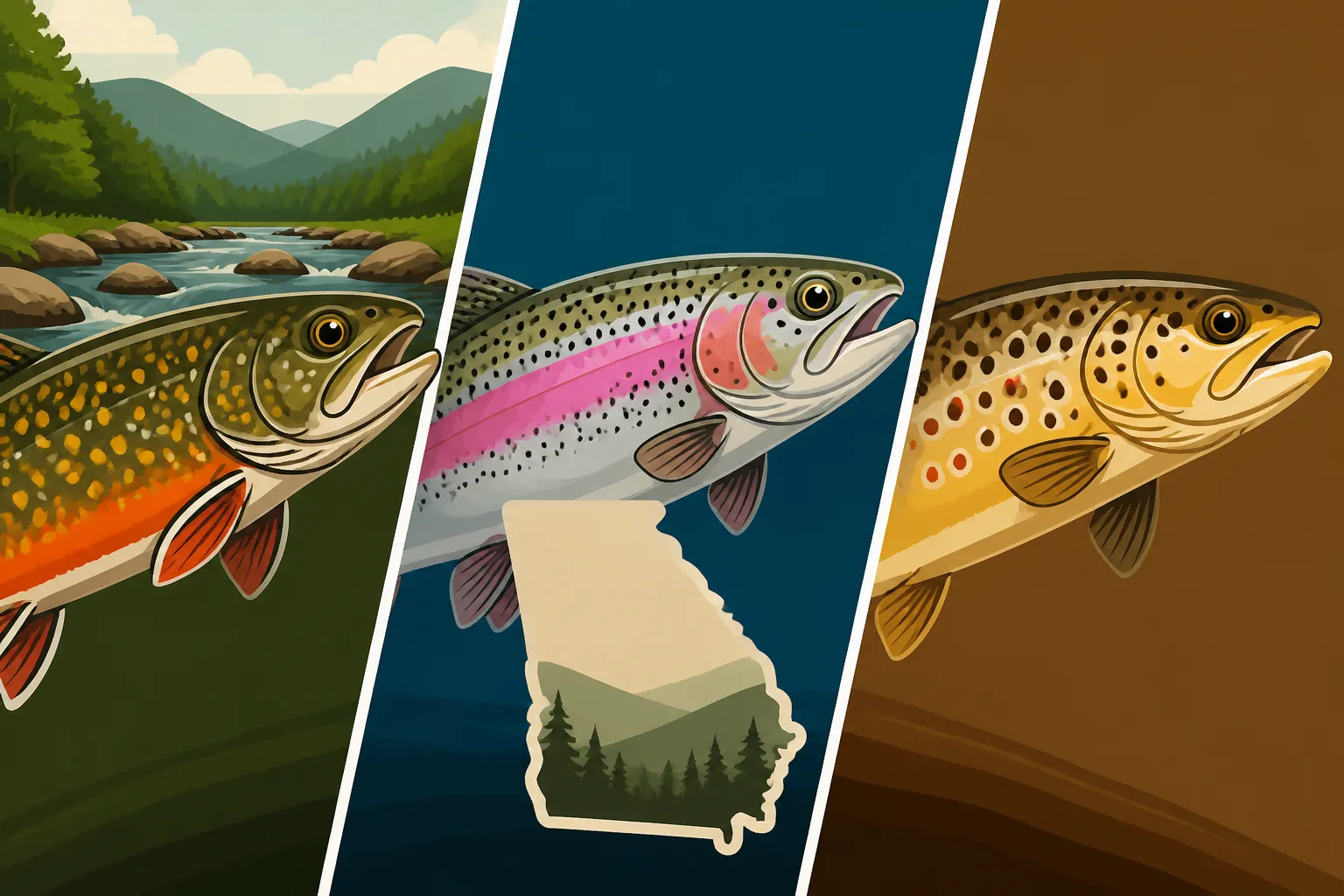
When you pull a brook trout from the cool waters, you'll immediately notice its stunning array of colors. Their backs are typically a dark, olive green, often adorned with mesmerizing, worm-like patterns that range from olive to cream – these are called vermiculations. Along their sides, you'll see scattered red spots, each usually encircled by a striking blue halo. This blue halo is a dead giveaway for a brook trout. Their bellies can vary from white to a deep orange or even reddish, especially during spawning season. Perhaps the most characteristic feature, however, are their lower fins (pelvic, anal, and caudal). These fins will have a distinct white leading edge, followed by a black stripe, and then the rest of the fin, which is typically orange or reddish. It's like they're wearing tiny white socks! For a deeper dive into their look, check out How to Identify a Brook Trout.
These markings aren't just for show; they're perfectly designed camouflage for the clear, rocky streams they call home. The vermiculations help them blend into the dappled light and shadows of stream bottoms, while the vibrant spots might serve as a warning or display during mating. No two brook trout are exactly alike, but these general patterns hold true across the species, allowing for easy identification once you know what to look for.
Preferred Habitat and Behavior
Brook trout are creatures of pristine, cold water. They thrive in the headwater streams and smaller tributaries of North Georgia's mountains, where the water temperatures rarely climb above 68°F (20°C). These are often the same streams where you might find yourself bushwhacking through rhododendron thickets, far from paved roads. They prefer rocky stream beds with plenty of overhead cover from vegetation, undercut banks, and fallen logs, offering them shelter from predators and strong currents. You'll often find them tucked into the slowest parts of a riffle, behind a boulder, or in a deep, cool pool.
Their diet primarily consists of aquatic insects like caddisflies, stoneflies, and mayflies, as well as terrestrial insects that fall into the water. They are opportunistic feeders but can be quite skittish, requiring a stealthy approach from anglers. Because they often inhabit smaller, more isolated streams, populations of native brook trout can be quite sensitive to environmental changes. Preserving their habitat is paramount to keeping these beautiful fish swimming in Georgia's wild places. Many anglers consider catching a wild brook trout to be the ultimate reward, a testament to the health of the stream.
Fishing Considerations for Brook Trout
When you're targeting brook trout, think finesse and stealth. Their habitats usually demand lighter tackle – an ultralight spinning rod or a light fly rod is ideal. Small lures like tiny spinners or spoons, or natural baits like worms, work well. For fly anglers, small dry flies, nymphs, and wet flies that mimic the local insect life are often productive. Approach the stream quietly, keeping a low profile, as these fish are easily spooked. Casting accurately into small pockets of water or along undercut banks is often key.
Because brook trout in Georgia are primarily a native species, they are often smaller than their rainbow and brown counterparts. You're usually looking at fish in the 6-10 inch range, though a truly large native brook trout might push 12-14 inches. Many anglers practice catch and release to preserve these fragile populations. If you're looking for gear suited for delicate presentations, you can often find a great selection of ultralight rods and reels, along with appropriate small lures and flies, on Amazon.
The Rainbow Trout: High-Flying Acrobats of Georgia's Waters
The rainbow trout is perhaps the most widely recognized trout species in Georgia, thanks to extensive stocking programs that bring them to numerous streams and lakes across the state. They are celebrated for their fighting spirit and willingness to take a variety of baits and lures, making them a favorite for many anglers, especially beginners.
Key Identification Marks
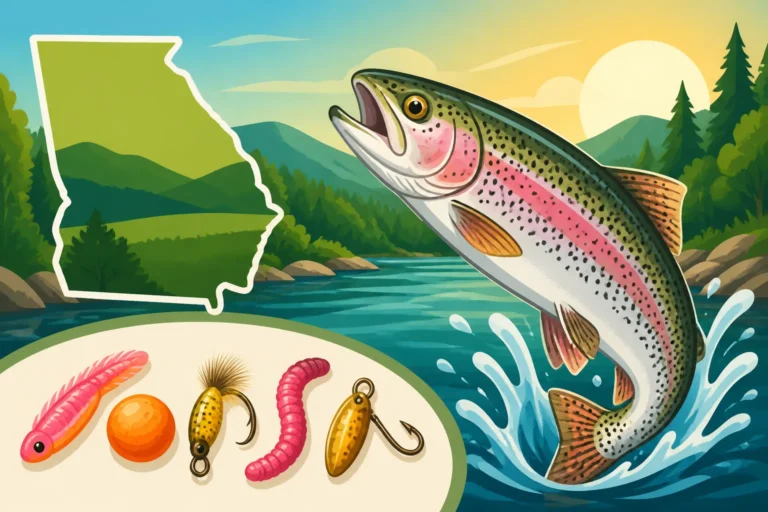
The rainbow trout gets its name from the iridescent, pinkish-red stripe that runs horizontally along its side, from its gill plate to its tail. This stripe can be very prominent on some fish, especially males during spawning, and more subdued on others. Their bodies are typically silver to olive green, with a whitish belly, and are covered in small, distinct black spots. These spots are usually uniformly distributed over their back, sides, and even their dorsal and caudal (tail) fins. Unlike the brook trout, the rainbow trout does not have the worm-like vermiculations on its back, nor the red spots with blue halos. And while their fins might have some dark edges, they lack the distinct white-black-color pattern of the brook trout's lower fins. For a detailed guide on their visual cues, check out How to Identify a Rainbow Trout.
Their overall sleek, torpedo-shaped body makes them powerful swimmers, capable of leaping clear of the water when hooked – a characteristic that endears them to many sport fishermen. The intensity of their rainbow stripe and the prevalence of their spots can vary slightly depending on their specific environment and diet, but the general pattern remains consistent.
Versatile Habitat and Behavior
Rainbow trout are incredibly adaptable and can thrive in a wider range of habitats than brook trout. In Georgia, you'll find them in cold, clear mountain streams, larger rivers, and even some cool-water lakes and reservoirs. They are the most common species targeted in the state's trout stocking program, which ensures a healthy population in easily accessible waters. Rainbow Trout Fishing in North Georgia Streams will give you more insight into their preferred locations.
They are more tolerant of slightly warmer water temperatures than brook trout, though they still prefer cool, oxygenated environments. Rainbows are active feeders, preying on a diverse menu of aquatic insects, crustaceans, small fish, and even fish eggs. They are known for their aggressive strikes, often hitting lures and baits with considerable force. Their willingness to bite makes them an excellent target for family outings and those just learning the ropes of trout fishing.
Angling for Rainbows
Rainbow trout offer a fantastic angling experience because they respond to such a wide variety of techniques. Spin fishermen can use small spinners, spoons, and an array of soft plastics, often tipped with bait like corn, salmon eggs, or powerbait. Fly anglers find success with dry flies, nymphs, streamers, and even small emergers. Bait fishing with worms or powerbait under a bobber is also a popular and effective method, especially in stocked waters. You can find many effective lures and baits for rainbows, along with handy tackle organizers, on Amazon.
In stocked streams, you might find rainbows schooled up in deeper pools or near current breaks. In larger rivers or lakes, they can be found cruising deeper waters or holding near structure. Unlike the stealth required for brook trout, rainbow trout fishing can often be more active and less demanding in terms of approach, though a quiet demeanor never hurts. For tips on bait, consider reading Best Bait for Rainbow Trout in Georgia.
The Brown Trout: Wily and Resilient Game Fish
Brown trout are the largest and often the most challenging of Georgia's trout species to catch. Known for their elusive nature and predatory instincts, they offer a thrilling challenge for experienced anglers seeking a trophy fish. While not native to Georgia, they have been successfully introduced and established in many of our cooler, larger rivers and streams.
Telling Browns Apart by Appearance
Identifying a brown trout can sometimes be tricky because their coloration can vary greatly depending on their habitat and diet. However, they typically have a golden-brown to yellowish-brown body, often with a bronze sheen. Their most distinguishing marks are fewer, larger, dark brown or black spots, which are usually ringed by a lighter, sometimes pale, halo. They also frequently have red or orange spots scattered along their sides, which may or may not have halos. Crucially, brown trout lack the distinct worm-like markings on their back seen on brook trout, and they don't have the vibrant pink stripe of the rainbow. Their tail fin usually has very few, if any, spots, setting it apart from the heavily spotted rainbow tail. Refer to How to Identify a Brown Trout for more detailed identification tips.
Their bodies are more robust and less streamlined than a rainbow's, often appearing thick and powerful, indicative of their predatory nature. The shades can range from light tan in clear, sandy streams to almost black in tannic, darker waters. Their overall appearance often gives them a "tougher" or "grittier" look compared to the delicate brook trout or the colorful rainbow.
Adaptable Survivors and Predatory Habits
Brown trout are incredibly adaptable and resilient, capable of tolerating a wider range of water temperatures than either rainbows or brookies. This makes them suitable for many of Georgia's larger, lower-elevation trout streams and rivers that might become too warm for other trout species in the summer. They are often found in larger rivers, tailwaters below dams, and even some cool-water reservoirs. Brown Trout Fishing on the Chattahoochee River offers a glimpse into one of their prime Georgia habitats.
These fish are highly predatory, especially as they grow larger. Their diet includes a significant proportion of smaller fish, crayfish, sculpins, and large aquatic and terrestrial insects. They are known for their nocturnal feeding habits, often venturing out under the cover of darkness to hunt. Their wary nature means they are keenly aware of their surroundings and can be notoriously difficult to fool, especially large specimens. This intelligence and their ability to survive in challenging conditions make them a true sport fish.
Chasing Big Browns: Angling Strategies
Angling for brown trout requires patience, skill, and often a different approach than what you'd use for rainbows or brookies. For larger browns, many anglers opt for bigger lures that imitate their natural prey, such as minnow-imitating crankbaits, larger spinners, or heavy streamers and articulated flies. Fishing during low-light conditions, like dawn, dusk, or even at night, can be particularly productive for trophy browns.
Heavy leaders and stronger lines are often needed, as these fish can put up a formidable fight, often diving for cover. For those targeting these robust fish, you might want to look for durable fishing line and leader materials on Amazon. Bait fishermen often use live bait like shiners or crayfish, or large nightcrawlers. Fly fishermen can find success with large streamers that imitate baitfish, or by drifting nymphs deep in the water column. Success often comes from understanding their holding patterns and presenting your offering as naturally as possible. Explore Best Lures for Brown Trout in Georgia for specific recommendations.
Side-by-Side Comparison: Why Species Identification Matters
Understanding the differences between brook, rainbow, and brown trout isn't just about identifying your catch; it's about tailoring your fishing approach, appreciating the unique ecosystems they inhabit, and adhering to important conservation efforts. Each species tells a story about the health and character of the water it lives in.
Quick Identification Table
To help you quickly distinguish between these three magnificent trout species, here's a handy comparison table summarizing their key features:
| Feature | Brook Trout | Rainbow Trout | Brown Trout |
|---|---|---|---|
| Native Status | Native to Georgia (only native trout) | Introduced (widely stocked) | Introduced (naturalized in many waters) |
| Body Color | Dark olive-green back, lighter sides/belly | Silver to olive-green, whitish belly | Golden-brown to yellowish-brown |
| Back Pattern | Distinctive worm-like vermiculations (olive/cream) | Mostly clear or light speckles | Light speckles, no vermiculations |
| Side Spots | Red spots with blue halos | Numerous small black spots | Fewer, larger dark spots with light halos; some red/orange spots |
| Side Stripe | None | Prominent pink/red horizontal stripe (variable) | None |
| Fin Edges | White leading edge on lower fins (with black stripe) | No distinct white leading edge | No distinct white leading edge |
| Tail Fin | Slightly forked, often mottled | Heavily spotted, slightly forked or square | Few to no spots, typically square or slightly forked |
| Typical Size | Smaller (6-12 inches, rarely larger) | Medium (10-20 inches) | Large (12-25+ inches, can be very big) |
| Preferred Water | Cold, pristine headwater streams | Cold to cool rivers, streams, lakes, reservoirs | Tolerant of warmer water, larger rivers, tailwaters |
Tailoring Your Approach
Knowing which species you're likely to encounter in a particular body of water will dramatically improve your fishing success. If you're hiking into a remote, high-elevation stream, you're probably targeting brook trout, and you'll want ultra-light gear and a stealthy approach. For example, a specialized lightweight fishing vest for carrying small tackle, which you can easily find on Amazon, would be perfect for these hikes. Conversely, if you're fishing a wider, more accessible river or a popular stocked lake, rainbow trout are a more probable catch, allowing for a wider range of techniques, from fly fishing to bait fishing. If you're after a trophy, focusing on the larger rivers and using bigger baits or lures in pursuit of brown trout would be your best bet.
This knowledge extends to your tackle box choices too. You might find that the tiny, delicate flies suitable for native brook trout are completely different from the larger streamers or crankbaits you'd use for a big brown trout. Having a versatile selection, or specialized gear for your target species, means you're always prepared.
Conservation and Regulations
Beyond the joy of the catch, distinguishing between these species is also vital for conservation. Each trout species in Georgia has specific regulations regarding size limits and creel limits. For instance, some smaller streams designated as native brook trout waters might have stricter catch-and-release rules or special tackle restrictions to protect their populations. On the other hand, heavily stocked rainbow trout waters often have more liberal limits to encourage harvest. Understanding these regulations is not just about avoiding penalties, like those mentioned in Penalties for Fishing Without a License in Georgia, but also about being a responsible steward of Georgia's aquatic resources.
Always consult the latest Georgia Fishing Regulations Explained before heading out. Sometimes, a specific creek might have unique rules for trout, like those outlined in Georgia Trout Stream Size Limits by Creek. Knowing your trout ensures you're playing by the rules and helping to maintain healthy fish populations for generations of anglers to come. Whether you're a seasoned fly fisherman or just starting with a simple worm and bobber, the ability to identify brook, rainbow, and brown trout will enrich your Georgia fishing experience immensely. And remember, the journey to becoming a knowledgeable angler is just as rewarding as the catch itself!
Disclaimer
This article is for general informational purposes only and does not constitute professional advice. Laws, prices and regulations vary by location and change over time. Consult a qualified professional for guidance on your specific situation.