Trout Species Compared: Rainbow vs Brown vs Brook in Georgia
It can be surprisingly tricky to tell the difference between the various trout species swimming in Georgia's beautiful mountain streams and rivers. Many anglers, even seasoned ones, often find themselves pausing, wondering if that shimmering fish in their net is a rainbow, a brown, or a treasured native brook trout. This guide is here to clear up that confusion once and for all, providing you with all the details you need to confidently identify Georgia's primary trout species and understand where each one thrives.
The Three Stars of Georgia Trout Fishing: An Overview
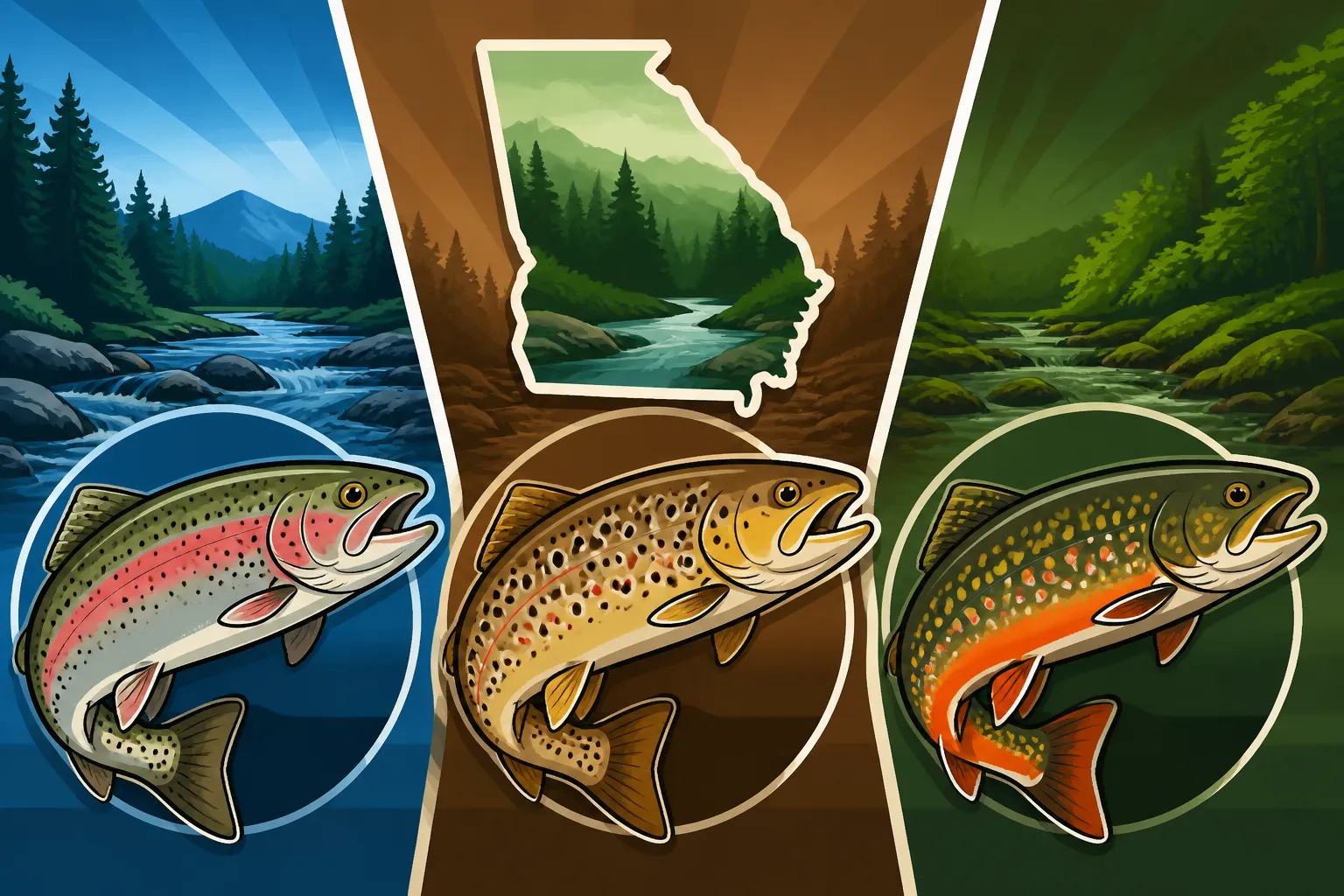
Georgia's cold mountain waters are home to three main trout species that capture the hearts of anglers: Rainbow Trout, Brown Trout, and Brook Trout. While they all share the common "trout" name, each has distinct characteristics, preferred habitats, and even different attitudes when it comes to taking a hook. Understanding these differences isn't just about identification; it's about appreciating the unique ecology of our state's waterways and becoming a more effective, and respectful, angler.
Rainbow Trout: The Stocking Favorite
Rainbow trout are probably the most familiar face in Georgia's trout streams, largely thanks to the Georgia Department of Natural Resources (GDNR) stocking programs. These fish are celebrated for their vibrant colors and willingness to bite, making them a fantastic target for anglers of all skill levels, especially beginners and families. They adapt well to a variety of water conditions, which is why they thrive in many of our public fishing areas and regularly stocked streams.
You'll find rainbows throughout the cooler waters of North Georgia, from larger rivers like the Toccoa to smaller creeks that are easily accessible. While many are hatchery-raised, there are also some fantastic wild and holdover populations, particularly in the more remote or productive stream sections. Their enthusiastic fight on the line makes them a thrilling catch, often leaping and thrashing, adding excitement to any fishing trip.
Brown Trout: The Elusive Predator
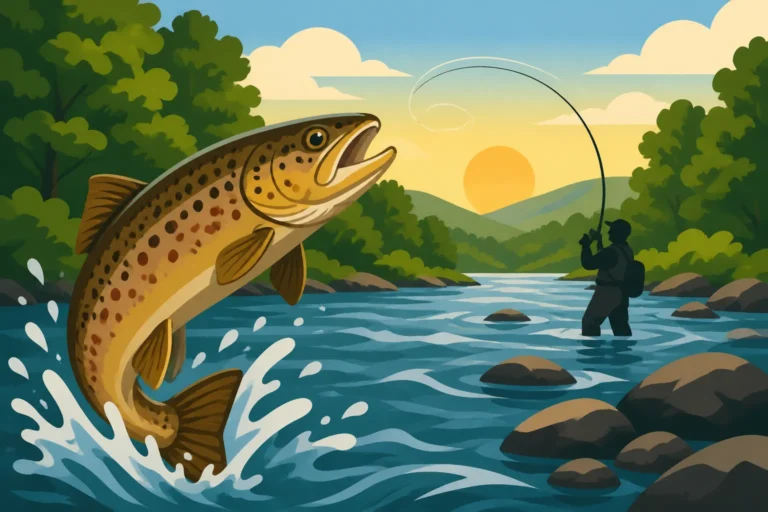
Brown trout hold a special mystique among Georgia anglers. They are often larger, more elusive, and possess a predatory nature that makes them a challenging but incredibly rewarding target. Unlike the more accommodating rainbows, browns are notorious for their wariness and often prefer to inhabit deeper, more structured water, using cover like submerged logs, undercut banks, and large rocks to their advantage.
These trout are not as widely stocked as rainbows, meaning that many of the brown trout you encounter, especially the larger ones, are wild or have been established for a long time in our rivers. They thrive in colder, well-oxygenated streams and rivers, and you can find them in systems like the Chattahoochee River below Buford Dam or in some of the larger mountain tributaries. Catching a trophy brown trout in Georgia is often considered a pinnacle achievement for many freshwater anglers, a testament to their cunning and strength.
Brook Trout: Georgia's Native Gem
Brook trout are truly special; they are Georgia's only native trout species, an original inhabitant of our pristine mountain headwaters. Often smaller in stature than their rainbow and brown cousins, brook trout are incredibly beautiful with their distinctive markings and vibrant colors. Finding them is an experience in itself, as they typically reside in the coldest, purest, and often highest elevation streams, waters so clean you could drink right from them.
These unique fish are often found in remote, wild streams that require a bit of hiking and bushwhacking to access, adding an element of adventure to the pursuit. Due to their native status and specific habitat requirements, brook trout are often managed under special regulations, with many areas promoting or requiring catch-and-release to protect their delicate populations. Successfully locating and catching a native Georgia brook trout feels less like a fishing trip and more like a pilgrimage, connecting you to the wild heart of our state. Brook Trout: Georgia's Native Trout Species
Key Physical Differences: A Side-by-Side Comparison
While all three trout species share a general torpedo-like body shape, a closer look at their physical characteristics reveals distinct differences that will help you identify them instantly on the water. These aren't subtle nuances; once you know what to look for, you'll be able to tell them apart with ease. Pay attention to the patterns, colors, and even the shape of their fins.
Spot Patterns and Coloration
The spotting and overall body color are perhaps the most reliable identifiers for these three trout species. Each has a unique signature that stands out once you train your eye.
Rainbow Trout: When you look at a rainbow trout, you'll typically notice small, dark spots scattered over its back, sides, and often extending onto its dorsal and caudal (tail) fins. These spots are usually uniform in size and quite pronounced. The most striking feature, and the one that gives them their name, is the iridescent, reddish-pink stripe that runs horizontally along their lateral line, from their gill plate to their tail. This stripe can be very vivid, especially in spawning males, but it can also be subtle depending on the fish's age, diet, and environment. Their overall body color can range from a silvery-green to a darker olive, often with a paler belly.
Brown Trout: Brown trout have a much different pattern. Their bodies are typically a darker brown or olive green on top, fading to a creamy or yellowish belly. The tell-tale sign of a brown trout is the presence of prominent dark spots surrounded by lighter "halos" on their sides, often interspersed with red or orange spots that also have these distinct halos. These red spots are a key characteristic and are usually quite noticeable. The spots typically extend onto the dorsal and adipose fins, but less so on the tail. The overall impression is more earthy and camouflaged compared to the brighter rainbow.
Brook Trout: Our native brook trout are perhaps the most visually distinct. Their back and sides are covered in a beautiful, intricate pattern of light, worm-like markings (known as "vermiculations") on a darker background, often olive or dark green. Along their sides, you'll see small, vibrant red or orange spots, often with blue halos, which are truly breathtaking. Their lower fins (pectoral, pelvic, and anal) have a striking white leading edge, backed by a dark line and then an orange or reddish color. This white leading edge is a definitive characteristic of a brook trout and is almost unmistakable. Their bellies can range from white to a deep orange or red, especially during spawning season.
Tail and Fin Distinctions
Beyond the spots and colors, the fins and tail can offer additional clues for identification, especially the distinctive markings on the brook trout's fins.
Rainbow Trout: Rainbow trout generally have a broad, moderately forked tail that is typically covered in those same dark spots found on their body. Their dorsal and adipose fins also bear these spots. The other fins (pectoral, pelvic, anal) are usually plain or slightly dusky, lacking any prominent markings. Their fins tend to be proportionate to their body, giving them a streamlined appearance for swift swimming in current.
Brown Trout: Brown trout typically have a square or slightly forked tail, which, unlike the rainbow's, usually has few or no spots. Their dorsal fin often has spots, but the tail and lower fins are usually plain. Their adipose fin (the small, fleshy fin near the tail) may have a hint of orange or red. Their fins can sometimes appear a bit more robust than a rainbow's, especially in larger, older fish that have developed powerful swimming muscles.
Brook Trout: The fins of a brook trout are arguably their most unique identifier. As mentioned, their lower fins (pelvic, pectoral, and anal) possess a distinctive white leading edge, often followed by a black stripe, and then a reddish or orange hue. This "white-tipped" fin is a dead giveaway for a brook trout. Their tail is typically square or only very slightly forked and is generally unspotted. The dorsal fin might have some faint vermiculations similar to those on its back, but it won't have the distinct spots of a rainbow. These colorful fin margins are like nature's neon sign, announcing the presence of a truly special fish.
Overall Body Shape and Size
While size can vary greatly depending on age, diet, and habitat, there are some general tendencies in body shape that can help you distinguish between the species.
Rainbow Trout: Rainbows generally have a classic, streamlined trout shape – long, somewhat slender, and built for speed in flowing water. In Georgia, stocked rainbows often range from 8 to 14 inches, though wild and holdover fish can grow larger, sometimes reaching impressive sizes in nutrient-rich waters. Their body tapers gracefully, making them powerful jumpers and fighters.
Brown Trout: Brown trout often appear more robust or "stocky" than rainbows, especially as they mature. They tend to have a larger head in proportion to their body, and their jaws can be quite formidable, particularly in older, predatory males which develop a hooked lower jaw (a "kype"). While many browns caught are similar in size to stocked rainbows, they have the potential to grow significantly larger, with trophy-sized browns over 20 inches being highly sought after in Georgia's productive rivers. Their muscular build is a testament to their often-challenging existence and predatory diet. Brown Trout Size and Growth in Georgia
Brook Trout: Brook trout are generally smaller and more delicate than either rainbows or browns, especially the native fish found in Georgia's headwaters. They tend to have a slightly more compressed body, suitable for navigating tight spaces and small pools in narrow streams. Most native brook trout in Georgia range from 6 to 10 inches, with anything over a foot being considered a truly exceptional trophy. Their smaller size belies their incredible beauty and resilience, making every brook trout catch a significant one. Brook Trout Size in Georgia Mountain Streams
Habitat and Behavior: Where and How They Live
Understanding where each trout species prefers to live and how they behave can greatly improve your chances of finding and catching them. It's not just about what they look like; it's about knowing their lifestyle and their preferred real estate.
Preferred Water Conditions and Flow
Each trout species has its ideal environment, influenced by water temperature, oxygen levels, and stream structure.
Rainbow Trout: Rainbows are remarkably adaptable, which is one of the reasons they're such a successful stocking species. They can tolerate a slightly wider range of water temperatures than brook trout, thriving in cool, well-oxygenated streams, rivers, and even some tailwaters. They're often found in areas with moderate current, riffles, and runs, but will also utilize deeper pools and eddies. You'll find them widely distributed throughout the North Georgia mountains, often in areas easily accessible by road. Rainbow Trout Fishing in North Georgia Streams
Brown Trout: Brown trout are typically found in larger, colder streams and rivers, often preferring waters that have more structure and cover. They are less tolerant of warmer water than rainbows but can handle it better than brook trout. They absolutely love holding tight to cover – think deep pools with undercut banks, large submerged logs, boulders, or overhanging vegetation. They are often most active during low-light conditions (dawn, dusk, and even night) and can be incredibly spooky, requiring a stealthy approach. This preference for structured, protected areas is part of what makes them so challenging to catch. Brown Trout Fishing on the Chattahoochee River
Brook Trout: Brook trout are the most demanding in terms of habitat. They are true indicators of pristine water quality, requiring the coldest, cleanest, and most highly oxygenated headwater streams. These are typically small, steep, forested streams at higher elevations, where water temperatures rarely rise above the mid-60s Fahrenheit, even in the peak of summer. They are incredibly sensitive to pollution, siltation, and habitat degradation. Because of their preference for small streams, they don't usually grow very large, but their presence is a sign of a healthy, untouched ecosystem. Finding these spots often means venturing deep into wilderness areas, making the journey part of the reward. Best Small Streams for Brook Trout in North Georgia
Diet and Feeding Habits
What these trout eat and how they forage also differs, reflecting their environment and predatory instincts.
Rainbow Trout: Rainbow trout are opportunistic feeders. In stocked waters, they'll readily take prepared baits like PowerBait, corn, or salmon eggs, as they've been raised on pellets. In wilder settings, their diet consists primarily of aquatic insects (mayflies, caddisflies, stoneflies), terrestrial insects (grasshoppers, ants), small crustaceans, and sometimes very small baitfish. They are often willing to rise to the surface for dry flies or chase down spinners, making them a fun and responsive target for various fishing methods.
Brown Trout: Brown trout are more predatory and often have a more aggressive feeding strategy, especially as they grow larger. While they will eat a variety of insects, their diet increasingly includes larger prey such as baitfish (like sculpins, dace, or juvenile trout), crayfish, and even small rodents or amphibians that fall into the water. This is why streamers and larger minnow-imitating lures are so effective for them. They tend to be ambush predators, waiting patiently in cover for prey to drift by before darting out with surprising speed. Their nocturnal feeding habits are also well-documented, with many trophy browns caught after dark. Best Lures for Brown Trout in Georgia
Brook Trout: Given their small stream habitat, brook trout typically feed on a diet of small aquatic and terrestrial insects. Larvae, nymphs, small adult insects, and tiny worms make up the bulk of their meals. They are often less aggressive feeders than browns or rainbows, requiring delicate presentations with small flies or baits. Because their environment is often resource-limited, they tend to be very efficient and selective eaters, making them a fascinating challenge for fly anglers using precise imitations.
Spawning Habits and Timing
The reproductive cycles of these trout species also vary, impacting their behavior at different times of the year.
Rainbow Trout: Most rainbow trout populations in Georgia, especially those that are stocked, are spring spawners. They typically lay their eggs (roe) in shallow, gravelly redds in stream beds when water temperatures are conducive. Wild rainbow populations might have slightly varied timing, but generally, spring is their primary reproductive period. After spawning, they can be quite hungry and aggressive as they recover, making them excellent targets in the late spring and early summer.
Brown Trout: Brown trout are fall spawners. As water temperatures begin to drop in the autumn months, often from late September through November in Georgia, brown trout will move into shallower, gravelly areas to create their redds. During this period, they can become very territorial and protective, making them susceptible to aggressive lure presentations. However, it's also a time when many anglers choose to give them space to ensure successful reproduction for future generations.
Brook Trout: Like brown trout, brook trout are also fall spawners, typically breeding in the cooler months of autumn, from September to November. They seek out very cold, clean, spring-fed headwaters with gravelly bottoms to lay their eggs. Their specific habitat requirements for spawning are a major factor in their distribution. Protecting these fragile spawning grounds is crucial for the survival of Georgia's native brook trout populations.
Fishing for Each Species: Techniques and Challenges
Knowing the differences in habitat and feeding habits translates directly into how you approach fishing for each species. While a general trout setup might catch any of them, specific techniques will greatly increase your success for each individual type of trout.
Targeting Rainbow Trout
Rainbow trout, particularly those that are regularly stocked, are often the most forgiving and accessible for anglers. This makes them perfect for a relaxing day on the water, whether you're bringing kids or just enjoying some relatively consistent action.
When targeting stocked rainbows, conventional bait fishing is incredibly effective. Baits like PowerBait (in various colors and shapes), corn kernels, and small worms (such as red wigglers) are often irresistible to them, especially if they've been raised in a hatchery. You can fish these on a light line with a small hook and a split shot or under a bobber in slower pools. For those who prefer artificials, small inline spinners (like Panther Martins or Mepps), tiny spoons, or even small jigs tipped with a piece of worm can be very productive. Fly anglers will find success with attractor patterns like Woolly Buggers, Squirmy Wormies, or even simple dry flies like an Adams or Elk Hair Caddis, especially during hatches. Best Lures for Stocked Trout Many of these effective baits and lures can be easily found on platforms like Amazon, allowing you to stock up before your next trip.
Rainbows tend to be less wary than browns, so you don't always need to be as stealthy, though quiet movements are always a good idea. Focus on areas where fish are likely to congregate after stocking, such as deeper pools, slower runs, and around current breaks. Check the Georgia's Trout Stocking Schedule Explained to find out when and where fish are being released for optimal opportunities.
Pursuing Brown Trout
Fishing for brown trout often requires a shift in mindset and technique. These fish are smarter, more cautious, and generally require a more deliberate approach. They are not as easily fooled as freshly stocked rainbows.
Successful brown trout fishing often involves stealth. Approach likely holding spots (undercut banks, deep log jams, large boulders) carefully, minimizing vibrations and shadows. For spin anglers, larger, more aggressive lures often work best. Minnow imitation plugs (like Rapalas or other jerkbaits), larger spinners, and soft plastic swimbaits that mimic baitfish can be highly effective. Fishing these lures in low-light conditions (dawn, dusk, or even after dark) can significantly increase your chances, as browns are often most active during these times. Fly anglers targeting browns frequently employ streamers that imitate baitfish or crayfish, stripping them aggressively through deep pools and along structure. Nymphs fished deep, especially imitations of stoneflies or large caddis larvae, are also very productive. Remember, browns are looking for a meal, so presenting a substantial offering that looks natural is key. Best Lures for Brown Trout in Georgia
Patience is a virtue when chasing browns. You might make many casts to a prime piece of water before a large brown decides to strike. Their strikes can be surprisingly subtle for such a large fish, or incredibly violent. It's all part of the challenge and reward.
Catching Native Brook Trout
Catching native brook trout is a truly unique experience, blending fishing with a wilderness adventure. Their habitats are often remote and require hiking, making the journey as much a part of the experience as the catch itself.
When targeting brook trout, think light and delicate. Ultra-light spinning gear with very fine line (2-4 lb test) and tiny spinners or micro-jigs are suitable for conventional anglers. However, fly fishing is often the preferred method due to the small stream environments and the fish's selective nature. Small dry flies (size 14-20) imitating gnats, ants, or small caddis, or tiny nymphs fished on a very light leader, are usually the most effective. Presentation is paramount; a soft, accurate cast that doesn't spook the fish is essential. Overhanging branches and tight casting quarters are common, so a shorter rod is often an advantage.
Due to their protected status and the fragile nature of their habitat, catch-and-release is highly recommended, and often required, for brook trout. Handle them with extreme care, keeping them in the water as much as possible, and release them quickly to ensure their survival. How to Catch and Release Trout Properly These are truly Georgia's gems, and we want to ensure they thrive for generations to come. Having a reliable pair of waders and a small pack to carry essentials, which you can easily find on Amazon, makes these remote trips much more enjoyable.
Conservation and Regulations: Protecting Georgia's Trout
Georgia's trout fishery is a precious resource, and responsible angling plays a huge role in its sustainability. Understanding the various conservation efforts and regulations is not just a suggestion; it's a responsibility we all share as anglers.
Stocking Programs and Wild Populations
The Georgia Department of Natural Resources (GDNR) works tirelessly to manage and enhance our state's trout fisheries. This includes robust stocking programs for rainbow trout, and sometimes brown trout, in designated public fishing areas and streams throughout North Georgia. These programs ensure consistent opportunities for anglers, especially in areas that cannot support robust wild populations due to environmental factors or fishing pressure.
However, it's crucial to distinguish between these stocked populations and Georgia's wild trout. Wild trout, particularly native brook trout, but also established wild rainbows and browns, reproduce naturally and sustain themselves within their ecosystems. These populations are often more sensitive and require different management strategies, including specific size and creel limits, or even catch-and-release only regulations. Appreciating the difference between a hatchery-raised fish and a truly wild one enhances the angling experience and fosters a deeper respect for the resource.
Size and Creel Limits by Species and Waterbody
Georgia's fishing regulations are designed to protect trout populations and ensure a healthy future for the fishery. These regulations can vary significantly depending on the specific waterbody and the species targeted. It's imperative that every angler check the most current regulations before heading out.
For example, many general trout streams might have a statewide daily creel limit for trout, while specific "trophy trout" or "delayed harvest" waters will have entirely different rules regarding minimum size limits and daily catch. Some streams might have special restrictions for brook trout, such as reduced creel limits or even mandating catch-and-release only. Georgia Fish Size and Creel Limits Always carry a copy of the current Georgia Sport Fishing Regulations or have access to the digital version. Ignorance of the law is not an excuse, and penalties for violations can be steep. A good digital fish scale and tape measure, easily orderable from Amazon, can help you quickly verify your catch against the regulations.
Catch and Release Best Practices
Practicing proper catch and release is one of the most important ways anglers can contribute to trout conservation, especially for wild and native populations. It ensures that fish can survive to spawn again and contribute to the health of the fishery.
Here are some key tips for catch and release:
- Minimize Fight Time: Land the fish quickly to reduce stress and exhaustion.
- Use Barbless Hooks: Barbless hooks make removal much easier and cause less damage to the fish's mouth. You can pinch down barbs on existing hooks with a pair of pliers.
- Keep the Fish Wet: Do not remove the fish from the water if you intend to release it. Trout need to breathe, and exposure to air can be very stressful and damaging to their gills and protective slime layer.
- Handle Gently: If you must handle the fish, do so with wet hands and as little pressure as possible. Avoid squeezing it, especially around the gills or belly.
- Remove Hook Quickly: Use forceps or pliers to quickly remove the hook. If the hook is deeply swallowed, cut the line as close to the hook as possible.
- Revive Carefully: If the fish seems sluggish, hold it gently in the current, facing upstream, until it can swim away under its own power. Do not "saw" it back and forth.
By following these practices, you give every released trout the best chance of survival, ensuring that these beautiful fish continue to populate Georgia's waters for generations of anglers to enjoy.
| Feature / Species | Rainbow Trout | Brown Trout | Brook Trout |
|---|---|---|---|
| Spotting | Small, dark spots over body, dorsal, and tail fins. | Dark spots with light halos; red/orange spots with halos. | Light, worm-like markings (vermiculations) on back. |
| Lateral Line | Distinctive pink/red stripe | Usually no stripe | Usually no stripe |
| Body Color | Silvery-green to olive | Brown, olive, yellowish-brown | Olive-green to dark, sometimes vibrant orange belly |
| Tail | Moderately forked, often spotted | Square to slightly forked, usually unspotted | Square to slightly notched, unspotted |
| Lower Fins | Plain, dusky | Plain, dusky (adipose may be orange) | White leading edge, followed by black stripe |
| Habitat | Adaptable; stocked streams, rivers, tailwaters | Larger, colder streams; deep pools, strong cover | Pristine, coldest, highest elevation headwaters |
| Diet | Opportunistic; insects, pellets (stocked), small baitfish | Predatory; insects, baitfish, crayfish, rodents | Small aquatic & terrestrial insects |
| Spawning | Spring spawners | Fall spawners | Fall spawners |
| Avg. Size | 8-14 inches (stocked), larger wild | Often larger, 12-20+ inches | 6-10 inches (native), up to 12+ inches (rare) |
Disclaimer
This article is for general informational purposes only and does not constitute professional advice. Laws, prices and regulations vary by location and change over time. Consult a qualified professional for guidance on your specific situation.