Black Crappie Size in Georgia Ponds and Reservoirs
Many anglers, especially those new to chasing panfish, often wonder what a "good" black crappie looks like in Georgia. You head out to your favorite pond or reservoir, eager to feel that distinctive tap, and when you reel one in, you're left asking yourself: "Is this little guy normal, or did I just catch a future lunker?" It's a valid question because crappie size can vary wildly, even within the same body of water. This guide is here to demystify black crappie sizes across Georgia's diverse waterways, helping you understand what to expect, what to dream of, and how to chase those elusive slabs.
The Typical Black Crappie You'll Find in Georgia
When you're out fishing for black crappie in Georgia, whether it's a small farm pond or a massive reservoir, there's a general size range you can expect to encounter most often. These are the fish that make up the bulk of the population and provide consistent action. It's important to understand that "average" doesn't mean "small," but rather "common."
Average Size Expectations in Ponds
If you're casting into a local pond, especially those smaller, more intimate settings, you're likely to pull in black crappie that range anywhere from 6 to 10 inches. These fish might not win any awards, but they're incredibly fun to catch, especially for kids or beginners, and they make for some mighty fine table fare. Think of them as the reliable workhorses of the pond. They're often abundant, readily biting on small jigs or minnows, and can offer non-stop action on the right day.
These smaller sizes in ponds are often a result of a few factors. Ponds, being closed systems, can sometimes become overpopulated with crappie. When there are too many mouths to feed, the available food supply, like zooplankton, insect larvae, and small baitfish, gets stretched thin. This competition leads to slower growth rates, resulting in a higher number of smaller fish. Additionally, the overall water quality and specific nutrient levels in a pond can influence how much food is produced and, consequently, how large the crappie can grow. It's a delicate balance, and without proper management, a pond can easily become a "stunted" crappie fishery, where all the fish are healthy but just don't reach larger sizes.
What to Expect in Georgia's Reservoirs
Stepping up to Georgia's larger reservoirs, like Lake Sinclair, Lake Oconee, or even parts of Lake Lanier, you'll generally find black crappie with the potential for more substantial growth. Here, the average size tends to creep up to the 8- to 12-inch range, with plenty of healthy fish stretching to 13 inches or more. These waters offer a more diverse ecosystem with vast expanses, varied habitat, and often a more robust forage base.
Reservoirs typically boast larger populations of baitfish, such as threadfin shad and gizzard shad, which are prime food sources for growing crappie. The sheer size of these impoundments means more diverse habitat – from flooded timber and deep creek channels to expansive flats and man-made brush piles. This variety allows crappie to spread out, find ample food, and escape some of the intense competition often found in smaller ponds. Angler pressure also plays a role; while popular reservoirs see a lot of fishing, the vastness often means there are still pockets where fish can grow relatively undisturbed. You'll find that many anglers specifically target these larger fish, using techniques and gear optimized for bigger slabs. For those looking to upgrade their arsenal, you can often find a wide selection of specialized crappie rods and reels on Amazon designed for precision and sensitivity.
What Makes a "Trophy" Black Crappie in the Peach State?
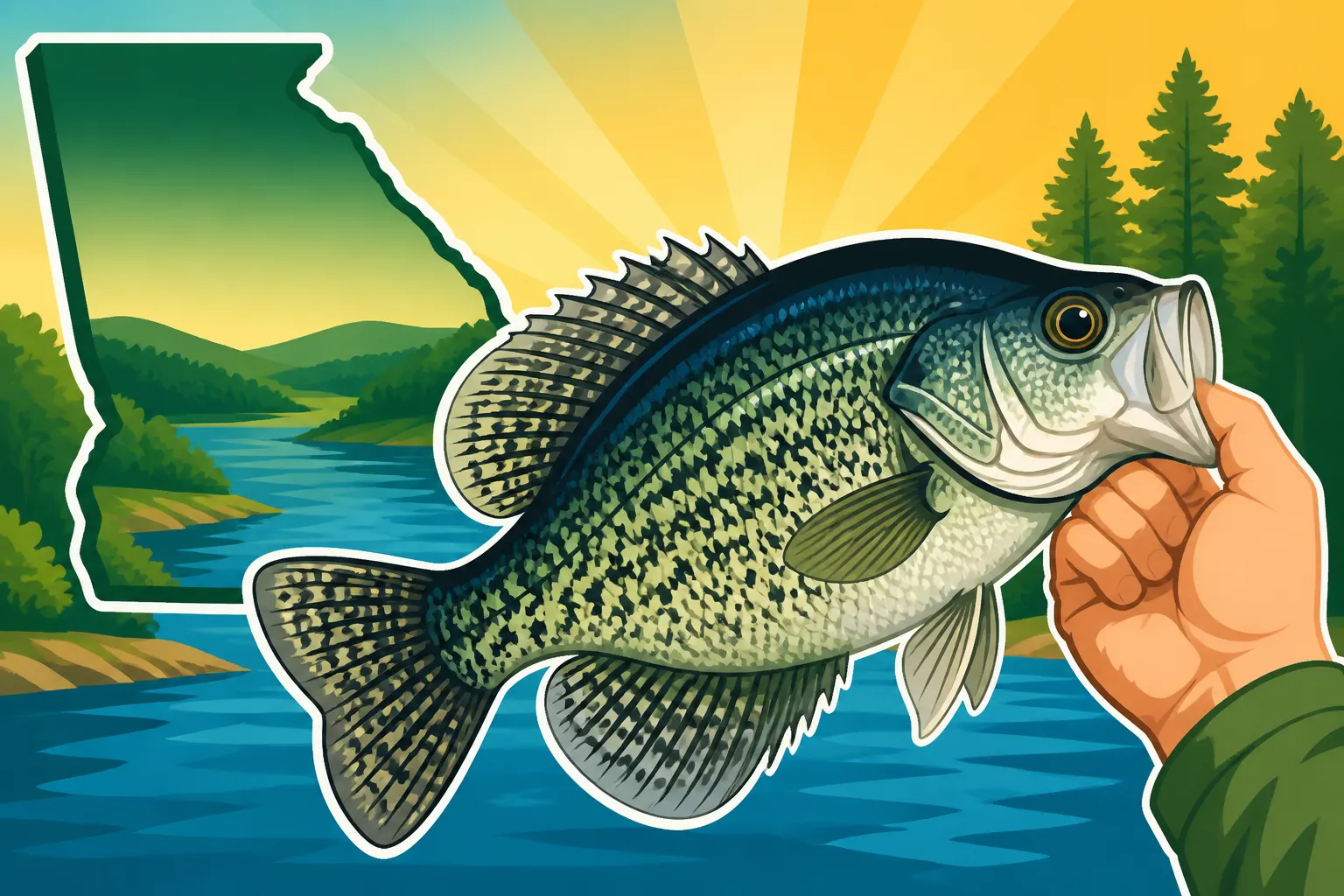
For most crappie anglers, there's a special thrill that comes with hooking into a true "slab" – a crappie so big it barely fits in your hand. While an 8-inch crappie is a fine catch, a trophy is something else entirely. It's the fish that makes you pause, admire its girth, and maybe even take a quick photo before deciding whether to keep it or let it swim another day.
Defining a Georgia Slab
What exactly constitutes a "trophy" black crappie in Georgia? Well, opinions can vary slightly, but generally, when a black crappie tips the scales at 1 pound or more, it's considered a true slab. In terms of length, this usually translates to a fish that's 13 inches or longer. Anything over 14 or 15 inches is truly exceptional and a fish of a lifetime for many anglers. These are the crappie that have survived countless fishing attempts, dodged predators, and eaten their way to the top of the food chain.
Catching a crappie of this caliber is not an everyday occurrence. It requires patience, skill, and often a bit of luck. These larger fish are usually older, wiser, and more wary. They often hold in deeper, more secluded cover, preferring dense brush piles, standing timber, or deep ledges where they feel safe and have access to abundant food. The pursuit of these trophy crappie is a journey in itself, often leading anglers to explore remote coves or invest in advanced electronics to pinpoint hidden structure. It’s the kind of fishing that keeps you coming back, always hoping for that next monster bite. If you're serious about documenting your catches, a high-quality digital scale from Amazon can be an invaluable tool to confirm those trophy weights.
Where to Pursue Bigger Black Crappie
If you're setting your sights on those bigger black crappie, you'll want to focus your efforts on certain types of waters and specific fishing techniques. Reservoirs with a good mix of deep water, submerged timber, and brush piles are prime hunting grounds. Lakes known for robust crappie populations, even if the average fish size is smaller, often hold a few giants. For example, lakes like West Point Lake and Lake Oconee are renowned for producing quality crappie. You might also want to explore some of Georgia's Public Fishing Areas (PFAs), as some are specifically managed for larger panfish.
Targeting these bigger crappie often means using slightly different approaches. While smaller crappie might readily hit tiny jigs or minnows in open water, trophy fish are often found nestled deep within heavy cover. Techniques like How to Jig for Crappie directly into brush piles, or slowly fishing live minnows on a tightline, can be incredibly effective. Consider using slightly heavier line and a more sensitive rod, perhaps one of the specialized crappie rods mentioned in Best Rods for Crappie Fishing in Georgia, to feel those subtle bites and muscle a big fish out of cover. Don't be afraid to experiment with different depths and presentations; the biggest crappie are often hiding just a little deeper or in a spot you might initially overlook. Remember, the goal isn't just to catch crappie, but to catch the biggest crappie, and that often means changing your strategy.
Georgia's Regulations on Black Crappie Size and Creel Limits
Understanding the rules and regulations is just as crucial as knowing where to find the fish. Georgia's Department of Natural Resources (DNR) sets these guidelines to ensure healthy fish populations for everyone to enjoy, both now and in the future. Ignoring them can lead to significant penalties, so it's always best to be informed.
Statewide Daily Limits and Length Minimums
For black crappie in most of Georgia's public waters, there isn't a statewide minimum length limit. This means that generally, any legal-sized crappie you catch can be kept, provided it meets the daily creel limit. The statewide daily creel limit for crappie (both black and white crappie combined) is quite generous, allowing anglers to keep up to 30 fish per person per day. This limit is designed to allow anglers to harvest a good number of fish while preventing overfishing of larger, spawning adults.
However, "no minimum length limit" doesn't mean "keep everything." Responsible anglers often practice selective harvesting, keeping some of the mid-sized fish for dinner and releasing the smaller ones to grow, or releasing the very largest "slab" crappie to pass on their genes. This helps maintain a balanced crappie population. It's always a good idea to consult the latest Georgia Fish Size and Creel Limits regulations directly from the Georgia DNR website or current fishing guide, as rules can occasionally be updated. Knowing these general rules helps ensure you're fishing legally and sustainably.
Local Pond and Reservoir Specific Rules
While the statewide regulations for black crappie are fairly consistent, it's absolutely critical to remember that certain individual bodies of water might have special, localized rules. These exceptions are typically put in place by the Georgia DNR to manage specific fisheries or unique ecological situations. For instance, some Public Fishing Areas (PFAs) or smaller, intensively managed lakes might have different creel limits, or even specific length restrictions, for crappie to achieve particular management goals, such as promoting trophy fish growth or reducing overpopulation.
Before you head out to a new lake, pond, or PFA, make it a habit to check for any special regulations pertaining to that specific body of water. Signs posted at boat ramps and access points often highlight these rules, and the Georgia DNR's official fishing regulations guide will list them in detail. Failing to observe these localized rules, even unknowingly, can lead to citations and fines. For example, some private ponds might have their own rules set by the landowner, which you should always respect. Staying informed helps you avoid potential issues and ensures you're contributing to healthy fisheries rather than inadvertently harming them. A quick search on your phone before you leave the house can save you a lot of headache.
Factors Influencing Black Crappie Size and Growth
The size of black crappie you encounter isn't just random luck; it's a complex interplay of environmental factors, food availability, and even how many fish are living in a given body of water. Understanding these elements can help you identify waters with the potential for larger crappie and even inform your fishing strategies.
Food Availability and Forage Base
Perhaps the most significant factor determining how big a black crappie can get is the abundance and quality of its food supply. Crappie are opportunistic feeders, starting with zooplankton and insect larvae when they're young, and transitioning to a diet primarily composed of small baitfish as they grow larger. In waters with a rich forage base – think healthy populations of threadfin shad, gizzard shad, small minnows, and shiners – crappie have a buffet at their fins. This consistent, high-protein diet allows them to grow faster and reach impressive sizes.
Conversely, in waters where the food supply is scarce or of poor quality, even if the crappie population is relatively small, their growth can be stunted. They might survive, but they won't put on the weight or length that anglers desire. The overall fertility of the water, influenced by nutrient levels, directly impacts the base of the food chain, from microscopic organisms to the baitfish that crappie rely on. A healthy, diverse aquatic ecosystem is crucial for producing plump, sizable crappie. Knowing what fish forage on can also guide your lure selection, as detailed in Best Bait for Black Crappie in Georgia.
Water Quality and Habitat
Beyond just food, the overall health of the water and the available habitat also heavily influence crappie size. Black crappie thrive in clean, well-oxygenated water with plenty of structure for cover and ambush points. They prefer areas with submerged vegetation, brush piles, standing timber, rock piles, and even man-made structures like dock pilings and bridge supports. These features provide shelter from predators, shade from the sun, and ideal locations to ambush unsuspecting baitfish.
Poor water quality, such as low oxygen levels, high turbidity (cloudiness), or pollution, can stress fish, reduce their feeding activity, and ultimately hinder their growth. Extreme water temperature fluctuations can also play a role, making crappie less active and impacting their metabolism. Waters that offer a stable environment with abundant, complex habitat are typically those that produce the largest crappie. For example, lakes with extensive creek channels lined with old timber often hold some of the biggest slabs. Anglers often look for these specific features, sometimes using fish finders, which are available on Amazon, to locate deep structure where big crappie congregate.
Population Dynamics and Angler Pressure
The number of black crappie living in a particular body of water, relative to the available food and habitat, is another critical factor. When a crappie population becomes too dense – a common issue in smaller ponds – the fish compete intensely for food. This competition often results in a large number of stunted, smaller fish, even if the individual fish are healthy. This is why fishery managers sometimes recommend harvesting a certain number of crappie to "thin the herd," allowing the remaining fish to grow larger.
Angler pressure also plays a role. In heavily fished waters, larger, older crappie are often removed from the population more frequently. While this can sometimes allow smaller fish to grow faster by reducing competition, it also means that the chances of catching a truly ancient, giant crappie might decrease in highly accessible spots. Savvy anglers often seek out less pressured areas or fish during off-peak times, like evenings or early mornings, as explored in Do Crappie Bite Better at Night?, to increase their odds of encountering those bigger, warier fish. Understanding these dynamics helps us appreciate the intricate balance of a healthy crappie fishery and encourages responsible angling practices.
Here's a quick look at what you might typically find:
| Feature | Typical Georgia Pond Black Crappie | Typical Georgia Reservoir Black Crappie | Trophy Georgia Black Crappie |
|---|---|---|---|
| Length (inches) | 6-10 | 8-12 | 13+ (often 14-15+) |
| Weight (pounds) | Up to 0.5 | 0.5 – 1.0 | 1.0+ (some reach 2-3 lbs) |
| Abundance | Often high | Moderate to high | Relatively low |
| Growth Factors | Limited food/space, overpopulation | Ample food, diverse habitat, less pressure | Optimal conditions, age, luck |
| Location | Small private ponds, some PFAs | Large public reservoirs, big rivers | Deep structure, unpressured areas |
Ultimately, whether you're targeting a mess of delicious pan-sized crappie or hoping for that one monster slab, Georgia's waters offer fantastic opportunities. Knowing what to expect in terms of size and understanding the factors that influence it will only enhance your time on the water. Don't forget to check out articles like Black Crappie Identification: A Georgia Angler's Guide and Crappie Fishing in Georgia: Black and White Crappie Guide for more tips on finding and catching these popular panfish. And remember, the thrill of the catch is always the biggest reward, no matter the size!
Disclaimer
This article is for general informational purposes only and does not constitute professional advice. Laws, prices and regulations vary by location and change over time. Consult a qualified professional for guidance on your specific situation.