Flathead Catfish vs Channel Catfish: What Sets Them Apart
It’s a tale as old as time for Georgia anglers: you've battled a big, feisty catfish to the boat, and while you're thrilled with the catch, a nagging question remains – exactly what kind of whiskered wonder have you landed? Distinguishing between a Flathead Catfish and a Channel Catfish can sometimes feel like trying to tell two shadows apart in the murky water, but understanding their unique characteristics is crucial for everything from identifying your catch to improving your fishing strategies. This comprehensive guide will break down the subtle yet significant differences, helping you become a more informed and successful catfish angler on Georgia's diverse waterways.
Key Differences in Appearance and Habitat
When you're out on the water, whether it's the Flint River or a quiet corner of Lake Seminole, knowing the visual cues that set flatheads and channels apart is your first step. These two popular species have distinct looks and prefer very different environments, which, once you know what to look for, can make identification a breeze.
Distinctive Physical Traits
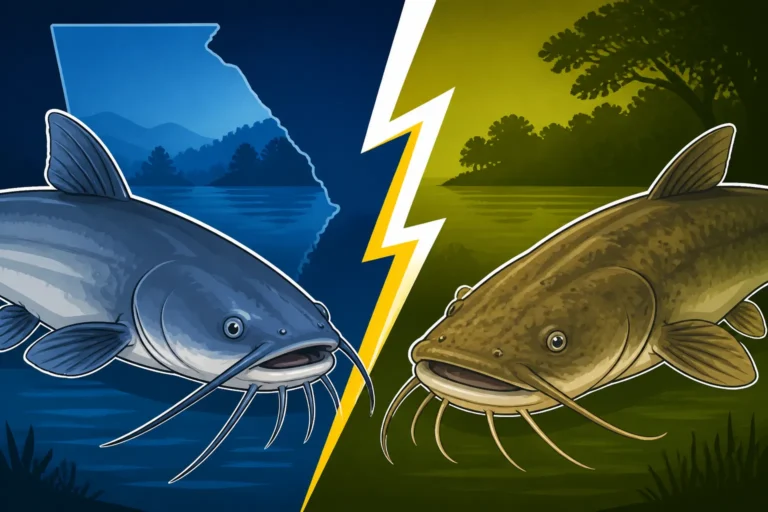
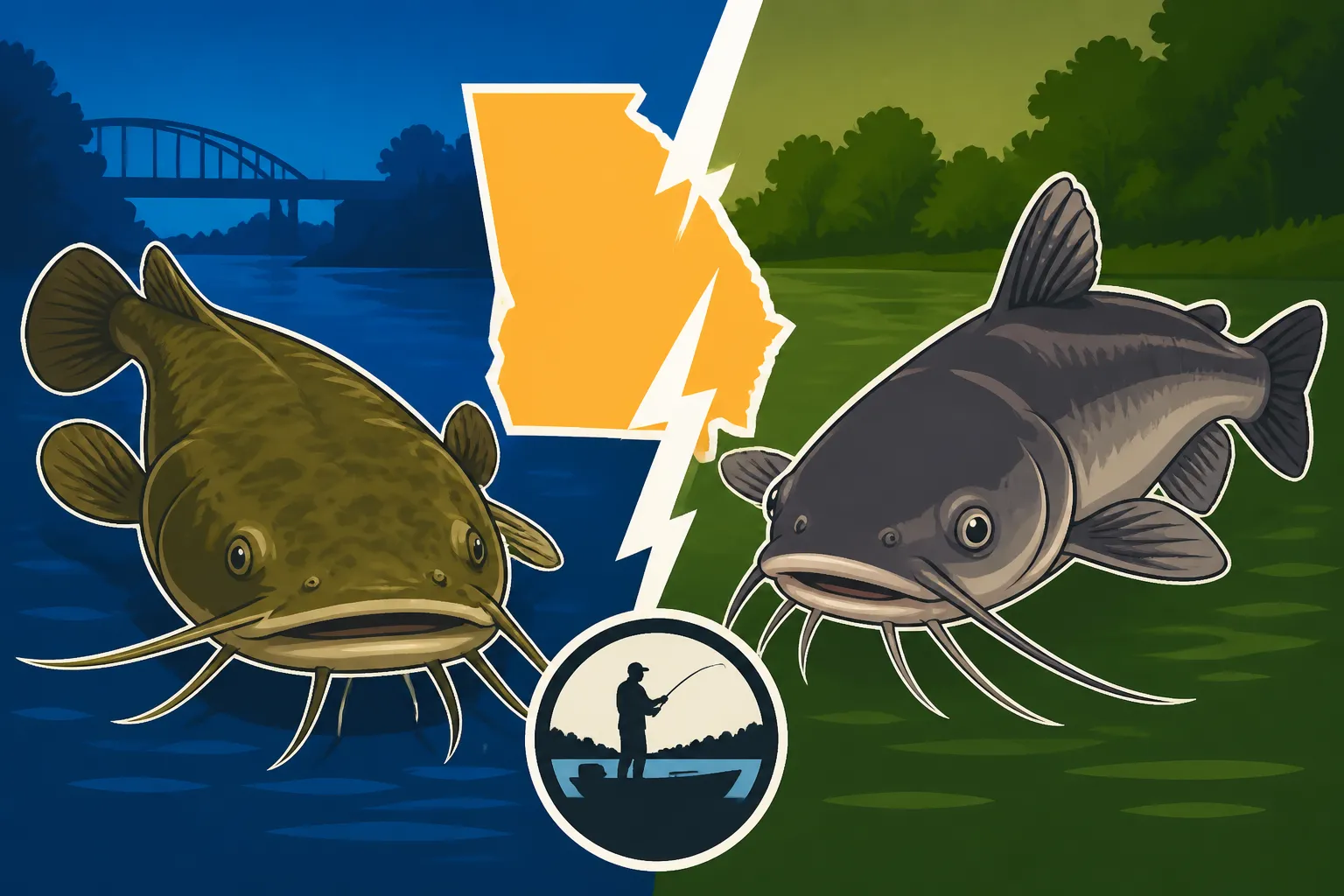
Let's start with what you can see. The most obvious difference lies in their heads and tails. Flathead catfish, true to their name, possess a noticeably broad, flattened head. Their lower jaw protrudes beyond the upper jaw, giving them a rather "bulldog" appearance. Their eyes are relatively small. Perhaps the most telling feature is their tail fin: it's typically square or very slightly notched, almost like a paddle. Coloration can vary, but flatheads usually sport a mottled yellow-brown to dark brown body with darker spots or blotches, often appearing somewhat camouflaged. They rarely have the dark spots that are characteristic of juvenile channel catfish, which is a key differentiator. If you're studying up, you might look at our detailed article on Flathead Catfish Identification and Habits.
Channel catfish, on the other hand, have a more torpedo-shaped body and a distinctly forked tail – this is probably the easiest way to identify them quickly. Their heads are more rounded, and their upper jaw often slightly protrudes over the lower. As juveniles, channel cats are known for their dark spots, though these tend to fade as they age, sometimes disappearing entirely in older, larger specimens. Their coloration ranges from olive-green to blue-grey on the back, fading to white on the belly. Knowing these visual cues means a quick glance at the tail fin can often solve the mystery right there on the spot.
Preferred Habitats in Georgia
Beyond their looks, where you find these catfish can tell you a lot. Flathead catfish are ambush predators that absolutely thrive in rivers and large impoundments with strong current and plenty of structure. Think snags, fallen trees, deep holes, and rocky bottoms where they can hide and wait for prey. They are often found in the main channels of rivers like the Altamaha, Ocmulgee, and Savannah, preferring those hard-to-reach, brush-filled spots. They don't mind a bit of current and will often position themselves downstream of obstructions, letting the current bring food to them. Finding them often means navigating tricky underwater terrain, making your choice of fishing spot critical, as detailed in Best Catfish Fishing Spots in Georgia.
Channel catfish are much more adaptable and widespread. You'll find them in almost every type of freshwater body in Georgia, from small ponds and creeks to large reservoirs and rivers. They are less picky about current and structure, happy to roam open water, suspend in the water column, or hang around points and humps. While they appreciate structure, they don't depend on it in the same way flatheads do. Their versatility makes them a common catch for bank anglers and boaters alike, and they're often the first species that comes to mind when you think of Georgia catfishing. They are comfortable in a wider range of water conditions, making them a more accessible target for many anglers across the state.
Feeding Habits and How They Impact Fishing Techniques
Understanding what these catfish eat is probably the single most important factor in deciding how to catch them. Their diets are remarkably different, and this dictates everything from your bait choice to your preferred fishing technique.
Flathead's Predatory Diet
Flathead catfish are obligate predators, meaning they primarily feed on live fish. This is a crucial distinction. They are not scavengers in the way many other catfish species are; they want their meal to be swimming and kicking. Their diet often includes shad, bream (like bluegill and sunfish), suckers, and other small to medium-sized forage fish. This predatory nature influences their behavior – they hunt, ambush, and consume live prey. This is why when you're targeting flatheads, live bait is almost always king.
Using live bream, robust shiners, or small carp on stout tackle and heavy line is the go-to strategy for serious flathead anglers. You need to present this bait in their preferred ambush spots – deep holes, undercut banks, and heavy cover in rivers. This often means a patient approach, allowing the live bait to attract attention naturally. The setup typically involves a strong circle hook, a heavy sinker to keep the bait near the bottom in current, and a sturdy rod and reel to handle a potentially very large, powerful fish. If you're looking for more tips, checking out Live Bream vs Cut Bait for Flathead Catfish is a great next step.
Channel Catfish's Omnivorous Menu
Channel catfish, by contrast, are opportunistic omnivores. This means they'll eat just about anything they can get their mouths on, and they're far less picky than their flathead cousins. Their diet consists of live fish, dead fish, insects, crustaceans (like crayfish), mollusks, aquatic plants, and even fruits or seeds that fall into the water. This broad palate makes them much easier to entice with a wider variety of baits.
You can successfully target channel catfish with an array of popular baits. Stink baits, chicken livers, cut bait (pieces of shad or other fish), worms, crickets, and even prepared dough balls are all highly effective. This versatility in bait selection makes channel catfish fishing incredibly popular, especially for beginners or those introducing kids to the sport. Their willingness to bite a variety of offerings also means you can often catch them with lighter tackle and simpler setups. Many anglers find success simply bottom fishing with a worm or a piece of cut bait, allowing them to fish multiple lines and cover more water. Delving into Best Bait for Channel Catfish will give you even more ideas for your next outing.
Size, Growth, and Table Quality
While both species offer exciting angling opportunities, they typically differ in their average size potential and even in how they're regarded on the dinner plate. Understanding these differences can help you set expectations and decide what to do with your catch.
Size and Growth Potential
When it comes to size, flathead catfish generally have the potential to grow much larger than channel catfish. While a big channel cat might push into the 20-30 pound range in Georgia, trophy flatheads can easily exceed 50 pounds, with some individuals reaching well over 100 pounds in prime conditions. They are a much more robust, heavy-bodied fish with immense power, especially in river current. Catching a true trophy flathead is a significant angling achievement, often requiring specialized gear and a dedication to seeking out their preferred, often challenging, habitats.
Channel catfish, while smaller on average, still provide fantastic sport. A 5-15 pound channel cat is a common and respectable catch, and they fight hard. Their faster growth rate and higher population densities in many waters mean you can often catch more of them in a single outing. For those seeking consistent action and a good number of fish for the frying pan, channel cats are usually the more reliable target. For more on how big these fish can get in our waters, check out Blue Catfish Size and Growth in Georgia Reservoirs, which offers context for other large catfish species.
Taste and Preparation
The table quality of both species is generally considered excellent, but there are subtle differences often debated among anglers. Many people praise the firm, white, and mild flesh of the channel catfish, especially those caught from clean, clear waters. They are often described as having a delicate flavor, making them incredibly versatile for frying, grilling, or baking. Smaller to medium-sized channels (1-5 pounds) are frequently regarded as the best eating.
Flathead catfish also offer delicious, firm, white meat, but some anglers perceive it to have a slightly stronger or "fishier" flavor, especially from very large or older fish. However, many avid flathead anglers insist that properly cleaned flatheads, particularly those in the 5-20 pound range, are superior in taste and texture due to their predatory diet of live fish. Their meat tends to be very lean and flaky when cooked. Regardless of your preference, both species are highly sought after for their culinary value and make a fine meal after a successful day on the water.
Fishing Strategies and Gear Considerations
Because of their differing habits and sizes, the gear and techniques you'd typically employ for a flathead are quite different from those you'd use for a channel cat. This isn't to say you can't catch one while targeting the other, but being intentional improves your odds significantly.
Targeting Flatheads
If you're dead set on a flathead, you need to go heavy, and you need to go live. We're talking about heavy-action rods, robust baitcasting reels spooled with strong braided or monofilament line, often in the 30-80 pound test range. Circle hooks in sizes from 5/0 to 10/0 are common, paired with heavy lead weights (often 2-8 ounces, depending on current) to keep your bait pinned near the bottom. The emphasis is on durability and strength, as a large flathead can quickly spool lesser gear or break lines in heavy cover. You'll want to focus your efforts around deep holes, significant log jams, or rock piles in strong current, especially during dusk or through the night when flatheads are most active. For sourcing heavy-duty gear, many anglers find a good selection on sites like Amazon.
Targeting Channel Catfish
For channel catfish, your approach can be much more varied. Medium-heavy spinning or baitcasting rods with lines in the 10-25 pound test range are perfectly adequate for most channel cat encounters. Lighter sinkers (1/2 to 2 ounces) and smaller hooks (1/0 to 4/0) are generally sufficient. Since they're less dependent on heavy cover, you can fish a broader range of spots: open flats, channel bends, the edges of weed lines, or even directly under boat docks. Their omnivorous diet means you can experiment with different baits until you find what they're hitting that day. Whether you're fishing from the bank with a simple bottom rig or drifting across a lake, channel cats offer consistent action and are perfect for a relaxed fishing trip. You might consider browsing Amazon for a versatile tackle box setup that accommodates a variety of channel cat baits.
Comparative Summary
To help solidify these distinctions, here’s a quick overview of how these two magnificent Georgia catfish stack up:
| Feature | Flathead Catfish | Channel Catfish |
|---|---|---|
| Head Shape | Broad, flattened; lower jaw protrudes | More rounded; upper jaw often protrudes |
| Tail Fin | Square or slightly notched, not deeply forked | Distinctly forked |
| Color/Markings | Mottled yellow-brown to dark brown; no spots | Olive-green to blue-grey; juveniles often spotted |
| Primary Diet | Live fish (predator) | Omnivorous (live/dead fish, insects, plants) |
| Preferred Habitat | Deep, structured areas in rivers with current | Wide range: rivers, lakes, ponds, varying current |
| Typical Size | Can grow very large (50+ lbs common) | Generally smaller (1-20 lbs common) |
| Best Baits | Live bream, shad, suckers | Cut bait, chicken liver, stink bait, worms |
| Recommended Gear | Heavy-action rod, strong line (30-80 lb), large circle hooks | Medium-heavy rod, moderate line (10-25 lb), smaller hooks |
Hopefully, with this information, you'll feel much more confident the next time you reel in a catfish from Georgia's bountiful waters. Knowing whether you've got a flathead or a channel will not only satisfy your curiosity but also empower you to refine your angling techniques for even greater success. Remember, part of the joy of Georgia Fishing Regulations Explained and exploring our lakes and rivers is learning about the incredible fish species that call them home. Happy fishing, and may your lines be tight! You can learn more about specific regulations like Georgia Fish Size and Creel Limits to ensure you're always fishing responsibly.
Disclaimer
This article is for general informational purposes only and does not constitute professional advice. Laws, prices and regulations vary by location and change over time. Consult a qualified professional for guidance on your specific situation.