Blue Catfish Identification and Size
You've probably been there: reeling in a monster catfish, heart pounding, only to wonder, "Is this a blue? A channel? Or maybe even a flathead?" It's a common dilemma on Georgia's waters, and correctly identifying your catch isn't just about bragging rights; it's essential for understanding regulations, knowing how to properly target these incredible fish, and appreciating the unique species swimming beneath the surface. This guide will walk you through the precise characteristics that define a blue catfish, helping you confidently identify these powerful bottom dwellers and understand their impressive size potential in our beautiful state.
Why Blue Catfish Identification Matters
Mistaking a blue catfish for a channel cat or a flathead might seem like a small thing, but it can actually impact your fishing experience quite a bit. From understanding their preferred diets to adhering to specific regulations that might differ slightly by species, knowing exactly what you've got on the end of your line is super helpful. Plus, if you're chasing a new personal best, you'll want to be sure you're targeting the right species!
Key Distinctions from Channel and Flathead Catfish
Let's be real, especially for new anglers, catfish can look pretty similar at first glance. They all have those characteristic whiskers (barbels), smooth skin, and often a similar dark, mottled coloration. However, once you learn what to look for, the differences between a blue, channel, and flathead catfish become quite clear. This isn't just academic; it influences how you approach your fishing. For example, flatheads are ambush predators that prefer live bait, while channel and blue cats are more opportunistic scavengers. Knowing your target helps you choose the right approach. If you're looking for more general information, our Catfish Species Compared: Channel vs Blue vs Flathead guide provides a broader overview.
| Feature | Blue Catfish | Channel Catfish | Flathead Catfish |
|---|---|---|---|
| Tail Fin Shape | Deeply forked, often with pointed lobes | Deeply forked, rounded lobes | Square or slightly notched, not deeply forked |
| Anal Fin | Long, straight margin, 30-35 rays | Curved, rounded margin, 24-29 rays | Shorter, rounded margin, 14-17 rays |
| Upper Jaw | Extends slightly beyond lower jaw | Upper jaw slightly longer | Lower jaw extends beyond upper jaw ("underbite") |
| Head Shape | Broad, flat between eyes | Moderately broad, more rounded | Very broad and flat |
| Body Shape | Sleek, often silvery-blue to slate gray | Slender, olive-brown to slate gray, often spotted | Stocky, mottled brown/yellow, often with dark spots |
| Coloration (Adult) | Silvery-blue to dark slate gray, no spots | Olive-brown to slate gray, often with dark spots | Mottled brown/yellow, often with darker blotches |
Visual Cues for Blue Catfish
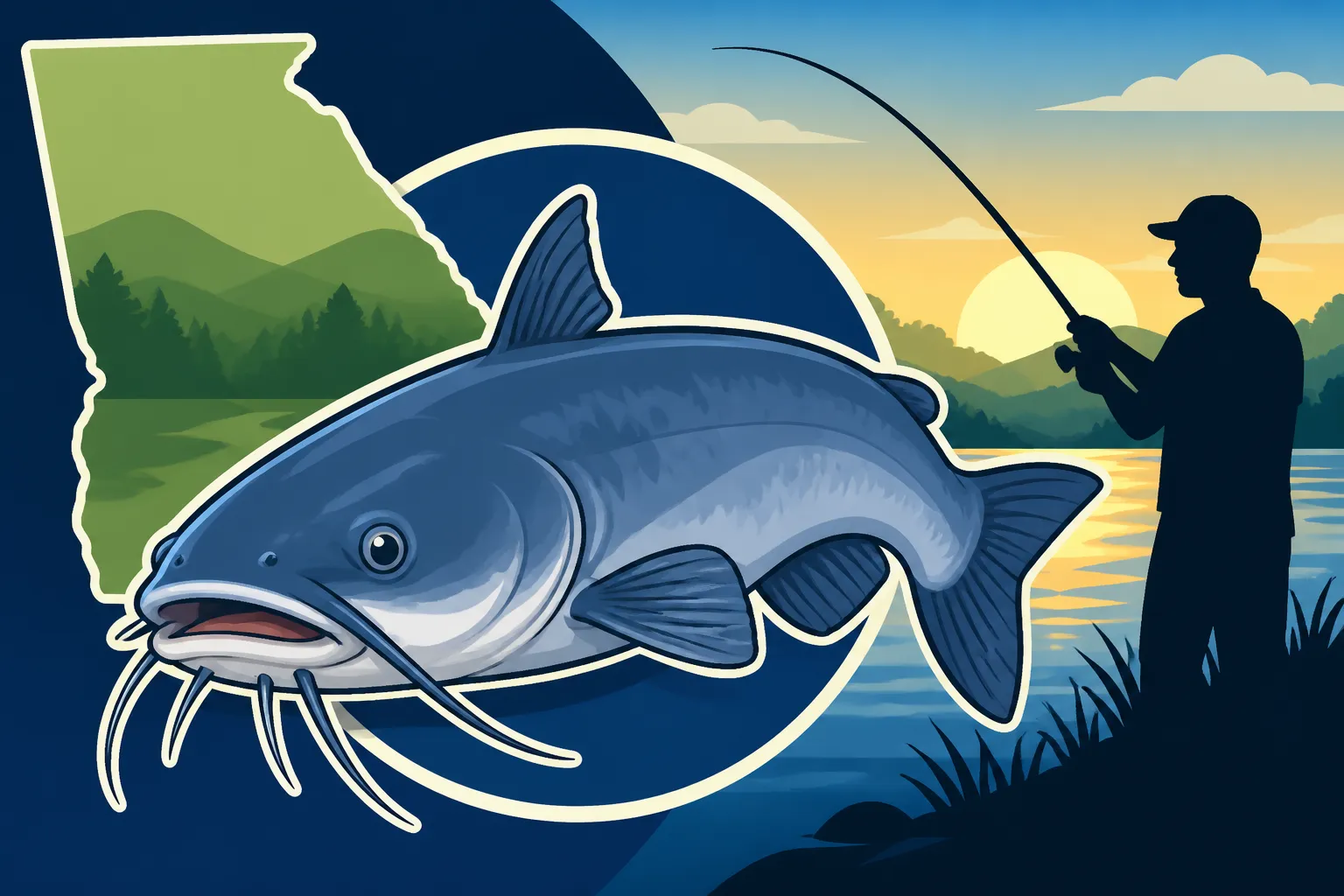
When you pull a fish out of the water, the first thing you want to check for a blue catfish is that distinctive, deeply forked tail. It's almost like a "V" cut into the tail, and the two lobes are often quite pointed. This is a dead giveaway that you're likely holding a blue. Next, take a look at the anal fin—that's the fin on the underside of the fish, just before the tail. For a blue cat, this fin is usually quite long with a straight leading edge, and if you were to count the rays (the spines within the fin), you'd find a high number, typically between 30 and 35. You can often count them right through the fin itself if you hold it up to the light.
Their color, as their name suggests, tends to be a silvery-blue or dark slate gray along the back, fading to white on the belly. Unlike channel catfish, adult blue cats usually don't have any spots. Their head is also quite broad and flat between the eyes, and their upper jaw will typically extend just slightly beyond the lower jaw, which is a subtle but helpful clue. These visual markers are key when you're trying to distinguish them from other catfish species. You might find a good ruler for measuring and examining fish on Amazon, which can be super handy for close inspection.
Unpacking the Blue Catfish Profile
Blue catfish are truly magnificent creatures, and understanding their typical size and the incredible potential they have for growth in Georgia's waters makes catching them even more exciting. These fish aren't just big; they're built for power, making them a formidable opponent on the line. Learning about their characteristics beyond just identification helps you appreciate the species you're targeting.
Average Size and Growth Rates in Georgia Waters
In Georgia, you can expect to catch blue catfish of various sizes, but many anglers will encounter them in the 5 to 20-pound range, especially in the larger reservoirs and rivers. These are healthy, robust fish that put up a fantastic fight. However, blues are known for their rapid growth and sheer size potential. Factors like the abundance of food, water quality, and the size of the body of water they inhabit all play a role in how large they grow. Lakes with ample gizzard shad, threadfin shad, and other forage fish tend to produce bigger, fatter blue cats.
It's not uncommon to hear tales of blue catfish pushing well over 50 pounds, particularly in some of Georgia's prime catfish fisheries. While your average catch might be smaller, that potential for a true giant is always there, which is part of the allure of targeting this species. If you're curious about specific locations, our Where to Catch Trophy Blue Catfish in Georgia guide offers some great starting points.
The Potential for Trophy Blue Catfish
Here in Georgia, blue catfish can reach truly monumental proportions. We're talking fish that will test your tackle, your patience, and your physical endurance! The state record blue catfish weighed in at an astounding number, showcasing just how massive these fish can get in our waters. What allows them to grow so large? A combination of factors:
- Longevity: Blue catfish can live for a good number of years, allowing them ample time to pack on the pounds.
- Diet: They are voracious eaters, consuming a wide variety of prey including shad, herring, bream, and even smaller catfish. This rich, varied diet provides the calories needed for immense growth.
- Habitat: Large, deep river systems and reservoirs with vast expanses of open water and plenty of current provide the ideal environment for trophy blues to thrive and find abundant food.
Anglers specifically targeting trophy blue catfish often employ heavy-duty gear, stout rods, and reels capable of handling powerful runs. Landing a true trophy blue is an experience you won't soon forget, and it takes skill, patience, and often a little bit of luck. Make sure your tackle box is equipped for battle; you can find sturdy fishing line and heavy-duty hooks on Amazon to ensure you're ready for whatever bites. For more on what to expect, check out Blue Catfish Size and Growth in Georgia Reservoirs.
Habitat and Behavior Clues
Knowing where blue catfish prefer to hang out and how they typically behave can be a huge asset in both identifying them before you even cast, and in understanding why they bite (or don't bite!) when they do. They're not just found anywhere; they have distinct preferences that set them apart.
Preferred Habitats in Georgia Rivers and Reservoirs
Blue catfish are primarily found in large rivers and reservoirs, especially in the Piedmont and Coastal Plain regions of Georgia. They thrive in moving water and often congregate in deep channels, river bends, and near submerged structures like old bridge pilings, log jams, and ledges where currents bring food to them. On reservoirs like Lake Eufaula (Walter F. George Reservoir) or the Savannah River system, you'll often find them lurking in the main river channel, especially during warmer months. They like areas with a good current and deep water, often migrating up and down the channels based on water temperature and food availability.
Look for them around breaks in current, deeper holes, or anywhere baitfish might be schooling. They're quite adaptable but truly shine in these big, open water environments. If you're exploring Best Catfish Fishing Spots in Georgia, you'll notice many of these spots share similar deep, current-rich characteristics. Having a good quality fish finder, available on Amazon, can be incredibly helpful for locating these preferred deep-water haunts.
Behavioral Differences that Aid Identification
Beyond their physical appearance, understanding blue catfish behavior can further help with identification. When hooked, blue catfish are known for their powerful, stubborn fights. They'll often make long, strong runs, trying to get back to the deep water or structure they came from. Unlike the head-shaking and thrashing of a flathead or the more erratic fight of a channel cat, a big blue often feels like you've hooked a locomotive, pulling steadily and powerfully. They are not typically shy about taking a variety of natural baits, from cut bait like shad or herring to chicken liver or even shrimp.
They are also more prone to schooling than flathead catfish, often found in groups, especially smaller to mid-sized fish. This means if you catch one, there's a good chance more are in the vicinity. This schooling behavior is less common with solitary flatheads, and channel cats tend to be more spread out. Observing these behavioral patterns, combined with the visual cues, will make you a pro at identifying blue catfish on Georgia's diverse waterways. If you're struggling to land these strong fighters, you might want to consider some of the Best Rods for Catfish Fishing on Georgia Rivers discussed in another one of our posts.
Disclaimer
This article is for general informational purposes only and does not constitute professional advice. Laws, prices and regulations vary by location and change over time. Consult a qualified professional for guidance on your specific situation.