Where to Catch White Crappie in Rivers and Reservoirs
Finding white crappie in Georgia's vast and varied waters can sometimes feel like searching for a needle in a haystack. Many anglers get frustrated, spending hours on the water without a nibble, simply because they aren't looking in the right places or understanding the nuances of where these speckled beauties prefer to hang out. This guide is here to cut through that frustration, offering a comprehensive look at exactly where to pinpoint white crappie in Georgia's rivers and reservoirs, helping you make every fishing trip more successful.
Understanding White Crappie Habits in Georgia
White crappie are truly fascinating fish, and knowing their habits is the first step to consistently finding them. Unlike some other species that might roam vast open waters, crappie are structure-oriented, meaning they love to be near something, whether it's a sunken tree, a bridge piling, or a deep creek channel. Their behavior can shift dramatically based on the type of water they inhabit, the time of year, and even the time of day.
Preferred Habitats: Rivers vs. Reservoirs
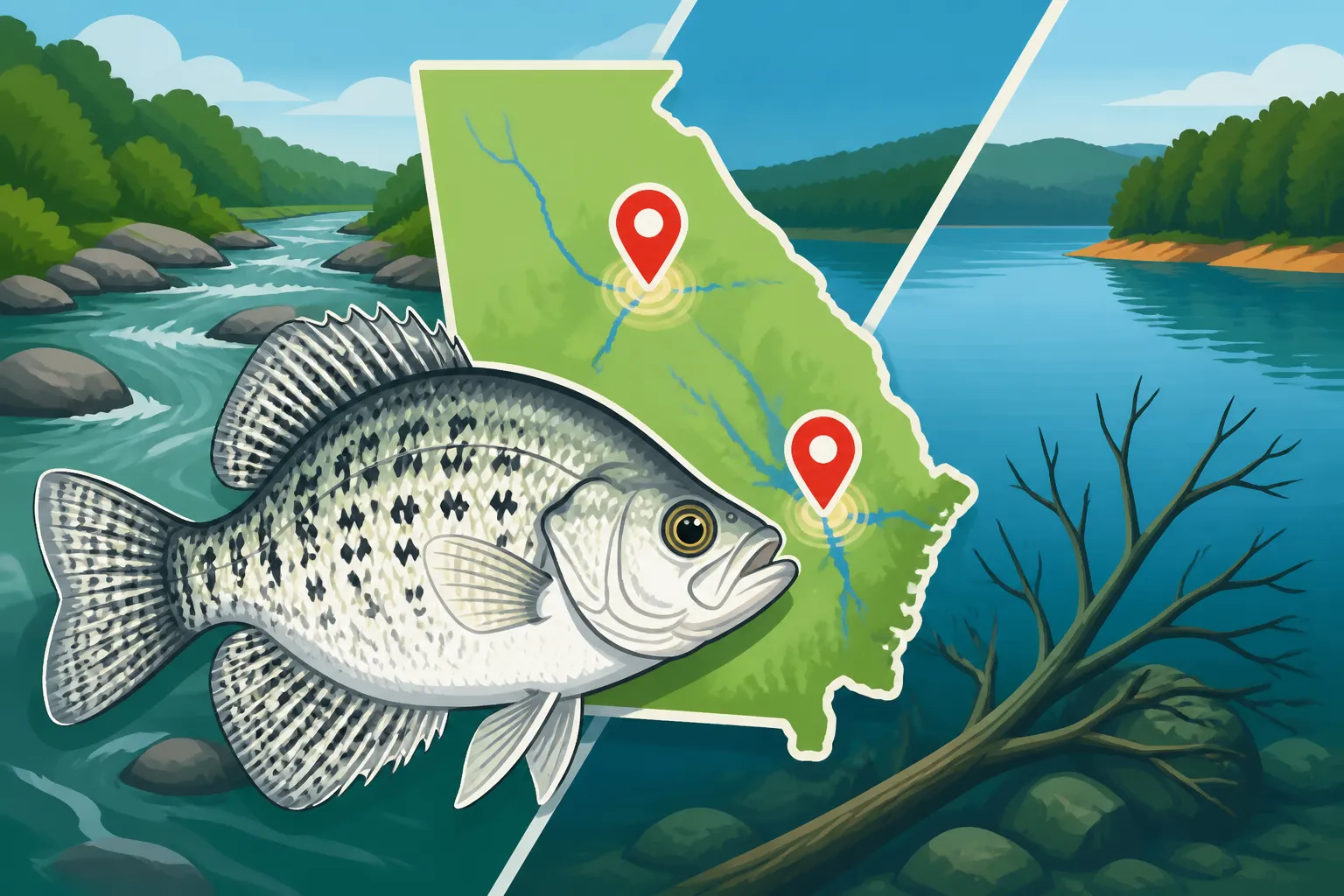
It's easy to assume all white crappie act the same, but the truth is, a crappie living in a slow-moving river often has a different routine than one in a large, impounded reservoir. In rivers, white crappie tend to gravitate towards slower, deeper pools, especially those with current breaks like log jams, submerged stumps, or fallen trees along the banks. They seek refuge from the main current, conserving energy while waiting for an easy meal to float by. You'll often find them tucked into oxbow lakes, sloughs, and backwater areas that connect to the main river but offer calmer, more stable conditions.
Reservoir crappie, on the other hand, have a much wider playground, but their preferences are still tied to structure. In these larger bodies of water, they'll congregate around brush piles, standing timber, submerged roadbeds, bridge pilings, and deep creek channels. During cooler months, they often retreat to deeper, main lake areas, suspending over creek beds or adjacent to major drop-offs. As the water warms in spring, they move into shallower coves and flats to spawn, seeking woody cover or vegetation, before moving back out to deeper, yet still structure-rich, areas for the summer and fall. Understanding these distinct habitat preferences is key to honing your search.
Key Environmental Factors
Beyond just the type of water, several environmental factors play a huge role in where white crappie decide to call home. Water temperature is probably the most critical. Crappie are cold-blooded, so their metabolism and activity levels are directly tied to the water temperature. In colder water, they are sluggish and tend to hold tighter to cover in deeper areas. As the water warms, especially into the 50s and 60s Fahrenheit, they become much more active and move shallower, signaling the beginning of their most active feeding and spawning periods.
Water clarity also influences their location. White crappie generally prefer water that's slightly stained or murky, offering them ambush cover and protection from predators. In very clear water, they might go deeper or relate to heavier, denser cover to feel secure. Current, particularly in rivers, dictates where they position themselves. Too much current and they'll expend too much energy; too little, and food might not be easily accessible. They'll find that "sweet spot" where the current delivers food without making them work too hard. Barometric pressure changes, often associated with weather fronts, can also make them more active or send them into a temporary funk, pushing them deeper or tighter into cover.
Top Georgia Reservoirs for White Crappie
Georgia is blessed with an abundance of fantastic reservoirs, many of which host thriving populations of white crappie. These lakes offer diverse structures and forage bases, making them prime destinations for crappie anglers. Knowing which lakes excel and what to look for in each can save you a lot of time and lead to a cooler full of fish.
Lake Sinclair and Lake Oconee
These two sister lakes, connected by the Oconee River, are renowned crappie fisheries in Georgia. Lake Sinclair, in particular, is a favorite among crappie anglers, especially during the cooler months. Its proximity to a power plant means certain areas stay warmer than others, creating prime crappie habitat even when other lakes are slowing down. Look for white crappie around the many docks, bridge pilings, and submerged timber, especially in the larger creeks and coves. The lake's abundant brush piles and standing timber in the deeper creek channels are also white crappie magnets. Many anglers explore the deeper pockets and flats on Lake Sinclair for consistent action, often finding success with Tightlining Techniques for Crappie or casting small jigs.
Lake Oconee also offers excellent white crappie opportunities, often relating to the standing timber and numerous bridge structures, like those spanning the Apalachee and Oconee rivers. The lake features extensive timber fields in its upper reaches, which are fantastic for crappie, particularly when the water cools. During the spring spawn, crappie move into shallower coves and around blowdowns. Both lakes have healthy populations of threadfin and gizzard shad, providing a rich food source that keeps the crappie growing big and healthy. For those looking to upgrade their sonar or specialized crappie rods for these lakes, a quick browse on Amazon can often yield great deals and a wider selection.
Clarks Hill Lake (Lake Strom Thurmond) and West Point Lake
Clarks Hill Lake, also known as Lake Strom Thurmond, on the Georgia-South Carolina border, is another powerhouse crappie destination. This massive reservoir boasts thousands of acres of standing timber, particularly in its upper end and major creek arms. White crappie here are often found relating to these submerged trees, suspending at various depths depending on the season and water temperature. The numerous creek channels, particularly those with defined edges and nearby structure, are also hotspots. Anglers often find success focusing on the vast timber stands within the Little River arm or in the larger coves off the main lake. During the colder months, fish the deeper ends of these creek channels where crappie school up tight.
West Point Lake, located on the Chattahoochee River, is another productive crappie lake, particularly known for its abundance of brush piles and standing timber. The lake's fluctuating water levels can influence crappie behavior, but generally, they'll be found relating to submerged cover. Look for them in the major creek arms like Yellowjacket, Wehadkee, and Whitewater Creek. The numerous bridge crossings and rip-rap banks can also hold crappie, especially during periods of stable weather. Both Clarks Hill and West Point offer excellent opportunities for boat anglers equipped with good electronics to locate submerged brush and timber, often deploying multiple rods in a "spider rigging" fashion to cover different depths. For those needing a new Best Fish Finder for Georgia Reservoir Fishing, Amazon often has a broad selection.
Other Notable Reservoirs
While Sinclair, Oconee, Clarks Hill, and West Point are often highlighted, Georgia has other reservoirs that offer fantastic white crappie fishing as well. Lake Blackshear, located on the Flint River in southwest Georgia, is a shallow, cypress-filled lake that provides ample cover for crappie. The cypress trees, brush piles, and shallow stump fields are prime crappie territory, especially during the spring spawn. Anglers often target the edges of the river channel and the many sloughs off the main lake.
Walter F. George Reservoir, also known as Lake Eufaula, straddling the Georgia-Alabama border, is another excellent option. This lake is known for its abundant standing timber and deep creek channels. White crappie here will relate heavily to these timber areas, as well as submerged brush piles and ledges. The larger coves and the main river channel bends are key areas to explore, especially with vertical jigging techniques. Don't forget to check out the Best Crappie Lakes in Georgia for even more options and detailed insights. Each of these lakes offers its unique challenges and rewards, but a consistent theme is the crappie's reliance on structure and cover.
| Reservoir Name | Key Crappie Features | Prime Time | Common Techniques |
|---|---|---|---|
| Lake Sinclair | Docks, bridge pilings, submerged timber, power plant | Fall, Winter, Spring | Jigging, spider rigging, minnows, small crankbaits |
| Lake Oconee | Standing timber, bridge structures, creek channels | Fall, Spring | Jigging, minnows, trolling, tightlining |
| Clarks Hill (Thurmond) | Extensive standing timber, creek channels, brush piles | Fall, Winter, Spring | Spider rigging, vertical jigging, minnows |
| West Point Lake | Brush piles, standing timber, creek arms | Spring, Fall | Jigging, minnows, casting small plastics |
| Lake Blackshear | Cypress trees, stump fields, river channel edges | Spring | Shallow jigging, bobber fishing, minnows |
| Walter F. George (Eufaula) | Standing timber, deep creek channels, ledges | All year, deep in winter, shallow in spring | Vertical jigging, minnows, slow trolling |
Best Rivers for White Crappie Fishing
While reservoirs often get the most attention, Georgia's rivers also hold fantastic opportunities for catching white crappie. River crappie can be a bit more elusive due to current and ever-changing conditions, but understanding their riverine habits can lead to some truly memorable fishing days.
Savannah River and Altamaha River
The Savannah River, particularly its lower reaches, is a gem for river crappie fishing. White crappie in the Savannah tend to congregate in the numerous oxbow lakes, sloughs, and backwater areas that are connected to the main river but offer reduced current. These calmer waters provide ideal conditions for crappie to feed and seek cover among fallen trees, submerged logs, and dense aquatic vegetation. As the river levels fluctuate, crappie will move in and out of these side channels, often becoming more active in the backwaters when the main river is high and muddy. Anglers should focus on fishing around any structure that breaks the current, such as large log jams or eddy lines.
Further south, the Altamaha River, often called "Georgia's Amazon," is a vast blackwater river system that is incredibly rich in biodiversity, including robust populations of white crappie. The Altamaha's expansive system of sloughs, swamps, and side channels, particularly those with standing timber and cypress knees, are prime crappie habitat. These areas provide both food and shelter. During periods of lower water, crappie might be concentrated in the deeper pools and oxbows within these systems. Look for them holding tight to cover, especially where there's a slight current break. Vertical jigging or pitching small jigs and minnows into dense cover are often effective tactics in these tannin-stained waters. Many experienced river anglers often consult their Georgia Fishing Regulations Explained before heading out on these dynamic waterways.
Ocmulgee and Flint Rivers
The Ocmulgee River, winding through central Georgia, also offers solid white crappie fishing, especially in its deeper sections and areas with significant structure. Crappie in the Ocmulgee will often be found in the slower pools, particularly those downstream from shoals or bends that create eddies. Log jams, brush piles that have accumulated along the banks, and undercut banks provide excellent ambush points. The river's many tributaries and smaller creeks that feed into it can also be hotspots, especially during spring when crappie move upstream to spawn in shallower, calmer waters. Targeting the mouths of these creeks or any substantial wood cover within the main river channel can yield good results.
The Flint River, known for its unique shoal bass population, also holds a healthy number of white crappie, particularly in its middle and lower sections. While not as widely known for crappie as some other rivers, the Flint's diverse habitats, including deep holes, current breaks, and extensive submerged timber, create pockets where crappie thrive. Anglers should look for crappie in the slower moving sections of the river, especially around large downed trees or along the edges of the main current where there's a noticeable depth change. The oxbows and backwater areas formed by historical river meanders are particularly productive. Similar to other river systems, Best Bait and Lures for Shoal Bass Fishing might entice a crappie or two, but small jigs and minnows are usually the ticket for crappie specific pursuits. Finding the right gear for river fishing, such as a sturdy kayak or a reliable waterproof tackle box, can often be done with ease on Amazon.
Effective Strategies for Locating White Crappie
Finding white crappie isn't just about knowing which body of water; it's about knowing how to find them within that water. These fish can be tricky, but with the right approach and a bit of persistence, you can significantly increase your chances of success.
Reading the Water and Using Electronics
One of the most crucial skills for any crappie angler is learning to "read the water." This means observing visible clues like current breaks, changes in water color, presence of baitfish, or even the subtle disturbances on the surface that might indicate structure below. In rivers, look for eddies behind snags, slack water pockets, or any areas where the current slows significantly. In reservoirs, pay attention to points, coves with deeper water access, and areas where creek channels intersect with the main lake. You'll often find crappie holding on the "edges" of these features.
When it comes to modern crappie fishing, good electronics are almost indispensable. A quality fish finder, especially one with side-imaging or down-imaging capabilities, can be a game-changer. These tools allow you to scan vast areas quickly, pinpointing submerged brush piles, standing timber, old roadbeds, and even schools of crappie or baitfish that you'd never see from the surface. Pay close attention to your depth finder for sudden drops or humps, and look for "arches" or "streaks" on the screen that indicate fish. Many anglers mark promising spots with GPS coordinates to return to them later. For anyone looking to upgrade their fish finder, browsing options on Amazon can give you a great overview of the latest technology and features. Don't underestimate the power of knowing what lies beneath the surface.
Targeting Specific Structure and Cover
As mentioned, white crappie are notorious structure lovers. They feel safe and find ample feeding opportunities around various types of cover, both natural and artificial. Natural cover includes things like fallen trees (also known as "blowdowns"), submerged stumps, standing timber, rock piles, and natural brush. In rivers, these often form current breaks. In lakes, they can be found anywhere from shallow coves to deep creek channels. Pay particular attention to the depth at which the crappie are holding on this natural cover, as this will change with the seasons and water temperature.
Artificial structures are also huge crappie magnets. These can range from homemade brush piles sunk by anglers (often marked with secret GPS coordinates!) to bridge pilings, dock posts, and even old tires or concrete slabs. Bridge pilings are especially good, as they often extend from shallow water down to significant depths, providing crappie with a vertical highway to move up and down based on conditions. The shade provided by docks and bridges can also be irresistible to crappie on bright days. Always approach these spots quietly and systematically, fan-casting or vertically jigging around the entire structure until you find the fish. Remember, crappie often school tightly, so once you find one, there are likely many more! For more on specific techniques, check out How to Jig for Crappie.
The Best Times and Techniques for White Crappie
Knowing where to find white crappie is only half the battle; knowing when and how to fish for them completes the picture. White crappie can be caught year-round in Georgia, but their activity levels and preferred depths will change significantly with the seasons.
Seasonal Movements and Depths
Spring (Pre-spawn and Spawn): This is arguably the most popular time for crappie fishing. As water temperatures climb into the low 50s, crappie begin their pre-spawn movements, pushing into creek channels and staging areas near shallow spawning flats. They'll often suspend over brush piles or along channel edges in 10-20 feet of water. Once water temperatures hit the mid-to-high 60s, the spawn is on! Crappie will move into very shallow water (1-5 feet) in coves, around visible brush, cypress knees, lily pads, or other submerged vegetation. This is when they are most accessible, and anglers can often catch them jigging or using minnows under a float.
Summer: After the spawn, crappie typically retreat to deeper, cooler water. They'll often suspend over deep creek channels, main lake humps, or around deep timber in 15-30 feet of water, or even deeper in some reservoirs. They'll still relate to structure but at greater depths. Night fishing under lights can be incredibly effective during the summer, drawing in baitfish and subsequently crappie to the illuminated areas.
Fall: As water temperatures begin to drop, crappie become more active and start moving back into shallower creek arms and coves, often following baitfish that are also moving shallower. They'll feed aggressively in preparation for winter. Look for them around brush piles, submerged timber, and deep points in 8-20 feet of water.
Winter: In the coldest months, crappie typically school up tightly in deep water, often suspending over main lake creek channels, deep brush piles, or along steep bluff walls. They can be found anywhere from 20 to 50 feet deep, sometimes even deeper. While their metabolism slows, they will still bite, but presentations need to be slower and more subtle. Vertical jigging directly over schools of crappie is often the most effective method during this time. For more on year-round patterns, consult Best Time of Year to Catch Crappie in Georgia.
Best Baits, Lures, and Techniques
The beauty of crappie fishing is the simplicity of the tackle, yet the variety of techniques. The most common baits are live minnows. Rigged under a bobber in shallow water, or on a tightline rig in deeper water, minnows are hard for a crappie to resist. Small jigs, typically 1/32 to 1/8 ounce, are also incredibly effective. Popular colors include chartreuse, white, black/chartreuse, and various shad patterns. Soft plastic bodies for these jigs can be tubes, grubs, or small paddletail swimbaits.
Techniques vary by season and depth:
- Jigging: This is a versatile technique. In shallow water, cast small jigs to visible cover and slowly retrieve or twitch them. In deeper water, vertical jigging (dropping a jig straight down to the fish you see on your electronics) is highly effective.
- Spider Rigging/Trolling: For covering large areas in reservoirs, especially when crappie are scattered, spider rigging (using multiple rods out of the front of the boat, often with jigs or minnows at different depths) or slow trolling with small crankbaits or jigs can be very productive.
- Bobber Fishing: Ideal for shallow water and beginners. A slip bobber allows you to adjust your depth easily. Cast to cover and let your minnow or jig suspend at the desired depth.
- Dock Shooting: A specialized technique for getting jigs under docks. It involves bending the rod and "shooting" the jig like an arrow to reach tight spots where crappie often hide.
- Tightlining: Simply dropping a jig or minnow straight down to the desired depth, often used when crappie are schooled up in deep water. This technique requires a sensitive rod to detect subtle bites. For the right gear, consider looking for specific "crappie rods" on Amazon designed for sensitivity and light lines.
- Crankbaits: Small, shallow-diving crankbaits can be deadly when crappie are actively feeding on baitfish, especially during the pre-spawn and fall.
White crappie offer fantastic fishing opportunities across Georgia's rivers and reservoirs, and by understanding their habitat preferences, seasonal movements, and effective techniques, you'll be well on your way to a successful day on the water.
Disclaimer
This article is for general informational purposes only and does not constitute professional advice. Laws, prices and regulations vary by location and change over time. Consult a qualified professional for guidance on your specific situation.