How to Find Crappie Around Brush Piles
There’s nothing quite as frustrating as knowing crappie are somewhere in a lake but feeling like you’re just casting blindly. We’ve all been there, especially when those wily panfish decide to vanish into their underwater hideouts. If you’ve ever wondered how to consistently pinpoint and pull crappie from brush piles – those magical fish magnets hidden beneath the surface – you’ve come to the right place. This guide is all about demystifying crappie behavior around brush and equipping you with the knowledge and tactics to find them effectively in Georgia's diverse waters.
Understanding Why Crappie Hold to Brush Piles
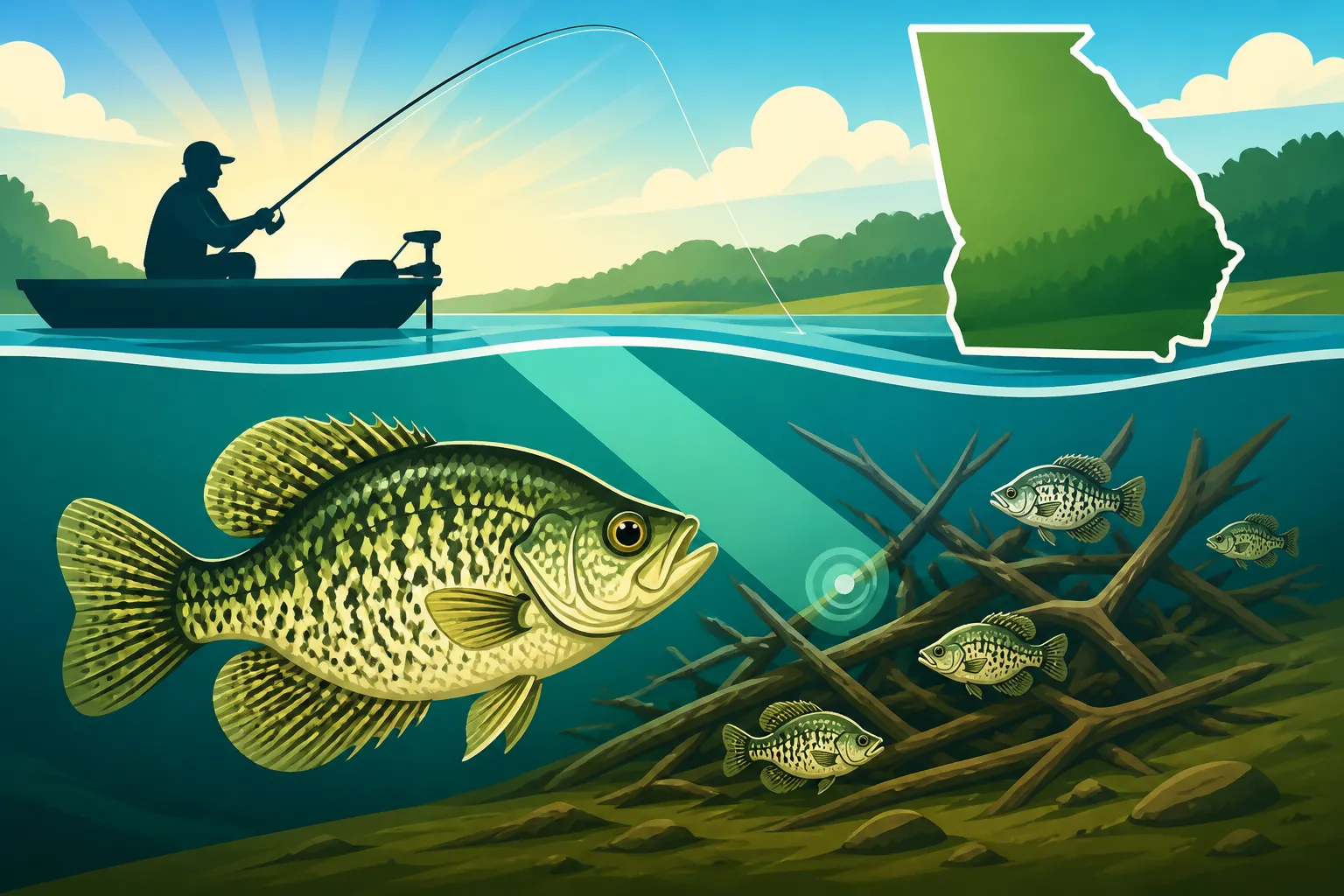
Crappie aren't just casually hanging out around brush piles; they're there for very specific, survival-driven reasons. These submerged structures are like five-star resorts for crappie, offering everything they need to thrive. Understanding this fundamental behavior is the first step to becoming a brush pile pro.
Shelter from Predators and the Elements
Think of a brush pile as a fortress for crappie. In many Georgia lakes, especially the larger, clearer reservoirs like Lake Lanier or Lake Oconee, the water can be quite open and expose smaller fish to bigger predators. Largemouth bass, spotted bass, and even striped bass are constantly on the prowl, and a dense brush pile offers an immediate escape route and hiding spot. When a hungry striper zooms by, those crappie can dart deep into the branches, making themselves nearly impossible to catch for the larger fish.
Beyond predators, brush piles also offer protection from environmental factors. On bright, sunny days, crappie will often tuck deep into the shade of a brush pile to escape harsh UV rays, which can bother their sensitive eyes. Conversely, during colder months or after a cold front, these structures provide a stable, insulated environment, often holding slightly warmer water than the open lake. This makes them a comfortable refuge when the temperatures drop, leading to predictable winter patterns around these submerged havens.
Abundant Food Source
What's a resort without a good restaurant? Brush piles don't just offer shelter; they're also prime dining spots. These structures act as artificial reefs, attracting a whole ecosystem of smaller organisms. Algae and plankton cling to the branches, which in turn attract tiny insects and crustaceans. This creates a magnet for baitfish like threadfin shad, blueback herring, and various minnow species, which swarm around the brush, grazing and seeking their own shelter.
For crappie, it’s a perfect scenario: their food is literally swimming around their living room. They can ambush unsuspecting baitfish from the cover of the branches, expending minimal energy while getting a hearty meal. This concentration of food is why you’ll often find crappie actively feeding around brush, even when other areas of the lake seem dormant. It's a natural food chain in action, and the brush pile is the epicenter.
Spawning and Resting Areas
While crappie are known to fan out and create nests in shallower areas during the spawn, brush piles still play a significant role in their reproductive cycle and recovery. Leading up to the spawn, crappie will often stage in deeper brush piles nearby before moving to shallower waters. After the rigors of spawning, exhausted crappie will retreat to the safety and comfort of brush piles to rest and recuperate.
Throughout the year, especially during periods of inactivity – perhaps after a major weather event or during midday lulls – crappie use these structures as resting spots. They can suspend themselves motionless within the branches, conserving energy, yet remain perfectly positioned to dart out for a meal when the opportunity arises. This makes them a year-round target around brush, whether they’re actively feeding or simply taking a break.
Locating Crappie-Holding Brush Piles in Georgia Waters
Finding brush piles might sound like searching for a needle in a haystack, but with the right tools and a keen eye, you can dramatically increase your chances. It’s a combination of technology, observation, and a little bit of local detective work.
Interpreting Sonar and Fish Finders
Modern electronics have revolutionized how we find fish, and crappie fishing is no exception. A good fish finder with down imaging, side imaging, and traditional 2D sonar is your best friend when hunting for brush piles.
- 2D Sonar: This traditional view is excellent for showing you what's directly beneath your boat. Brush piles will appear as dense, irregular blobs or "Christmas tree" shapes on the screen, often extending upwards from the bottom. Look for individual fish arches or dots suspended within or just above the brush – these are your crappie!
- Down Imaging: This provides a clearer, photographic-like view directly below the boat. You'll see more detail of the brush pile's structure, making it easier to distinguish between a sparse laydown and a dense, fish-holding brush pile. You can often see individual limbs and fish tucked amongst them.
- Side Imaging: This is arguably the most powerful tool for quickly covering water and finding brush piles off to the sides of your boat. As you motor along, side imaging sweeps a wide area, revealing brush piles that would otherwise be missed by traditional sonar. Look for those distinct, shadow-casting humps on the screen. Once you spot one, you can mark it with a waypoint and turn the boat to investigate more closely with down imaging or 2D. Top brands like Humminbird with MEGA Imaging or Garmin with LiveScope offer incredible clarity, helping you distinguish between different types of cover and even see fish reacting to your lure. Many of these advanced units can be found on retailers like Amazon.
When you see a brush pile on your sonar, pay close attention to the fish marks. Are they scattered, or are they tightly schooled? Are they suspended high above the brush, or buried deep within it? This tells you a lot about their mood and how you should present your bait. Remember to adjust your sensitivity and gain settings for the clearest possible picture.
Identifying Visible and Subtle Clues
Sometimes, you don't need fancy electronics to find brush piles. Nature and other anglers often leave clues.
- Shoreline Features: Look for clues on the bank that might extend underwater. A dense stand of cypress trees, a specific type of hardwood, or even an old fence line on the shore could indicate similar structures beneath the surface, especially if it's a gradual slope. Old logging roads or creek channels that run into the main lake often have brush piles lining their edges.
- Marker Buoys: Be observant of other anglers. If you see numerous marker buoys clustered in an area, chances are there's something good beneath the surface. While it's not ethical to crowd another angler's spot, you can learn general areas where brush piles are prevalent. Many anglers will sink their own brush piles, and sometimes a stray marker will give it away.
- Subtle Ripples and Depth Changes: On calm days, sometimes you can see subtle surface ripples or boils directly over a submerged brush pile, particularly if it's close to the surface. Also, pay attention to sudden depth changes on your GPS map or sonar. A sudden drop-off or a hump can be a prime spot for crappie to congregate, and brush piles are often placed along these contours. Learning how to read the landscape, both above and below the water, is a crucial skill for finding fish.
Leveraging Local Knowledge and Resources
Never underestimate the power of local knowledge. Georgia is blessed with incredible crappie fishing, from the expansive waters of Lake Weiss (dubbed the "Crappie Capital of the World") to the more intimate settings of the public fishing areas.
- Tackle Shops and Guides: A friendly chat with staff at a local tackle shop, like Hammond's Fishing Center in Cumming (serving Lake Lanier anglers) or a bait shop near Lake Sinclair, can provide invaluable, up-to-the-minute information on crappie movements and brush pile locations. These folks live and breathe fishing and know their local waters inside and out. Hiring a local guide for a half-day can also be an incredible investment, teaching you not only where the brush piles are but also how to fish them effectively.
- Online Forums and Social Media: Join Georgia fishing forums or Facebook groups. Anglers often share general information about techniques and sometimes even hint at productive areas. Just be respectful and don’t ask for exact GPS coordinates!
- Georgia DNR Resources: The Georgia Department of Natural Resources (DNR) often creates and maintains artificial fish attractors, including brush piles, in public lakes and reservoirs. They sometimes publish maps or coordinates of these structures online. These are excellent starting points, especially for those new to a specific body of water. Keep an eye out for updates on their website for locations in lakes like Lake Allatoona, Clarks Hill Lake, and others. These publicly available brush piles are designed to improve fishing and are a fantastic resource.
Effective Techniques for Fishing Brush Piles
Once you’ve located a promising brush pile, the real fun begins. The key to success is presenting your bait in a way that tempts the crappie without getting hopelessly snagged in the branches. It’s a delicate dance!
Vertical Jigging and Dropping
This is arguably the most precise and effective method for fishing brush piles, especially when crappie are tightly congregated. The idea is to position your boat directly over the brush pile – either using your trolling motor with spot-lock or a precise anchor – and drop your lure straight down into the cover.
- The Approach: Use your sonar to identify the top of the brush pile and where the fish are holding. If crappie are suspended five feet above the brush, that’s your target depth. If they're buried deep within, you'll need to drop your bait carefully into the thick stuff.
- Lure Selection: Small jigs (1/16 to 1/8 ounce are common, but adjust for depth and current) tipped with a soft plastic like a Bobby Garland Baby Shad or a small hair jig are deadly. Many anglers will also add a live minnow to their jig for extra appeal. The trick is using enough weight to get your bait down quickly, but not so much that it hangs up constantly.
- Presentation: Drop your bait slowly, letting it free-fall until it reaches the desired depth. Once there, engage your reel and impart subtle movements. A gentle twitch, a slight lift, or just holding it still can be enough. The goal is to keep your bait in the strike zone for as long as possible without getting snagged. If you feel resistance, immediately lift your rod tip to pull it free. Sometimes, the crappie bite can be incredibly subtle – just a slight pressure or a tick on the line. Being able to feel these light bites is crucial. For more details on this, check out our guide on How to Jig for Crappie.
Spider Rigging and Slow Trolling
For covering larger brush piles or areas with scattered brush, spider rigging (also known as tightlining) or slow trolling can be incredibly effective. This technique allows you to present multiple baits at various depths simultaneously.
- Spider Rigging Setup: This involves using multiple rods (often 4-8 or more) deployed from rod holders around the front and sides of your boat, creating a "spider web" of lines. Each rod has a jig or a minnow rig, fished at different depths. You then slowly troll or drift over and around the brush pile. This allows you to quickly pinpoint the crappie's preferred depth and the most productive parts of the brush. Many anglers will use specialized spider rigging setups from brands like B'n'M or Crappie Monster, which are also often available on Amazon for easy ordering.
- Bait & Depth Control: You can rig each line with a different jig color or bait combination. Live minnows, often hooked through the lip or back, are a classic choice for spider rigging, especially when crappie are finicky. Our guide on How to Rig a Minnow for Crappie has more tips. Use varying sinker weights or jig sizes to ensure your baits are covering a wide range of depths, particularly around the contour of the brush pile. Keep your boat speed very slow, just enough to keep your lines spread out and your baits moving subtly. For more on this technique, take a look at our article on How to Spider Rig for Crappie.
- Slow Trolling with a Single Rod: If you're not ready for a full spider rig, even slow trolling a single jig or a minnow rig around the perimeter of a brush pile can be productive. This is often done by motoring slowly with your trolling motor, letting your bait swing past the edges of the cover. This can be particularly effective when crappie are suspended just outside the densest part of the brush.
Presentation and Bait Selection
The right presentation and bait are paramount when fishing brush. Crappie can be incredibly picky!
- Jig Colors and Sizes: Water clarity, light conditions, and even the time of year can influence crappie's preference for jig colors. In clear water, natural colors like clear/sparkle, smoke, or light greens often work best. In stained or murky water, brighter colors like chartreuse, pink, or orange can be more visible. Small jigs (1/32 to 1/8 ounce) are usually the go-to, mimicking small baitfish or insects. Experimentation is key – if one color isn't working, switch it up! We have a whole guide on Best Jig Colors for Crappie Fishing that dives deep into this.
- Live Bait vs. Artificials: While jigs are fantastic, sometimes nothing beats a live minnow, especially when crappie are less aggressive. A small minnow on a light wire hook, suspended under a bobber or fished tightlined, can be irresistible. However, artificials like tube jigs, soft plastic grubs, or small hair jigs offer versatility and less hassle than keeping live bait. Many anglers will tip their jigs with a crappie nibbler or a small piece of scented plastic for added attraction.
- Line and Rod Sensitivity: Use light fishing line (4-6 lb test monofilament or fluorocarbon) for stealth and sensitivity. A highly sensitive rod, often with a fast or extra-fast tip, will allow you to feel those incredibly light crappie bites, which can sometimes be no more than a slight "tick" or a feeling of added weight. A good quality rod from a brand like Lew's or Shakespeare, available on Amazon, can make a huge difference in bite detection.
Essential Gear for Brush Pile Crappie Fishing
Having the right tools for the job makes all the difference, especially when you’re trying to pluck crappie from snag-filled brush piles. Investing in proper gear will not only increase your catch rate but also your enjoyment on the water.
Rods, Reels, and Line
The foundation of successful crappie fishing around brush is a well-matched rod and reel setup with the right line.
- Rods: For vertical jigging and tightlining around brush, you want a light to ultra-light action spinning rod, typically 5 to 7 feet long. The key is a sensitive tip that can detect those subtle crappie bites, but enough backbone to pull a fish out of heavy cover and prevent it from burying itself deeper. Many crappie anglers prefer long, flexible rods for spider rigging, often 9 to 14 feet, which allow them to spread multiple lines out from the boat. For a deeper dive, check out our articles on Best Rods for Crappie Fishing in Georgia and Best Rod Length for Crappie Jigging.
- Reels: Pair your rods with small, lightweight spinning reels (500 or 1000 series). These reels are perfectly suited for light lines and offer smooth drag systems that are crucial for fighting crappie, which have delicate mouths.
- Line: Stick with 4-6 pound test monofilament or fluorocarbon. Monofilament offers good knot strength and some stretch, which can be forgiving. Fluorocarbon is nearly invisible underwater and has less stretch, providing increased sensitivity. Some anglers use braided line for its extreme sensitivity and strength, but its lack of stretch can be a disadvantage with crappie's soft mouths, and it can be more visible. The critical factor is a low-diameter line that allows for natural lure presentation and minimal resistance when fishing tight cover.
Jigs, Hooks, and Sinkers
Your terminal tackle is what the fish see, so make sure it's appealing and effective.
- Jigs: Crappie jigs come in a dizzying array of shapes, sizes, and colors. Tube jigs, grub-style plastics, hair jigs, and minnow-imitating soft plastics like the Bobby Garland Slabs Smasher or the Johnson Crappie Buster are all popular choices. Carry an assortment of weights (1/32, 1/16, 1/8 ounce) to match different depths, currents, and crappie moods. Brands like Strike King and Mister Twister offer excellent options readily available. Don't forget to experiment with the Best Jig Colors for Crappie Fishing based on water conditions.
- Hooks: If you’re fishing live minnows, use small, sharp Aberdeen hooks (sizes #4 to #8) or specialized crappie hooks. Aberdeen hooks have a fine wire that straightens out under pressure, allowing you to retrieve your snagged hook with minimal damage to your line or rig.
- Sinkers: Small split shot or bullet weights are perfect for adding extra weight to minnow rigs or light jigs to get them down to the crappie quickly. Keep a variety of sizes on hand. When tightlining, specialized crappie rigs often incorporate small bell sinkers or pencil weights to get the bait down effectively.
Navigational and Safety Gear
Fishing brush piles requires precision boat control and attention to safety.
- Trolling Motor: A reliable bow-mount electric trolling motor with GPS capabilities (like a Minn Kota Ulterra or MotorGuide Xi5) is invaluable. The "spot-lock" feature allows you to hold your boat precisely over a brush pile, even in wind or current, freeing you up to focus on fishing. This exact positioning is critical for vertical jigging.
- Anchor Systems: For those without spot-lock, a traditional anchor or a shallow water anchor system (like a Power-Pole or Talon) can keep you in place. Ensure your anchor is heavy enough for the conditions and you have plenty of rope.
- Marker Buoys: Always have a few marker buoys on hand. Once you locate a brush pile with your sonar, drop a buoy a short distance away (to avoid spooking fish) to help you maintain your position.
- Tackle Box Setup: A well-organized tackle box or bag is essential to keep all your jigs, hooks, sinkers, and tools (like line clippers, needle-nose pliers for hook removal, and a fish gripper) easily accessible. Consider a compact tackle bag that fits neatly in your boat. For more tips on organizing your gear, refer to our guide on Best Tackle Box Setup for Crappie Fishing.
- Safety Gear: Don't forget essential safety gear: life jackets for everyone on board (especially important for kids!), a first-aid kit, whistle or horn, and paddles in case of engine trouble. These are standard requirements in Georgia waters and can be easily found on sites like Amazon.
With the right understanding of why crappie seek out brush piles, the tools to find them, and the techniques to fish them, you'll be well on your way to filling your cooler with some delicious Georgia crappie. Tight lines!
Disclaimer
Fishing conditions and regulations can change. Always consult the latest Georgia Department of Natural Resources (DNR) fishing regulations before heading out. This article is for informational purposes only and does not constitute professional advice.