What Depth Striped Bass Hold At
One of the biggest head-scratchers for any angler targeting striped bass in Georgia is figuring out just where they are. These powerful, schooling fish are constantly on the move, and their depth preferences can change dramatically based on the time of year, water conditions, and what they’re chasing. If you've ever felt like you're casting into an empty abyss, this guide is for you, as we dive deep into understanding what depth striped bass hold at throughout Georgia's diverse waterways.
Understanding Striped Bass Behavior and Depth Preferences in Georgia
Striped bass, often simply called stripers, aren't just swimming aimlessly; their movements and preferred depths are dictated by fundamental biological needs. Think of it like us looking for a comfortable spot – we want the right temperature, enough air to breathe, and easy access to our favorite snacks. Stripers are no different, just underwater. Getting a handle on these key factors is your first step to consistently finding them.
The Influence of Water Temperature on Striper Depth
Water temperature is arguably the most critical factor influencing where striped bass will hold. Unlike many other species, stripers are cold-water fish, meaning they thrive in cooler temperatures, typically between 55 and 70 degrees Fahrenheit. When water temperatures start to climb in Georgia's lakes and reservoirs, especially during our hot summers, stripers are forced to seek refuge in deeper, cooler water. This isn't just about comfort; it's about survival. Their metabolism works more efficiently in cooler water, and prolonged exposure to warm water can be stressful, even lethal.
For instance, on a vast lake like Lake Lanier, you'll find stripers congregating in the deepest sections of the main lake channel or around the dam during the dog days of summer. They're trying to escape those scorching surface temperatures that can reach into the 80s. Conversely, in the cooler months, when the entire water column is more hospitable, they might spread out more, coming shallower to feed. Understanding this thermal preference is paramount to knowing what depth striped bass hold at, and it's why anglers often look for specific temperature breaks using their electronics.
Oxygen Levels and Striped Bass Habitat
Hand-in-hand with temperature, oxygen levels play a crucial role in striper depth. Warm water holds less dissolved oxygen than cold water. This creates a challenging scenario for stripers in Georgia's deep lakes during summer. As the water stratifies, a thermocline forms – a distinct layer where the water temperature changes rapidly with depth. Below this thermocline, the water is cooler, which is good, but often, the oxygen levels can become dangerously low due to decomposition of organic matter. This creates what's known as an anoxic zone, essentially a dead zone for fish.
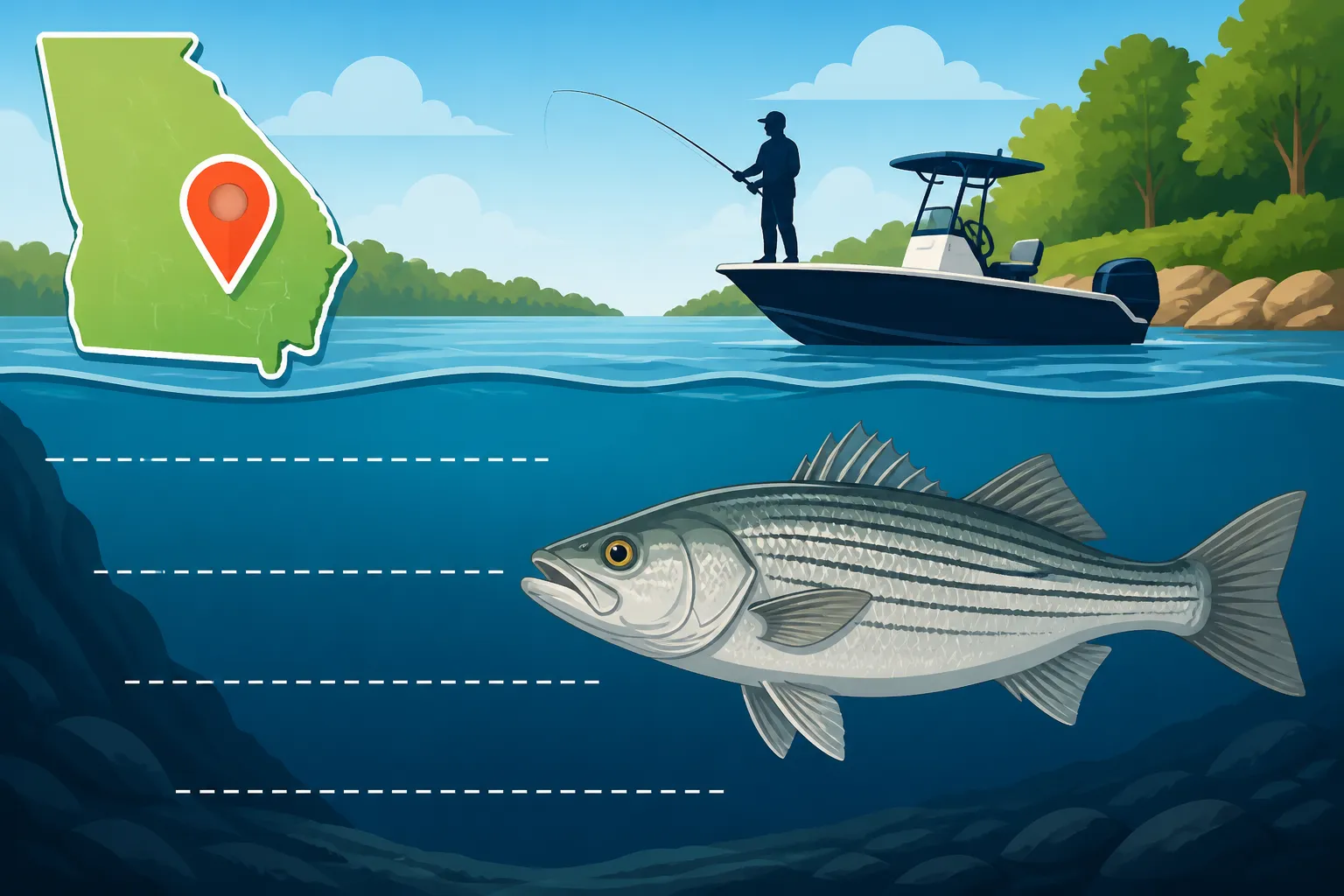
Stripers are then "squeezed" into a very specific band of water: below the warm, oxygen-rich surface layer, but above the cool, oxygen-depleted deep layer. This is often referred to as the "comfort zone" or "strike zone." It might be a narrow band, say from 30 to 50 feet, even if the lake is 100 feet deep. Learning about Deep Water Techniques for Striped Bass is really helpful here. If you're not finding fish at a certain depth, it's not always about temperature; sometimes, they've simply run out of breathable air down there. This is especially true in lakes like Lake Allatoona or Lake Hartwell where summer stratification can be pronounced.
Forage and Baitfish Location
Let's be real, stripers are predators, and they go where the food is. The presence and depth of baitfish – often threadfin shad, gizzard shad, or blueback herring in Georgia's lakes – profoundly influence where striped bass will hold. If baitfish are schooling at 20 feet, you can bet the stripers won't be far behind, even if the "ideal" temperature is a bit deeper. Stripers are opportunists, and a readily available meal often trumps slight discomfort in water temperature.
Throughout the year, baitfish movements are critical. In spring, baitfish might be in shallow coves seeking warmer water or spawning, drawing stripers in close to the banks. In summer, as baitfish retreat to cooler, oxygenated water, the stripers follow them into deeper main lake channels. Observing what depth baitfish are holding at on your sonar is one of the quickest ways to pinpoint active striped bass. Many anglers even carry specialized baitcast nets to catch live bait, knowing that freshly caught local forage is often the most irresistible offering for hungry stripers. You can find quality baitcast nets and other essential gear on popular online marketplaces like Amazon, making sure you're ready for whatever the lake throws at you.
Seasonal Depth Patterns for Striped Bass in Georgia
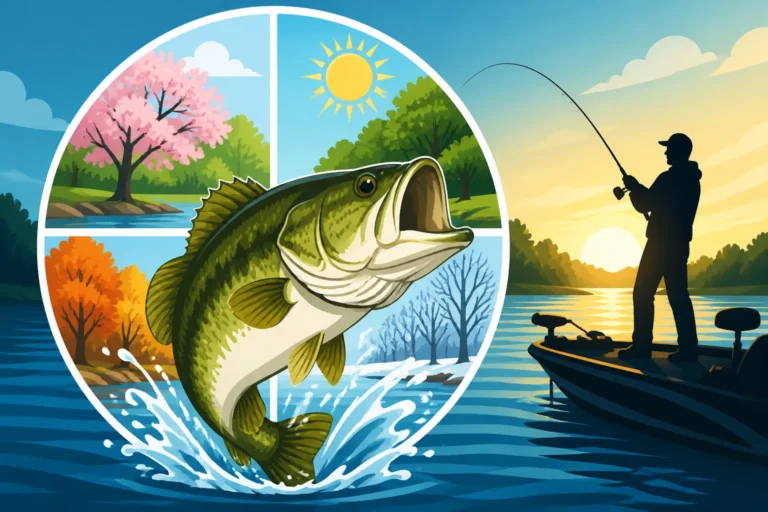
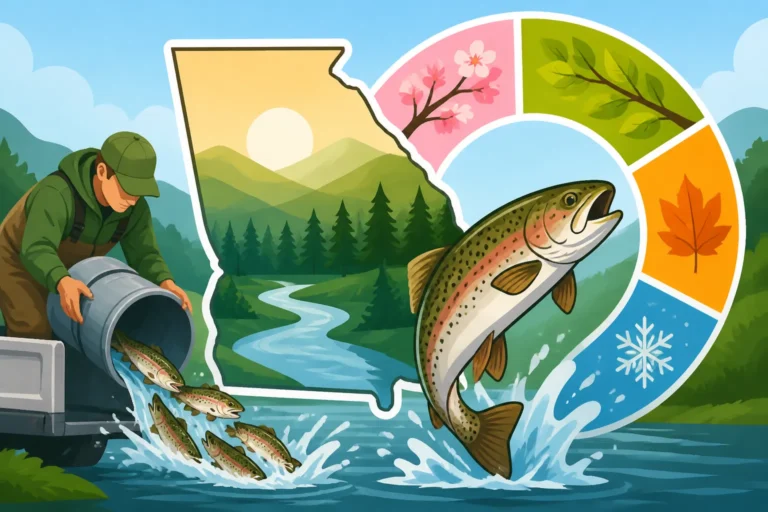
Just like the leaves change color, the patterns of striped bass change with the seasons. What works in April won't necessarily work in August, and understanding these shifts is key to consistent success. Instead of guessing, let's break down the general depth patterns you can expect throughout the year in Georgia's fantastic striper fisheries. This knowledge will put you miles ahead of the competition and help you refine your How to Fish Live Bait for Striped Bass strategy.
Spring: Pre-Spawn and Spawn Depth
Ah, spring! The air warms up, and so does the water, slowly at first, but with increasing speed. This is a magical time for striper fishing. As water temperatures climb into the 50s and low 60s, striped bass start to become very active. They move out of their deep winter haunts and begin to push into shallower, warmer coves and creek arms. This "pre-spawn" movement is all about fattening up before the strenuous spawning process. You might find them holding in depths anywhere from 10 to 30 feet, often relating to points, humps, and submerged structure where they can ambush baitfish.
As the water continues to warm, typically into the mid-60s, stripers will move even shallower, sometimes to just a few feet, to spawn. While Georgia's landlocked stripers don't have access to true saltwater spawning grounds, they will attempt to spawn in tributaries or large creek mouths with current. During this time, they can be incredibly aggressive, and you might find them cruising just under the surface or around shallow banks. Once the spawn is over, they'll often fall back to slightly deeper water, perhaps 20-40 feet, to recover and feed heavily. Lakes like Lake Oconee or Lake Sinclair can be particularly productive in the spring.
Summer: Thermocline and Deep Water Holds
When Georgia's summer heat truly sets in, usually from late June through September, striped bass fishing becomes a completely different game. The surface water warms significantly, pushing stripers deep. This is when the concept of the thermocline becomes paramount. Striped bass will typically be found at or just above the thermocline, in that narrow band of cooler, oxygenated water. This could be anywhere from 30 to 80 feet, depending on the lake and how deep the thermocline has set up. Learning How to Find Striped Bass in Deep Water is essential during these months.
During the day, especially under bright sun, stripers will often suspend in the main lake basins, sometimes over very deep water (100+ feet), but they'll be holding within that 30-80 foot comfort zone. They might be relating to points, humps, or channel bends, but their specific depth will be dictated by the thermocline and baitfish presence. Early mornings and late evenings might see them rise slightly in the water column to chase bait, but for the most part, summer striper fishing is a deep-water affair. Using heavy downriggers or lead core line is common, and having a good fish finder is indispensable. You can find robust options on Amazon that make identifying the thermocline and bait balls much easier.
Fall: Transition and Feeding Frenzies
Fall is another fantastic season for Georgia striper fishing. As the days shorten and the nights get cooler, the surface water temperature begins to drop, eventually breaking up the thermocline. This "turnover" can be a bit tricky initially, as fish can be scattered, but once the water column starts to mix and cool evenly, stripers become highly active. They sense the coming winter and go on a feeding frenzy to bulk up.
During fall, stripers will often be found at more moderate depths, ranging from 15 to 50 feet. They will follow schools of baitfish into creek arms, coves, and river channels. You'll frequently see stripers busting the surface, chasing bait, especially in the mornings and evenings. This makes topwater fishing and casting swimbaits incredibly exciting. They might hold on long main lake points, over submerged humps, or in the middle of a creek arm, always with an eye on the bait. This is a great time to explore various depths, as fish can be anywhere from just below the surface to 50 feet down.
Winter: Stable Depths and Subtle Bites
Winter fishing for striped bass in Georgia can be incredibly rewarding, though it often requires a bit more patience and finesse. The entire water column is usually cold and well-oxygenated, meaning stripers aren't as restricted by depth as they are in summer. However, their metabolism slows down, so they might not be as aggressive. They tend to school up tightly and hold at more stable depths, often in the 30 to 70-foot range, though they can be shallower on cloudy days or when baitfish push up.
In winter, you'll often find stripers grouped in deep channels, tight to structure like timber or rock piles, or suspended over the deepest parts of the lake. They might be relatively inactive, requiring a slower presentation of live bait or jigs. Keep an eye on your sonar for dense schools of fish. While they might not be actively chasing, a well-presented bait in their face can often trigger a strike. Lakes like Clarks Hill Lake and West Point Lake can offer excellent winter striper opportunities. Remember that even during these colder months, the proper gear, easily found on sites like Amazon, can make a huge difference in staying warm and comfortable, allowing you to focus on those subtle bites.
Locating Striped Bass with Technology and Techniques
Finding stripers at the right depth isn't just about understanding their behavior; it's also about leveraging the tools and techniques available to you. Modern electronics have revolutionized how we target these fish, making the search much more efficient.
Using Sonar and Fish Finders
If you're serious about striped bass fishing, a quality fish finder is non-negotiable. This piece of equipment is your window into the underwater world, showing you not only the depth but also structure, baitfish schools, and, most importantly, the stripers themselves. When you're trying to figure out What Depth Striped Bass Hold At, your sonar will be your best friend.
Here's how to use it effectively:
- Identify the Thermocline: In summer, learn to recognize the thermocline on your sonar. It often appears as a fuzzy line or a distinct change in the density of returns. This will tell you the upper and lower bounds of the comfort zone.
- Locate Baitfish: Look for dense clouds or schools of baitfish. Stripers are almost always in close proximity to their food source. If you see baitfish at 40 feet, start targeting that depth.
- Pinpoint Stripers: Stripers will often appear as large, distinct arches or blobs, sometimes suspending individually, other times in tight schools. Their size and position relative to baitfish can give you clues about their activity level.
- Observe Structure: Pay attention to how stripers relate to submerged points, humps, ledges, or timber. They often use these features as ambush points.
Spend time interpreting what you see on your screen. The more you use it, the better you'll become at identifying prime striper real estate. Brands like Garmin and Humminbird offer a range of reliable fish finders that can greatly enhance your ability to locate fish.
Effective Depth-Specific Fishing Techniques
Once you've identified the depth where stripers are holding, you need techniques to get your bait or lure down to them. Here are a few common approaches for Striped Bass and Hybrid Striped Bass in Georgia Waters:
- Downrigging: This technique is ideal for precisely presenting baits or lures at a specific depth. A heavy lead ball (the downrigger weight) is used to carry your line down, and a release clip holds your fishing line. When a fish strikes, the line releases from the clip, allowing you to fight the fish directly. It's incredibly effective when stripers are suspended at a consistent depth.
- Lead Core Line: This specialized fishing line has a lead core inside a braided sheath, causing it to sink. The amount of line you let out determines the depth your lure will run. Each color segment (typically 10 yards) generally sinks to a predictable depth, allowing you to target specific zones.
- Planer Boards: While not directly depth-related, planer boards pull your lines out to the side of the boat, covering a wider swath of water. This is often used in conjunction with lead core or weighted lines to present multiple baits at various depths and distances from the boat, especially when fish are scattered.
- Heavy Jigs and Spoons: For vertical presentations, especially when stripers are schooled up over structure or in deep water, heavy jigs, spoons, or even large bucktails can be dropped directly onto them. This is often effective in winter when fish are less active.
- Live Bait Fishing: Whether freelines, balloons, or weighted presentations, live bait is a striper killer. For deeper fish, use Carolina rigs with heavy weights to get your bait down quickly to the desired depth. Consider a large slip sinker, like those you can find on Amazon, to allow your bait to swim freely once it reaches the target depth. You might also want to read up on Best Live Bait for Striped Bass in Georgia to maximize your chances.
By combining your understanding of striper behavior, seasonal patterns, and these proven techniques, you'll be well on your way to consistently finding and catching these exciting fish in Georgia.
Summary of Striped Bass Depth Preferences by Season
| Season | Typical Water Temperature Range | Common Depth Range (Feet) | Key Factors Influencing Depth | Preferred Forage Depth | Common Techniques |
|---|---|---|---|---|---|
| Spring | 55-68°F | 10-40 | Warming water, pre-spawn, baitfish pushing shallow | Shallow coves, creek arms, points (0-20 ft) | Trolling shallow, casting swimbaits, freelines, planer boards |
| Summer | 70-85°F (surface) | 30-80 (at thermocline) | Thermocline, oxygen levels, deep baitfish | Main lake channels, deep humps, suspended (20-60 ft) | Downrigging, lead core, weighted freelines, jigging spoons |
| Fall | 60-75°F | 15-50 | Cooling water, turnover, feeding frenzies | Scattered, schooling baitfish, surface busts (0-40 ft) | Topwater, swimbaits, umbrella rigs, freelines, planer boards |
| Winter | 45-58°F | 30-70 | Stable water temps, slower metabolism, tight schools | Deep channels, structure, suspended (20-60 ft) | Live bait on weighted lines, jigging spoons, slow trolling deep |
Disclaimer
This article is for general informational purposes only and does not constitute professional advice. Laws, prices and regulations vary by location and change over time. Consult a qualified professional for guidance on your specific situation.