Best Tackle Box Setup for Crappie Fishing
There’s nothing quite as frustrating as finally getting out on the water, the crappie biting, only to realize your tackle box is a chaotic mess. You spend precious minutes fumbling for the right jig head or a specific soft plastic, missing out on bites and losing your rhythm. This guide is all about helping you create the ultimate crappie fishing tackle box setup, ensuring every piece of gear is organized, accessible, and ready to help you reel in those slabs.
The Essential Foundation: Your Tackle Box Itself
Before you even start thinking about what goes inside, you need to consider the vessel that will hold all your crappie treasures. A good tackle box isn't just a container; it's your portable fishing command center, designed to keep everything secure and easy to find when the bite is on. Skimping here can lead to endless frustration, broken gear, and wasted time on the water.
Size and Capacity Considerations
When choosing a tackle box for crappie, size truly matters, but it's not always about bigger being better. You want a box that's big enough to hold all your essentials without being so cumbersome that it’s a pain to carry or takes up too much space in a kayak or small boat. Think about how you primarily fish: from the bank, a jon boat, a large bass boat, or even a kayak? Each scenario might call for a different style.
For bank fishing or kayak fishing, a compact soft-sided tackle bag or a smaller hard-sided box with multiple removable utility trays might be ideal. These are lighter and easier to transport. They allow you to bring just what you need without feeling overloaded. On the other hand, if you're fishing from a larger bass boat or often target crappie in various conditions and locations, a bigger system with more storage compartments might be necessary. Some anglers even opt for a "mother ship" tackle box that stays in the boat, holding bulk supplies, and a smaller, grab-and-go box for daily use. Consider the sheer volume of jigs, soft plastics, and terminal tackle you carry, and choose a box that offers ample, customizable space.
Material and Durability Matters
The material and construction of your tackle box are critical for its longevity and for protecting your gear. Crappie fishing often involves damp environments, jostling in the boat, and exposure to sunlight. A flimsy box won't cut it. Hard-sided boxes, often made of durable plastics, offer excellent protection from impact and can be easier to stack. Look for robust latches that won't pop open unexpectedly and watertight seals to protect against splashes and rain, especially important for keeping hooks from rusting.
Soft-sided tackle bags, typically made from heavy-duty nylon or polyester, offer flexibility and often have more external pockets for quick access to tools. Many of these bags come with several clear plastic utility boxes that slide in and out, allowing for excellent organization and visibility of your lures. Brands like Plano and Bass Pro Shops offer a wide range of options in both hard and soft-sided designs, each with its own advantages. A high-quality, durable tackle box might cost a bit more upfront, but it will save you money in the long run by protecting your valuable fishing gear and standing up to years of use.
Must-Have Crappie Jigs and Baits
This is where the real fun begins! Crappie are finicky eaters, and having a diverse selection of jigs and baits is key to adapting to changing conditions and finding what they want on any given day. Your tackle box should be a well-stocked arsenal, not a random assortment. You'll find yourself reaching for these regularly, so keep them organized.
Soft Plastics: Colors, Shapes, and Sizes
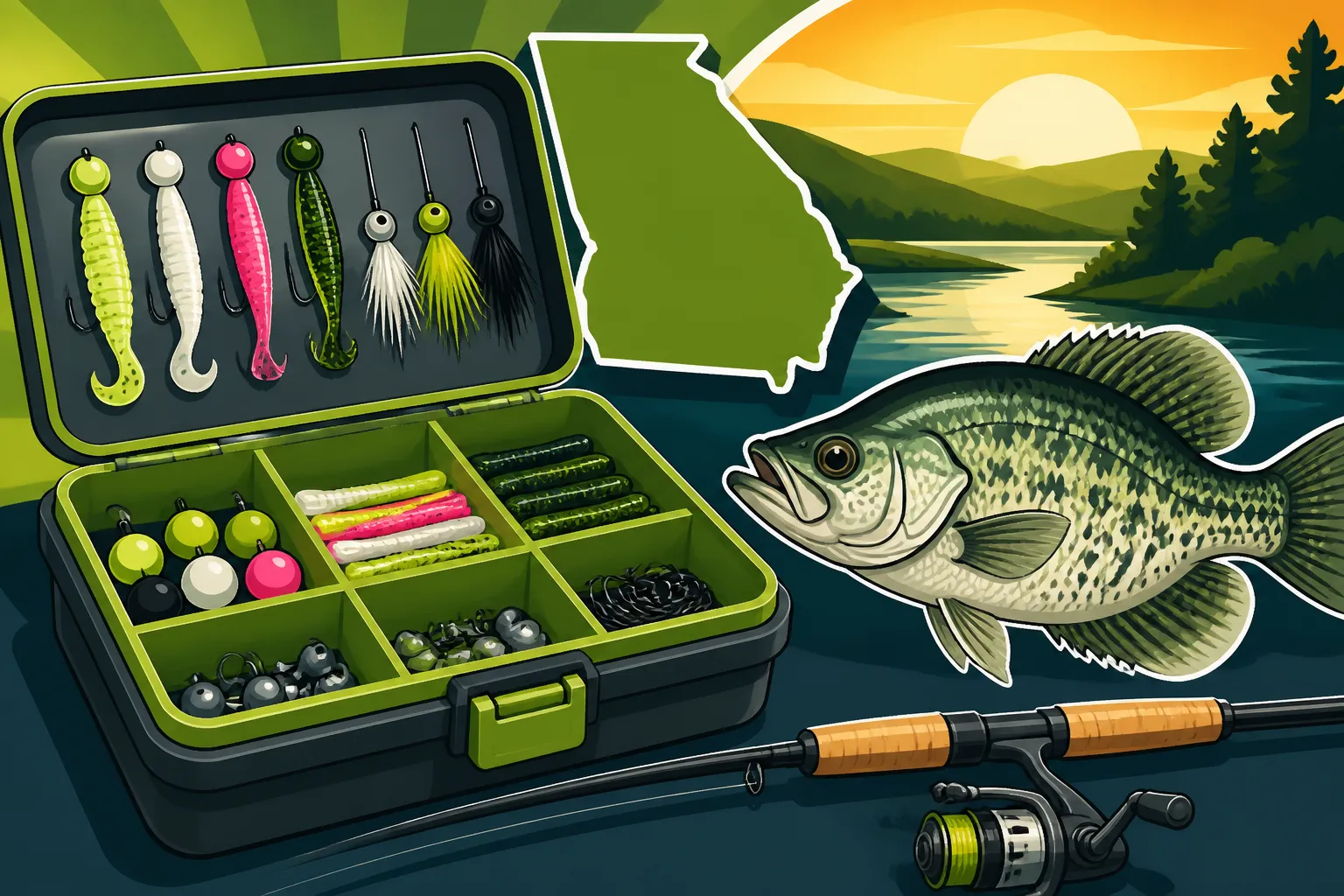
Soft plastic lures are undeniably king in the crappie world. These versatile baits come in an almost endless array of colors, shapes, and sizes, mimicking everything from tiny minnows to insects. For your crappie tackle box, focus on a core selection that covers common scenarios in Georgia's lakes and rivers.
Colors: You absolutely need natural colors like whites, pearls, and shad patterns for clear water, and bright, high-contrast colors like chartreuse, pink, and oranges for stained or murky water, or on cloudy days. Don't forget two-tone options, such as chartreuse and black, or white and red, which often provide that extra bit of flash or contrast. Having a variety means you're prepared whether you're fishing the clear waters of Lake Lanier or the stained depths of the Flint River.
Shapes: Curly-tail grubs are a classic for a reason – their tail provides irresistible action with even the slightest retrieve. Tube jigs are excellent for vertical presentations and mimicking baitfish. Paddle-tail grubs offer a different vibration and flash. Straight-tail minnow imitations are fantastic when crappie are targeting subtle baitfish profiles. Experiment with different profiles to see what the fish prefer on a given day. You might even find some unique designs on Amazon that become your secret weapon!
Sizes: Most crappie soft plastics range from 1 to 2.5 inches. Having a mix is crucial. Smaller baits (1 to 1.5 inches) are perfect for finicky crappie or when they're targeting tiny baitfish. Larger baits (2 to 2.5 inches) can entice bigger slabs or be more visible in darker water. Pair these with appropriately sized jig heads, usually ranging from 1/32 oz to 1/8 oz. A good rule of thumb is lighter jig heads for shallower water or a slower fall, and heavier ones for deeper water or strong currents. For more on jigging, check out our guide on How to Jig for Crappie.
Live Bait Essentials and Alternatives
While soft plastics are highly effective, sometimes live bait is just what you need to tempt those stubborn crappie. Your tackle box setup should make provisions for live bait, even if you don't always use it.
Live Minnows: Small live minnows, often called "crappie minnows," are a traditional and incredibly effective bait. You won't keep them in your tackle box, of course, but having the necessary terminal tackle ready is key. This includes small kahle hooks or Aberdeen hooks (size 4 to 8) and small split-shot weights. A small aerated minnow bucket is essential for keeping them alive. On days when the bite is slow, a lively minnow can often outperform artificial lures.
Other Live Bait: Don't overlook other options like small crickets or wax worms, especially if you're targeting smaller crappie or bluegill that might be mixed in. These are easy to store in small, breathable containers if you plan to use them.
Scented Baits and Alternatives: For those times when live bait isn't practical or available, consider scented soft plastics or crappie nibblers. These can be added to a bare jig or tipped onto a soft plastic for an extra burst of fish-attracting scent. Having a small container of these tucked away can make a huge difference on tough days.
Cranks and Spinners: When to Reach for Them
While jigs dominate the crappie fishing scene, don't underestimate the power of small crankbaits and inline spinners. These can be game-changers in certain situations and deserve a spot in your tackle box.
Small Crankbaits: Crappie will absolutely hit small crankbaits, especially when they are actively chasing baitfish. Look for baits in the 1 to 2-inch range that dive to different depths. Shallow divers (0-5 feet) are great for covering flats or shallow brush, while medium divers (5-10 feet) can reach those suspended fish or ledges. Colors should mimic baitfish like shad, or be brighter like firetiger for aggressive bites. Cranking can be a highly effective way to cover water and locate active crappie, particularly in the warmer months when they are more aggressive. It's a different presentation that can trigger bites when jigs are being ignored.
Inline Spinners: Simple yet effective, inline spinners are fantastic for covering shallow areas, especially around submerged vegetation or fallen timber. The flash and vibration can draw crappie in from a distance. Sizes typically range from 1/16 oz to 1/8 oz. Colors like silver, gold, and brass blades with chartreuse, white, or black skirts are excellent choices. They're also a great option for targeting crappie that might be mixed in with other panfish, offering a broad appeal. Sometimes, the continuous flash and vibration of a spinner is just what's needed to trigger a reactionary strike from a crappie that's not quite ready to commit to a jig.
Terminal Tackle: The Small Stuff That Makes a Big Difference
The tiny components of your tackle box are often overlooked but are absolutely critical to success. Without the right hooks, weights, and line, even the best jigs and bait won't matter. Keep these items neatly separated in small compartments to avoid tangles and confusion.
Hooks, Weights, and Floats
These are the backbone of your crappie rigs, and having a diverse selection is essential.
Hooks: For crappie, small, sharp hooks are paramount. Aberdeen hooks are a classic choice due to their thin wire, which makes them less visible and allows for easier hook removal if snagged (the wire tends to straighten). Sizes 4, 6, and 8 are good to have. Sickle hooks are another popular option; their unique bend is designed to hold fish more securely. For jigging, you'll need a range of jig heads.
Common crappie jig head weights:
| Jig Head Weight | Recommended Soft Plastic Size (inches) | Primary Depth Range (feet) | Notes |
|---|---|---|---|
| 1/64 oz | 1" – 1.5" | 1 – 5 | Very slow fall, ultra-light tackle, extremely finicky fish, shallow |
| 1/32 oz | 1" – 2" | 3 – 8 | Versatile, slow fall, good for light line, general crappie fishing |
| 1/16 oz | 1.5" – 2.5" | 5 – 15 | Most common, faster fall, good for medium depths and currents |
| 1/8 oz | 2" – 3" | 10 – 25+ | Deeper water, stronger currents, faster retrieve, bigger plastics |
Always have a variety of these weights. When you're fishing in shallower water or for very sluggish fish, that 1/64 oz jig head might be the only thing they'll touch. Conversely, if you're trying to get a lure down quickly in 20 feet of water or fighting a strong current, a 1/8 oz head becomes necessary.
Weights: Small split shot weights (sizes BB, 3/0, 2/0) are perfect for adding just enough weight above a live bait rig or to help a light jig get deeper. Always have a dispenser of various sizes. For a more subtle approach, a tiny bullet weight or a small bell sinker might be appropriate, especially when fishing around vertical cover. Remember, crappie have a relatively soft mouth, so you don't want to use excessively heavy weights that could tear the hook out during a fight.
Floats/Bobbers: Floats are invaluable for presenting baits at a precise depth. Slip floats are fantastic because they allow you to fish any depth without having a long leader dangling from your rod tip, making casting much easier. Fixed floats are simpler and great for shallow water presentations. Having a few different sizes of each will ensure you're ready for varying conditions, from calm ponds to light current. A good quality bobber that is sensitive to subtle crappie bites can make all the difference, preventing those "nibbles" from going unnoticed. For tips on fishing specific lakes, consider Lake Sinclair Fishing Spots for Bream which might also offer insights into panfish techniques.
Line Selection: Mono, Fluoro, or Braid?
Your fishing line is the direct connection to the fish, and choosing the right type and strength is paramount for crappie. Each type of line has its strengths and weaknesses, and a well-prepared tackle box includes options.
Monofilament (Mono): This is the go-to for many crappie anglers due to its affordability, stretch, and ease of handling. The stretch acts as a shock absorber, helping to prevent hooks from tearing out of a crappie's delicate mouth. Mono is also less visible in water than braid, which can be an advantage in clear conditions. A good range for crappie is 4-pound to 8-pound test. It's excellent for jigs and live bait under a float.
Fluorocarbon (Fluoro): Fluorocarbon is virtually invisible underwater due to its refractive index, making it fantastic for extremely clear water and wary crappie. It has less stretch than mono, offering increased sensitivity, which can help detect those light crappie bites. However, it's generally more expensive and can be stiffer than mono. Many anglers use a fluorocarbon leader (4-6 lb test) tied to a main line of braid or mono.
Braided Line: Braid offers incredible strength for its diameter, zero stretch for maximum sensitivity, and excellent casting distance. It's fantastic for detecting the slightest tap on a jig in deep water or when fishing vertically. However, it's very visible underwater, so it's almost always paired with a fluorocarbon leader. For crappie, a 6-10 pound test braid for a main line, with a 4-6 pound fluoro leader, is a common setup. If you're looking to rig a jig for crappie, understanding How to Rig a Minnow for Crappie might give you ideas on how to optimize your line choice for live bait presentations as well. Consider storing smaller spools of each line type in your tackle box for quick re-spooling or leader tying.
Essential Tools and Accessories for Crappie Anglers
Beyond the lures and terminal tackle, a few key tools and accessories will make your crappie fishing trips much smoother and more enjoyable. These are the unsung heroes of your tackle box setup, often used but rarely thought about until you really need them.
Pliers, Scissors, and Hook Removers
These are your absolute non-negotiables. Trying to tie a knot, cut line, or remove a deeply set hook without the right tools is a recipe for frustration and potentially injury.
Needle-nose Pliers: A good pair of needle-nose pliers (preferably with a split ring opener) is invaluable. They're perfect for bending hooks, crimping weights, and safely removing hooks from a fish's mouth without damaging the fish or your fingers. Look for stainless steel or corrosion-resistant options.
Fishing Scissors/Line Cutters: You'll be tying knots and re-rigging constantly, so sharp scissors or dedicated line cutters are a must. If you're using braided line, ensure your scissors are specifically designed for braid, as standard scissors often struggle and fray the line. Having these readily accessible in an outer pocket of a soft-sided bag or a dedicated compartment is a huge time saver.
Hook Removers: While pliers can work, a dedicated hook remover tool (like a long-nosed plier or a specialized disgorger) can make quick work of deeply swallowed hooks, allowing for a safer release, especially for crappie you plan to put back. This is particularly important for respecting How to Catch and Release Trout Properly (and crappie too!).
Fish Grips, Measuring Devices, and Coolers
These accessories might not fit inside your tackle box, but they are crucial companions for any serious crappie angler and should always be nearby.
Fish Grips: While crappie generally aren't toothy, a good set of fish grips can protect your hands from hooks and help you handle larger crappie or other species you might catch (like an aggressive bass). They provide a secure grip, reducing the chance of dropping your prize catch back into the water before you've had a chance to admire it or snap a photo.
Measuring Device: Crappie often have minimum size limits in certain areas, and having a ruler or measuring tape handy ensures you stay compliant with Georgia Fish Size and Creel Limits. Plus, it's always fun to know just how big that slab truly is! Many small, retractable measuring tapes are available that fit easily into a pocket or side compartment.
Cooler: While not in the tackle box, a good cooler for keeping your catch fresh is paramount if you plan to keep fish. A small cooler with ice can also hold drinks and snacks, making your day on the water more enjoyable. Don't forget that if you're keeping live minnows, you'll need a separate aerated minnow bucket to keep them healthy.
Storage and Organization Hacks
The best tackle box in the world is useless if it's not organized. Effective organization is the true secret to a successful crappie fishing setup.
Clear Utility Boxes: This is perhaps the biggest game-changer. Using clear, modular utility boxes (like those made by Plano or similar brands found on Amazon) allows you to see exactly what's inside without opening every compartment. Dedicate one box to jig heads, another to soft plastics (separated by color or shape), and another to terminal tackle. This compartmentalization is invaluable.
Labeling: Take it a step further and label your utility boxes. Use a permanent marker on the outside of each box to indicate its contents: "Jig Heads 1/32-1/16 oz," "Chartreuse Plastics," "Assorted Hooks & Weights." This saves even more time when you're quickly grabbing for a specific item.
Soft Plastic Storage: Keep your soft plastics in their original bags inside the utility boxes to prevent different plastic compounds from melting or reacting with each other. Alternatively, some anglers use small, clear, sealable bags within their utility boxes. Avoid mixing different brands or types of plastics directly into a single compartment unless you're sure they won't react. This organization helps you keep track of your inventory, so you know when it's time to replenish those essential curly tails or tube jigs. Having a well-organized tackle box means more fishing, and less fumbling, which is exactly what every crappie angler wants!
Disclaimer
This article is for general informational purposes only and does not constitute professional advice. Laws, prices and regulations vary by location and change over time. Consult a qualified professional for guidance on your specific situation.