Fly Fishing Basics for Trout
Stepping into the world of fly fishing for trout can feel incredibly intimidating, can't it? You see those seasoned anglers gracefully casting their lines, flies landing feather-light on the water, and it looks like a secret society with its own language and endless gear. Many folks get discouraged before they even begin, thinking it's too complex or requires a lifetime of dedication just to catch a fish. But I promise you, with a little guidance and patience, fly fishing for trout in Georgia's beautiful waters is an achievable and immensely rewarding experience, even for beginners. This guide is here to demystify the basics, helping you understand the gear, techniques, and the incredible trout that call our mountain streams home.
The Unique Allure of Fly Fishing in Georgia's Trout Country
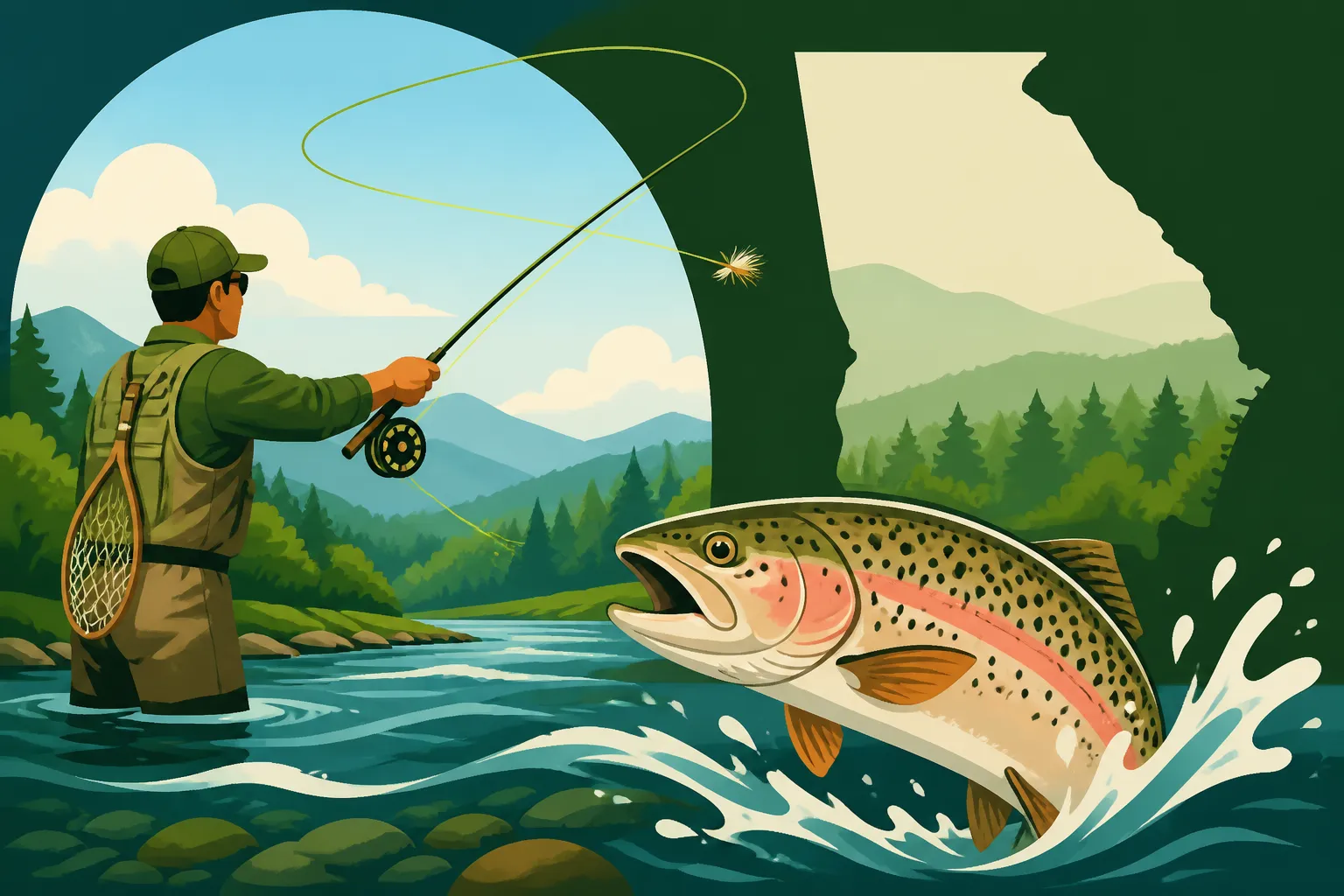
There's something truly magical about fly fishing, especially for trout in the crisp, clear waters of North Georgia. It's not just about catching fish; it's about connecting with nature in a profound way, understanding the subtle nuances of a flowing stream, and the delicate dance between angler, fly, and fish. Unlike other fishing methods that often rely on heavier tackle and more aggressive presentations, fly fishing is an art form that demands a gentler touch and a keen eye.
Why Georgia is a Fly Angler's Paradise
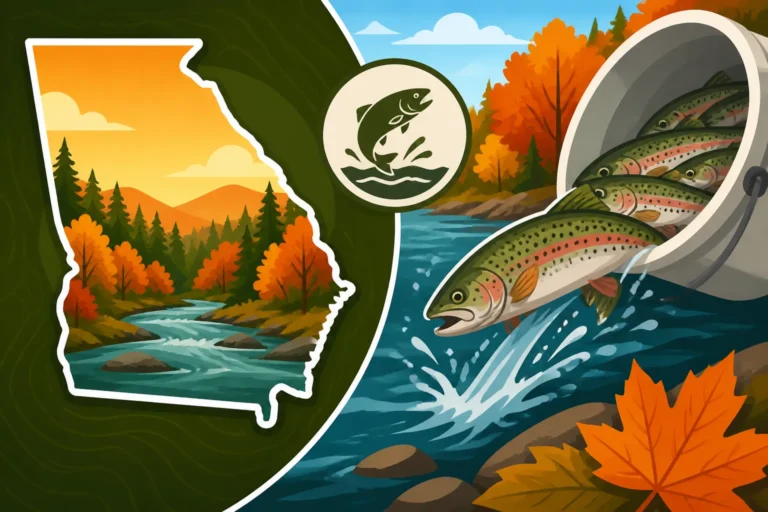
Georgia might be known for its peaches and coastal waters, but tucked away in the northern reaches are stunning mountains with a network of cold, oxygen-rich streams that are perfect for trout. These aren't just any streams; they're home to vibrant populations of rainbow, brown, and even our native brook trout. The diverse landscape, from easily accessible state park waters to remote wilderness stretches, offers a lifetime of exploration for any fly angler. You can spend a peaceful morning casting dry flies on the Toccoa River, or challenge yourself to find elusive wild brook trout in a secluded headwater creek. It’s this variety, combined with the sheer beauty of the surroundings, that makes fly fishing here so special. If you're curious about what kind of fish are swimming in these pristine waters, our comprehensive guide, Georgia Trout Fishing: Rainbow, Brown, and Brook Trout Explained, dives deep into each species.
The Zen of the Cast and the Connection to Nature
For many, fly fishing transcends a simple hobby; it becomes a form of moving meditation. The rhythmic motion of the cast, the focused attention on the water's surface, and the quiet anticipation of a strike all contribute to a sense of calm and presence. It forces you to slow down, observe, and truly absorb your surroundings. You'll learn to notice the subtle currents, the insects buzzing above the water, and the way sunlight dapples through the trees. It’s an escape from the hustle and bustle of daily life, offering moments of profound tranquility. There’s a distinct satisfaction in fooling a wary trout with a meticulously tied fly, knowing you’ve presented something so convincing that a wild creature accepted it as real food. It’s this intimate connection to the ecosystem, rather than just the act of catching, that draws so many to fly fishing.
Essential Gear for Beginning Fly Anglers
When you're just starting out, the sheer volume of fly fishing gear can feel overwhelming. Rods, reels, lines, leaders, tippet, flies – it's a lot to take in! But don't worry, you don't need to buy the most expensive equipment right away. Focusing on a few core items will get you on the water and catching fish without breaking the bank. Think of it as investing in an experience, not just a pile of gear. For a detailed breakdown of everything you'll need, check out our guide on Fly Fishing Gear for North Georgia Trout.
Choosing Your First Rod, Reel, and Line
For beginners targeting trout in Georgia, a medium-action fly rod in the 8 to 9-foot range, designed for a 5-weight line, is often the perfect starting point. A 5-weight rod is versatile enough to handle most trout you'll encounter, from small stocked rainbows to larger wild browns, and it’s forgiving for learning various casting techniques. You can find some excellent beginner combos on platforms like Amazon that include a rod, reel, and line, which is a great way to start without individually matching components. For more specific recommendations, our article on the Best Fly Rod for North Georgia Trout Streams offers insights into what to look for.
Pair your 5-weight rod with a matching 5-weight fly reel. For trout fishing, the reel primarily serves to hold your line and provide drag if you hook a larger fish. A simple, reliable disc drag reel is all you need. Don't feel pressured to get a fancy, lightweight, large-arbor reel just yet. As for the line, a weight-forward (WF) floating line is ideal for most trout applications, especially for dry fly fishing and nymphing. The weight-forward design helps with casting distance and turnover, making it easier to present your fly accurately.
Leaders, Tippet, and the All-Important Flies
Once you have your rod, reel, and line, you’ll need to connect your fly to the main line. This is where leaders and tippet come in. A leader is a tapered piece of monofilament or fluorocarbon that connects to the end of your fly line. It gradually thins out, helping to transfer the casting energy from the thick fly line down to the delicate fly, and making it harder for fish to see the line. For trout, a 7.5 to 9-foot leader, usually in 3X to 5X thickness, is a good general choice.
Tippet is an even finer section of line that you tie to the end of your leader, and then your fly to the tippet. It’s designed to be the weakest link, so if your fly gets snagged, you only lose the fly and a short piece of tippet, not your entire leader. Tippet comes in various diameters, often denoted by an "X" rating (e.g., 5X, 6X, 7X). For Georgia trout, 5X or 6X tippet is commonly used. It's a consumable item, so having a spool or two in your vest is essential. When it comes to the flies themselves, the choices are endless! We'll dive deeper into this, but having a small selection of nymphs, dry flies, and maybe a few small streamers will cover most situations. Many fly shops, and even online retailers like Amazon, offer beginner fly assortments that are a great way to start building your collection. Be sure to explore our guide on the Best Flies for Trout Fishing in Georgia for specific patterns.
| Component | Description | Common Specs for Georgia Trout |
|---|---|---|
| Fly Rod | Lever for casting the line and fighting fish. | 8-9 ft, 5-weight, Medium-Fast |
| Fly Reel | Stores line, balances rod, provides drag. | Matching 5-weight, Disc Drag |
| Fly Line | Heavier than monofilament, designed to be cast. | WF (Weight Forward) Floating, 5-weight |
| Leader | Tapered line connecting fly line to tippet. | 7.5-9 ft, 3X-5X |
| Tippet | Fine line extending from leader to fly. | 5X-7X spools |
| Flies | Imitations of insects, baitfish, or other food sources. | Nymphs, Dry Flies, Streamers |
Understanding Georgia Trout and Their Habitats
To be a successful fly angler, it's incredibly helpful to understand the fish you're targeting. Knowing where trout live, what they eat, and how they behave in different conditions will give you a significant advantage. Georgia is home to three main trout species, and each has its own preferences.
The Three Trout of Georgia: Rainbow, Brown, and Brook
Georgia's trout waters are primarily stocked with Rainbow Trout, which are identifiable by the distinctive red band running along their sides and small black spots. They are often the most common catch for beginners, especially in easily accessible, regularly stocked streams. They’re generally less finicky eaters and can provide exciting action. For more on these vibrant fish, read our article, Rainbow Trout Fishing in North Georgia Streams.
Brown Trout are known for their beautiful golden-brown coloration with dark spots surrounded by lighter halos, sometimes with red or orange spots mixed in. They are generally more elusive and wary than rainbows, making them a prized catch for many anglers. They tend to be more predatory, feeding on larger insects and baitfish, and often grow to larger sizes. The Chattahoochee River, especially below Buford Dam, is renowned for its brown trout population, as detailed in our guide on Brown Trout Fishing on the Chattahoochee River.
Finally, the Brook Trout is Georgia's only native trout species. These stunning fish are smaller, with worm-like markings on their backs (vermiculations) and vibrant red spots with blue halos along their sides, often sporting white leading edges on their fins. They thrive in the coldest, purest headwater streams and are a true wilderness gem. Catching a native brook trout is a special achievement for any Georgia angler. Our guide, Brook Trout: Georgia's Native Trout Species, offers an in-depth look at these beautiful fish.
Where to Find Trout in Georgia's Streams
Trout need cold, clean, oxygenated water to survive, which is why you'll primarily find them in the mountainous regions of North Georgia. They seek out specific features in a stream that provide food, shelter, and comfort from strong currents. Look for areas like:
- Riffles: These are shallow, fast-moving sections of water that break over rocks. They oxygenate the water and dislodge insects, making them prime feeding grounds. Trout will often hold behind rocks or in deeper pockets within a riffle, waiting for food to drift by.
- Pools: Deeper, slower-moving sections of a stream. Trout often retreat to pools for safety and rest, especially larger fish. They can also be good feeding areas, particularly when insects are hatching on the surface.
- Runs: Moderately fast, deeper sections of water with a relatively consistent flow. These are often productive spots where trout can feed without expending too much energy.
- Structure: Anything that breaks the current and offers cover, such as fallen trees (snags), large rocks, undercut banks, or even bridge pilings. Trout love to hide in these spots, darting out to grab a meal.
Understanding how to identify these features and predict where a trout might be holding is key to success. This skill, often called "reading the water," is covered in detail in our post on How to Read Water for Trout Fishing. Many of these prime locations can be found in the Best Trout Streams in Georgia, offering fantastic opportunities to practice your skills.
Mastering Basic Casting and Presentation Techniques
The "cast" is arguably the most recognizable aspect of fly fishing. It might look daunting, but it's a learned skill that improves with practice. The goal isn't just to throw the fly, but to present it naturally to the fish.
The Overhead Cast: Your Foundational Skill
The overhead cast is the bread and butter of fly fishing. It’s the one you see most often, where the line unfurls behind you and then forward in a graceful loop. It essentially involves moving the rod in a forward and backward motion, allowing the weight of the fly line to load the rod, which then propels the line forward. Think of it like a pendulum, or flicking a whip. The key is smooth acceleration and abrupt stops. Start with a short amount of line, perhaps 15-20 feet, and focus on timing. Your backcast should go straight behind you, allowing the line to fully extend, and then you bring the rod forward, stopping high to allow the line to unroll in front. It takes practice, but once you get the rhythm, it becomes second nature. Many fly shops offer beginner casting lessons, which can dramatically shorten your learning curve.
A common frustration for beginners is "tailing loops" or "crashing the line." This usually means you’re either stopping too low on the forward cast or rushing your backcast. Remember the adage: "pause on the backcast, accelerate on the forward cast, and stop high." You can even practice in your backyard with a bare hook (or even just a piece of yarn) to get the motion down before hitting the water.
The Roll Cast: A Stream Angler's Best Friend
While the overhead cast is fantastic for open spaces, stream fishing often presents challenges like overhead branches, dense vegetation, or steep banks that make a full backcast impossible. This is where the roll cast shines. It’s a dynamic cast that loads the rod using only the water tension in front of you, eliminating the need for a backcast. To execute a roll cast, you bring your rod tip up and slightly back, allowing a "D-loop" of line to form on the water in front of you. Then, with a smooth, forward stroke, you roll the line out over the water.
The roll cast is incredibly useful in tight quarters, and mastering it will open up many more fishing opportunities on Georgia's brushy mountain streams. It's particularly effective for presenting nymphs or wet flies in close proximity, and it's less disruptive to the water than a full overhead cast. Think of it as a compact, efficient way to get your fly out there when space is limited. Once you have a handle on the basic cast, you can delve into more advanced presentations like those covered in How to Drift a Fly for Trout, which are crucial for success.
Presenting Your Fly and Reading the Water
Casting is just one piece of the puzzle. Getting your fly to behave naturally in the water, fooling a discerning trout, is where the real art lies. This is called presentation, and it's heavily influenced by how well you "read" the stream.
Understanding the Drift: The Key to Deception
Trout primarily feed on insects and small organisms that drift freely with the current. To trick a trout, your fly must also drift naturally, without any drag or unnatural movement caused by your line. This is known as a "dead drift." Any drag, where your line pulls the fly unnaturally through the water, is a dead giveaway to a trout that something is amiss. Achieving a dead drift, especially in complex currents, is one of the biggest challenges and rewards of fly fishing.
You achieve a dead drift by mending your line. Mending involves repositioning your fly line on the water during the drift to counteract the effects of different current speeds. If the current closer to you is faster than where your fly is, it will pull your line and cause drag. You can "mend upstream" by lifting a section of your line and flipping it upstream, giving your fly more slack to drift naturally. Conversely, if the current closer to you is slower, you might need to "mend downstream." It sounds complicated, but with practice, it becomes intuitive. Focusing on that drag-free drift is paramount, whether you're fishing with a tiny dry fly on the surface or a weighted nymph deep below.
Identifying Productive Lies: Where Trout Hide
Reading the water means understanding where trout are likely to hold, also known as their "lies." Trout are energy-efficient creatures; they want to be in a spot where food comes to them, but they don't have to fight a strong current constantly. At the same time, they need cover from predators like birds and otters.
Look for:
- Current Seams: Where fast water meets slow water. Trout often sit in the slower water, waiting for food to be swept by in the faster current.
- Behind Boulders: A classic trout lie. The rock creates a pocket of slower water downstream where a trout can rest and ambush food.
- Under Overhanging Banks or Vegetation: Provides excellent cover and shade.
- Deep Pools or Depressions: Offers safety and comfort, especially for larger trout.
- Confluence of Streams: Where two currents meet, often concentrating food.
Being able to visually identify these spots and then place your fly accurately into them will dramatically increase your chances of success. It's a continuous learning process, but the more time you spend observing the water, the better you'll become at predicting where the fish are. Many of these insights are shared in our article, How to Read Water for Trout Fishing.
Choosing the Right Flies for Georgia Trout
The world of fly patterns is vast and can feel overwhelming. However, for a beginner targeting trout in Georgia, you can simplify things significantly by focusing on a few key categories that imitate the most common food sources.
Nymphs: The Underwater Workhorses
By far, the majority of a trout's diet consists of aquatic insects in their larval or nymphal stage, living on the stream bottom. This makes nymphs the most consistently productive fly type for trout almost year-round. You fish nymphs subsurface, often with a small weight (split shot) to get them down to where the fish are feeding, mimicking a drifting insect larva.
Some staple nymph patterns for Georgia include:
- Pheasant Tail Nymph: A classic, versatile pattern that imitates many different insect species.
- Hare's Ear Nymph: Another fantastic general imitation, often tied with a little flash to attract attention.
- Prince Nymph: A "flashy" pattern that's good when you want to get noticed.
- Caddis Larva/Pupa imitations: Caddisflies are abundant in many Georgia streams.
- Stonefly Nymphs: Larger nymphs that can be very effective, especially after rain or in colder water.
Don't be afraid to experiment with different sizes and colors. A good starting point is to carry nymphs in sizes #12-18. When in doubt, a smaller, less obtrusive nymph is often a good choice.
Dry Flies: The Thrill of the Surface Take
Dry flies are designed to float on the surface of the water, imitating adult insects that have hatched or fallen into the stream. Dry fly fishing is incredibly exciting because you get to see the trout rise and take your fly! While not always the most productive method, it's often the most visually rewarding.
Key dry fly patterns for Georgia streams typically include:
- Elk Hair Caddis: A buoyant, buggy pattern that imitates adult caddisflies. Great for pocket water.
- Parachute Adams: A highly versatile mayfly imitation that works for many species and conditions.
- Stimulator: A larger, bushier fly that imitates stoneflies or general attractor patterns.
- Griffith's Gnat: A tiny, simple pattern that imitates clusters of small midges, often effective on selective trout.
Matching the hatch (identifying the natural insects on the water and using a fly that looks similar) is the ultimate goal of dry fly fishing, but for beginners, having a few general attractor patterns will get you started. Focus on presenting these flies with a perfect, drag-free drift, as discussed in How to Drift a Fly for Trout. You can find a wide assortment of these, and many more, from retailers like Amazon.
Stream Etiquette and Catch-and-Release Practices
Beyond the techniques, being a responsible and respectful angler is paramount, especially on heavily fished public waters. Fly fishing often takes place in sensitive ecosystems, and our actions directly impact the health of the fish populations and the experience of other anglers.
Sharing the Water and Respecting Fellow Anglers
Georgia's trout streams, particularly those that are regularly stocked or easily accessible, can get crowded, especially on weekends or during peak seasons. When you approach a stream, take a moment to observe before wading in. Look for other anglers upstream and downstream. A good rule of thumb is to give other anglers plenty of space—at least 100 feet if possible, or even more. If someone is already fishing a prime run, either choose a different section or politely ask if you can fish nearby.
It's generally considered rude to walk directly upstream or downstream past another angler, especially through the water they are actively fishing. If you must pass, try to walk well away from the bank, or even get out of the water completely and circle around. A simple wave or nod can go a long way. Remember, we're all out there to enjoy the peace and beauty of the stream, and a little courtesy ensures everyone has a good time.
The Importance of Proper Catch-and-Release
Many of Georgia's wild trout streams, and even some stocked waters, operate under catch-and-release regulations or have specific size limits. Even when keeping fish is allowed, practicing good catch-and-release techniques is crucial for sustaining healthy fish populations. It minimizes stress and injury to the fish, giving them the best chance of survival after being caught.
Here are some key tips for ethical catch-and-release:
- Use Barbless Hooks: You can buy barbless hooks or simply crimp down the barb on your barbed hooks with pliers. Barbless hooks are much easier to remove and cause less damage.
- Minimize Handling: Try to keep the fish in the water as much as possible. Wet your hands before touching the fish to protect its protective slime coat. Avoid squeezing or handling it by the gills.
- Remove the Hook Quickly: Use forceps or hemostats to quickly and carefully remove the hook. If the fish is deeply hooked and removal would cause excessive damage, it's sometimes best to snip the line as close to the hook as possible.
- Revive the Fish: Hold the fish gently in the water, facing upstream, allowing water to flow over its gills. Don't pump it back and forth. Wait until it can swim away under its own power.
- Take Photos Quickly: If you want a photo, get it quickly while keeping the fish wet. Avoid holding it out of the water for extended periods.
Our guide, How to Catch and Release Trout Properly, provides even more detailed instructions to ensure the well-being of these magnificent creatures. Always double-check current Georgia Fishing Regulations Explained for the specific stream you’re fishing, as rules can vary.
Seasonal Considerations for Georgia Trout Fishing
Trout fishing in Georgia isn't just a spring or summer activity; it's a year-round pursuit, though the best times to go and the tactics you employ will shift with the seasons. Understanding these seasonal patterns can significantly boost your success.
Spring and Fall: Peak Trout Action
Spring is arguably the most popular time for trout fishing in Georgia. As water temperatures begin to rise but remain cool, trout become very active. This is also when many aquatic insect hatches occur, leading to exciting dry fly opportunities. The Georgia Department of Natural Resources also conducts extensive trout stocking operations during the spring, ensuring plenty of fish for anglers. Stream flows are generally good, and fish are eager to feed after the slower winter months.
Fall offers another incredible window for trout fishing, particularly for brown trout. As water temperatures drop, brown trout become increasingly aggressive in preparation for their spawning season. The vibrant fall foliage in North Georgia also makes for a breathtaking backdrop. Insect activity may decrease, making streamer fishing or nymphing with larger patterns highly effective. This is often when you have the best chance at catching a trophy brown trout. For a deeper dive into the best times, consult our article, Best Time of Year to Fish Georgia's Mountain Streams.
Summer and Winter: Unique Challenges and Rewards
Summer trout fishing in Georgia can be challenging, especially as air and water temperatures rise. Trout seek out colder, more oxygenated water, often retreating to deep pools, spring-fed sections, or shaded areas during the heat of the day. Early mornings and late evenings become the most productive times. Focusing on headwater streams higher in the mountains, which tend to stay cooler, can also yield good results. Smaller, more delicate presentations with tiny nymphs or emergers are often key.
Winter offers a peaceful, uncrowded fishing experience. While insect activity is minimal, trout still need to feed. They become more lethargic and generally hold in slower, deeper water. Slow, deep nymphing with small, subtle patterns can be very effective. It requires patience, but catching a beautiful trout against a snowy or frosty backdrop is a truly unique reward. The key during winter is often finding those consistent, slow-moving pools where trout conserve energy. Always be mindful of stream closures for spawning or special regulations during these colder months.
Disclaimer
Please remember that fishing regulations in Georgia can change. Always consult the latest rules and regulations published by the Georgia Department of Natural Resources (DNR) before heading out on the water. This guide is for informational purposes only and does not supersede official government regulations. Have fun, fish safely, and respect our precious natural resources!