Fly Fishing Gear for North Georgia Trout
There's nothing quite like the crisp air and serene beauty of North Georgia's trout streams, but many aspiring fly anglers feel overwhelmed by the sheer volume of gear options out there. Knowing what rod, reel, line, and accessories are truly essential versus what's just nice-to-have can be a real headache, leading to wasted money or, worse, a frustrating day on the water. This comprehensive guide is designed to cut through the confusion, helping you select the perfect fly fishing gear specifically tailored for chasing rainbow, brown, and native brook trout in Georgia's stunning mountain waters.
The Essentials: Rod, Reel, and Line Selection for North Georgia Trout
When you're first getting into fly fishing, the rod, reel, and line often feel like the biggest decisions you'll make. And in many ways, they are! These three components work together as a system, and choosing them wisely for the specific conditions of North Georgia's trout streams will make a world of difference in your casting, presentation, and overall enjoyment. Think of it as building the foundation for your fly fishing adventures.
Choosing Your Fly Rod: Weight, Length, and Action
Your fly rod is arguably the most personal piece of equipment you'll select. For the typical trout streams found in North Georgia, like the Toccoa River or the smaller creeks in the Chattahoochee National Forest, you'll generally want a lighter rod. A 3-weight or 4-weight rod is often ideal, as it provides a delicate presentation needed for wary trout while still having enough backbone to handle a decent fish. A 5-weight can also be a good all-around choice if you're looking for something versatile that can handle slightly larger waters or bigger fish, but it might feel a bit heavy for the smallest brook trout streams.
The length of your rod also plays a crucial role. For tight, overgrown streams where casting space is limited – and let's be honest, North Georgia has plenty of those – a shorter rod, perhaps 7'6" to 8'6", gives you more maneuverability. However, if you plan to fish larger, more open rivers or need to make longer casts, an 8'6" to 9' rod will offer better line control and distance. The "action" of the rod, which describes how much it bends, is another key factor. A medium-fast action rod is often recommended for beginners and experienced anglers alike, as it offers a good balance of casting accuracy, delicate presentation, and enough power to fight fish. Faster action rods require more precise timing but offer greater distance and power, while slower action rods are very forgiving for delicate presentations but can be harder to cast in windy conditions.
Consider the species you'll primarily be targeting. If native brook trout in tiny headwater streams are your main goal, a shorter, lighter rod (e.g., 2- or 3-weight, 7'6") will feel perfectly balanced and make the experience much more engaging. For larger rainbow and brown trout in places like the Chattooga River or the Upper Chattahoochee, a 4- or 5-weight, 8'6" rod will give you the versatility to throw a wider range of fly sizes and handle stronger currents.
Matching Your Fly Reel: Balance and Drag Systems
Unlike conventional fishing where the reel does a lot of the work, in fly fishing, the reel primarily serves two purposes: storing your line and providing a drag system for fighting larger fish. Therefore, balancing your rod is key. A reel that is too heavy or too light will throw off the feel of the rod, making casting less comfortable and efficient. When you hold your assembled rod and reel with your hand around the cork grip, it should feel balanced, with the tip neither dipping nor rising significantly. Many fly shops, like those at Bass Pro Shops, will let you try out different reels on a rod to find that sweet spot.
Beyond balance, the drag system is the most important feature of your fly reel. For North Georgia trout, you don't necessarily need an ultra-powerful, sealed drag system designed for saltwater giants, but a smooth and consistent drag is incredibly important. When a lively trout decides to make a run, you want the line to peel off without any hesitation or jerky movements, which could lead to snapped tippet or lost fish. A good quality disc drag system is usually more than sufficient and can be found on many reputable mid-range reels.
Don't overlook the arbor size either. Large arbor reels retrieve line faster and reduce line memory, meaning fewer coils when you cast. This is a nice convenience, especially when a fish takes off quickly or you need to pick up slack line. For trout fishing, you'll find reels ranging from standard arbor to large arbor. While a standard arbor reel will certainly do the job, a large arbor can make your life a little easier on the water.
Understanding Fly Line: Weight Forward, Double Taper, and Backing
The fly line is the actual "weight" you're casting in fly fishing, unlike spin fishing where the lure or bait provides the weight. It's crucial that your fly line matches the weight of your rod. So, if you have a 4-weight rod, you need a 4-weight fly line. Mismatched line and rod weights can lead to frustrating casting and poor performance. The most common type of fly line you'll encounter is a "weight forward" (WF) line. This line has a heavier, tapered front section that helps load the rod for easier casting and distance, making it a great all-around choice for most trout fishing scenarios.
Another type is "double taper" (DT) line, which is designed for very delicate presentations and short to medium casts. It has a taper on both ends, allowing it to be reversed when one end wears out. While excellent for finesse fishing on smaller streams, it generally doesn't cast as far or handle larger flies as well as a weight forward line. For North Georgia, a WF floating line is your bread and butter, especially if you're nymphing, dry fly fishing, or even throwing small streamers.
Finally, you'll need backing line. This is a thin, strong braided line that fills most of your reel's spool before your fly line is attached. While most North Georgia trout aren't going to strip you down to your backing, it serves as an important reserve for those unexpectedly large fish or when fishing stronger currents. It also helps fill the spool to prevent excessive line memory and allows the drag system to function more effectively. Make sure to have at least 50-100 yards of backing on your reel. For more on getting started, check out How to Fly Fish for Trout as a Beginner.
Terminal Tackle: Leaders, Tippet, and Flies for Georgia Streams
Once you've got your rod, reel, and line sorted, it's time to think about what connects your fly line to your actual fly: the terminal tackle. This is where precision and subtlety often make or break your day on the water, especially when dealing with spooky trout in clear North Georgia streams. Getting these components right ensures your fly presents naturally and that you have a fighting chance when a fish decides to bite.
Demystifying Leaders and Tippet: Tapered vs. Level
The leader is a critical, almost invisible link between your thick fly line and your delicate fly. Most fly fishing leaders are tapered, meaning they start thick where they connect to your fly line and gradually thin out to a fine point. This taper helps transfer the energy of your cast smoothly, allowing your fly to land gently and naturally on the water. For trout fishing, a 7.5-foot or 9-foot tapered leader is standard. The "X" rating (e.g., 3X, 4X, 5X, 6X) indicates the diameter of the leader's thin end, with higher numbers meaning thinner and more delicate tippet. For most North Georgia trout, a 4X or 5X leader is a versatile choice.
Tippet is the final, thinnest section of line that you tie your fly to. It's designed to be easily replaced as you change flies or break off, saving your more expensive tapered leader. You'll carry spools of tippet in various X sizes that match or are lighter than the end of your tapered leader. For example, if you're using a 5X leader, you might tie on 5X, 6X, or even 7X tippet, depending on how wary the fish are and how small your fly is. The finer the tippet (higher X number), the more invisible it is to the fish, but also the weaker it is. Fluorocarbon tippet is gaining popularity because it's nearly invisible underwater and sinks faster than monofilament, which can be a huge advantage when nymphing. Best Flies for Trout Fishing in Georgia will definitely highlight why tippet size matters.
Choosing between tapered and level leaders usually comes down to preference and specific techniques. For dry fly fishing and general nymphing, tapered leaders are superior for their delicate presentation. Level leaders, which are just a single strand of monofilament, are sometimes used for streamer fishing where a less delicate presentation is acceptable, or for building custom nymphing rigs. However, for the average trout angler in Georgia, a good quality tapered leader with matching tippet spools is the way to go.
Essential Fly Patterns for North Georgia Trout
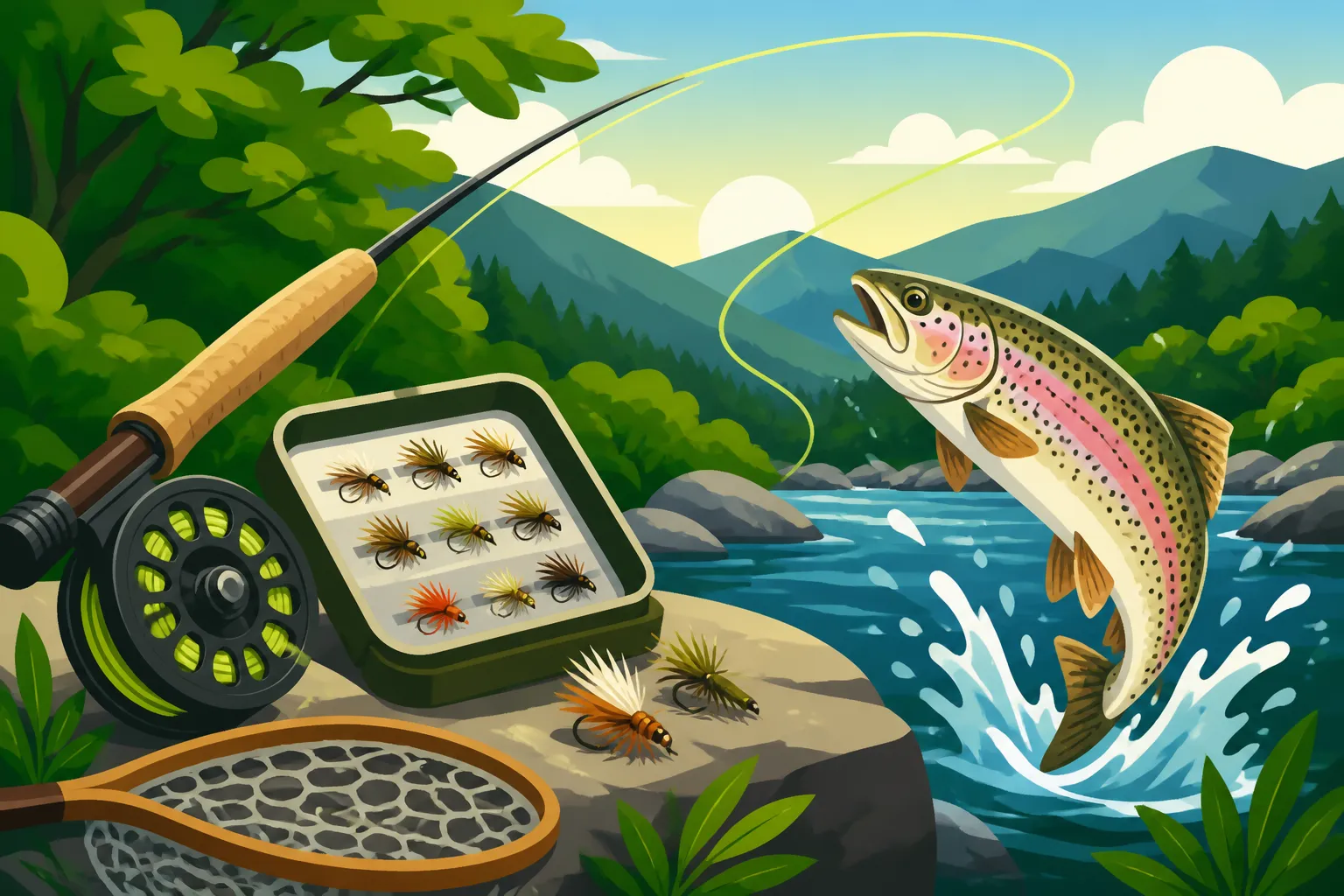
This is where the art and science of fly fishing truly converge. North Georgia's trout feed on a variety of insects throughout the year, so having a selection of key patterns is crucial. You'll want to cover the main food sources: mayflies, caddisflies, stoneflies, midges, and terrestrials. For dry fly fishing, classic patterns like the Parachute Adams, Elk Hair Caddis, and Stimulator are absolute must-haves. When the trout are rising to specific hatches, having a few different sizes of these patterns will be incredibly helpful.
Nymphing is often the most productive way to catch trout, especially when they're not actively rising to dry flies. Essential nymph patterns include the Pheasant Tail, Hare's Ear, Prince Nymph, Squirmy Wormy, and various sizes of simple bead-head flies like a Zebra Midge. Having these in sizes from #12 down to #20 will cover a wide range of situations. Streamers, which imitate baitfish, are fantastic for aggressive trout or targeting larger fish. Patterns like the Woolly Bugger (in black, olive, or white) and articulated streamers can be incredibly effective, especially in deeper pools or during higher flows.
Don't forget terrestrials! During warmer months, grasshoppers, ants, and beetles often fall into the water, providing a protein-packed meal for trout. Patterns like Dave's Hopper, ant patterns, and beetle imitations can be deadly from late spring through early fall. A diverse fly box with a good mix of dry flies, nymphs, and a few streamers will prepare you for almost any condition you encounter in Georgia Trout Fishing: Rainbow, Brown, and Brook Trout Explained. You can often find great starter assortments or build your own selection at a store like Bass Pro Shops or through online retailers like Amazon.
Indicators, Split Shot, and Other Rigging Necessities
Beyond leaders and flies, there are a few other small but mighty components of your terminal tackle that you absolutely cannot do without. Strike indicators (often just called "indicators") are essentially small bobbers that tell you when a fish has taken your subsurface nymph. They come in various styles – foam, yarn, bobber-style, even putty – and each has its pros and cons. Learning to read your indicator is a fundamental skill in nymphing, and having a few different types on hand allows you to adapt to current speeds and fly depths.
Split shot refers to small lead-free weights that you crimp onto your leader, usually above your nymph, to help it sink faster and get down to where the fish are feeding. Carrying a small assortment of different sizes is crucial, as you'll often need to adjust the amount of weight based on current speed and water depth. Tippet rings are tiny metal rings that allow you to attach new sections of tippet without cutting back into your tapered leader, extending its life. They're also great for building multi-nymph rigs.
Finally, don't forget leader straighteners – small tools that help remove memory coils from your leader, ensuring a more natural presentation. And if you're dry fly fishing, a desiccant (drying agent) and floatant are essential for keeping your flies riding high on the water. These small items might seem insignificant, but they make a huge difference in your success and enjoyment.
Waders, Boots, and Apparel: Staying Comfortable and Safe on the Water
Fly fishing in North Georgia often means spending hours wading in cool or cold water, traversing slippery riverbeds, and dealing with unpredictable mountain weather. Being properly dressed and protected isn't just about comfort; it's about safety and extending your time on the water. Investing in quality waders, boots, and appropriate layering will ensure you remain warm, dry, and able to focus on the fishing, not on shivering.
Selecting the Right Waders: Breathable, Neoprene, and Fit
Waders are perhaps the most important piece of clothing for fly fishing, as they allow you to get into the water without getting wet. For North Georgia's year-round trout fishing, breathable waders are almost always the best choice. They are made from advanced fabrics (like Gore-Tex or similar proprietary materials) that allow perspiration to escape while preventing water from entering, keeping you comfortable in a wide range of temperatures. Neoprene waders, while very warm, are generally too hot for anything but the coldest winter days and can be cumbersome. Breathable waders give you the flexibility to layer underneath, making them adaptable for all seasons.
Fit is paramount for both comfort and durability. Waders that are too tight will restrict movement and put stress on seams, leading to leaks. Waders that are too baggy can bunch up and be uncomfortable to walk in. Pay close attention to inseam, chest, and foot size (for stockingfoot waders). Most breathable waders come in stockingfoot design, meaning they have neoprene "socks" that you wear wading boots over. This setup offers better ankle support and comfort than bootfoot waders, which have integrated boots.
When trying on waders, wear the kind of layers you'd typically wear while fishing. Sit down, squat, and walk around to ensure full range of motion. Quality waders are an investment, but they will last for years with proper care and make your time on the stream infinitely more enjoyable. Look for features like reinforced knees and seat, integrated gravel guards, and chest pockets for storage.
Choosing Wading Boots: Felt vs. Rubber Soles and Studs
Your wading boots are your connection to the riverbed, providing crucial traction and support. This is where safety truly comes into play, as slippery rocks are a constant hazard. Wading boots are typically worn over your stockingfoot waders. The primary decision here is between felt soles and rubber soles. Felt soles offer superior grip on slick, algae-covered rocks, which are common in many Georgia trout streams. However, felt can pick up invasive species (though efforts are made to clean them) and can be slippery on muddy banks or snow/ice.
Rubber soles, on the other hand, are more versatile off the riverbed, offering better grip on trails, mud, and snow, and are easier to clean. Modern rubber soles often feature specialized compounds and lug patterns designed to maximize grip on wet rocks, sometimes rivaling felt. Many anglers in Georgia opt for rubber soles due to environmental concerns about felt, or simply for their versatility. You can often enhance the grip of either felt or rubber soles by adding studs or cleats. These metal or tungsten carbide spikes screw into the sole, providing an incredible amount of traction on even the slickest surfaces.
Regardless of your sole choice, ensure your wading boots are comfortable, provide good ankle support, and fit well over your wader socks. Trying them on with your waders is essential. Look for durable construction, good drainage, and sturdy lacing systems. The right boots will keep you upright and confident as you navigate North Georgia's beautiful, but sometimes challenging, stream beds.
Layering for North Georgia Weather: From Cool Mornings to Warm Afternoons
North Georgia's weather can be notoriously fickle, especially in the mountains. A chilly morning can turn into a warm afternoon, and a clear sky can quickly give way to a pop-up shower. Therefore, dressing in layers is the golden rule of comfortable fly fishing. Start with a moisture-wicking base layer next to your skin. This could be synthetic or merino wool, and its job is to pull sweat away from your body, keeping you dry.
Next comes an insulating mid-layer. A fleece jacket, vest, or a lightweight puffy jacket works perfectly. This layer traps warm air, providing warmth without excessive bulk. On colder days, you might even double up on mid-layers. Over your mid-layer, you'll want a good waterproof and breathable outer shell. This could be a dedicated wading jacket or a high-quality rain jacket. It's essential for protecting you from rain, wind, and spray, and should be sized to fit comfortably over all your other layers.
For your legs, wear synthetic or wool pants under your waders – absolutely no cotton, as it retains moisture and will make you cold if it gets wet. Finally, a good pair of wool or synthetic socks will keep your feet warm and comfortable inside your waders and boots. Don't forget a hat for sun protection or warmth, and polarized sunglasses to cut glare and help you spot fish. Thinking through these layers will allow you to adjust to changing conditions throughout your day on the water, ensuring maximum comfort and focus. For a general overview of seasonal patterns, refer to Georgia Fishing Seasons by Month.
Tools and Accessories: The Small Details That Make a Big Difference
Beyond the big-ticket items like rods and waders, it's often the small tools and accessories that truly complete your fly fishing setup. These are the items that streamline your operations on the water, protect your catch, and keep you organized. Ignoring them can lead to frustration, while having the right ones can turn a good day into a great one.
Netting and Landing Fish: Conservation in Mind
Landing a trout safely and efficiently is a crucial part of the angling experience, especially if you plan on practicing catch and release, which is common in many North Georgia trout waters. A good landing net is essential. For fly fishing, look for a net with a rubber or silicone mesh bag. Unlike traditional nylon nets, rubber mesh is much gentler on the fish's delicate slime coat, fins, and scales. It also prevents flies from getting tangled in the mesh, saving you time and frustration.
Nets come in various sizes and handle lengths. For stream fishing in North Georgia, a shorter-handled, basket-style net that can be clipped to your vest or pack is often ideal. It's easy to maneuver in tight spaces and allows you to quickly subdue a fish for a quick photo and release. If you're fishing larger rivers or from a boat, a longer-handled net might be more appropriate.
When landing a fish, try to keep it in the water as much as possible. Wet your hands before handling the fish, and support its body fully if you must lift it for a quick picture. The goal is to minimize stress and ensure the fish has the best chance of survival after release. Proper netting and handling demonstrate good angling ethics and contribute to the health of the fishery.
Essential Tools for the Vest or Pack: Nippers, Forceps, and Floatant
Your fishing vest or pack will become a mobile toolkit, holding all the small items you need frequently. Among the most critical are nippers. These small, sharp clippers are used to quickly trim excess tippet or leader material after tying a knot. They often come with a small needle to clear the eye of a hook, which can sometimes get clogged with glue or paint. Having them easily accessible, perhaps on a zinger (a retractable cord), saves precious time and avoids fumbling.
Forceps or hemostats are another indispensable tool. These clamp-like instruments are perfect for safely removing hooks from a fish's mouth, especially if the hook is deeply set or the fish is small. Their locking mechanism allows you to grip the hook firmly and twist it out without excessive handling of the fish. Like nippers, keep them handy on a zinger or clipped to your vest.
If you're dry fly fishing, floatant is a must. This liquid or paste-like substance is applied to your dry flies to make them more buoyant, helping them float high on the water's surface. A good quality floatant will keep your fly riding correctly through multiple casts and fish, maintaining its natural appearance. For nymphing, you might carry a small split shot dispenser to quickly add or remove weight, and a leader straightener to keep your leader supple. These small items, easily found at Bass Pro Shops or online platforms like Amazon, truly make the difference between a smooth fishing experience and one riddled with minor frustrations.
Fly Boxes, Packs, and Vests: Organization on the Go
Keeping your flies organized and protected is vital. Fly boxes come in countless styles, from slim, clear plastic boxes with magnetic closures to waterproof, foam-lined cases that can hold hundreds of flies. It's smart to have a few different boxes: a larger "master" box that stays in your truck or bag, and a smaller, thinner "on-the-water" box that fits easily in your vest or pack, holding only the patterns you anticipate using that day. This keeps your essential flies accessible and prevents you from having to lug around your entire collection.
For carrying all your gear, you have a few options: a traditional fishing vest, a chest pack, a sling pack, or a backpack. Fishing vests are classic, offering numerous pockets to distribute weight evenly and keep everything within reach. Chest packs are smaller and keep everything front and center, great for minimalistic anglers or those wading deep. Sling packs sit comfortably over one shoulder and can be swung around to the front for easy access to compartments without removing the pack. Backpacks are for those who carry more gear, hike longer distances, or need to pack extra layers and provisions.
Ultimately, the best option depends on your personal preference and how much gear you like to carry. The key is to find a system that keeps your tools, flies, and other necessities organized, easily accessible, and comfortable for a full day of wading and casting. Having a well-organized system means less fumbling and more focused fishing, which is what we all want, right?
Safety and Navigation: Beyond the Basic Gear
While fly fishing is generally a peaceful pursuit, the natural environment of North Georgia's trout streams can present its own challenges. Being prepared for potential hazards and knowing how to navigate safely isn't just a good idea – it's crucial for an enjoyable and incident-free trip. Think of this section as your personal preparedness checklist for mountain angling.
Wading Staffs and Traction Aids for Tricky Currents
One of the most underestimated pieces of safety gear, especially in North Georgia's boulder-strewn rivers and fast-flowing currents, is a wading staff. A sturdy wading staff provides a crucial third point of contact with the riverbed, significantly enhancing your balance and reducing your risk of falling. This is particularly important when crossing strong currents, navigating deep pools, or dealing with slippery rocks. Collapsible wading staffs are popular as they can be easily stowed on your pack or vest when not in use and quickly deployed when needed.
Beyond a wading staff, enhancing the traction of your wading boots is paramount. As discussed earlier, studs or cleats can be screwed into the soles of your wading boots (whether felt or rubber) to provide exceptional grip on slick rocks. Some boots even come with integrated stud systems. Investing in these traction aids can literally save you from a nasty fall and potential injury. Always remember, a fall in cold, moving water can turn serious quickly.
Before entering any new water, take a moment to assess the current speed, depth, and riverbed conditions. Walk slowly, testing each step with your wading staff or foot before committing your weight. Good traction and a reliable wading staff are your best friends in navigating the challenging terrain of Georgia's wild trout streams.
First Aid and Emergency Preparedness
Even on a short trip, a basic first aid kit is an absolute non-negotiable for any angler venturing into the outdoors. You don't need a massive trauma kit, but a small, waterproof pouch containing essentials can address common minor injuries. Think about items like adhesive bandages, antiseptic wipes, pain relievers, blister treatment, gauze, and medical tape. Bug spray is also a wise addition, especially during warmer months.
Beyond minor injuries, consider what you would do in a more serious emergency. Cell service can be spotty or non-existent in remote sections of North Georgia. Informing someone of your float plan – where you're going, when you expect to return, and who to call if you don't check in – is a simple yet vital safety measure. Carrying a fully charged cell phone (perhaps in a waterproof bag) is a given, but also consider a personal locator beacon (PLB) or satellite messenger if you plan on exploring very remote areas. These devices can summon emergency help even when out of cell range.
Carrying enough water and a few high-energy snacks is also critical, even for a half-day trip. Dehydration and low blood sugar can impair judgment and lead to dangerous situations. Be aware of changing weather conditions and know when to call it a day if a storm rolls in or lightning becomes a threat. For advice on fishing after extreme weather, you might find Fishing After a Cold Front or Fishing After Rain helpful.
Navigation and Communication in Remote Areas
Many of North Georgia's best trout streams flow through dense national forests and wilderness areas, where getting turned around is a real possibility, especially for those unfamiliar with the terrain. Having reliable navigation tools is key. While a smartphone with mapping apps can be useful, always carry a physical map (waterproofed, if possible) and a compass as a backup, especially since batteries die and signals drop. Know how to read them!
Consider downloading offline maps of your intended fishing area before you leave home. Many apps allow this and can utilize your phone's GPS without needing cellular service. If you're exploring new or particularly remote areas, marking your entry and exit points on a map or GPS device can be a lifesaver.
Communication is also part of preparedness. If you're fishing with a buddy, agree on hand signals or protocols if you separate. For solo anglers, the earlier advice about letting someone know your itinerary is paramount. Whistles are also useful to carry; three short blasts are a universal distress signal. Being mindful of your surroundings, knowing your limits, and having the right tools to navigate and communicate can ensure your fly fishing adventure remains a positive and safe experience in Georgia's beautiful backcountry.
Disclaimer
This article is for general informational purposes only and does not constitute professional advice. Laws, prices and regulations vary by location and change over time. Consult a qualified professional for guidance on your specific situation.