Fishing Techniques for Every Time of Day
Have you ever spent hours on the water, only to come home empty-handed, wondering if you just picked the wrong day to fish? It's a frustrating experience many of us know all too well. The truth is, while a little luck always helps, success often boils down to understanding the subtle rhythms of nature, especially how fish behavior changes throughout the day. This comprehensive guide is here to unravel the mysteries of timing, offering you practical, Georgia-specific fishing techniques for every part of the day, helping you make the most of your precious time on the water.
The Ever-Changing Clock: Why Time of Day Matters to Georgia Anglers
It might seem obvious that different times of day affect fishing, but truly understanding why is the first step to becoming a more consistent angler. Fish aren't just swimming around aimlessly; their entire world is dictated by a cascade of environmental factors that shift with the sun and moon. Ignoring these changes is like trying to fish blindfolded – you might get lucky, but you're definitely missing out on prime opportunities.
Understanding Fish Behavior and Circadian Rhythms
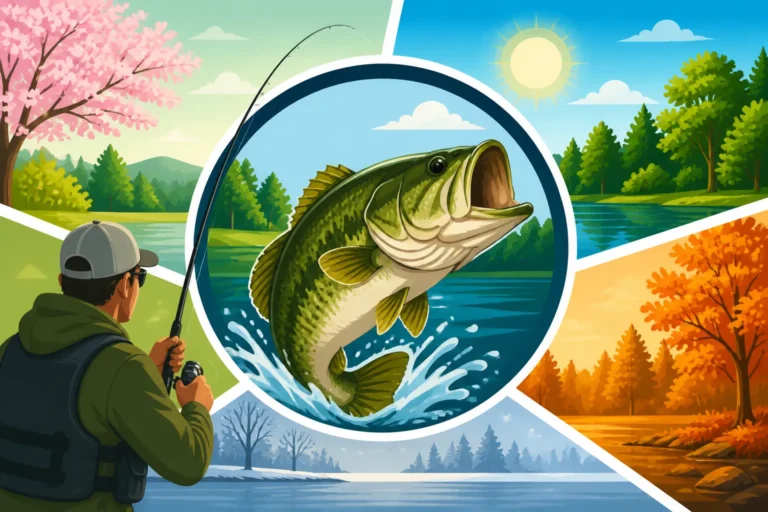
Just like us, fish have their own internal clocks, or "circadian rhythms," that influence when they feed, rest, and move. These rhythms are primarily triggered by light levels. When the sun is rising or setting, the low light provides a perfect ambush scenario for many predatory fish, making them more active. Think about how a human hunter might prefer dawn or dusk to stalk prey – it's similar for a largemouth bass or a hungry trout. They rely on these periods of reduced visibility to gain an advantage over their food sources, which often include smaller baitfish that become more vulnerable without the bright sunlight. This natural cycle means that simply being on the water doesn't guarantee a bite; being there when the fish are programmed to eat dramatically increases your odds.
Beyond just feeding, fish also use these rhythms for other critical life functions. For instance, in cooler months, midday might be when they're most active, seeking warmer waters to maintain their body temperature. In contrast, during the sweltering Georgia summer, they might retreat to deeper, cooler zones during the brightest hours, only to emerge in the relative cool of dawn or dusk. Understanding this fundamental behavioral pattern is key to predicting where they’ll be and what they’ll be doing.
Impact of Light, Temperature, and Oxygen Levels
The trifecta of light, temperature, and oxygen levels are the unsung heroes (or villains!) of your fishing day. As the sun rises higher, light penetration into the water increases, causing some fish to retreat to deeper, darker haunts or seek refuge in dense cover. This isn't just about avoiding predators; it's also about comfort and energy conservation.
Temperature is another huge factor, especially in Georgia's diverse climate. On a crisp autumn morning, the water might be too cold for an active bite, but as the sun warms the shallows, baitfish become more lively, which in turn stimulates predators like spotted bass to move in. Conversely, in the dog days of summer, surface waters can become oppressively warm, reducing dissolved oxygen levels. This drives fish deeper, often near thermoclines or areas with fresh oxygenated water, like creek channels or river bends. Knowing how to read the water temperature, perhaps with a basic fish finder, can give you a massive advantage. You can learn more about How Water Temperature Affects Fish Behavior to further refine your approach.
Oxygen levels, while less talked about, are incredibly important. Warm water holds less oxygen than cold water. During hot summer afternoons, shallow areas and stagnant coves can become oxygen-depleted, pushing fish to move. Wind, rain, and current can all help oxygenate the water, often creating hotspots. This complex interplay means that the prime "feeding windows" can be surprisingly short, making an informed approach essential for maximizing your catch.
Dawn Patrol: Mastering Early Morning Fishing Techniques
Ah, the "golden hour." There's something almost sacred about being on the water before the rest of the world wakes up. The air is cool, the sounds are crisp, and the anticipation is palpable. For many Georgia anglers, this isn't just a preference; it's often the most productive time to target many species.
The "Golden Hour" Explained for Georgia Waters
The "golden hour" in fishing refers to the period just before and after sunrise, usually lasting an hour or two. During this time, light levels are low, creating a perfect camouflage for predatory fish. They feel less exposed and are more willing to venture into shallower water to hunt for breakfast. Think about a trophy largemouth bass lurking in the shadows of a dock on Lake Lanier; as the sun peeks over the horizon, it becomes an opportune hunter. The slight chill in the air also often means cooler surface water temperatures, which can be exactly what fish need to become active after a night of relative inactivity, especially in warmer months. This is when you'll often see explosive topwater bites.
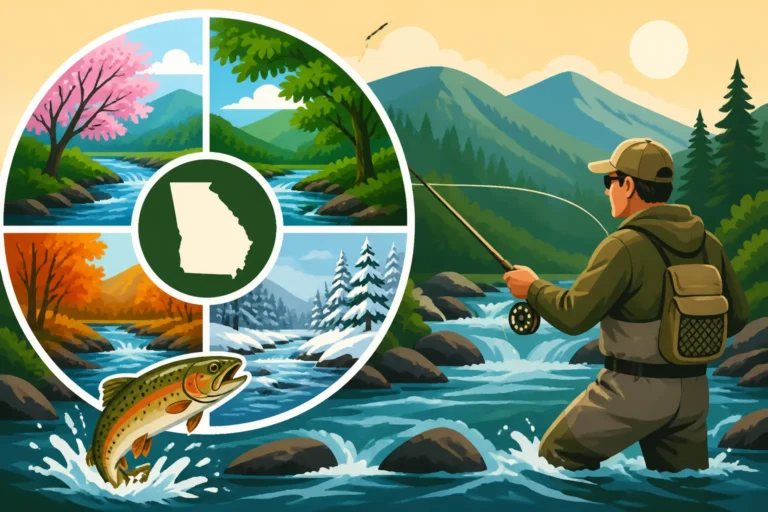
This prime window isn't just for bass; trout in North Georgia's mountain streams, like the Toccoa River, will often be more active as the first rays of sun warm the water just enough to get insects moving, providing an easy meal. Even saltwater species along the Georgia coast, such as redfish and speckled trout, will use the low light to ambush baitfish moving in and out of tidal creeks. It's a universal truth in fishing: low light often equals high action.
Lure and Bait Choices for Low Light Conditions
When the light is dim, you need lures and baits that can make themselves known without relying solely on visual appeal. This means focusing on vibration, sound, and silhouette. Topwater lures are absolute kings during dawn. Poppers, buzzbaits, and walking baits (like a Heddon Super Spook or a Strike King KVD Sexy Dawg) create a commotion on the surface that fish can't resist, often resulting in exhilarating strikes. Darker colored topwaters, such as black or dark blue, provide a better silhouette against the pre-dawn sky, making them easier for fish to see from below.
Spinnerbaits and chatterbaits are also excellent choices. Their thumping blades and vibrating skirts create a strong sensory disturbance that fish can detect even in murky or low-light conditions. For a more subtle approach, consider a dark-colored soft plastic worm (like a black or junebug Senko) fished weightless or with a light Texas rig. Live bait, of course, is always a fantastic option. A lively shiner or minnow fished under a bobber can be incredibly effective when fish are actively foraging. On the trout streams, a simple nightcrawler or even a dark-colored fly pattern can entice a hungry trout before the sun gets too high. For deeper insights, our guide on Dawn Fishing Techniques provides even more specialized tips.
Strategic Location Selection at Sunrise
During the golden hour, fish are often moving shallow to feed. This makes specific locations prime targets. Focus on areas where fish can easily transition from deeper water to shallow feeding zones. Points, humps, grass lines, and shoreline cover like docks, fallen trees, and lily pads are all excellent choices. For instance, on a lake like Lake Oconee, targeting boat docks and rip-rap banks with a buzzbait at dawn can be incredibly productive for bass.
River anglers targeting shoal bass on the Flint River should focus on current breaks and eddies near the banks where baitfish might be congregating. Trout anglers should look for the heads of pools and riffles where fish are actively feeding on emerging insects. Along the coast, wade fishing around oyster beds or marsh grass edges during an incoming tide can put you right in the path of feeding redfish. The key is to find those transition areas, places where fish can quickly dart out to grab a meal and retreat to safety. Positioning your boat or yourself to cast into these zones without spooking the fish is crucial for maximizing your early morning success.
Midday Maneuvers: Tactics for When the Sun is High
As the sun climbs higher and the day heats up, many anglers pack up, thinking the bite is off. While it's true that the midday sun can slow things down, it doesn't mean you can't catch fish. It just means you need to adjust your tactics and think like a fish trying to escape the heat. This is often when the less persistent anglers give up, giving you an advantage if you know what you’re doing.
Dealing with Bright Light and Warm Water
Bright sunlight can be a double-edged sword. On one hand, it drives many fish deep or into heavy cover. On the other, it can make sight fishing easier in clear water conditions, assuming the fish are still in visual range. However, for most Georgia lakes and rivers, the primary challenge is finding fish that have retreated from the sun. Warm water exacerbates this, especially in the summer. When the surface temperature climbs, fish become lethargic and seek out cooler, more oxygenated water.
This means rethinking your approach. Instead of fast-moving, flashy lures designed for active predators, you'll want to present slower, more natural offerings. Consider downsizing your line and using more subtle colors. The midday sun can also make your shadow visible to fish if you’re not careful, especially when bank fishing or wading. Always try to approach your fishing spot with the sun to your back, casting your shadow away from where you expect the fish to be. This attention to detail can make all the difference when fish are already wary.
Targeting Deeper Water and Shade Structures
When the sun is high, fish gravitate towards deeper water or dense shade. For lake anglers, this means focusing on deep creek channels, submerged timber, offshore humps, and ledges. On Lake Sinclair, for example, many crappie anglers will target brush piles in 15-25 feet of water using jigs or live minnows. Bass will often suspend over deep water near baitfish schools or hug the bottom along ledges. A good fish finder is invaluable here to locate these hidden structures and schools of fish.
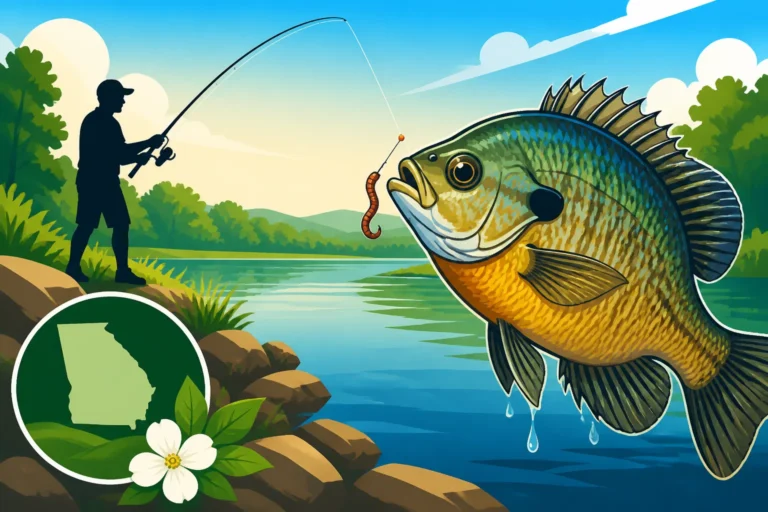
Shade structures are another fantastic midday refuge. Docks, bridges, overhanging trees, and even large rocks can provide crucial thermal cover. Cast your lures as far under these structures as possible. For bass, pitching a jig or a Texas-rigged creature bait into the darkest corners of a dock can often provoke a bite. For panfish like bluegill and bream, a simple worm under a bobber cast into shaded pockets can be incredibly effective. Even in rivers, deep holes and undercut banks offer fish a reprieve from the direct sunlight and stronger currents.
Slowing Down Your Presentation
Midday fishing often calls for a patient, slower approach. Fast retrieves that worked at dawn might be completely ignored now. Fish are typically less aggressive and won't chase a bait as far. This is the time for finesse techniques. Drop-shotting, Carolina rigging, and shaky head jigs are excellent for targeting lethargic bass holding tight to structure in deeper water. These presentations allow your bait to stay in the strike zone longer, giving reluctant fish more time to decide to bite.
For catfish, midday can still be productive if you target deep holes in rivers like the Altamaha or Ocmulgee, using cut bait or stink baits fished on the bottom with a Carolina rig. They aren't as sensitive to light as some other species and will often feed throughout the day in their preferred deep, dark habitats. Even trout in shaded, cold mountain streams can be caught midday by slowly drifting nymphs or small worms through deeper pockets. Remember, patience is a virtue in midday fishing. Don't be afraid to let your bait soak or retrieve it at a snail's pace; sometimes, the slightest twitch is all it takes to trigger a strike.
Dusk Dynamics: Capitalizing on Evening Feeding Sprees
As the sun begins its descent, casting long shadows across the water, a new energy awakens the aquatic world. This evening transition, much like dawn, often signals a major feeding window. It's a fantastic time to be on the water, offering a blend of daytime visibility and nighttime fish activity.
The Evening Bite: What Triggers It?
The evening bite is a magical time for anglers. As the intense midday sun fades, the water temperature in the shallower areas begins to cool down. This cooling, even by a few degrees, can signal to fish that it's safe to move out of their deep-water or shaded retreats. Predatory species, like largemouth and spotted bass, start to push baitfish towards the surface or into more exposed areas. You'll often see active schooling behavior from baitfish and more surface disturbances as game fish begin to chase them. This is also when insect activity picks up around the water's edge, drawing in trout and panfish.
The fading light itself is a major trigger. Similar to dawn, it offers a distinct advantage to predators. Their eyes are often more adapted to low light than those of their prey, giving them the upper hand. This diminished visibility means fish are less wary and more willing to strike at a variety of lures. For anglers, this often translates into some of the most exciting action of the day, with powerful strikes and aggressive chases. Our article on Dusk Fishing Techniques offers more detailed guidance on maximizing this productive period.
Transitioning from Day to Night Lures
As dusk progresses, you'll want to adjust your lure selection. Start with presentations similar to what worked at dawn: topwater lures, spinnerbaits, and chatterbaits are still highly effective. As the light dims further, however, you might want to switch to lures that emphasize sound, vibration, and a larger profile. Darker colors continue to excel because they create a strong silhouette against the fading light. Consider a black or junebug colored Senko, a dark jig, or a large, dark-colored soft plastic worm.
In coastal areas, as the sun dips below the horizon, noisy topwater plugs like "walk-the-dog" style baits can be irresistible to redfish and sea trout. For trout streams, evening hatches of insects can make fly fishing with dry flies incredibly productive, but as darkness settles, switching to streamers or larger nymph patterns might yield better results. Many anglers also find that glow-in-the-dark or UV-enhanced baits start to shine (pun intended!) as true darkness approaches, especially for crappie and other panfish. It's about adapting to the diminishing light and providing a target that fish can easily locate. On a warm Georgia evening, you might even consider trying a crankbait in the shallows to target bass feeding actively before full darkness.
Shoreline and Shallow Water Opportunities
The evening is prime time for targeting fish in shoreline and shallow water areas. During the day, these spots might have been too exposed or too warm, but as the sun retreats, they become comfortable feeding grounds. Bass will move out of deeper cover and patrol the edges of weed beds, submerged timber, and rip-rap banks. This makes bank fishing a fantastic option during the evening. You can often access prime fishing real estate without needing a boat. Look for areas with a quick drop-off nearby, giving fish easy access to both shallow feeding zones and deeper safety.
For crappie, they'll often move from deep brush piles to shallower submerged cover or dock lights as night falls. Panfish, like bluegill and bream, will congregate around lily pads and brush near the bank, eager to snap up insects or small worms. In rivers, current seams and shallow shoals become active as fish emerge to feed. Whether you're casting from shore or from a boat, systematically working these shallow water features can lead to some incredible action, especially for anglers who stay on the water a little longer than the average crowd.
Night Shift Success: Unlocking the Mysteries of Nocturnal Fishing
For some, the thought of fishing in pitch black is daunting. For others, it’s an exciting adventure into a world where familiar waters take on a new, mysterious character. Night fishing can be incredibly productive, often yielding larger fish and offering a peaceful, solitary experience away from daytime crowds. It's a fantastic way to extend your fishing day, especially during hot Georgia summers when daytime bites can be tough.
Embracing the Darkness: Why Fish Feed at Night
Many species of fish become much more active at night for several compelling reasons. First and foremost, the cover of darkness offers supreme ambush conditions for nocturnal predators like catfish, flatheads, and even some large bass. Without the glaring sun, they feel safer to venture into open water or shallower areas to hunt. Second, night fishing often means cooler water temperatures, which can reinvigorate sluggish fish, particularly in the sweltering heat of a Georgia July or August. Cooler temperatures also mean higher dissolved oxygen levels, making fish more comfortable and active.
Finally, some prey species, like certain baitfish or insects, are more active at night, providing a readily available food source. This shift in the food chain encourages predators to adjust their schedules. Imagine a massive blue catfish in the Flint River; it's perfectly adapted to hunting by smell and touch in the dark, making night fishing the ideal time to target these giants. Our guide on Night Fishing Techniques for Catfish is a must-read if you're serious about after-hours success.
Essential Gear and Safety for Night Fishing
Night fishing requires a few essential gear considerations to ensure both success and safety. A good headlamp or powerful spotlight is non-negotiable. Look for models with red light options, as red light is less likely to spook fish and preserves your night vision. Carrying spare batteries is also crucial. Beyond illumination, a first-aid kit, insect repellent (especially important in Georgia!), and a fully charged cell phone are vital safety items.
For your tackle, consider glow-in-the-dark lures, UV-reactive baits, or those that emit strong vibrations. Rattling crankbaits, spinnerbaits with large thumping blades, and jigs tipped with scent-infused plastics are excellent choices. Using heavier line can also be a good idea, as you'll be relying more on feel than sight, and a stronger line offers more forgiveness when setting the hook or fighting a fish in the dark. Always let someone know where you're going and when you expect to return, especially if you're fishing alone. Navigating in the dark, whether by boat or on foot, adds an extra layer of challenge and requires heightened awareness.
Best Species and Baits for After-Hours Action
While many fish can be caught at night, some species are particularly geared for nocturnal feeding, making them prime targets. Catfish are arguably the kings of night fishing in Georgia. Channel cats, blue cats, and flatheads use their keen sense of smell and barbels to locate food in the dark. Large cut baits, chicken livers, stink baits, or live sunfish are incredibly effective. Target them in deep holes, along river bends, or near significant structure in lakes.
Largemouth bass can also be incredibly active at night, especially trophy-sized fish. Big black or dark-colored spinnerbaits, Jitterbugs, or even large soft plastic worms fished slowly along weed lines or under dock lights can yield impressive results. Crappie, too, are often caught at night, especially under artificial lights. Many anglers use submersible lights to attract plankton and baitfish, which in turn draw in crappie. Small jigs or minnows fished vertically around these light sources can be lights out! Even walleye, if you're lucky enough to find them in Georgia, are known for their excellent night vision and often feed heavily after dark. Experiment with species and locations, and you might discover your new favorite fishing time.
Beyond the Clock: Other Factors Influencing Bite Times
While the time of day is undeniably a huge factor, it's never the only factor. Smart anglers know that fish behavior is a complex puzzle, and solving it requires considering a range of other environmental conditions. Ignoring these can mean the difference between a great day and a frustrating one, even if you’re fishing during the "right" time of day.
Weather Patterns and Their Influence
Weather is a game-changer. A sudden cold front can shut down a bite faster than anything, sending fish deep and making them incredibly lethargic. Conversely, a stable period of warm, overcast weather can lead to sustained, aggressive feeding. Leading up to a storm, especially a thunderstorm, fish often go on a feeding frenzy. The drop in barometric pressure seems to trigger an instinct to feed before the weather turns foul. Our guide on How to Fish After a Cold Front delves deeper into adapting to these challenging conditions.
Overcast days with light rain can also be fantastic. The diffused light allows fish to roam more freely and feel more secure in shallower water, and the rain can wash bait into the water. Heavy rain, however, can muddy the water, disperse bait, and make fishing difficult. Wind also plays a role. A moderate breeze creates a "chop" on the water's surface, breaking up light penetration and often pushing baitfish into specific areas, making them easier targets for predators. Too much wind, though, can make boat control and casting a nightmare. Always check the forecast and have a plan B for unexpected weather shifts.
Seasonal Variations
Georgia experiences four distinct seasons, and each brings its own unique set of fishing patterns. What works in spring won't necessarily work in winter. Spring is often associated with the spawn for many species, particularly bass and crappie. During this time, fish move shallow to nest, becoming territorial and aggressive, making them easier to catch. Our guide on Spring Bass Fishing Patterns on Georgia's Reservoirs offers extensive advice for this exciting period.
Summer heat drives many fish deep or into heavy cover during the day, making early morning and late evening bites crucial. Fall sees a "fall turnover" in many lakes, followed by fish feeding heavily as they prepare for winter. They often move shallower again, chasing baitfish that are also fattening up. Winter fishing can be tough, but certain species like crappie and stripers can still be caught if you know where to find them in deeper, stable water. Tailoring your techniques not just to the time of day, but also to the season, is paramount for year-round success in Georgia.
Moon Phases and Tidal Effects (Coastal Fishing)
For coastal anglers, moon phases and tidal effects are as important, if not more important, than the time of day. The gravitational pull of the moon dictates the tides, and fish activity in saltwater environments is inextricably linked to these ebb and flow cycles. Incoming tides often bring in baitfish and cooler, more oxygenated water, triggering a feeding frenzy among species like redfish, flounder, and speckled trout. Outgoing tides can concentrate baitfish in creeks and channels, making them easy targets for predators.
Full moons and new moons, known as "spring tides," produce stronger tidal currents, which can significantly influence where fish stage and feed. Conversely, quarter moons, or "neap tides," result in weaker currents. While less critical for freshwater fishing, some freshwater anglers still consult solunar tables, which predict periods of increased fish activity based on moon and sun positions. While the science behind solunar tables for freshwater is debated, many swear by their effectiveness, especially for predicting peak feeding windows within prime times like dawn and dusk. Always check your local tide charts if you're heading to the Georgia coast; it can make or break your trip.
Optimizing Your Day: Planning for Peak Performance
You've learned that time of day, weather, and seasons all play a critical role in fishing success. Now, how do you put it all together to plan your perfect fishing day in Georgia? It’s about being prepared, observant, and willing to adapt. Even the best laid plans can go awry, but a flexible angler is a successful angler.
Using Weather Apps and Solunar Tables
Before you even leave the house, leverage the technology available to you. Modern weather apps provide detailed hourly forecasts, including temperature, wind speed and direction, barometric pressure, and even moon phase. This information is gold for planning your attack. If a cold front is coming through, you might shift your strategy to target deeper, slower presentations. If an approaching storm is predicted, you might focus on aggressive, pre-front feeding behavior in the hours leading up to it.
As mentioned, solunar tables are another tool many anglers use. You can find these online or in various fishing apps. They typically highlight "major" and "minor" feeding periods throughout the day. While not foolproof, they can guide you towards potential peak activity windows within your chosen fishing times. For instance, if you're planning an evening trip and the solunar table shows a major period coinciding with dusk, you know you're likely in for some hot action. Think of these tools as additional data points to inform your decisions, rather than hard-and-fast rules. They offer a strong indication of Best Time of Day to Fish for Bass, and other species, but should be used in conjunction with your own observations.
Adapting Your Approach as the Day Progresses
One of the biggest mistakes an angler can make is sticking to a single technique or lure all day long. Fish aren't static; their behavior changes as light, temperature, and other factors evolve. A truly successful angler is constantly observing and adapting. Start your morning with those aggressive topwater baits, but as the sun gets high, be ready to transition to deeper presentations, slower retrieves, or more subtle offerings.
For instance, if you're fishing a popular spot on Lake Lanier for striped bass, you might start by casting topwater lures at dawn. If that bite dies off by mid-morning, you might then switch to downlining live bait in deeper channels where stripers are schooling. As evening approaches, you might find them chasing shad again in shallower coves, making a jig or spoon effective. Have a variety of lures and baits rigged and ready, so you can make quick changes without wasting precious fishing time. This adaptability is critical, especially when fishing Georgia's diverse waters, whether you're fly fishing for trout or casting for bass. Many great lures can be found on platforms like Amazon, offering a huge selection to cover all your bases.
The Importance of Observation and Persistence
Ultimately, no guide or solunar table can replace your own observations on the water. Pay attention to everything: water temperature, clarity, wind, bird activity, baitfish schools, and any signs of active feeding. Did you see a bass blow up on bait just beyond that weed line? Is there a subtle swirl where a trout might be rising? These visual cues are invaluable.
Persistence is also key. There will be days when the bite is tough, no matter what you do. Don't get discouraged. Keep trying different depths, retrieves, and lure colors. Sometimes, just a slight adjustment to your presentation can unlock the bite. Learn from every trip, good or bad. What worked? What didn't? Keep a mental (or even written) log, and over time, you'll develop an intuitive understanding of the waters you fish. A Year-Round Guide to Fishing in Georgia will give you a broader understanding of how these daily changes fit into the bigger picture of seasonal patterns.
By combining an understanding of daily rhythms with an awareness of broader environmental factors and a commitment to adapting your strategy, you’ll transform those frustrating, empty-handed days into memorable, successful fishing adventures across Georgia. Good luck out there!
| Time of Day | Typical Conditions | Fish Behavior | Recommended Techniques | Example Species | Key Lure/Bait Types |
|---|---|---|---|---|---|
| Dawn (Pre-sunrise to 2 hrs after) | Low light, cool air/water (warming), often calm | Highly active, feeding shallow, less wary | Topwater, aggressive retrieves, shallow presentations | Largemouth Bass, Striped Bass, Trout, Redfish | Buzzbaits, Poppers, Spinnerbaits, Jerkbaits, Live Minnows |
| Midday (Late morning to mid-afternoon) | Bright sun, warm water (esp. summer), higher boat traffic | Retreat to deep water or heavy cover, less active | Deep presentations, slow retrieves, finesse | Crappie, Catfish, Deep Bass, Suspended Stripers | Jigs, Carolina Rigs, Drop Shots, Live Bait (deep), Cut Bait |
| Dusk (2 hrs before sunset to post-sunset) | Fading light, cooling water, increased insect activity | Increased activity, moving shallow again, ambushing | Topwater, transition baits, shallow to mid-depth | Largemouth Bass, Spotted Bass, Trout, Crappie, Redfish | Walking Baits, Spinnerbaits, Soft Plastics (dark), Dry Flies, Live Bait |
| Night (Post-sunset to pre-sunrise) | Dark, cool water, minimal light | Nocturnal predators highly active, using smell/vibration | Scented baits, noisy lures, glow lures, stationary | Catfish, Flathead, Large Bass, Walleye, Crappie (under lights) | Cut Bait, Stink Bait, Live Sunfish, Large Dark Jigs, Glow Jigs |
Disclaimer
Please remember that fishing regulations, including license requirements, size limits, and creel limits, are subject to change. Always consult the latest Georgia Department of Natural Resources (GDNR) guidelines and regulations before heading out on the water. This guide is for informational purposes only and should not replace official regulatory information.