Best Flies for Trout Fishing in Georgia
Stepping into the world of fly fishing for Georgia trout can feel a little overwhelming, right? You walk into a tackle shop, and there's a wall of tiny, feathery creations, each with a cryptic name, and you wonder how on earth you're supposed to pick the "right" one. It's a common frustration that many anglers face, whether you're a seasoned veteran or just dipping your toes into the North Georgia waters. This guide is here to cut through the confusion and equip you with the knowledge to choose the best flies for trout fishing in Georgia, helping you feel confident and successful on your next angling adventure.
Understanding Georgia's Trout Waters and Their Inhabitants
Before you can even begin to think about what fly to tie on, it’s crucial to understand the environment you’ll be fishing and the fish you’re targeting. Georgia’s trout fishing scene is incredibly diverse, offering everything from crystal-clear mountain freestone streams to larger, more stable tailwaters. Each type of water, and each species of trout, often dictates a slightly different approach and, by extension, a different set of go-to flies.
General Characteristics of North Georgia Trout Streams
Most of Georgia's prime trout fishing happens in the northern part of the state, nestled in the Appalachian foothills. Here, you'll encounter two primary types of trout waters: freestone streams and tailwaters. Freestone streams, like the Toccoa River and many smaller creeks in the Chattahoochee National Forest, are completely dependent on rainfall and snowmelt. Their water levels and clarity can fluctuate dramatically, especially after heavy rains, and their temperatures tend to mirror the ambient air, warming up in summer and cooling significantly in winter.
These freestone streams are often characterized by a mix of riffles, runs, and deeper pools, providing diverse habitats for trout and a varied insect life. Because they are often smaller and more intimate, fly selection here might lean towards patterns that imitate common aquatic insects and terrestrials found along the banks. Understanding the local conditions on any given day is paramount; a clear, low-water day might call for smaller, more imitative flies, while a slightly off-color, higher-water day could warrant larger, more visible patterns.
Tailwaters, on the other hand, are streams fed by the bottom releases of large dams, such as the Chattahoochee River below Lake Lanier. These waters typically have more stable temperatures, often staying cool even in the heat of summer, which makes them prime year-round trout fisheries. They also tend to have more consistent flows, though releases from the dam can change dramatically. The insect life in tailwaters can be prolific, often featuring dense hatches of midges and small mayflies, providing a more predictable "menu" for the trout.
Fishing these tailwaters often requires a more nuanced approach, with smaller fly sizes and meticulous presentation being key. The consistent cold water allows for a stable aquatic insect population, meaning trout can become very selective feeders, keying in on specific insect stages or sizes. Knowing the recent hatch activity or consulting local fly shops can be incredibly beneficial when planning a trip to a Georgia tailwater. Chattahoochee River Headwaters Trout Fishing is a great resource to learn more about specific spots.
The Three Main Trout Species and Their Feeding Habits
Georgia is home to three primary trout species: Rainbow, Brown, and our native Brook Trout. Each has its own personality and preferred feeding habits, which can influence your fly choice. Rainbow trout are often the most common in stocked waters and are known for their aggressive nature. They're often opportunistic feeders, willing to chase down a well-presented dry fly or aggressively strike a nymph or streamer. If you're fishing a recently stocked section of river, rainbows might hit almost anything that looks remotely edible. For more on these vibrant fish, check out Rainbow Trout Fishing in North Georgia Streams.
Brown trout, while also stocked, are generally more elusive and often grow to larger sizes. They are typically more wary, preferring to hold in deeper, more complex cover like undercut banks or logjams. Brown trout are known for being voracious predators, especially larger specimens, and will readily feed on baitfish, crayfish, and larger aquatic insects. This often makes streamers a highly effective choice for targeting bigger browns, particularly during low light conditions or after a rain. Learning about their characteristics can greatly improve your chances; our guide on Brown Trout Fishing on the Chattahoochee River delves deeper into these magnificent fish.
Finally, we have the elusive Brook Trout, Georgia's only native trout species. These beautiful, smaller fish typically inhabit the highest, coldest, and most pristine headwater streams, often in remote wilderness areas. They are usually less picky than rainbows, but due to their smaller size and the tight quarters they inhabit, smaller, more delicate presentations are often required. Terrestrial patterns and small dry flies are often very effective for brookies, especially in the summer months when insects fall from streamside vegetation. If you're keen on finding these native beauties, our article on Brook Trout: Georgia's Native Trout Species offers excellent insights.
Matching the Hatch – Or Not: Realistic Expectations
The term "matching the hatch" is practically gospel in fly fishing, and for good reason. It refers to selecting a fly pattern that closely imitates the natural insects currently emerging from the water. When a dense hatch is occurring, and trout are actively feeding on those specific insects, using a "matching" fly can be incredibly effective. However, the reality of fishing in Georgia, especially on freestone streams, is that a perfect hatch often isn't happening.
Many days, you'll arrive at the stream, and there won't be a visible insect emergence. The trout might still be feeding, but on nymphs drifting subsurface, on terrestrials that have fallen into the water, or simply on whatever looks like an easy meal. This is where the "or not" part comes in. Don't be afraid to try "attractor" patterns – flies that don't imitate a specific insect perfectly but rather suggest a tasty morsel, drawing attention with their color, flash, or movement. Sometimes, a well-presented, slightly impressionistic fly is all it takes to entice a strike, even when no specific hatch is in full swing. This flexibility in fly selection is a key aspect of successful trout fishing in Georgia.
Essential Dry Flies for Georgia Trout Fishing
There’s nothing quite like watching a trout rise to sip your dry fly off the surface. It’s an exhilarating moment that keeps fly anglers coming back for more. Dry flies imitate adult insects that either fall onto the water or emerge from it, sitting right on the surface film. While Georgia's trout can be a bit finicky at times, having a solid selection of these patterns is absolutely essential for any angler exploring our trout streams.
Caddis Patterns: Elk Hair Caddis, X-Caddis
Caddisflies are incredibly common insects in Georgia's trout streams, and trout love them. Adult caddisflies are usually identifiable by their tent-shaped wings and skittering flight near the water. They often emerge in large numbers, particularly in the evenings or on overcast days, creating exciting dry fly fishing opportunities. Two patterns that every Georgia angler should have in their box are the Elk Hair Caddis and the X-Caddis.
The Elk Hair Caddis is a classic for a reason. Its buoyant elk hair wing makes it float high and it's durable, mimicking a wide range of caddisfly species. It can be fished dead-drift, or with a slight twitch to imitate a caddis fluttering on the surface, which can often trigger aggressive strikes, especially from opportunistic rainbow trout. I've had countless days where a size 14 or 16 Elk Hair Caddis was the only thing those fish would touch. You can pick up a wide variety of these and other essentials at places like Bass Pro Shops or online through Amazon, making sure you have options for different sizes and colors.
The X-Caddis is a more imitative pattern, often featuring a trailing shuck that suggests a caddisfly in the process of emerging. This can be deadly when trout are keying in on emergers, which are often more vulnerable targets. Both patterns are versatile and should be carried in a range of sizes (from 12 down to 18) and a few color variations (tan, olive, grey) to cover different caddisfly species found across the state. They are truly year-round producers, though their peak effectiveness often comes in the warmer months.
Mayfly Patterns: Parachute Adams, Blue-Winged Olive (BWO)
Mayflies are another cornerstone of a trout's diet, and their delicate hatches are what many fly anglers dream about. Unlike caddis, mayflies typically have upright, sail-like wings and often emerge more slowly, making them easier targets for trout. Two indispensable mayfly patterns for Georgia are the Parachute Adams and the Blue-Winged Olive (BWO).
The Parachute Adams is arguably the most versatile dry fly ever created. It doesn't imitate any specific mayfly perfectly, but rather suggests a generic mayfly struggling on the surface. Its parachute hackle allows it to sit low in the water, making it incredibly realistic, and its white post makes it easy for the angler to see. I've found this fly effective in almost any situation, from small mountain creeks to larger rivers like the Toccoa, and in a range of sizes from a tiny 20 for selective fish to a more visible 14. If you're unsure what's hatching, a Parachute Adams is often a great "search pattern."
Blue-Winged Olives (BWOs) are small, dark-bodied mayflies that hatch throughout the year, but are particularly important in cooler weather, especially during overcast or drizzly conditions. When BWOs are hatching, trout can become incredibly focused on these tiny insects. Having BWO patterns in sizes 18-22 is critical, especially for fishing the more technical tailwaters or during the cooler seasons. Their subtle profile and dark color are key to imitating this prevalent food source.
Terrestrial Patterns: Hoppers, Ants, Beetles
Sometimes, the best meal for a trout doesn't come from the water at all, but from the surrounding land. Terrestrial insects – grasshoppers, ants, and beetles – often fall into the water from streamside vegetation, providing a substantial, protein-rich meal for trout. These patterns become particularly effective during the warmer months, typically from late spring through early fall, when these insects are most active.
Hopper patterns, like the Dave's Hopper or a tan or yellow stimulator, are excellent for imitating grasshoppers. These flies are usually larger and more buoyant, making them easy to see and fish, especially in faster water. Casting a hopper pattern along grassy banks or near overhanging brush can often trigger explosive strikes from larger trout that are looking for a big meal. I always carry a few hoppers in sizes 8-12, especially when fishing larger sections of rivers where a trout might not pass up an easy meal.
Ant and beetle patterns, on the other hand, are typically much smaller and more subtle. Ants, in particular, are ubiquitous, and trout will often feed on them opportunistically even when no visible hatch is present. A simple black or cinnamon ant pattern in sizes 14-18 can be incredibly effective, especially on clear, low-water days. Beetle patterns, such as a black foam beetle, can also draw strikes when fished tight to cover. These small, unassuming flies can often save a slow day when trout aren't interested in traditional aquatic imitations.
Subsurface Success: Nymphs and Streamers for Georgia Trout
While the visual thrill of a dry fly take is unmatched, the vast majority of a trout's diet consists of food found beneath the surface. Nymphs, which imitate the immature stages of aquatic insects, and streamers, which imitate baitfish or other larger prey, are often the most consistent producers, especially when trout aren't actively rising. Mastering these subsurface techniques is crucial for consistent success on Georgia's trout streams.
Go-To Nymph Patterns: Pheasant Tail, Hare's Ear, Squirmy Wormy
Nymphs are the workhorses of fly fishing. They imitate the larval and pupal stages of mayflies, caddisflies, and stoneflies that live on the stream bottom. For Georgia's waters, a few patterns stand out as consistent fish-catchers: the Pheasant Tail, Hare's Ear, and Squirmy Wormy.
The Pheasant Tail Nymph is an incredibly versatile and realistic mayfly imitation. Its slender profile and natural materials make it look like a wide variety of mayfly nymphs. I typically carry them in sizes 12-20, both weighted (with a bead head) and unweighted, in various shades of brown and olive. It's a go-to pattern for clear water and pressured fish, and often excels as the trailing fly in a two-nymph rig. This fly can fool even the wariest brown trout.
The Hare's Ear Nymph, with its buggy, shaggy appearance, suggests a general aquatic insect or even a scud. It's less imitative than the Pheasant Tail but often more alluring due to its impressionistic "bugginess." Sizes 12-18 are good to have, again with bead-head options for getting down quickly. The Hare's Ear is particularly effective in slightly off-color water or when trout are less selective. It's also a great choice when you're fishing waters with lots of stoneflies or larger caddis nymphs.
Now, for a pattern that might raise a few eyebrows but undeniably catches fish: the Squirmy Wormy. While not a natural insect imitation, this worm-like fly is an absolute magnet for trout, especially stocked fish. Its squishy, vibrant material creates an irresistible action in the water, mimicking a terrestrial worm or an aquatic annelid. I wouldn't go to the stream without a few in pink, red, or brown, in sizes 10-14. It's particularly deadly after rain events when natural worms are washed into the water, and it can save a slow day when nothing else seems to work.
Attractor Nymphs and Egg Patterns: Walt's Worm, San Juan Worm, Glo-Bug
Sometimes, you need a fly that doesn't just imitate, but attracts. Attractor nymphs and egg patterns are designed to stand out, often with bright colors, flash, or an exaggerated profile, to trigger a reaction strike from curious or aggressive trout. These are especially effective for recently stocked fish or in higher, stained water.
Walt's Worm is a deceptively simple pattern made mostly of dubbing, giving it a buggy, grub-like appearance. Its effectiveness lies in its versatility; it can imitate a caddis larva, a sowbug, or even just a general tasty meal. Weighted versions in natural colors (tan, olive, grey) in sizes 10-16 are excellent search patterns or lead flies in a multiple-nymph rig. It’s unassuming, but fish can’t seem to resist it.
The San Juan Worm is another "worm" pattern, but typically tied with brightly colored chenille. Like the Squirmy Wormy, it capitalizes on trout's natural inclination to feed on washed-in worms. Red, pink, and chartreuse versions in sizes 10-14 are particularly effective. These patterns are fantastic after rain, or in high-pressure situations where stocked fish have seen every other fly in the book.
Egg patterns, like the Glo-Bug or Otter's Soft Egg, are often bright and round, imitating fish eggs. These are incredibly effective during spawning seasons (fall for browns, spring for rainbows), when trout are actively feeding on the eggs of other fish. However, they can also work year-round as an attractor or even when fish are feeding on other small, round food sources. Fluorescent orange, pink, and chartreuse in sizes 12-16 are the ticket.
Streamer Savvy: Woolly Bugger, Clouser Minnow
When you want to target the biggest trout in the stream, or when fish are being particularly aggressive, streamers are your secret weapon. These larger, often weighted flies imitate baitfish, crayfish, or even large aquatic insects, suggesting a substantial meal. Fishing streamers requires a more active retrieve, mimicking the movement of prey.
The Woolly Bugger is the most famous and versatile streamer pattern, and for good reason. Its marabou tail and hackled body give it an incredible amount of lifelike movement in the water. It can imitate a baitfish, a crayfish, or even a large nymph. I never go fishing without a variety of Woolly Buggers in black, olive, and brown, in sizes 4-10. You can strip them fast, slow, or swing them through runs; they are effective in nearly every situation, especially for targeting predatory brown trout holding in deep pools or undercut banks. It's a must-have for Toccoa River Trout Fishing in Georgia where bigger fish lurk.
The Clouser Minnow, while often thought of as a saltwater pattern, is incredibly effective in freshwater too, especially for larger trout and even smallmouth bass. Its dumbbell eyes give it a jigging action, and its sparse bucktail profile imitates a variety of small baitfish. White, chartreuse, or olive Clousers in sizes 6-10 are excellent choices for clear, deeper pools or larger runs where trout might be chasing baitfish. The way it darts and dives can provoke aggressive strikes from trout that might ignore smaller offerings. For more advanced techniques, our guide on How to Fly Fish for Trout as a Beginner offers a solid foundation.
Tips for Choosing and Using Flies Effectively in Georgia
Choosing the right fly is only part of the equation. Knowing when to use it, how to present it, and understanding how conditions influence trout behavior are equally important. Georgia’s trout fishing can be dynamic, so a little strategic thinking goes a long way.
Seasonal Considerations: How Fly Choices Change
Georgia's distinct seasons play a huge role in what flies will be most effective. In spring, as water temperatures rise and insect activity picks up, you'll see more significant hatches of caddis and various mayflies. This is a prime time for dry flies like Elk Hair Caddis and Parachute Adams, but nymphs (Pheasant Tail, Hare's Ear) are still crucial as trout will be feeding heavily subsurface.
Summer brings warmer temperatures, and water levels can get lower in freestone streams. This is peak time for terrestrial patterns like hoppers, ants, and beetles, as well as smaller caddis and mayfly dries, especially in the mornings and evenings. In tailwaters, tiny midges and BWOs remain important. For native brook trout in high-elevation creeks, small dries and terrestrials are often the ticket.
As fall arrives, cooler temperatures invigorate the trout. Mayfly hatches, particularly BWOs, become more prevalent, and streamers become incredibly effective as brown trout begin their pre-spawn feeding frenzy. This is a great time to throw bigger Woolly Buggers or Clousers. You'll also see some excellent dry fly action, especially on warmer, sunny days. This is also when fish stocking is ramped up, so having some attractor patterns like the Squirmy Wormy can be very beneficial, as detailed in our Georgia Trout Stocking Schedule Explained.
Winter fishing often means colder water and less surface activity. Nymphs are king during this season. Focus on small, imitative patterns like tiny Pheasant Tails, midges, and even egg patterns in areas where trout might be staging. Streamers can also be effective on warmer days or in deeper pools, but a slow, deliberate retrieve is usually best. Don't forget the importance of getting your flies deep, often with added weight.
Size Matters: Discuss Fly Size Relative to Water Conditions and Fish
The size of your fly can be just as important, if not more important, than the pattern itself. As a general rule, in clear, low water conditions, especially on pressured streams, downsizing your flies is usually a good idea. Trout in these situations have more time to inspect your offering and are more likely to refuse an unnaturally large or clunky fly. Think sizes 18-22 for nymphs and dries. Conversely, in higher, off-color water or when targeting aggressive, recently stocked fish, you can often get away with, and even benefit from, larger flies (sizes 10-14). These larger patterns offer more visibility and can present a more enticing meal.
Consider the natural food sources. If you see tiny midges hatching, throwing a size 12 dry fly is probably not going to work. If large stoneflies are crawling on rocks, a size 20 nymph might be ignored. Carry a range of sizes for your most important patterns. When in doubt, start with a slightly smaller, more natural-looking fly and adjust if the fish aren't responding. Remember, trout often feed on the most prevalent food source, and that can vary greatly in size.
Presentation is Key: Emphasize Casting, Drift, and Retrieve
Even the best fly pattern in the world won't catch fish if it's not presented correctly. This is where the art of fly fishing truly comes into play. For dry flies and nymphs, a natural, drag-free drift is almost always paramount. Trout are incredibly sensitive to unnatural drag, where your fly line pulls the fly unnaturally across the surface or through the water column. Mastering mending techniques – manipulating your line to reduce drag – is critical. A well-placed cast upstream of a likely holding spot, allowing your fly to drift naturally into the fish's feeding lane, is often the difference between success and frustration.
For streamers, the retrieve is everything. You're trying to imitate a living creature, so varying your strip speed, adding pauses, and twitching your rod tip can all make your streamer appear more lifelike. Sometimes a fast, erratic retrieve triggers a chase, while other times a slow, methodical strip-and-pause is what the fish want. Experiment with different retrieve speeds and cadences until you find what works. Learning How to Read Water for Trout Fishing will also greatly improve your presentation by helping you identify where fish are likely holding and feeding. You can find excellent instructional videos and gear for practicing your casting at stores like Bass Pro Shops or by browsing online at Amazon. Don't forget to practice your casting in the yard or at a local pond before hitting the stream.
Georgia Trout Fly Guide Quick Reference
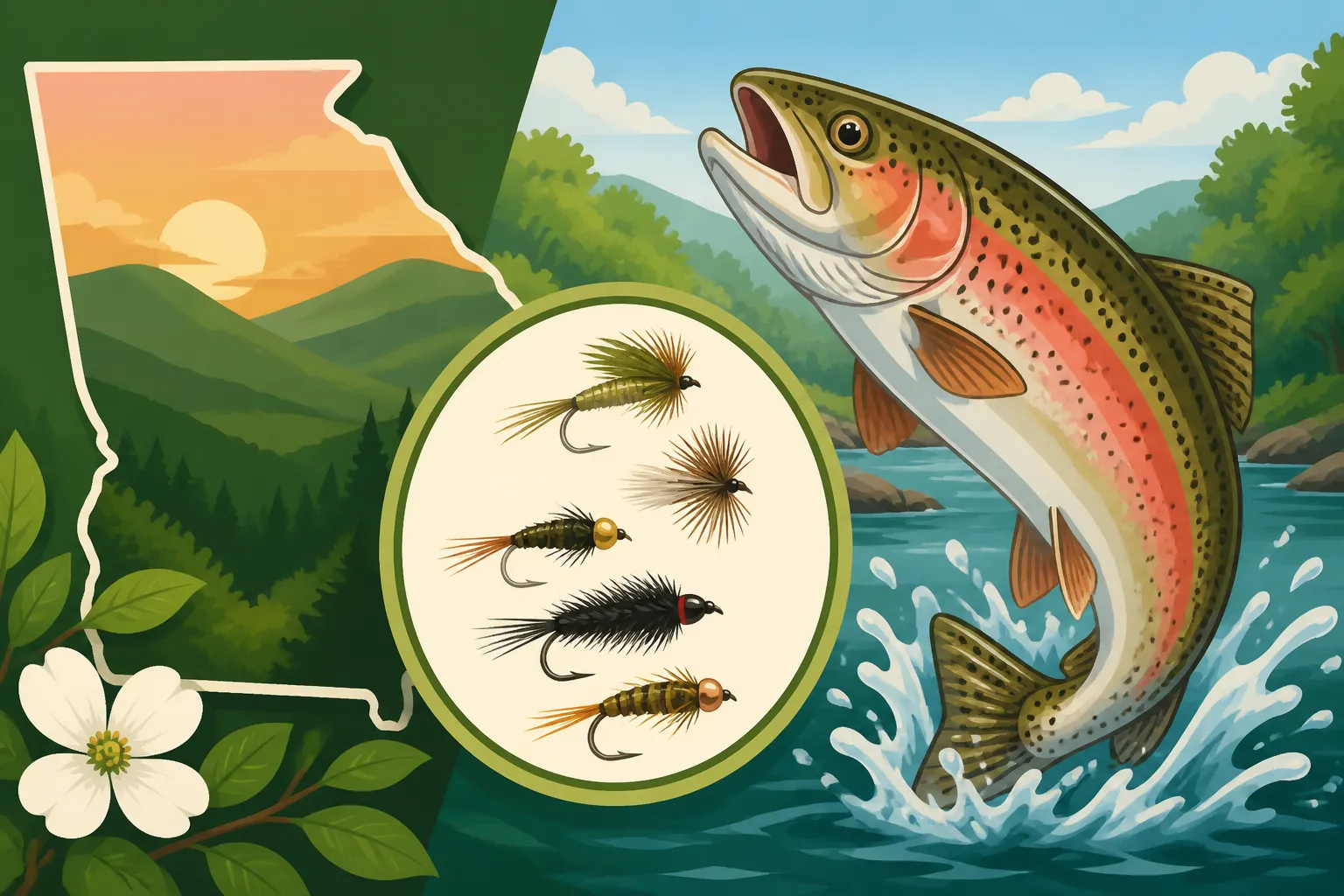
To help you get started or refine your fly box, here’s a quick reference for some of the best flies for trout fishing in Georgia, what they generally imitate, and when they typically shine. This isn't an exhaustive list, but it covers the core patterns that will serve you well across the state's diverse trout waters.
| Fly Pattern | Type | Primary Imitation | Best Seasons | Typical Sizes | Notes |
|---|---|---|---|---|---|
| Elk Hair Caddis | Dry | Adult Caddisfly | Spring, Summer, Fall | #12-18 | Versatile, buoyant, can be twitched to imitate emerging caddis. |
| Parachute Adams | Dry | General Mayfly | Year-round | #14-22 | Excellent search pattern, sits low in water, easy to see. |
| Blue-Winged Olive (BWO) | Dry | Small Mayfly | Spring, Fall, Winter | #18-22 | Crucial for cool, overcast days, especially on tailwaters. |
| Hoppers | Dry | Grasshopper | Summer, Early Fall | #8-14 | Great for aggressive strikes along grassy banks. |
| Pheasant Tail Nymph | Nymph | Mayfly Nymph | Year-round | #12-20 | Highly imitative, effective in clear water, bead-head versions key. |
| Hare's Ear Nymph | Nymph | General Aquatic Nymph | Year-round | #12-18 | "Buggy" profile, good search pattern, effective in off-color water. |
| Squirmy Wormy | Nymph | Worm | Year-round | #10-14 | Attractor, deadly for stocked fish and after rain, especially in pink/red. |
| Walt's Worm | Nymph | Caddis Larva, Sowbug, General Grub | Year-round | #10-16 | Simple, versatile, and effective attractor nymph. |
| Woolly Bugger | Streamer | Baitfish, Crayfish, Large Nymph | Year-round | #4-10 | Most versatile streamer, great for larger trout, various colors. |
| Clouser Minnow | Streamer | Baitfish | Year-round | #6-10 | Jigging action, effective for aggressive fish, especially in clear water. |
Ultimately, the "best" flies for trout fishing in Georgia are the ones you have confidence in and that you learn to fish effectively. Don't be afraid to experiment, observe what the fish are doing, and adapt your approach. With a well-stocked fly box and a solid understanding of Georgia's diverse trout waters, you'll be well on your way to many memorable days on the stream. Remember, sometimes a small change in fly size or color can make all the difference, so carrying a variety of patterns is key.
Disclaimer
This article is for general informational purposes only and does not constitute professional advice. Laws, prices and regulations vary by location and change over time. Consult a qualified professional for guidance on your specific situation.