Best Reel for Trolling Striped Bass
Trolling for striped bass on Georgia's expansive lakes like Lanier, Hartwell, or Oconee is an exhilarating experience, but it demands specialized gear to tackle these powerful, hard-fighting fish. Many anglers get frustrated when they invest in a new reel only to find it can't handle the sheer strength and long runs of a trophy striper, leading to lost fish and wasted time. This guide will walk you through everything you need to know to select the absolute best reel for trolling striped bass in Georgia, ensuring your next battle ends with a fish in the boat, not a broken heart.
Why Trolling for Striped Bass Demands Specific Reel Features
Let's be real, striped bass are not your average pond bluegill. These fish are built for speed and power, especially when they reach impressive sizes in our Georgia reservoirs. Trolling specifically adds another layer of demand to your gear. You're not casting and retrieving a lure quickly; you're dragging a bait or lure behind a boat, often at a consistent speed, covering large amounts of water. When a striper hits a trolled bait, it's usually a violent, aggressive strike, and the fish often takes off on a long, blistering run. Your reel needs to be ready for that kind of punishment.
The Power and Fight of a Georgia Striper
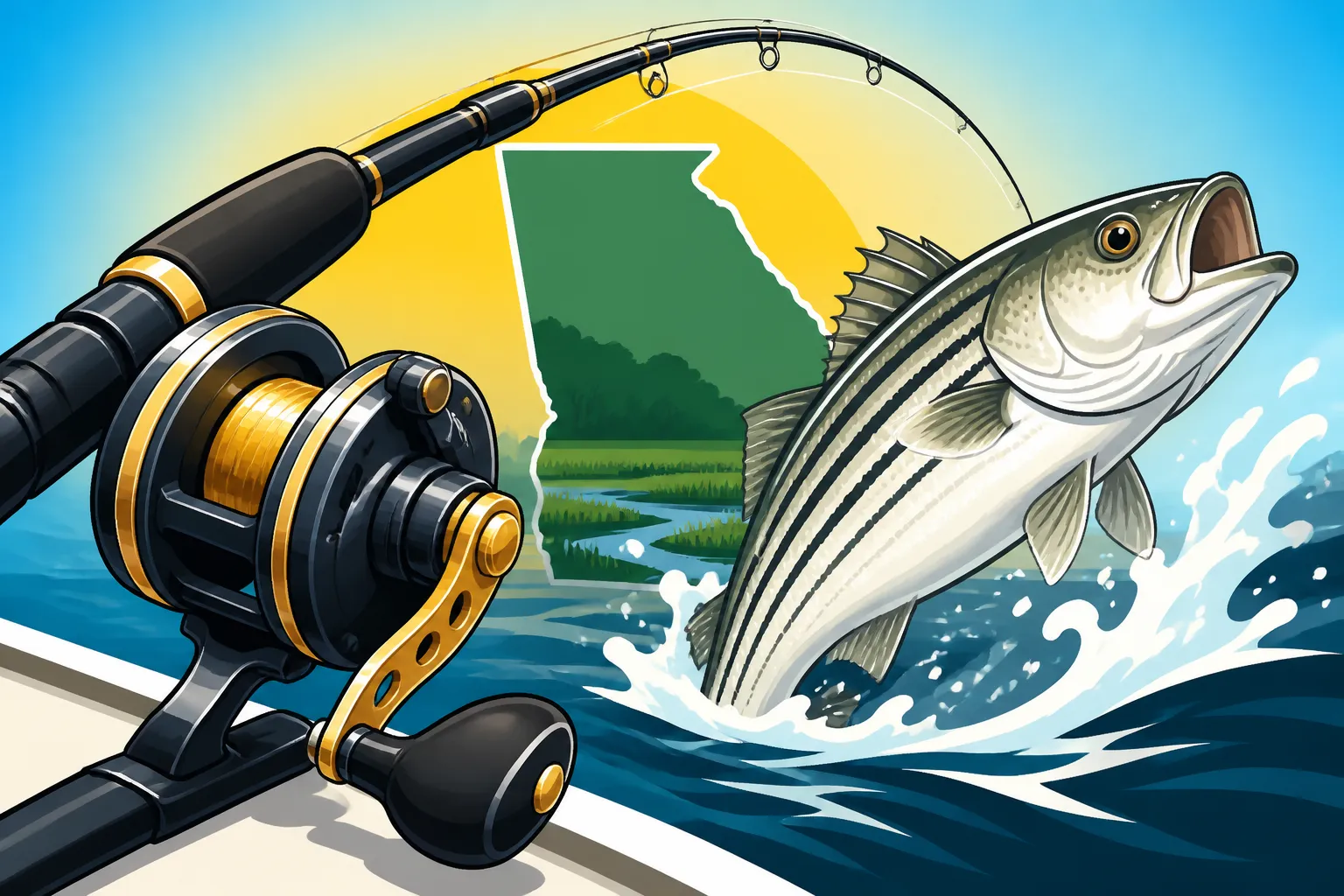
Imagine hooking into a 20-pound striped bass on Lake Lanier. The rod bends violently, line screams off the reel, and your heart races. These aren't dainty pulls; they're powerful surges that test every component of your tackle. A reel that might perform admirably for bass or crappie simply won't cut it for a seasoned striper. The drag system, the retrieve strength, and the overall construction need to be robust enough to withstand repetitive fights with fish that can easily strip hundreds of yards of line off your spool in seconds. If your reel can't handle it, you'll be left with snapped lines, burnt-out drag washers, or even broken reel components, leaving you feeling defeated. Understanding Striped Bass and Hybrid Striped Bass in Georgia Waters can really help you appreciate the challenge.
The Unique Stresses of Trolling Techniques
Trolling itself puts specific demands on your reel. Unlike casting, where you're actively working a lure, trolling involves your reel constantly maintaining line tension while moving. This means the gearing and drag system are under continuous, albeit lighter, stress for extended periods. When a fish strikes, the sudden shock load is immense. You need a reel that can smoothly transition from holding a trolled bait at depth to instantly engaging a powerful drag to slow a charging fish. Furthermore, depending on your trolling setup, you might be using lead core line, downriggers, or planer boards, all of which add extra strain and require a reel with good line capacity and robust construction.
Essential Features for a Striped Bass Trolling Reel
When you're sifting through the countless options available, whether you're browsing Bass Pro Shops or looking at reviews on Amazon, there are a few non-negotiable features you absolutely must prioritize for trolling striped bass effectively in Georgia. These features are what separate a good general-purpose reel from a purpose-built striper trolling machine.
Line Capacity: More is Definitely More
This is perhaps the most critical factor. Striped bass make long, powerful runs. A 15-pound striper can easily peel off 100 yards of line in its initial burst, and a 30-pounder can take double that. If you're fishing a vast lake like Clarks Hill or Walter F. George, where stripers have endless open water to run, insufficient line capacity is a recipe for a broken heart. You need a reel that can comfortably hold at least 250-300 yards of your chosen line, and for larger fish or heavier lines, 400-500 yards isn't excessive. Think of it as insurance – you'd rather have it and not need it, than need it and not have it. Running out of line on a monster striper is a crushing experience that can easily be avoided with proper planning.
Drag System: Smooth, Strong, and Consistent
The drag system is the heart of any fishing reel, but for striped bass trolling, it needs to be exceptional. You're looking for a drag that is:
- Smooth: It should deliver line under pressure without any hesitation, jerking, or sticking. A jerky drag will snap lines or pull hooks.
- Strong: It needs to be able to apply enough stopping power to turn a running striper. Look for reels with substantial maximum drag ratings.
- Consistent: It should maintain its setting throughout the fight, even when it heats up from friction. Quality drag washers (like carbon fiber) are key here.
You'll typically find two main types of drag systems in reels suitable for trolling: star drag and lever drag. Star drags are common and offer fine adjustments, while lever drags provide a wider range of drag settings from free spool to full strike drag, often favored by serious offshore anglers for their precision and power. For detailed strategies, consider how Deep Water Techniques for Striped Bass rely on a reliable drag.
Gear Ratio and Retrieve Power: Balancing Speed and Torque
The gear ratio tells you how many times the spool rotates for one full turn of the handle.
- High Gear Ratio (e.g., 6.0:1 and up): Means faster line retrieve. This is great for quickly reeling in slack, checking baits, or getting a fish to the boat once it's tired.
- Low Gear Ratio (e.g., 3.8:1 to 4.9:1): Means more torque and cranking power, but slower retrieve. This is ideal for fighting big, stubborn fish that want to stay deep, allowing you to winch them in without feeling like you're going to break the handle.
For trolling striped bass, you often want a balance. Many anglers prefer reels in the mid-range (around 4.5:1 to 5.5:1) to offer a good compromise between power and speed. Some higher-end reels offer two-speed gearboxes, allowing you to switch between a fast retrieve and a powerful low gear during a fight, which is incredibly useful for big stripers.
Durability and Construction: Built to Last
A reel for striped bass trolling needs to withstand saltwater-like abuse, even in freshwater. Look for reels made with:
- Corrosion-resistant materials: Aluminum frames, stainless steel components, and treated gears are essential.
- Robust frame construction: A solid, one-piece frame will prevent flex and torque during heavy fights, keeping gears aligned.
- Quality bearings: Smooth operation comes from good ball bearings, typically shielded or sealed for protection.
A reel with a cheap plastic body or flimsy components simply won't hold up to the rigors of consistent trolling and fighting large fish. This is where investing in a reputable brand with a proven track record pays off.
Types of Reels Best Suited for Striped Bass Trolling
When it comes to the physical type of reel, conventional reels are overwhelmingly the top choice for striped bass trolling. They are designed for power, line capacity, and robust drag systems, making them perfect for handling big game fish.
Conventional Reels: The Workhorse of Striper Trolling
Conventional reels (also known as "baitcasters" in some contexts, but specifically the larger, round-profile models for trolling) are hands-down the preferred choice for trolling striped bass. They offer:
- Superior line capacity: Their design inherently allows for larger spools.
- More powerful drag systems: Often featuring multiple, larger drag washers for smooth, consistent pressure.
- Robust gearing: Built to withstand heavy loads and the continuous strain of fighting large fish.
Within conventional reels, you'll primarily encounter two drag types:
Star Drag Reels
These reels feature a star-shaped knob on the handle side that adjusts the drag. They are generally more affordable and widely available. Many excellent star drag conventional reels are perfectly capable of handling Georgia stripers. They offer easy, on-the-fly adjustment and are relatively simple to maintain. They are a fantastic choice for anglers seeking a balance of performance and value. Just ensure the model you pick has ample line capacity and a well-regarded drag system. You can often find great options at your local Bass Pro Shops.
Lever Drag Reels
Lever drag reels are the more advanced, often higher-end option. Instead of a star knob, they have a lever that allows for precise, quick adjustments to the drag setting, from free spool to a "strike" setting (where the drag is set to a predetermined fighting pressure) and then to a "full" setting for maximum stopping power. This system is prized by serious big game anglers for its ability to quickly adjust to a fish's run and to prevent accidental over-tightening of the drag. While they come at a higher price point, their performance and control are unmatched for battling truly large stripers. They excel in situations where you might need to quickly back off the drag to prevent a line break or put on more pressure to turn a stubborn fish.
Why Other Reel Types Fall Short for Trolling
While spinning reels and smaller baitcasting reels have their place in Georgia fishing, they generally fall short for dedicated striped bass trolling.
- Spinning Reels: While great for casting light lures or vertical jigging, most spinning reels lack the raw line capacity, drag power, and gearing strength needed to consistently handle the long, hard runs of a big trolled striper. Their open spool design also makes them more prone to line twist under heavy trolling loads.
- Smaller Baitcasting Reels: These are fantastic for targeting largemouth or spotted bass, but their limited line capacity and lighter construction are simply not up to the task of trolling for larger striped bass. You'd quickly get spooled or burn out the drag with anything over a modest fish.
Setting Up Your Reel for Striped Bass Trolling Success
Getting the right reel is only half the battle. How you spool it, the line you choose, and proper maintenance are equally important to ensure your reel performs flawlessly when that trophy striper hits.
Line Selection for Optimal Performance
The line you put on your trolling reel is crucial. For striped bass, you'll generally choose between monofilament, braided line, or a combination.
Monofilament Line
- Pros: It's more affordable, has stretch (which can act as a shock absorber during violent strikes), and is generally more forgiving. It's also less visible in the water.
- Cons: Less sensitive than braid, higher diameter for the same strength (meaning less line capacity), and it can retain memory and get damaged by UV light over time.
- Recommendation: For trolling, many anglers opt for a good quality monofilament in the 17-30 pound test range, depending on the size of fish expected and the specific technique. It's a solid, all-around choice.
Braided Line
- Pros: Extremely strong for its diameter (allowing for much more line on the spool), virtually no stretch (incredible sensitivity, helping you detect subtle bites), and very durable.
- Cons: More expensive, highly visible (often requiring a fluorocarbon or mono leader), and its lack of stretch means less shock absorption, putting more strain directly on your rod and knots. It also requires a robust drag system to prevent pulling hooks with no stretch.
- Recommendation: Many serious striper trollers use braided line as their main line for its capacity and sensitivity, then tie on a long (15-30 foot) monofilament or fluorocarbon leader to provide some stretch and invisibility. This allows you to spool up with a lighter pound test braid, giving you even more line capacity without sacrificing strength.
Backing and Leaders
No matter your main line choice, using backing is a smart move. You can save money by spooling the bottom third of your reel with a cheaper, heavier mono backing, then tying your main line to it. This ensures you fill the spool efficiently. For braided main lines, a fluorocarbon or monofilament leader (typically 6-10 feet, but sometimes much longer depending on clarity and conditions) is almost always recommended for its invisibility and abrasion resistance. Think about Live Bait Rigs for Striped Bass and how a proper leader plays a huge role.
| Reel Feature | Importance for Striped Bass Trolling | Ideal Specification | Why It Matters |
|---|---|---|---|
| Line Capacity | Critical for long runs | 300+ yards of 20lb mono (or equivalent braid) | Prevents being spooled by powerful, fast-running fish like a Lake Lanier striper. |
| Drag System | Essential for smooth fish fighting | Smooth, consistent, 15-25 lbs+ max drag (carbon washers) | Avoids line snaps and pulled hooks, allows fish to run without excessive resistance. |
| Gear Ratio | Balance of power and retrieve speed | 4.0:1 to 5.5:1 (mid-range or 2-speed) | Enough power to winch in big fish, enough speed to check baits. |
| Construction | Durability against large, strong fish and elements | Aluminum frame, stainless steel gears, sealed bearings | Prevents flex, corrosion, and ensures longevity against heavy use. |
| Handle | Comfort and leverage during long fights | Large, comfortable power handle | Reduces fatigue and provides better leverage when reeling in stubborn fish. |
Maintenance: Keeping Your Reel in Top Shape
Even the best reel money can buy will eventually fail if neglected. Regular maintenance is key to prolonging its life and ensuring peak performance.
- Rinse After Use: A quick rinse with fresh water (avoiding direct, high-pressure spray) will remove salt, grime, and lake residue.
- Lubrication: Periodically apply a light reel oil to moving parts (handle knobs, bearings) and a small amount of reel grease to gears (if comfortable disassembling slightly).
- Drag Check: Test your drag regularly. If it feels rough or inconsistent, it might be time to clean or replace the drag washers.
- Storage: Store your reel in a dry place, ideally with the drag backed off to relieve pressure on the washers.
By taking care of your reel, it will take care of you, ensuring many successful striped bass trolling trips across Georgia. When you consider the investment in Best Rod for Striped Bass Fishing in Georgia, it only makes sense to give your reel the same level of care.
Top Considerations for Specific Georgia Waters
While the general principles remain, some nuances might arise depending on where in Georgia you're doing your striped bass trolling. Whether it's the vast depths of Lake Lanier or the sprawling expanse of Lake Oconee, a little local knowledge goes a long way.
Deep Water Trolling on Reservoirs
Lakes like Lanier, Hartwell, and Thurmond are known for their deep, clear waters, especially during the warmer months when stripers will seek out cooler temperatures. This means you might be trolling at depths of 30, 40, or even 60 feet.
- Lead Core Line: Many anglers use lead core line, which is designed to sink without additional weight. A 10-color lead core line (each color is 10 yards) can put your bait deep. This heavy, low-stretch line puts significant strain on your reel, so robust gearing and a strong frame are essential. The increased diameter of lead core also means you'll need even more line capacity to get sufficient length out.
- Downriggers: For extreme depths or precise depth control, downriggers are often employed. While the downrigger itself handles the weight, the reel still needs to have ample line capacity for the fish's run once it's released from the clip.
- Fighting Power: Deep water stripers have nowhere to go but out and down. Your reel needs the cranking power to lift a heavy fish from the depths and a reliable drag to handle those initial, explosive deep runs. Understanding Lake Lanier Fishing Guide, Georgia reveals just how crucial these factors are.
Live Bait Trolling
Trolling live bait, particularly large gizzard shad or herring, is a common and incredibly effective method for trophy stripers in Georgia. These baits are typically bigger and put more strain on your line and reel due to their size and resistance in the water.
- Beefier Gear: When trolling live bait, especially with planer boards that pull significant drag, you'll often step up to heavier line and a reel with even more robust construction. You're trying to subdue a truly large fish with an equally large meal in its mouth, so every component is tested.
- Smooth Drag for Soft Mouths: While stripers have tough mouths, sometimes a powerful hit on live bait can result in a shallow hookset. A smooth, forgiving drag is paramount to prevent pulling the hook out during the initial run.
- Instant Hookset: With live bait, you often allow the fish to take the bait for a few seconds before setting the hook. When you do, the force is significant. Your reel needs to handle that immediate load without slipping or locking up. Checking out options at a store like Bass Pro Shops can help you visualize these setups.
Shallow Water and Topwater Trolling
While less common for dedicated trolling, some anglers will troll topwater plugs or shallow-running crankbaits early in the morning or late in the evening when stripers are actively feeding on the surface or in shallower coves.
- Faster Retrieve: If you're covering shallower areas and need to retrieve slack quickly or impart action to a lure, a slightly higher gear ratio might be beneficial here.
- No Less Power: Even in shallow water, a striper is still a striper. Don't compromise on drag strength or overall durability just because you're not fishing as deep. You might still encounter a monstrous fish. The Best Time of Year to Catch Bass at Lake Lanier, Georgia often involves some shallow water action, and stripers aren't far behind.
Choosing the right reel for trolling striped bass in Georgia is about understanding the demands of the fish and the technique. Prioritize line capacity, a strong and smooth drag, and durable construction, and you'll be well on your way to landing some incredible fish. Don't let inadequate gear be the reason you miss out on the fight of a lifetime.
Disclaimer
This article is for general informational purposes only and does not constitute professional advice. Laws, prices and regulations vary by location and change over time. Consult a qualified professional for guidance on your specific situation.