Kayak Fishing Gear Checklist for Beginners
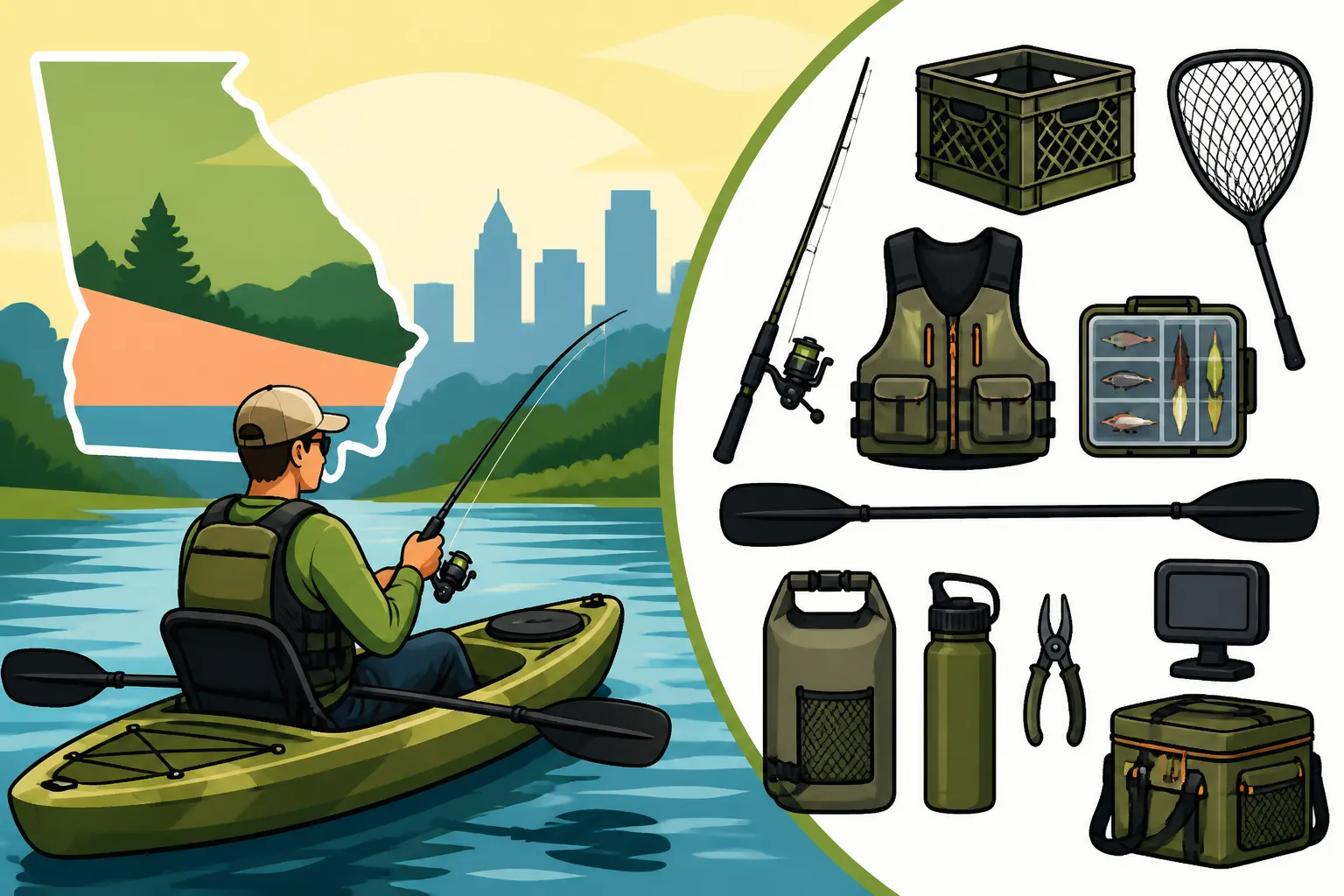
Stepping into the world of kayak fishing can feel a little overwhelming when you're just starting out. You're probably picturing yourself silently gliding across a peaceful lake, rod in hand, but then you wonder, "What exactly do I need to bring so I don't get stuck, lose my gear, or, heaven forbid, go for an unplanned swim?" It's a valid concern, and many folks face this initial hurdle. This comprehensive guide is here to take the guesswork out of it, walking you through all the essential kayak fishing gear you'll need to confidently and safely hit the water for your first angling adventures in Georgia.
The Foundation: Your Kayak, Paddle, and Personal Flotation Device
Before you even think about baits and lures, you need to ensure you have the core equipment that makes kayak fishing possible and, most importantly, safe. This isn't just about getting on the water; it's about making sure you can stay on it comfortably and return home safely.
Choosing the Right Fishing Kayak for Georgia Waters
For a beginner, the sheer variety of fishing kayaks can be dizzying. Do you need a sit-on-top or a sit-in? Pedal drive or paddle? The truth is, for starting out, a stable sit-on-top kayak is usually your best bet. They are incredibly forgiving, making it easy to get on and off, and they offer a wide-open deck for rigging and gear. Their self-bailing scupper holes mean any water that splashes in simply drains out, which is a huge peace of mind for new paddlers.
When considering a kayak, think about the types of waters you'll be frequenting in Georgia. Are you dreaming of quiet pond fishing, exploring the vast expanse of Lake Lanier Fishing Guide, Georgia, or maybe even the calmer stretches of the Chattahoochee River? A shorter kayak, say 10-12 feet, is more maneuverable and easier to transport, perfect for smaller lakes and slow-moving rivers. Longer kayaks offer better tracking and speed, which can be a blessing on larger reservoirs, but they also require more storage space and are heavier to load and unload.
Don't feel pressured to buy the most expensive model with all the bells and whistles right away. Many excellent entry-level fishing kayaks from brands like Perception, Old Town, or Pelican offer a great balance of stability, features, and affordability. You can always upgrade later once you've truly fallen in love with the sport and have a better sense of your specific needs. The key is to find something that feels stable when you sit in it and gives you enough room for your legs and a modest amount of tackle.
Paddle Power: Your Kayak's Engine
Your paddle is just as important as your kayak itself, and it's an area where many beginners accidentally skimp. A cheap, heavy paddle can quickly lead to fatigue and make your day on the water a lot less enjoyable. Look for a paddle that's lightweight and properly sized for your height and the width of your kayak. A general rule of thumb is that when standing the paddle on the ground, the hand grip should reach your nose.
Materials matter here. Aluminum paddles are common and affordable, but they can be heavy and cold in cooler weather. Fiberglass paddles strike a nice balance between weight and cost, while carbon fiber paddles are the lightest (and typically the most expensive). Consider a paddle with adjustable feathering, which allows you to change the angle of the blades, making it more efficient for different wind conditions and paddling styles. Many fishing-specific paddles also feature built-in measuring tapes or a hook retrieval notch, which can be surprisingly handy.
Remember, even if you invest in a pedal-drive kayak, a paddle is still an absolute necessity. It serves as your backup propulsion in case of mechanical issues, for navigating shallow spots where pedals aren't effective, or for silently sneaking up on a prime fishing spot. Always secure it to your kayak with a paddle leash to prevent an accidental loss, especially when you're busy fighting a fish!
The Non-Negotiable: Personal Flotation Device (PFD)
This is one piece of gear you absolutely cannot compromise on. A properly fitted Personal Flotation Device (PFD), often called a life jacket, isn't just a good idea; it's often legally required in many Georgia waters, especially for certain age groups. More importantly, it's your primary safety device. Even if you're a strong swimmer, an unexpected capsize in cold water or if you hit your head can quickly turn a fun day into a dangerous situation.
For kayak fishing, look for a PFD that's designed with anglers in mind. These typically have larger armholes for unrestricted casting, mesh lower backs to accommodate high-back kayak seats, and often feature multiple pockets, D-rings, and attachment points for small tools, pliers, or a whistle. Try it on before you buy it – it should fit snugly but comfortably, allowing for a full range of motion. Spend some time wearing it around the store to make sure it doesn't chafe or ride up.
There are different types of PFDs, but for most kayak fishing, a Type III vest is ideal. Inflatable PFDs are also popular among experienced anglers for their low profile, but they require proper maintenance and a different set of considerations for beginners. Always check the current Georgia Life Jacket Laws for Boaters and Kids to ensure you're compliant, and then wear your PFD every single time you're on the water. It's truly a no-brainer when it comes to personal safety.
Safety and Navigation Essentials
Once you've got your primary floating vessel and your personal safety secured, it’s time to think about all the other things that keep you safe, seen, and on course while you’re out on the water. Kayak fishing often takes you into areas where a boat might not go, which can be both a blessing and a challenge.
Visibility, Sound, and Signaling
Being visible to other boaters, especially on larger lakes like Best Boats for Lake Lanier Fishing, is paramount. Kayaks sit low on the water, making them hard to spot. A bright flag or a 360-degree white light, particularly if you plan to be out around dawn, dusk, or after dark, is crucial. Many kayak anglers use a collapsible flag pole with a light on top that can be easily stored when not needed. Consider reflective tape on your paddle or kayak for added visibility in low light.
Beyond sight, sound is your next important safety tool. A whistle is not just a useful signaling device, it's often a legal requirement on many waterways. If you get into trouble, need to alert another boater, or signal for help, a loud, clear whistle is invaluable. Attach it to your PFD so it's always within reach. Some PFDs even come with one attached. Additionally, carrying a small air horn can provide an even louder signal in emergencies, though it's typically less of a legal requirement than a whistle.
Anchoring Your Spot and Staying Put
There's nothing more frustrating than finally getting set up on a promising fishing spot, only for the wind or current to slowly drift you away. An anchor is a game-changer for kayak fishing, allowing you to stay precisely where you want to be. For most situations, a 1.5 to 3-pound grapple anchor (sometimes called a folding anchor) is perfect. It’s compact, lightweight, and effective in various bottom types.
You’ll also need anchor line, ideally 50-75 feet, to account for different depths and to allow for a proper scope (the ratio of line length to water depth). A dedicated anchor trolley system is highly recommended. This allows you to deploy your anchor from either the bow or stern of your kayak, ensuring you can adjust your position relative to the wind or current without having to physically move the anchor point, helping you maintain optimal casting angles. You can find excellent options at outdoor retailers like Bass Pro Shops. Don't forget a small float to attach to your anchor line so you can easily retrieve it if you need to release it quickly.
Emergency Readiness and Repair
Even the calmest day can bring unexpected challenges. A small, waterproof dry bag or Pelican case stocked with essential emergency items is a must-have. Think about things like a basic first-aid kit for minor cuts or scrapes, a multi-tool for quick repairs, some zip ties and duct tape (you'd be amazed what these can temporarily fix!), and a small flashlight or headlamp, even if you don't plan to be out after dark. You never know when you might need to illuminate a dark spot in your kayak or find something you dropped.
It's also a good idea to have a small sponge or bilge pump for bailing out any unexpected water, though sit-on-top kayaks are designed to self-bail. For longer excursions, especially in more remote areas like those described in Remote Wilderness Fishing Spots in North Georgia, a small repair kit for your kayak (patching materials, marine epoxy) might be a good idea, though less critical for shorter, local trips.
Staying Connected
In today's world, a waterproof way to carry your phone is almost as important as your PFD. Whether it's to check a map, look up fishing reports, or, most critically, call for help in an emergency, your phone is a vital tool. A simple waterproof phone case or a dedicated dry bag for electronics will suffice. Make sure it floats! Many anglers also carry a portable power bank to recharge their phone, especially on longer days.
For those venturing further afield or into areas with spotty cell service, a dedicated marine radio (VHF) or a satellite communication device can provide an extra layer of safety. While not strictly necessary for every beginner, understanding their use and considering them for future, more ambitious trips is smart. Always let someone know where you're going and when you expect to return—it's the simplest and most effective safety measure you can take.
| Category | Essential Item | Why You Need It |
|---|---|---|
| Kayak & Paddle | Fishing Kayak | Stable platform for fishing; sit-on-top recommended for beginners. |
| Kayak Paddle | Primary propulsion; essential backup even for pedal drives. | |
| Paddle Leash | Prevents losing your paddle in the water. | |
| Personal Flotation Device | Non-negotiable safety item; often legally required. | |
| Safety & Nav. | Visibility Flag/Light | Makes you visible to other boaters, especially in low light. |
| Whistle/Air Horn | Signaling for help or alerting others. | |
| Anchor & Anchor Trolley | Staying on your desired fishing spot, controlling drift. | |
| Dry Bag/Waterproof Box | Keeps essentials dry and secure (first aid, phone, keys). | |
| First Aid Kit | For minor injuries on the water. | |
| Waterproof Phone Case | Communication and emergency contact. | |
| Fishing Tackle | Rods & Reels | Your primary tools for catching fish. |
| Tackle Box/Bag | Organizes lures, hooks, weights, and tools. | |
| Rod Holders | Keeps rods secure while paddling or waiting for a bite. | |
| Net or Gripper | Safely landing fish without getting hooked. | |
| Comfort & Prep. | Sun Protection (Hat, SPF) | Protects from Georgia's strong sun. |
| Hydration (Water/Drinks) | Prevents dehydration; essential for long days. | |
| Appropriate Clothing | Layers, quick-dry materials, rain gear. | |
| Small Cooler | Keeps drinks, snacks, and your catch fresh. |
Fishing Tackle and Storage Solutions
Now that you’re squared away on the basic boat and safety gear, let’s talk about the fun part: the actual fishing gear! Kayak fishing requires a slightly different approach to tackle management than traditional boat fishing, as space is at a premium and organization is key.
Rods, Reels, and Line: Choosing Wisely
For beginners, a couple of medium-light to medium-action spinning rod and reel combos will cover most of your freshwater fishing needs in Georgia, whether you're targeting bass on Best Bass Fishing Coves on West Point Lake or panfish in a local pond. A 6'6" to 7' spinning rod offers a good balance of casting distance and maneuverability in a kayak. You don't want anything too long that will constantly get in the way when you're casting, paddling, or landing a fish.
Consider reels spooled with 8-12 lb monofilament or fluorocarbon line, or even braided line with a fluorocarbon leader, which gives you strength and sensitivity. You'll want one setup for lighter baits and finesse presentations, and another for slightly heavier lures or when you're going after bigger fish. Many entry-level combos are surprisingly capable and durable, perfect for getting started without breaking the bank. Brands like Shimano, Daiwa, or Penn offer reliable options that you can often find at Amazon.
One crucial accessory for kayak fishing is a rod leash. Just like your paddle, an unhooked rod can quickly go overboard and sink before you even realize it's gone. A simple coiled leash that attaches your rod to your kayak can save you from losing your prized fishing rod to the depths. Similarly, dedicated rod holders, either flush-mounted or track-mounted, allow you to safely store extra rods while paddling or keep a rod ready for trolling.
Terminal Tackle, Lures, and Bait Management
When it comes to tackle, less is often more on a kayak. You have limited space, so prioritize versatility. A small tackle box or a compact tackle bag with a few plano-style utility boxes is ideal for organizing your hooks, weights, swivels, and a selection of your favorite lures. For Georgia's diverse fisheries, a good starter kit might include: soft plastic worms and creature baits, a few spinnerbaits, crankbaits (shallow and medium divers), topwater lures, and jigs. Don't forget an assortment of hooks (worm hooks, jig heads), sinkers (bullet weights, drop shot weights), and maybe some bobbers for panfish.
If you plan to use live bait, you'll need a small, aerated bait bucket. These are typically designed to sit on your kayak's deck or in a tank well. Keeping your bait lively is key to successful live bait fishing. Even if you're primarily a lure angler, having a few pieces of cut bait or a handful of worms can often save a slow day.
Tools are also essential. A good pair of fishing pliers (preferably stainless steel) for hook removal and cutting line, a set of nail clippers for quick line trimming, and a small measuring tape or bump board for checking fish lengths against Georgia Fish Size and Creel Limits are all must-haves. Attach these tools to retractable lanyards or leashes so they're always handy and won't get lost overboard.
Keeping Your Catch Fresh
If you plan on keeping some of your fish for dinner, you'll need a way to keep them fresh and cool. A small, soft-sided cooler that can fit in your tank well or on your deck is perfect for this. Fill it with ice, and it will keep your fillets or whole fish chilled throughout the day. Some anglers opt for a fish stringer, but be mindful of predators (like alligators in some southern Georgia waters!) if you're stringing fish in the water.
For larger catches, like a trophy bass or a substantial catfish, a measuring board or an accurate weigh scale is useful for documenting your catch before release, especially if you're participating in a friendly tournament or just want bragging rights! A gentle fish gripper can also help you handle fish safely for photos without harming them or getting your fingers too close to sharp hooks or teeth.
Personal Comfort and Preparedness
Being comfortable and prepared will make your kayak fishing experience far more enjoyable, especially when you're spending hours on the water under the Georgia sun. Don't underestimate the small details that can make a big difference.
Dressing for Success: Layers and Quick-Dry
Your clothing choices are more important than you might think. Georgia weather can be unpredictable, swinging from cool mornings to hot afternoons, or even a sudden rain shower. Dressing in layers is always the best strategy. Start with a moisture-wicking base layer, even in summer, to help manage sweat. Over that, a long-sleeved fishing shirt made of quick-dry, UV-protective fabric will protect you from the sun and keep you cool.
Avoid cotton, which absorbs water and stays wet, making you cold if the temperature drops or uncomfortable if you get splashed. Quick-drying shorts or pants are ideal. In cooler weather, consider waterproof or water-resistant outer layers. Your feet will likely get wet, so quick-draining water shoes or sandals are a good choice. In colder conditions, neoprene booties can keep your feet warm. Remember that comfort directly translates to how long and how much you'll enjoy your time fishing.
Sun Protection and Hydration: Beat the Georgia Heat
The Georgia sun can be relentless, even on cloudy days. Sun protection isn't just about preventing a sunburn; it's about long-term skin health and avoiding heatstroke. A wide-brimmed hat or a baseball cap with a neck gaiter (buff) will protect your face and neck. Good polarized sunglasses are essential not only for eye protection but also for cutting glare off the water, helping you spot structure or even fish.
Generously apply a broad-spectrum sunscreen with a high SPF to all exposed skin, and reapply it regularly, especially after splashing. Remember those spots that often get missed, like the tops of your ears and the backs of your hands. Hydration is equally critical. Bring plenty of water, even more than you think you'll need, especially on hot summer days. Electrolyte drinks can also be beneficial for longer trips. A water bottle with a carabiner or leash can be secured to your kayak, preventing it from floating away.
Keeping Things Dry: Crucial for Electronics and Valuables
While your phone needs its own waterproof case, other items like your wallet, keys, extra layers, and snacks also need to stay dry. A medium-sized dry bag (10-20 liters is a good starting point) is invaluable for this. They come in various sizes and are designed to keep contents completely dry, even if submerged. You can stash it in your kayak's hull or secure it to your deck.
For items you need frequent access to, like snacks or a camera, a small, top-opening dry bag or a waterproof hatch in your kayak's bow or stern can be super convenient. If your kayak has dry storage compartments with secure latches, these are great for stashing your car keys and other essentials you absolutely cannot afford to get wet or lose.
The Little Extras That Make a Difference
Sometimes it's the small, often overlooked items that make your day on the water much smoother. A small towel for drying hands or wiping down gear is always useful. A pair of inexpensive gloves can protect your hands from sun, blisters from paddling, or even fin spines when handling fish. A small cooler, like those available on Amazon, filled with drinks and snacks will keep you fueled throughout your trip.
Consider a headlamp for setting up in the dark or navigating back to shore as the light fades. A small repair kit with pliers, a screwdriver, and some spare parts for your reel or kayak accessories can be a lifesaver. And don't forget to review Basic Fishing Techniques Every Beginner Should Know before you go, ensuring you're mentally prepared for a successful outing. Having a clean, organized kayak before you launch will also reduce stress and maximize your enjoyment.
Disclaimer
This article is for general informational purposes only and does not constitute professional advice. Laws, prices and regulations vary by location and change over time. Consult a qualified professional for guidance on your specific situation.