Best Time to Catch Crappie at Lake Oconee, Georgia
There's nothing quite like the thrill of catching a stringer full of crappie, especially on a beautiful lake like Oconee. But let's be honest, trying to pinpoint the absolute "best time" to consistently fill your livewell can feel like chasing a ghost if you don't understand the nuances of the season and the lake itself. This comprehensive guide is here to unravel the mysteries of crappie behavior on Lake Oconee, helping you predict their movements and feeding patterns so you can maximize your time on the water, no matter what time of year you head out.
Understanding Crappie Dynamics on Lake Oconee
Lake Oconee, a sprawling 19,000-acre reservoir known for its fantastic fishing, is home to both black crappie and white crappie, though black crappie tend to be more dominant in its clearer waters. These panfish are incredibly popular for their feisty fight and delicious table fare, making them a prime target for anglers of all skill levels. However, their behavior is heavily influenced by water temperature, available cover, and forage, which means what works one month might be completely ineffective the next. Understanding the annual cycle of crappie on Lake Oconee is the first step to consistent success.
Black Crappie vs. White Crappie in Lake Oconee
While both species inhabit the lake, you'll generally find that black crappie are more prevalent in the clearer, deeper sections of Lake Oconee, especially around structure like submerged timber, brush piles, and docks. They thrive in environments with ample vegetation and woody cover. White crappie, on the other hand, tend to prefer more turbid (cloudy) waters and are often found in open water or along creek channels, but you can certainly find them mixed in with black crappie, especially in the larger creek arms and shallower coves when they move in to spawn. Knowing the difference can sometimes inform your location choice, as black crappie often hold tighter to cover. If you're curious about identifying these subtle differences, you might find our Black Crappie Identification: A Georgia Angler's Guide and White Crappie Identification Guide helpful for your next trip.
The Impact of Water Temperature on Crappie Behavior
Water temperature is arguably the single most critical factor dictating crappie activity and location. Crappie are cold-blooded, so their metabolism and comfort zones are directly tied to the thermometer. As the water warms in spring, their metabolism speeds up, driving them into the shallows to spawn. Conversely, as it cools in fall and winter, they retreat to deeper, more stable temperatures, becoming less active but still catchable if you know where to look. Lake Oconee's main body often stays slightly warmer than some other Georgia lakes due to the power plant influence, which can extend certain fishing seasons or keep crappie active a bit longer into the cooler months. A deeper dive into how water temperature affects fish behavior can really elevate your game.
For a general idea, here's a quick look at crappie activity levels by water temperature:
| Water Temperature Range | Crappie Activity Level | Preferred Location | Fishing Strategy |
|---|---|---|---|
| Below 45°F (7°C) | Very Slow, Deep | Main lake channels, deep structure | Vertical jigging, slow trolling deep |
| 45-55°F (7-13°C) | Slow to Moderate | Deep points, creek channel bends | Slow trolling, deep jigging, live bait |
| 55-65°F (13-18°C) | High, Pre-spawn & Spawn | Shallow coves, docks, brush piles | Casting jigs, minnows, bobber fishing |
| 65-75°F (18-24°C) | Moderate to High | Post-spawn, deeper brush, shade | Trolling, deep jigging, night fishing |
| Above 75°F (24°C) | Slows, Deeper, Shade | Main lake timber, bridge pilings, brush in shade | Deep trolling, night fishing, tight to cover |
Spring: The Undisputed Crappie Hotspot at Lake Oconee
If you ask any seasoned crappie angler on Lake Oconee, they'll likely tell you that spring is the prime time. This isn't just a rumor; it's when crappie become most accessible and aggressive as they prepare for and engage in their annual spawning ritual. The transition from cold winter water to warming spring temperatures triggers a biological imperative that drives them from the deep into the shallows.
Pre-Spawn Buildup: Late Winter to Early Spring
As late winter transitions into early spring, typically from late February through March, Lake Oconee's crappie begin to stage. The water temperature will hover in the 48-55°F range. During this phase, they're not quite in the super-shallow spawning grounds yet, but they're actively feeding and building up energy for the big event. You'll find them congregating in areas adjacent to their future spawning flats – think creek channel bends, secondary points leading into coves, and the mouths of tributaries. They'll often hold around brush piles or timber in 10-20 feet of water, waiting for that water to warm just a few more degrees.
This is a fantastic time for slow trolling or casting small jigs and live minnows. If you're a fan of a good slow troll, rigging up with multiple poles using small jigs or minnows under floats can be incredibly effective as you cover water, letting the crappie find your bait as they move. It’s also a good time to ensure your tackle box is ready for the season, perhaps picking up some new jigs or bobbers from Amazon.
The Crappie Spawn: Peak Action in April and May
When Lake Oconee's water temperatures consistently hit the 58-68°F mark, typically in April and extending into May, the crappie spawn is in full swing. This is the moment most anglers dream of! Crappie move right into the shallowest water, often less than 5 feet deep, seeking out woody cover, submerged vegetation, and even the shallow ends of docks to lay their eggs. They become less wary and incredibly focused on reproduction, making them easier to target.
Focus your efforts on the backs of coves, protected pockets with plenty of brush, and around any visible structure. Small, dark-colored jigs (like black/chartreuse or blue/pearl) presented under a slip bobber are deadly. Live minnows, fished similarly, are always a reliable choice. You can often see the crappie actively guarding their nests or darting around cover, making for exciting sight fishing opportunities. This is when crappie fishing is arguably at its best in Georgia, making it well worth the trip to Oconee. If you're looking for general advice on Best Time of Year to Catch Crappie in Georgia, this period is usually the consensus.
Summer and Fall: Adapting Your Crappie Strategy
Once the spawn is over and the water continues to heat up, crappie revert to a more typical fish behavior, seeking comfort and food in deeper water and around shade. Summer and fall fishing on Lake Oconee can still be excellent, but it requires different tactics and a more nuanced understanding of their movements.
Summer Crappie: Deep and Shady Retreats
By June and throughout the summer, Lake Oconee's surface temperatures often climb into the 80s°F. This warmth pushes crappie out of the super-shallow areas they occupied during the spawn. They migrate to deeper, cooler water, often congregating around substantial cover like brush piles in 15-30 feet of water, bridge pilings, standing timber in the main lake, and even under the shade of boat docks. The influence of the local power generation can sometimes create subtle temperature differences that concentrate fish in specific areas, especially around discharge points or cooler thermal layers.
During these hotter months, fishing at dawn, dusk, or even at night can be incredibly productive. Crappie often move shallower to feed during these low-light periods. Techniques like vertical jigging over brush piles with small jigs or slow trolling deep with crankbaits or live minnows are highly effective. For vertical presentations, a good fish finder is essential to locate those hidden brush piles. Consider investing in quality fishing electronics; you can find a wide selection of models with excellent reviews on Amazon. Our guide on How to Jig for Crappie provides excellent starting points for this method.
Fall Crappie: Following the Baitfish
As late September rolls around and through October and November, Lake Oconee's waters begin to cool, and crappie enter their fall pattern. This period is characterized by them actively chasing baitfish (like threadfin shad and gizzard shad) that are also schooling up in preparation for winter. Crappie become more nomadic, often suspending in open water or along creek channels, following these schools of bait. The cooling water reinvigorates them, and they feed aggressively.
You'll find them on secondary points, creek channel ledges, and sometimes in the deeper parts of coves that still have good cover. Trolling with small crankbaits or jigs becomes a very effective strategy, allowing you to cover large areas of water until you locate active schools. Live minnows, again, are hard to beat when crappie are focused on forage. Pay attention to birds diving, as they often indicate baitfish schools, and crappie won't be far behind. This is a time when understanding the relationship between predators and prey can make all the difference.
Winter: Challenging but Rewarding Pursuits
Winter crappie fishing on Lake Oconee, typically from December through February, can be challenging due to colder water temperatures and slower fish metabolism. However, it can also be incredibly rewarding for those willing to adapt their techniques. Crappie in winter are often schooled up tightly and are less willing to chase, but once you find them, you can often catch quite a few.
Deep Water Concentrations
During the coldest months, Lake Oconee crappie seek the most stable water temperatures, which are usually found in the deeper sections of the main lake channels, significant creek channels, and sometimes suspended over deep timber or around bridge structures. They'll often hold tight to cover or on the bottom, conserving energy. You might find them in 20-40 feet of water, often in large, dense schools. The power plant's warm water discharge areas can sometimes be a localized hotspot, as crappie are drawn to the slightly elevated temperatures.
The key to winter crappie is slow, precise presentations. Vertical jigging directly over schools of fish located with your electronics is paramount. Small spoons, hair jigs, or tiny soft plastics tipped with a crappie nibbler or live minnow are excellent choices. Slow trolling with live minnows is another proven tactic, allowing you to slowly present bait through different depth zones until you hit their sweet spot. Patience is truly a virtue during this time. Remember that you can often buy small crappie minnows or the specialized jigs you'll need on Amazon for convenience.
The Art of Tightlining
Tightlining is a particularly effective technique for winter crappie, especially when they're holding deep and aren't interested in chasing. This method involves using multiple rods, each with a small weight and bait (often a live minnow or small jig), suspended directly below the boat at varying depths. By slowly moving over deep cover or channel edges, you can present your bait precisely to lethargic crappie. You can learn more about this technique in our Tightlining Techniques for Crappie guide. When crappie are schooled up and not moving much, this targeted approach can outfish almost anything else.
Optimal Times of Day and Conditions for Crappie
While seasonal patterns dictate broader movements, daily factors like time of day, weather, and water clarity also play a significant role in crappie activity.
Low-Light Hours Reign Supreme
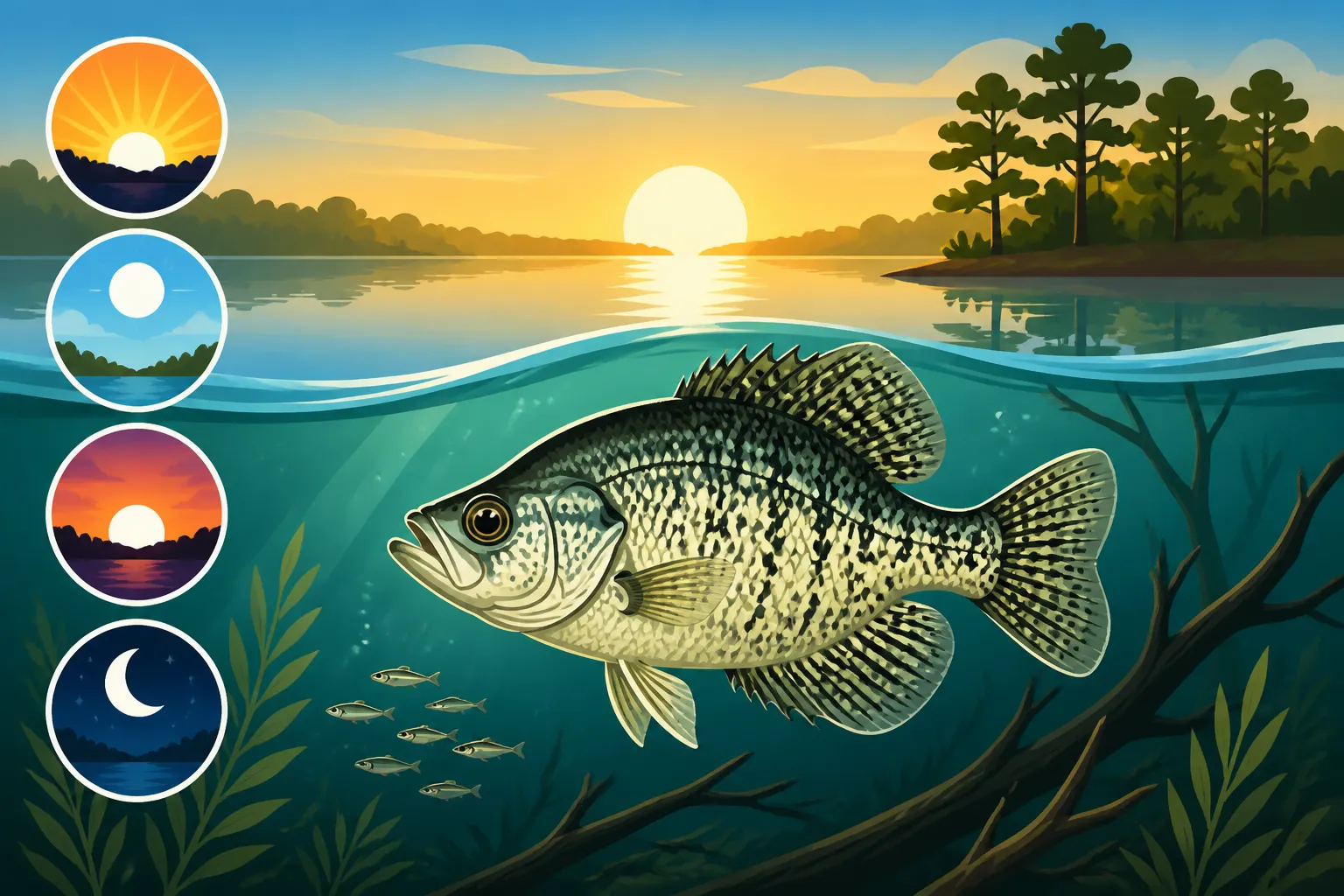
Generally speaking, crappie are most active during low-light conditions. This means early morning (dawn), late evening (dusk), and even night fishing can be incredibly productive. During these times, crappie often move shallower to feed, feeling more secure under the cover of darkness or dim light. In summer, especially, fishing under the moonlight or with submerged lights can draw in baitfish, and subsequently, crappie. If you've ever wondered Do Crappie Bite Better at Night?, the answer is often a resounding yes, especially in warm water.
Cloudy Days and Stable Weather
Cloudy, overcast days are often crappie heaven. The diffused light encourages them to stay shallower and feed longer throughout the day compared to bright, sunny conditions which push them deeper or into heavy shade. Similarly, stable weather patterns, without drastic changes in temperature or barometric pressure, usually lead to more consistent crappie bites. While fish can still be caught after a cold front or major storm, they generally become more lethargic and less cooperative, requiring even slower presentations. Understanding How Water Temperature Affects Fish Behavior further explains why stability is key.
Choosing the Right Gear
Having the right gear makes a huge difference, especially when you're trying different techniques throughout the year. For crappie, light to ultralight spinning rods with sensitive tips are ideal for detecting their subtle bites. A good quality reel spooled with 4-6 pound test monofilament or fluorocarbon line will give you the sensitivity and strength you need. For specifics, check out our Best Rods for Crappie Fishing in Georgia and Best Tackle Box Setup for Crappie Fishing guides. Don't forget a good selection of small jigs (1/32 to 1/8 ounce), crappie tubes, tiny crankbaits, and plenty of minnow hooks and small bobbers. Many anglers find it convenient to order their specialized crappie jigs and soft plastics online through Amazon, as the selection can be vast.
Disclaimer
Fishing conditions and regulations in Georgia can change. Always check the latest Georgia Department of Natural Resources (DNR) rules and advisories before heading out on the water. This guide is for informational purposes only and does not constitute legal advice or guarantee fishing success.