How to Bottom Fish for Catfish
There’s nothing quite like the thrill of a heavy tug on your line, the kind that makes your rod bend double and your heart pound in anticipation. But let's be honest, sometimes you spend hours casting into Georgia's beautiful waters, hoping for that exciting fight, only to come up empty-handed, especially when you're trying to target those elusive bottom-dwelling catfish. Many anglers struggle to consistently find and hook these powerful fish because they're not quite sure how to get their bait down into the strike zone effectively. This comprehensive guide is here to change that, offering a detailed look at how to master bottom fishing techniques for catfish, ensuring you're better equipped to land those whiskered giants in Georgia's lakes and rivers.
Understanding Catfish Behavior for Bottom Fishing
Before you even think about rigging up, it's crucial to understand a bit about the fish you're after. Catfish aren't just random dwellers; they have habits and preferences that, once understood, can dramatically increase your success rate, especially when you're focusing on bottom fishing.
Where Catfish Hang Out
Catfish are opportunistic feeders and masters of using structure and current to their advantage. In Georgia's diverse waterways, from the vast expanses of Lake Lanier to the flowing currents of the Flint River or the Altamaha River, these fish seek out specific areas. You'll often find channel catfish, blue catfish, and flathead catfish in deeper holes, especially those with current breaks or nearby cover. Think about the outside bends of rivers where the water scours out deeper pockets, or the areas downstream from dams and spillways where current slows and creates eddies.
On large reservoirs, look for submerged timber, old creek channels, humps, and ledges. These underwater structures provide both ambush points for feeding and cover from predators and strong currents. Often, the transition areas where a hard bottom meets a soft, muddy bottom can be particularly productive. Even in smaller ponds and public fishing areas, catfish will gravitate towards the deepest parts, especially near any submerged brush or drop-offs. Knowing where to focus your efforts is half the battle when you're trying to target these bottom-dwellers.
Why Bottom Fishing Works Best for Catfish
Unlike some predatory fish that actively chase down schooling baitfish in open water, catfish, particularly the larger blues and flatheads, are often scavengers or ambush predators that prefer to feed directly on or near the bottom. They use their sensitive whiskers, called barbels, to detect food by smell and touch, even in murky water or low light conditions. This makes presenting your bait right on the bottom, where their natural foraging instincts kick in, incredibly effective.
Bottom fishing ensures your bait stays exactly where these fish are most likely to encounter it. Whether they're rooting around in the mud for crayfish, waiting for dead bait to drift by, or simply patrolling their territory, having your offering anchored to the lake or riverbed maximizes your chances. Trying to keep a bait suspended in the middle of the water column might work for other species, but for catfish, gravity is your friend, pulling your delicious offering right into their wheelhouse. This technique is especially important for those looking to land a trophy-sized blue cat in the deeper sections of reservoirs like Lake Sinclair.
Best Times to Target Bottom-Dwellers
While catfish can be caught year-round, certain times of day and year offer peak opportunities for bottom fishing. Generally, catfish are more active feeders during low light conditions – dawn, dusk, and throughout the night. Their excellent sense of smell gives them an advantage over prey during these times, and they often move shallower to feed under the cover of darkness. If you're planning a trip to catch some blue catfish, consider getting out there when the sun starts to dip, and you'll often find the bite picks up significantly. Learning more about if Do Catfish Bite Better After Dark? can further enhance your night fishing strategies.
Seasonally, spring and fall are often considered prime times. In spring, as water temperatures rise, catfish become more active after their winter sluggishness, often moving to shallower flats and spawning areas. Fall sees them bulking up for winter, leading to aggressive feeding. Even in summer, they can be caught during the cooler parts of the day or by targeting deeper, cooler water during midday. Winter fishing can still be productive, but you'll usually need to find them congregated in the deepest holes where they conserve energy.
Essential Gear for Successful Bottom Fishing
Having the right equipment is non-negotiable when you're aiming for big catfish that lurk on the bottom. You need gear that can handle powerful runs, sharp snags, and the sheer weight of a potential trophy catch. Don't skimp on quality; it could mean the difference between landing a lunker and a heartbreaking break-off.
Rods, Reels, and Line Choices
For bottom fishing for catfish in Georgia, you'll want a sturdy setup. A medium-heavy to heavy action rod, typically between 7 and 9 feet long, is ideal. This length provides good casting distance for getting your bait out to those deeper spots and enough backbone to muscle in a big fish. The heavy action allows you to cast substantial weights and absorb the shock of a powerful strike without snapping. Brands like Ugly Stik or Berkley make excellent, durable catfish rods that you can often find readily available on Amazon.
Pair your robust rod with a equally stout reel. A baitcasting reel is often preferred for its power and control when casting heavy rigs and fighting big fish, but a large, strong spinning reel with a reliable drag system can also work well, especially for beginners. Ensure your reel has a smooth, strong drag that can be set correctly to prevent line breaks during a fierce fight.
Line choice is critical. Most serious catfish anglers opt for monofilament or braided line in the 20 to 50-pound test range, depending on the size of catfish you're targeting and the amount of cover in the area. Monofilament offers good abrasion resistance and stretch, which can be forgiving. Braided line, with its superior strength-to-diameter ratio and lack of stretch, provides excellent sensitivity for detecting subtle bites and incredible pulling power, especially in heavy cover. Consider a 30-pound braided main line with a 20-pound monofilament leader for a versatile setup.
Terminal Tackle: Hooks, Sinkers, and Swivels
Your terminal tackle is where the business happens – it's what connects your line to the fish. For bottom fishing, simplicity and strength are key.
- Hooks: Circle hooks are the gold standard for catfish. They are designed to hook fish in the corner of the mouth, which is much safer for the fish if you plan to release it, and they greatly reduce gut-hooking. Sizes typically range from 4/0 to 8/0, depending on your bait and target species. For larger blue and flathead catfish, leaning towards the bigger sizes is a good idea.
- Sinkers: You'll need enough weight to hold your bait on the bottom, especially in current. Egg sinkers or flat, no-roll sinkers are popular choices, ranging from 1/2 ounce up to several ounces. The exact weight will depend on the strength of the current and the depth you're fishing. A slip-sinker rig allows the line to run freely through the sinker, letting the fish pick up the bait without feeling the weight immediately. Want to learn more? Check out how to rig a How to Rig a Slip Sinker for Catfish for a detailed breakdown.
- Swivels: Heavy-duty barrel swivels or ball-bearing swivels are essential for preventing line twist, especially when using cut bait or fishing in current. They also serve as a stop for your slip sinker. Choose swivels rated for at least the same pound test as your main line, or higher.
- Leaders: A strong monofilament or fluorocarbon leader (20-80 lb test, depending on the mainline) between your swivel and hook is often a good idea. This provides an extra layer of abrasion resistance against rough bottom structures and the catfish's sandpaper-like mouth.
The Best Baits for Georgia Catfish
When it comes to catfish, they're not usually picky eaters, but some baits are undoubtedly more effective than others for bottom fishing. The key is often scent and staying power on the hook. Different species in Georgia also have their preferences, so it pays to be versatile.
- Cut Bait: For blue catfish and channel catfish, cut bait is often king. Freshly cut shad, herring, or even small bream (check local regulations on using game fish as bait) release strong oils and scent into the water, attracting catfish from a distance. Larger chunks are better for bigger fish. Learning about Best Bait for Blue Catfish or Best Bait for Channel Catfish can give you an edge.
- Chicken Livers: A classic for channel catfish, chicken livers are incredibly smelly and soft. The challenge is keeping them on the hook, but they are undeniably effective. Some anglers cure them with garlic or Kool-Aid to make them tougher and even more pungent.
- Stink Baits/Prepared Baits: There's a wide array of commercially available stink baits, dip baits, and punch baits designed specifically for catfish. These typically have a strong, often artificial, odor that catfish can't resist. They come in various forms, from pastes to sponges to nuggets, and can be very effective, especially for channel catfish in warmer waters. You can find a huge selection of these on Amazon.
- Nightcrawlers/Worms: Simple, yet effective, especially for smaller channel catfish and sometimes even bullheads. A big juicy gob of nightcrawlers on a hook can be irresistible.
- Live Bait: While cut bait is often preferred, live bait can be deadly for flathead catfish. Flatheads prefer live, struggling baitfish like small bream, goldfish, or shiners. Presenting a lively baitfish right on the bottom near structure is a prime tactic for these elusive predators. Make sure you understand the specific feeding habits of Flathead Catfish Guide for Georgia Anglers before you head out.
| Catfish Species | Preferred Baits | Typical Habitat in Georgia |
|---|---|---|
| Channel Catfish | Chicken Livers, Stink Baits, Cut Bait, Worms | Rivers, Ponds, Reservoirs; tolerates warmer, murkier water. |
| Blue Catfish | Cut Bait (Shad, Herring), Live Bait (larger) | Large Rivers (e.g., Savannah, Altamaha), Major Reservoirs (e.g., Lanier, Sinclair, Clarks Hill); prefers deeper, open water. |
| Flathead Catfish | Live Bait (Bream, Shiners), Large Cut Bait | Rivers and Tributaries (e.g., Flint, Ocmulgee), some reservoirs; often near heavy cover. |
Step-by-Step Bottom Fishing Techniques
Now that you've got your gear and bait sorted, let's talk about the practical application. Getting your bait in the right spot and presenting it naturally is key to enticing those catfish to bite.
Setting Up Your Rig
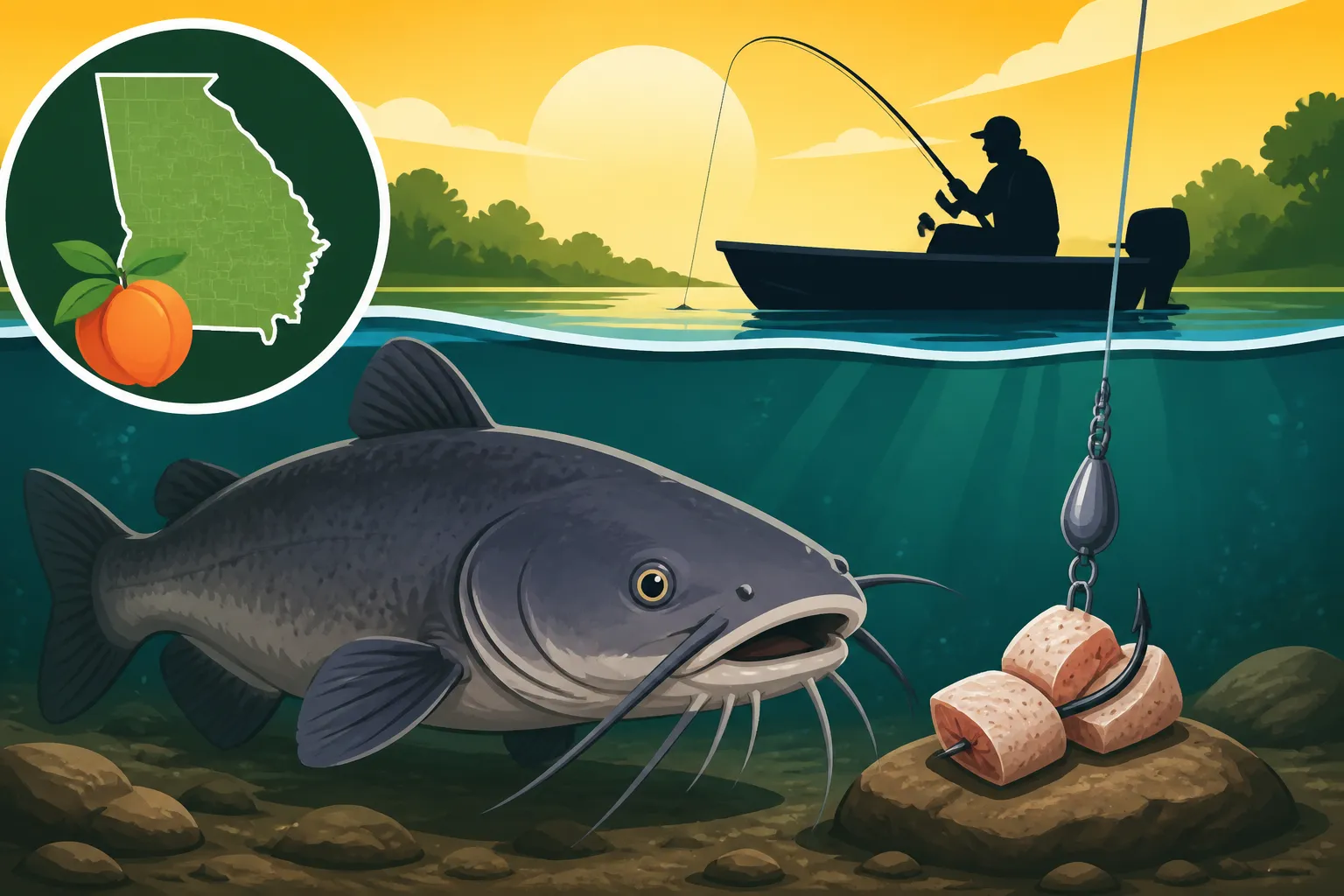
The most common and effective rig for bottom fishing catfish is the slip-sinker rig, often called a Carolina rig by bass anglers. It’s simple, effective, and allows the fish to take the bait without feeling immediate resistance from the sinker.
Here’s how to set it up:
- Main Line: Start with your main line coming off your reel.
- Sinker: Thread an egg sinker (or other slip-sinker type) onto your main line. The weight will depend on the current and how far you need to cast.
- Bead (Optional but Recommended): Slide a small plastic or glass bead onto the line after the sinker. This protects your knot from the sinker repeatedly banging against it during casts and retrieves.
- Swivel: Tie a strong barrel swivel to the end of your main line using a reliable knot like a Palomar knot or improved clinch knot. This acts as a stopper for the sinker and bead.
- Leader: To the other end of the swivel, tie a length of monofilament or fluorocarbon leader. This leader can be anywhere from 12 inches to 3 feet long, depending on how much slack you want the bait to have off the bottom. A longer leader allows the bait to drift more naturally with the current, while a shorter one keeps it closer to the weight.
- Hook: Finally, tie your circle hook to the end of the leader.
This setup ensures that when a catfish picks up the bait, your main line can slide freely through the sinker, giving the fish a chance to fully ingest the bait before it feels any unnatural weight. This usually leads to a better hookset in the corner of the mouth.
Casting and Presentation Tips
Once your rig is ready, proper casting and presentation make all the difference. You want to get your bait to the catfish's home without spooking them or getting snagged immediately.
- Cast Accurately: Aim for those prime catfish holding spots you identified – deep holes, submerged cover, or current seams. Overcasting and dragging your bait back can pick up debris and reduce its appeal.
- Let It Settle: After casting, allow your rig to sink completely to the bottom. You’ll feel a distinct "thump" as the sinker hits. If you're in a river, the current will dictate how quickly it settles. Don't be too quick to reel in; give it time to find its resting spot.
- Maintain Slack: Once the bait is on the bottom, reel in just enough slack so you have a slight bend in your rod tip. You don’t want a super tight line, as this can create unnatural tension that a wary catfish might feel. However, too much slack makes it hard to detect subtle bites. It’s a delicate balance you’ll learn with practice.
- Multiple Rods (Where Legal): In many Georgia waters, you're allowed to fish with multiple rods. This can be a huge advantage for catfish. Spread your lines out, casting to different depths or structures, and experiment with different baits to see what the fish are keying in on that day. Just make sure you can keep an eye on all your rods to avoid missing a bite or having a rod pulled into the water.
- Current Considerations: If you're fishing in a river, cast slightly upstream and let the current carry your rig downstream into the target area. This allows your bait to settle naturally with the flow, rather than landing with a splash directly on top of the fish.
Reading the Bite and Setting the Hook
Catfish bites can range from a gentle tap to a rod-bending, drag-screaming slam. Learning to interpret these signs is crucial for knowing when to react.
- Subtle Bites: Sometimes, especially in colder water or with larger, lazier fish, the bite might just be a slight twitch of the rod tip or a slow, steady pull. Don't dismiss these; they often indicate a big fish mouthing the bait.
- Aggressive Bites: More often, you'll see a distinct nod of the rod tip, followed by a steady pull or even the rod being violently pulled towards the water. This is usually when a fish has committed to the bait.
- Using Circle Hooks: This is where circle hooks shine. When you detect a bite, do not set the hook by sharply yanking the rod back like you might with a J-hook. Instead, simply reel down until your line is tight and steadily lift the rod. The design of the circle hook will cause it to rotate and embed itself perfectly in the corner of the fish's mouth as pressure is applied. This technique takes some getting used to if you're accustomed to traditional hooksets, but it's incredibly effective and safer for the fish.
- Patience: Catfish sometimes "play" with their food. If you feel a bite but it doesn't commit, give it a few more seconds. Often, they'll come back for a second, more assertive bite.
Advanced Tips and Troubleshooting for Georgia Waters
Even with the best gear and techniques, fishing is still about adapting to conditions. Georgia’s diverse waterways present unique challenges and opportunities that require a little extra know-how.
Adapting to Different Georgia Waterways
Fishing for catfish in a broad reservoir like Lake Hartwell is a different ballgame than tackling the swift currents of the Chattahoochee River. Your bottom fishing approach needs to evolve with the environment.
- Reservoirs: On large impoundments such as Clarks Hill Lake or West Point Lake, catfish often follow seasonal patterns, moving from shallow coves in spring to deeper, cooler main lake humps and ledges in summer. Use your boat’s electronics, if you have them, to locate those submerged structures and channel swings. Here, a heavier sinker might be needed to reach the depths, and longer casts can be beneficial. Consider anchoring upwind or upstream of a likely spot and casting your baits to allow them to settle naturally. If you're looking for Best Catfish Fishing Spots in Georgia, exploring the deep channels of these large lakes is a must.
- Rivers: Rivers like the Flint or the Ocmulgee present a challenge with current. Catfish will often position themselves just out of the main current, in eddies, behind log jams, or in deeper holes created by the flow. For river fishing, heavier sinkers are usually required to keep your bait stationary. You might also want to cast slightly upstream and let your rig wash downstream into the target zone, allowing it to settle naturally. Pay close attention to current breaks, as these are prime ambush points. For bigger flathead catfish, focusing on heavy cover and live bait in these river systems is often the most productive strategy. Learning about How to Anchor for Catfish Fishing can be particularly helpful in river settings.
Common Mistakes and How to Avoid Them
Even seasoned anglers make mistakes. Being aware of these pitfalls can help you avoid frustration and improve your catch rate.
- Not Using Fresh Bait: Especially for flathead catfish, fresh, live bait is often paramount. While channel and blue cats are more forgiving, a stale piece of cut bait simply won't have the drawing power of a fresh one. Always try to use the freshest bait possible.
- Fishing Too Shallow in Summer: During the heat of a Georgia summer, catfish will often retreat to deeper, cooler water. Many anglers make the mistake of sticking to shallow banks. Use depth finders to locate deeper channels, humps, or thermal breaks where catfish will congregate.
- Not Being Patient Enough: Catfishing often requires patience. Sometimes, it takes a while for the scent of your bait to spread and attract fish. Don't constantly reel in and recast if you're confident you're in a good spot. Give the fish time to find your offering.
- Using Too Light of Tackle: Bottom fishing for catfish means encountering snags and potentially huge fish. Using flimsy rods, reels with weak drags, or light line is a recipe for broken gear and lost fish. Invest in the Best Rod for Catfish Fishing on Georgia Rivers and other heavy-duty equipment.
- Ignoring the Weather and Water Conditions: Catfish activity can be heavily influenced by factors like barometric pressure, water temperature, and recent rainfall. A sudden cold front can put them off the bite, while stable, warm weather often signals increased activity. Pay attention to forecasts and historical patterns to inform your fishing trips.
By understanding catfish behavior, equipping yourself with the right gear, mastering effective techniques, and adapting to the specific characteristics of Georgia's diverse waters, you'll be well on your way to consistent success in bottom fishing for these incredible fish. Good luck out there, and tight lines!
Disclaimer
Fishing regulations, license requirements, and fish consumption advisories can change. Always consult the latest Georgia Department of Natural Resources (DNR) guidelines and local signage before fishing to ensure compliance and safety. This guide is for informational purposes only and should not be considered a substitute for official regulations.