Best Season to Fish South Georgia’s Reservoirs for Bass
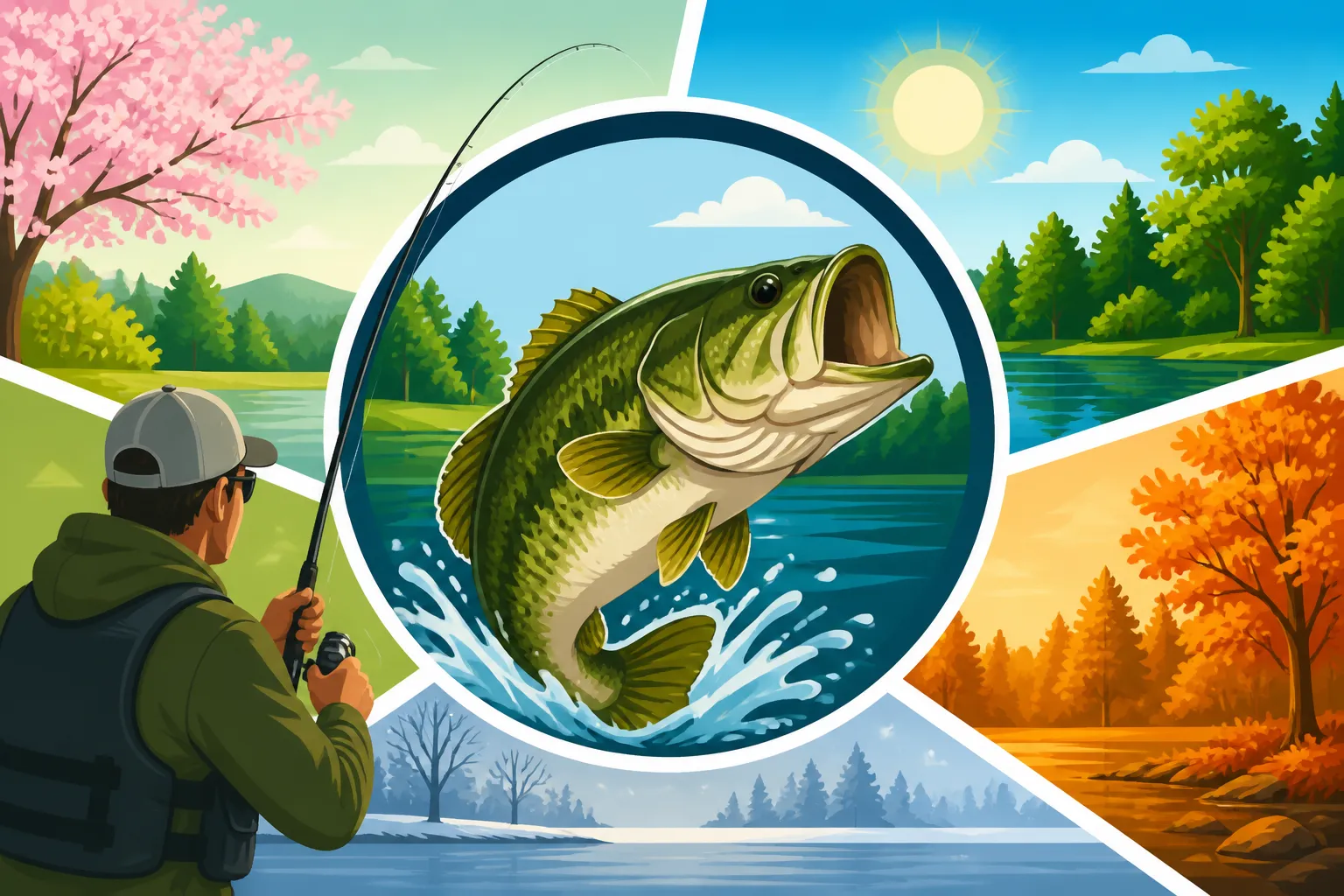
Trying to figure out the absolute best time to hit South Georgia's sprawling reservoirs for bass can feel like solving a complex puzzle. With the region's unique climate, fish behavior doesn't always align perfectly with what you might expect in other parts of the state. This comprehensive guide is here to demystify those seasonal shifts, helping you understand when and how to maximize your bass fishing success on waters like Lake Seminole, Walter F. George Reservoir, and Lake Blackshear.
The Reign of Spring: Unlocking South Georgia's Bass Potential
When it comes to bass fishing in South Georgia's reservoirs, spring is, without a doubt, the undisputed champion. The warming waters signal a biological imperative for bass: to feed heavily and then spawn. This period offers some of the most exciting and predictable fishing opportunities of the entire year, drawing anglers from all over.
Pre-Spawn Aggression: Before the Beds
As the chill of winter truly begins to recede, typically from late February into March, South Georgia's reservoir bass start stirring. Water temperatures begin to climb steadily, moving from the low 50s into the low 60s. This is the "pre-spawn" phase, a time when bass are incredibly aggressive, gorging themselves to build up energy for the upcoming spawning ritual. They're moving up from deeper winter haunts, staging on points, humps, and submerged cover adjacent to prime spawning flats.
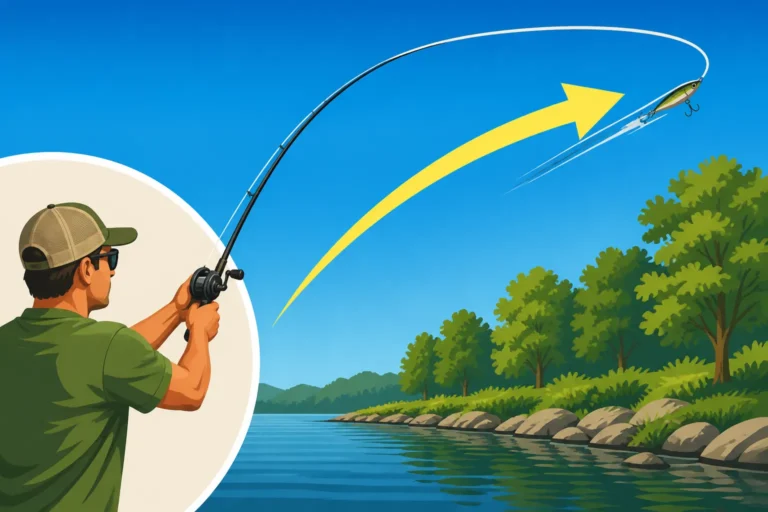
This is your golden window for throwing reaction baits. Think about lipless crankbaits, medium-diving crankbaits that mimic shad or bream, and spinnerbaits that flash and vibrate through the warming water. For anglers looking to pick up some versatile baits, many excellent options can be found on online retailers like Amazon, offering a wide array of colors and sizes. Bass are often found in 5 to 15 feet of water, frequently around submerged timber, rock piles, or transition areas where deep water meets shallower spawning grounds. On a reservoir like Lake Seminole, this means focusing on the edges of hydrilla beds or the mouths of creeks and sloughs. Understanding these active feeding patterns is key to successful Spring Bass Fishing Patterns on Georgia's Reservoirs.
The Spawning Season: Shallow Water Excitement
Once water temperatures consistently hit the mid-60s, usually from late March through April, the bass move onto the flats to spawn. This is what many anglers refer to as "the spawn." In South Georgia's reservoirs, where vast shallow areas and abundant vegetation are common, bass will fan out beds in protected coves, along shoreline reeds, or within sparse hydrilla.
During this time, sight fishing can be incredibly effective, allowing you to spot bass on their nests. However, responsible angling dictates minimizing disturbance to spawning fish. Instead, focus on casting soft plastics like creature baits, worms, or jigs into likely bedding areas. Bass guarding their nests will often strike out of aggression rather than hunger. Flipping and pitching into thick cover where bass might be bedding or cruising nearby is also a highly productive technique. Remember, bass are focused on reproduction, so presentations need to be slow and often repetitive to coax a strike. Keep an eye on the Spring Bass Spawn Timing on Georgia's Lakes as it can vary slightly year to year.
Post-Spawn Recovery: The Brief Retreat
After the exhaustive process of spawning, bass enter a "post-spawn" phase, typically in May. They're often tired, a little beat up, and temporarily less aggressive. Many will move to slightly deeper water, often suspending near cover or moving to secondary points and humps to recuperate. They're still active, but their feeding windows might be shorter, and their strikes more subtle.
During this time, a mix of reaction baits and slower presentations can work. Look for bass relating to offshore cover like brush piles, submerged stumps, or ledges in 10-25 feet of water. Topwater baits can still be effective early and late in the day as bass chase shad schools, but don't overlook a reliable shaky head worm or a Texas-rigged creature bait fished slowly along the bottom. The key here is patience and versatility.
Navigating Summer and Fall Patterns
While spring holds the crown, summer and fall in South Georgia's reservoirs offer distinct, and often incredibly rewarding, bass fishing opportunities if you know where to look and what tactics to employ. The extreme heat of summer demands different strategies, as do the vibrant, migratory patterns of autumn.
Summer's Deep Dive: Heat and Hydration
When the scorching heat of June, July, and August settles over South Georgia, surface water temperatures in reservoirs can soar, often reaching into the upper 80s or even 90s. This heat drives bass to deeper, cooler, and more oxygenated water. They'll seek refuge in deeper offshore humps, ledges, creek channels, and dense, deep submerged cover. Night fishing also becomes a popular and highly effective strategy during the summer months, offering a reprieve from the sun and often more active fish. For information on how water temperature affects fish behavior, check out this guide: How Water Temperature Affects Fish Behavior.
During the day, focus your efforts on fishing vertically or with deep-diving lures. Big football jigs, Carolina rigs, and deep crankbaits are excellent choices for targeting bass holding tight to structure in 20-40 feet of water. Pay close attention to your electronics; a good fish finder is invaluable for locating submerged brush piles, timber, and schools of baitfish. Many reliable models, along with other essential Best Electronics for Bass Boats, are readily available from online retailers like Amazon. Early mornings and late evenings can still produce topwater bites over deeper hydrilla mats or around shaded docks on reservoirs like Walter F. George Reservoir, but generally, expect to work harder for fewer, but often larger, bites in the heat of midday.
Fall Feed Frenzy: Chasing the Bait
As September rolls into October and November, and water temperatures gradually cool from the high 70s down into the 60s, South Georgia's reservoirs undergo a significant transformation. This is the "fall turnover" period, where the water column mixes, and bass become incredibly active, chasing baitfish in preparation for winter. This is often described as a "feeding frenzy" because bass will aggressively school and pursue shad and other forage.
Look for schooling bass busting bait on the surface, especially early and late in the day. Topwater lures like poppers, walking baits, and buzzbaits can be deadly. When the fish go down, switch to lipless crankbaits, spinnerbaits, or even jerkbaits that mimic struggling baitfish. Bass will move up into shallower creeks and pockets, following the bait. On Lake Blackshear, this means targeting the river channel bends and areas where shad are congregating. This is a dynamic time to be on the water, requiring a versatile approach to match the fast-paced action. Consider carrying a variety of lures to adapt to changing conditions and fish preferences.
Winter's Hidden Gems: Patience Pays Off
Winter fishing in South Georgia's reservoirs, from December through February, presents a unique set of challenges and rewards. While the overall activity level of bass slows down significantly due to colder water temperatures, patient and strategic anglers can still find success, often landing some of the biggest bass of the year.
Cold Water Challenges: Slower Metabolisms
When water temperatures dip into the 50s and even upper 40s, bass become much more lethargic. Their metabolism slows, and they don't need to feed as frequently or as aggressively. They'll typically congregate in deep, stable areas – think main lake points, channel bends, deep timber, and steep bluff walls. They're looking for thermal stability and easy meals. For a deeper dive into how fish behave during colder months, consider reading our guide on Winter Fishing Patterns on Georgia's Reservoirs.
Your presentation needs to be incredibly slow and precise. Vertical jigging spoons, slow-rolled spinnerbaits, and shaky head worms fished with agonizing patience are your best bets. Some anglers even prefer suspending jerkbaits, allowing them to sit motionless for long periods, mimicking an injured baitfish. On Lake Seminole, this might mean probing deep timber or the deeper edges of remaining hydrilla. On Walter F. George, focus on the river channel bends and steep drops. It's a game of inches and persistence, but when a big bass decides to bite, it's often a memorable strike.
Targeting Warm Pockets: Finding the Comfort Zones
Even in winter, some areas of South Georgia's reservoirs can offer slightly warmer water, attracting bass. Power plant discharges, such as those found on some larger lakes, can be incredible magnets for bass seeking a more comfortable environment. Darker bottom areas, especially on sunny days, can also absorb and radiate a bit more warmth.
Look for protected coves with dark bottoms, north-facing banks that receive more direct sunlight, or areas with dense, dark timber that might hold a few extra degrees of warmth. These subtle temperature differences, sometimes just a degree or two, can make a significant impact on bass activity. Fishing these "warm pockets" with finesse presentations like drop shots or small jigs can sometimes trigger bites when the rest of the lake feels dead. Always keep an eye on water temperature readings if your electronics provide them, as even a small change can point you to fish.
Essential Gear and Tactics for South Georgia Reservoirs
To truly excel at bass fishing across the seasons in South Georgia, having the right gear and understanding foundational tactics for these unique reservoirs is crucial.
Rods, Reels, and Line: Matching the Method
Versatility is your friend. A medium-heavy casting rod (7' to 7'6") paired with a baitcasting reel spooled with 15-20 lb fluorocarbon or braided line will handle most techniques, from pitching jigs to throwing crankbaits. For lighter presentations like shaky heads or drop shots, a 7' medium-light spinning rod with a sensitive tip, paired with a spinning reel and 8-10 lb fluorocarbon, is essential. Having a dedicated topwater rod (medium action, fast tip) with monofilament line can also make a huge difference in hook-up ratios. Don't forget, finding quality fishing line and other tackle is easy on platforms like Amazon.
Lure Selection by Season: Be Prepared
Your tackle box should evolve with the seasons.
- Spring: Crankbaits (lipless, medium diver), spinnerbaits, jigs (flipping, football), soft plastics (creature baits, worms), ChatterBaits. For specifics on popular choices, explore the Best Lures for Georgia Largemouth Bass.
- Summer: Deep-diving crankbaits, Carolina rigs (with worms or creature baits), heavy jigs, large soft plastics for pitching into deep cover, topwater baits for early/late.
- Fall: Topwater lures (poppers, walking baits, buzzbaits), lipless crankbaits, spinnerbaits, jerkbaits, flukes, squarebill crankbaits for shallow cover.
- Winter: Vertical jigging spoons, slow-rolled spinnerbaits, shaky head worms, drop shot rigs, suspending jerkbaits, football jigs. For more on slow presentations, consider researching How to Fish a Texas Rig for Bass.
The Importance of Electronics: Seeing Below the Surface
Modern marine electronics are no longer a luxury, but a necessity for serious bass anglers, especially on large, feature-rich reservoirs. A good fish finder with down imaging and side imaging can reveal submerged timber, brush piles, rock formations, and even individual fish and bait schools that are invisible from the surface. GPS mapping helps you navigate, mark productive spots, and return to them with precision. This technology allows you to efficiently scout new areas and quickly identify high-potential fishing zones, saving countless hours of unproductive casting. Many top-tier fish finders, along with other boat accessories, are conveniently available on online marketplaces.
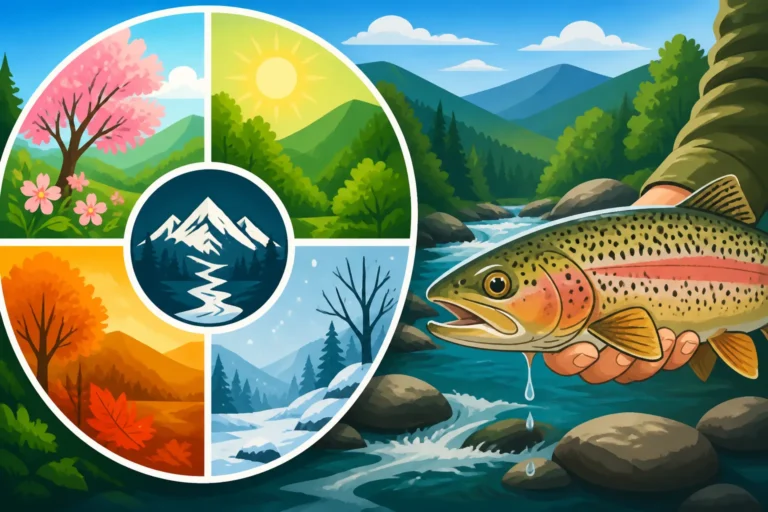
Seasonal Bass Fishing Overview for South Georgia Reservoirs
| Season | Water Temperature Range | Primary Bass Location | Best Lure Categories | Key Tactics |
|---|---|---|---|---|
| Spring (Late Feb – May) | 50s – Mid-70s F | Staging points, spawning flats, shallow cover, creek mouths | Crankbaits, spinnerbaits, jigs, soft plastics, ChatterBaits | Reaction bait retrieve, flipping/pitching, sight fishing (respectfully) |
| Summer (June – Aug) | Mid-70s – 90s+ F | Deep ledges, offshore humps, creek channels, dense deep cover | Deep crankbaits, Carolina rigs, heavy jigs, large soft plastics, topwater (early/late) | Deep water targeting, vertical jigging, night fishing, precise presentations |
| Fall (Sept – Nov) | 60s – Mid-70s F | Following baitfish in creeks, shallow pockets, main lake points, surface breaks | Topwater, lipless crankbaits, spinnerbaits, jerkbaits, flukes | Covering water, targeting schooling fish, matching the hatch |
| Winter (Dec – Feb) | 40s – Low 50s F | Deep channel bends, main lake points, bluff walls, deep timber, power plant discharges | Vertical jigging spoons, slow-rolled spinnerbaits, shaky heads, drop shots, suspending jerkbaits | Slow retrieves, patience, finesse, targeting thermal advantages |
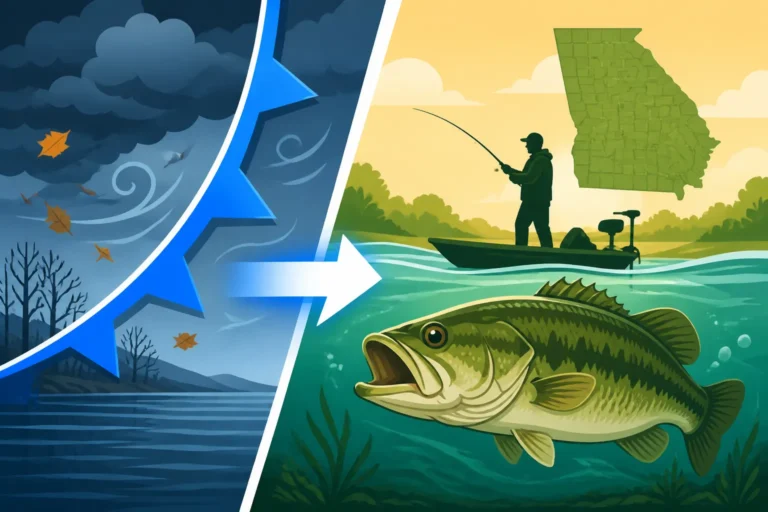
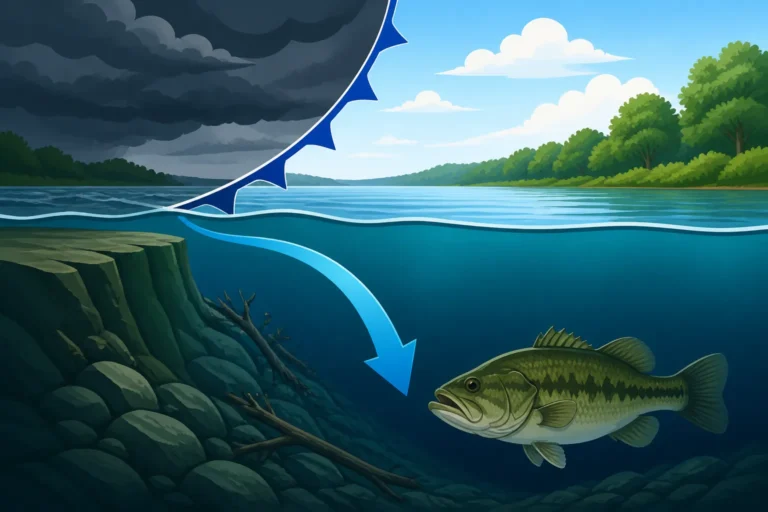
Remember, these are general guidelines, and bass behavior can be influenced by factors like weather fronts, water clarity, and fishing pressure. Always be prepared to adapt your approach based on what the fish are telling you on any given day. To get a better sense of where to apply these techniques, explore our guide on the Best Bass Fishing Lakes in Georgia.
Disclaimer
Fishing conditions and regulations in Georgia can change. Always consult the latest rules and guidelines from the Georgia Department of Natural Resources (GDNR) before heading out. This guide provides general information and recommendations for educational purposes only.