Boat Fishing Techniques
There’s nothing quite like the feeling of watching a fellow angler motor past you on the lake, disappearing into that perfect cove while you’re stuck wishing for better access. Shore fishing is fantastic, but let’s be real, a boat opens up a whole new world of possibilities, letting you reach those untouched spots and employ techniques impossible from land. If you’ve been itching to maximize your time on Georgia’s incredible waters from the comfort of your own vessel, this guide is your comprehensive dive into effective boat fishing techniques that will transform your angling experience.
Getting Started: The Essentials of Boat Fishing
Stepping into boat fishing, whether it’s your first time or you’re just looking to refine your approach, can feel a bit overwhelming. There's a lot more to consider than just your rod and reel! But with a little planning and the right essentials, you'll be navigating Georgia's lakes and rivers like a seasoned pro in no time.
Pre-Trip Planning and Preparation
Before you even think about launching, a solid plan is your best friend. This isn't just about packing snacks; it's about knowing your destination, understanding the conditions, and ensuring everything on your boat is shipshape. Start by researching your chosen fishing spot. Are you heading to Lake Lanier for some striped bass or perhaps a smaller river for shoal bass? Knowing the specific body of water will dictate the fish species you're targeting and, consequently, the gear and techniques you'll employ. Check the weather forecast meticulously – wind, rain, and temperature can all dramatically affect both safety and fishing success. A quick check of recent fishing reports can also give you a leg up, telling you what's biting and where.
Beyond the fishing itself, make sure your boat is ready. Check your fuel levels, battery charge, and engine oil. Is your trailer in good working order, with proper tire pressure and functioning lights? These seemingly small details can quickly turn a fun day into a frustrating one if overlooked. Finally, ensure all your legal documentation is in order. You’ll need to understand Georgia Boat Registration Requirements Explained and have your registration current. It's a real buzzkill to get to the ramp only to realize your tags are expired or you’ve forgotten your paperwork.
Essential Gear for Your Boat
Equipping your boat correctly is crucial for both safety and fishing efficiency. Think beyond just fishing tackle. Safety equipment is paramount: always have enough Georgia Life Jacket Laws for Boaters and Kids for everyone on board, a fire extinguisher, a sound-producing device (like a whistle or horn), navigation lights if you'll be out at dusk or dawn, and a throwable flotation device. These are not just recommendations; they’re often legal requirements. For navigation, a reliable GPS unit or chart plotter is invaluable, especially on large reservoirs like Clarks Hill Lake or Lake Seminole where countless coves and submerged structures can look similar. Many modern fish finders come with integrated GPS, making them a dual-purpose tool.
For your actual fishing, consider the species you're after. If it's bass, you'll want a variety of rods, reels, and tackle, perhaps even a dedicated Tackle Box Setup for Bass Fishing. If you're targeting crappie, lighter jigs and minnows will be essential. Don't forget a cooler for your catch (and your drinks!), a net for landing fish, and a first-aid kit for any minor mishaps. Carrying extra rope, a multi-tool, and a spare prop can save your day if you run into unexpected trouble. You can often find great deals on these essential safety and fishing accessories, like a sturdy cooler or a waterproof dry bag, on platforms like Amazon.
Here's a quick rundown of some crucial boat fishing gear:
| Category | Item | Purpose | Notes |
|---|---|---|---|
| Safety | Life Jackets | Personal flotation for all occupants | Ensure correct size and type for each person, especially children. |
| Fire Extinguisher | Emergency fire suppression | Required on most motorized boats. | |
| Sound Device (Whistle/Horn) | Alerting other boaters | Essential for signaling in fog or emergencies. | |
| Throwable Flotation | Aid for someone overboard | Ring buoy or cushion; easily accessible. | |
| Navigation Lights | Visibility at night or low light | Bow (red/green) and stern (white) lights. | |
| First Aid Kit | Treating minor injuries | Keep well-stocked and accessible. | |
| Navigation | GPS / Chart Plotter | Mapping, route planning, marking waypoints | Often integrated into fish finders. |
| Maps (Paper/Digital) | Backup navigation, understanding contours | Helps identify structure, depths, and hazards. | |
| Fishing Tools | Landing Net | Safely landing fish | Choose size appropriate for target species. |
| Pliers/Dehooker | Removing hooks, cutting line | Essential for quick and safe release. | |
| Cooler | Storing catch, food, and drinks | Keep separate coolers for fish and food/drinks. | |
| Boat Spares | Extra Propeller | Replacement for damaged prop | Can save a trip if you hit an underwater object. |
| Basic Tool Kit | Minor repairs and adjustments | Wrenches, screwdrivers, electrical tape. | |
| Rope/Dock Lines | Docking, anchoring, towing | Various lengths and strengths. |
Mastering Different Boat Types for Georgia Waters
Georgia's diverse fishing environments, from vast deepwater reservoirs to winding shallow rivers and coastal estuaries, mean that one boat doesn't fit all. Understanding the strengths and limitations of different boat types can significantly enhance your fishing experience, allowing you to choose the perfect vessel for your angling ambitions.
Bass Boats and Their Advantages
For serious tournament anglers and those passionate about chasing largemouth and spotted bass, a bass boat is often the vessel of choice. These boats are designed for speed, stability, and quick access to fishing spots. They typically feature powerful outboard motors, shallow drafts for navigating skinny water, and a wide, stable casting deck that allows for comfortable stand-up fishing. The extensive storage on bass boats is perfect for organizing an array of rods, tackle boxes, and specialized gear, which is critical when you need to switch techniques quickly. Many bass boats are also equipped with advanced electronics, including multiple Best Fish Finders for Georgia Reservoir Fishing and trolling motors with GPS spot-lock capabilities, invaluable for holding position over prime structure on lakes like Lake Lanier or Lake Hartwell.
The speed of a bass boat allows anglers to cover large amounts of water efficiently, jumping from one potential hotspot to another. This is a huge advantage in competitive fishing or when fish are scattered across a big lake. However, their lower freeboard means they can be less comfortable in choppy conditions, and their specialized design isn't always ideal for family outings or diverse species. But if you’re focused on active, aggressive bass fishing, especially in tournaments, a quality bass boat is a game-changer.
Pontoons and Deck Boats for Family Fishing
If your idea of a perfect fishing day involves bringing the whole family, relaxing, and targeting a variety of species, then pontoon or deck boats are fantastic options. Pontoons, with their stable, spacious platforms, offer unparalleled comfort and room to move around. They’re perfect for social fishing trips, where multiple lines can be cast simultaneously without tangling, making them excellent for targeting panfish, catfish, or even slower-moving striped bass. Many pontoons come equipped with comfortable seating, tables, and even small galleys, turning a fishing trip into a full-day leisure cruise. On big lakes like Lake Oconee or Lake Sinclair, you’ll see plenty of families enjoying the water from a pontoon.
Deck boats offer a similar blend of space and comfort, often with a more V-hull design that handles chop better than a pontoon while still providing ample room. While not as nimble or fast as a bass boat, these vessels excel at creating a relaxed fishing environment. They're great for Bream and Bluegill Fishing for Beginners or for bottom fishing for catfish. Their stability also makes them a safer choice for fishing with children or elderly family members. You might not break speed records, but you’ll certainly create lasting memories.
Kayaks and Canoes: Stealth and Access
For anglers seeking a more intimate connection with the water, unparalleled stealth, and access to hard-to-reach spots, kayaks and canoes are truly remarkable. Modern fishing kayaks, in particular, are incredibly versatile. They are designed with stability in mind, allowing anglers to stand up and cast, and often feature built-in rod holders, storage, and even mounting options for small fish finders or shallow water anchors. Their lightweight nature means they can be launched virtually anywhere, from designated boat ramps to secluded riverbanks or hidden coves that larger boats simply cannot access.
Kayaks are fantastic for targeting trout in North Georgia's smaller rivers, exploring the quiet backwaters for crappie, or even stalking redfish in coastal Georgia's marshy estuaries. The silent glide of a kayak or canoe allows you to approach fish without spooking them, often leading to more natural presentations and bites. While they don’t offer the speed or capacity of larger vessels, the experience of paddling or pedaling into remote fishing grounds and catching fish in solitude is incredibly rewarding. Just remember to always wear your life jacket, as even calm waters can be unpredictable in a small craft. You can find specialized fishing kayaks and essential accessories like paddles and dry bags on Amazon.
Key Techniques for Popular Georgia Game Fish from a Boat
Once you've got your boat, understanding how to effectively target different species from it is the next step. Georgia boasts an incredible variety of game fish, and each calls for specific strategies when you're on the water.
Bass Fishing from a Boat: Targeting Structures
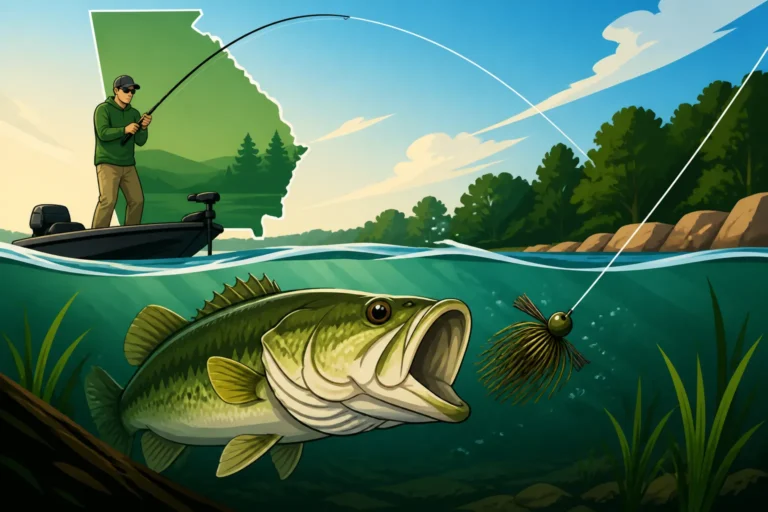
When it comes to bass fishing from a boat, you’re not just randomly casting. You're hunting for structure and cover. Largemouth bass, spotted bass, and even shoal bass are ambush predators that relate heavily to underwater features. From a boat, you have the advantage of thoroughly working these areas. Start by using your electronics to locate submerged brush piles, rock formations, humps, ledges, and creek channels. On many Georgia lakes, like West Point Lake or Lake Oconee, these features are abundant. Once you find a promising spot, use your trolling motor to position your boat perfectly to cast to the structure from multiple angles.
Techniques vary with the season and depth. In spring, during the Spring Bass Spawn Timing on Georgia's Lakes, you might target shallower areas with jigs, Texas-rigged worms, or spinnerbaits around docks and lily pads. During summer, when bass often move deeper, you’ll be focusing on offshore humps and ledges with deep-diving crankbaits, Carolina rigs, or drop shots. Fall sees bass transitioning, often chasing baitfish in the backs of coves, making topwater lures and lipless crankbaits effective. How to Catch Bass Around Submerged Timber is another critical skill, often requiring stout gear to pull fish out of thick cover. Your boat allows you to get right on top of these spots, offering precise presentations that shore anglers can only dream of.
Crappie and Panfish: Slow and Steady Wins the Race
Crappie and other panfish like bluegill and shellcrackers are fantastic targets from a boat, offering consistent action and delicious table fare. These fish often school up, and a boat allows you to locate and stay with the schools. For crappie, the key is often a slow, vertical presentation. How to Jig for Crappie is a fundamental technique, using small jigs (1/16 to 1/8 ounce) tipped with minnows or soft plastics. Your boat lets you spider rig, where multiple rods are deployed from the bow and stern, each with a jig or minnow rig set at a different depth. This method allows you to quickly pinpoint the crappie's preferred depth.
When fishing for crappie, look for submerged timber, brush piles, bridge pilings, and deep docks, especially on lakes like Lake Sinclair or Lake Blackshear. In spring, crappie move shallow to spawn, making them accessible to vertical jigging or casting small spinners. In colder months, they often suspend in deeper water over brush piles or creek channels, making a good fish finder indispensable. For bluegill and other panfish, the approach is similar but often shallower. Look for weed beds, fallen trees, or shaded areas near banks. Small worms, crickets, or tiny artificial baits under a bobber are incredibly effective. A boat allows you to approach these areas quietly and work them thoroughly without spooking the fish.
Striped Bass: Open Water and Deep Dives
Striped bass, often called "stripers" in Georgia, are powerful, hard-fighting fish that primarily inhabit large reservoirs and some river systems. They are open-water predators that follow baitfish, typically threadfin and gizzard shad. Fishing for stripers from a boat is almost a necessity, as they often suspend in deep water or patrol vast open areas. One of the most common and effective techniques is Deep Water Techniques for Striped Bass using live bait. Alewives, blueback herring, or shad are fished on planer boards, freelines, or downlines. Planer boards spread your lines out, covering a wider area, while downlines get your bait to specific depths where fish are holding, often marked on your fish finder.
Trolling is another incredibly productive method for stripers, especially when they are scattered. Using large crankbaits, bucktail jigs, or even umbrella rigs pulled behind the boat allows you to cover vast expanses of water and locate active fish. On lakes like Lake Lanier or Lake Hartwell, you'll see many boats employing these methods, often with specialized Best Tackle for Georgia Striped Bass Fishing setups. Early mornings and late evenings are prime times, as stripers often push bait to the surface, creating explosive topwater action. Your boat allows you to chase these "boils" and cast topwater plugs or spoons into the frenzy. Always be ready for a fight; these fish hit hard!
Advanced Boat Fishing Strategies and Electronics
Once you’ve got the basics down, it’s time to elevate your game. Modern boat fishing is increasingly reliant on technology and refined strategies that can put you on fish when others are struggling.
Understanding and Using Sonar and GPS
Today’s fishing boats are often equipped with incredible electronics, and mastering your sonar and GPS units is like having an X-ray vision into the underwater world. Your sonar (or fish finder) isn't just for seeing fish; it's for understanding the bottom composition, identifying submerged structure, and tracking baitfish schools. Learn to interpret the different colors and shapes on your screen – a hard bottom will appear differently than soft mud, and a dense brush pile will look distinct from scattered rocks. Down Imaging and Side Imaging technologies offer even clearer, photographic-like views of what’s directly beneath and to the sides of your boat, allowing you to literally "scan" areas for fish-holding cover.
GPS, often integrated into your fish finder, is equally vital. It allows you to mark waypoints for productive spots, navigate back to them with precision, and follow contour lines accurately. If you find a promising ledge or a brush pile on your sonar, marking it with GPS means you can return to it reliably, even years later. Many advanced trolling motors now feature "spot-lock" capabilities, using GPS to hold your boat in a precise location, even against wind and current. This frees you up to focus on fishing, rather than constantly adjusting your boat position. Investing time in learning the nuances of your specific unit, perhaps through online tutorials or the manual, will pay huge dividends.
Trolling and Drifting Effectively
Trolling and drifting are two classic boat fishing techniques that, when executed correctly, can be incredibly effective, especially for species that roam open water or suspend at specific depths. Trolling involves pulling lures or bait behind your boat at a controlled speed. The key to successful trolling is maintaining the correct speed for your chosen lure (which dictates its running depth and action) and covering productive water. For striped bass, this might mean slow trolling live bait with downriggers or planer boards. For crappie, a slow, almost imperceptible troll with small jigs might be the ticket. Experiment with different speeds and depths until you find what the fish are responding to.
Drifting uses the wind or current to move your boat, allowing your baits to cover a broader area naturally. This is particularly effective for catfish, crappie, or even bass that are spread out over a flat. To optimize drifting, use a drift sock (a parachute-like device deployed from the boat) to slow your drift speed and maintain better boat control. This prevents your bait from skipping across the bottom too quickly and allows fish more time to react. Pay attention to wind direction and strength, as well as any subtle currents, to predict your drift path and position your boat accordingly.
Anchoring and Spot-Lock Strategies
While covering water is often important, sometimes holding your boat in a precise location is the key to success. Anchoring is the traditional method, but there's an art to it. You need enough anchor line for the depth (typically a 7:1 scope ratio for effective holding), the right type of anchor for the bottom (e.g., a fluke anchor for sand/mud, a grapnel for rocky bottoms), and the technique to set it properly. When fishing in rivers or current, setting two anchors (one from the bow, one from the stern) can help stabilize your boat and prevent it from swinging.
Modern technology has given us the "spot-lock" feature on electric trolling motors, which uses GPS to automatically keep your boat on a precise point. This is an absolute game-changer for bass anglers working a brush pile, crappie fishermen hovering over a submerged tree, or catfish anglers targeting a specific hole. Rather than constantly battling the wind or current with your foot pedal or engine, spot-lock holds you steady, allowing you to focus entirely on fishing. Many anglers consider a high-quality spot-lock trolling motor an indispensable tool, and you can explore various models, like those from Minn Kota or Lowrance, on Amazon.
Navigating the Seasons and Weather from Your Boat
Fishing from a boat gives you a distinct advantage in adapting to changing seasons and weather conditions. Understanding how these factors influence fish behavior is paramount to consistent success on Georgia’s waterways.
Adapting to Seasonal Changes
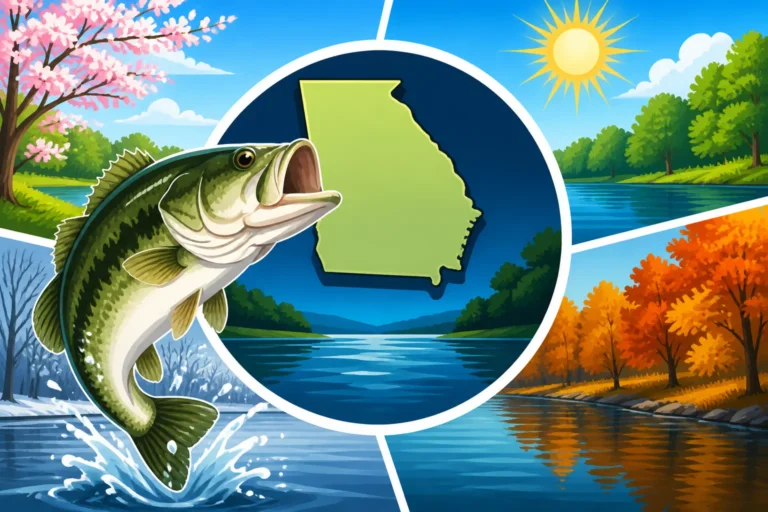
Georgia's distinct seasons bring significant changes to water temperature, oxygen levels, and forage availability, all of which directly impact where fish are, what they're eating, and how active they are. In spring, as water temperatures rise, many fish move into shallower waters for their spawning rituals. This is a prime time for targeting bass around visible cover or crappie in brush piles near the banks. Your boat allows you to easily move from one shallow cove to another, scouting for active fish.
Summer brings warmer surface temperatures, often driving fish deeper to seek cooler, more oxygenated water. This is when deep-diving techniques, offshore structures, and nocturnal fishing from your boat become highly effective for species like striped bass and catfish. Fall is a transitional period, with cooling water temperatures signaling fish to feed aggressively in preparation for winter. Baitfish move into the backs of creeks, and predatory fish follow, creating fantastic opportunities for chasing schooling bass and stripers. Finally, winter slows things down, but with a boat, you can target fish holding in deeper channels or near thermal refuges, like the warm-water discharges sometimes found near power plants, famously productive on Lake Sinclair. Understanding How Water Temperature Affects Fish Behavior is truly key to year-round success.
Fishing After a Cold Front or Rain
Weather patterns can drastically alter fish behavior, and knowing how to adjust your boat fishing techniques can make all the difference. After a strong cold front, fish often become sluggish and move deeper, suspending or hugging the bottom. Their metabolism slows, and they're less likely to chase fast-moving baits. From your boat, you can focus on slower, more subtle presentations like drop shots, jigs, or even dead sticking live bait in deeper water. Your fish finder becomes crucial for locating these inactive fish.
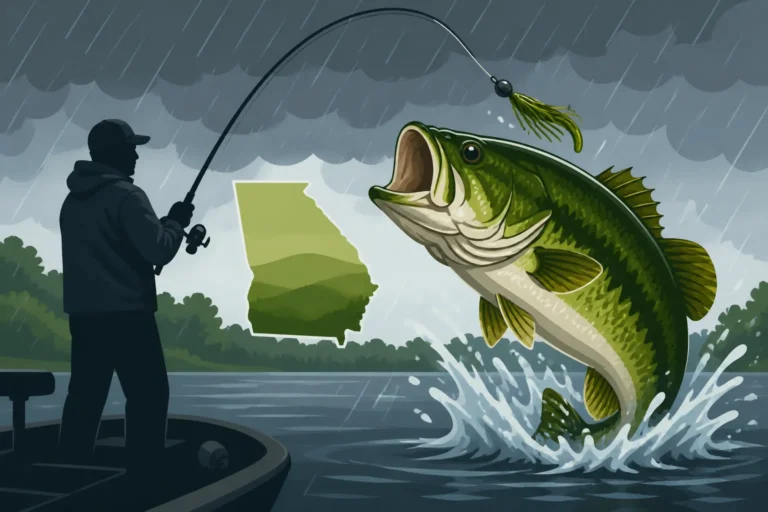
Conversely, a good rain can sometimes "turn on" the bite. Rain can cool surface temperatures, increase oxygen levels, and wash nutrients and bait into the water, particularly in feeder creeks and rivers. From a boat, you can target these inflowing waters where baitfish congregate and predatory fish lie in wait. Bass might be more active around muddy points, and catfish could be feasting on newly available forage. However, heavy rains can also cause stained or muddy water, which might require using louder, more vibrantly colored lures that fish can find more easily by vibration or sight. Always keep an eye on safety, as sudden storms or heavy winds can make boating hazardous.
Safety and Etiquette on Georgia's Crowded Waters
While boat fishing offers incredible freedom, it also comes with the responsibility of ensuring safety and respecting fellow anglers and boaters. Georgia's waters can get busy, especially on weekends and holidays.
Understanding Georgia Boating Regulations
Before you even think about putting your boat in the water, you need to be familiar with Georgia Fishing Regulations Explained and all state and local boating laws. This includes having all required safety equipment on board, understanding speed limits (especially in no-wake zones), and knowing right-of-way rules. For instance, sailboats typically have the right-of-way over powerboats, and commercial vessels have priority over recreational boats. There are also specific rules regarding children and life jackets; for instance, any child under 13 must wear a Coast Guard-approved life jacket while on a moving vessel.
Another critical regulation to be aware of is the Georgia Boater Education Card Requirements. Depending on your age (specifically if you were born after January 1, 1998), you might be required to complete a boater education course and carry a Boater Education Card. Ignorance of the law is not an excuse, and game wardens or marine patrol officers regularly check for compliance. These laws are in place for everyone's safety, so taking the time to learn and follow them is non-negotiable.
Courtesy on the Water
Sharing Georgia’s beautiful lakes and rivers requires a degree of courtesy and respect for others. When approaching other boats, especially those that appear to be fishing, slow down and create as little wake as possible. A large wake can easily swamp a smaller vessel, tangle lines, or spook fish. If someone is anchored and fishing a spot, give them a wide berth. Don't run directly over their lines or cast into their immediate area.
Ramp etiquette is also crucial. During busy times, have your boat prepped and ready to launch before you get to the ramp itself. This means securing your drain plug, loading your gear, and removing tie-downs while waiting in line, not once you’re on the ramp. Once launched, move your boat away from the ramp quickly to allow others access. Similarly, when retrieving your boat, have your trailer ready and don't linger at the ramp. A little planning and consideration go a long way in ensuring a pleasant experience for everyone. Remember, we're all out there to enjoy the peace and thrill of fishing, so let's make it enjoyable for all.
Disclaimer
Please note that fishing regulations and boating laws in Georgia can change. While this guide provides comprehensive information, it is always your responsibility to consult the latest official resources from the Georgia Department of Natural Resources (DNR) or the relevant authorities before heading out on the water. Stay safe and enjoy your time fishing!