Best Fishing Techniques for Georgia Anglers
It can feel overwhelming, right? You're standing on the bank of a shimmering Georgia lake, staring at a flowing river, or wading into a mountain stream, and all you can think is: "What in the world do I do to actually catch a fish here?" Georgia's waters are incredibly diverse, teeming with everything from feisty largemouth bass to elusive trout, and trying to figure out the "best" way to catch them can quickly turn a relaxing day into a head-scratching puzzle. This comprehensive guide is here to untangle that mystery, offering you proven techniques, seasonal insights, and practical tips to boost your success, no matter where your angling adventures take you across our beautiful state.
Understanding Georgia's Diverse Waters and Fish Behavior
Before you even think about casting a line, it's crucial to appreciate the incredible variety of fishing environments Georgia offers. From the cool, clear mountain streams of the north to the vast freshwater reservoirs of the central region, and down to the brackish estuaries of our coast, each ecosystem demands a unique approach. Understanding these differences and, more importantly, understanding the fish themselves, is the first step towards becoming a truly skilled Georgia angler.
The Lay of the Land: From Mountains to Coast
Georgia is a state of remarkable geographical contrasts, and this diversity directly influences its fishing opportunities. Up in the northern part of the state, you'll find the Appalachian Mountains, carved by countless cold, fast-flowing streams that are home to trout. These waters are often rocky, oxygen-rich, and demand lighter tackle and a stealthier approach. The fishing here is a different beast entirely from what you'd encounter just a few hours south.
As you move south, the landscape flattens into the Piedmont region, characterized by rolling hills and, crucially for anglers, a multitude of large reservoirs. Think of iconic bodies of water like Lake Lanier, Lake Oconee, Lake Sinclair, and West Point Lake. These impoundments are deep, often cover vast areas, and are primarily known for their incredible bass, crappie, catfish, and striped bass fisheries. The techniques here often involve boats, electronics, and understanding expansive underwater structures. Further south still, you enter the Coastal Plain, with its slower-moving rivers like the Altamaha and the Flint, which hold robust populations of catfish, bream, and even unique species like shoal bass. Finally, the true coast presents saltwater challenges, with estuaries, tidal creeks, and the open ocean offering up redfish, speckled trout, and various other species. Each of these distinct zones dictates the kind of gear you'll need, the baits you'll use, and the specific strategies you'll employ.
Reading the Fish: Key Behavioral Cues
Fish aren't just randomly swimming around waiting to bite your hook; they are complex creatures driven by instincts related to feeding, spawning, and self-preservation. Learning to "read the fish" — understanding their typical behaviors, preferred habitats, and how they react to environmental changes — is perhaps the most significant skill an angler can develop. It's about putting yourself in their fins, so to speak. For instance, knowing that bass often relate to cover and structure means you'll focus your efforts around submerged timber, docks, or rock piles rather than casting aimlessly into open water.
Temperature plays an enormous role in fish activity, often determining their depth and feeding aggressiveness. When the water is cold, fish are generally more sluggish and require slower presentations of baits. As temperatures rise, their metabolism increases, making them more active and willing to chase faster-moving lures. Understanding how factors like this influence your target species can make a world of difference. For a deeper dive into this, check out our guide on How Water Temperature Affects Fish Behavior. Similarly, knowing the best times of day to target specific species, often tied to light levels and feeding windows, can drastically improve your odds. Bass, for example, frequently feed more aggressively during low light conditions at dawn and dusk. Our article on Best Time of Day to Fish for Bass offers some excellent insights into this.
Mastering Freshwater Lake Techniques
Georgia's lakes are a playground for anglers, offering a diverse array of species and fishing scenarios. From chasing aggressive bass to patiently targeting crappie, or battling monster catfish and stripers, the techniques you employ in these larger bodies of water are critical for success. It's not just about casting and hoping; it's about strategic presentations, understanding depth, and utilizing the right gear for the job.
Bass Fishing: Targeting Largemouth and Spotted Bass
When most people think of lake fishing in Georgia, largemouth bass are usually the first fish that come to mind. These iconic green fish are abundant in nearly all of Georgia's major reservoirs, offering thrilling fights and a rewarding challenge. Spotted bass, another prevalent species, are often found in the same waters, though they tend to prefer deeper, clearer, and rockier habitats. The key to catching both often revolves around understanding their relationship to structure and cover.
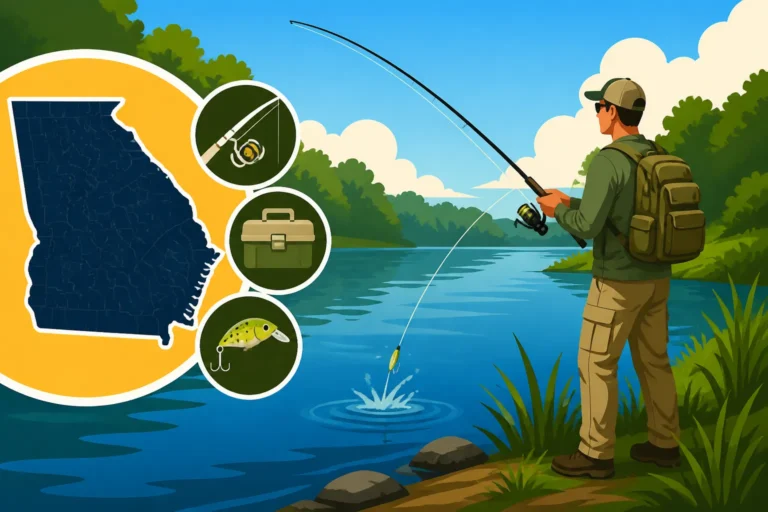
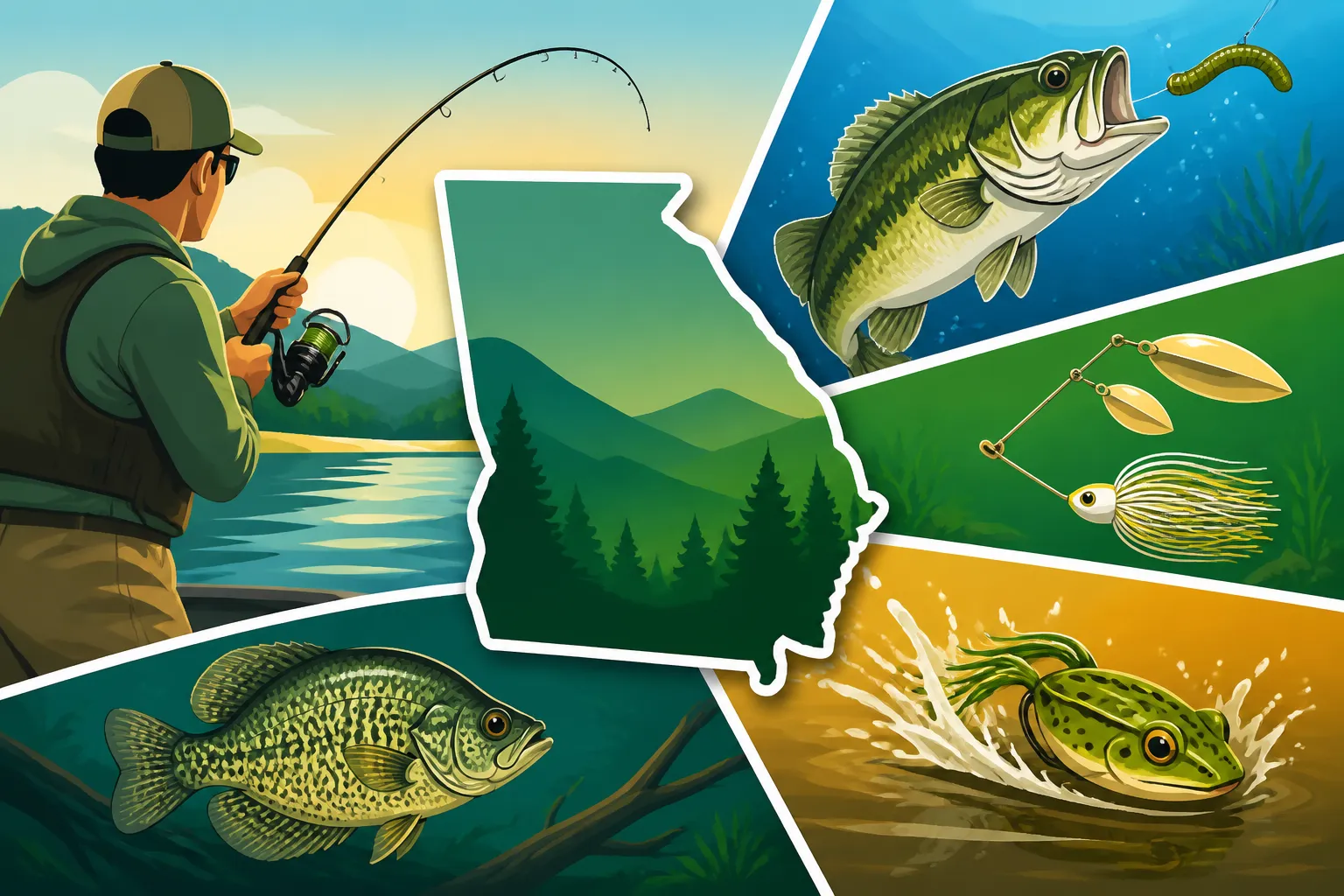
For largemouth bass, a versatile set of techniques is essential. Soft plastics, rigged "Texas style" (weedless with a bullet weight) or "Carolina style" (with the weight separated from the bait by a leader), are fantastic for fishing around submerged timber, brush piles, or grass beds. Think about fishing a worm or a creature bait slowly along the bottom, mimicking a crawfish or a fleeing baitfish. Crankbaits, which dive to specific depths, are excellent for covering water and finding active fish, especially when they're feeding on shad. Spinnerbaits, with their flashing blades, are great for stained water or when fish are scattered. And who can resist the thrill of a topwater bite? Poppers, walk-the-dog lures, and buzzbaits fished at dawn or dusk can produce explosive strikes that will get your heart pounding. Many anglers swear by specific colors and sizes, and you can find an incredible variety of these lures and baits on platforms like Amazon, offering convenience and selection. If you're looking for more in-depth information on these popular game fish, our guide on Largemouth Bass Fishing in Georgia: The Complete Species Guide is a must-read.
Crappie and Panfish: The Art of the Light Bite
Crappie, whether black or white, are beloved by Georgia anglers for their delicious table fare and the sheer fun of catching them. They are schooling fish that often congregate around submerged brush, timber, bridge pilings, and dock structures. Panfish, including bluegill, redbreast sunfish, and shellcrackers (redear sunfish), are typically found in shallower areas, especially around shoreline vegetation, docks, and fallen trees. These smaller species are perfect for introducing kids to fishing, but they can also be a blast for experienced anglers using light tackle.
When targeting crappie, jigging is perhaps the most popular and effective technique. Small jigs, typically 1/16 to 1/8 ounce, tipped with tiny plastic bodies or live minnows, are worked vertically or cast out and slowly retrieved. Understanding how to use your electronics to locate schools of crappie suspended around brush piles is a game-changer. For a detailed breakdown, explore our article on How to Jig for Crappie. Another reliable method involves fishing live minnows under a slip bobber, allowing you to present the bait at a precise depth. For panfish, simplicity is often key. A small hook, a bit of red wiggler worm or crickets, and a bobber are all you really need. Cast near cover and watch that bobber disappear! They're not picky, which is why they're such a hit with families. We have a fantastic resource dedicated to Bream and Bluegill Fishing for Beginners that you might find helpful.
Catfish and Striper: Going for the Big Ones
For those who love a powerful fight and the chance at a truly monstrous catch, Georgia's lakes deliver with their robust populations of channel, blue, and flathead catfish, as well as hard-fighting striped bass and hybrid stripers. These fish often grow to impressive sizes and demand different tactics than their smaller counterparts. Catfish are primarily bottom feeders, while stripers are open-water predators that often chase schools of baitfish.
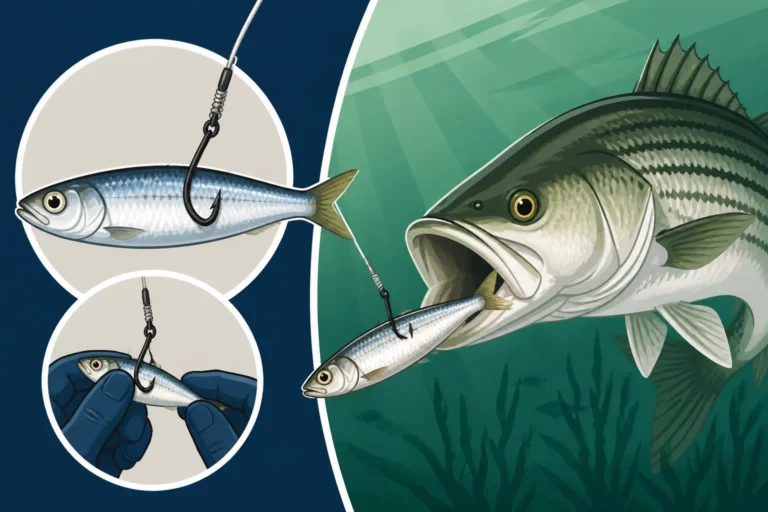
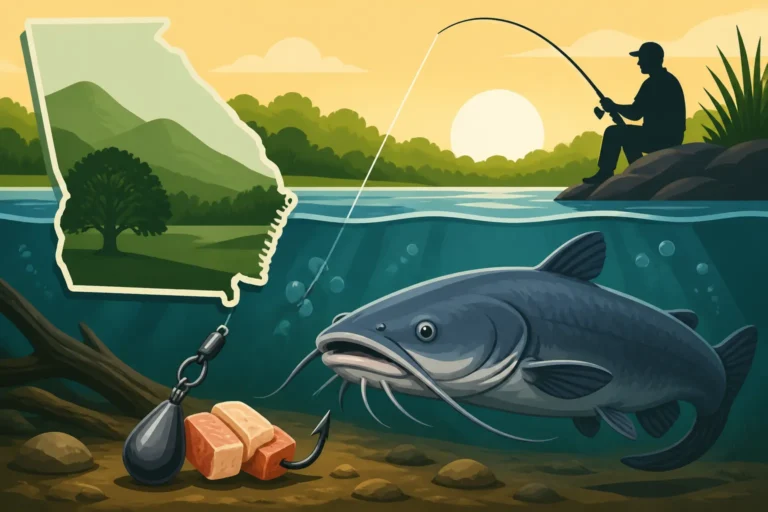
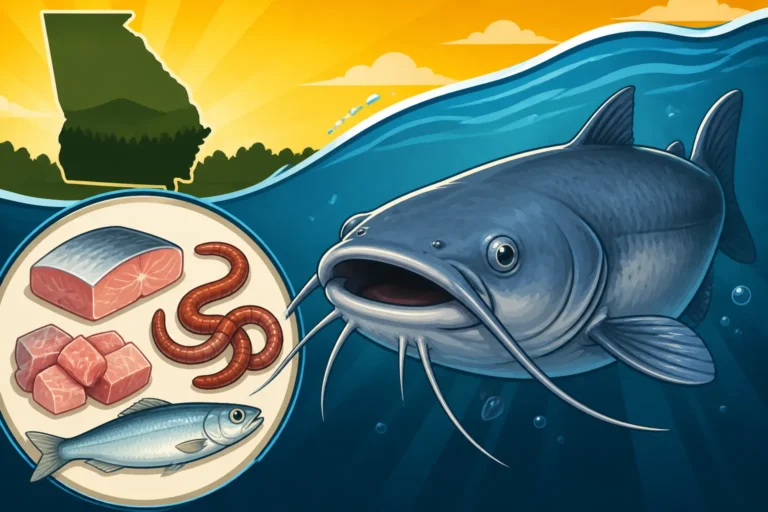
For catfish, bottom fishing is the name of the game. Using heavy tackle, a slip sinker rig (which allows the fish to pull the bait without feeling the weight), and smelly baits like chicken livers, cut bait (shad or bream), or specially prepared stink baits can be incredibly effective. Anglers often fish multiple rods from the bank or a boat, casting into deep channels, creek bends, or river mouths within the lake. For blue and flathead catfish, live or large cut baits are often preferred. To truly master this, be sure to read our guide on Catfish Bottom Fishing Basics. Striped bass and hybrid stripers, on the other hand, require a more active approach. Trolling with large crankbaits or live bait (gizzard shad, herring) is a common method for covering vast expanses of open water where these fish roam. Using downriggers or umbrella rigs can help present baits at the correct depths. When stripers are actively schooling and busting bait on the surface, casting large topwater plugs or spoons can lead to explosive strikes. For those eager to chase these formidable fish, our article on Deep Water Techniques for Striped Bass provides invaluable strategies. You'll find more comprehensive details on these species in our Striped Bass and Hybrid Striped Bass in Georgia Waters guide.
| Species Targeted | Primary Techniques | Recommended Bait/Lures | Common Habitat in Lakes |
|---|---|---|---|
| Largemouth Bass | Soft plastics, crankbaits, spinnerbaits, topwater | Worms, creature baits, shad-imitating lures, frogs | Submerged timber, grass beds, docks, rock piles |
| Spotted Bass | Drop shots, shaky heads, small jigs, crankbaits | Finesse worms, small swimbaits, grubs | Deep, clear water, rocky points, humps |
| Crappie | Jigging, minnows under a bobber, spider rigging | Small plastic jigs, live minnows, tiny spoons | Brush piles, submerged timber, bridge pilings |
| Panfish | Bobber and worm, small crickets, tiny flies | Worms, crickets, small poppers | Shallow vegetation, docks, fallen trees |
| Catfish (Channel, Blue, Flathead) | Bottom fishing (stationary or drifting), jug fishing | Chicken livers, cut bait (shad, bream), live bait (for flatheads) | Deep channels, creek mouths, ledges, timber |
| Striped Bass | Trolling, live bait, casting jigs/spoons, topwater | Live shad/herring, large crankbaits, bucktail jigs | Open water, schooling baitfish, dam tailraces |
Unlocking the Secrets of Georgia's Rivers
While lakes offer expansive opportunities, Georgia's rivers present a different kind of challenge and reward. The constant flow of current shapes everything from fish behavior to effective angling techniques. Fishing a river often means adapting to varying depths, currents, and natural structures that are constantly being reshaped. It's a dynamic environment that calls for a keen eye and a willingness to adjust.
River Bass and Shoal Bass Strategies
Georgia's rivers, particularly those in the central and southern parts of the state, hold excellent populations of largemouth and spotted bass, but they truly shine for their unique native species: the shoal bass. These incredible fish thrive in clear, rocky, flowing waters and are known for their aggressive strikes and powerful fights, often preferring riverine environments over still lake waters. Targeting river bass, especially shoal bass, requires a different mindset than lake fishing.
Instead of vast open water, you're looking for current breaks, eddies behind boulders, fallen trees, deep pockets, and shoals (hence the name!). Shallow-running crankbaits that mimic crawfish or small baitfish are highly effective, as are jigs tipped with soft plastics that can be bounced along the bottom or swung through current seams. Topwater lures, particularly prop baits or poppers, can trigger explosive strikes when fished near cover in calmer pockets. The key is to present your bait naturally with the current, allowing it to drift into prime ambush points. These fish are often territorial and will strike aggressively at intruders. Our comprehensive guide on Shoal Bass: Georgia's River-Specialist Black Bass provides all the details you need to chase these remarkable fish.
River Catfish and Stripers: Current-Driven Approaches
Just like in lakes, catfish are a prominent feature in Georgia's rivers, and the current significantly influences how you target them. Blue and flathead catfish, in particular, thrive in larger river systems like the Altamaha, Savannah, and Flint. Striped bass also make their way into these river systems, especially during spawning runs or when chasing baitfish.
For river catfish, anchoring strategically upstream of a promising hole, deep bend, or logjam and letting your bait drift down into the strike zone is a classic and effective approach. Heavy Carolina rigs or three-way swivel rigs are essential to keep your bait on the bottom in strong currents. Cut bait, particularly fresh shad or mullet, is a top choice for blue cats, while live bream or robust goldfish are irresistible to flatheads. Often, targeting the slack water areas just out of the main current, or the deeper scour holes below rapids, will put you on the fish. For river stripers, particularly in the lower river basins, live bait like shad or herring fished on a free-line or weighted rig is hard to beat. Look for them holding in deeper bends, around submerged structure, or congregating below dams. The continuous current in rivers provides a constant food source and oxygen, making them prime habitat for these powerful fish.
Conquering North Georgia's Trout Streams
Ah, the North Georgia mountains! For many, this is where the true magic of freshwater fishing happens, surrounded by breathtaking scenery and the challenge of outwitting clever trout. The clear, cold, rushing waters of these streams are a world away from the expansive lakes, demanding finesse, stealth, and an appreciation for the subtle art of trout fishing.
Fly Fishing for Georgia Trout
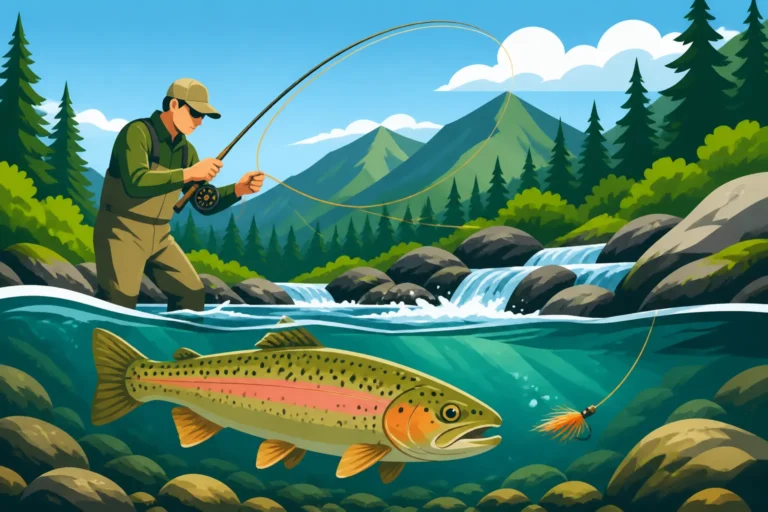
Fly fishing is more than just a technique; for many, it's a meditative dance with nature, especially when targeting the beautiful rainbow, brown, and native brook trout of Georgia's mountain streams. The goal is to present an artificial fly — a meticulously crafted imitation of an insect or baitfish — in a way that looks utterly natural to the discerning eye of a trout. This often involves precise casting, mending your line to achieve a drag-free drift, and a deep understanding of entomology (the study of insects).
For those just starting, learning the basics of casting a fly rod and understanding how to "read the water" to identify likely holding lies (where trout rest and feed) are fundamental. Dry flies, which float on the surface, are exciting when trout are rising to eat adult insects. Nymphs, which imitate immature insects drifting sub-surface, are often the most consistent producers, as trout do most of their feeding underwater. Streamers, mimicking baitfish, can entice larger, more aggressive trout. The Chattahoochee River, particularly below Buford Dam, and the Toccoa River are excellent starting points for fly anglers. If you're looking to dive into this rewarding discipline, our Fly Fishing Basics for Trout guide will get you off on the right foot. For a comprehensive overview of the species you're likely to encounter, check out our Georgia Trout Fishing: Rainbow, Brown, and Brook Trout Explained article.
Spin Fishing for Mountain Trout
While fly fishing often gets the romantic spotlight, spin fishing is an incredibly effective and accessible way to catch trout in North Georgia's streams. It's often the preferred method for many anglers, especially when covering water or fishing larger, faster-flowing sections. The key here is using light tackle and understanding how to present small lures and natural baits to avoid spooking these wary fish.
Small spinning rods, often ultralight outfits, spooled with light line (4-6 lb test) are ideal. Your lure selection should be focused on small spinners (like Panther Martins or Mepps), tiny spoons (such as Phoebe or Little Cleo), or micro jigs. These lures should be cast upstream and retrieved just fast enough to get the blade spinning or the spoon wobbling, allowing the current to help carry them naturally downstream past prime trout lies. Natural baits are also highly effective; live worms, corn, or salmon eggs fished under a small float or on a very light bottom rig can be irresistible to hungry trout. Many of Georgia's trout streams are regularly stocked by the Department of Natural Resources, especially in popular areas. Knowing the Georgia's Trout Stocking Schedule Explained can give you a significant advantage. For detailed techniques on this approach, take a look at our Spin Fishing Techniques for Trout guide. Remember, whether fly fishing or spin fishing, a stealthy approach, reading the water, and understanding current are paramount to success in these delicate ecosystems.
Embracing the Coastal Challenge: Saltwater Techniques
Leaving the mountains and lakes behind, Georgia's coast offers a completely different, yet equally thrilling, angling experience. The ebb and flow of tides, the unique species, and the vastness of the ocean present a fresh set of techniques and challenges. From the tranquil tidal creeks to the crashing waves of the open Atlantic, coastal fishing in Georgia is a vibrant and rewarding endeavor.
Inshore Species: Redfish, Speckled Trout, and Flounder
Georgia's coastal marshes and estuaries are teeming with incredible inshore species, chief among them being redfish (red drum), speckled sea trout, and flounder. These fish thrive in the nutrient-rich, brackish waters and provide fantastic action for anglers of all skill levels. The key to success inshore is often understanding tidal movements and knowing where these fish feed and hold during different parts of the tide cycle.
Redfish are powerful fighters, often found tailing in shallow grass flats during high tide, or holding in deeper creek bends and oyster beds as the tide falls. Live shrimp or mud minnows fished under a popping cork are deadly, as are scented soft plastics (like those from Z-Man or D.O.A., readily available on Amazon) rigged on jig heads and worked along the bottom. Speckled trout, also known as "specks," are often found in similar areas, preferring grass beds and oyster reefs where they can ambush baitfish. They readily strike soft plastics, topwater lures, and live shrimp. Flounder, masters of camouflage, lie camouflaged on sandy or muddy bottoms near structure, ambushing unsuspecting prey. They are best targeted with live mud minnows or Gulp! shrimp on a Carolina rig, slowly dragged along the bottom. Understanding the specific Coastal Georgia Fishing Spots Guide will greatly enhance your success.
Nearshore Opportunities and Pier Fishing
Beyond the immediate creeks and marshes, Georgia's nearshore waters and numerous fishing piers offer different angling opportunities. Here, you might encounter species like whiting, croaker, king mackerel, Spanish mackerel, sharks, and even larger red drum. These areas are generally more exposed to the ocean's elements and might require slightly heavier tackle.
Pier fishing is a fantastic way to access productive waters without needing a boat. From popular piers like those on Tybee Island or St. Simons Island, anglers can cast out for various species. Bottom fishing rigs with shrimp, squid, or cut bait are excellent for whiting and croaker. For Spanish mackerel or smaller king mackerel, casting spoons or small diving plugs and retrieving them quickly can be very effective, especially during their migratory seasons. Nearshore boat fishing opens up options like trolling for Spanish mackerel with small spoons or targeting artificial reefs and wrecks for larger bottom fish. Depending on the species you're targeting, different gear and bait choices will be paramount, and a quick search on Amazon for "saltwater tackle kits" can give you a head start on what's available.
Adapting Your Approach: Seasonal and Weather Considerations
Georgia's weather can be notoriously fickle, swinging from mild winters to scorching summers, often with unpredictable fronts and storms. A truly effective angler knows that successful fishing isn't just about technique; it's about adapting those techniques to the prevailing conditions. Ignoring seasonal patterns or failing to adjust to a sudden cold front can quickly turn a potential banner day into a frustrating skunk.
Seasonal Fishing Patterns
Each season in Georgia brings unique challenges and opportunities. Fish, being cold-blooded creatures, are heavily influenced by water temperature, which dictates their metabolism, where they hold, and how aggressively they feed.
- Spring: This is often considered prime time, especially for bass. As waters warm, fish move shallow for the pre-spawn and spawn. Bass will be aggressive, crappie move into shallows to spawn around brush, and trout fishing in the mountains picks up as stocking intensifies. Topwater lures, spinnerbaits, and soft plastics shine for bass.
- Summer: The heat drives many fish deeper during the day, seeking cooler, oxygen-rich water. Early mornings and late evenings become prime fishing times. Night fishing for catfish and some bass can be incredibly productive. Targeting deep humps, ledges, and thermoclines for bass, stripers, and crappie is crucial.
- Fall: As temperatures cool, fish become very active again, aggressively feeding to build up reserves for winter. This "fall feeding frenzy" can be fantastic for all species, as baitfish school up. Crankbaits, topwater lures, and jigging spoons are excellent for bass and stripers, while trout streams remain productive.
- Winter: Fishing slows down, but it's far from impossible. Fish are lethargic but still need to eat. Slow presentations are key. Deep-water jigging for crappie, slow-rolling spinnerbaits for bass, and targeting specific warm-water discharges for stripers can be very effective. Some lakes, like Lake Sinclair, are known for fishing well in winter due to warmer water. Our article, A Year-Round Guide to Fishing in Georgia, offers a comprehensive look at these seasonal shifts.
Fishing Through Weather Changes
Beyond the broader seasons, daily weather patterns can dramatically impact fish behavior. A sudden cold front, a rainy day, or even changes in barometric pressure can turn a hot bite cold in an instant. The key is not to give up, but to adjust your approach.
- Cold Fronts: These are notorious for shutting down a bite. After a cold front, skies are often clear, and temperatures drop, making fish lethargic. They'll often move deeper or tighter into cover. Slow down your presentation drastically, use finesse techniques like drop shots or shaky heads, and consider smaller baits. Learn more about adapting your strategy with our How to Fish After a Cold Front guide.
- Rainy Days: Often, overcast and rainy conditions are fantastic for fishing! The reduced light penetration encourages fish to move shallower and feed more aggressively. The rain can also wash insects and nutrients into the water, stirring up the food chain. Consider using louder, more visible baits like spinnerbaits, ChatterBaits, or topwater lures, especially when it's drizzling or raining lightly. If you’re planning a trip during inclement weather, ensure you have reliable rain gear, which you can easily find on Amazon, to stay comfortable and focused on the fishing.
- Barometric Pressure: Fish have a swim bladder that is sensitive to changes in pressure. High, stable pressure often means clear skies and a good bite, while rapidly falling pressure (before a storm) can also trigger aggressive feeding. However, a sudden, sharp drop in pressure after a front often makes fish uncomfortable and less active. Paying attention to weather forecasts isn't just for comfort; it's a vital fishing strategy.
Essential Gear and Preparation for Success
You wouldn't head into a professional kitchen without the right tools, and fishing is no different. Having the right gear, and understanding how to use it, is fundamental to maximizing your success and enjoyment on the water. It’s not about having the most expensive equipment, but rather having the appropriate tools for the specific type of fishing you plan to do in Georgia.
Rods, Reels, and Line: Matching Your Quarry
The foundational elements of your fishing setup are your rod, reel, and line. Each plays a crucial role, and matching them to your target species and chosen technique can make a world of difference.
- Rods: Rods come in various lengths, powers (how much backbone they have), and actions (how much they bend and where). For panfish and small trout, an ultralight spinning rod (4-6 feet) with a fast action is perfect for feeling delicate bites. For bass, medium to medium-heavy casting or spinning rods (6'6" to 7'6") are versatile, handling everything from jigs to crankbaits. Heavier rods, often 7 feet or longer with a heavy power, are necessary for battling large catfish or stripers, providing the leverage needed for powerful fish. You'll find many reputable brands like Ugly Stik, Daiwa, and Penn offering quality rods for every budget.
- Reels: Spinning reels are generally easier for beginners and excel with lighter lines and lures. Baitcasting reels, while requiring a bit more practice to master (avoiding backlashes!), offer greater casting accuracy and power, making them popular for bass and heavy-duty applications. Again, match the size of your reel to your rod and line.
- Line: Line choice is paramount. Monofilament is a good all-around choice, offering stretch and good knot strength. Fluorocarbon is nearly invisible underwater and has less stretch, making it ideal for finesse presentations for wary fish. Braided line offers incredible strength-to-diameter ratio, zero stretch for maximum sensitivity, and excels in heavy cover, but often requires a fluorocarbon leader. Generally, 4-8 lb test for trout and panfish, 10-20 lb for bass, and 20-50 lb (or even heavier) for catfish and stripers are good starting points.
Bait and Lure Selection: The Right Temptation
Choosing the right bait or lure is often the biggest decision an angler makes. It needs to mimic what the fish are naturally eating or trigger an aggressive reaction strike.
- Natural Baits: Worms, crickets, minnows, shad, chicken livers, and shrimp are classic natural baits. They often work when artificials don't, especially for panfish, catfish, and sometimes for sluggish bass or trout. Matching the hatch (using bait that is currently prevalent in the ecosystem) can be incredibly effective.
- Artificial Lures: These come in an astounding variety:
- Soft Plastics: Worms, creature baits, flukes, swimbaits – highly versatile, mimicking various prey.
- Crankbaits: Designed to dive to specific depths, great for covering water and imitating baitfish.
- Spinnerbaits & ChatterBaits: Produce flash and vibration, excellent for stained water or active fish.
- Jigs: Vertical presentations, can be tipped with plastics or natural baits.
- Topwater Lures: Designed to float and create commotion on the surface, incredibly exciting strikes.
- Spoons: Cast and retrieve or jigged vertically, imitating injured baitfish.
The choice often depends on water clarity, depth, species, and the time of year. Our articles on Choosing Lures by Season and Choosing Bait by Season delve deeper into making these critical decisions.
Navigation and Safety on the Water
Beyond fishing gear, preparing for your trip with safety and navigation in mind is non-negotiable. Being safe on the water ensures you can enjoy your fishing and return home without incident.
- Life Jackets: Always have Coast Guard-approved life jackets for everyone on board, readily accessible. Children under 13 are required to wear them on moving vessels in Georgia.
- Navigation: Whether you're on a vast reservoir or a winding river, having a reliable way to navigate is crucial. GPS devices, dedicated fish finders with mapping capabilities (like those from Garmin or Humminbird, which are widely available on Amazon), or even a good old-fashioned paper map combined with a compass can keep you oriented. Knowing the depths, contours, and potential hazards of the water body you're fishing is invaluable.
- Communication: A fully charged cell phone (in a waterproof case) or a VHF marine radio for larger bodies of water.
- Emergency Kit: Basic first aid, a whistle or horn, a throwable flotation device, a bailing device, and a fire extinguisher (if required for your vessel) are essential.
- Weather Awareness: Always check the forecast before heading out and be prepared for sudden changes. Knowing what's coming can prevent dangerous situations.
Responsible Angling Practices in Georgia
As anglers, we are not just consumers of the natural world; we are its custodians. Practicing responsible angling ensures that Georgia's incredible fishing resources remain healthy and abundant for future generations to enjoy. This means understanding and adhering to regulations, minimizing our impact on the environment, and always acting ethically.
Conservation and Catch Limits
Every angler in Georgia has a responsibility to understand and follow the state's fishing regulations. These rules are in place for a reason: to manage fish populations, prevent overfishing, and protect vulnerable species.
- Fishing Licenses: First and foremost, always ensure you have a valid Georgia fishing license. Exemptions exist for certain age groups or conditions, but generally, if you're over 16 and under 65, you'll need one. You can typically purchase these online, at bait shops, or through various vendors.
- Size and Creel Limits: Most game fish in Georgia have specific size limits (minimum or maximum lengths) and creel limits (the maximum number of fish you can keep per day). These vary by species and sometimes even by specific body of water. For example, some lakes might have a 14-inch minimum for bass, while others have a different rule. It is imperative to know these limits for the specific waters you are fishing to avoid penalties and contribute to sustainable fishing. Our article on Georgia Fish Size and Creel Limits is an excellent resource, as is the comprehensive Georgia Fishing Regulations Explained guide. Always double-check the latest regulations published by the Georgia Department of Natural Resources (DNR) before you head out.
- Species Identification: Be confident in identifying your catch. This is particularly important when different species have different regulations (e.g., largemouth bass vs. spotted bass, or various trout species). If in doubt, it’s always best to release the fish.
Leave No Trace and Ethical Angling
Beyond regulations, responsible angling encompasses a broader commitment to environmental stewardship and ethical behavior. Our actions on the water have a direct impact on the health of the ecosystem and the quality of the fishing experience for everyone.
- Pack It In, Pack It Out: This is a golden rule. Whatever you bring onto the water, take it back with you – and ideally, take a little extra trash out too. Discarded fishing line, plastic bait containers, and food wrappers are detrimental to wildlife and pollute our beautiful waters.
- Proper Catch and Release: If you're planning to release fish, learn proper catch-and-release techniques. Minimize handling, especially by avoiding touching the gills or eyes. Use barbless hooks or flatten barbs to make hook removal easier. Keep the fish in the water as much as possible, reviving it gently until it can swim away under its own power. This is especially crucial for trout in cold mountain streams and for trophy bass that you hope to catch again.
- Respect Other Anglers and Property: Share the water respectfully with other anglers, boaters, and property owners. Avoid crowding others, especially when they are already fishing a spot. Leave private property as you found it, or better. Be mindful of noise levels and wake from your boat.
- Report Violations: If you witness illegal fishing activity or environmental damage, report it to the Georgia DNR. Protecting our resources is a collective effort.
By embracing these responsible angling practices, we not only ensure the longevity of Georgia's fantastic fishing but also uphold the integrity and respect of the angling community. It's about being a steward, not just a sportsman.
Disclaimer
The information provided in this guide is for general informational purposes only and is subject to change. Fishing regulations, license requirements, and local conditions can vary. Always consult the official Georgia Department of Natural Resources (DNR) website or their current fishing regulations guide for the most up-to-date and specific information before engaging in any fishing activities. Adhering to all laws and safety guidelines is the responsibility of the individual angler.