How to Rig Herring for Striped Bass
Ah, the mighty striped bass! If you've spent any time on Georgia's big reservoirs like Lake Lanier or Lake Hartwell, you know the thrill and frustration these powerful fish can bring. They can be incredibly hard to pin down, and getting them to bite can feel like cracking a secret code. One of the most effective and time-tested methods for enticing these hard-fighting beauties is using herring as bait. But simply having the bait isn't enough; knowing how to rig herring for striped bass is absolutely crucial for success. This guide is going to walk you through everything you need to know, from selecting your bait to the finer points of rigging, so you can increase your chances of landing that trophy striper.
Why Herring is Your Secret Weapon for Georgia Stripers
When it comes to bait for striped bass, herring stands in a league of its own. It's not just a good bait; it's often the best bait, especially in lakes where stripers actively feed on them. Understanding why herring is so effective is the first step in appreciating the importance of proper rigging.
The Allure of Live and Cut Herring
Striped bass are predators, and they're constantly on the hunt for protein-rich meals. Herring, whether alive and kicking or cut into scent-emitting chunks, offers an irresistible combination of factors that trigger a striper's predatory instincts. Live herring mimic the natural forage that stripers are accustomed to chasing. Their darting movements, their shimmer, and their desperate struggles on the hook send out distress signals that larger fish can't ignore. There's nothing quite like watching a live herring swim frantically, knowing a striper is about to ambush it.
But the appeal doesn't stop with live bait. Herring are naturally oily fish, and when they're cut, they release a powerful scent trail into the water. This scent acts like a beacon, drawing in stripers from a distance, even if they're not actively hunting by sight. Imagine you're fishing a deep channel or a submerged creek bed in one of Georgia's major lakes. A live baitfish might struggle to get noticed in the vastness, but a piece of cut herring slowly releasing its oils can bring fish to you. This is especially true when fishing deeper water or in murky conditions where visibility is limited. It's all about making your offering as appealing and natural as possible, and herring excels at both.
Sourcing Your Bait: Fresh is Always Best
The effectiveness of your herring rig starts long before you even touch a hook; it begins with the quality of your bait. Freshness is paramount. A lively, healthy live herring will outperform a sluggish, dying one every single time. Similarly, cut herring that's been recently prepared will release far more potent scent than bait that's been sitting around.
There are a few ways to get your hands on herring. Many local bait shops around Georgia's striper lakes will carry live herring, especially during peak seasons. It's always a good idea to call ahead to ensure availability. When purchasing, look for actively swimming, bright-eyed fish. Avoid any that look listless, have cloudy eyes, or show signs of injury. Keeping them lively on the way to the lake and in your livewell is key. Good aeration and proper water temperature are non-negotiable.
For anglers who prefer to catch their own, cast nets are typically the method of choice for shad and herring in certain areas, but always double-check local regulations and baitfish limits before attempting this. Regardless of where you get your herring, ensure it's handled gently and kept in the best possible condition. A vibrant, healthy bait is your best chance at catching a truly spectacular fish.
Essential Gear for a Successful Herring Rig
Having the right bait is only half the battle; the other half is making sure your tackle is up to the task. Striped bass are powerful, and they'll quickly expose any weaknesses in your setup. Don't skimp on quality here; it could mean the difference between landing a lunker and telling a heartbreaking "one that got away" story.
Rods, Reels, and Line: Power and Sensitivity
For striped bass, you'll want a rod and reel combo that offers a good balance of power to fight strong fish, and enough sensitivity to detect subtle bites. A medium-heavy to heavy action casting rod, typically between 6'6" and 7'6" in length, is a popular choice. This type of rod provides the backbone needed to handle bigger fish and cast heavier rigs, while still allowing you to feel what your bait is doing. Match this with a sturdy baitcasting reel that has a smooth drag system. Stripers make powerful runs, and a sticky drag will lead to broken lines and lost fish. You can find excellent options for both rods and reels on platforms like Amazon. For a more detailed look, check out our guide on Best Rod for Striped Bass Fishing in Georgia.
When it comes to line, you generally have two main choices: monofilament or braided line.
- Monofilament: Often preferred for its stretch, which can act as a shock absorber against sudden runs, and its ease of handling. A line strength of 17-25 pound test is usually appropriate.
- Braided Line: Offers superior strength-to-diameter ratio and zero stretch, providing incredible sensitivity to feel every bump and nibble. Many anglers use 30-50 pound test braid for stripers. If you go with braid, consider adding a fluorocarbon leader for abrasion resistance and stealth, as braid can be more visible in clear water.
Ultimately, the choice comes down to personal preference, but ensure your line strength is appropriate for the size of fish you're targeting. For more comprehensive insights into your overall setup, you might find our article on Best Tackle for Georgia Striped Bass Fishing incredibly helpful.
Hooks, Swivels, and Leaders: The Critical Connections
These small components are arguably the most critical points in your entire setup. A strong striper will expose any weak link, so invest in quality.
- Hooks: For live bait, many anglers prefer circle hooks. These hooks are designed to hook the fish in the corner of the mouth, which greatly reduces gut-hooking and increases the chances of a healthy release if you're not keeping the fish. Sizes typically range from 5/0 to 8/0, depending on the size of your herring and the stripers you expect to encounter. For cut bait or when a more aggressive hook set is desired, a robust J-hook in similar sizes can also be used, but be mindful of deep-hooking. You can find a wide array of reliable circle and J-hooks from reputable brands on Amazon.
- Swivels: Heavy-duty barrel swivels or ball bearing swivels are essential. They prevent line twist, especially when using live bait that might spin as it swims. A 50-80 pound test swivel is a good choice to ensure it can withstand the fight.
- Leaders: A fluorocarbon leader is highly recommended. Fluorocarbon is nearly invisible underwater, extremely abrasion-resistant, and provides excellent knot strength. Use a leader of 20-40 pound test, depending on your main line and target fish size, and typically 2-4 feet long. Connect your main line to one end of the swivel, and your fluorocarbon leader to the other.
Weights and Floats: Controlling Your Depth
Controlling where your bait is in the water column is just as important as the bait itself. Stripers can be at various depths, and your ability to present your herring at their level is crucial. For information on locating fish, check out How to Find Striped Bass in Deep Water.
- Weights:
- Egg Sinkers/Slip Sinkers: These are common for bottom fishing rigs. The line runs through the center of the weight, allowing the fish to take the bait without feeling the full resistance of the sinker. Weights typically range from 1/2 ounce to 3 ounces, depending on current, depth, and the size of your bait. You can easily stock up on various weights for your tackle box via Amazon.
- Pyramid or Bank Sinkers: More suitable for anchoring your bait in strong currents, especially in river systems.
- Floats:
- Balloon Floats: Excellent for suspending live herring at a specific depth or drifting them over structure. You can inflate a small balloon, tie your leader to it, and let the wind or current carry your bait across productive areas.
- Slip Floats: Allow you to fish at precise depths by adjusting a bobber stop.
Choosing the right weight and float setup depends entirely on the fishing conditions and the depth at which the stripers are holding.
Mastering the Live Herring Rig
Rigging live herring effectively is an art form. The goal is to keep the bait alive and active for as long as possible, while presenting it in a way that looks natural and entices a strike.
The Classic Carolina Rig for Bottom Fishing
The Carolina rig is a versatile and incredibly effective setup for presenting live or cut bait near the bottom. It's a go-to for stripers, especially when they are holding in deeper water or around submerged structure like humps, points, or old creek beds. This rig allows your bait to swim somewhat freely, mimicking a natural forage fish, while your weight keeps it in the strike zone.
Here’s how you assemble a classic Carolina rig:
- Main Line: Start with your main line coming from your reel.
- Weight: Thread an egg sinker or slip sinker onto your main line. The size of the weight will depend on the depth, current, and how quickly you want your bait to sink. For deeper water or stronger currents, you might use 1 to 2 ounces.
- Bead: Slide a small plastic or glass bead onto the line after the sinker. This bead protects the knot of your swivel from the constant banging of the sinker.
- Swivel: Tie a strong barrel swivel to the end of your main line. Use a reliable knot like a Palomar knot or an improved Clinch knot.
- Leader: To the other end of the swivel, tie your fluorocarbon leader. As mentioned, a 2-4 foot leader of 20-40 pound test fluorocarbon is ideal. This separation allows your bait to move more naturally, away from the heavy sinker.
- Hook: Finally, tie your chosen circle hook (or J-hook) to the end of your leader.
Now, for hooking your live herring:
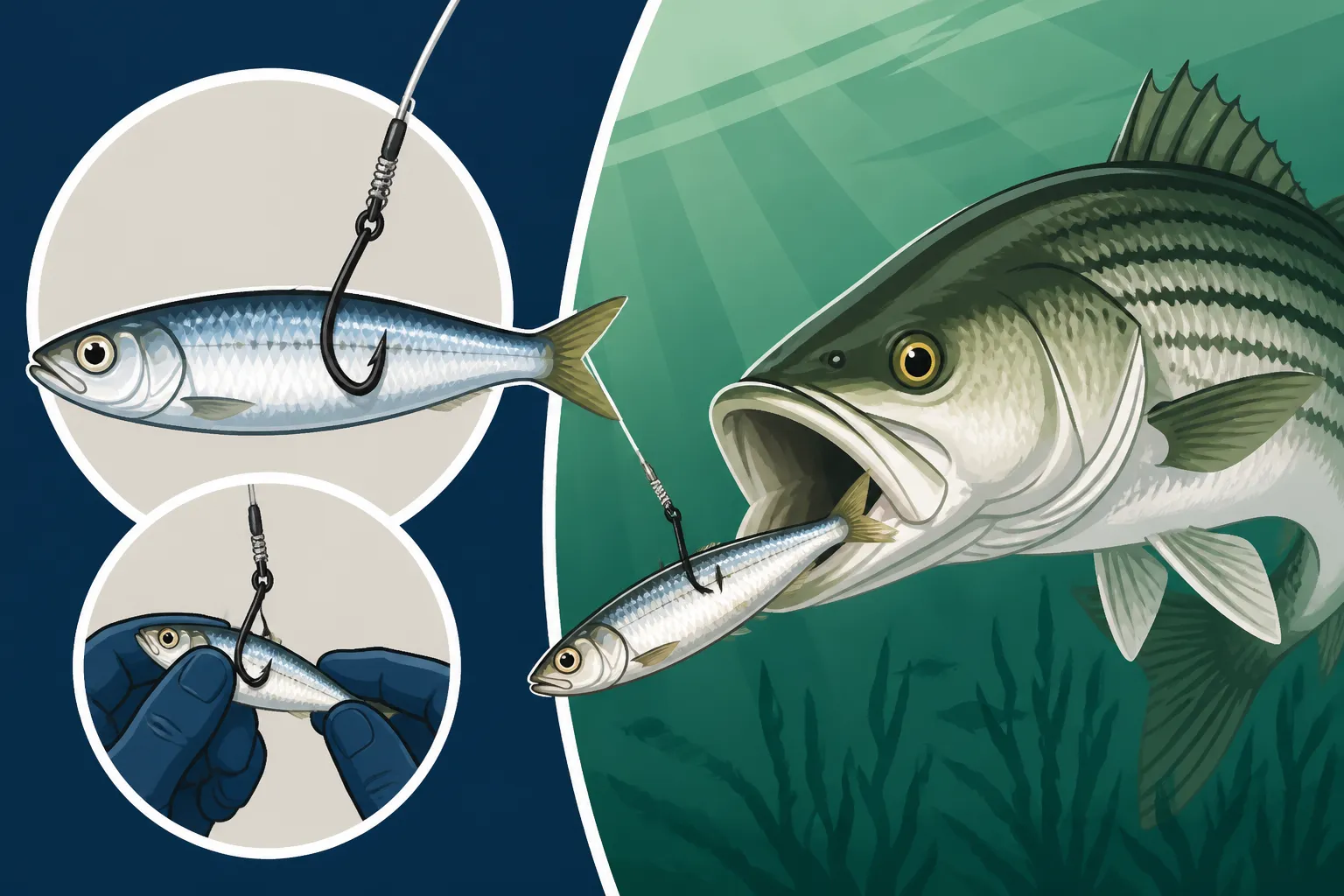
- Through the Nose: This is arguably the most common and effective method. Pass the hook through both nostrils of the herring. This allows the bait to swim naturally and breathe easily, keeping it lively. It also provides a good hook-up ratio.
- Through the Back: If you want your herring to swim a little deeper or appear more distressed, you can hook it just behind the dorsal fin, being careful not to hit its spine. This method is often preferred when fishing in areas with a lot of bottom structure where a nose-hooked bait might snag.
Once your rig is set, gently cast it out to your desired spot, such as the edge of a submerged ridge or a deep river channel in lakes like Clarks Hill Lake. Let the weight settle to the bottom, and then engage your reel. You'll often feel the baitfish darting around, which is a great sign! Keep a slight tension on the line, but let the stripers take the bait without feeling resistance. For more insights on this technique, check out How to Fish Live Bait for Striped Bass.
Free-Lining or Balloon Rigging for Surface Action
Sometimes, stripers are actively feeding higher in the water column, even busting on the surface. In these thrilling scenarios, a free-line rig or a balloon rig can be deadly effective. These methods allow your live herring to swim naturally and unrestricted, right into the path of an aggressive striper.
- Free-Lining: This is the simplest rig imaginable. You simply tie your fluorocarbon leader directly to your main line (or a small swivel for convenience) and then your hook to the leader. No weight, no float. This setup is perfect when you see stripers actively chasing bait on the surface, or when you want your herring to swim just below the surface in relatively calm conditions. Cast your live herring into the general vicinity of the feeding activity and let it swim freely. The natural movements of the bait are enough to attract attention. This technique requires patience and a keen eye on your line for any sudden movement.
- Balloon Rigging: When you need to keep your live herring suspended at a specific depth or drift it over a wider area with the wind or current, a balloon rig is ideal. Attach a small, brightly colored balloon to your main line a set distance above your hook. The balloon acts as a float, holding your herring at your desired depth. You can adjust the depth by sliding the balloon up or down the line before tying it off. This is particularly effective for drifting bait over open water or deeper flats where stripers might be suspended.
Imagine a calm summer morning on Lake Oconee, and you spot stripers churning the water in the distance. A free-lined herring cast ahead of the school can be absolutely devastating. Or perhaps you're targeting suspended fish over a deep channel in the middle of the day; a balloon rig can keep your bait right in their face. These techniques, often detailed in articles like Live Bait Rigs for Striped Bass, maximize the natural appeal of your live herring.
Rigging Dead or Cut Herring for a Scent Trail
While live bait is often king, don't underestimate the power of dead or cut herring. Sometimes, stripers are less aggressive, or you're fishing conditions where a lively bait isn't practical. This is where the potent scent of herring shines.
The Power of Scent: Why Cut Bait Works
Dead or cut herring works on a different principle than live bait. Instead of relying on lifelike movement, it capitalizes on a striper's keen sense of smell. Herring is a very oily fish, and when it's cut, those oils and juices are released, creating a powerful scent plume in the water. This scent can travel a considerable distance, drawing in stripers that might be cruising or holding deep and not actively chasing.
Cut bait is especially effective in a few scenarios:
- Deep Water: In the dark depths, visual cues are less important, and scent becomes paramount.
- Slow Presentations: If you're slow-trolling or drift-fishing, the scent trail is continuously dispersed, creating a consistent attraction.
- Less Active Fish: When stripers are lethargic or wary, a stationary, scent-rich bait can be more appealing than something they have to chase.
- Targeting Other Species: While effective for stripers, cut herring is also incredibly attractive to other Georgia heavyweights like blue catfish and flatheads, offering a chance for a mixed bag!
Think of it as laying out a delicious buffet rather than serving a chase-and-catch meal. The powerful smell of herring tells any nearby predator that there's an easy meal to be had.
Effective Rigging for Cut Bait
Rigging cut herring is generally simpler than rigging live bait, but presentation still matters. You want the bait to look natural and allow for good scent dispersion.
- The Cut: For stripers, you can use several cuts:
- Head or Tail Sections: These are often very oily and still contain a lot of scent.
- Chunks: Cut a herring into 1-2 inch thick sections.
- Fillets/Strips: A longer, thinner strip of herring fillet can be effective, especially for drift fishing where it flutters naturally.
- Hook Placement: When using cut bait, a sturdy J-hook is often preferred, typically in the 5/0 to 8/0 range. Thread the hook through the thickest part of the chunk or fillet, ensuring the hook point is exposed for a good hook-set. For longer strips, you might thread it through twice to keep it securely on the hook.
- Rigging: The classic Carolina rig (weight, bead, swivel, leader, hook) is excellent for cut bait on the bottom. You can also use a simple three-way swivel rig, especially if you're drift fishing in a river or current, with a weight on one dropper line and your bait on another. Ensure your leader is still fluorocarbon for stealth and abrasion resistance.
When using cut bait, remember that scent is your primary attractant. Let your bait soak, giving the oils time to disperse. A slow, steady retrieve or a controlled drift can help spread that scent even further, calling in those elusive stripers.
Techniques and Tips for Striped Bass Success
Rigging your herring perfectly is a huge step, but it's just one piece of the puzzle. To consistently catch striped bass in Georgia, you need to understand their behavior and how to approach them.
Locating Stripers: Structure and Current
Striped bass are highly migratory and often relate to specific types of underwater structure and current. Knowing where to look is half the battle.
- Structure: On large reservoirs like Lake Lanier or Lake Hartwell, stripers will often congregate around main lake points, submerged humps, deep water ledges, and creek channels. These features provide ambush points, cover, and easy access to deep water where they can retreat during the heat of the day. Using your boat's electronics (fish finder, GPS) to locate these structures and identify schools of baitfish (which stripers follow) is invaluable. Mark any productive spots on your GPS for future reference.
- Current: In river systems or below dams (like Buford Dam on the Chattahoochee River), current is a major factor. Stripers will position themselves in current breaks or eddies where they can ambush baitfish without expending too much energy. Fishing the tailraces below dams can be particularly productive as baitfish are often disoriented by the flow. In lakes, even subtle current from wind or thermocline can influence where fish hold. Understanding Deep Water Techniques for Striped Bass will significantly aid your search.
Always pay attention to your surroundings. Are there diving birds? Are baitfish flickering on the surface? These are all indicators that stripers might be nearby.
Presentation and Patience: The Angler's Virtue
Once you've found the fish and rigged your herring, presentation and patience are key.
- Natural Presentation: Whether live or cut, your herring needs to look as natural as possible. For live bait, avoid over-hooking it or using hooks that are too large, which can impede its natural swimming action. For cut bait, ensure it's not spinning unnaturally in the current. Letting your line out slowly and allowing the bait to sink naturally can make a big difference.
- Patience is Golden: Stripers can be finicky. Sometimes they hit hard and fast, other times they'll mouth the bait for a while before committing. Resist the urge to constantly reel in and re-cast. Let your bait do its job. When you get a bite, especially on a circle hook, don't set the hook aggressively. Instead, simply reel down until you feel the weight of the fish and let the rod load up. The circle hook will do the work. Remember, stripers are often found in schools, so if you catch one, there are likely more around!
Seasonal Considerations for Herring Rigs
Striped bass behavior changes dramatically with the seasons, and so too should your fishing approach. Our comprehensive A Year-Round Guide to Fishing in Georgia is a great resource for understanding these shifts.
- Spring: As water temperatures rise, stripers become very active and move into shallower areas to spawn or feed heavily on migrating baitfish. This can be a prime time for free-lining live herring or fishing them under floats in creek mouths and shallow flats.
- Summer: When the scorching Georgia heat sets in, stripers typically retreat to deeper, cooler waters where oxygen levels are stable. This is a prime time for fishing deep with Carolina rigs, targeting submerged humps, main lake channels, and thermocline layers. Night fishing with cut bait can also be highly effective. For more on summer tactics, refer to Summer Fishing Patterns on Georgia's Big Lakes.
- Fall: As temperatures cool, stripers become more active again, often chasing baitfish schools in open water. They'll feed aggressively to fatten up for winter. Trolling live herring or vertical jigging with cut bait can be very productive.
- Winter: Stripers will generally congregate in large schools in deep water during the colder months. They might be less active, but a well-presented live or cut herring in their direct vicinity can still trigger a strike. Slow-trolling or soaking cut bait on the bottom are common tactics.
Knowing when and where to present your herring is crucial for consistent success. Each season presents its own challenges and rewards for the dedicated striper angler. For specific information, our article on Best Time of Year for Striped Bass Fishing in Georgia can guide you further, and to understand the specific species you're chasing, delve into Striped Bass and Hybrid Striped Bass in Georgia Waters.
Here’s a quick comparison of live vs. cut herring rigs to help you decide which approach to take:
| Feature | Live Herring Rig (e.g., Carolina, Free-line) | Cut Herring Rig (e.g., Carolina, Bottom Rig) |
|---|---|---|
| Primary Attractant | Lifelike movement, vibration, distress signals, natural appearance | Strong scent trail, oils, taste |
| Ideal Conditions | Active fish, surface busts, clear water, when fish are chasing | Less active fish, deep water, murky water, slow drifts, night fishing |
| Bait Condition | Needs to be lively and healthy for optimal performance | Can use dead or less-than-lively bait; freshness still important for scent |
| Effort to Maintain | Requires a well-aerated livewell, gentle handling | Easier to store (cooler with ice), less demanding |
| Hook-up Ratio | Generally high, especially with circle hooks due to natural takes | Can be high, but some fish may "taste" the bait more, requiring patience |
| Target Species | Primarily striped bass; also effective for large spotted bass | Striped bass, blue catfish, flathead catfish, other large scavengers |
Mastering the art of rigging herring for striped bass takes practice, but with the right gear and an understanding of fish behavior, you'll be well on your way to experiencing the incredible fight of a Georgia striper.
Disclaimer
This article is for general informational purposes only and does not constitute professional advice. Laws, prices and regulations vary by location and change over time. Consult a qualified professional for guidance on your specific situation.