Do Kayaks Need to Be Registered in Georgia?
It's a common misconception, isn't it? You get a sleek new kayak, maybe even a used one you've lovingly restored, and you're just itching to get it on the water, whether that's the serene expanse of Lake Lanier or a quiet stretch of the Ocmulgee River. But then that nagging question pops up: do I actually need to register this thing with the state of Georgia? It's a valid concern, and honestly, the rules around boat registration can feel like navigating a maze, especially when it comes to smaller vessels like kayaks. This guide is here to clear up that confusion, explaining exactly when your paddle-powered craft needs to be registered and what steps you'll need to take to stay on the right side of the law.
The Basics of Georgia Boat Registration
Before we dive specifically into kayaks, it’s really helpful to understand the foundational rules for boat registration here in Georgia. Think of it like getting a driver's license for your car; it's a way for the state to identify vessels, ensure safety, and collect necessary fees to support waterways. Many folks assume that if it's not a big motorboat, it's exempt, but that's not always the case. The Georgia Department of Natural Resources (DNR) sets the guidelines, and they apply to a wide range of watercraft.
The key distinction usually comes down to two main factors: whether your vessel has a mechanical motor and its overall length. This is where a lot of the confusion for kayakers begins, because while many kayaks are solely human-powered, a growing number of anglers are adding electric trolling motors to enhance their fishing experience, and that changes everything from a legal standpoint. It's not about the size of the motor, but simply the presence of one.
When Does a Boat Need to Be Registered?
In Georgia, the general rule is quite clear: any vessel equipped with any kind of mechanical propulsion, whether it’s an outboard, inboard, or an electric trolling motor, must be registered. This applies regardless of the vessel’s length or primary mode of propulsion. So, if your kayak is typically paddled but you occasionally clamp on a small electric motor to cover more water or fight against the current, it suddenly falls under the registration requirement. This can catch a lot of people off guard because they view their kayak as a simple paddle craft, not a "boat" in the traditional sense.
Furthermore, all sailboats over 12 feet in length also require registration, even if they never use an auxiliary motor. So, while this particular rule doesn't usually apply to typical fishing kayaks, it illustrates that motorization isn't the only trigger for registration. For most small, personal watercraft, however, the motor is the primary determinant. Understanding this fundamental principle is the first step in figuring out if your kayak needs to be registered.
What Counts as a "Motor" in Georgia?
This is a critical point that trips up many kayak owners. When the Georgia DNR talks about "mechanical propulsion," they're not just thinking about powerful gas engines found on bass boats or pontoons. They mean any device that provides mechanical power to move the vessel through the water. This includes, without a doubt, electric trolling motors.
Imagine you've just picked up a compact electric trolling motor from Bass Pro Shops to help you sneak into those quiet coves on Lake Oconee. Even if it's a tiny, low-horsepower motor, and even if you only use it sporadically, its presence on your kayak instantly makes your vessel subject to registration. The law doesn't differentiate between a 100 horsepower outboard and a 30-pound thrust electric motor when it comes to the registration requirement itself. This is why many kayakers who accessorize their boats for fishing or convenience often find themselves needing to go through the registration process, even if their craft looks much different than a traditional motorboat.
Kayaks and Registration: The Specifics
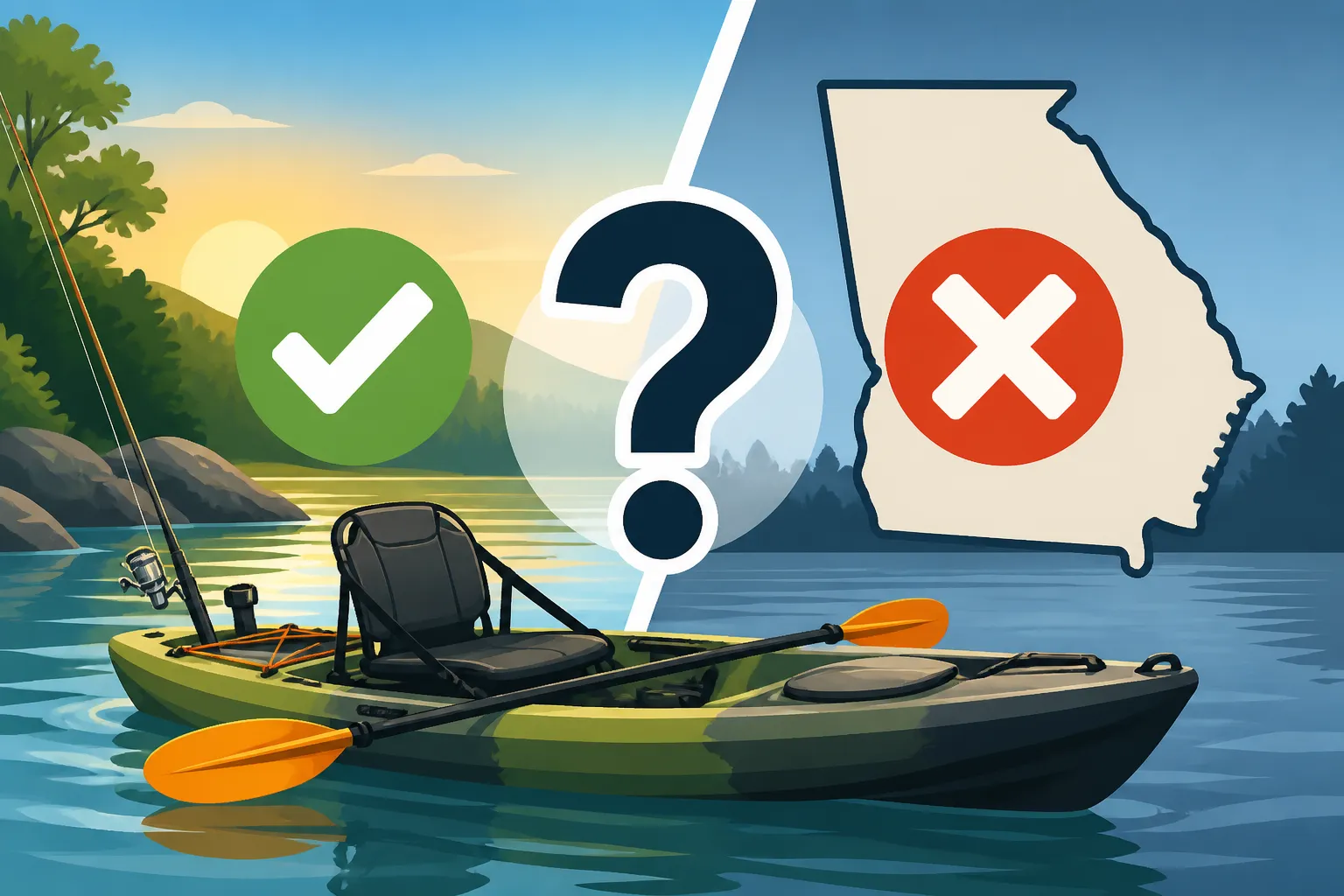
Alright, let's get right to the heart of the matter for kayak enthusiasts. The question of "Do kayaks need to be registered in Georgia?" isn't a simple yes or no; it truly depends on how your kayak is equipped. It's all about that power source, or lack thereof.
Unmotorized Kayaks: Generally Exempt
Good news for the purists! If your kayak is powered solely by your own muscle — whether you're paddling, rowing, or using a pedal-drive system that relies on your legs — then, generally speaking, it does not need to be registered in the state of Georgia. This includes all those beautiful recreational kayaks you see out on the Chattahoochee River, the speedy touring kayaks, and even your trusty fishing kayak that you power with a paddle. The same goes for canoes and stand-up paddleboards that don't have motors.
This exemption is a huge relief for many outdoor enthusiasts who love the simplicity and quiet of human-powered watercraft. You can grab your paddle, your Kayak Fishing Gear Checklist for Beginners, and head out to explore Georgia's waterways without the extra paperwork. It makes spontaneous trips to a local pond or a quiet section of a river much easier. However, while registration might not be required, you're still expected to follow all other applicable boating safety laws, like having proper lighting if you're out at night and, crucially, having a life jacket for every person on board.
Kayaks with Motors: When Registration Becomes Necessary
Now, here's where things get a bit more involved. As we touched on earlier, if you decide to equip your kayak with any form of mechanical propulsion, it instantly falls under Georgia's vessel registration laws. This includes:
- Electric Trolling Motors: These are incredibly popular with kayak anglers looking for an edge. Whether it's bow-mounted, transom-mounted, or even a smaller, integrated motor system, if it's electric and propels your kayak, you need to register it. Many kayakers love the convenience of using an electric motor to cover more water, especially on larger lakes like Lake Sinclair or West Point Lake, or to fight strong currents. But that convenience comes with the responsibility of registration.
- Small Outboard Gas Motors: While less common on traditional kayaks, some larger, more stable fishing kayaks are designed to handle small gas outboards. If you go this route, your kayak is definitely considered a motorized vessel.
- Integrated Motor Systems: Some high-end kayaks now come with sleek, built-in electric motors that might feel like an extension of the kayak itself. Don't be fooled by the seamless design; if it has a motor, it needs to be registered.
It's not just about what kind of motor it is, but that it exists at all. The moment you attach that motor, even if it's just for certain trips, you’re obligated to register your kayak. This distinction is often a surprise for people who think of their motor as a temporary add-on, not something that changes the fundamental legal classification of their vessel. The state considers it a motorized vessel once that engine is affixed or used, and that's the rule of thumb to remember.
Here’s a quick overview of what needs registering:
| Kayak Type | Motorized? | Registration Required? |
|---|---|---|
| Traditional Paddle Kayak | No | No |
| Pedal Drive Kayak | No | No |
| Kayak with Electric Trolling Motor | Yes | Yes |
| Kayak with Small Gas Outboard | Yes | Yes |
| Kayak with Integrated Electric Motor | Yes | Yes |
How to Register a Motorized Kayak in Georgia
So, you've decided to put a motor on your kayak, or perhaps you've realized that your current setup requires registration. Don't worry, the process isn't overly complicated, but it does require attention to detail. Just like with any other boat, the Georgia Department of Natural Resources (DNR) handles vessel registrations. You'll want to make sure you have all your ducks in a row before you start to avoid unnecessary delays. Many of the same rules apply as they would for registering a larger powerboat, so it's good to familiarize yourself with the general Georgia Boat Registration Requirements Explained.
Required Documents and Information
Getting your paperwork in order is the first and most crucial step. You can't just show up with your kayak and a smile; you'll need specific documentation to prove ownership and provide details about the vessel. Here's a rundown of what you'll typically need:
- Application Form: The Georgia DNR has a specific application form for vessel registration. You can usually find this form on their official website or pick one up at a DNR office. Make sure you fill it out completely and accurately, providing all requested information about yourself and your kayak.
- Proof of Ownership: This is paramount. If you bought your kayak new from a retailer like Bass Pro Shops, you'll need the manufacturer's statement of origin (MSO) or the certificate of origin. If you purchased it used, you'll need a bill of sale that clearly identifies the kayak and the previous owner, along with any existing title or registration from the seller. It’s vital that the chain of ownership is clear.
- Proof of Motor Ownership (if applicable): If your motor was purchased separately, you might also need a bill of sale or receipt for the motor itself, especially if it has a serial number that needs to be recorded.
- Identification: You'll need a valid form of personal identification, such as a driver's license, to complete the registration.
- Payment: There will be a registration fee, which varies depending on the length of your vessel. Always check the current fee schedule on the Georgia DNR website, as these can change. Remember, specific costs aren't something I can provide, but they outline the structure for Georgia Boat Registration Fees by Boat Length.
Gathering these documents beforehand will save you a lot of hassle and ensure a smoother registration process. It’s always a good idea to make copies of everything for your own records once you've submitted your application.
The Registration Process: Online, Mail, In-Person
Once you have all your documents ready, you have a few options for submitting your registration application:
- Online: For many, this is the most convenient method. The Georgia DNR typically offers an online portal where you can submit your application, upload scanned documents, and pay the fees electronically. This option is great for those who prefer to handle things from the comfort of their home. Just make sure your scans are clear and readable. If you're looking for guidance on How to Register a Kayak or Canoe in Georgia, the online portal is a common starting point.
- By Mail: You can also print out the application form, fill it out, and mail it along with copies of your supporting documents and a check or money order for the fees. This is a good option if you're not comfortable with online submissions or if you live far from a DNR office. Be sure to use certified mail for important documents to ensure they arrive safely.
- In-Person: If you prefer face-to-face interaction or need assistance with your application, you can visit a local Georgia DNR office or one of their authorized license agents. Bringing all your original documents will ensure a smooth process. They can review your application, collect the fees, and often provide you with temporary documentation on the spot.
Once your registration is processed, you'll receive your Georgia Certificate of Number (the actual registration document) and a set of decals. These decals, along with your registration number, must be properly displayed on your kayak according to state regulations. Knowing Where to Put Your Georgia Boat Registration Decal is crucial for compliance. It's a small but important detail that prevents issues with law enforcement out on the water.
Important Considerations Beyond Registration
Even if your kayak doesn't need to be registered, or once you've successfully registered your motorized craft, your responsibilities as a boater don't end there. Georgia has specific rules and regulations designed to keep everyone safe on the water, and these apply to kayaks just as much as they do to larger vessels. Ignoring these can lead to fines, so it's essential to be prepared.
Life Jacket Requirements for Kayaks
This is non-negotiable and one of the most important safety rules for any paddler, motorized or not. In Georgia, every vessel, including kayaks, must have at least one Coast Guard-approved wearable personal flotation device (PFD), or life jacket, for each person on board. It doesn't matter if you're an Olympic swimmer; the law requires it. And simply having it on board isn't enough for everyone.
For children under the age of 13, Georgia law mandates that they must wear a Coast Guard-approved life jacket at all times while on any vessel, including kayaks, unless they are within an enclosed cabin. This is a huge one for families taking kids out fishing on a kayak. So, if you're planning a family outing to one of Georgia's State Parks with a fishing pond, and your little one is joining you in a kayak, make sure they are properly fitted with and wearing their life jacket. You can find excellent options for all ages at retailers like Bass Pro Shops or on Amazon. Always prioritize safety, and make sure you're familiar with Life Jacket Requirements for Kids Under 13 in Georgia. Even for adults, while not always legally required to wear it, it's always a good idea to have it on, especially in cooler water or rough conditions. You can read more about the broader Georgia Life Jacket Laws for Boaters and Kids.
Boater Education for Motorized Kayaks
Another critical point, especially if your kayak now has a motor, is boater education. Georgia has a specific law concerning who needs to complete a boater education course: Anyone born on or after January 1, 1998, who operates any vessel, including a motorized kayak, must have a Georgia Boater Education Card.
This means if you're a younger angler who's added an electric motor to your kayak, you absolutely need to take an approved boating safety course and carry proof of completion. Even if you're a seasoned kayaker, the rules apply based on your birthdate, not your experience level. This course covers essential topics like navigation rules, aids to navigation, safety equipment, and emergency procedures. It's a fantastic way to ensure you're well-prepared for any situation on the water. You can often take these courses online, which makes them very accessible. Familiarize yourself with the Georgia Boater Education Card Requirements and understand Georgia's Boater Education Card and the 1998 Birthdate Rule to ensure you're compliant before you launch your motorized kayak.
Displaying Registration Decals and Numbers
Once your motorized kayak is successfully registered, the state will issue you a registration number and validation decals. It's not enough to just have them; they must be properly displayed on your kayak.
The registration number typically consists of letters and numbers (e.g., GA-1234-AB) and must be:
- Painted or permanently attached to each side of the forward half of the vessel.
- In block characters, at least three inches high.
- Of a color that contrasts sharply with the background.
- Read from left to right.
- Separated from the letters by a hyphen or equivalent space.
The validation decal, which indicates the current registration period, must be displayed on the port (left) side of the vessel, typically within six inches of the registration number. This ensures that law enforcement can easily identify your registered kayak while you're out enjoying the water. Neglecting to display these properly can result in a citation, even if your kayak is technically registered. Always double-check your display before heading out.
Disclaimer
This article is for general informational purposes only and does not constitute professional advice. Laws, prices and regulations vary by location and change over time. Consult a qualified professional for guidance on your specific situation.