Best Tackle for Spotted Bass on Lake Lanier
Trying to dial in your tackle for spotted bass on Lake Lanier can feel like a never-ending puzzle, especially with their unique habits compared to the largemouth we're all so familiar with. It's frustrating to throw everything in your tackle box at them only to come up empty-handed. This guide is here to cut through the confusion and equip you with the best tackle choices to consistently land those feisty Lake Lanier spotted bass.
Understanding Lake Lanier Spotted Bass Behavior and Habitat
Before we even talk about rods and reels, it's crucial to understand what makes spotted bass on Lake Lanier tick. They aren't your typical shallow-water, brush-pile-dwelling largemouth. Spots tend to prefer deeper, clearer water, often associating with rocky structures, humps, points, and steep drops. This preference dictates almost every tackle choice you'll make. They also love to school up, especially when actively feeding, chasing baitfish like threadfin and gizzard shad.
The Clear Water and Deep Habitat Challenge
Lake Lanier is known for its relatively clear waters, particularly in the mid-lake and lower lake sections. This clarity, combined with the spotted bass's tendency to suspend or hold deep, means your presentation needs to be subtle and your line nearly invisible. These fish aren't usually ambushing from thick cover; they're often cruising open water or hugging structures that provide current breaks or ambush points in deeper zones. It's a different game than pitching a jig into heavy hydrilla mats.
Think about it: when you're fishing a clear lake, fish have a much better chance of seeing your line, your hardware, and anything else that looks unnatural. This is why lighter lines, smaller baits, and more natural presentations often outperform bulky, aggressive tackle. They're wary, and a heavy fluorocarbon leader or thick braid can be enough to spook them. The rocky bottom and underwater humps that are spotted bass magnets also present snags, so you need a balance between finesse and durability.
Schooling Patterns and Forage Habits
One of the most exciting aspects of fishing for spotted bass on Lake Lanier is their schooling behavior. When they're "wadded up" and actively feeding, it can be an incredible bite. They'll often push baitfish to the surface, creating those thrilling topwater explosions, or they'll be suspended together over deep water, gorging on shad. This schooling behavior means you might be catching fish after fish once you locate a school, but you need tackle that allows you to mimic their prey effectively.
Their primary diet consists of shad, which means slender profile baits, those with a good shimmer, or baits that can be retrieved quickly to imitate fleeing baitfish are usually excellent choices. However, when the bite slows, or they're holding tight to structure, they can become incredibly finicky. This is where a versatile tackle setup, capable of both aggressive power fishing and subtle finesse presentations, becomes your best friend. Understanding How Water Temperature Affects Fish Behavior can also give you an edge in predicting when these schooling frenzies might occur, as cooler temperatures often push baitfish deeper.
Rod and Reel Setups for Lake Lanier Spots
Choosing the right rod and reel is paramount for effective spotted bass fishing on Lake Lanier. You need gear that offers sensitivity, casting distance, and enough backbone to handle a powerful fish in deep water or near structure. Unlike largemouth, where heavy power rods and stout baitcasters often dominate, spotted bass frequently call for a more balanced approach.
Spinning Rods: The Finesse Edge
For many Lake Lanier spotted bass situations, especially when the fish are finicky or deep, spinning gear is king. A medium-light to medium power spinning rod, typically 6'9" to 7'4" in length, with a fast action tip, is ideal. This setup provides the sensitivity needed to detect subtle bites when using lighter lines and smaller finesse baits. The fast action tip allows for precise casting of lighter lures and quick hook sets, while the medium power gives you enough strength to fight a hard-pulling spot without fear of breaking your rod.
Pair this rod with a high-quality spinning reel in the 2500 to 3000 size range. Look for a reel with a smooth drag system, as spotted bass can make powerful runs. Spool it with 8 to 15 lb braided line as your main line, and then attach a fluorocarbon leader of 6 to 10 lb test. The braid provides excellent casting distance and sensitivity, while the fluorocarbon leader offers invisibility in clear water. Many anglers grab their gear from places like Bass Pro Shops for a wide selection or even check Amazon for competitive deals. This setup is perfect for techniques like drop-shotting, shaky heads, or throwing small swimbaits – all staples for Lake Lanier spots.
Baitcasting Rods: Power and Precision
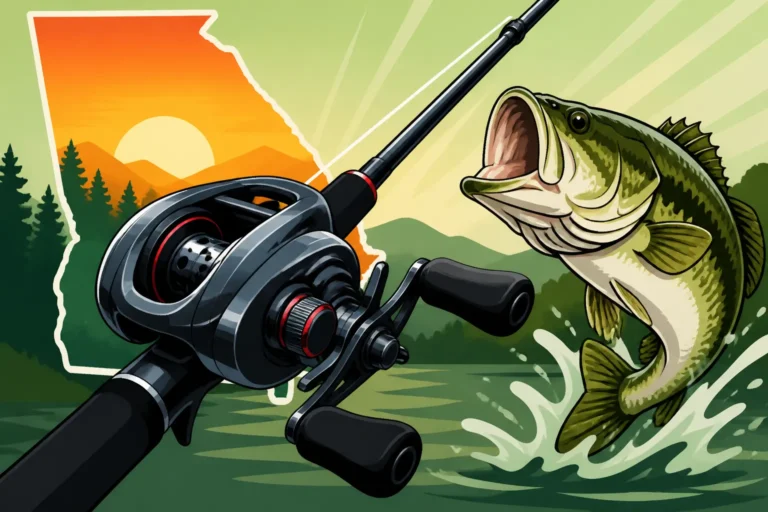
While spinning gear handles much of the finesse work, there are definitely times when a baitcasting setup shines for spotted bass on Lanier. For throwing heavier moving baits like crankbaits, larger swimbaits, or even some topwaters, a medium to medium-heavy power baitcasting rod, 6'10" to 7'6" in length, with a fast to moderate-fast action, is a great choice. The moderate-fast action is particularly good for treble hook baits, as it provides a bit more give to prevent hooks from tearing out.
Match this with a reliable baitcasting reel with a gear ratio that suits your technique. A mid-range gear ratio (around 7.1:1) is versatile for many applications, allowing you to retrieve quickly or slow down as needed. Spool your baitcaster with 10 to 17 lb fluorocarbon line for excellent abrasion resistance around rocky structures and its low visibility. Alternatively, you can use 30 to 50 lb braid with a fluorocarbon leader for maximum casting distance and sensitivity, especially with heavier jigs or swimbaits. This setup is your workhorse for covering water and targeting actively feeding fish.
Line Selection: The Invisible Link
Line choice is critical for Lake Lanier spotted bass. As mentioned, fluorocarbon is your best friend for leaders due to its near invisibility underwater and good abrasion resistance. For your main line, braid offers superior casting distance, strength, and sensitivity, making it easier to detect those subtle "thunks" or "ticks" of a spotted bass bite.
| Line Type | Main Line Application | Leader Application | Key Benefits | Drawbacks |
|---|---|---|---|---|
| Braided Line | Spinning & Baitcasting (main) | N/A | Max sensitivity, strength, casting distance | Visible in clear water, no stretch (can pull hooks) |
| Fluorocarbon | Baitcasting (main), Leaders | Spinning & Baitcasting (primary leader) | Low visibility, good abrasion resistance, some stretch | Can be stiff, lower knot strength than mono, more expensive |
| Monofilament | Topwater (main), Occasional leader | N/A | Good knot strength, buoyant, good stretch | Higher visibility, less sensitive, lower abrasion resistance |
Remember, spots are visual feeders, and in Lanier's clear water, a heavy, visible line can absolutely turn them off. Don't be afraid to go lighter than you might for largemouth. A 6-8 lb fluorocarbon leader on your spinning rod might feel delicate, but it's often the difference between getting bites and getting skunked. For heavier presentations, a 12-15 lb fluorocarbon leader should suffice.
Essential Lures and Baits for Lake Lanier Spotted Bass
Now for the fun part: what to tie on! Spotted bass have a diverse diet, and their preferences can shift with the season and water conditions. Having a versatile selection of baits is key. The best tackle for spotted bass on Lake Lanier often includes a mix of finesse presentations and baits that mimic their primary forage: shad.
Finesse Presentations: When the Bite is Tough
When Lake Lanier spots get finicky, or they're holding deep, finesse techniques are indispensable. These are your bread and butter for tough days and crucial for targeting fish that are suspended or tight to structure.
- Drop Shot Rigs: This is arguably the most effective finesse technique for spotted bass on Lanier. It allows you to present a small plastic bait (like a soft plastic worm, minnow imitation, or small creature bait) precisely at the depth fish are holding, keeping it suspended off the bottom. A light spinning rod with a sensitive tip is perfect here. Rig your bait Texas-style or nose-hooked, depending on cover. The key is to keep your bait still or impart very subtle twitches, letting the weight maintain depth.
- Shaky Heads: A shaky head jig is another phenomenal option for bottom-dwelling spots. The weighted head with a screw lock allows you to attach a straight-tail worm, which stands up enticingly off the bottom, mimicking a feeding or injured baitfish. Work it slowly, dragging and subtly shaking the rod tip to make the worm quiver. This is fantastic around rocky points, humps, and ledges. Best Tackle for Spotted Bass on Lake Lanier almost always includes these two rigs.
- Ned Rigs: While perhaps more common in other parts of the country, the Ned rig can be surprisingly effective on Lake Lanier, especially for lethargic or pressured fish. It's a small mushroom-shaped jig head paired with a short, buoyant soft plastic, which stands straight up on the bottom. It's a hyper-finesse presentation that often coaxes bites when nothing else will.
Moving Baits: Covering Water and Triggering Strikes
When spotted bass are actively feeding, especially in schools or chasing bait, moving baits are incredibly efficient for covering water and triggering reaction strikes.
- Small Swimbaits: Paddle-tail swimbaits, 3-4 inches long, rigged on an appropriate jig head (1/8 oz to 1/2 oz, depending on depth and retrieve speed), are deadly for spotted bass. They perfectly mimic the shad that spots feed on. Cast them out and retrieve them steadily, varying your depth until you find where the fish are holding. White, shad, and pearl colors are consistent producers. You can find a huge variety of these plastics at Bass Pro Shops or on Amazon.
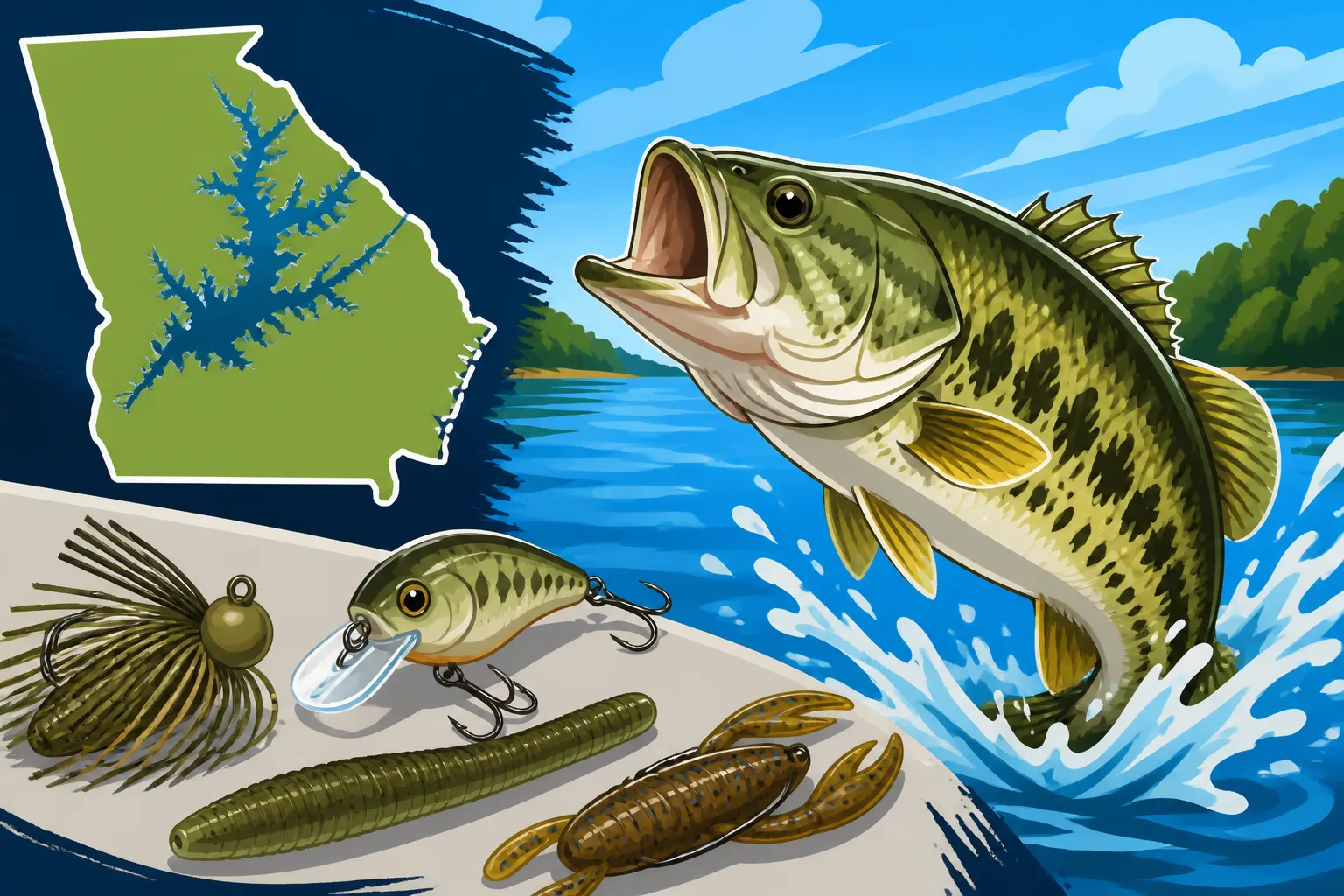
- Crankbaits: Medium-diving and deep-diving crankbaits are excellent for covering humps, points, and ledges. Choose colors that imitate shad (chrome, white, blueback herring patterns) or crawfish patterns if you're targeting specific rocky areas. The key is to make contact with the bottom or structure to deflect the bait and trigger strikes. Retrieve them with varying speeds and occasional pauses.
- Topwater Lures: When spots are busting bait on the surface, there's nothing more exciting than a topwater bite. Walking baits (like Heddon Super Spooks) and prop baits (like a Devil's Horse) are fantastic choices. Poppers can also work, especially in calmer conditions or around specific cover. Timing is key for topwater – early mornings and late evenings, or overcast days, are often best.
Other Productive Baits and Lures
Beyond the core finesse and moving baits, a few other lures deserve a spot in your Lake Lanier spotted bass arsenal:
- Jigs: While often associated with largemouth, small football jigs (1/4 to 3/8 oz) with a craw or creature trailer can be highly effective around deep rock and brush piles. The compact profile can be irresistible to spots holding tight to cover. Keep your colors natural – greens, browns, and black/blue are always solid choices.
- Spoons: When spotted bass are schooling deep over ledges or humps, vertical jigging spoons can be lights out. Drop them down to the depth of the fish, jig them sharply, and let them flutter back down. The flash and erratic fall perfectly imitate a dying baitfish.
- Flipping and Pitching Baits: While less common than for largemouth, if you find spots relating to docks, brush, or isolated submerged timber, compact creature baits or small jigs can be pitched or flipped into these zones. You might need to use slightly heavier tackle here to get them out of cover.
Seasonal Adjustments for Spotted Bass Tackle
Lake Lanier spotted bass, like all fish, adjust their behavior with the seasons, and so should your tackle. What works in the spring might not be the best approach in the dog days of summer. Paying attention to these seasonal nuances can significantly improve your success rate. Understanding the Georgia Fishing Seasons by Month can provide a broader context for these adjustments.
Spring: Pre-Spawn and Spawn Aggression
Spring on Lake Lanier sees spotted bass moving shallower, though often still holding to deeper points and humps adjacent to spawning coves. As they transition from winter haunts to pre-spawn staging areas, they become more aggressive feeders. This is a fantastic time for moving baits.
- Pre-Spawn (February – April): Focus on deeper crankbaits, jigging spoons, and small swimbaits around main lake points, humps, and channel swings. Spots are trying to bulk up before the spawn. You can also start working shaky heads and drop shots around these same areas, especially if cold fronts push fish deeper.
- Spawn (April – May): While largemouth will be visible on beds, spotted bass spawn deeper and are harder to see. They often spawn on rocky points or hard bottom areas. Finesse baits like drop shots and shaky heads are excellent for targeting these fish, as they can be very particular. Topwater can also be explosive on warmer days when fish are guarding fry or chasing bait after the spawn.
Summer: Deep Schools and Early Morning Topwater
Summer on Lake Lanier often means clear, warm water and spotted bass retreating to deeper, cooler sections of the lake during the day. However, mornings can be incredibly productive for topwater action.
- Early Morning/Late Evening: Focus on topwater baits (walking baits, poppers) over points and humps where baitfish are shallow. The low light often brings spots up to feed aggressively.
- Mid-Day/Deep Water: As the sun rises, spots will typically move deep. This is prime time for drop shot rigs, jigging spoons, and deep-diving crankbaits. Look for schooling fish on your electronics over main lake humps, deep points, and brush piles. Vertical presentations are key here. Knowing the Best Time of Year to Catch Bass at Lake Lanier, Georgia is all about understanding this seasonal migration.
Fall: Chasing Bait and Transitioning Depths
Fall is often considered one of the best times to fish Lake Lanier, as cooling water temperatures ignite a major feeding frenzy. Spotted bass will aggressively chase baitfish, often schooling up in massive numbers.
- Aggressive Feeders: This is prime time for larger swimbaits, main lake topwater action, and fast-moving crankbaits. Spots will push baitfish to the surface in massive schools, creating spectacular feeding frenzies. Keep an eye out for bird activity, as diving birds often indicate actively feeding fish below.
- Transitioning Depths: As fall progresses and water cools, spots may start moving into creek arms and shallower pockets, following the bait. Continue to use a mix of moving baits and finesse presentations, adjusting your depth as needed. Jerkbaits can also become incredibly effective as water temperatures drop.
Winter: Deep and Slow Presentations
Winter fishing on Lake Lanier for spotted bass typically means going deep and slowing down your presentation. The fish are often schooled up and suspended in deep water or tight to deep structure.
- Deep Finesse: Drop shot rigs and shaky heads are still highly effective, but slow down your retrieve considerably. Spots are lethargic and won't chase a fast-moving bait. Small, subtle presentations are key.
- Jigging Spoons and Underspins: Vertical jigging spoons remain a winter staple for deep-holding schools. Small underspins with tiny swimbaits can also be deadly when retrieved slowly near the bottom or through suspended schools. Look for these fish on your electronics over major creek channels, deep points, and standing timber. The fish might be stacked up, but they'll often require a perfect presentation.
By matching your tackle to the season and the specific behaviors of Lake Lanier's spotted bass, you'll greatly increase your chances of a successful day on the water.
Advanced Tips and Techniques for Lake Lanier Spotted Bass
Beyond the basic tackle, a few advanced tips and techniques can help you truly master spotted bass fishing on Lake Lanier. These often come from experience and observation, fine-tuning your approach for those particularly challenging days.
Electronic Dominance: Finding the Fish
Modern electronics are an absolute game-changer for Lake Lanier spotted bass. These fish often suspend or relate to deep, subtle structures that are invisible from the surface. A good fish finder with side imaging and down imaging is invaluable.
- Interpreting Your Sonar: Learn to distinguish bait balls from fish arches. Spotted bass often appear as dense arches or clusters of arches, particularly when schooled. Pay attention to the depth they're holding at and the type of structure they're relating to – a brush pile, a rock pile, a steep ledge. Best Fish Finder for Lake Lanier discussions often revolve around getting the clearest picture of these deep structures.
- Waypoint Management: Once you find a productive spot, mark it immediately with a waypoint. These fish will often return to the same areas. Also, note the depth, temperature, and any other relevant conditions. Over time, you'll build a "milk run" of productive spots.
- Scanning with Side Imaging: Use side imaging to scan wide areas for humps, submerged timber, or schools of baitfish and bass that might be off to the side of your boat. This is far more efficient than driving directly over every piece of structure.
Leader Length and Knot Tying Precision
Details matter for clear-water spotted bass. Your leader length and the quality of your knots can make a huge difference.
- Leader Length: For most spinning applications with braid, a 6 to 10-foot fluorocarbon leader is a good starting point. This gives you plenty of invisible line while still allowing for easy casting. For topwater, you might go with a shorter leader, as the fish are less likely to see the line on the surface.
- Knot Choice: Learn to tie strong, reliable knots for joining your main line to your leader. The FG knot is popular among serious anglers for its strength and small profile, allowing it to pass through rod guides smoothly. The double uni-knot is another excellent choice that is easier to learn. Practice these knots until they become second nature; a lost fish due to a faulty knot is one of the most frustrating things on the water.
The Importance of the Right Presentation Angle
Spotted bass are often ambush predators, even if they're in open water. How your bait approaches them can be as important as the bait itself.
- Up-Current/Up-Wind Drifts: If there's current or wind, try to position your boat so you can cast up-current or up-wind and let your bait drift naturally down to the fish. This presents the bait in a more realistic manner, mimicking how actual forage would move.
- Casting Past the Target: Don't cast directly onto the fish. Cast past them and retrieve your bait through the school or structure. This allows the bait to achieve its natural action before it gets to the fish and prevents spooking them with your initial splashdown.
- Varying Retrieve Speeds: Spotted bass can be finicky about retrieve speed. One day they might want a fast, erratic retrieve, and the next a slow, steady one. Experiment until you find what they prefer. Don't be afraid to add pauses or twitches.
By integrating these advanced tips with your chosen tackle, you'll be well on your way to becoming a more consistent and successful spotted bass angler on Lake Lanier. It's all about attention to detail, persistence, and continuously learning from your experiences on the water.
Disclaimer
This article is for general informational purposes only and does not constitute professional advice. Laws, prices and regulations vary by location and change over time. Consult a qualified professional for guidance on your specific situation.