Fishing License Reciprocity for Georgia Anglers
It's a common scenario: you’re heading out for a relaxing day of fishing, maybe you're venturing close to a state line, or perhaps planning a trip to a neighboring state, and then that nagging question pops into your head – "Does my Georgia fishing license actually cover me there?" This guide is all about untangling the confusion surrounding fishing license reciprocity for Georgia anglers, ensuring you know exactly where you stand when your angling adventures take you beyond the Peach State's interior.
Understanding Fishing License Reciprocity
The world of fishing licenses can feel like a tangled mess of lines, especially when state borders come into play. Many anglers, myself included, have stood on the bank of a river, wondering if that particular stretch of water technically belongs to Georgia, or if they’ve somehow drifted into Alabama without realizing it. It's a valid concern, and thankfully, reciprocity agreements are designed to make things a little easier, though they still come with their own set of rules.
What Reciprocity Means for Anglers
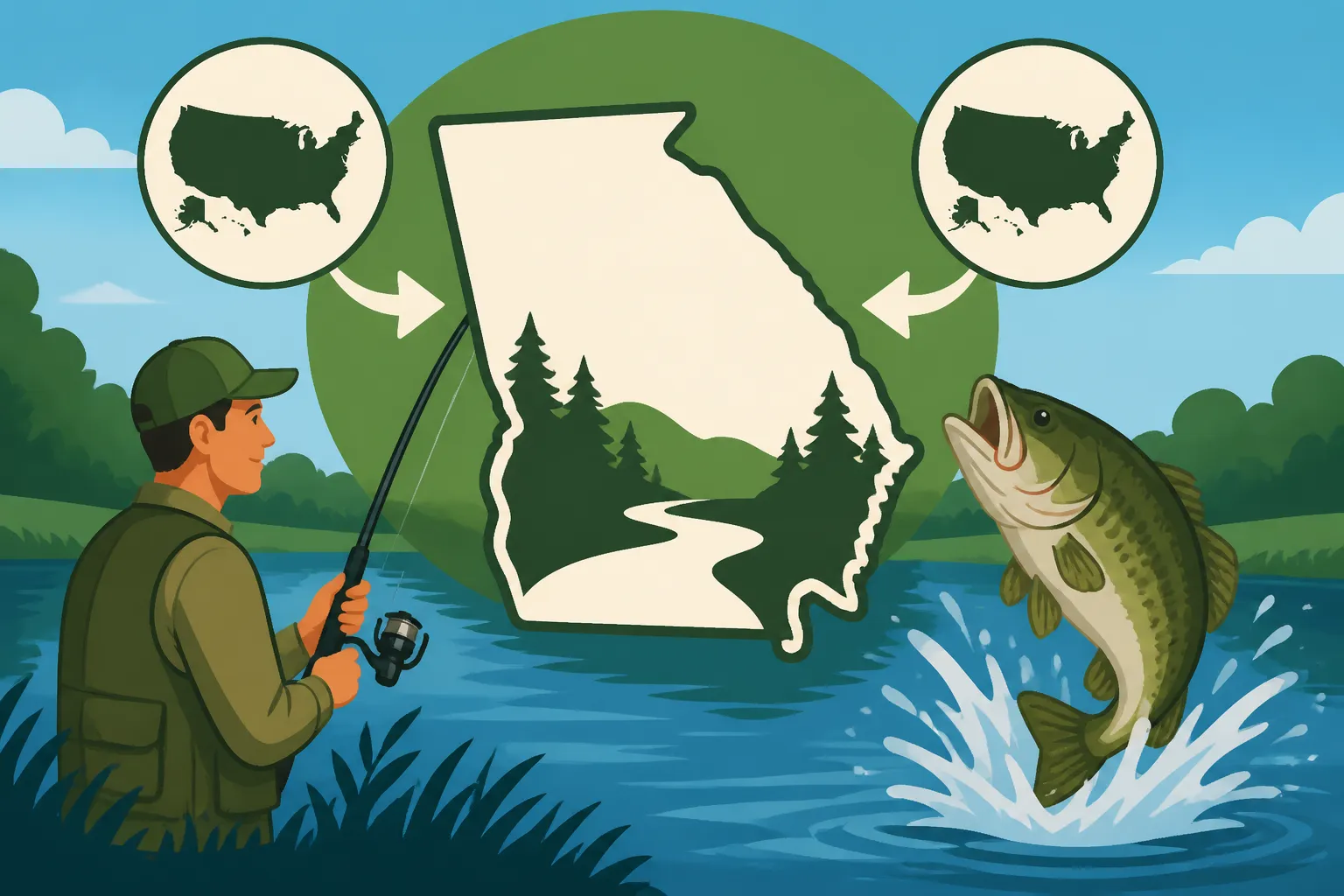
At its heart, reciprocity in fishing licenses simply means that states agree to recognize each other's fishing licenses under certain, very specific conditions. Think of it like a handshake agreement between Georgia and its neighbors. Instead of needing to buy two separate annual licenses just to fish a border river, these agreements allow your Georgia license to be valid on certain shared waters, or vice-versa for non-residents fishing in Georgia. It’s designed to reduce hassle and encourage more people to enjoy the outdoors without jumping through excessive hoops.
However, it's never a blanket "your license works everywhere" kind of deal. These agreements usually apply only to particular bodies of water that form a common border, like the Chattahoochee River shared with Alabama, or specific segments of a lake. They don't mean your Georgia license suddenly lets you fish anywhere in Florida, for instance. It’s critical to understand the precise boundaries and conditions of these agreements, because getting it wrong can lead to a fine, or worse, having your fishing privileges revoked. The convenience is huge, but so is the responsibility of knowing the rules.
Why Reciprocity Matters on Border Waters
Imagine you're fishing a sprawling reservoir like Lake Lanier, a purely internal Georgia lake, and then you decide to take your boat down the Chattahoochee River, which forms part of the border with Alabama. Without reciprocity, you’d have to stop at the state line, pull out your Alabama license, or risk being cited if you’re caught. It’s not just about convenience; it's about making shared natural resources accessible without creating unnecessary bureaucratic hurdles.
Reciprocity helps prevent those "oops, I crossed the line" moments that are all too easy to have on large bodies of water where state boundaries aren't marked by buoys every hundred yards. It acknowledges that fish don't carry passports and often swim across invisible state lines. For communities along these borders, it also fosters a sense of shared stewardship and encourages local economies that thrive on outdoor recreation. Knowing that your Georgia fishing license is valid on parts of the Chattahoochee or Savannah River, for example, allows for uninterrupted fishing enjoyment and peace of mind. It’s crucial to remember, though, that these agreements often have nuances regarding what species you can target and what gear you can use, often deferring to the stricter of the two states' regulations. Understanding the intricacies of Georgia Fishing Regulations Explained can certainly help here.
Georgia's Reciprocity Agreements with Neighboring States
Georgia shares borders with five other states: Alabama, Florida, North Carolina, South Carolina, and Tennessee. Each of these states has unique agreements with Georgia, and it's vital to know which applies where. It's not a one-size-fits-all policy, and what works on one river might not work on another.
Border Waters with Alabama
Georgia and Alabama share a significant border, much of it defined by the Chattahoochee River and the reservoirs along it, such as West Point Lake and Lake Walter F. George (also known as Lake Eufaula). For these specific border waters, Georgia has reciprocal agreements in place. This means that if you possess a valid Georgia fishing license, you are generally permitted to fish the reciprocal waters that form the common boundary between Georgia and Alabama, without needing an additional Alabama license.
This is a huge boon for anglers, especially those targeting species like bass and crappie on West Point Lake or the formidable largemouth and striped bass of Lake Walter F. George. It means you can launch your boat in Georgia, fish across the lake, and not worry about technically being in Alabama waters. However, it's important to stress that "border waters" typically refers to the main body of the lake or river itself, and often not the tributaries that flow entirely within the neighboring state. If you venture up a creek that's entirely in Alabama, you'll need an Alabama license. Always double-check the exact boundaries of these reciprocal agreements, as they can sometimes be tricky to interpret.
Shared Waters with Florida
When it comes to Florida, Georgia has a more limited reciprocal agreement. The main area where this applies is on the St. Marys River, which forms a natural boundary between the two states. If you're fishing the St. Marys River, a valid Georgia fishing license will generally be honored by Florida authorities, and vice-versa. This is particularly good news for anglers targeting catfish, sunfish, and even some striped bass that venture into the brackish lower reaches of the river.
Beyond the St. Marys River, however, the reciprocity largely ends. Unlike the expansive lakes shared with Alabama, there aren’t large reservoirs or other river systems where a Georgia license would grant you fishing privileges deep into Florida. So, if you're planning a trip to fish Florida's famous bass lakes or saltwater hotspots, you'll absolutely need to secure a Florida fishing license. This distinction is crucial, as the fishing opportunities in Florida are vast and unique, and trying to stretch your Georgia license there would quickly land you in hot water.
North Carolina and South Carolina Reciprocity
Georgia has reciprocal agreements with both North Carolina and South Carolina, primarily centered around shared boundary waters.
For North Carolina, this largely applies to the Chatuge Reservoir and a few other specified waters that straddle the state line in the mountainous region. Lake Chatuge, known for its bass and crappie fishing, is a prime example where your Georgia license can be valid on the North Carolina side, provided you're on the main body of the lake. Similarly, if you plan to fish any trout streams that weave back and forth across the border, you'll need to confirm the specific agreements, as mountain stream rules can be quite intricate. For more details on trout fishing, you might want to read our guide on Georgia Trout Fishing License Requirements.
With South Carolina, the primary reciprocal water is the Savannah River, especially along large reservoirs like Clarks Hill Lake (also known as Lake Strom Thurmond) and Lake Hartwell. On these vast impoundments, a Georgia fishing license typically allows you to fish anywhere on the lake, even in portions that technically lie within South Carolina. This means you can chase striper or largemouth bass across the entirety of these lakes without needing a separate South Carolina license. As with other agreements, remember that the reciprocity applies to the main body of the shared waters, not necessarily to tributaries that are entirely within one state's borders. Always check the latest regulations as they can sometimes change or have specific exceptions.
Tennessee River System Considerations
The situation with Tennessee is a bit more nuanced. While Georgia does not share any major direct border lakes or rivers with Tennessee in the same way it does with Alabama or South Carolina, portions of North Georgia are part of the Tennessee River watershed. This means that some smaller streams and rivers in extreme North Georgia eventually feed into the Tennessee River system.
However, there is no broad reciprocity agreement that allows a Georgia fishing license to be valid on major Tennessee reservoirs like Chickamauga or Nickajack, or vice versa. If your fishing plans take you into Tennessee, even just over the border for a few miles, you will undoubtedly need a Tennessee fishing license. This is a common point of confusion for anglers living in extreme North Georgia who might be just a short drive from prime Tennessee fishing grounds. Always assume you need a separate license for Tennessee waters, even if they seem like a natural extension of Georgia's mountain streams. When in doubt, it’s always best to err on the side of caution and acquire the necessary license. This is particularly true if you're exploring the more remote sections of the North Georgia mountains, where a sudden turn could take you across a seemingly invisible state line.
Key Rules and Exceptions to Reciprocity
While reciprocity is a fantastic convenience, it’s rarely a simple free pass. There are always specific conditions, and sometimes outright exceptions, that you need to be aware of. Ignoring these details could land you in hot water, even if you believe you’re covered. It's not enough to know that there's reciprocity; you also need to know its precise limits.
Where a Georgia License Doesn't Work
Despite the agreements, there are many places where your Georgia fishing license simply won't cut it. Firstly, as mentioned, reciprocity almost exclusively applies to the main channels of border rivers or the open waters of shared reservoirs. It rarely extends to tributaries or embayments that are wholly contained within the neighboring state's boundaries. So, if you're fishing on Lake Hartwell and decide to motor up a creek arm that's entirely in South Carolina, you'll likely need a South Carolina license.
Secondly, and this is a big one, reciprocity never applies to state-owned or managed public fishing areas (PFAs) or specific designated waters within a neighboring state that are not part of the common boundary. For example, your Georgia license won't let you fish in a Florida State Park's fishing pond or an Alabama Wildlife Management Area lake, even if they're close to the border. These areas are managed by the individual state, and they require their own state-specific licenses. It’s also important to remember that marine (saltwater) licenses are generally not reciprocal. If you plan to fish Georgia's coast, you'll need a Georgia Saltwater Information Permit Explained, and if you venture into Florida's coastal waters, you'll need a Florida saltwater license.
Special Endorsements and Trout Stamps
Another critical aspect of reciprocity involves special endorsements or stamps, particularly for trout fishing. Even if a reciprocal agreement covers the general fishing license on a shared body of water, it might not extend to special permits. For instance, if you're fishing a border river like the Chattahoochee, and you want to target trout in areas designated as "trout waters," you might still need a Georgia Mountain Trout License Add-On in Georgia in addition to your basic fishing license. The same can apply if you cross into a neighboring state.
Often, states maintain separate requirements for species that require specific management, like trout. So, while your Georgia general fishing license might be recognized on the North Carolina side of Lake Chatuge for bass, if you're planning to fish a specific designated trout stream or section within North Carolina, you would almost certainly need to purchase a North Carolina trout stamp or endorsement. These special permits are usually tied to specific conservation programs and are not often included in general reciprocity agreements. Always check the specific regulations for the species you intend to pursue, especially for trout.
Residency Rules and Proof
The foundation of most fishing license reciprocity is your residency. These agreements are generally designed to benefit residents of the respective states. This means that to take advantage of Georgia’s reciprocal agreements, you must be a legitimate Georgia resident, holding a valid Georgia resident fishing license. The same applies for a non-resident of Georgia fishing on our border waters with their home state's license; they must be a bona fide resident of that neighboring state.
Proving residency usually requires a valid driver’s license or state ID. If you're a Georgia resident and purchase a Georgia Resident Fishing License Cost, you’re set for the reciprocal waters. However, if you're a non-resident who lives, say, in Ohio, and you come to Georgia, your Ohio license won't work on the shared Georgia/Alabama waters, nor would an Alabama license you might buy. Non-residents visiting Georgia generally need a Nonresident Fishing License Prices in Georgia or one of the Georgia's Nonresident Short-Term License Options to fish in Georgia waters, regardless of any reciprocity agreements Georgia has with other neighboring states. Always carry proof of residency and your fishing license while on the water. It’s the easiest way to ensure a smooth interaction with wildlife officers and confirm your eligibility for any reciprocal privileges.
Navigating the Nuances of Border Fishing
Fishing across state lines can be confusing, even with reciprocity. The waters themselves rarely have clear markers, and regulations can change without you realizing it. Staying informed and prepared is your best defense against accidental violations.
Checking Specific Regulations
This is probably the most crucial piece of advice for any angler venturing near state lines: always check the specific regulations for the body of water you intend to fish. Don't assume. Each state's Department of Natural Resources (DNR) or equivalent agency will have detailed information regarding reciprocal agreements and the rules that apply to those waters. For Georgia, you can find this information on the Georgia Department of Natural Resources (GA DNR) Wildlife Resources Division website. Similarly, if you're fishing a border lake with Alabama, you should also check the Alabama Department of Conservation and Natural Resources website.
Sometimes, the reciprocal agreement might state that the stricter of the two states' regulations applies to catch limits or gear restrictions. For example, if Georgia has a 12-inch minimum size limit for a certain fish species on a shared lake, and Alabama has a 14-inch limit, you might be required to abide by the 14-inch limit on the entire shared body of water. This applies to creel limits (the number of fish you can keep) as well. It’s a good idea to print out the relevant pages from both states’ regulations and keep them with your tackle box, just in case you need to reference them on the water.
Gear and Boat Registration on Reciprocal Waters
Another aspect that can trip up anglers on reciprocal waters is boat registration and required safety gear. While your Georgia fishing license might be valid across the state line on a shared lake, your boat's registration and the safety equipment you carry are typically dictated by the state in which your boat is registered. So, if your boat is registered in Georgia, you must comply with Georgia boat registration requirements and safety equipment rules, even if you're fishing on the South Carolina side of Clarks Hill Lake.
However, there's a flip side: if you're primarily fishing in the other state's waters within the reciprocal zone, it’s wise to be aware of their general boating laws, especially regarding things like navigation lights, PFD (personal flotation device) requirements, and rules about negligent operation. While your Georgia registration is usually honored, local law enforcement may still enforce general safe boating practices. This is particularly relevant if you have younger passengers, as life jacket rules for children under a certain age can vary slightly between states. Ensuring you understand Georgia Life Jacket Laws for Boaters and Kids is a good starting point, but don't assume they are identical in every detail to those of a neighboring state.
What to Do When in Doubt
Let's face it, sometimes the rules aren't perfectly clear, or you find yourself in a situation where you're just not sure if you're covered. In these instances, the best approach is always to err on the side of caution.
Here’s a simple process if you're ever in doubt:
- Consult Official Sources: Check the Georgia DNR website and the website of the neighboring state's wildlife agency. They are the definitive sources for regulations.
- Contact Authorities: If the websites aren't clear, call the respective wildlife agencies. They have wardens and licensing personnel who can provide specific answers. Don't rely on advice from fellow anglers at the boat ramp, as well-meaning as they might be, unless you can confirm it with official sources. You can also look up Georgia License Agents Near You for local advice.
- Buy the License: If you still can't get a definitive answer, or if the fishing is truly exceptional and worth the extra cost, buy a short-term nonresident license for the neighboring state. It's a small price to pay for peace of mind and avoids potential fines and legal trouble. Many states offer very affordable 1-day or 3-day nonresident fishing licenses. It truly is better to be safe than sorry, especially when faced with the prospect of a penalty for fishing without a license in Georgia, or its equivalent in another state.
Planning Your Cross-State Fishing Adventure
Embarking on a fishing trip that crosses state lines can add an exciting dimension to your angling, but it requires a bit more foresight than just heading to your local lake. A little planning goes a long way to ensure your trip is memorable for the right reasons.
Researching Licenses for Non-Reciprocal Waters
For those times when reciprocity just isn't an option, or when your adventure takes you well beyond the border waters, proactive license research is key. Before you even pack your rods, hop online and check the wildlife agency website for your destination state. Figure out what type of license you'll need – usually a nonresident freshwater fishing license, and any specific endorsements for trout or other specialty species.
Pay attention to the validity period. Some states offer annual licenses that run for a full calendar year, while others might offer them for 365 days from the purchase date. Often, short-term options (1-day, 3-day, or 7-day) are available and are perfect for a quick trip. For example, if you're considering a trip up to North Carolina for some serious trout fishing beyond Lake Chatuge, you’ll need to understand their specific trout stamp requirements. The good news is that most states now offer online purchasing, making it incredibly convenient to secure your license from the comfort of your home. You can even learn How to Buy a Fishing License Online in Georgia, and similar processes exist for other states.
Benefits of Short-Term Nonresident Licenses
If you're only making a brief excursion into a neighboring state, a short-term nonresident license is often your best friend. These licenses are typically much more affordable than an annual nonresident license and are specifically designed for visitors. For instance, if you're a Georgia angler planning a quick weekend trip to fish a specific lake in Florida that isn't covered by reciprocity, a 3-day or 7-day Florida nonresident license makes perfect sense.
This saves you money compared to buying an annual license you'll barely use, and it ensures you're fully legal. Imagine you want to spend just one day fishing for bluegill in a small Alabama pond that's close to the border but not a reciprocal water. Instead of shelling out for a full Alabama annual nonresident license, which can be considerably more expensive, you could grab a 1-day license for a fraction of the cost. It’s all about being strategic with your budget and making sure you're compliant without overspending.
Essential Gear for Multi-State Trips
When you're packing for a fishing trip that spans states or touches on border waters, it's not just about what lures to bring, but also about the practicalities of travel and compliance. Consider a good quality, waterproof tackle bag or box to keep your essential documents, like licenses, proof of residency, and any printed regulations, safe and dry.
A reliable GPS unit or a fishing app on your phone with good mapping capabilities can be invaluable for identifying precise state lines on large lakes or rivers. This helps prevent accidental crossings into non-reciprocal zones. Beyond fishing gear, think about versatile clothing layers for different weather conditions, especially if you're traveling from the Georgia coast to the North Carolina mountains, where temperatures can vary wildly. And, of course, a sturdy cooler to keep your catch fresh is a must. Many anglers find great deals on these kinds of practical items, from waterproof bags to advanced GPS devices, on platforms like Amazon before their trips. It’s all about being prepared for whatever the water throws at you, no matter which state you’re in.
Georgia Fishing License Reciprocity Overview
To make things a bit clearer, here's a quick rundown of Georgia's general reciprocity agreements with its neighbors. Remember, this table provides a general overview, and specific regulations always supersede this summary.
| Neighboring State | Primary Reciprocal Waters (General) | Notes on Reciprocity | Special Considerations |
|---|---|---|---|
| Alabama | Chattahoochee River, West Point Lake, Lake Walter F. George (Eufaula) | Valid for main body of shared waters. | Does not typically extend to tributaries wholly within Alabama. |
| Florida | St. Marys River | Valid for St. Marys River only. | No other general reciprocity. Separate Florida license needed for other waters. |
| North Carolina | Lake Chatuge, specific border streams (check details) | Valid for main body of Lake Chatuge. | Trout endorsements may still be required in NC-managed trout waters. |
| South Carolina | Savannah River, Clarks Hill Lake (Strom Thurmond), Lake Hartwell | Valid for main body of shared reservoirs/river. | Does not typically extend to tributaries wholly within South Carolina. |
| Tennessee | None (no major shared border waters with general agreement) | No broad reciprocity. | A Tennessee license is required for all fishing in Tennessee waters, even near the border. |
Disclaimer
Please note that fishing regulations, including those concerning reciprocity, can change. While this guide aims to provide accurate and up-to-date information, it is ultimately the angler's responsibility to verify the current regulations with the Georgia Department of Natural Resources and the equivalent agencies of any neighboring states before fishing. Always consult official sources to ensure compliance.